Successes in Creiddylad’s Garden

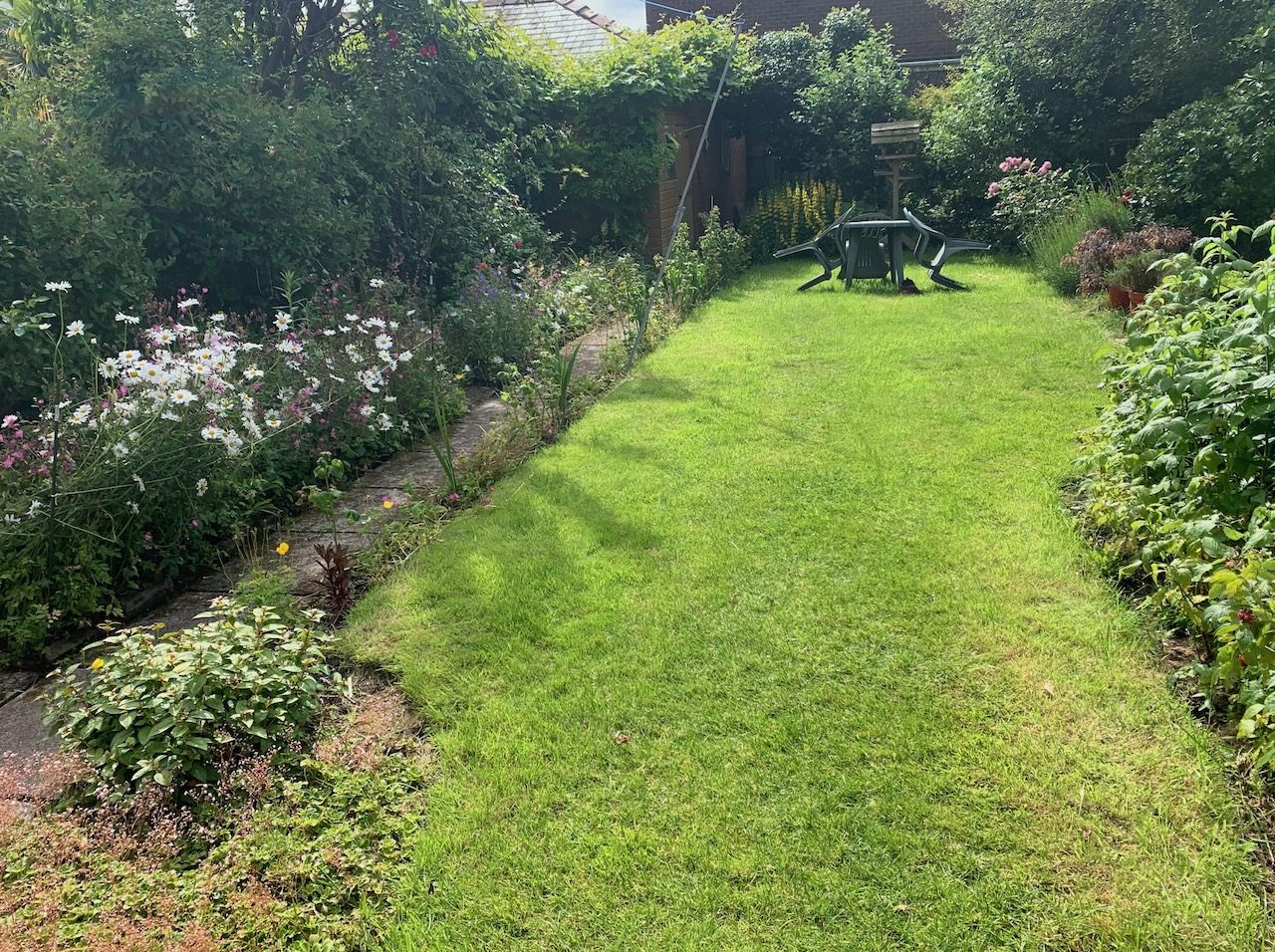
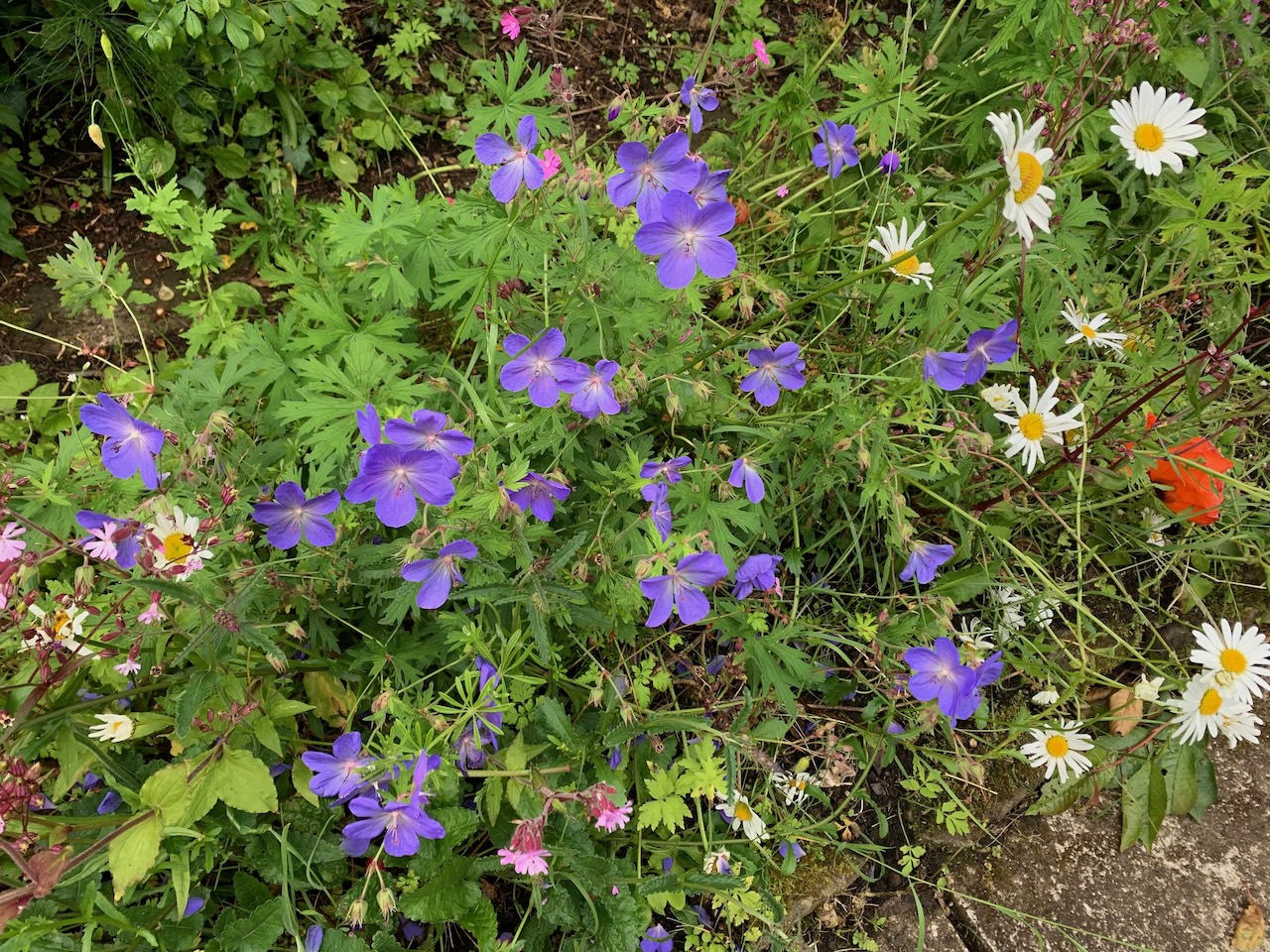
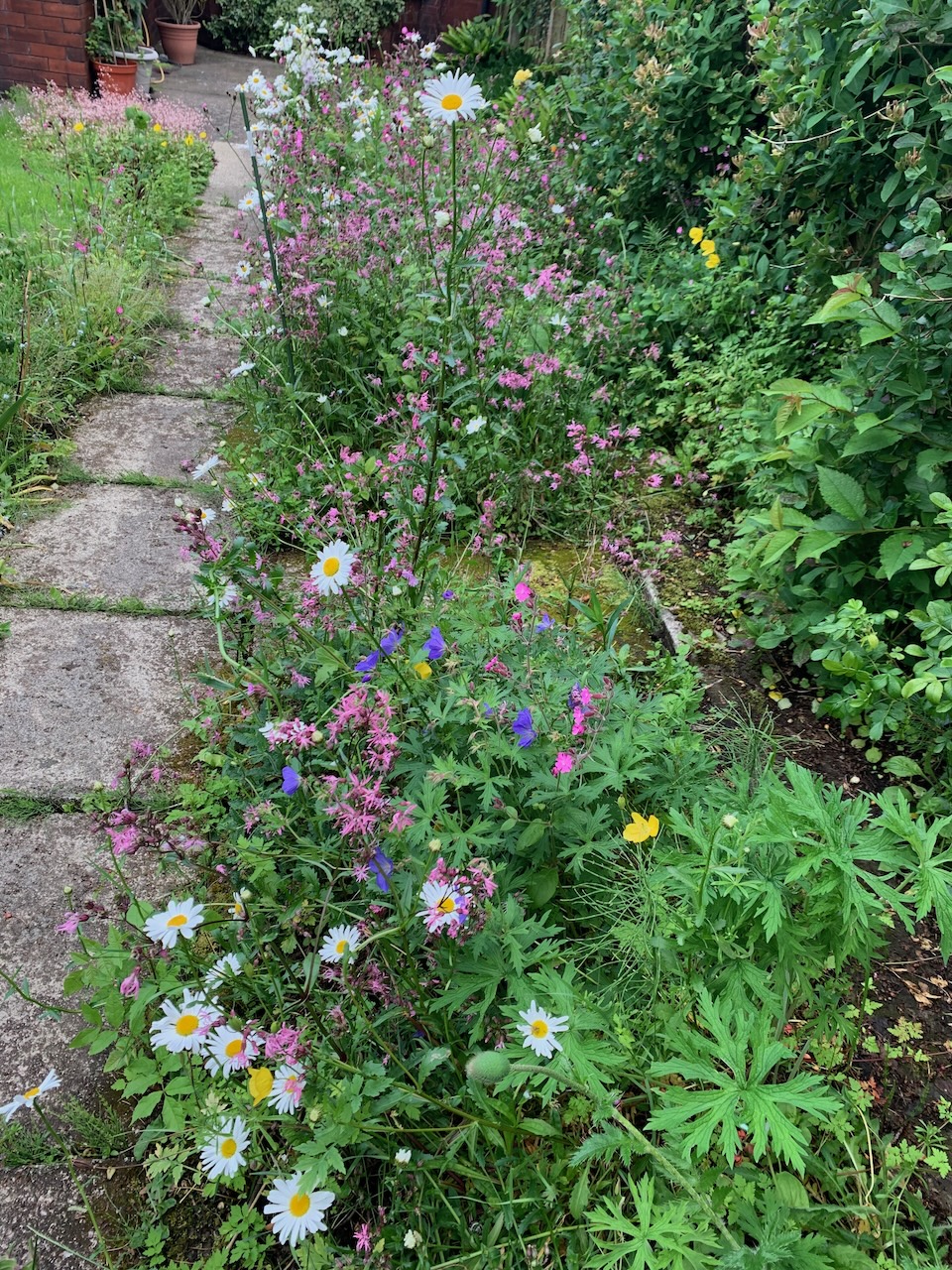
This year I’ve had much more success with our wildflower area in Creiddylad’s garden. The first year it was mainly a monoculture of red campion and the second year of ox-eye daisies. This year the ox-eye daises haven’t dominated so much and the other species have had more opportunity for growth. Most of the native wildflowers I have grown from seed. The betony and common agrimony were gifts from an ecology colleague. The nectar-rich geranium cultivars I bought from Let’s Grow Preston.

This is a list of some of the wildflowers that have grown in our wildflower area this year ~

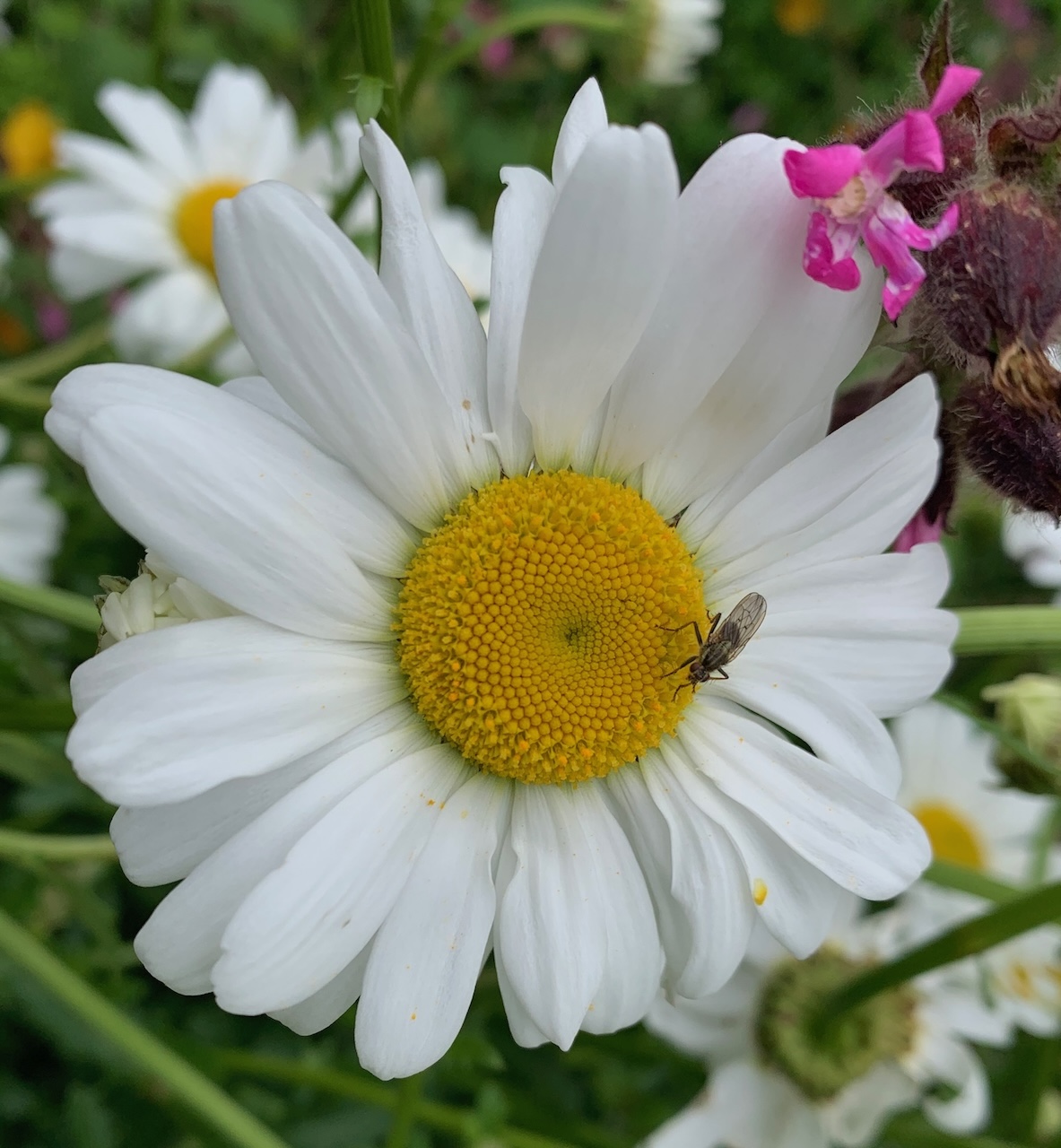
Ox-Eye Daisy (Leucanthemum vulgare)
Ragged Robin (Silene flos-cuculi)
Red Campion (Silene dioica)
Foxglove (Digitalis sp.)
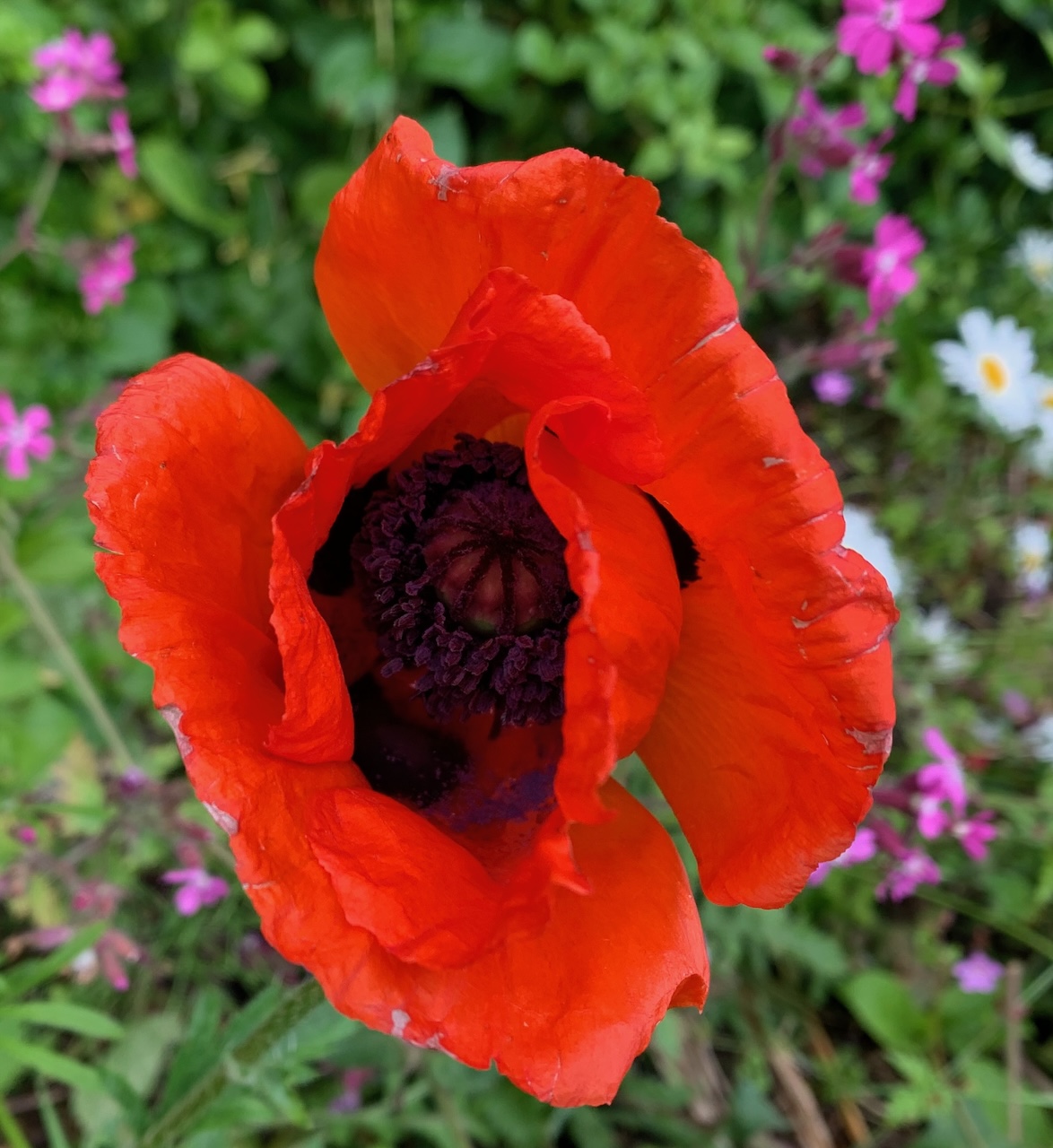
Poppy (Papaver sp.)
Meadow Cranesbill (Geranium pratense)
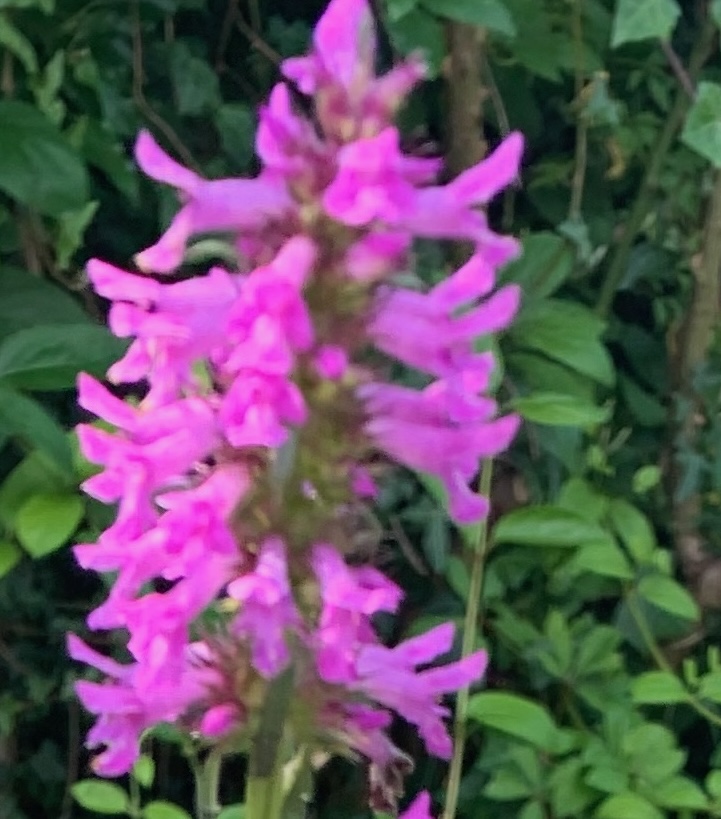
Betony (Betonica officinalis)
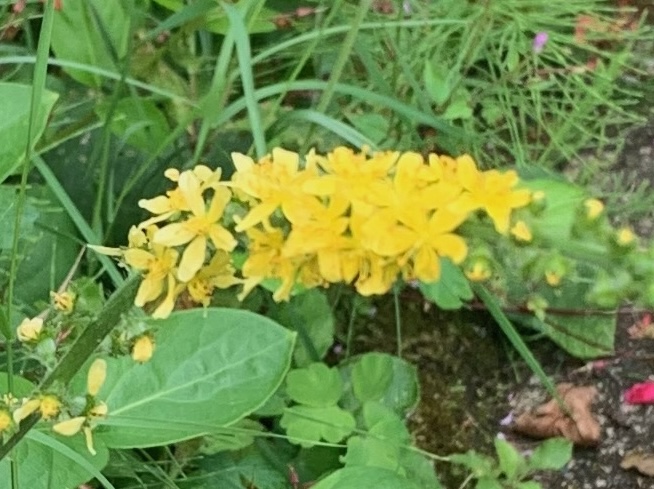
Common Agrimony (Agrimonia eupatoria)
Geranium ‘Rozanne’
Geranium ‘Elworthy Eyecatcher’
Michaelmas Daisy (Aster sp.)

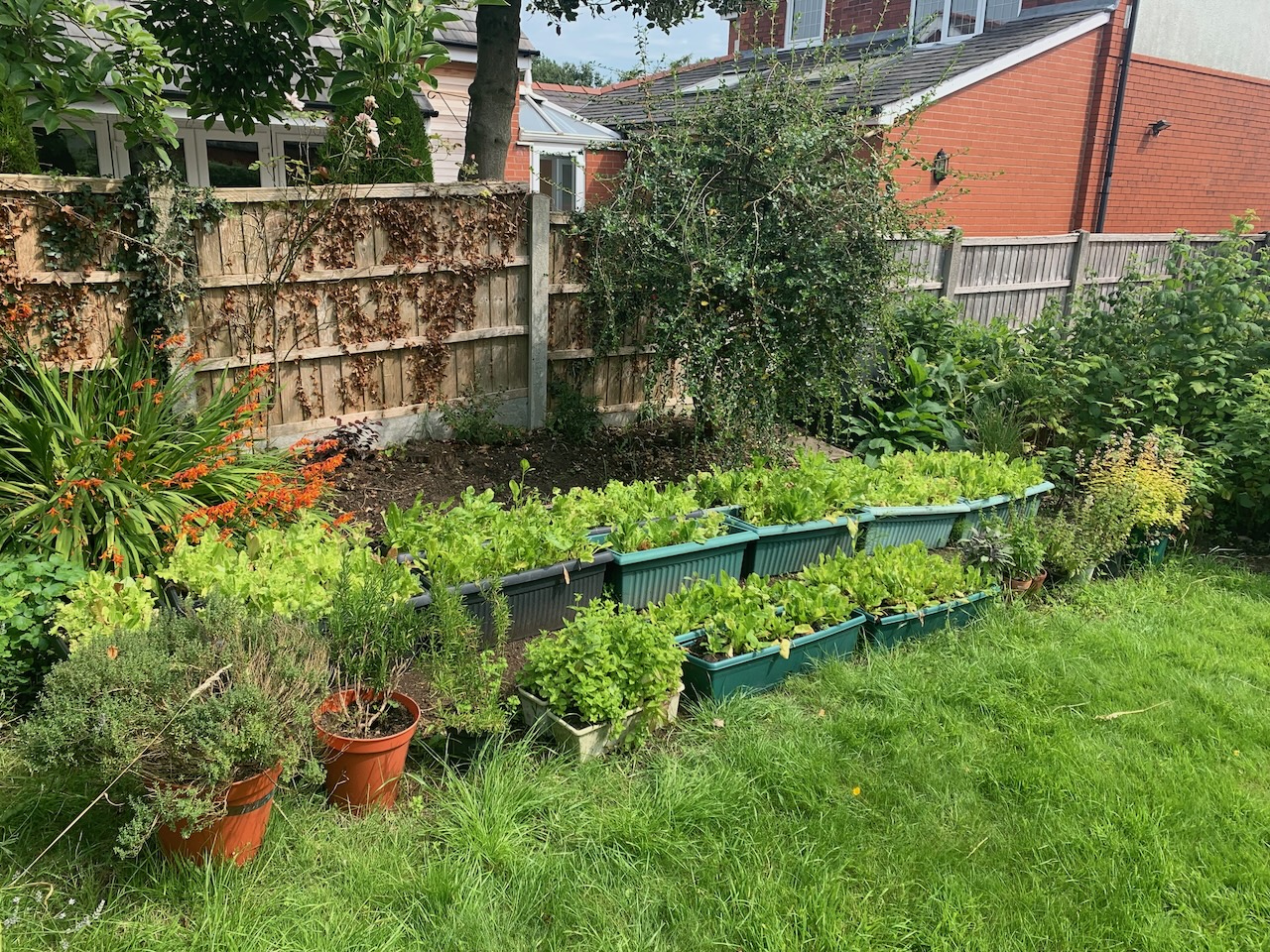
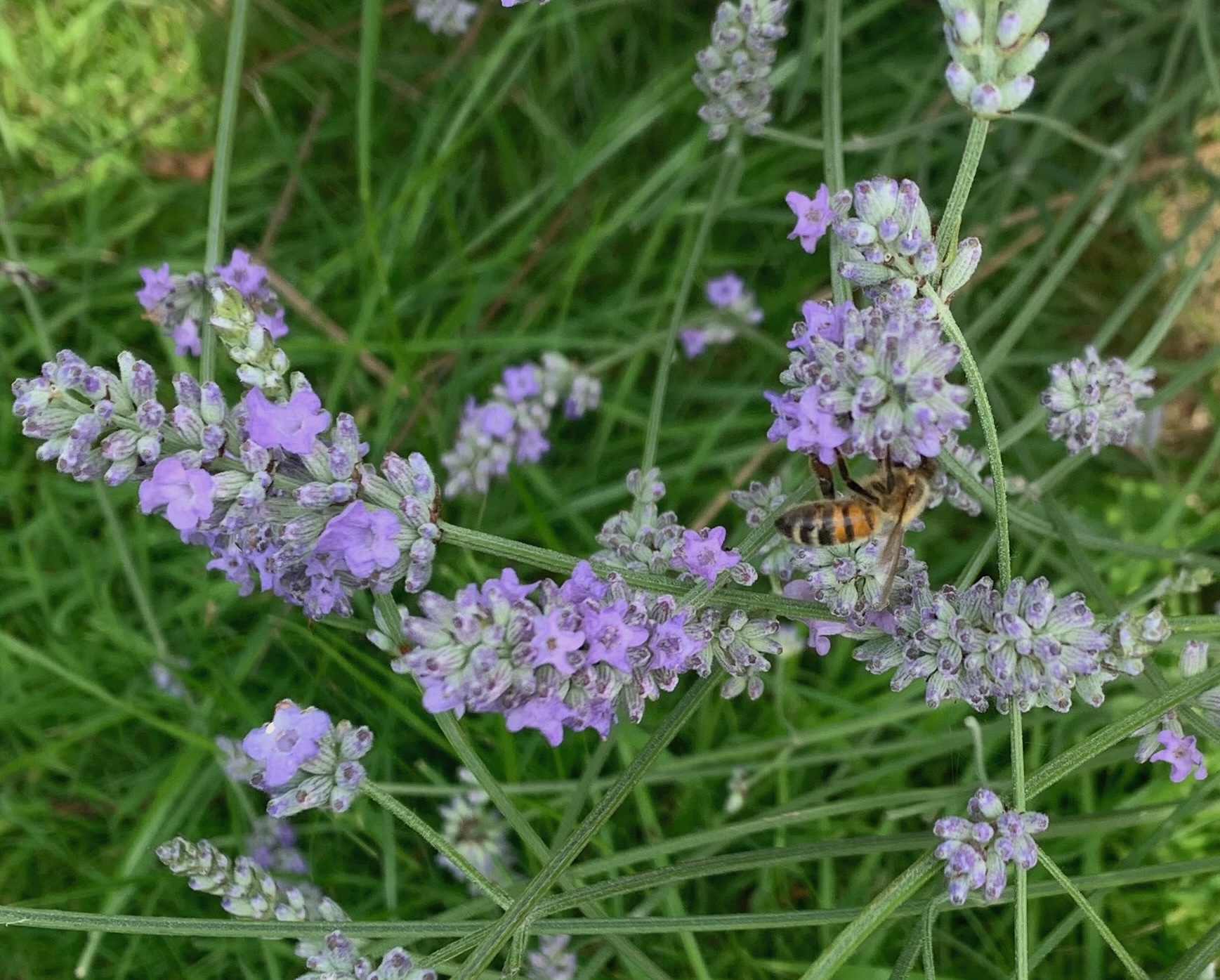
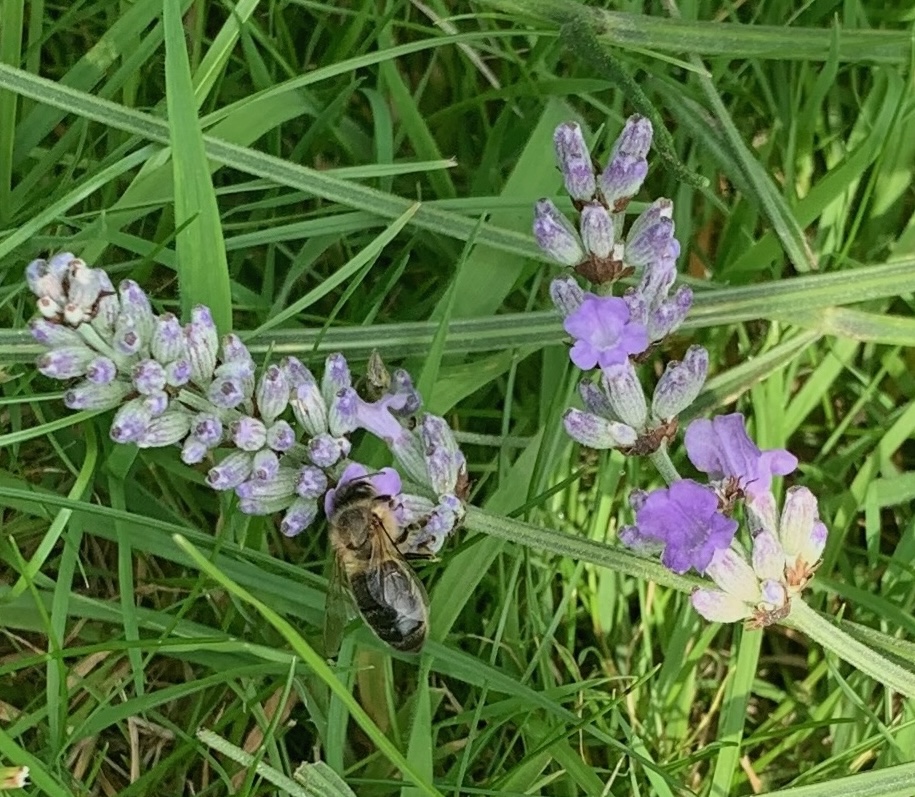
In terms of monastic gardening we were self-sufficient in lettuce and spinach and herbs for most of the summer and the bees enjoyed the lavender with sightings of many different species of bees and flies.

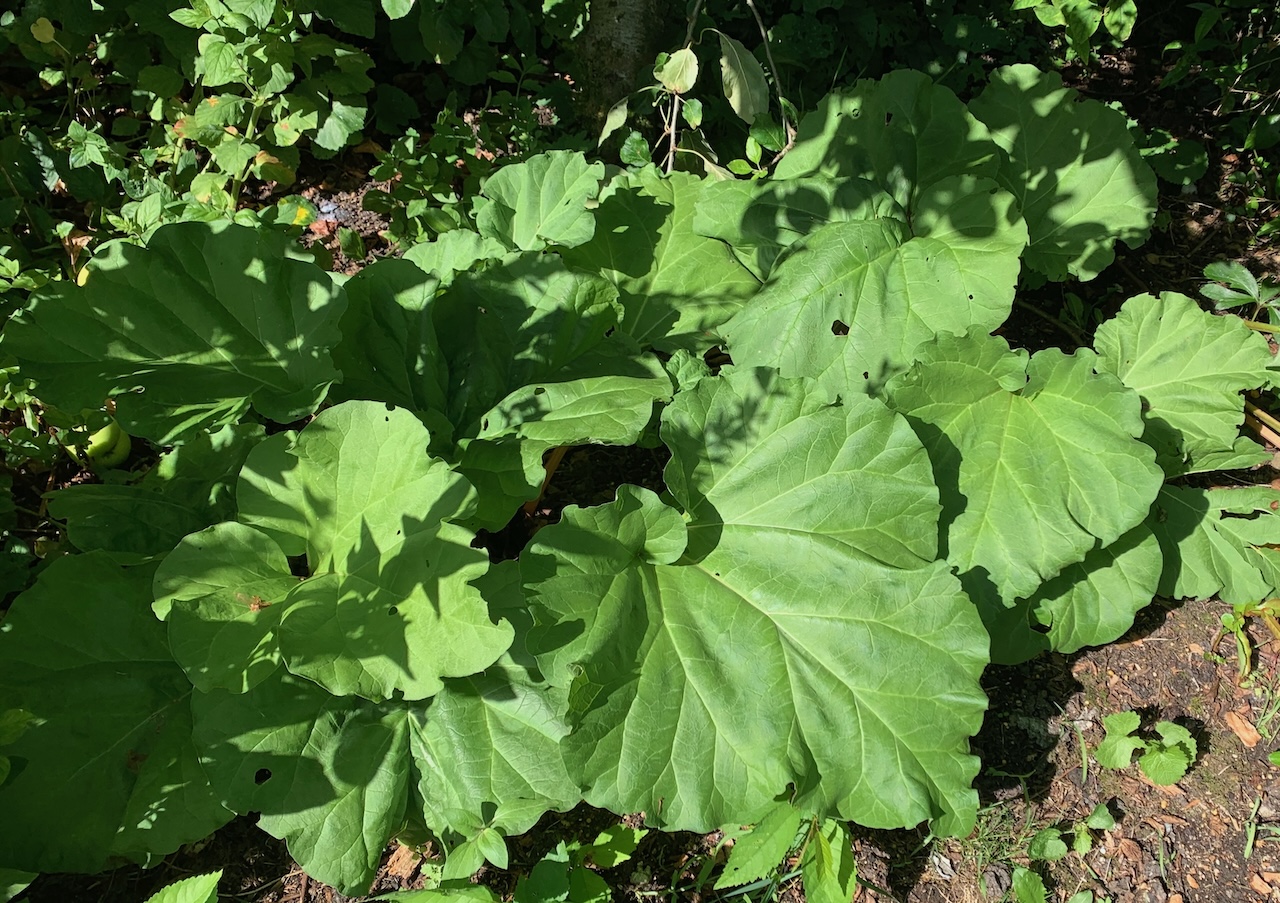
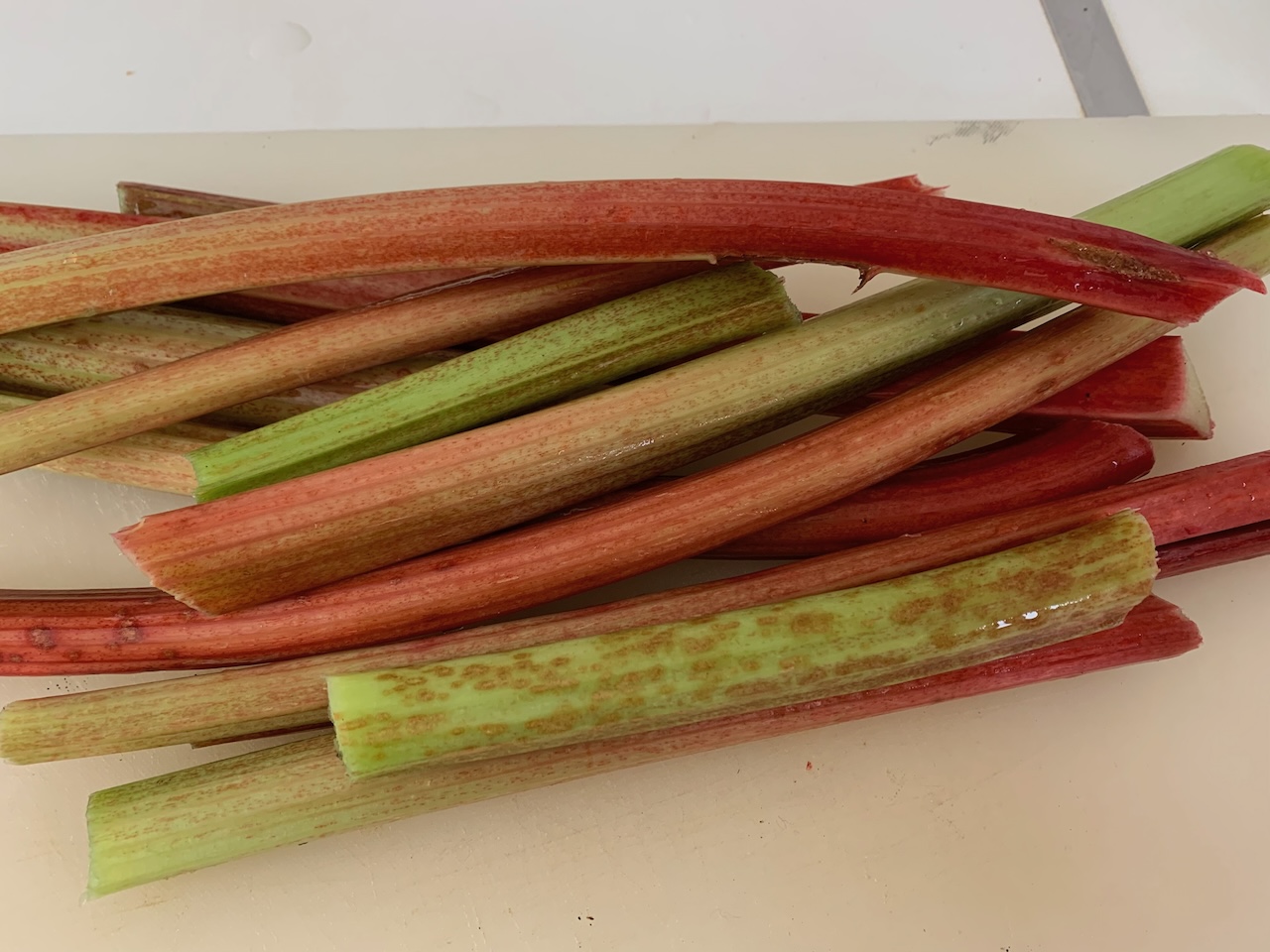
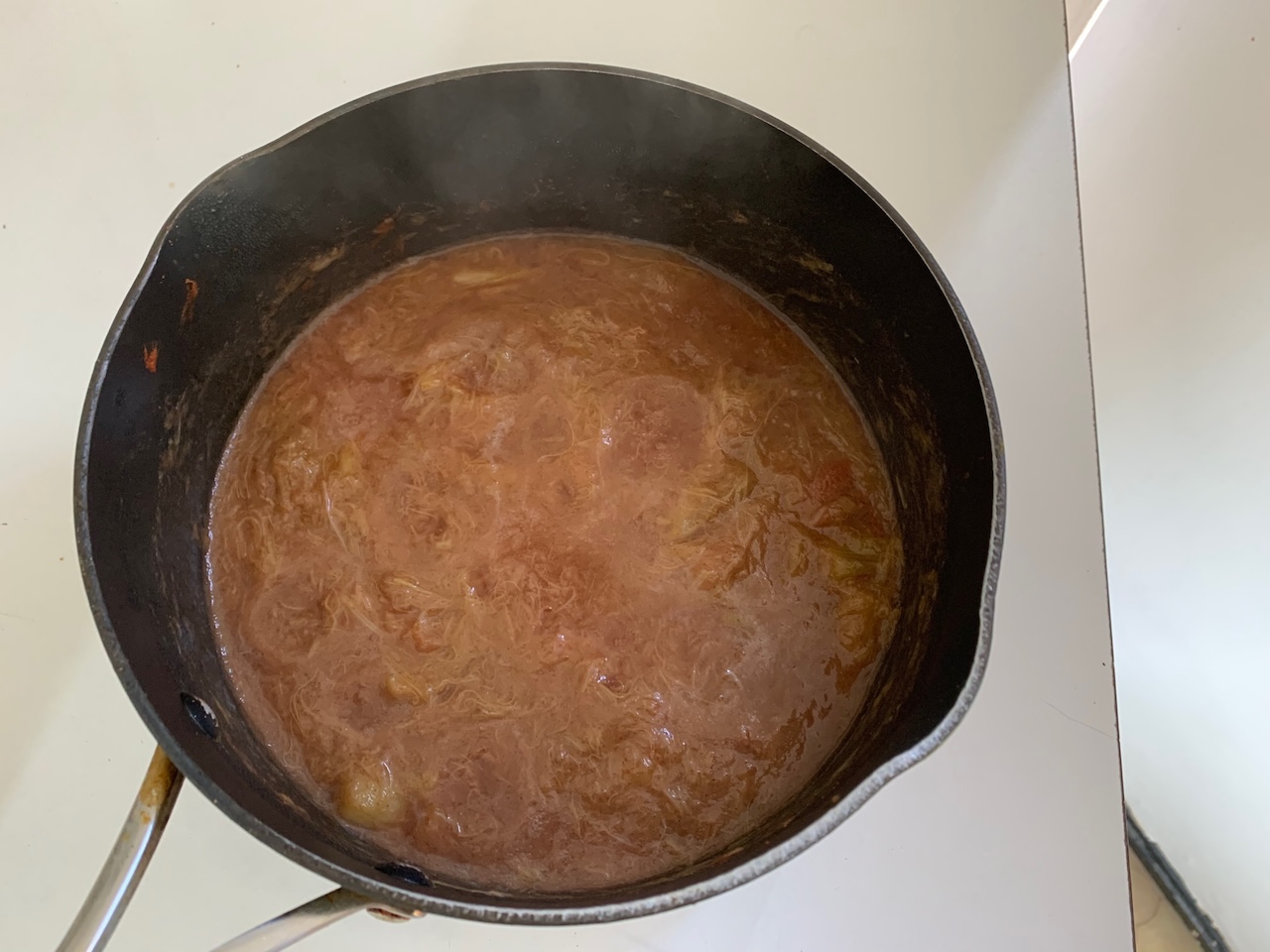
The rhubarb has also done well providing plenty of rhubarb goo.

Oh Sleeper in Deep Annwn

A Prayer of Adoration for Gwyn 

Oh Sleeper in Deep Annwn
I adore Your sacrifice
Oh Sleeper in Deep Annwn
I adore Your death
Oh Sleeper in Deep Annwn
I adore Your revival
Oh Sleeper in Deep Annwn
I adore Your breath
Oh Sleeper in Deep Annwn
I adore Your heartbeat
Oh Sleeper in Deep Annwn
I adore Your pulse
Oh Sleeper in Deep Annwn
I adore Your silence
Oh Sleeper in Deep Annwn
I adore Your lying still
Oh Sleeper in Deep Annwn
I adore Your dreaming
Oh Sleeper in Deep Annwn
I adore Your white wolf
Oh Sleeper in Deep Annwn
I adore Your imaginings
Oh Sleeper in Deep Annwn
I adore Your wandering soul
Oh Sleeper in Deep Annwn
I adore Your waiting
Oh Sleeper in Deep Annwn
I know You will return
Oh Sleeper in Deep Annwn
I sit in silence and listen
Oh Sleeper in Deep Annwn
I sit, I wait, I yearn

This prayer of adoration for Gwyn ap Nudd was written to bring more adoring / praising into my prayer practice which veered more towards petition. In the myth I live by after His defeat by Gwythyr on Calan Mai (May Day) Gwyn sleeps in His Castle of Cold Stone until Mis Medi (September – the Reaping Month).

A Dragon Calming Song

Riots across the North fed by misinformation in the aftermath of the tragic massacre of three little girls. The fiery energy of the Red Dragon perverted into nationalist attacks on asylum seekers and Muslims. The White Dragon, who always carries the label of ‘other’, fighting back.

I sing a song that was sung to calm the red and white dragons during the battles between the Britons and Romans, the Britons and Saxons, by the warrior-women, the prophets, who became known as Witches of Annwn.*

A song, in the Dog Days of Summer, that invokes the aid of our Husband and Winter King, Gwyn ap Nudd, against the fiery energies of His rival Gwythyr ap Greidol, Summer King, ally of Arthur, the first to sow the seeds of British nationalism by uniting the nation under ‘One King, One God, One Law.’

A song that transforms the dragons into monstrous animals, little pigs, two babes in a woman’s arms.

A song that coaxes them back to sleep in deep Annwn.

Sleep babes sleep
daddy’s gone a hunting
he’ll bring us snowy white hares
and ptarmigan; in his wolf furs
we’re so safe and warm.

Sleep babes sleep
daddy’s gone into the cold again
he’ll bring us a white bushy-tailed
snow fox; in his wolf furs
we’re so safe and warm.

Sleep babes sleep
daddy’s gone into the frost again
he’ll bring us the feathers of a snowy
white owl; in his wolf furs
we’re so safe and warm.

Sleep babes sleep
daddy’s gone into the snow again
he’ll bring us the last reindeer
of the North; in his wolf furs
we’re so safe and warm.

*This song was first published in my book Gatherer of Souls in a story called ‘The Purple-Cloaked Empire’ when it is sung by Wind Singer to calm the red and white dragons during the Roman invasions. It has a basis in the medieval Welsh story of Lludd and Llefelys wherein Lludd / Nudd calms the dragons to sleep. I believe the Witches of Annwn, as devotees of Gwyn ap Nudd and His father, had a supporting role.
**A quick note for clarity – whilst I am speaking about British nationalism being rooted in the Roman and Anglo Saxon invasions and the mythos of Arthur I am not drawing parallels between the Romans and Anglo-Saxons as invaders and the asylum seekers and Muslims who come in peace and are a welcome part of our British communities.

Gwythyr’s Ants

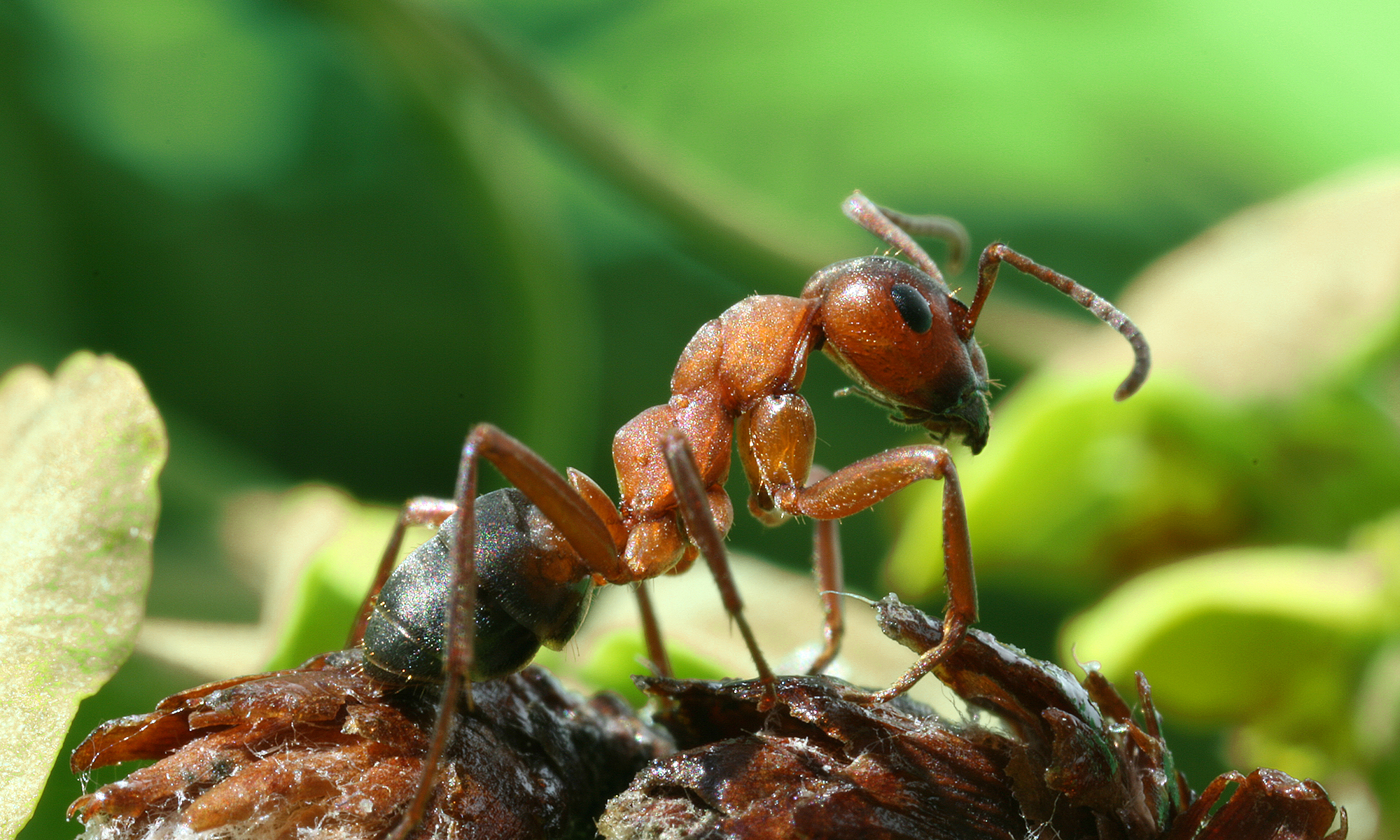
In How Culhwch Won Olwen there is an enigmatic episode wherein Gwythyr ap Greidol is ‘travelling over a mountain’ and hears ‘weeping and woeful wailing’ ‘terrible to hear’. He rushes towards the sound, unsheaths his sword and cuts off an anthill at ground level, thus saving the ants from a fire. In return they bring him the ‘nine hestors of flax seed’ previously sown into tilled red soil that has not grown to be resown in newly ploughed land to make a ‘white veil’ for Olwen at Culhwch’s wedding feast. This is one of the impossible tasks assigned to Culhwch by Ysbaddaden Bencawr, Olwen’s father. The ants complete the task, the lame ant bringing the last seed just in time.

Recently one of my guides suggested I should look deeper into this story. So, I journeyed on it, and this is what came as an origin tale for Gwythyr’s ants.

*

During the time of Arthur Gwythyr ap Greidol joined forces with the warlord against the giants, the witches, the monsters of Annwn, their rival, Gwyn ap Nudd.

At the height of summer he was leading his warriors through the mountains of the north, driving the giants from their mountain fortresses, from their seats in the craggy heights where they liked to look up to their kindred, the stars.

“There,” he pointed to a crag in the distance, even in summer circled by mist. 

“No,” his men shook their heads, “that belongs not to a giant but the Grey King.”

“Take it,” Gwythyr commanded, “build a new fortress on its summit in my name.” Their battle-leader left them for another task of marauding with Arthur.

As they approached a Spectre-in-the-mist appeared and warned them, “If you wish to remain men turn your back on this summit and return to your homes.”

“No way.” “This mountaintop will be ours.” “You’re nothing but a trick of the mist.”

As Gwythyr’s warriors battled against the spectre and his misty minions they noticed not their armour becoming carapaces moulded to their skin, their two legs becoming six, their spears becoming antennae. “We won! We won!”

They build their fortress on the summit thinking they were carrying great boughs when really they were building from twigs, leaves, pine needles.

When Gwythyr returned he found not a new fortress but an ant hill. 

“Accursed ants!” he raised his flaming sword to destroy the useless thing.

“No, no,” shrieked his warriors, “can’t you see it is us – your loyal soldiers?” 

When Gwythyr looked closer at their red-brown armoured bodies and their spear-like antennae he saw they still had the faces and intelligence of men. 

“We won the battle.” “We built our fort.” “Only one man was lamed.”

As Gwythyr cursed the mist rolled in and he heard the laughter of the Grey King.

Image wood ant (Formica rufra) courtesy of Wikipedia Commons

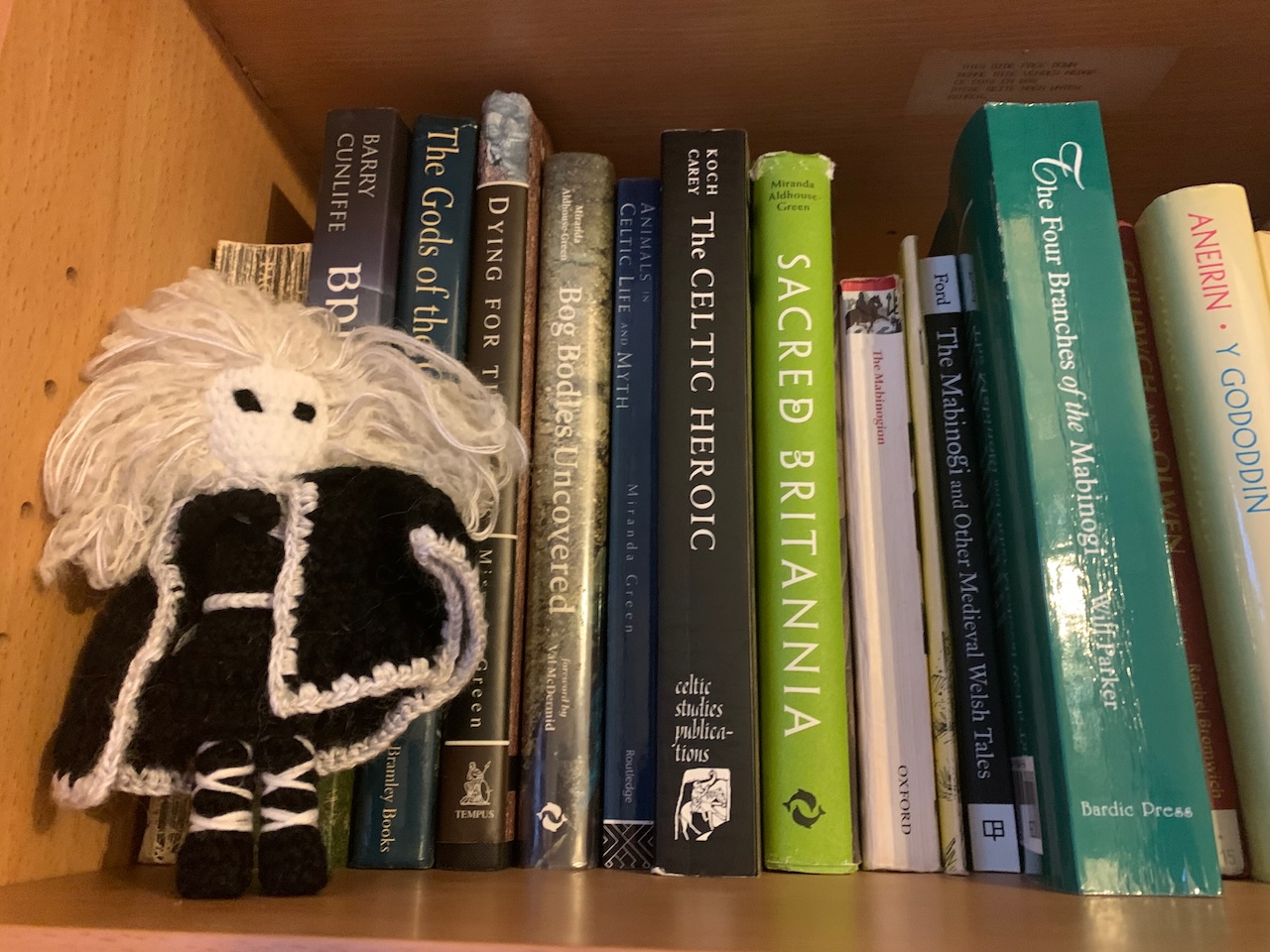
Tiny Gwyn (from Thornsilver Hollysong)

Thornsilver Hollysong is a fellow monastic devotee of Annwn who makes pocket-sized crocheted Gods from his own hand-dyed yarn. I recently commissioned him to make me a tiny Gwyn based on lines from a poem I wrote when Gwyn and I first met:

His spectral shine shimmers white as moonlight
His hair floats fair about his phantom limbs
His warrior attire is black as night.
The eyes of the hunter of souls are grim
As the howl of his hounds on Annwn’s winds.

Tiny Gwyn has finally arrived and He is perfect. I love the textures of His moonlight white hair and the powerful sway of His black cloak. He has a guardian-like quality and has assumed custodianship of my bookshelf from where He is watching over my room in preparation for the return of big Gwyn. It’s lovely to have some of the energy and craftsmanship of a fellow monastic and Gwyn devotee in my home.

You can view Thorn’s Teeny Tiny Gods and order your own commissions HERE.

If the birds in my garden were the spirits of the dead

You, blue tit, in your blue hat, were that guy who worked on the log flume at Camelot Theme Park. When I took cash on the gates I was envious of how you worked yourself up from the Go-Karts, Sir Lancelot’s Chargers, Pendragon’s Plunge. Neither of us were knights but both of us dreamed of drowning under water and I was sad to hear of how you went down and didn’t surface again with splashes in your face to the flash of cameras.

You, sparrow, were that woman with the orange lipstick and fluffy cream and brown coat selling yourself near New Hall Lane at 4am as I walked past in my fishnets and army boots avoiding the cars that might ask if I was on the job. I saw you get in and kind of guessed you might not get out again. I walked on, and on, and on, guiltily glad I had not your desperation.

You, blackbird, were the wannabe magician who worked in the gaming store.  You found out about how John Dee and Edward Kelley attempted to raise the dead at St Leonard’s Church in Walton-le-Dale but had no interest in necromancy nor summoning angels. It seems demons were your thing, smoky mirrors, circles of salt, vanishing. I met you in the Zoo Cafe smelling of sulphur and looking vaguely lost on that night you vanished forever.

You, nuthatch, were the bricklayer who boxed at Penwortham Boxing Club. I’d never have picked a fight with you even on that equinox at the mixed martial arts day when I was told I had a mean right hook. You, big guy, now in your eyeliner with your big torso and determined legs, could not accept yourself. Was that why the cancer crept in that took all your strength?

You, magpie, I cannnot determine who you are. A black-and-white trickster. I accept your mask as I accept the masks of all who ride on the floats in the procession at Penwortham Gala and I accept the harshness of your mocking call.

*All personages in this prose poem are fictitious but have a loose basis in my memories.

The Art of Coming Home

Gwyn ap Nudd who are far in the forests for the love of your mate allow us to come home.’
~ Speculum Christiani

Going away. Coming home. These two processes every spiritworker needs to master. 

I was away for such a long part of my life, never fully in my body. Struggling with disassociation and derealisation stuck somewhere between the worlds.

Then Gwyn ap Nudd came into my life and taught me to journey to Annwn and, perhaps more importantly, how to come home. Since I met Him I have been striving to lead a life that combines the shamanic and ecstatic with being present in the here and now with the myriad beings on the land where I live.

With more difficulty, particularly since becoming a nun of Annwn, I’ve been getting to know myself a lot better – my body, my mind, my habits. 

I thought that I was getting better. That I’d begun to become more aware of my cycles of driving myself too hard often when operating under some delusion such as that I’m going to become a recognised philosopher, poet, author… then realising I’m being unrealistic and burning out and dropping out.

I thought I’d cracked it but somehow similar delusions crept in around what I might be capable of as a nun of Annwn and aspiring shamanic practitioner. After my shamanic initiation and marriage to Gwyn I came back ecstatic with ambitions of running online discussions and shamanic journey circles and hit the ground with a bump when I came upon the same old barrier of lack of interest in the Brythonic tradition and was further derailed by the consequences of my mistake in reviewing a book by Galina Krasskova.

It’s taken me over two months to come back to myself, back to reality, to my limitations as an autistic person and introvert and to realise I would never have been able to hold space for group discussions or run shamanic journey circles due to my difficulties with reading and communicating with large groups and the huge drain upon my energy that these things take.

I’m fine one-to-one or with small groups of people I know and who I don’t need to mask with such as my fellow monastic devotees. But I’m not the warm smiley front-of-house meet-and-greet person who knows intuitively what each person needs and how to put them at ease fit for leading large groups.

Once again I’ve landed with a bump and a crash but as always I’ve had a wonderful God who is now my Husband to hold me through it. I’ve had the support of my mum, the land I live on, and members of the Monastery of Annwn.

I’ve finally come back home into a state of stillness and presence wherein I can stop beating myself up over my mistakes and accept who I am. 

That being a nun is not about striving to be a celebrity (‘Sister Patience TM’) but leading a life of prayer and meditation centred on devotional relationship with the Gods and the land and the ancestors and journeying to Annwn to bring back inspiration and healing for one’s communities.

Accepting I am enough rather than trying to strive beyond.

Not easy. Not glamorous. But this is where and who I am. A suburban nun. At home in Penwortham with a wonderful God who dwells in my heart and countless deities and spirits and plants and creatures all around me. With Gwyn’s help I’m beginning to master the art of coming home.

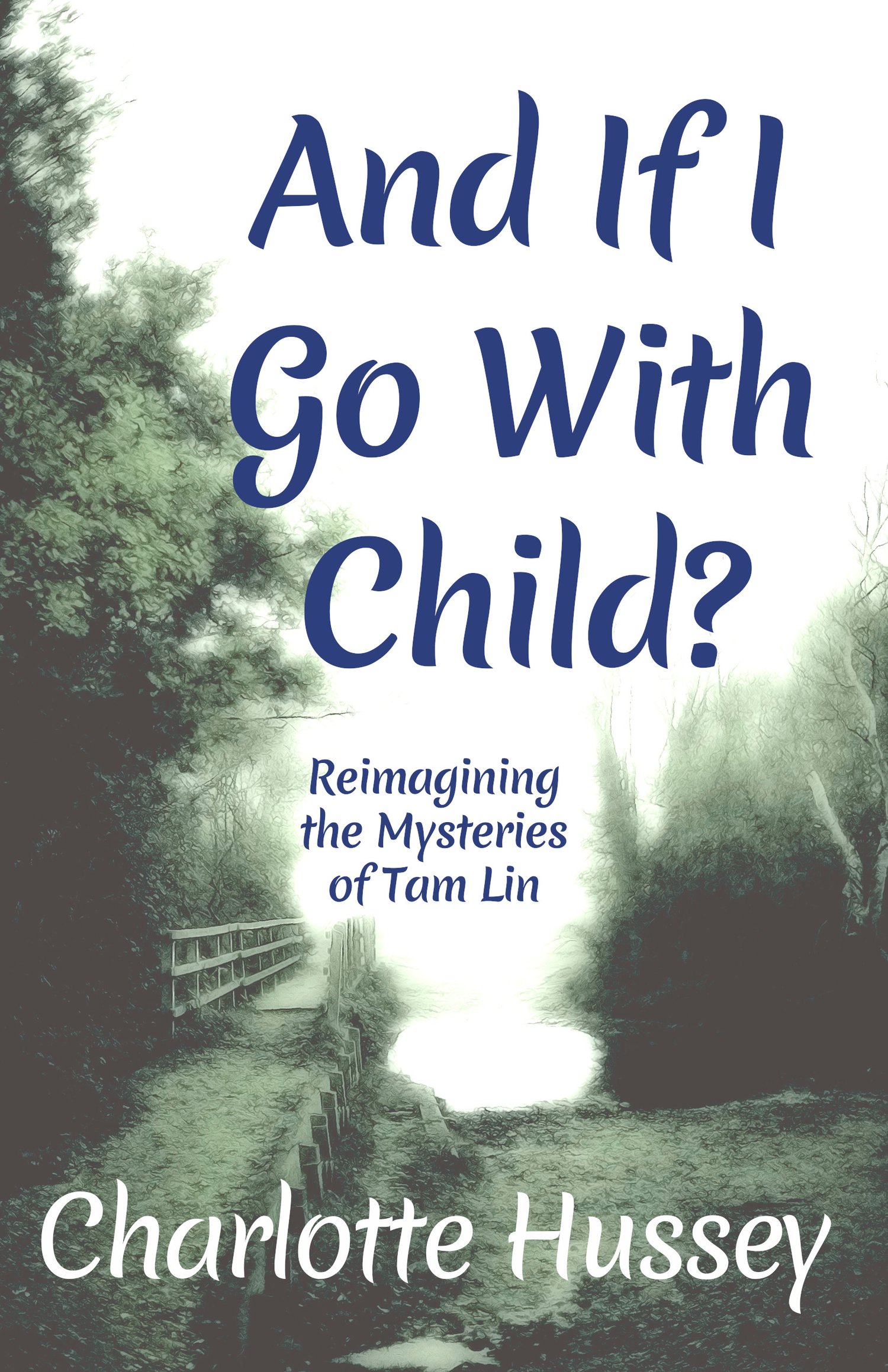
Review – And If I Go With Child? by Charlotte Hussey

And If I Go With Child? is a poetry collection by Charlotte Hussey reimagining the medieval Scottish Border Ballad of Tam Lin as an initiation into Faery. Here she interweaves Janet’s ‘coming of age story’, ‘her sensual, sexual and imaginative awakening’ with her own in a sequence of poetic collages set across place and time structured around lines from the ballad.

In her biography Charlotte speaks of ‘growing up on a sand bar fronted by the Atlantic and backed by a tidal marsh’ and some of the narrative is set in these landscapes. The descriptions are rich showing Charlotte’s knowledge of the ecology of the land, particularly its plants, sweet grass, marsh rose, many more.

The first section tells of Janet going to Cautherhaugh wood where it is rumoured girls might lose their maidenhead. Here Charlotte describes a surprise encounter with a man which would spook any woman anywhere at any time.

‘A bush shakes a man out of it.
He’s stubby as a rough root.
His face is overgrown with hair
and shadows. His back bends
under bundle tied with a vine.’ 

Is he a lurker? A rapist? A mythic woodwose bringing his own dangers? In this instance he leaves nothing but a bundle and we’re left with guilt at our assumptions.

One of the prominent features of this book is Charlotte’s unique and original descriptions of the characters as they are summoned into our times. Janet begins stiff-laced with ‘plucked eyebrows’, ‘forbidden lipstick’ and ‘a starched white / secretarial blouse’ but this apparel is swiftly undone by the wind.

We first find Tam perching on a van on a cliff top looking over a beach (a deliberately liminal position). At first he appears ordinary and in now way fae.

‘His barely zit-free chin bristles
with a don’t-tread-on-me beard.
My mannish boy! A green sweatshirt
rumples under his armpits.
Thrift store jeans…’

Yet it isn’t long until he becomes more sinister. ‘Eyes / stare, sucked like eggs from their shells / by a snake side-winding through his drug-laced / mind.’

The Faery Queen is deftly described crowned in honeysuckle, ‘almost beautiful’, ‘small lips a bit tight, / tiny nostrils like dark / pinholes against the white’. In accordance with the ballad she’s cruel and punishing, plucking out eyes and putting them in trees and stuffing mouths with moss. An Ice Queen who can strike one dumb and kill with her ‘blighting breath’.

‘Annunciation Dream’ clevery brings together Janet’s impregnation by Tam with Mary’s by depicting her in the ‘crown of 12 stars’ from the Book of Revelations. Janet’s realising she goes with child is subtly written and her attempt to abort, with Pennywort, is wrapped up in nature imagery.

Apocalyptic imagery features again strongly later on in the collection where it is brought together with the appearance of the Faery Riders in the Wild Hunt on Halloween. In a stroke of genius Charlotte sets this at Miles Gas Station, interweaving the ordinary and extraordinary in this liminal setting. 

‘Red Pegasus has faded
and fled this Mobil gas
station, leaving his winged
trace on a worn sign.
Twin pumps go on
guarding their lonely island,
where slack rubber hoses
hang useless as a bridle
not buckled up in time.’

A guitarist ‘clad in a long black / coat, preacher or gunslinger’ summons the hunt.

‘Their hurling
mass sucks fire from the stars
they pass, whooping, riding
hard across the fenceless,
Great Plains of the Sky.

Gutted pumpkins sputter
and glare. Dogs howl.’

The black, brown and white horses from the ballad take on an apocalyptic apparel with Tam, on his white horse ‘vast inside and out’, ‘a rider condensing as if / in an alembic, / unkempt, sun-struck, dazed.’

Janet’s rescue of Tam from captivity on the hunt of the Faery Queen is followed by the famous scene ‘hold me close and fear me not’ where she must keep tight hold of him as he shifts through a series of forms. Charlotte reimagines this cleverly with a ‘pet store girl’ wrestling a snake amongst the tanks and ‘a naughty circus girl’ embracing him as a lion. 

When he becomes a gleed she thrusts him into a well and he is returned as a knight in a poem that uses the alchemical symbolism of the wedding of Sol and Luna. Alchemical imagery occurs earlier in the verses about the horses – ‘A horse head’s a rebis / alchemists say you can fashion / into anything you want.’ This fits with the collection’s mercurial antagonists and the overall feel. 

Safe and wrapped in Janet’s green mantle Tam becomes the vulnerable one. ‘On the first of a cool November, / he shivers, clutching his crotch.’ At once a child and an old man. ‘Is he 21 or 990 years old / like the withered Children of Lir?’

Charlotte speaks of this ballad as ‘a story of captivity and liberation by way of redemptive love.’ It’s deliberately left ambiguous whether Tam’s impregnation of Janet constitutes rape. The reader is left to make their own mind up on the matter and, whatever the case, whether they could love Tam, hold him tight, bring him back. Working with, reimagining, imaginally experiencing these mysteries is all part of the initiatory process.

At the outset Charlotte leaves the question of whether she has been initated into Faery to her readers. On the basis of the magic and visionary impact of her words and their retention of the tale’s mystery I would give a resounding ‘yes’.

And If I Go With Child? is available from Ritona Press HERE.
Dragon of my Heart

Gwyn son of Nudd… God has put the spirit of the demons of Annwfn in him, lest the world be destroyed.’
~ Culhwch and Olwen

I.
Dragon of my Heart black and beautiful
with Your wings filled with ghosts

You take me up high into the sky,
show me how far I am from

the cannon fire, the sparks,
the fuses, the ram of gunpowder,
the sound of cannon balls hitting walls.

From the sieges of the past and of the future.

You grant to me Your perspective.
You tell me I must be calm.

II.
Dragon of my Heart black and beautiful
with Your wings filled with skulls

You take me up high into the sky,
show me how far I am from

the machine-gun fire echoing
from my past lives stacatto across
the battlefields where barbed wire is strung.

From the executions of firing squads from the guns.

You grant to me Your perspective.
You tell me I must find peace.

III.
Dragon of my Heart black and beautiful
with Your wings filled with the hung

You take me up high into the sky,
show me how far I am from

the forests of the suicides,
where they hang from the trees
driven to their deaths by who knows what.

From the bullies on the streets and on the screens.

You grant to me Your perspective.
You tell me I must be kind.

IV.
Dragon of my Heart black and beautiful
with Your wings terrifying to angels

You take me up high into the sky,
show me how far I am from

the Gallic Wars, the Crusades,
the Wars of the Roses, the Napoleonic Wars,
from Bergen-Belsen and Dachau, Nagasaki and Hiroshima.

From Vietnam, Crimea, the Russian invasion of Ukraine.

You grant to me Your perspective.
You tell me I must love.

V.
Dragon of my Heart black and beautiful
with Your wings filled with light

You take me up high into the sky,
show me the heights of my privilege.

You tell me I must found a monastery
for one day like You I will bear
the dead in my wings.