The Oracle of Counting Crow

I was the first to learn to count –
un, dau, tri, pedwar, pump, chwech, saith.
Saith brain, seven crows…

We were not born from a mother or father
but crawled from the corpse of a dead crow –
maggots, then flies, then black, black flapping things.

We taught you not to count on fingerbones 
with the touch of our wings brushing
the divides between the worlds.

We taught you to count in threes,
sixes, sevens, nines, sacred numbers.
We did not teach you the numbers of the Gods.

When you asked why we take the eyes of the dead
and put them in the empty eye sockets of seers
we told you our eyes are without count.

We place them in the palms of the hands 
of the blind so maggots can be born from them,
flies, crows, to carry visions of the past, present, end.

Of when the skies fall in a sheen of crow feathers,
black, black, black, just a glimpse of indigo.
They tell you they are without number.

The Oracle of Courting Crow

Let your words rush like a river, 
like rocks tumbling, water flowing, 
flooding down, water runs, crows fly!

Flying up above I see my reflection 
in the water, court it, court my shadow 
but cannot pull it from the surface 

or peel it screaming from the rocks.
Water runs, crows fly, shadows glide.
There are too many holes in the sky.

Courting Crow will never be whole.
I’m so in love with my reflection, shadow
dark in the water, always half astride.

Courting Crow will never fix the sky.
I’ll never be whole until my flight is one with
rocks and water, river crashing down,

until my bones are back up above,
the rocks tumbling up to fill the holes,
the rivers flowing backwards to source. 

The Oracle of Crafty Crow

I perched on the eyelids 
of the first eyes of the universe
to open then I ate them all – crafty!

That is why they call me Crafty Crow
and that is why my eyes are black.
As a punishment or reward?

Only Crafty Crow knows.
I am the one who knows how
to bend fates like a twig in water. 

I perch on the shoulder of Morgana.
I change the directions of twigs
and leave a trail of feathers

leading to a witch’s hut.
I know wordcraft, spellcraft, 
the ingredients for the best potions,

why the awen always becomes poison,
why you should never ever eat
the corpse of a dead crow.

Crows are the world’s livers.
We feast on the world’s darkness
growing bigger and darker until we fill all.

The Oracle of Chattering Crow

Chattering Crow:

Chit chat chatter chatter
caw! Caws a corvid. Not enough
words in your language for crow-talk.

Do you want to know why I got my beak bound?
Why I got banished for banter? Yes? No?
Crows never give a yes or no answer

because words are slippery things,
sliding from our mouths like maggots
becoming flies their truths already transforming.

They are like morsels tossed from beak to beak –
meat from corpses that float like corks
downriver and out to sea fit not even for seagulls.

Caw. Caw. Cough. Cough. Choke. I was never
a chough, a raven, or a rook, doomed,
exalted to crow instead. One word

too many was my undoing. What?
You’ll never find it amongst the chatter.
Easier to find a maggot wriggling in a corpse.

The Oracle of Scattered Crow

Scattered Crow:

I was the first crow to be born
and the first to be torn apart –
every little piece of me

from liver to gizzard
from tail to black beak
every single feather scattered.

You see the darkness between
the stars? That’s me. There before
that ancient sea-crow Morfran-Afagddu.

I am the darkness behind everything – 
without, within, I lurk even where
the light enters your eyes.

And where are my eyes?
Everywhere! Numerous as possibilities.
Call upon me and with them I will help you see.

Do not endeavour to make me whole because
I am already one in my scatteredness.
The Gatherer of Souls will gather

the stars but never the darkness.
Do you feel the touch of my wings?
Do you feel the darkness in your retina?

Only when you close your eyes and scry
the blackness of the beginning will
you know Scattered Crow.

The Speaking Ones

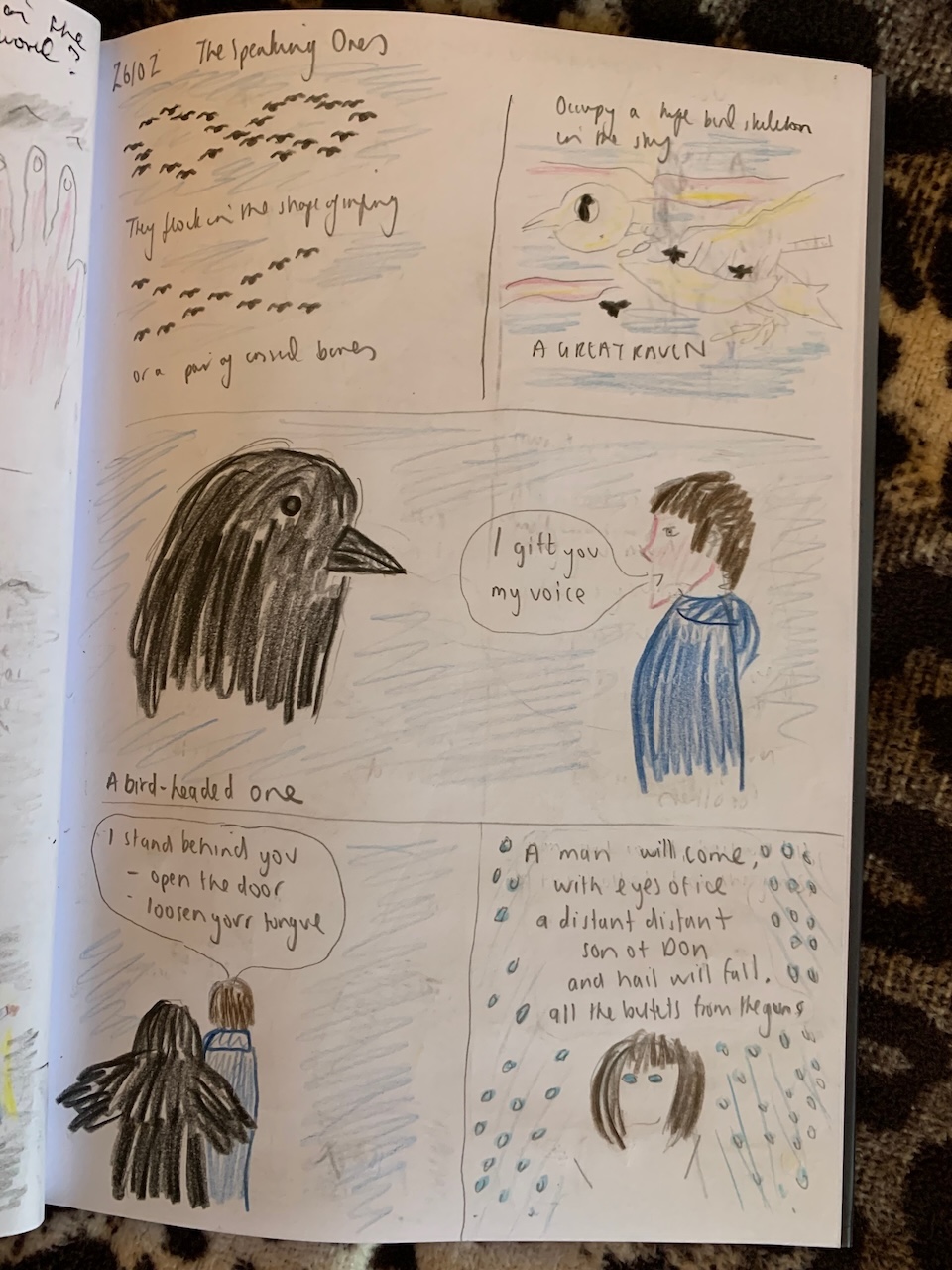
Several years ago I had a vision of the world becoming as a whirlpool from the source. ‘Green moving swards of vegetation, trees, people, marching through a labyrinthine kingdom back into the void carrying houses and entire civilisations.’ Sometimes people got stuck. With bird-headed ones they came knocking on the back of my head trying to shout through me. I was on Psylocybe mushrooms and alone at the time and didn’t dare let them.

The practice of a person allowing spirits to speak through them is found in many world religions from Voodoo to Evangelical Christianity. It was likely to have been an important component of pre-Christian Brythonic polytheistic religion and survived into the 12th century as recorded by Gerald of Wales.

Gerald writes of awenyddion ‘people inspired’. ‘When consulted upon any doubtful event, they roar out violently, are rendered beside themselves, and become, as it were, possessed by a spirit.’ Their speeches are ‘nugatory, ‘incoherent’, ‘ornamented’. When ‘roused from their ecstasy, as from a deep sleep’ they cannot ‘remember the replies they have given’. He conjectures: ‘perhaps they speak by the means of fanatic and ignorant spirits.’ (1)

Gerald’s words provide evidence for a Brythonic tradition of spiritwork in which there exist ‘soothsayers’, referred to as awenyddion, who are possessed by spirits by whom they speak in the metaphorical language of poetry.

I first came across the term ‘awen’ for ‘poetic inspiration’ in the Druid communities and saw myself as a bard before my patron God, Gwyn ap Nudd, initiated me as an awenydd. I have served Gwyn in this role for over ten years by journeying to Annwn to bring back inspiration for my communities. 

I have prayed for awen and for the Gods and spirits to inspire and come into me when writing in a similar way to the ancient Greek poets calling on the Muses and to William Blake asking the Daughters of Beulah to come into his hand. (2) I’ve also experimented with trance singing, letting go, just letting any words and tune flow. But, until recently, I hadn’t dared speak the voices of spirits.

This changed after a conversation with a fellow member of the Monastery of Annwn, who told me of his calling to channel Gwyn. It reminded me of the bird-headed spirits, who’d come knocking, whose desire to speak I had denied. I felt the time to offer my voice had come and journeyed to them.

I saw them as crows flocking in the sky in the shape of infinity then crossed bones. Their home appeared as the floating skeleton of a great raven. I offered to gift them my voice and they gave me some instructions. They would stand behind me. Then I must open the door and loosen my tongue. I tried it whilst in the Otherworld and received a prophecy about a distant son of Don.

Several days later on their prompting I composed a song to enter the trance state:

Crows, crows, the Speaking Ones
Y rhai sy’n siarad

Come, come from Annwfn
Come, come your will be done

Crows, crows, the Speaking Ones
Y rhai sy’n siarad

Come, come bring your words
Come, come you will be heard

Crows, crows, the Speaking Ones
Y rhai sy’n siarad

When I tried it the first time and asked who wanted to speak they told me they would take it in turns and each wanted me to make their words into an oracle. I did this by letting them speak out loud through me first then writing down what I could remember and putting it into more poetic form. (3)

On completion of the oracles I read them to the Speaking Ones and gained their approval. At first I wasn’t planning to make any of this work public but I was told they wanted their voices to be heard so I will be posting the oracles of these seven crow-guides over the course of the next week. 

(1) https://awenydd.weebly.com/giraldus-cambrensis-and-the-awenyddion.html
(2) ‘Daughters of Beulah! Muses who inspire the Poets Song… 
Of varied beauty, to delight the wanderer and repose 
His burning thirst & freezing hunger! Come into my hand 
By your mild power; descending down the Nerves of my right arm 
From out the Portals of my Brain, where by your ministry 
The Eternal Great Humanity Divine, planted his Paradise’
~ William Blake, ‘Milton’
(3) As a note I don’t consider this to be full trance possession because, whilst working alone, I don’t dare let go of my conscious faculties fully. Also, for this particular work, I have been asked to record the words so need to be aware enough to remember them. During this process I’ve felt something other has come through, but that I’m not fully out of the way, and suspect my consciousness might have coloured some of the content.

Review – Hidden: A Life All For God

This documentary records the daily lives of the Trappistine Sisters at Mount Saint Mary’s Abbey in Wrentham, MA. Although I am a Brythonic polytheist not a Christian witnessing their monastic lives and devotion touched me deeply.

The story begins with one of the sisters lighting the candles in the chapel at 3am prior to vigils at 3.20am which is followed by the Great Silence – a time for silent prayer. This resonated with me very much as an early riser who gets up at 4am to pray to my Gods and spends time meditating in the sacred hours before the rest of the world wakes up and the bustle of everyday life begins. Sadly I can only imagine sharing it with other polytheistic monastics.

The sisters are Benedictines and keep the seven canonical hours of prayer (1) with compline at 7.20pm. This is coupled with private prayer and study including lectio divina ‘Divine Reading’. In accordance with the motto of Saint Benedict ora et labora ‘pray and work’ this is balanced with physical labour. The nuns work in a ‘state of the art high tech candy factory’ and also on a farm where they look after animals including keeping sheep for wool. I related strongly to the sister who found spiritual fulfilment in her compost duties. The sisters see no difference between the two – “Life here is a continual prayer.”

Although the nuns come from differing places and backgrounds and admit getting on isn’t always easy they are united by one thing – their love of God. “Everything is centred on fostering a deep personal relationship with Jesus Christ.”

Several of the nuns share their moving vocation stories, speaking of how they were called by God and came to recognise Him as “the one before all others”.

“Why did you come?”

“It’s Him.” 

“What do you seek?”

“It’s Him.”

“Why do you stay?”

“I can’t live without Him.”

Their words echoed exactly how I feel about my patron God Gwyn ap Nudd.

The functioning of this monastic community is made possible by the silence. One of the sisters says their lives are “100 per cent community and 100 per cent silence not 50 / 50”. Their “silence”, in which they commune with God in everything they do throughout the day, “is part of the conversation.”

As somebody who struggles with idle chatter but enjoys quiet company I can imagine the only way I could live with others would be if life was mostly silent.

The documentary records one of the younger sisters making her solemn profession, her life long vows. This was very moving to watch and left me with a yearning to be able to make my lifelong vows with my monastic community.

I came away from this video feeling I identified with the sisters in all ways except for being a polytheist rather than a Christian and feeling I’m closer to monotheists than most other Pagans in centring my life on my patron God and in believing that God/the Gods are real and are worthy of worship. (2)

I’ve watched it a few times now and always return to it when I feel alone in my devotion (although this is less now since founding the Monastery of Annwn).

(1) Matins / vigils (nighttime), lauds (early morning), prime (first hour of daylight),  terce (third hour), sext (noon), nones (ninth hour), vespers (sunset), compline (end of the day).
(2) In Paganism the views on Deity range widely and include: 
*The Gods don’t exist (atheism).
*We imagined up the Gods or they are parts of our psyches (psychological).
*The Gods are archetypes (archetypal).
*The Gods are real but we shouldn’t bother them – “I’’m not a God-botherer.” 
*The Gods are real and we can work with Them and celebrate Their festivals but They don’t demand our worship (non-Polytheistic Witchcraft, Wicca and Druidry).
*The Gods are real and are worthy of worship (Polytheism). 
*The Gods are real and we should centre our lives around Them (Devotional Polytheism).
*The Gods are real and we should withdraw from the secular world as far as possible to centre our lives on Them (Polytheistic Monasticism).

Return to King of Annwn Cycle and new Patreon tiers

I guess it was always going to happen. I couldn’t set it down for long. When I gave up my desire to be a professional author at the end of last year I let my King of Annwn Cycle series of books go with it. Since then I’ve felt like a part of me is missing and when I’ve been praying and meditating with Gwyn I’ve felt a yearning to have a full story of His life to meditate on and been filled with sadness at its absence. I’ve also had a niggling feeling that my promise to write ‘His book’ in my failed version was unfulfilled.

This feeling has grown and grown. Over the past couple of days I have found myself looking back at the old material and thinking in the earlier poetry and story fragments from the beginning and the poem from the end I still have something. It’s not going to be a fantasy-style novel to sell in the mainstream or an epic re-imagining of a Brythonic creation myth but a story of Gwyn’s birth and creation of His kingdom which might appeal to other Gwyn devotees and to followers of this blog.

When I asked Gwyn if He wanted me to return to it He said “Yes – it’s my gift.”

In these simple words I perceived a delightful reciprocity. It’s my gift from Him to gift back to Him. A gift from us to those who are open to receiving it. This reciprocal process of gifting forms the core of my devotional relationship with Gwyn and with my audience.

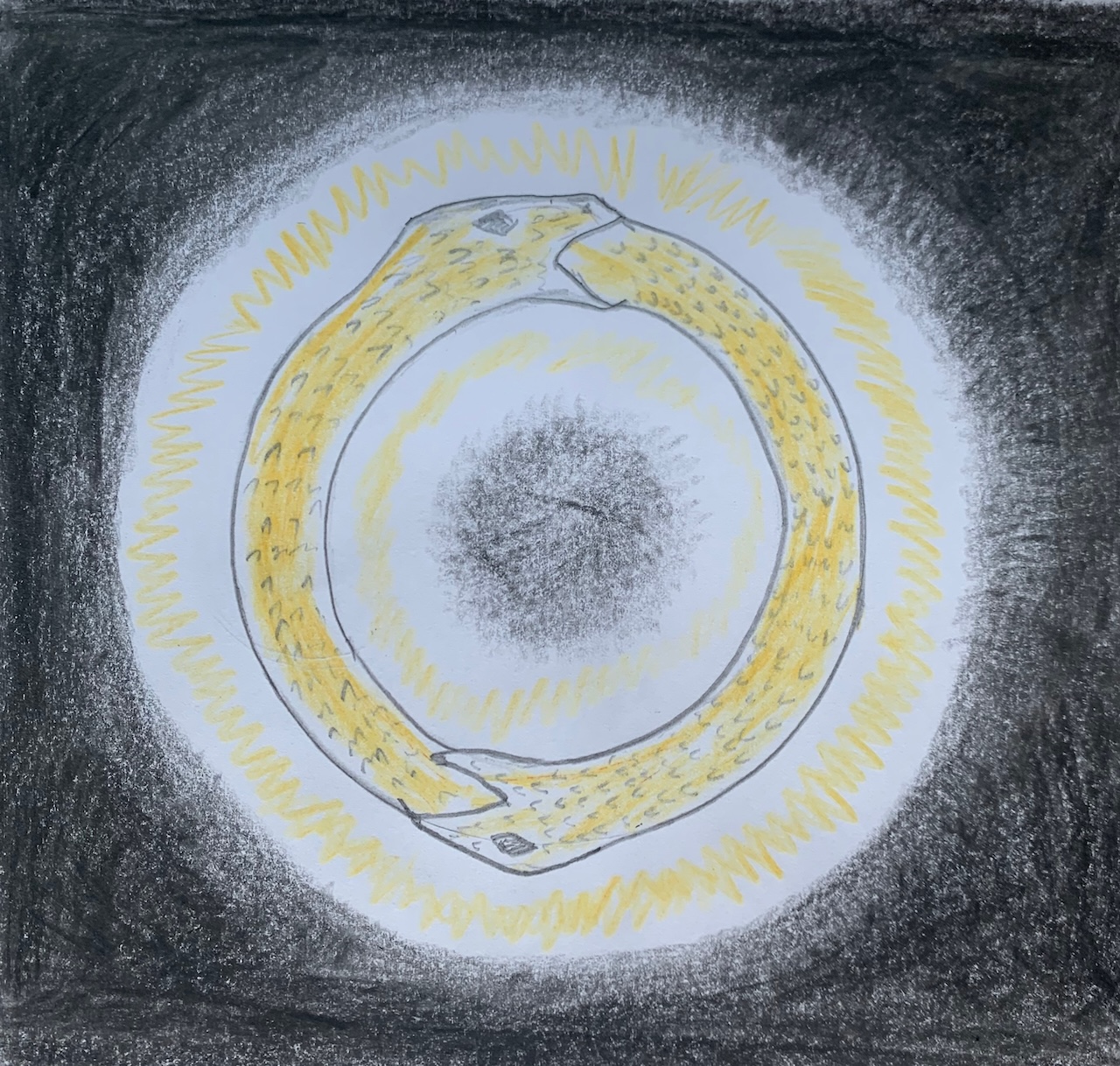
Gwyn also gave me a symbol to represent the King of Annwn Cycle – His golden ring with two serpents biting one another’s tails. This double ouroboros has meaning for me on many levels. Driving the cosmic cycle are the battles between the red and white serpents, between Gwyn and Gwythyr, and this also represents how patron and devotee, the Gods and humanity, feed upon and nourish one another.

In response to this and to other inspirations I have updated my Patreon tiers to reflect that I am able to give more and thus perhaps to ask for a little more in return.

~

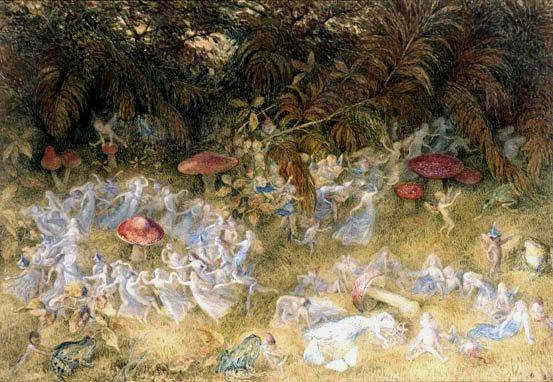
£1 Fairy Ring

You will have access to a quarterly patron only online Q & A session and discussion on Annuvian / Faerie lore and exploring Annwn and building relationships with its Gods and spirits.

£2.50 News from Sister Patience

You will receive the aforementioned and my quarterly newsletter on the equinoxes and solstices in which I will share news about my life as a polytheist nun through the seasons.

£4 Visions from the Mist

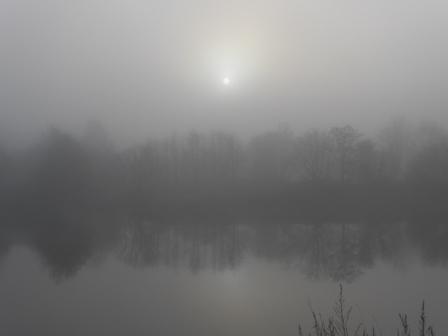
You will receive the aforementioned and fortnightly patron only posts where I will share visions and experiences from journeys and spirit work which I will not be sharing in public.

£7 King of Annwn Cycle Excerpts

You will receive the aforementioned and monthly patron only excerpts from my King of Annwn Cycle.

£10 Winter Gifts

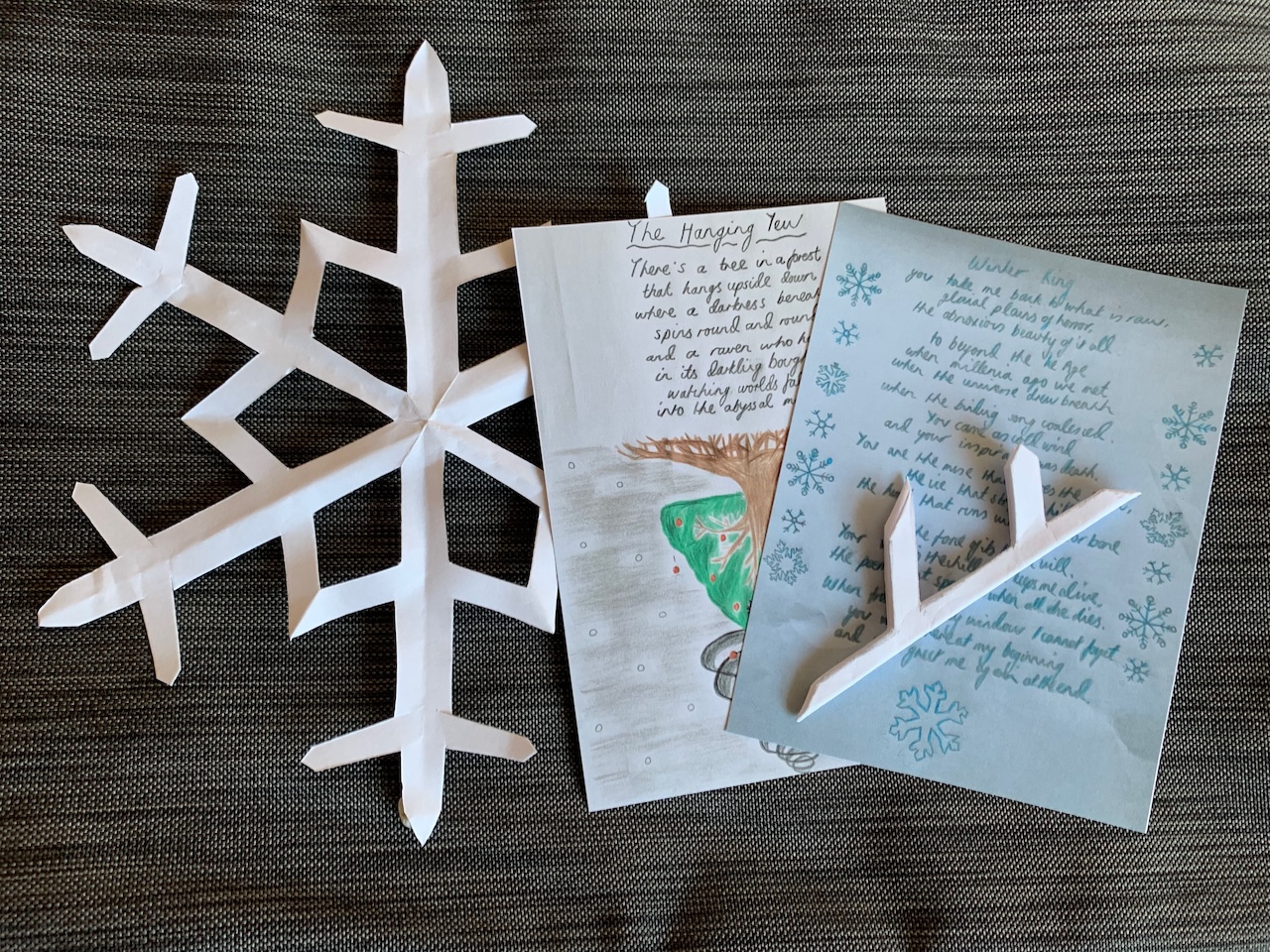
You will receive the aforementioned and winter gifts in the post at the Winter Solstice which will include illustrated poetry, drawings, and print outs of my best work.

£12 Annuvian Butterflies

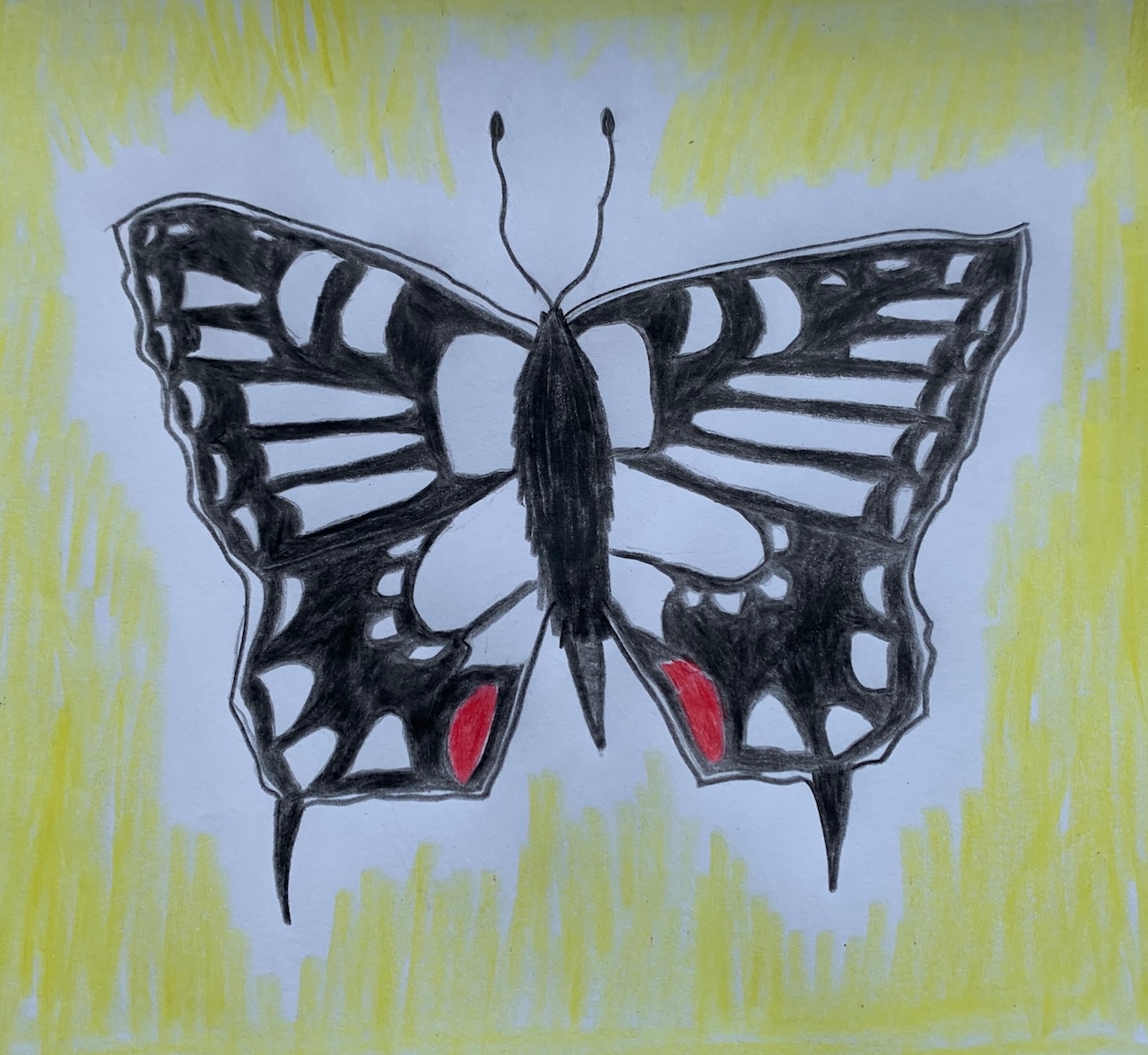
You will receive the aforementioned and up to four 30 minute soul guidance sessions per year which can include divination and explorations of Annwn, its Deities, and the lore.

£15 Mythic Books

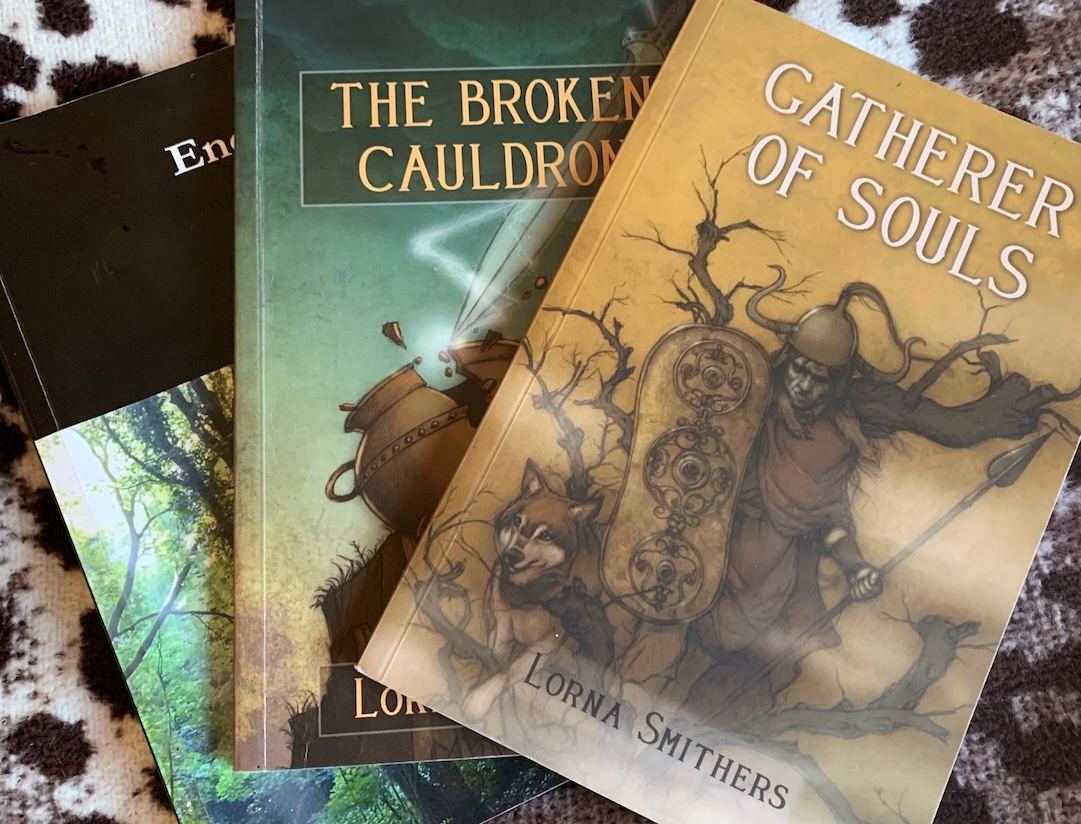
You will receive the aforementioned, free PDFs of my existing books on joining, your name in my future books and free print and digital copies when they are published.

You can join my Patreon HERE.

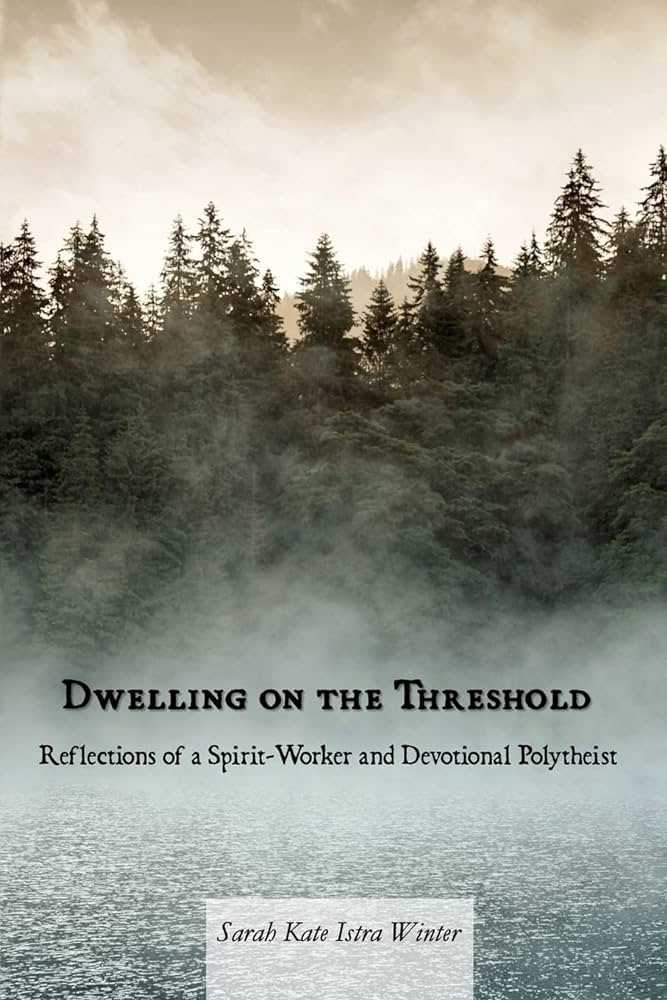
Review – Dwelling on the Threshold: Reflections of a Spirit-Worker and Devotional Polytheist by Sara Kate Istra Winter

This book was published in 2012. When I first read it in 2015 I was delighted to find a kindred spirit who shared my deep devotion to the Gods and practices as a spiritworker, albeit in the Hellenic rather than the Brythonic tradition.

It is a collection of essays covering diverse topics from relationships with Deities, land spirits and personal spirits to practices such as oracular trance and possession and the use of entheogens. As the author states, it ‘isn’t geared towards beginners’ but is a record of ‘thoughts and experiences’ that serve to ‘inspire and stimulate’ ‘anyone on a devotional and / or spirit-work path’.

In the introduction Winter notes the term ‘spirit-worker’ is recent and is ‘not well defined. But it generally indicates a polytheist and / or animist who serves the gods and spirits directly in some capacity, and with a level of intensity and devotion above the average worshipper… They might serve a community, but unlike a a shaman they don’t necessarily have to. A spirit-worker traverses the road between humans and gods, between this world and the otherworlds, and they do this because they must, because they are called to, and because it is quite literally their work in life.’

She says, ‘devotional polytheist’ ‘was coined partly as a counterpoint to strict reconstructionism’. The differences lies in placing ‘a high level of importance on personal and direct experience of the holy powers’ and the devotional practices of ‘prayer, ritual, offerings etc’ whilst remaining respectful of the historical sources rather than attempting to reconstruct past traditions.

The rest of the essays form an exploration of these ‘twin paths’. A piece that particularly still resonates is ‘Mysticism as Vocation in Modern Paganism’. Here Winter rails against the view not only of secular society but ‘the majority of pagans’ that ‘spiritual vocation’ ‘is a luxury to be fitted around daily life’. Why cannot ‘home, family and career’ ‘be fitted around spiritual vocation?’ With no state support for Pagan religious vocations here in the UK those of us who share such a calling are left with a constant struggle to balance the need for financial security with fulfilling our calling from the Gods and spirits.

Those who follow Winter / Dver’s blog ‘A Forest Door’ will know she writes beautifully about her relationship with lands spirits. Here, too, she describes her practice, traversing her ritual landscape, carrying a ‘beeswax taper’ ‘like a ritual torch’, following crow feathers, making offerings of ‘mandrake root’, ‘an old and crackled coyote’s tooth’, ‘fly agaric’, for a local land spirit.

In ‘Evolving Patron Relationships’ and ‘Two Decades with Dionysos’ Winter talks about how He crept into her life ‘in bits and pieces’ with poetry, red wine, the Doors and how she became a Hellenic Polytheist and served her God ‘in the community at large’ before seeming to withdraw in order to lead her elsewhere – into ‘entanglement’ with the spirits. She prompts the reader to ‘recognise the possibility that a patron relationship might end’ or one might find it ‘evolves in a new unexpected directions’ ‘to where you needed to be all along’. I cannot imagine my relationship with Gwyn ap Nudd ending but do appreciate the warning of that potential and for unexpected change.

‘The Gods Are Real and Trance Isn’t Just Visualisation’ is important in stating that argument in relation to the writings of Diana Paxon and others who fail to point out the difference between ‘visualising a pre-set series of events’ and ‘actually meeting the gods and spirits in a foreign land’.

Of immense value are the pieces documenting Winter’s reconstruction of her oracular practice for Apollon based on the traditions at Delphi. Winter visited Delphi in 2003 and performed ritual and ceremony and a night long vigil. She was later inspired to take up the practices of the Pythiai after seeing similarities between her landscape of Cascadia and that of Delphi. This inspired a pilgrimage to the source of her local headwaters and to setting up her own adyton andtaking to the tripod on the seventh day of the month. In ‘On the Tripod’ she describes emptying herself to receive Appollon’s words.

‘Lord Apollon,
enter into this place
made only for Your entry
and no other’s.

I have emptied out my skull,
and await your voice to fill it.’

Eight years on I have found this book to be packed with wise words and inspiration and to be incredibly relatable as someone still walking the ‘twin paths’ of devotional polytheism and spirit-work as a polytheistic monastic. I would recommend it as a core resource for anyone wanting to learn more about these paths or delve more deeply into the issues that confront modern practitioners and the struggles and joys of building sacred relationships.

The Challenges of Taking a Polytheistic Monastic Name

In the mainstream religions it is traditional for monastics to take a monastic name when they are ordained into a monastery on taking their vows.

When Christians monks and nuns take temporary vows they take a new name. This must be the name of a saint, monastic or Old Testament figure. The name is preceded by ‘brother’ or ‘sister’ as they see each other as family. For example Brother David, Sister Mary, Brother John. Three choices are handed to the Abbot who makes the final decision on the name.

Buddhist monastics are given a Dharma name, usually by the head of the monastery or by their teacher, and may have several different names during a lifetime. For example Shinran’s first name was Matsuwakamaru and his other monastic names were Hanen, Shakku, Zenshin, Gutoku Shinran and Kenshin Daeshi.

In Hindiusm monastics also take a new name when initiated by a guru. For example Paramahansa Yogananda was born Mukunda Lal Ghosh.

When a monastic name is taken it symbolises giving up one’s old identity, wealth and ties with family and friends to enter the community of the monastery. One’s secular life is renounced for a religious life.

*

Modern Polytheism began to emerge in the 1960s and to grow in the 1990s. Polytheistic monasticism has developed more recently with the first book, Polytheistic Monasticism: Voices from the Pagan Cloisters, published in 2022. It has precedents in Pagan and Druidic monasticism.

The only physical Pagan monastery in existence is the Matreum of Cybele. Online Druidic monastic organisations include the Order of the Sacred Nemeton and Gnostic Celtic Church Monastery. Unfortunately I couldn’t find any information on their websites about whether monastics are required to take a monastic name or if they renounce their former life in any way.

In Paganism, more widely, it is common to take a craft name or magical name. This can be chosen through contemplating which animals, herbs, myths and Deities one has an affinity with or can be gifted by the Gods and spirits. Some well known examples are Greywolf, Starhawk, Bobcat, Robin Herne and Nimue Brown. This is used in the Pagan community and does not involve changing one’s identity and ties with secular sociey in which one’s regular name is retained.

*

I am a Brythonic Polytheist and received my monastic name from my patron God, Gwyn ap Nudd, before I took vows as a nun. It started as a joke. Lockdown reawakened my longings for a monastic life. I’m an incredibly impatient person and, when I was being impatient with the weeds, Gwyn chided me, “Sister Patience.” I took it as a challenge, telling him “I will become Sister Patience.” It was a self-fulfilling prophecy for three years later I founded the Monastery of Annwn and took vows by that name.

For me the shift in name and identity from Lorna Smithers to Sister Patience has been a gradual one. I first started using my monastic name in the monastery only, then, as I began to change and grow to own it, I renamed my blog ‘The Cell of Sister Patience’ using it more widely in online spaces.

In February 2024 I was faced with the decision of whether to return to a regular job, which would have meant staying as Lorna Smithers and likely returning to old habits like shopping and drinking due to the stress and having more money, or to fully commit to a monastic life as Sister Patience.

My ability to choose the latter was made possible by mum offering to support me financially if my savings run out before I have found a way of supporting myself through a combination of writing and spiritual work.

This gave me the security to take the step of using my monastic name in all my communities, keeping my birth name only for financial and legal purposes.

It hasn’t been an easy process. Everyone who knows me knows I’m very impatient, thus Sister Patience would be the last name they would call me. My mum’s first reaction was, “I’m not calling you that!” before I explained. She still keeps calling me Lorna or, bizarrely, Beatrice, but is getting better. My dad won’t use it. My uncle on my mum’s side and his partner have been accepting. Most of my friends and the horticultural groups I volunteer with along with my personal trainer at the gym have been supportive. 

As a polytheistic monastic without a physical monastery it is impossible for me to make the break with the secular world made by other monastics. Ethically I am currently unable to make such a break as my eldery parents are dependent on me for support around the house and in the garden. 

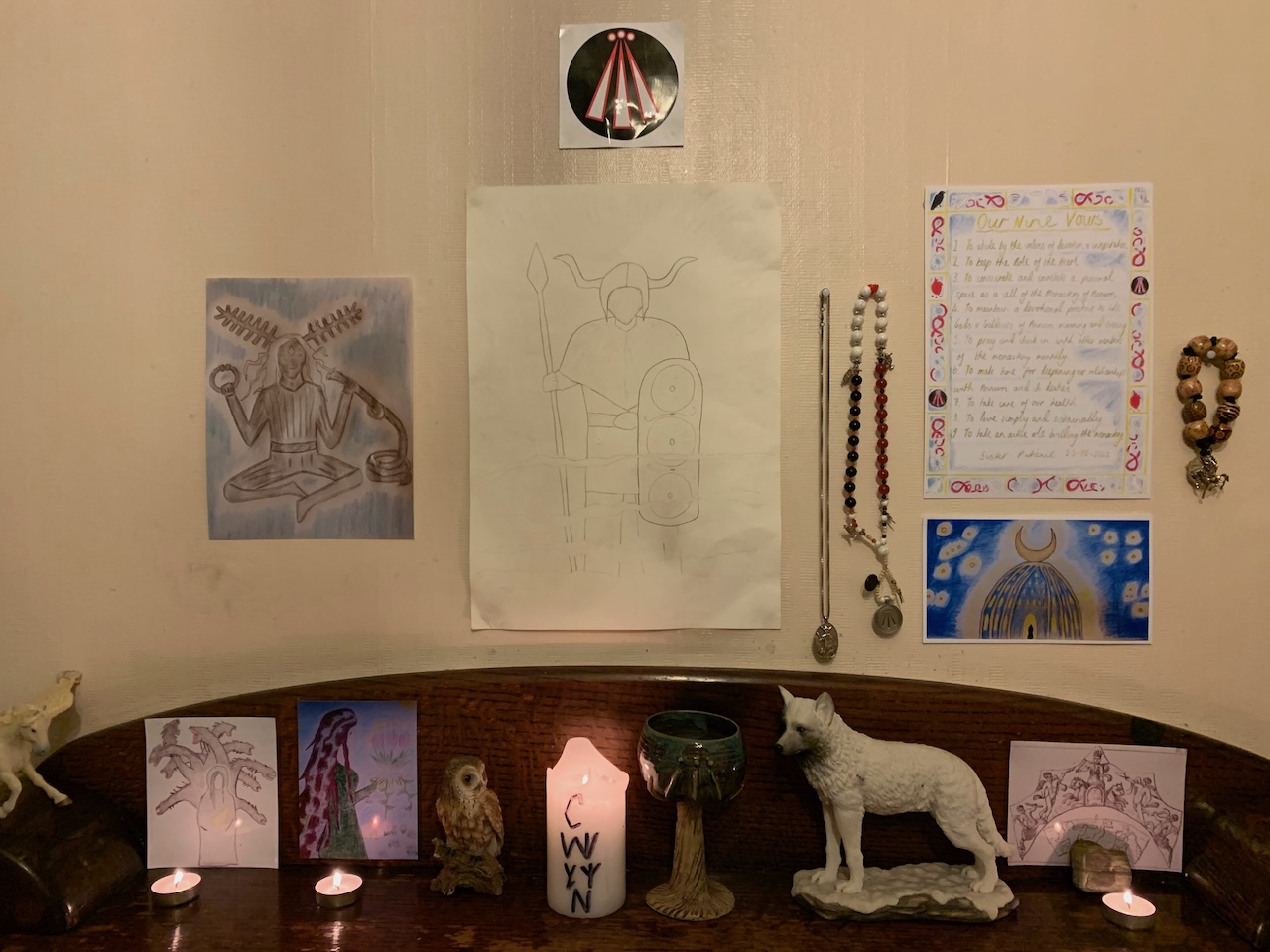
Instead I strive to live as monastically as I can considering my circumstances. I serve my Gods through my spiritual practices and creativity and treat my room as a monastic cell and my home and garden as a monastery. My engagement with the wider world is limited to occassionally seeing friends for a walk and / or a brew and to attending spiritual groups. I don’t use social media and limit my online time to engaging with others for spiritual discussions and research for my writing along with learning yoga.

Taking a monastic name hasn’t changed how I am around people. I’m not putting on airs and graces. I’m not pretending to be something I’m not. I still swear. I still get angry. I still get impatient. But, looking back, not quite so much. There is power in taking a name and perhaps, one day, I will live up to it.