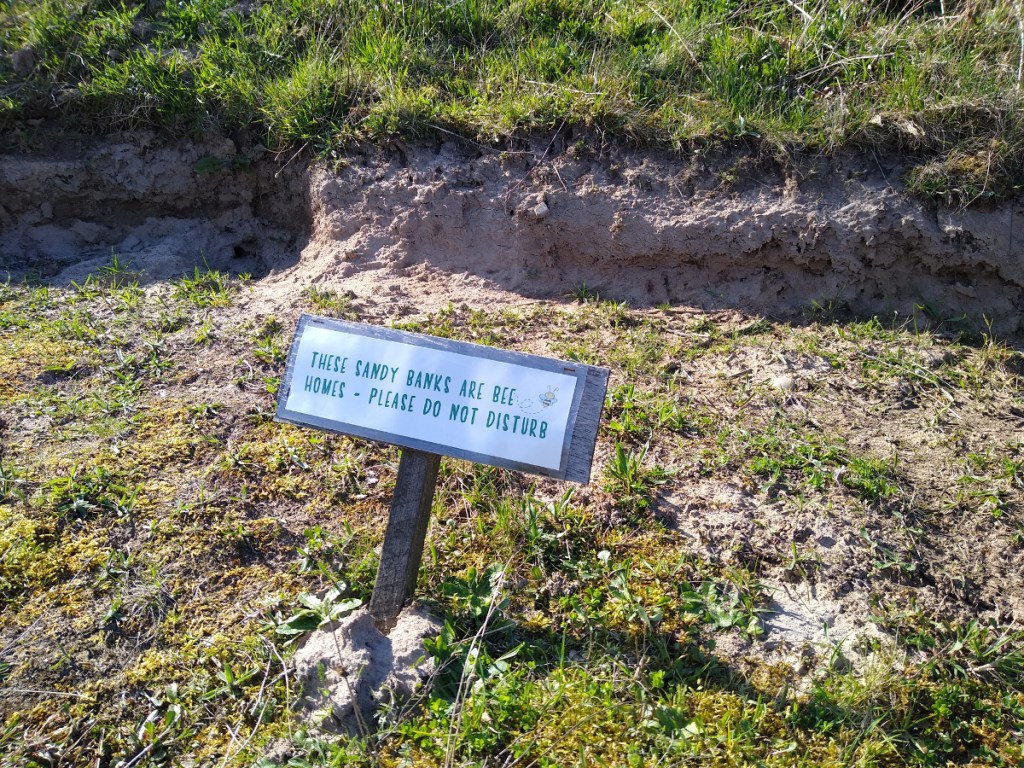
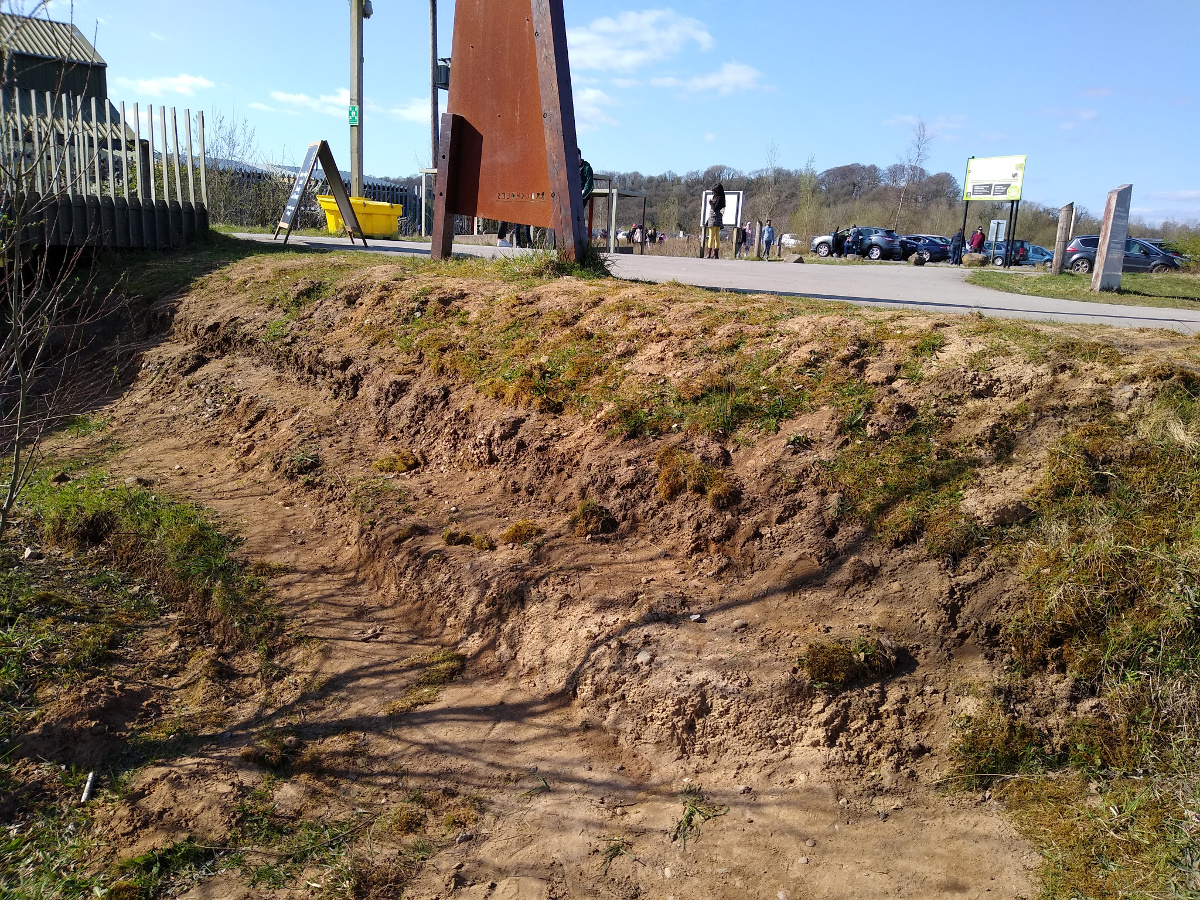
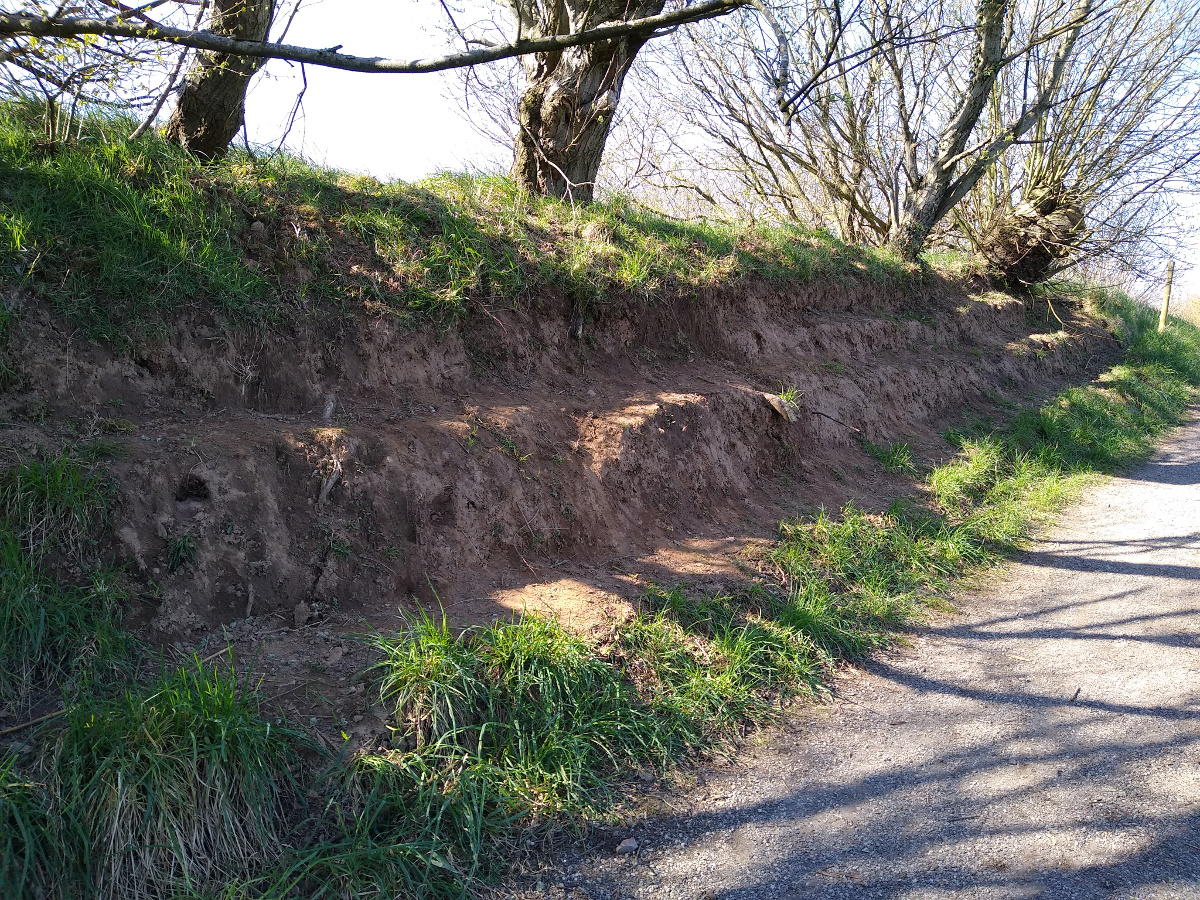
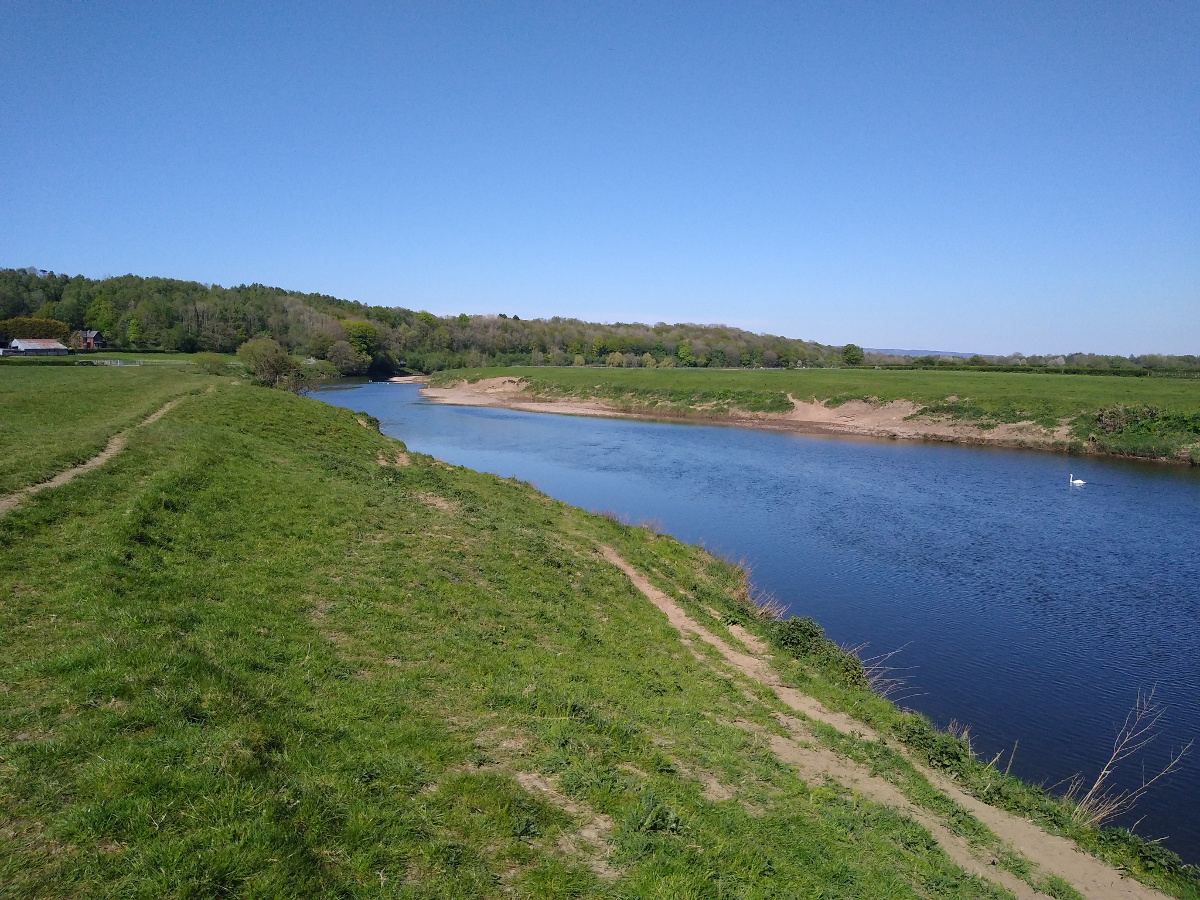
One of my tasks as a conservation intern at Brockholes Nature Reserve over the winter was helping to clear the vegetation from the sandy banks, which are used as nesting sites by mining bees. Brockholes is next to the river Ribble, whose shifts of course since its valley was carved by a glacier during the Ice Age, have laid down sandy deposits (although most of the sand and gravel was quarried over a decade ago some remains).
These sandy banks are the perfect homes for mining bees (Andrena species). It is little known that, in Britain, of over 270 species of bee, there is only one species of honey bee, 24 species of bumblebee and around 250 species of solitary bees. 65 of the latter are mining bees. They make homes for their young in soil, sand, or clay, and can be found on river banks, road and railway embankments, cliff faces, garden lawns, allotments, open woodlands, and moorlands.
During their brief life-span of four to six weeks, in spring and summer, female mining bees gather pollen on their hind legs and take it to where they have excavated their nests. They dig a tunnel to a chamber, add pollen to strengthen the walls, lay an egg, seal it shut, and move on to the next. Once laying is complete they perish. The only function of the males is to mate with the females, after which they die. The larvae over-winter in the chambers and emerge in the spring to restart the cycle.
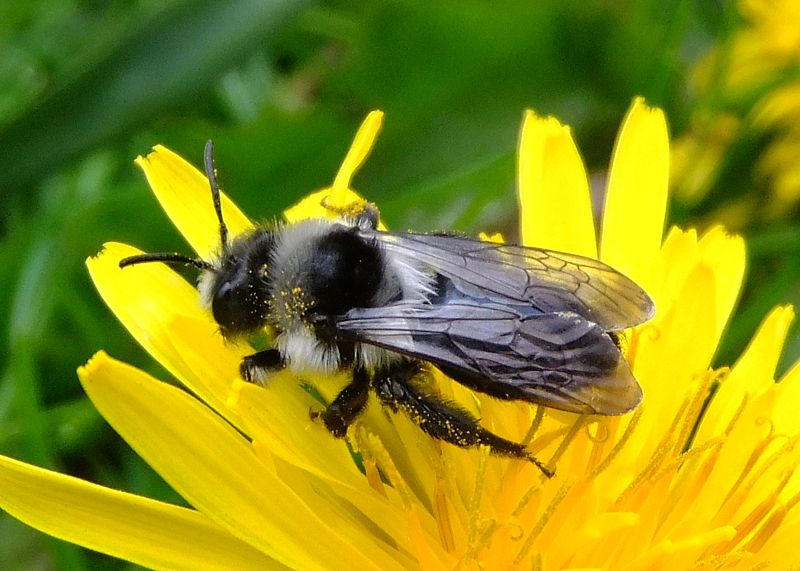
One of the most common species is the ashy mining bee (Andrena cineraria). TheLatin term cinerarius means‘of ashes’ and refers to the broad ash grey bands on the thorax of the female who is otherwise black. It flies from April to August and is an important pollinator of fruit trees.
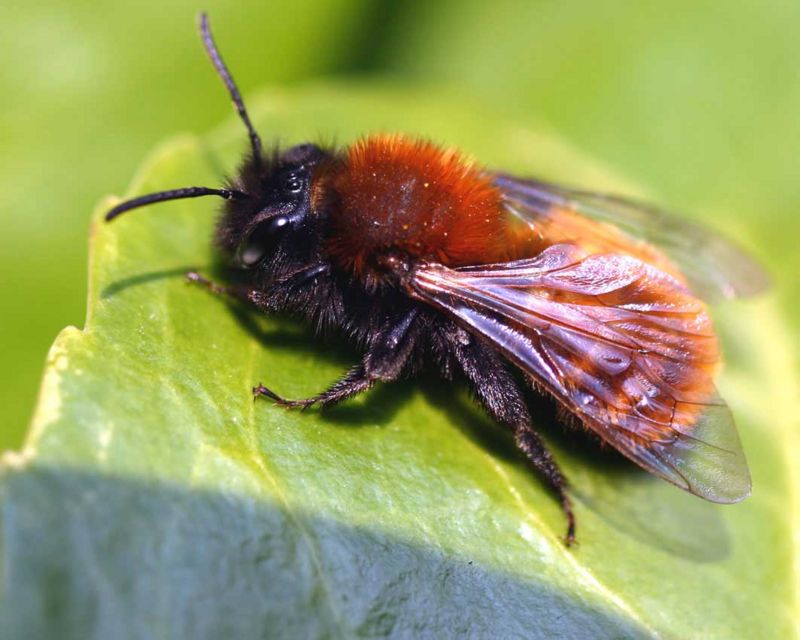
Another is the tawny mining bee (Andrena fulva). The female has bright red hairs on her thorax. It flies from March to June and feeds on a variety of nectar-producing and pollen-bearing plants and trees.
The early mining bee (Andrena haemorhhoa) is named for the blood-red tip on its abdomen and red hairs on its thorax and flies from April to July. One of the defining behaviours of the wool carder bee (Anthidium maculatum) is collecting hairs from plants for its nest. The small sallow mining bee (Andrena praecox) is a sallow specialist. There are many more species of these intriguing bees.
Learning about mining bees and their favoured habitat in sandy banks has led me to contemplate how I have long intuited a connection between Belisama, ‘Shining One’, the goddess of the Ribble, and bees. At first I thought this was because she is connected with light and sunshine and the coming of spring and summer, when bees emerge and take flight, but now I see she has a particular connection with mining bees who build their homes on the Ribble’s banks and sandy banks left by the river.
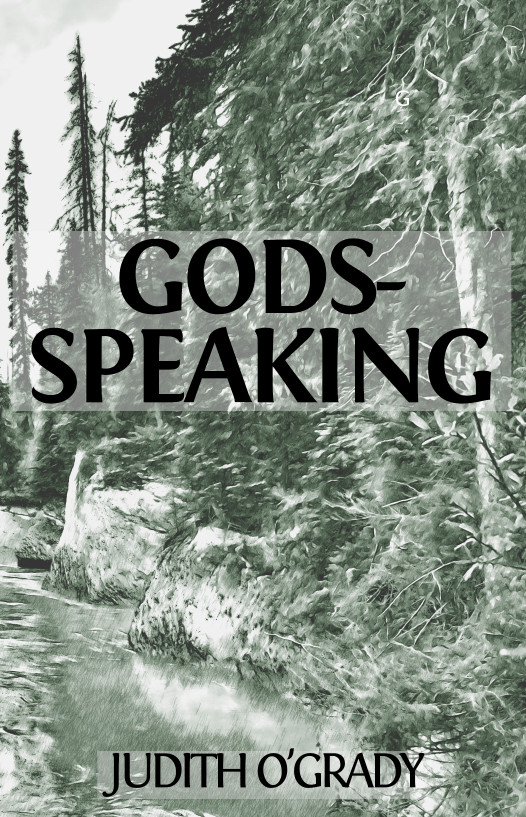
Gods-Speaking is by Judith O’Grady, an elderly druid and biologist who had a career in veterinary medicine and lived on a tiny urban farm in Ottawa, Canada. She sadly passed away in December 2020.
Judith, like myself, was one of the long-standing writers for Gods & Radicals and I felt a kinship with her as somebody who honoured the old gods and had a deep relationship with the land and its spirits, upheld not only in ritual but in action such as going out and litter picking and planting trees. It is with regret I write this review after her passing. I hope, somehow, my words may still reach her.
In the first section of this readable little book Judith outlines what it means to be a ‘God-Speaker’. She relates this word, which she coined herself, to the better-known terms ‘visionary’, ‘seer’, and ‘mystic’ and says this is about ‘the belief in the Gods that I believe that are speaking to me, the belief that They can and do speak to me, and the belief that our communication has some purpose’.
Judith describes the ‘process of God-Speaking’ as ‘two-way communication’ and also refers to it as ‘Gods-Bothered’ as ‘the Gods don’t enter communication with us to pat us on the back or congratulate us on a job well done, but instead to give us difficult tasks and teach us unpleasant truths.’
She speaks of how most societies ‘have a place for the person who troubles hirself to speak with the Gods and whom They trouble in return’ and notes most Gods-Bothered people are segregated in some way, for example, in ‘the detached dwelling of the shaman’, ‘the hut of the hermit’ and ‘the monastery’. This draws to attention the lack of a place for the God-Speaker outside traditional religions.
She outlines some of the problems faced by the Gods-Bothered, one of the most common, for those who see visions and hear voices, being walking the fine line between being a seer and being crazy. This is distinguished by the ability to use discernment and free choice in accepting advice from the gods for the better of themselves and their communities rather than engaging in destructive behaviour.
One of the helpful analogies she uses is the ‘crazy train’ – it is always possible to ‘get off at “ask a question junction” or “find a guide halt” and refuse to descend to “the platform of destructive thinking”’.
Judith outlines how her conception of how God-Speaking relates to biology. ‘Imaging technology’ shows that when a person is having a mystical experience ‘a tiny part of the brain’ ‘lights up’. She calls this the ‘God-Speaker’ and suggests there is an evolutionary purpose to speaking with the Gods.
As an awenydd, an ‘inspired one’ or ‘seer’ in the Brythonic tradition, I found this section insightful and relatable and imagine anyone who speaks with or has been spoken to by the gods would also relate.
In the second section Judith speaks of her personal experiences with the gods and spirits of the land. As someone with an important relationship with my local river goddess and her ‘daughters’ (my local streams), I empathised strongly with Judith’s account of getting to know the spirit of her creek, Pinecrest Creek, which is piped from near her home, under a bus transitway and shopping centre, into a Parkway, then ‘comes out into a pool to flow for a brief free stretch before flowing into the Ottawa river.’
Judith provides an account of how her Druid Grove came to honour the Spirit of the Creek by collecting water and using it as an offering in ritual and by litter picking. Her vision of this spirit, who they came to know as Sionnach Du ‘Black Fox’ stood out to me as vivid and very real.
‘Ze steps out from the shadows, taking the form of an urbanized wild creature, a fox, to personify to me. But it was a humanoid-shaped being, apart from the fox face, and dressed in dark colours, black, and heavily cloaked as befitting a land spirit largely confined to sewer pipes and storm drains. Androgynous…’
Judith speaks of how the spirits of the grove, Black Fox Watershed, Singing Memory Frog, the ghost of large Snapping Turtle and the dragons, were slowly and organically gathered. I related to this way of discovering gods and spirits within the land rather than calling them from outside.
Throughout the book Judith, who is clearly not only wise but well-read in philosophy, outlines her conception of the gods. She says that rather than being ‘friends’, ‘allies’, or ‘partners’ to ‘work with’ they are ‘timeless, wise, philosophical, powerful and motivated by a greater understanding and comprehension than I have access to.’ The come from ‘Gods-Land’ and speak ‘God-ish’ not English or any other language (it is a function of our human minds that translates their language into our own).
Most profoundly: ‘I do not think that my belief or the lack of belief of others affects the beings of place or the Gods; I believe that They are present whether believed in or not. They see us regardless of what we see when we look towards Them. Their world lies behind ours like a bright shadow of reality: the shadow does not reflect what we have built (or destroyed), but what might be.’
These are the words of a true God-Speaker, a seer, a wise woman in the modern Druidic tradition.
This book is essential reading for all who are new to God-Speaking, for in Judith you will find an older, wiser guide whose voice is filled with love of the land and the gods, rich in counsel and humour. It will also resonate with those who have been speaking with the gods for a long while. I would recommend it, too, to those who are curious about whether they can speak with the Gods (yes, you can – I believe, with Judith, this is a capacity we all have and can develop with practice) and to those who don’t want to try it, but would like to find out more from an experienced practitioner.
Gods-Speaking is available through Gods & Radicals Press HERE.
Farewell Little Woolden Moss. Farewell Great Manchester Wetlands – an end of contract and news of a failed job interview fall on the same day but I haven’t failed because we planted that last plant,
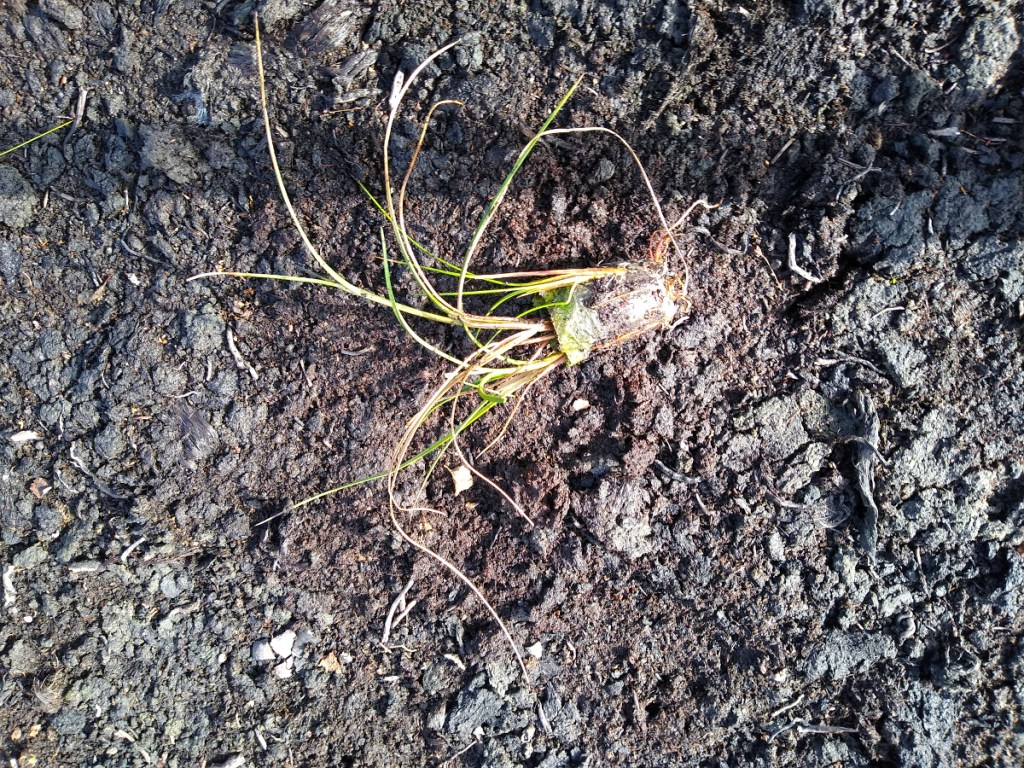
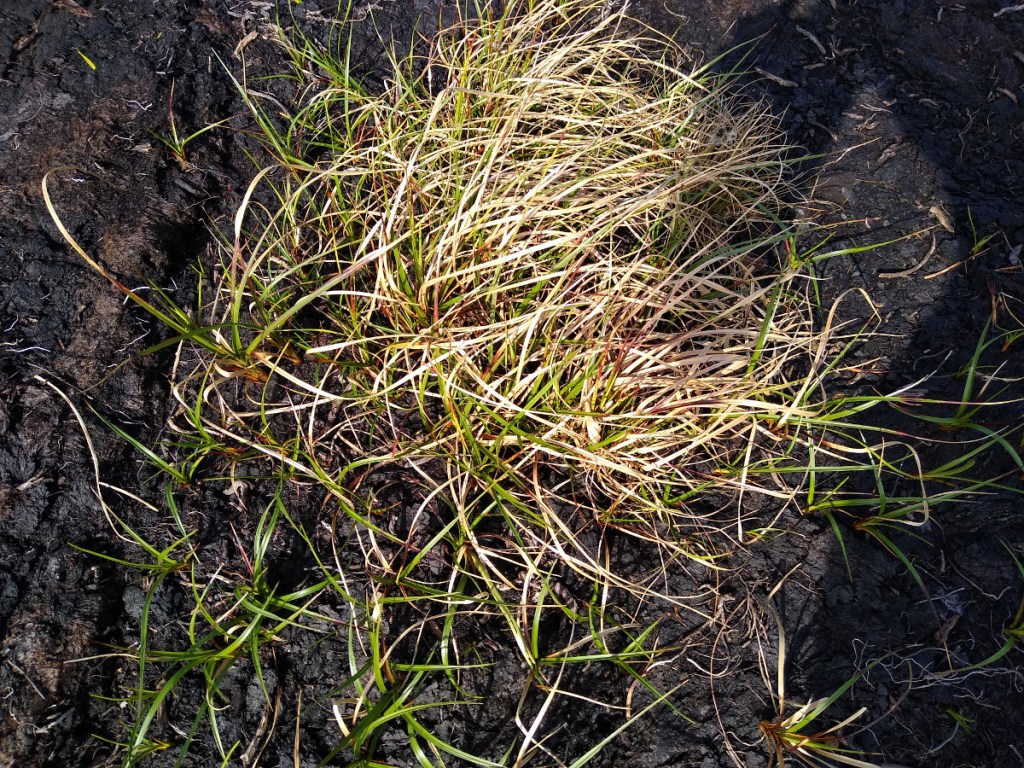
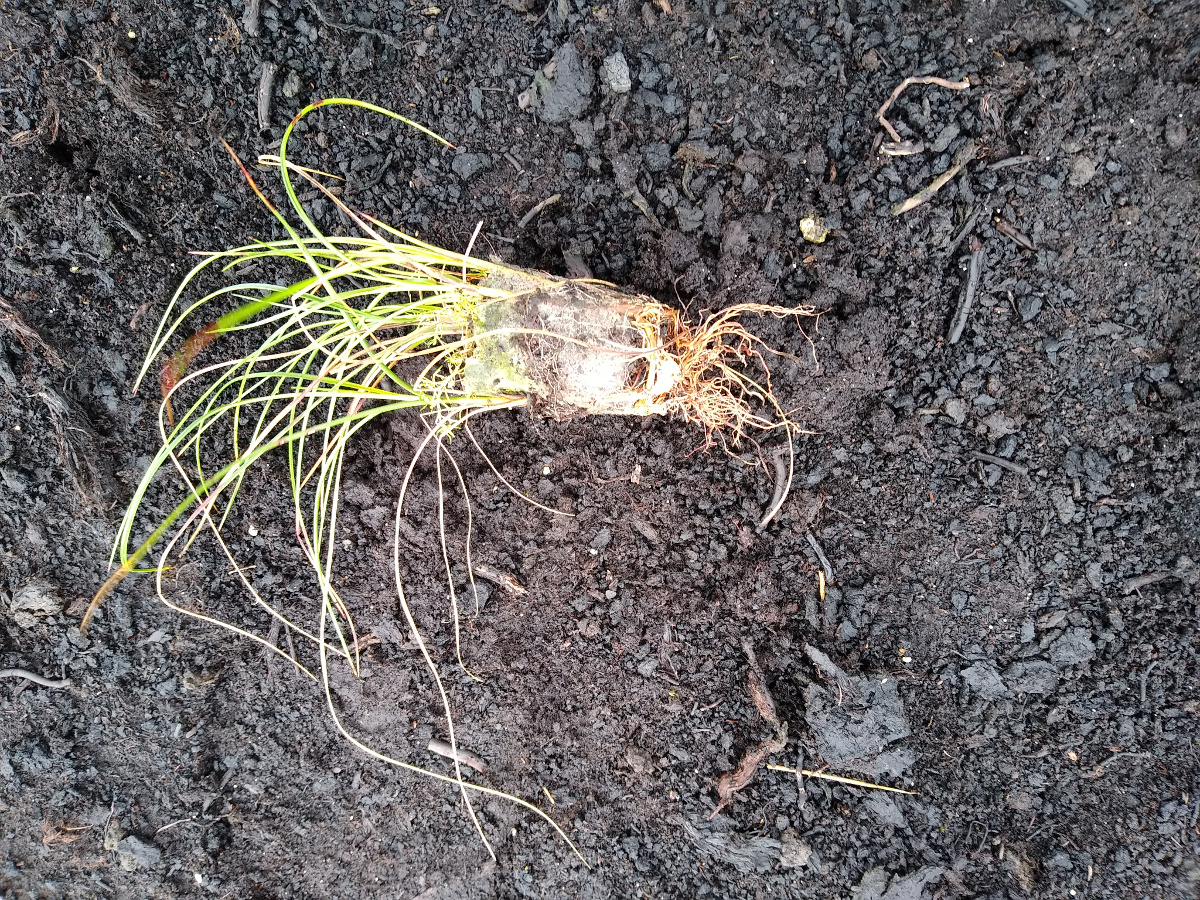
that last little plug plant of common cottongrass,
greening and rimmed with red like a sunset, ready to turn golden next month’s dawn.
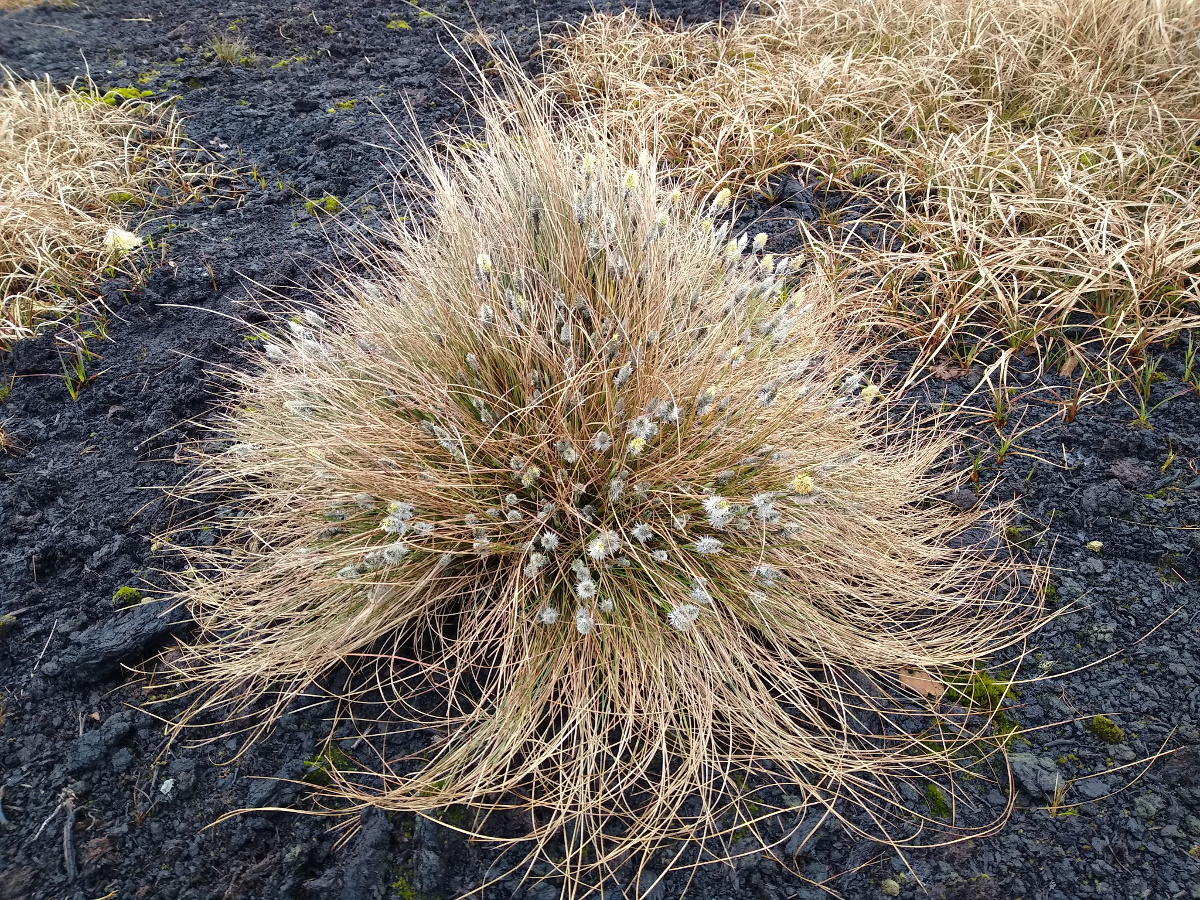
Farewell to hare’s tail cottongrass, tails showing like the tails of brown hares racing up and down the bunds like celebrities.
Farewell to all eleven species of sphagnum, bog rosemary, cross-leafed heath, long may you grow and prosper beauties.
Farewell to the oyster catchers who we saw back-to-back on the bund, reflected in the water, who cried weep weep in the air far from human tears.
Farewell to the lapwings in their black-and-white mating flight.
Farewell to the curlews with their cur-lee cur-lee-eee, to the four flying over with down-curved beaks.
Farewell to the skylarks keeping our spirits up and to the meadow pipits piping away.
Farewell to those I worked with now friends.
Farewell to the porter cabin and the fact we had a toilet.
Farewell to the journeys down the M6 (busy and contentious).
Farewell to a journey now complete – back home now I will wait, again, to hear the will of the gods…
~
This poem relates to the completion of the contract work I have been carrying out planting on Little Woolden Moss for the Lancashire Wildlife Trust and my failure, on interview, to gain the paid position of Great Manchester Wetlands Trainee.
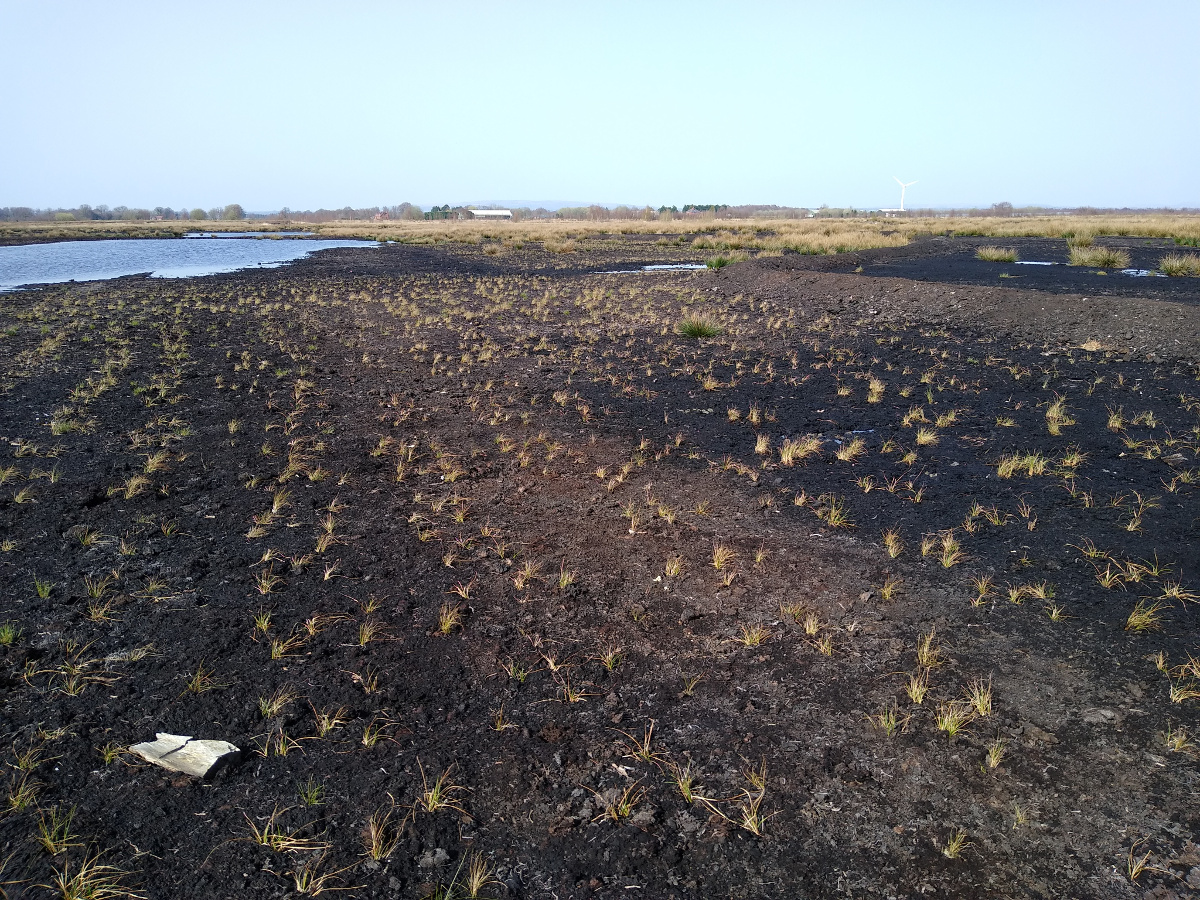
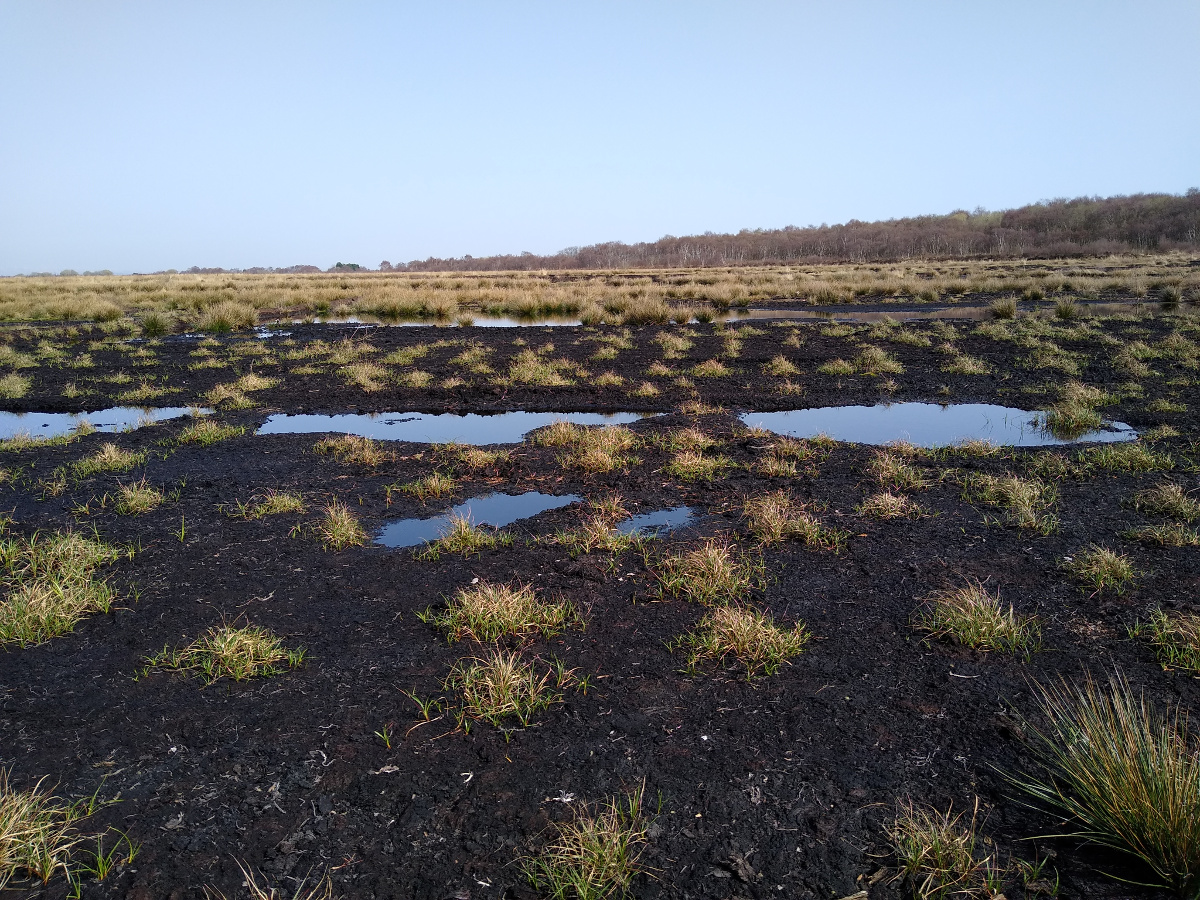
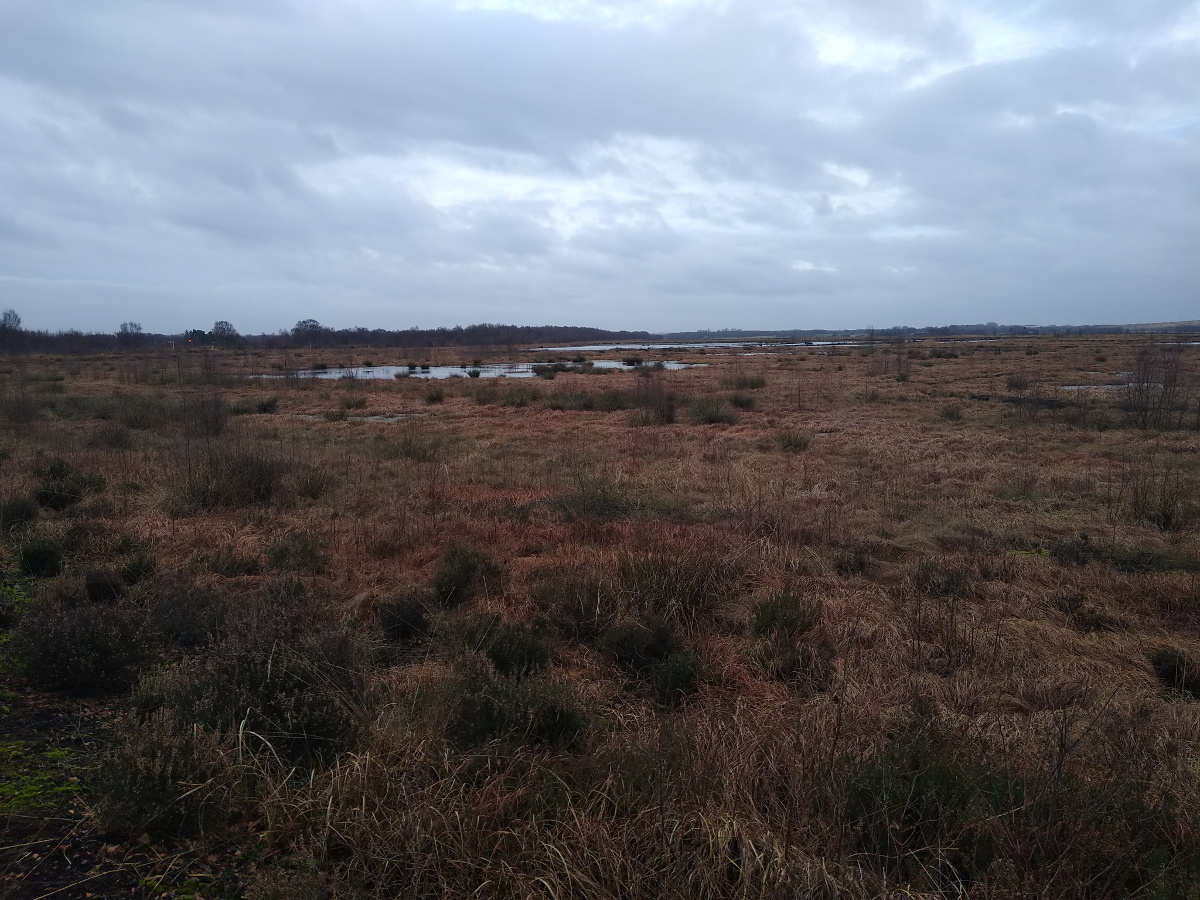
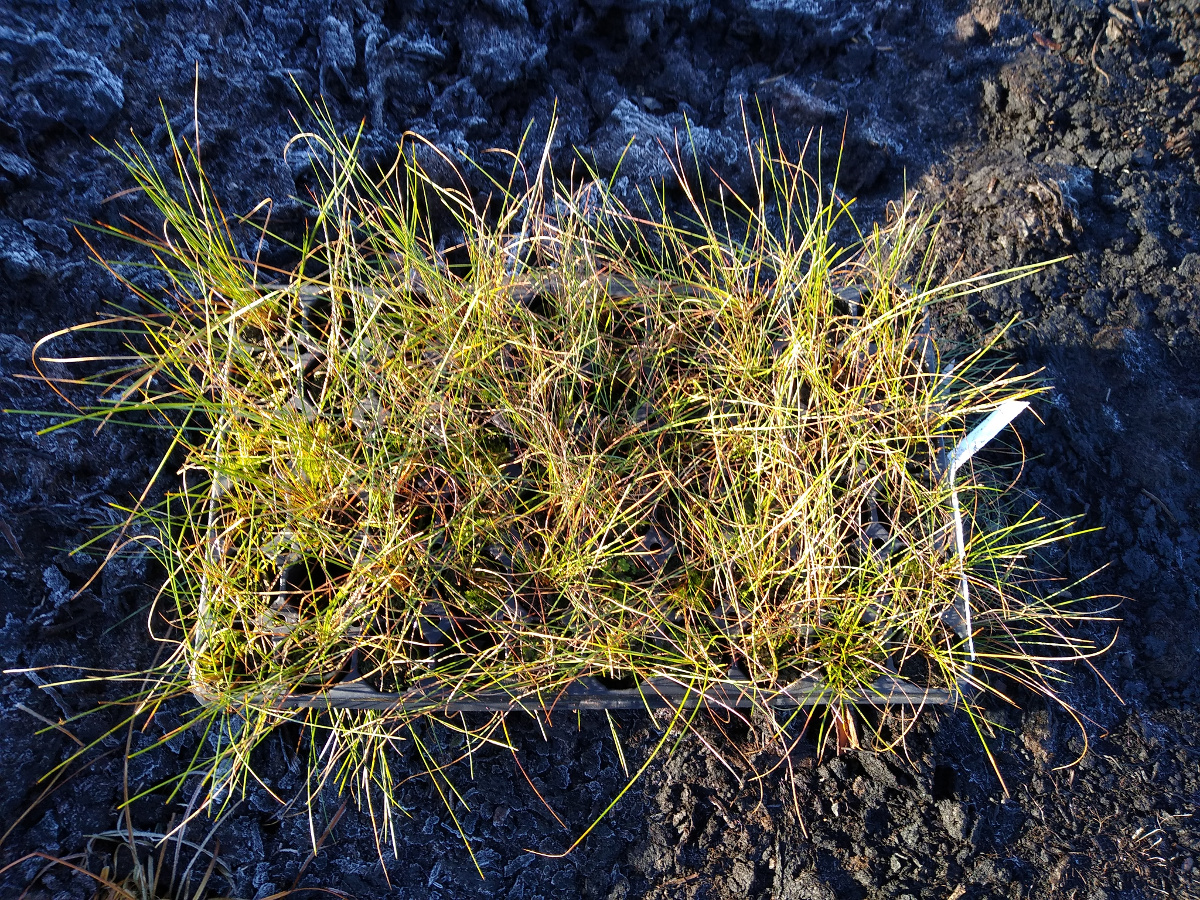
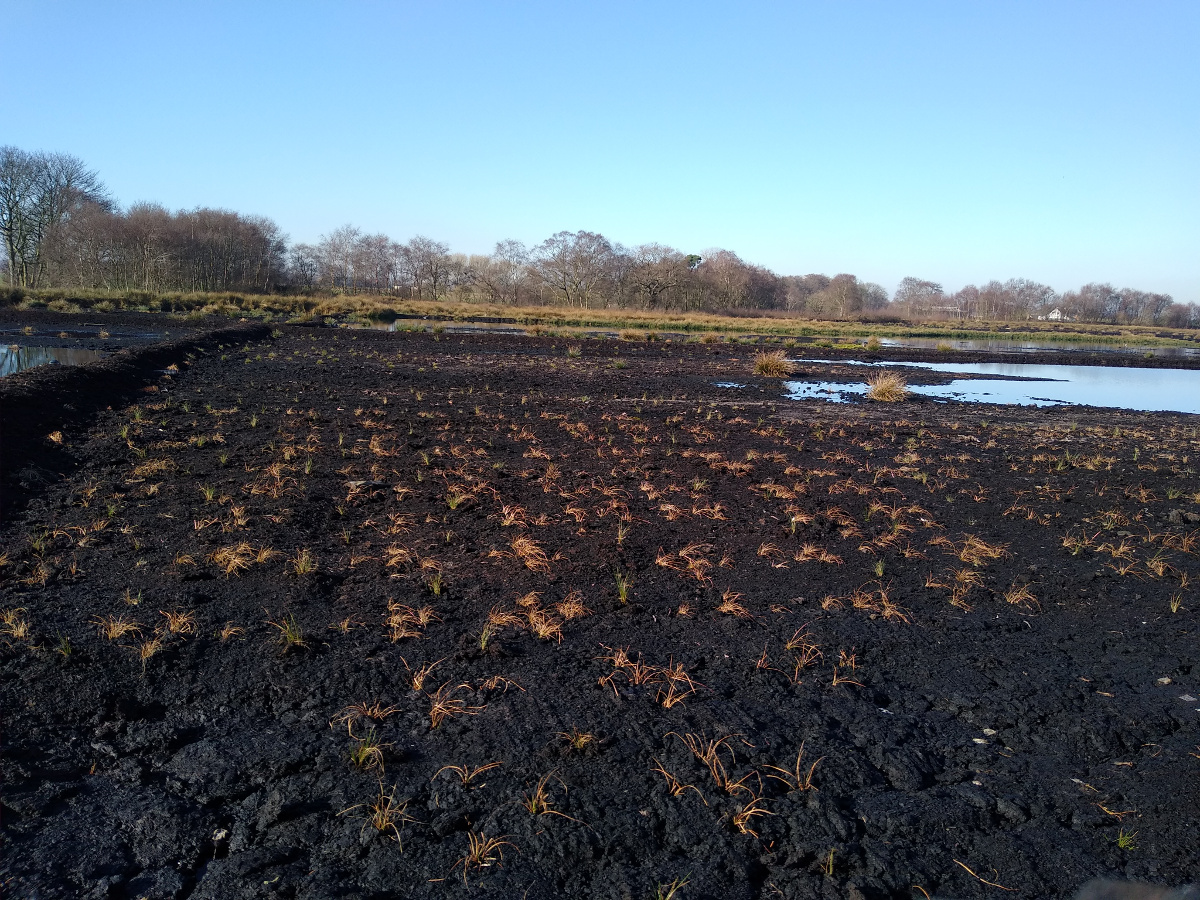
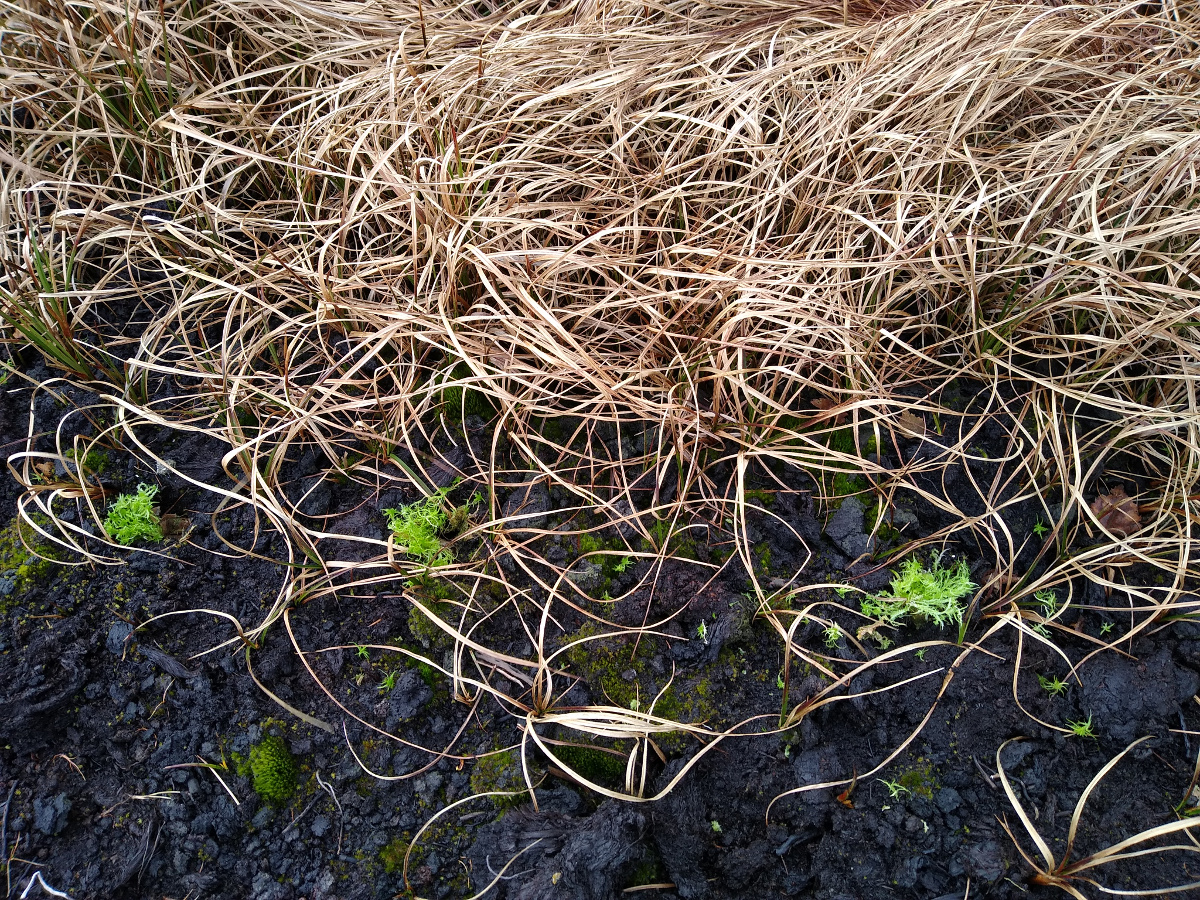
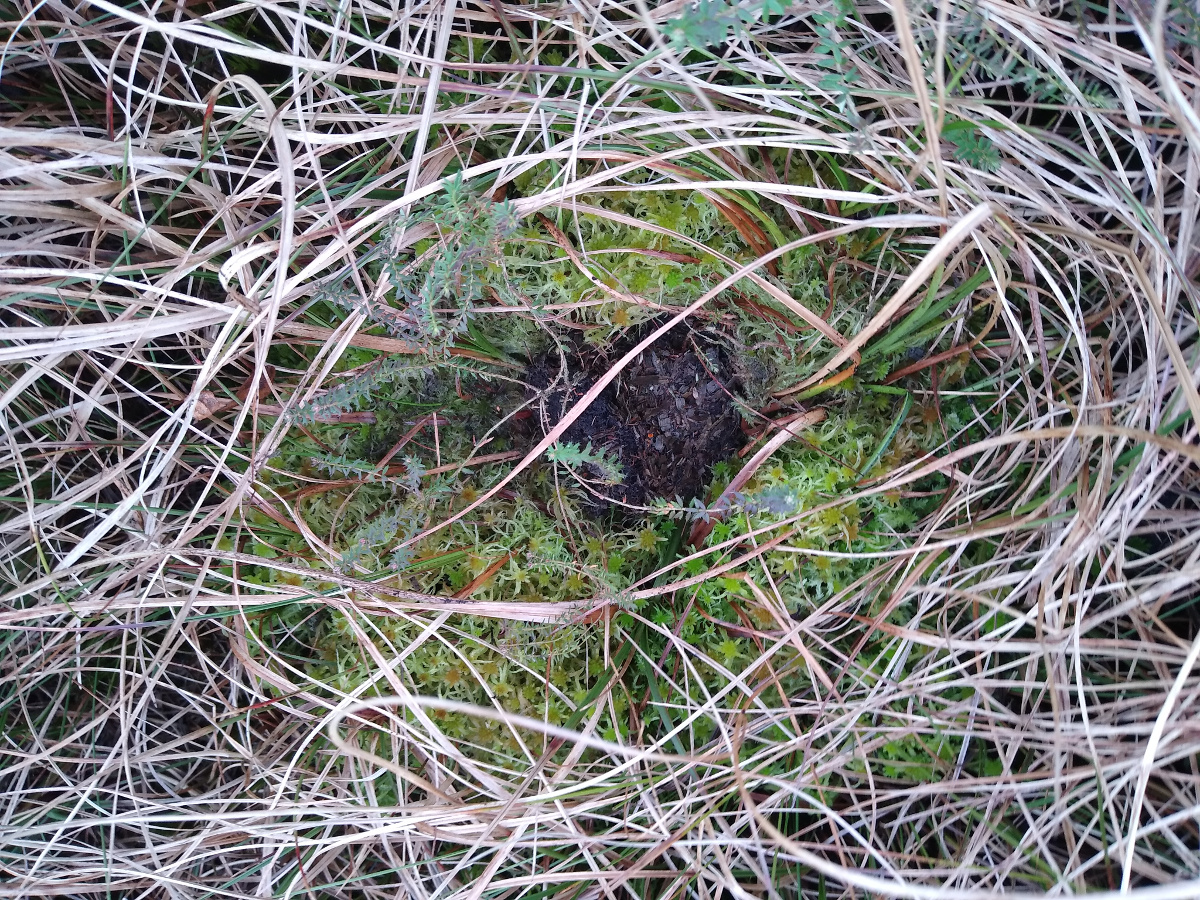
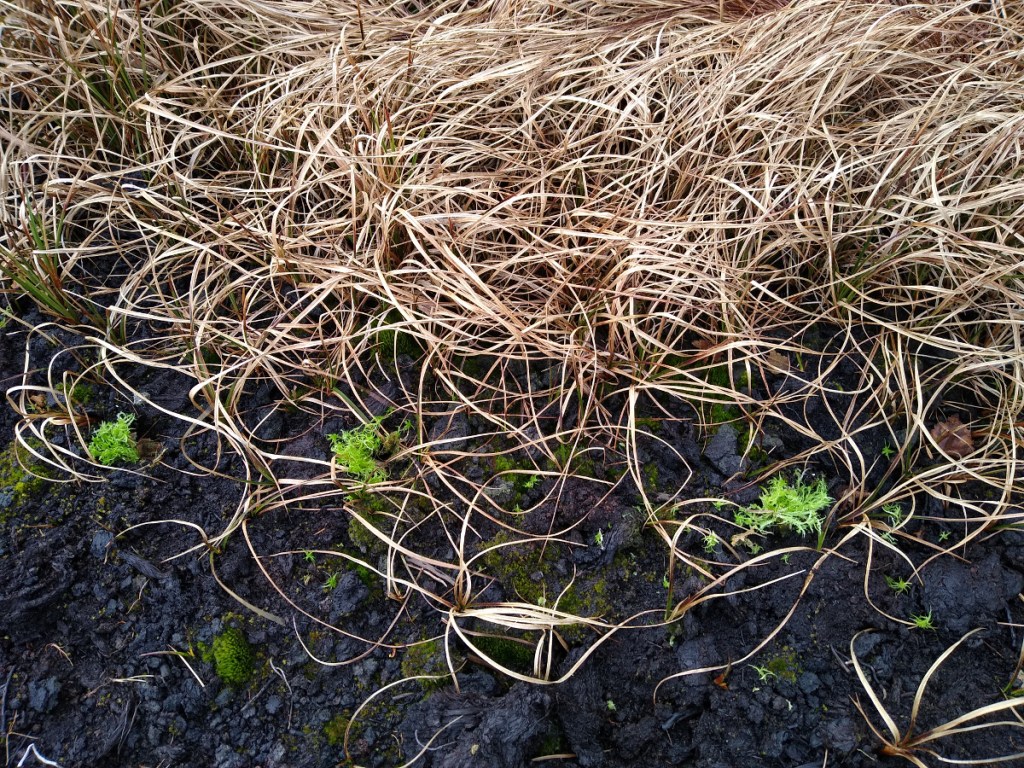
These photographs show the development of common cottongrass on a mossland over time.
I. The Roos Carr Figures – Voyagers to the Otherworld?
A few weeks ago, fellow awenydd Greg Hill drew my attention to the Roos Carr Figures HERE. These fascinating wooden warrior figurines, eight in total, their shields, and their serpent-headed boats were sealed in a wooden box and deposited in a boggy area (‘carr’ means ‘bog or fen covered with scrub’).
They were found in a layer of blue clay by labourers cleaning a ditch in 1836. Of the eight, only five remain (the fifth was returned after one of the labourers gave him to his daughter as an ‘ancient doll’ to play with), a couple of the shields and one of conjecturally two boats due to decay.
Radiocarbon dating to 606 – 508 BCE places them in the Late Bronze Age or Early Iron Age. Carved from yew they stand between 31cm and 45cm tall. Their faces are angular with prominent noses, slit-like mouths, and striking eyes made of quartzite pebbles set into eye-holes. Elongated trunks with drill-holes at the shoulders for arms taper into thin peg-like legs. Each has a central pubic hole.
The figures were found with a number of dis-attached appendages, some of which were arms, some of which were phalluses, to be placed in the empty holes. Typically, the Victorians mistook the phalluses for oars. Since then their manhoods have been returned to their correct positions.
I immediately fell in love with these little figures who might be interpreted to be living or dead warriors sailing their serpent-ship on a voyage to Annwn, ‘the Deep’, the ancient British Otherworld. Their representation reminded me of the medieval Welsh poem ‘Preiddu Annwn’ ‘The Spoils of the Otherworld’ in which Arthur takes three loads of warriors in his ship, Prydwen, to assault a series of otherworldly fortresses to steal the Brindled Ox and the Cauldron of Pen Annwn.
It suggested the existence of a pre-Arthurian tale in which warriors set out on a quest to Annwn to visit the dead and the deities of Annwn and perhaps bring back treasures to Thisworld.
II. Wooden Idols of Britain and Ireland – Threshold Guardians?
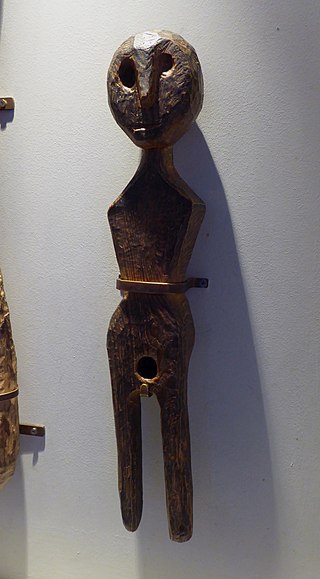
My research on the Roos Carr Figures led me to discovering that a number of wooden figurines have been found across Britain and Ireland. All were found in wet places which were seen as liminal – where crossings of bogs or waters needed to be made – suggesting they were threshold guardians. Some of these ‘idols’ have been interpreted to be gods and goddesses, others spirits of place, and others ancestors and, of course, the boundaries between these terms are intrinsically fluid.
The Ballachulish Goddess was found on Ballchulish Moss, in Inverness-shire, Scotland. Dated to 600 BC it stands at a height of 145cm, the size of a girl, and is the largest of our British figures. Carved from alder wood it has a large head with a long, thin nose, a full mouth, and small white quartzite eyes. Its chest is flat with two pairs of incised circles representing breasts and nipples. The objects it is holding have not yet been securely identified (a couple of scholars have suggested they are severed penises!). Its legs end in a solid block of wood.
It was discovered during building work, in 1880, in deep layers of peat ‘lying face down on the gravel of an old raised beach, around 120 metres from the shore of Loch Leven’ and may have stood beside a pool. ‘Under and above’ were ‘intertwined branches and twigs and ‘straighter poles which might have formed a ‘wickerwork container, or a little shrine’.
Its location, overlooking ‘the dangerous straits linking Loch Leven with the sea’ are suggestive of its worship as ‘the goddess of the straits’ to whom travellers made offerings for a safe crossing.
Another intriguing example is the Somerset God Dolly which is the oldest of Britain’s known wooden idols, dating to between 2285 and 3340 BCE. This hermaphroditic figure was carved from ash wood, was 16cm high, and had a ‘round featureless head, no neck, and a small stubby body with two asymmetrically placed breasts and a large horizontal penis’ ending ‘at the base of the trunk without legs.’
It was found on the Somerset Levels, ‘driven upside down’ ‘within a cluster of pegs’ ‘that formed part of Bell Track A’ and ‘stratigraphically below the Bell B Track’. This suggests it might have been a threshold guardian of the earlier trackway, then made redundant, and buried beneath.
Nearby, in Hillfarrance, an oak forked-branch figure dated to 1131-1410 BCE was retrieved from a pit in a ‘riverine peat wetland’ ‘beside two brooks, both tributaries of the river Tone.’ Only the lower limbs and torso, 45cm long, have survived. It was buried with shards of pottery, a burnt stone and worked wood. Again, this was a deliberate deposition, perhaps of a former guardian.
The Kingsteignton Idol was discovered on the banks of the river Teign, in south Devon, ‘lying up against the trunk of a fallen oak tree’. Carved from oak wood, 33cm tall, it has a ‘long thin body’, ‘elongated neck’, and ‘large head’ with ‘eyes, nose and chin’ ‘indicated’. There is a hole in his neck for insertable arms. Its ‘trunk is straight, square-shouldered, with carefully carved buttocks and erect penis’ and its ‘short, kneed legs end in stubby feet.’ It has been dated to 426-352 BC. It was likely associated with the oak tree, a threshold marker, and may have been its guardian spirit.
On the Dagenham marshes, on the bank of the Thames, down river from London, the Dagenham Idol was found in close proximity to the skeleton of a deer. It has been dated to 2250 BC. Carved from the wood of a Scots pine it stands at 46cm tall and has a large head, flat face, sockets for eyes (‘the right deeper than the left’), and no ears or hair. Its trunk is armless. It has a central pubic hole, potentially for the insertion of a penis and its legs are straight and footless. It might have been a guardian of the marshland and/or river and possibly had an association with deer and other animals.
In Ireland the Ralaghan Figure was found in a peat bog and the Lagore Figure on a crannog in a peat lake. A model dug-out canoe was discovered at Clowanstown 1, County Meath, and might be seen to resemble the serpent boat of the Roos Carr Figures, paddling the lake, and between worlds.
The existence of these idols provides evidence that, from the early Bronze Age into the Iron Age, the people of Britain and Ireland saw wet places as sacred and inspirited as well as potentially dangerous. The gods and spirits appeared to them in anthropomorphic forms and were carved into wooden idols, which were seen to embody them, and to which offerings were likely made for safe passage.
For unknown reasons some of these idols were deposed and buried in or near the place where they stood. Had they reached the end of their power and thus served their purpose? Had they requested to be returned to the waters of their origin? Were they seen as just as or more powerful when buried like the dead? The answers to these questions are as unknowable as the minds of our distant ancestors
III. Wooden Idols and Ritual Landscapes in Northern Europe
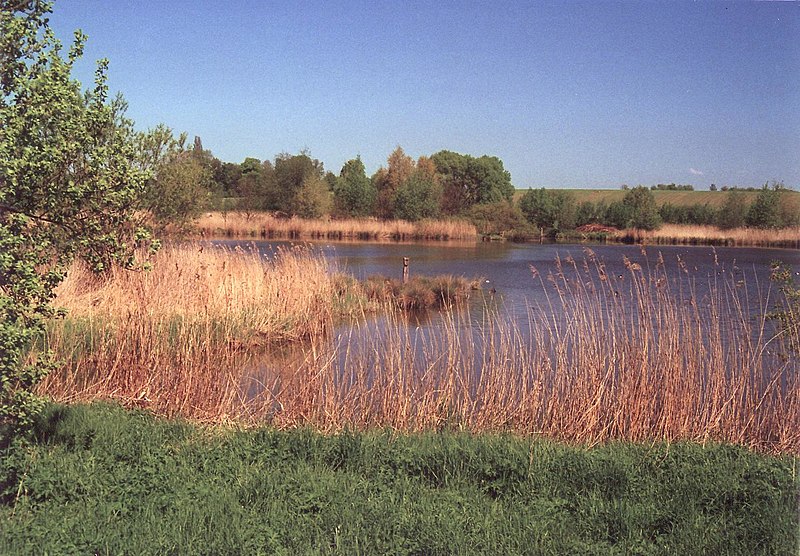
Numerous wooden idols serving a similar function have been recovered from across Northern Europe. The best example of a ritual complex is Opfermoor Vogtei in Germany. Situated on a bog, which includes a shallow lake, it was in use from the 5th century to beyond the Roman period.
Within circular enclosures of hazel branches were altars where wooden cult figures were worshipped. Wooden idols were also found on the edges of the lake where they overlooked the waters.
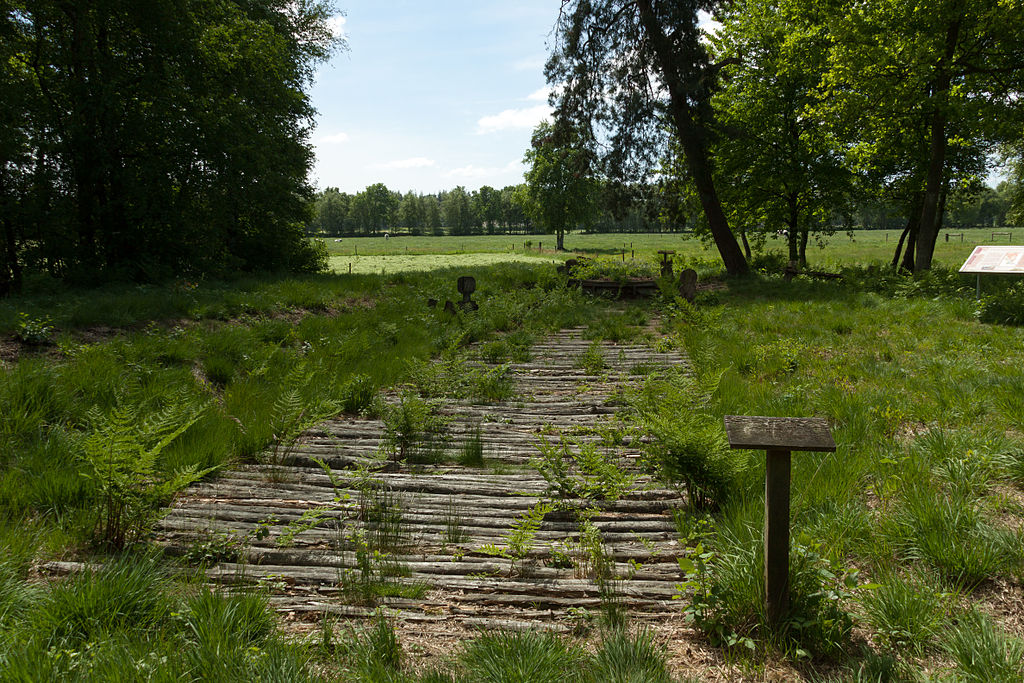
During excavations on Wittemoor timber trackway across a bog in Berne, Lower Saxony, in Germany, six wooden figurines dating to the Iron Age were found. Two of them stood on either side of the track where it crossed a stream. Both were ‘carved in silhouette out of oak planks 3 to 7cm thick’. The male was 105cm tall ‘with a rectangular body’ and the female 95cm tall ‘with breasts or shoulders indicated by a slanted cut, broad hips and vulva’. The male slotted into a plank and the female stood on a mound. The other figures are described as ‘cult poles’. Fire sites ‘at each end of the crossing’ and ‘stones and worked alder sticks’ around two of the poles suggest offerings were made.
These discoveries show that wooden idols served a significant function within ritual landscapes for the Germanic peoples. As representations of gods and goddesses and spirits of place with threshold functions they were raised on altars, fires were built in their honour, and offerings were made to them.
Similar idols, such as the Braak Bog Figures, have been found elsewhere in Germany. From Denmark we have the Broddenjberg Idol and figurines were found in Wilemstad in the Netherlands.
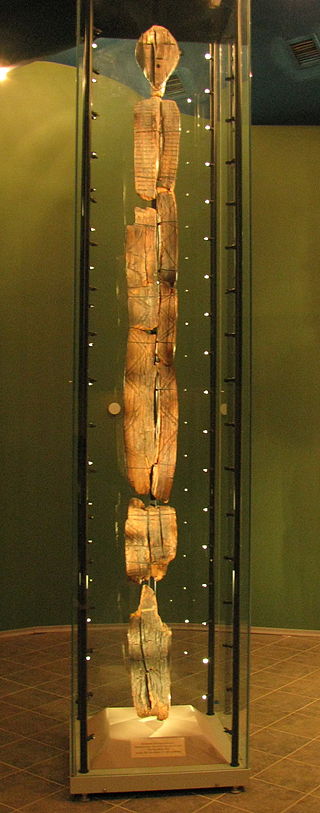
One of the most impressive, from Russia, is the Shigir Idol. Dated to 10500 BCE, the Mesolithic period, around the end of the Ice Age, it is ‘the oldest known wooden sculpture in the world.’
Found in a peat bog in Shigir it is carved from larch and may have originally stood at at 5.3m tall. It has a small head with narrow eyes, a triangular nose, circular mouth, and pointed chin. Its body is flat and pole-like and covered in ‘geometrical motifs’ including ‘zigzag lines’ and ‘depictions of human hands and faces’. It speaks to me of a death god filled with the spirits of the dead.
It has been proposed that the decorations tell the story of a creation myth or ‘serve as a warning not to enter a dangerous area’. Whatever the case, it would have been a formidable figure at the centre of a ritual landscape, seen for miles around, imbued with great meaning for the early hunter-gatherers.
What strikes me the most about these wooden idols is that they seem hauntingly familiar. I’m not sure if this because, as a Smithers, I have Saxon ancestry and connections to the figures from Germany or because, when I’ve been travelling wetlands, physically and in spirit, I have caught glimpses of dark figures who might be wetland spirits or echoes of their representations.
What is certain is that the presence of spirits and the urge to carve them from wood has been felt across Northern Europe since, at least, the Ice Age. In the Norse myths, the first humans were created from ash and elm by the gods and, in the Brythonic myths, soldiers were conjured from trees by a deity. I wonder whether our creation of wooden idols was seen to mirror this divine process?
SOURCES
Bryony Coles, ‘Anthropomorphic Wooden Figures From Britain and Ireland’, Proceedings of the Prehistoric Society, 56, 1990
Clive Jonathon Bond, ‘The God-Dolly Wooden Figurine from the Somerset Levels, Britain: The Context, the Place and its Meaning’, Anthropomorphic and Zoomorphic Miniature Figures in Eurasia, Africa and Meso-America, Oxford: Archaeopress/BAR International Series 2138
Jeremy Clark, ‘The Intriguing Roos Carr Model Wooden Boat Figures Found Near Withersea, East Yorkshire’, The Yorkshire Journal, Issue 1, Spring 2011
Spending over a month doing restoration work on Little Woolden Moss has inspired me to find out more about the ecology of peat bogs – what they are, how they come to life, how they function, how exploitation by humans has led to the deaths of 80% of them, and how they are currently being revived.
The information that follows has been gleaned almost exclusively from the IUCN Peatland Programme’s Conserving Bogs: The Management Handbook, which can be downloaded for free HERE.
What is a Peatland?
A peatland is ‘first and foremost’ a ‘wetland’. Water is essential because peat does not form when the land is dry. Peat is ‘a wetland soil composed largely of semi-decomposed organic matter deposited in-situ, having a minimum organic content of 30% and a thickness greater than 30cm’ and a peatland ‘an area with or without vegetation but possessing a naturally accumulated peat layer at the surface.’
The EU Habitats Directive distinguishes between ‘active bog’ as ‘a system that supports a significant area of vegetation which is normally peat forming’ and ‘non-active bog’ which does not. It is my intuition that a peat-forming bog is a living bog and a bog that is not forming peat is dead.
The most common type of peat bog is raised bog ‘accumulations of peat’ ‘within a non-peat landscape’ or ‘a fen-peat landscape’ mainly found in the lowlands. Such bogs form distinct domes that rise above the surrounding landscape by as much as 10 metres.’ The ‘classic type’ is basin raised bog – ‘formed within a shallow lake that has then infilled through terrestrialisation’.
Other types include floodplain raised bog, estuarine raised bog, and the evocatively named Schwingmoor ‘swinging bog’ which forms as ‘a floating raised dome’ ‘over a deeper lake basin’.
A rarer type of bog is blanket bog which forms as mantles of peat in the uplands. Types include watershed bog, saddle bog, valleyside bog, spur bog, minerotrophic bog, and ladder fen.
How Do Peat Bogs Form?
The UK’s ‘classic’ basin raised bogs developed over basins created in the aftermath of the last Ice Age by the melting of dead ice, surrounded by sediment, which was left when the glaciers retreated. These basins filled with water and became lakes which were ‘colonised by a fringe of fen vegetation’.
As this vegetation decayed the lakes were filled in with ‘fen peats and sediment’. The plants at the centre were ‘cut off from the nutrients at the lake margins.’ These nutrient poor, waterlogged conditions were perfect for sphagnum mosses to come to dominate, forming a thick carpet.
As the sphagnum began to slowly decompose it resulted in an accumulation of peat. When this reached a thickness of half a metre above the original level of the lakes the bogs were separated from the groundwater and became ombotrophic (rain-fed) so dependent on precipitation alone. Slowly they expanded, escaping their lake basins, to become the lowland raised bogs we know of today.
Blanket bogs formed in a similar way in waterlogged areas of our uplands such as saddles and spurs.
The Structure of Living Peat Bogs
All living peat bogs have a ‘diplotelmic structure’ (telm is Greek for marsh, pool, standing or stagnant water’). The acrotelm (from Greek acro ‘topmost’) is the surface of peat-forming vegetation and the catotelm (from Greek cata ‘down’) is the ‘inert, permanently waterlogged peat store’.
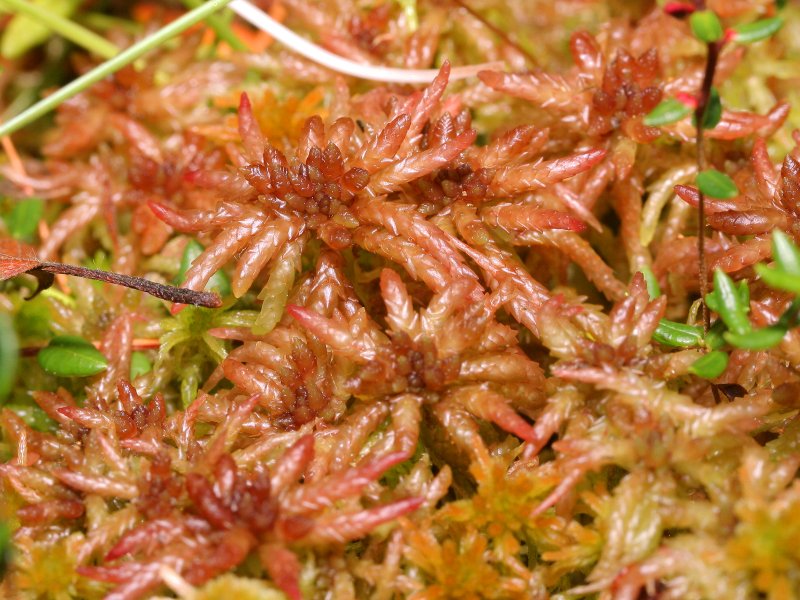
This structure is created, mainly, by sphagnum mosses. Their densely packed heads, known as capitula, form a thick carpet around 2cm deep. Sphagnum leaves are specially designed to cope with water logging due to their ‘large and empty hyaline cells’ ‘sandwiching smaller photosynthetic cells’. This provides a ‘large surface area for cation exchange’ – absorbing ‘nutrients dissolved in water’.
Their swapping of scarce nutrients for hydrogen ions acidifies their surroundings making them more favourable for sphagnum colonisation and unfavourable for decomposer micro-organisms. This leads to conditions that are favourable for peat formation. Sphagnum mosses also release a ‘pectin-like substance’ called sphagnan which coats the upper parts of the plant and the water and ‘inhibits nitrogen uptake in decomposer bacteria’ further slowing the processes of decomposition.
(The anti-microbial properties of sphagna led to the use of packs of sphagnum as dressings in World War I).
Sphagnum mosses ‘grow from the top of the plant – the apices – and die at the base’ at around 10cm. The stems and branches collapse, flatten, and break down to form peat. This is the point of transfer to the catotelm. The living layer of the acrotelm can be between 10cm and 40 cm deep. The catotelm can extend up to several metres (the deepest peat bog, in the Netherlands, is nearly 7m deep).
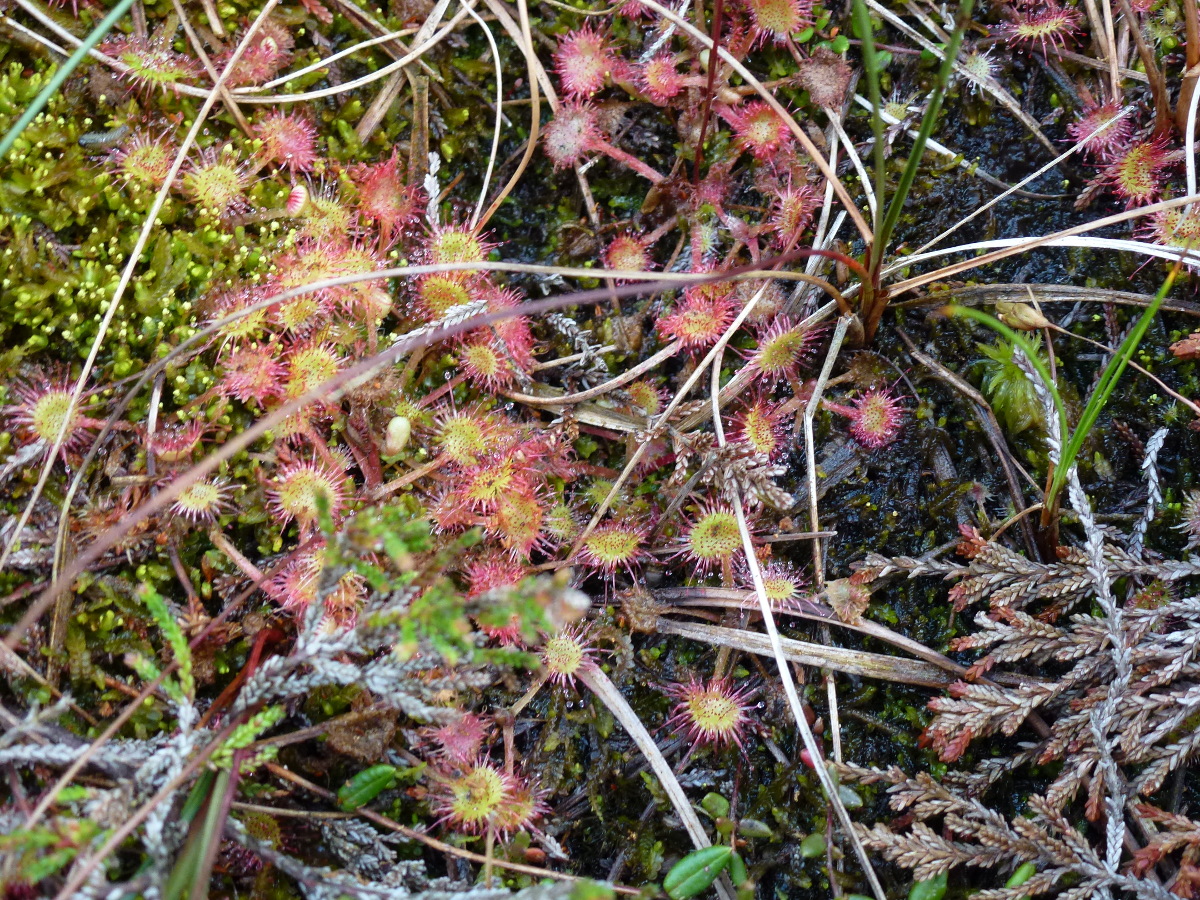
Sphagnum are the dominant species of mosslands and our lowland raised bogs include species such as S. magellanicum, S. papillosum, S. capillifolium, S. tenellum, and S. cuspidatum. Other plants that can survive in these conditions include common cottongrass (Eriophorum angustifolium), hare’s-tail cotton-grass (Eriophorum vaginatum), cross-leaved heath (Erica tetralix), bog rosemary (Andromeda polifolia), and round-leaved sundew (Drosera rotundifolia). Sundews are carnivorous bog plants ‘which gain extra nutrients (particularly nitrogen) by catching and absorbing insects.
Ombotrophic bogs gain their water not only from rainfall but from ‘occult precipitation’ – mist and fog.
Exploitation and Death
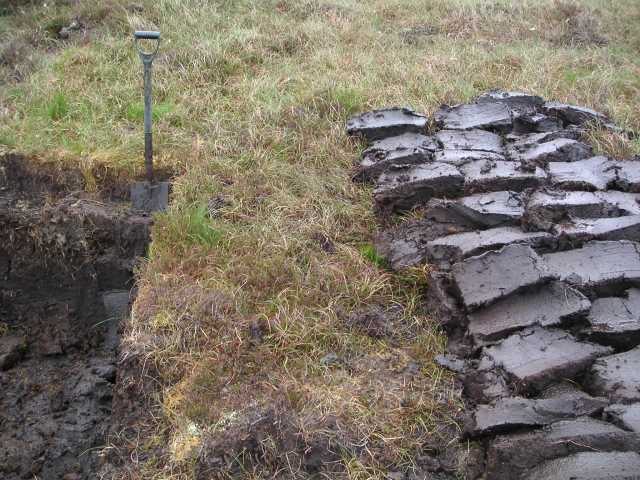
Humans have been exploiting peat bogs for fuel for many centuries. This began with domestic peat cutting. ‘Turves’ were cut by hand with a spade from banks 10m to 100m long, then stacked nearby to dry. The banks were reached by ‘peat tracks’ and carried by horse and cart or in creels or baskets
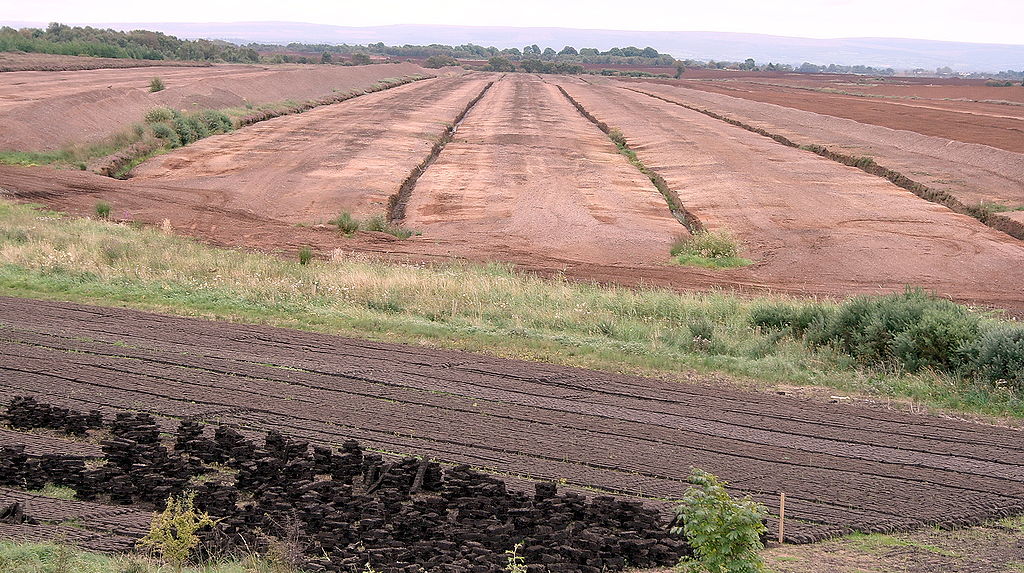
Traditional cutting has been replaced by ‘tractor-driven machines’ that ‘cut slits beneath the surface’ to extract ‘sausages’ of peat that are left on the surface to dry before their use as burning briquettes’.
Commercial peat extraction for horticulture and energy is currently taking place on a far greater scale and is far more damaging. Peat accumulates at ‘2mm a year’ and ‘a hundred times that depth’ is removed each year by modern extraction methods such as peat milling. This begins with the drainage of the land by ‘regularly spaced deep drains’. Once the upper peat has dried ‘the surface vegetation is removed’ to create ‘bare black fields’ then the top layers are ‘rotovated’ or ‘milled’ to allow further drying before the peat is ‘bulldozed into long ridges’ then bagged or taken to power stations.
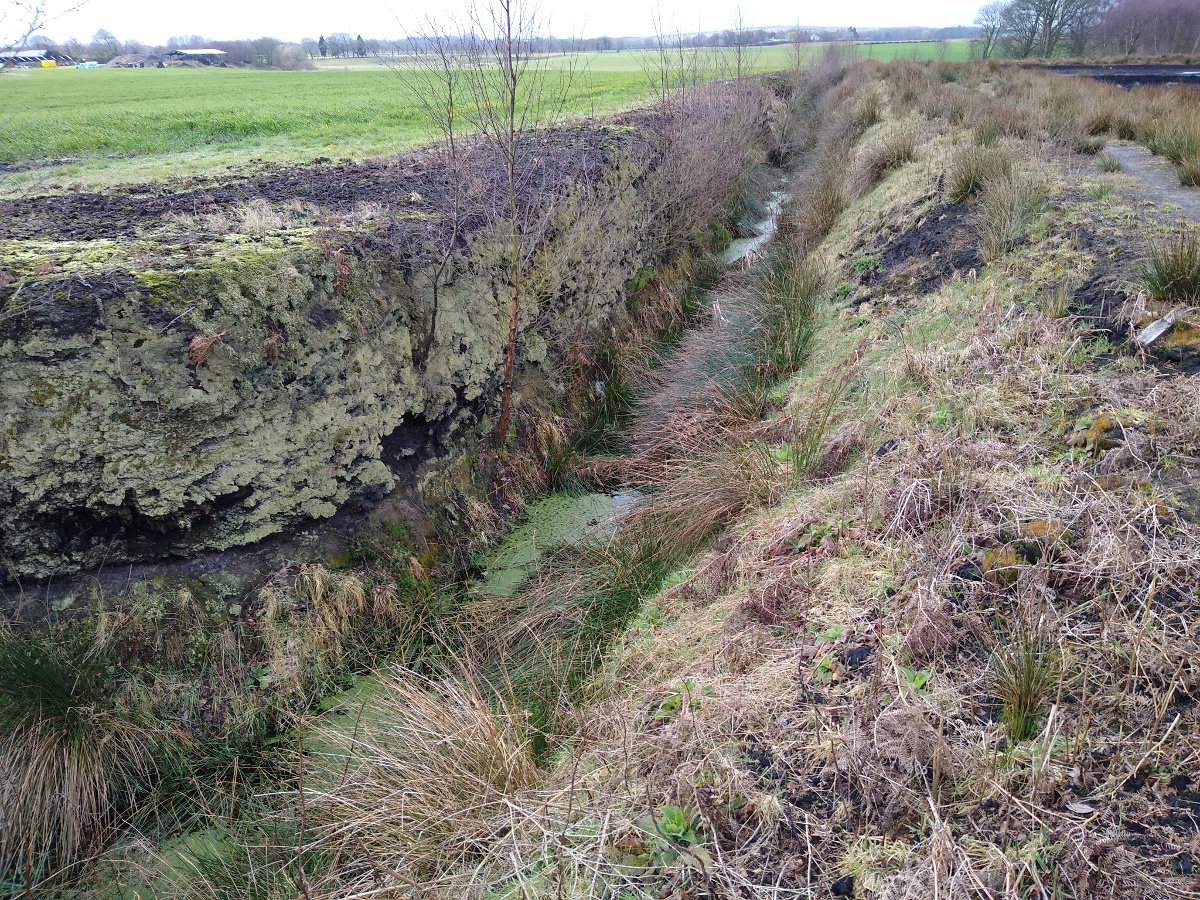
Drainage of the land for human benefits has deadly results. The immediate effect is water loss from, and the drying out of, the acrotelm, leading to the decline in sphagnum and other peatland species.
Loss of water from the catotelm is slower (up to one million times slower than the speed of a snail!). However, water in the spaces between peat fragments seeps into the drain. This causes peat adjacent to the drain to collapse and shrink. This process is called ‘primary consolidation’.
The ‘drier catotelm peat adjacent to the drain itself becomes a heavy load on the peat beneath because the drained layer no longer floats buoyantly within the bog water table.’ It ‘compresses the peat beneath it and squeezes more water from the peat into the drain, causing the bog surface to subside still further.’ The entire depth of the catotelm subsides. This is ‘secondary compression’.
Drainage ‘allows oxygen to penetrate the catotelm’ which is usually prevented by waterlogged conditions. ‘Preserved plant material is thus lost in the form of carbon dioxide (CO 2 ), leading to further subsidence as the peat material itself vanishes into the atmosphere.’ This is ‘oxidative wastage’.
‘The three drainage processes – primary consolidation, secondary compression and oxidative wastage – cause the peat to subside progressively and continuously across an ever-expanding area. Drainage in effect continually widens the dimensions and impact of the drain.’
‘Where drainage leads to the loss of the peat-forming layer, carbon sequestration may cease’ and there are increases in the production of dissolved and particulate organic carbon (DOCs and POCs).
A peat bog in this state is termed haplotelmic. Without an acrotelm it is no longer living.
Sadly ‘80% of UK peat bogs now lack an active living surface as a result of human impacts’ and ‘therefore now have little or no capacity for resilience in the face of future climate change.’
Reviving Peat Bogs
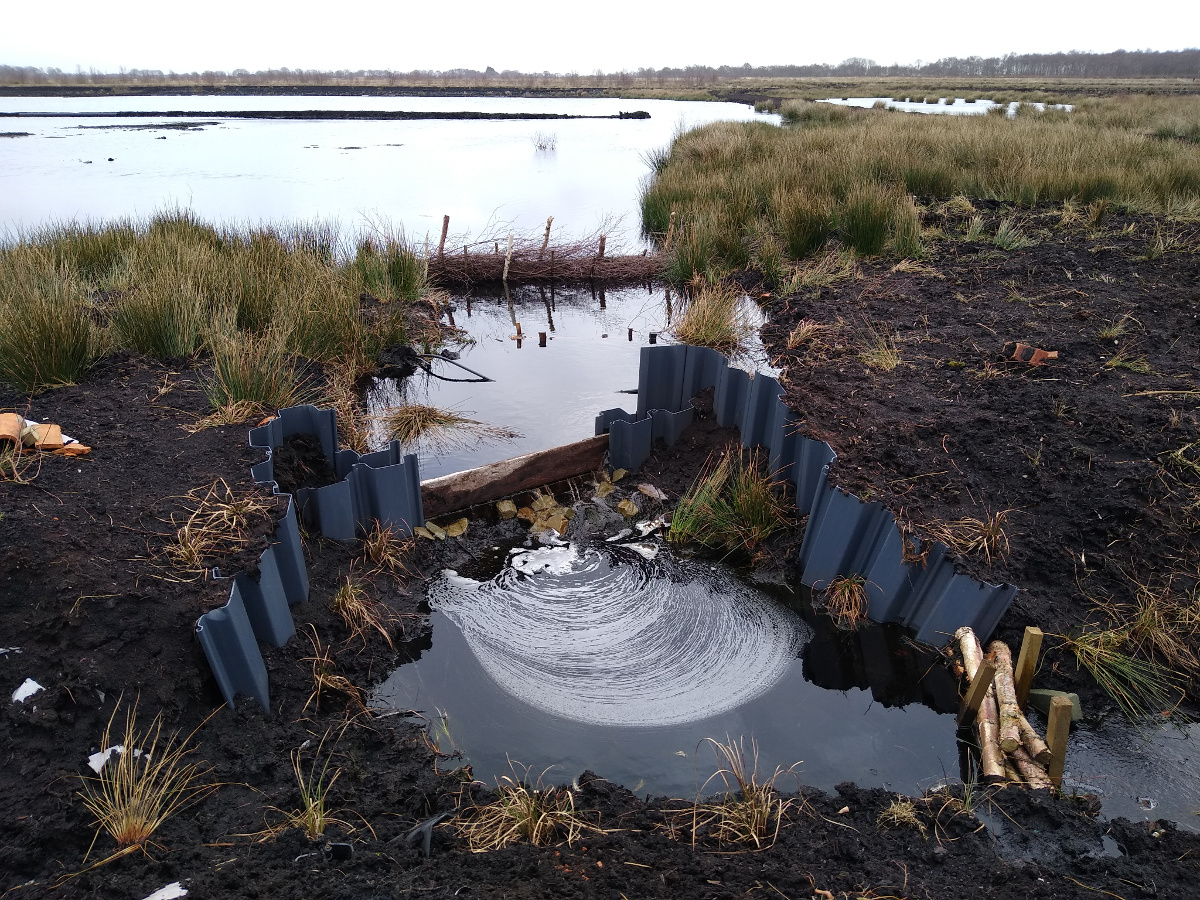
Peat bogs can be revived by blocking drains and building dams and bunds to prevent water loss and begin the long process of silting up with vegetation that will lead to the development of sphagnum.
Bare peat can be re-vegetated by planting hardy species such as common cottongrass and hair’s tail cottongrass.
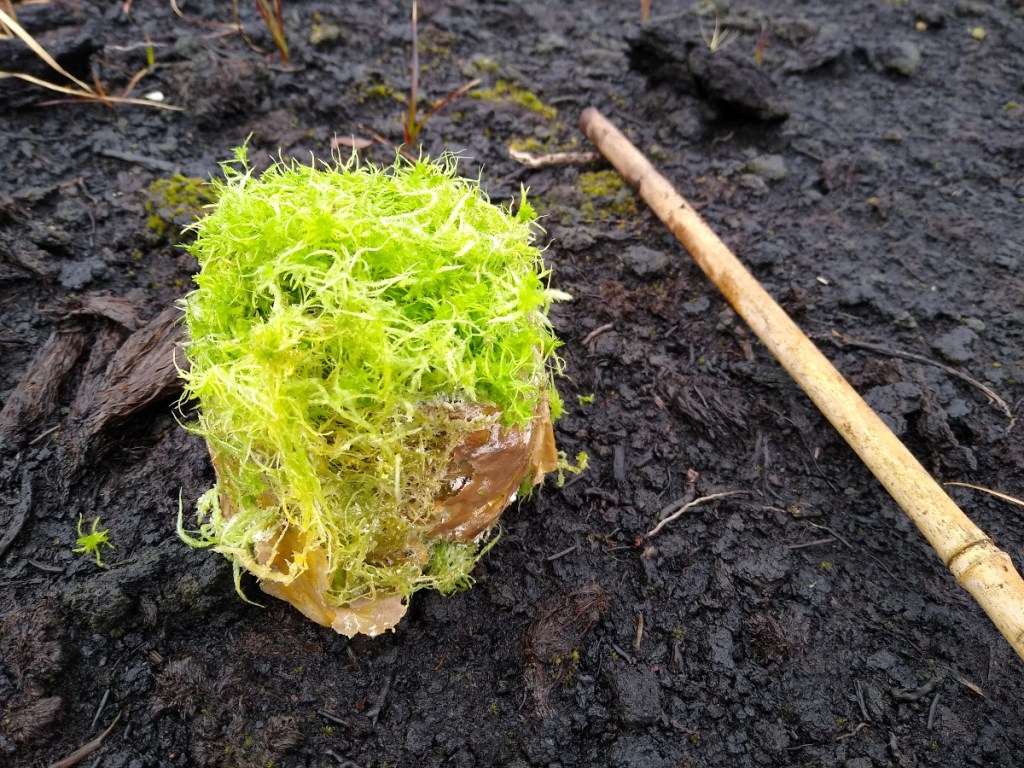
Sphagnum mosses can then be planted amongst the common cottongrass to form new hummocks and once these have formed species such as cross-leaved heath and bog rosemary can be planted on them.
Doing this research has provided me with a greater depth of understanding of the workings of peat bogs and the impact of my work on Little Woolden Moss. It has shown me how restoring a living acrotelm of sphagnum is essential to reviving a bog and reinstating the process of peat formation which sequesters carbon in the depths of the catotelm rather than releasing it into atmosphere.
I look forward to revisiting the mossland in years to come and watching its return to life.
The pit of despair is a familiar metaphor. For me it’s a peat pit. Not the pwll mawn,the fishpond-sized peat cutting that Dafydd ap Gwilym fell into whilst riding his grey-black horse across the misty moors of Wales many centuries ago, but the empty expanses of the Lancashire peatlands made into gigantic peat pits by commercial peat extraction.
Drained, the vegetation (sphagnum moss, cross-leaved heath, bog rosemary, bog asphodel, sundew, cottongrasses) of the living acrotelm stripped away, rotovated, left to dry, bulldozed, bagged up for horticultural use or taken to power stations. The catotelm left bare, barren, leaking its carbonic ghosts into the atmosphere.
I’ve fallen into it metaphorically many times over the past year. When the first lockdown struck and all my conservation volunteering was cancelled and my internship postponed, when my mum had a fall and broke her hip, when the third lockdown put an end to all my volunteering but my internship.
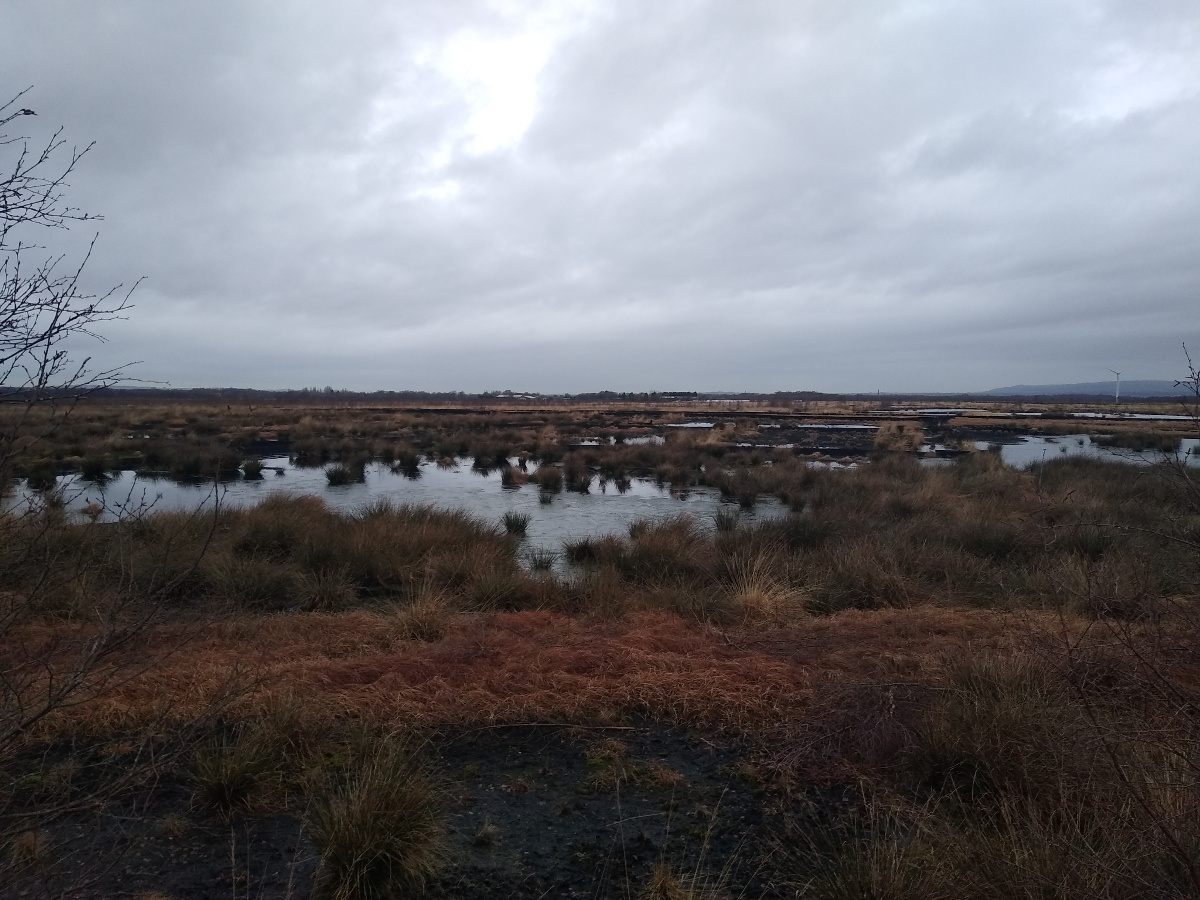
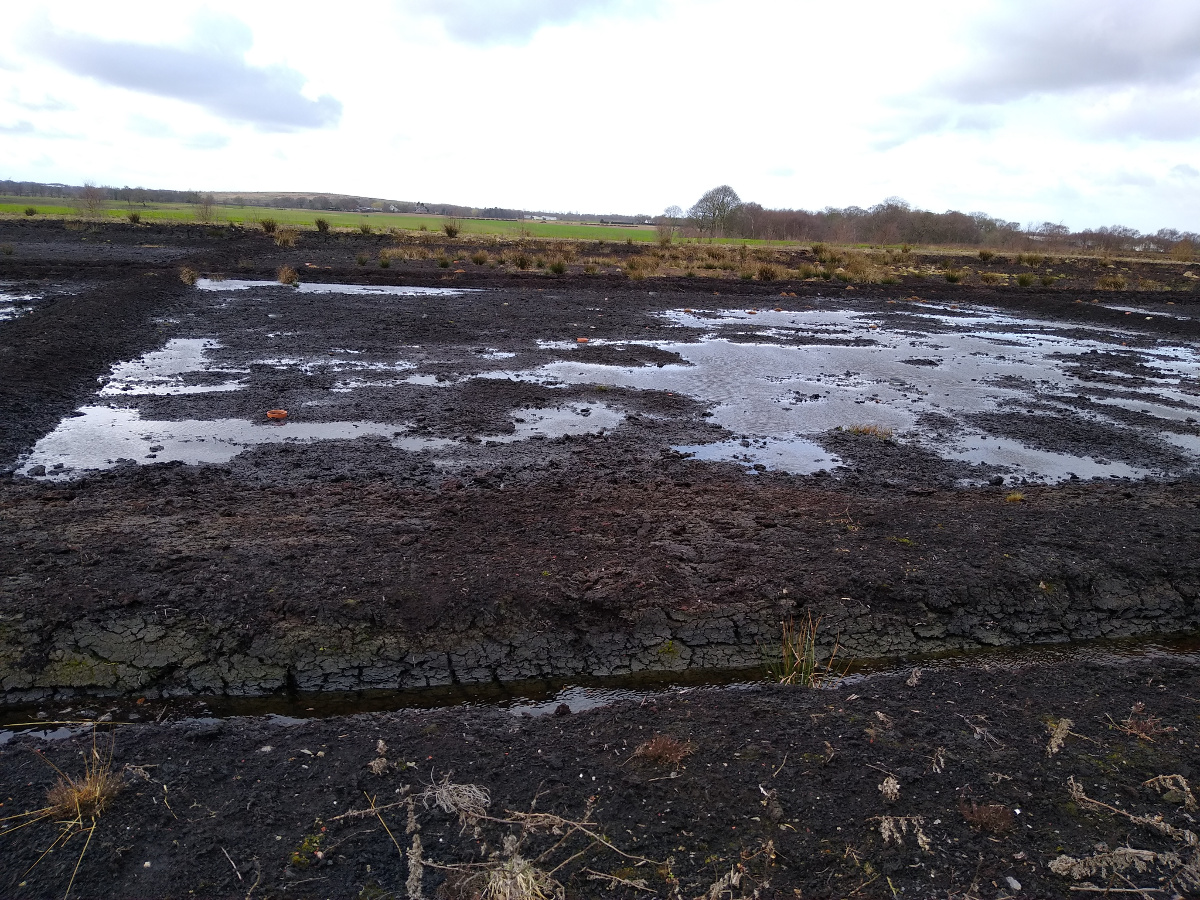
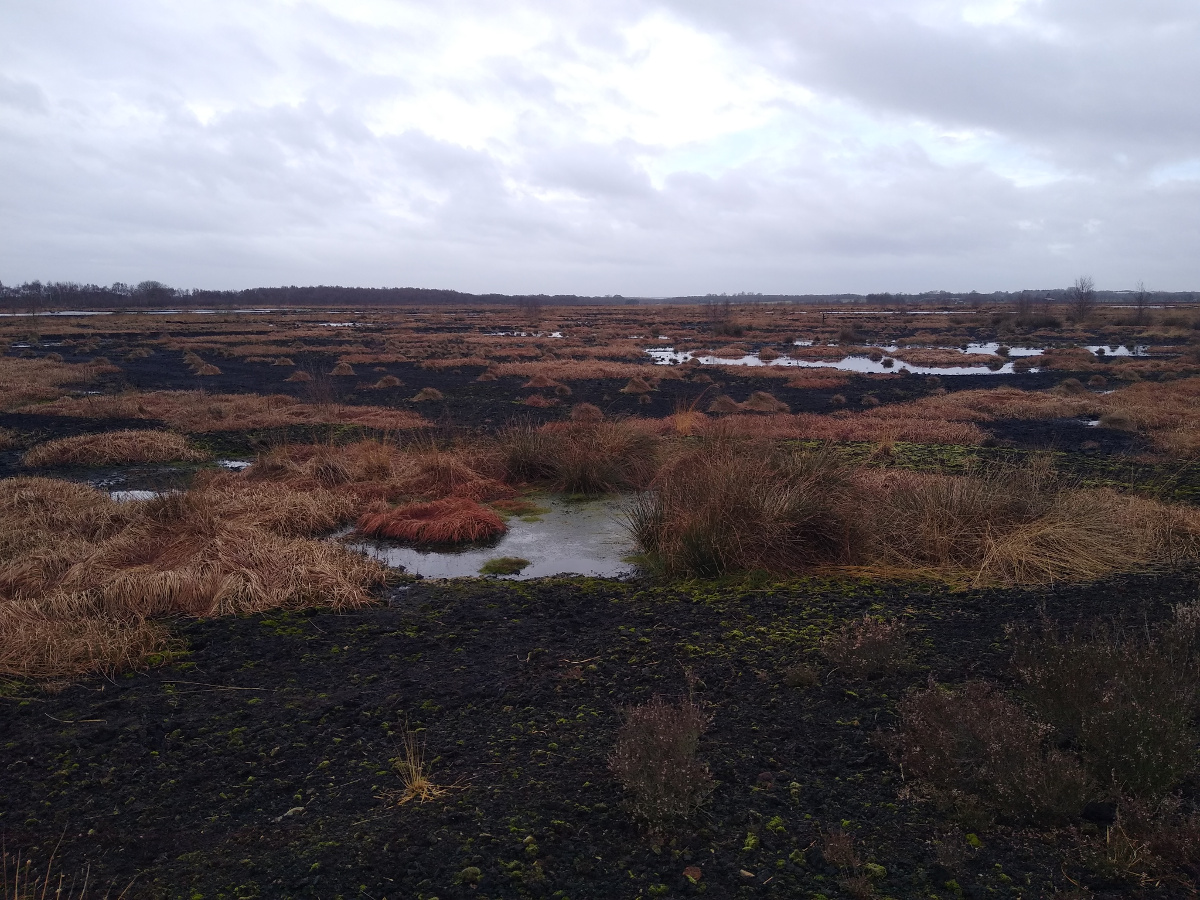
Now I’m there for real. On Little Woolden Moss, part of Chat Moss (which was once 10 square miles), near Manchester, which has been severely damaged by peat extraction. Since the Lancashire Wildlife Trust took it over in 2012 the east side is steadily being restored, but much of the west is bare.
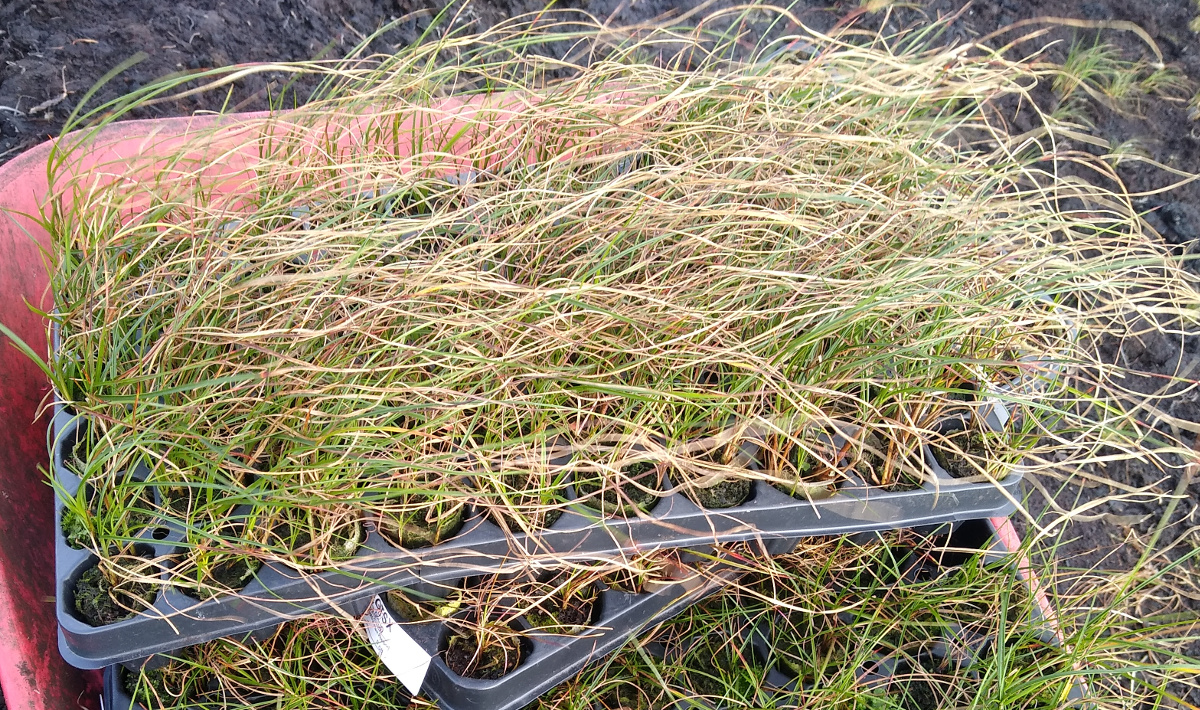
This week my task, as part of the contracts team, has been planting the barren section with common cottongrass and hare’s tail cottongrass. I’ve been acutely aware of the wrongness of the exposure of the catotelm, the under-layer of peat, the underworld bare for all to see, its spirits disturbed, released.
Yet it has been rewarding to have the opportunity to make amends, hole by hole, plug plant by plug plant. Slowly but steadily recovering and restoring the broken body of the Mother of the Moss. Giving back her tresses by which, like by the hair of Rapunzel, I may too pull myself out of the peat pit.
It seems to be no coincidence, before I got this temporary contract work, I found out ‘the fish-pond of Gwyn ap Nudd’ was y pwll mawn ‘the peat pit’ and Gwyn, my patron god, was associated with peat bogs. I promised to make him an offering next time I visited him a bog.
Two weeks later I was offered this job. When I asked Gwyn what he wanted, he showed me a cottongrass plant and told me my planting would be the offering – restoring the body of his mother, Anrhuna, who I believe to be a long-forgotten Brythonic wetland goddess.
I’ve long been in a pit of despair because I have unable to find paid work by which I can serve my gods. Now I’ve got it, temporarily at least, and have applied for two other watery jobs – traineeships on the Kingfisher Trail (on Bradshaw Brook) and on the Great Manchester Wetlands.
I’m currently in an in-between place with three weeks done and two weeks left on Little Woolden Moss. Not knowing if I’ll get an interview and where my life might be heading next. A little like the mossland, teetering between death and recovery, this fragmented part of Anrhuna’s body slowly being brought to life.
Gwyn has stolen me to the underworld countless times. He has put into my hands the healing plants. He has sent me back to repair the damage of its exploitation with work and words.
I pray to you my gods, Gwyn and Family, to grant me the means to continue with this work.
Cover these bare bones no longer considered sacrosanct.
Cover me with eleven magical mosses:
Give me back my fringe of fimbriatum and my cow-horns of denticulatum.
Let cuspidatum fill my wet places.
Let flat-topped fallax enfold my curves. Let papillosum return my pimples rising in the damp. Let squarrosum be my spikes of dignity.
Return to me my ruby slippers of capillifolium.
Let palustre and subnitens make me lustrous. Let fuscum dress me in rusty colours. Let magellanicum work its magic.
Give me back my hummocks and my hair of hare’s tail cottongrass and common cottongrass, cross-leaved heath, bog rosemary and bilberry and I will be a common for the large heath butterfly where all commoners are welcome.
Cover me in moss come make these mosslands whole again.
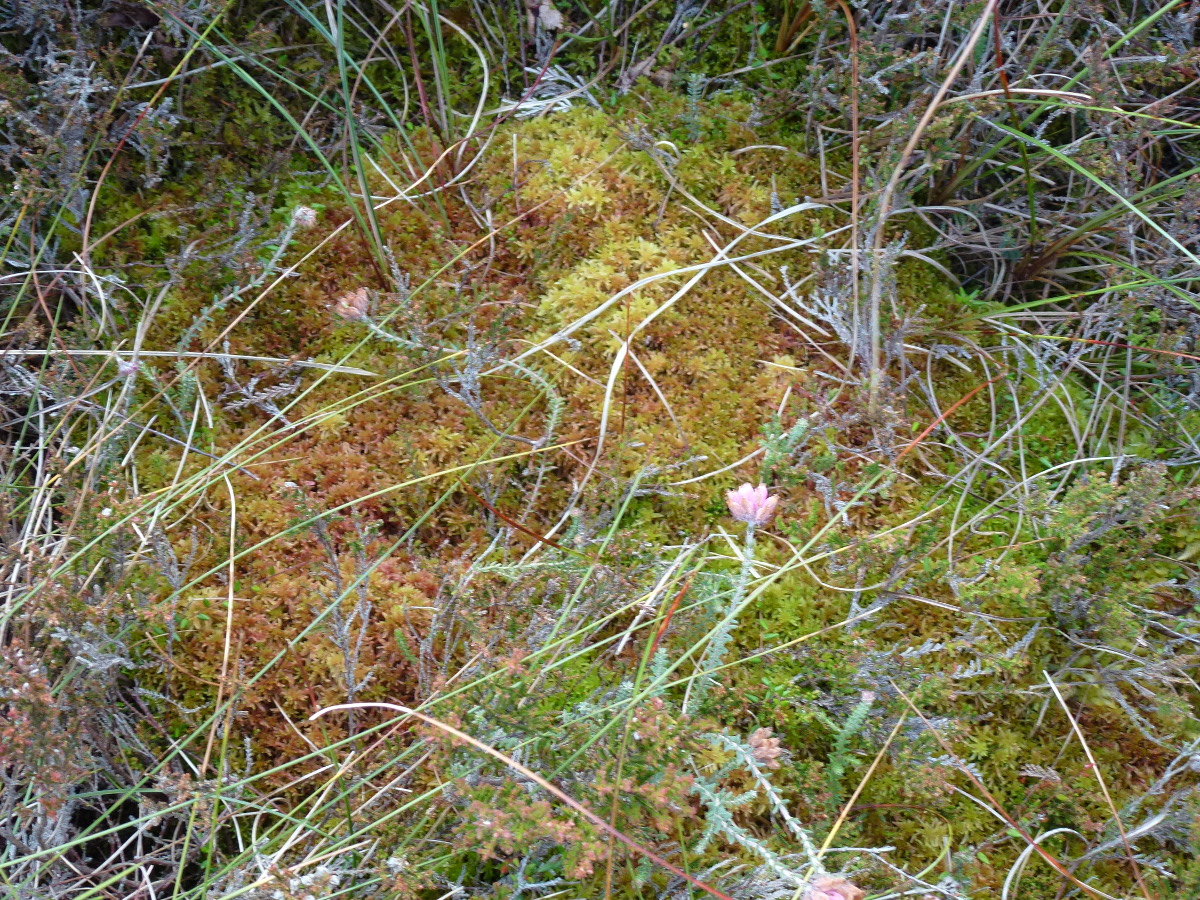
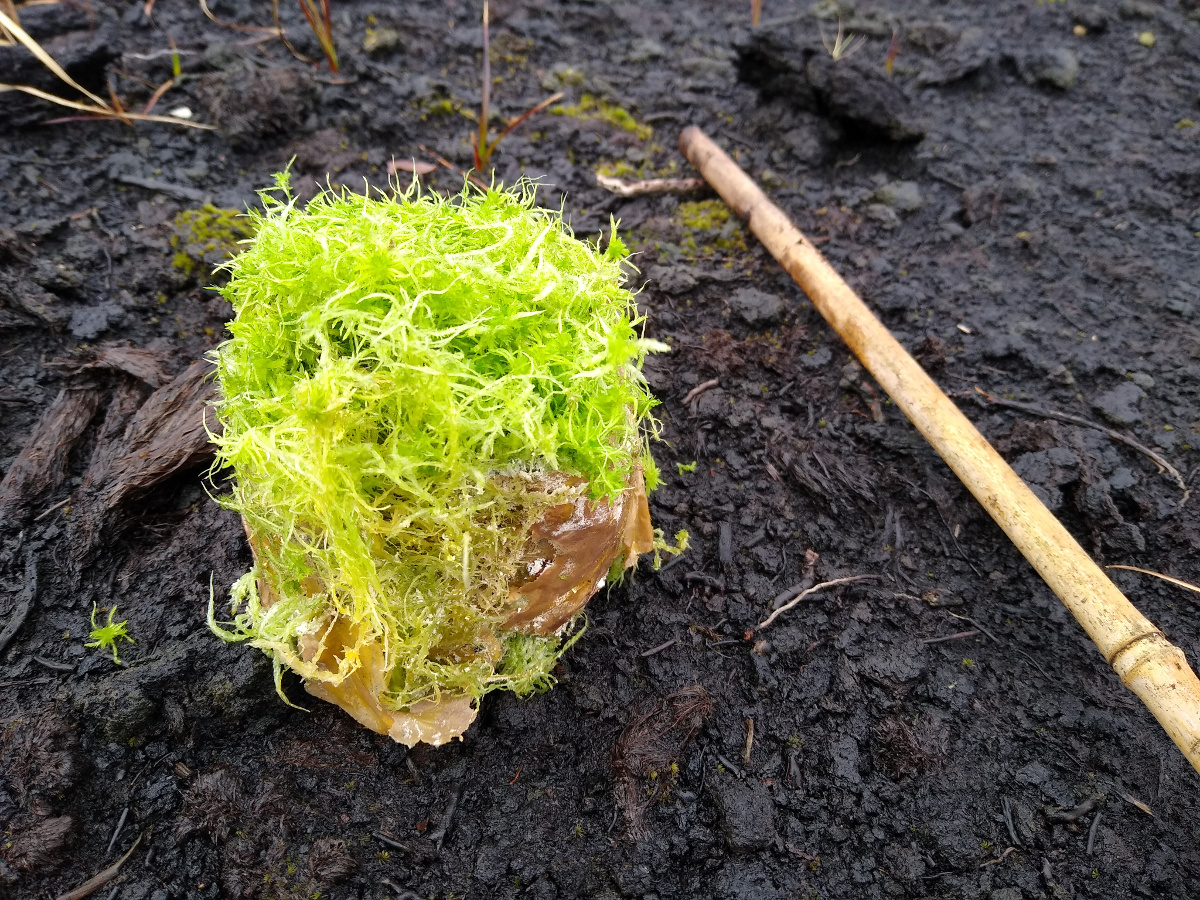
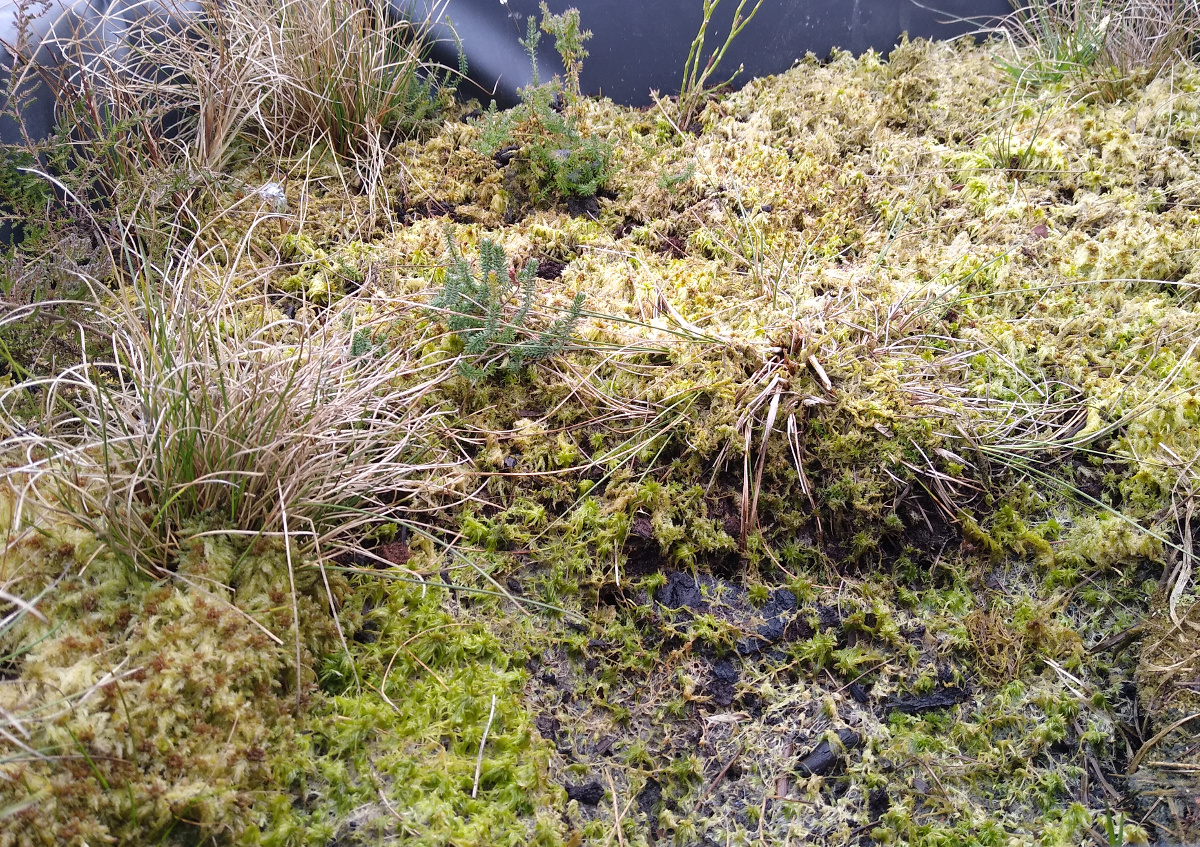
This poem is based on my paid restoration work with the Lancashire Wildlife Trust’s contract team on Little Woolden Moss. This mossland, badly damaged by peat extraction, was taken over by LWT in 2012. Since then the drains have been blocked and new bunds built. We are currently planting cotton grass, hare’s tail cottongrass, sphagnum, cross-leaved heath and bog rosemary to recolonise the mossland and make it inhabitable for wildlife. Hare’s tail cottongrass is the food source of the large heath caterpillar and cross-leaved heath is the nectar source of the large heath butterfly. Planting these species will make possible its later reintroduction. The image of the ‘bog in a box’ directly above shows what the mossland will look like when restored.
This poem is written in the voice of the Mother of the Moss – a title of the wetland goddess Anrhuna.
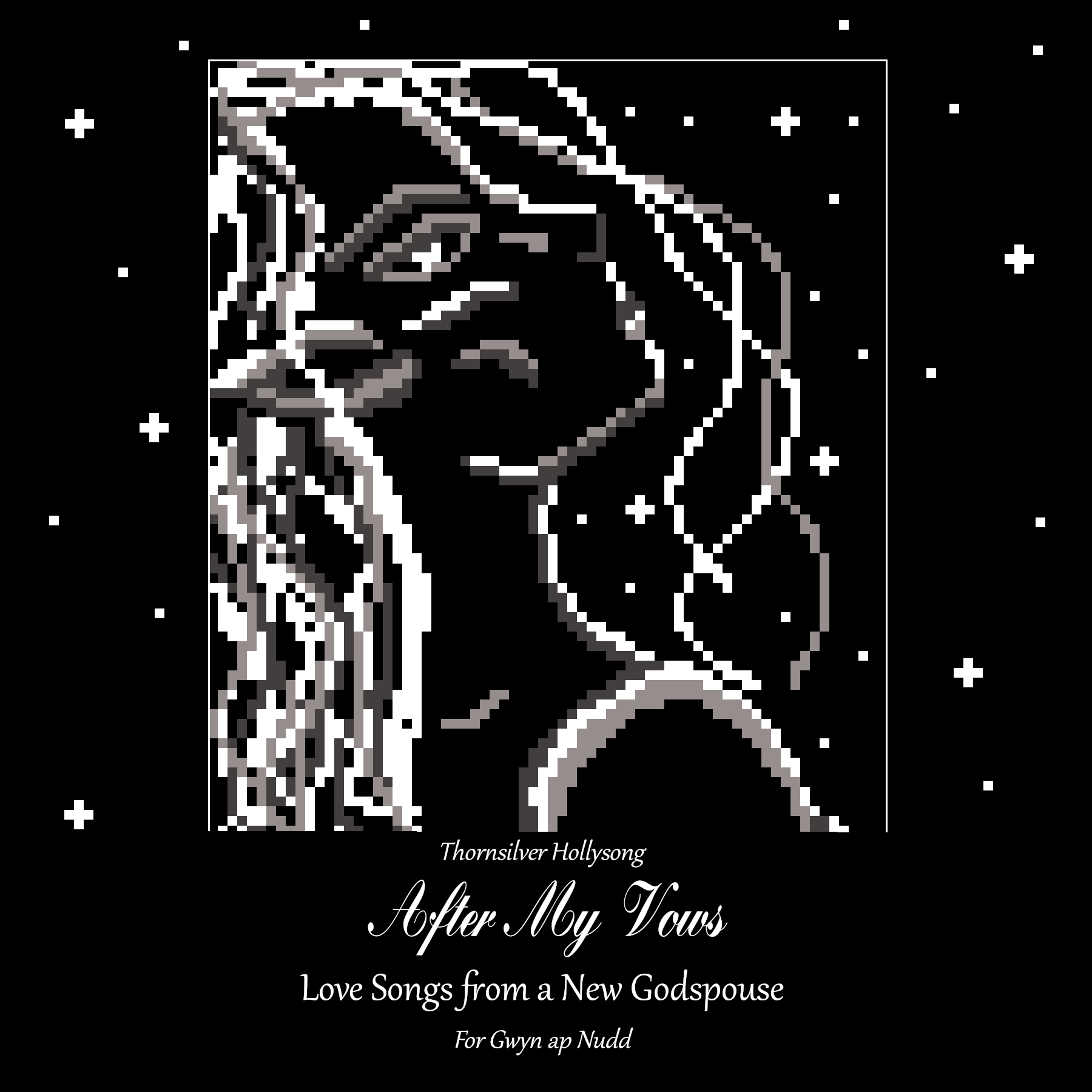
‘After My Vows (Love Songs from a New Godspouse)’ is the second album from Thornsilver Hollysong. Thorn is a fellow awenydd and devotee of Gwyn ap Nudd who I met through the Awen ac Awenydd Facebook group in September 2019. He hosts Gwyn Day Thursdays on Land Sea Sky Travel and we have since worked together on conferences and workshops for Gwyn and his ‘family’.
It has been spiritually affirming to form a friendship with someone else who shares my devotion to Gwyn. Whilst my relationship with Gwyn is primarily devotee to god, Thorn is also a godspouse, thus Gwyn’s lover and husband. Godspousery is an ancient tradition which has probably been around since humans met gods and entered liaisons and marriages with them. Its best-known form is Christian nuns becoming Brides of Christ and it is particularly deeply embedded in the Brythonic tradition, which contains numerous stories of the Fairy King and his people taking humans as lovers. It has been illuminating listening to this album and hearing of experiences familiar and unfamiliar.
‘After My Vows’ was composed by Thorn with his own piano-playing and vocals. There is a rawness and immediacy to this music, a heartfelt passion, an outpouring of devotion. Whereas some songs are waltz-like, others are operatic, some put me in mind of a monk’s voice from a polytheistic cloister.
If there is one line from the album that summarises it for me it is: ‘Come to the ballroom of waltzing shadows’. This is from ‘Won’t You Dance’, a song that, although the tunes differ, put me in mind of David Bowie’s ‘Let’s Dance’. Here Thorn relates meeting Gwyn as ‘Black shade, silver mist / In a raven’s mask’ ‘At the Faery Ball / Sparkling shadows darkling as the moonbeams fall.’ It took me back to my own clubbing days, dancing alone, melting into the oneness of Faery. It gives voice to the timeless truth that gods are not only met at the altar or out in nature, but on the dance floor. In other songs this moonlit ballroom becomes Gwyn’s Hall in ‘the Castle of ice and bone’ where Thorn sings before his Fairy King like Gweir in his heavy blue-grey chain.
In ‘Greensleeves (He’s My Heart of Gold)’ Thorn takes the tune and rewrites the lyrics from the traditional English Folk Ballad, replacing Lady Greensleeves with Gwyn in an incredibly catchy chorus that I’ve been singing along to since I heard it. The following lines felt deeply familiar:
He rode with grace and I knew his face Though I had no reason to know him– The songs I sing have crowned him King With a pathway of stars strewn below him.
Another song which stirred this sense of familiarity was ‘Reunion’:
Was I a monk or mystic? Did I meet You? Was I a cunning man or woman? Did I know You? Was I a heretic or witch who dared to greet You? And for me, to put the holy Church below You?
It put me in mind of my own feeling, upon meeting Gwyn, that I’d known him in other lives, since the beginning of time. This is also conveyed in Thorn’s songs and his vows to love him ‘forever’.
‘Light of the Mist’, with its softly song couplet ‘Light of the Mist / Ghost of the Void’, sent shivers down my spine. Here ‘ghosts stars’ burn in ‘Inspired art’ and we find untold stories only hinted at such as the tale of ‘the Star who gave his Wings’ and how ‘He kissed the dead/ To bring me back’.
In other songs, like ‘As I Made My Vows (It Felt Like a Wedding)’ and ‘Just a Life with You’ I found lines that, as someone without a romantic or sexual relationship with Gwyn (or a human partner), it was harder to relate to. However, I appreciated their craftsmanship and aesthetic beauty.
And You take my hand Saying “Come, lie down Where the fruit trees stand Each with blossoming crown– In the winter sun Under apples sweet With our hair undone And our joy complete.”
The album is filled with instances anyone who has sat with Gwyn in a woodland or the forests of Annwn would ‘get’: ‘You’re taller than a man could be– / Your antlers, like an ancient tree / Branch out and cover up the distant cross.’ ‘I dream of stars in a forest sky / I dream we watch them, You and I.’
I would recommend ‘After My Vows’ to polytheists who have devotional relationships with Gwyn or other gods, to those who are called to godspousery and to those who are not, and to all who appreciate beautiful music.
‘After My Vows’ is available on Bandcamp for $3 HERE.
Nobody knows where the Lost Temple of Nodens on the Lancashire coast once stood.
All we know is that two silver Romano-British statuettes dedicated to Nodens as Mars-Nodontis were found on Cockerham Moss (in the 19th century?) and have since been stolen.
I believe it is likely they came from a shrine. My meditations reveal nothing more than the shuffling of robes against chapped skin, quick stitches undone rubbing bare legs, splashing feet. I do not know if they were dropped or deposited, whether by thieves or priests.
I long to know what the statues looked like, who shaped the Cloud Shaper from the clouds and gave him a form and name, who caught the Catcher with his catching hand, so fittingly made of silver
I long to know who brought them back from the Isles of Dream, from the Land of Nod, where our mythos is always forming, ever forming, from the combining of elements into molecules, where air meets water, from the oceans whence emerged the first life where he embraced his consort.
I long to know if he truly deemed it wise to teach the secrets of the atom to his son…
Long I have pondered the existence of his temple, never really got there, seen only the yawn of a priest called Slumber in a huge mouth-like hood and the departures of countless peregrini.
Yet my focus has been on the past. He and the cloud-shapers still shape the clouds as their temple.
Last week a group of polytheists came together to connect with Nodens in the misty interstices of the internet where we might sense him working with Gobannos in the co-creation of other worlds.
When we journeyed to the Lost Temple of Nodens we did not find an ancient temple, but a temple in progress, shaped from clouds, ‘like a cartoon in the making’*, becoming in the here-and-now.
I do not know how or if this temple will be built as its mysteries escape me like the phenomenon of a god made of mist becoming flesh and, on the battlefield, losing his hand, having it replaced by silver.
I do not know how I was touched by that hand, reaching out across the seas, from the Abyss.
I do not know how something comes from nothing, the distinction between dé and andé, god and un-god.
Temples are swept away by the sea, what is dissolved is lost, knowing the past is impossible.
The impossibility of truth shines like a star that died millions of years ago yet is seen by us so far away.
Perhaps in loss we recall ourselves through the light years – ours the silver hands to shape the now – the subtle vibrations of molecules that respond to form our temples in the old gods’ names.
This piece is based on a meditation on the lost temple of Nodens which I ran with Thornsilver Hollysong and Bryan Hewitt for Land Sea Sky Travel on the Nodens/Nudd day of our ‘Tylwyth Gwyn’ series.
*The quote ‘like a cartoon in the making’ was how one of the participants, Emily Kamp, described the temple. She has kindly given me permission to use her words.
A plot of land in the bend of Fish House Brook, tell me, my gods, is this my allotted place?
A place to dig, to sow, to watch life grow, leaving the battlefield and the ravens behind me
like the servicemen returning from the First World War?
Is it time to leave the heroes to be pecked apart and join, instead, with the labouring poor?
To set aside the books of heroic poetry – the verses on shattered shields and clashing spears,
the blood and bones to the soil return with spade and hoe to feed the future generations?
Tell me, my gods, is this my allotted place? A plot of land in the bend of Fish House Brook
my Bremetennacum Veteranorum as I enter my later years?
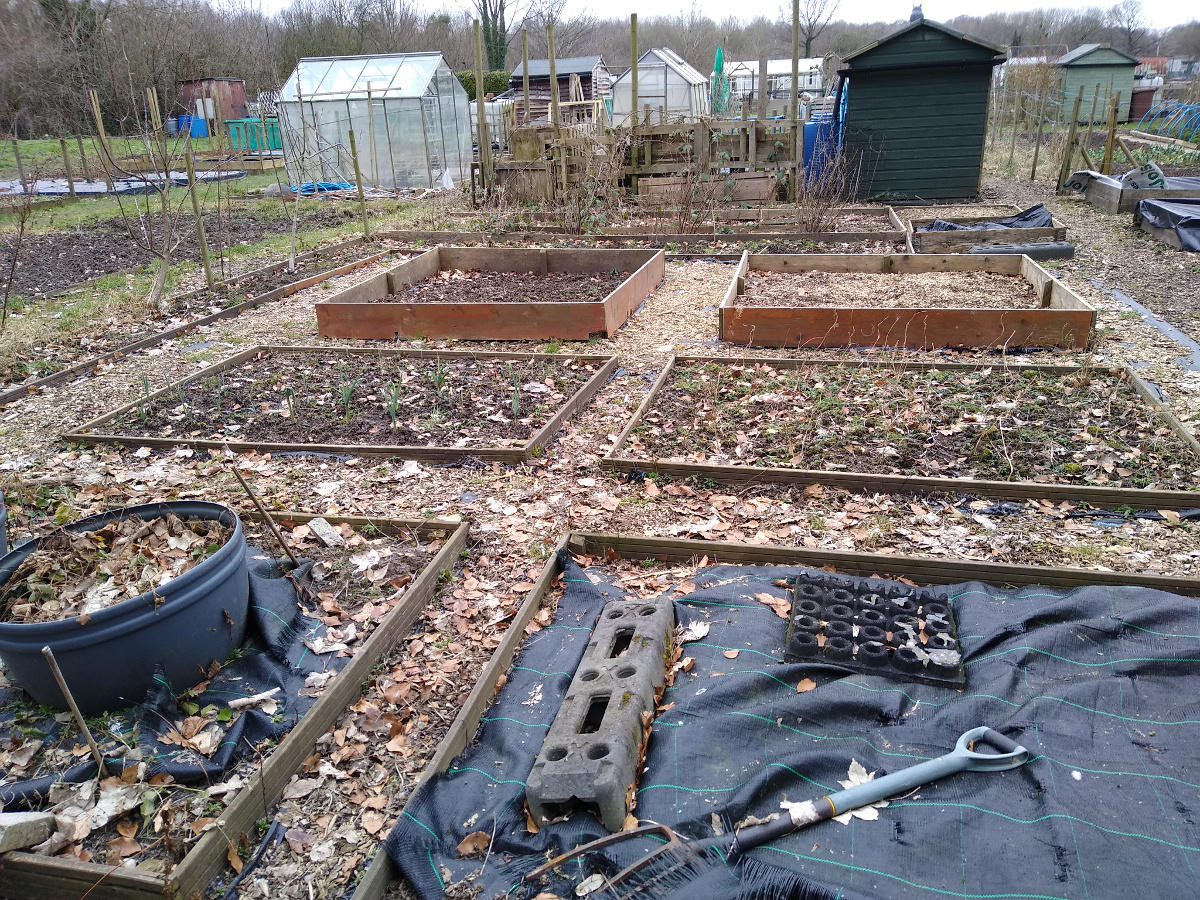
As you might have guessed, after a year’s wait, I am finally the proud tenant of an allotment. This has come about after a difficult year during which I’ve felt like I’ve been kicked in the teeth by the universe in many ways, one of them being the landslide on Castle Hill cutting off my access to the yew tree where I dedicated myself to Gwyn on Fairy Lane.
I now feel my gods have gifted me with an alternative. It is happily within a bend of Fish House Brook, which begins near my house and runs through Greencroft Valley, where I run a friends group, before joining the Ribble at Fish House Bridge on the other side of the allotments. In this I see the guiding hand of Belisama, goddess of the Ribble, along with the land spirits and Gwyn and his ‘family’ – the Tylwyth Teg or ‘fairies’.
Whereas I had been considering moving away to find a job in conservation this has led me to decide to remain rooted in Penwortham, even if it means a longish commute. I am beginning a month of cotton grass planting on Little Woolden Moss near Manchester next week, which will be my first paid contract, and a couple of paid traineeships have come up in Bolton, so possibilities are opening up.
Having spent the last decade working with the heroic poetry of the Old North, not least in my latest collection ‘Co(r)vid Moon’ whose main characters are battlefield ravens, I’m sensing a shift away from the medieval courts, where I never belonged with the Taliesins, toward a poetry of the land, to where I belong, alongside other labouring poets.*
Although I’m far from retirement age I see this as a step in maturing and and stepping up to take responsibility for leading a sustainable life as I head toward the big 40 this November.
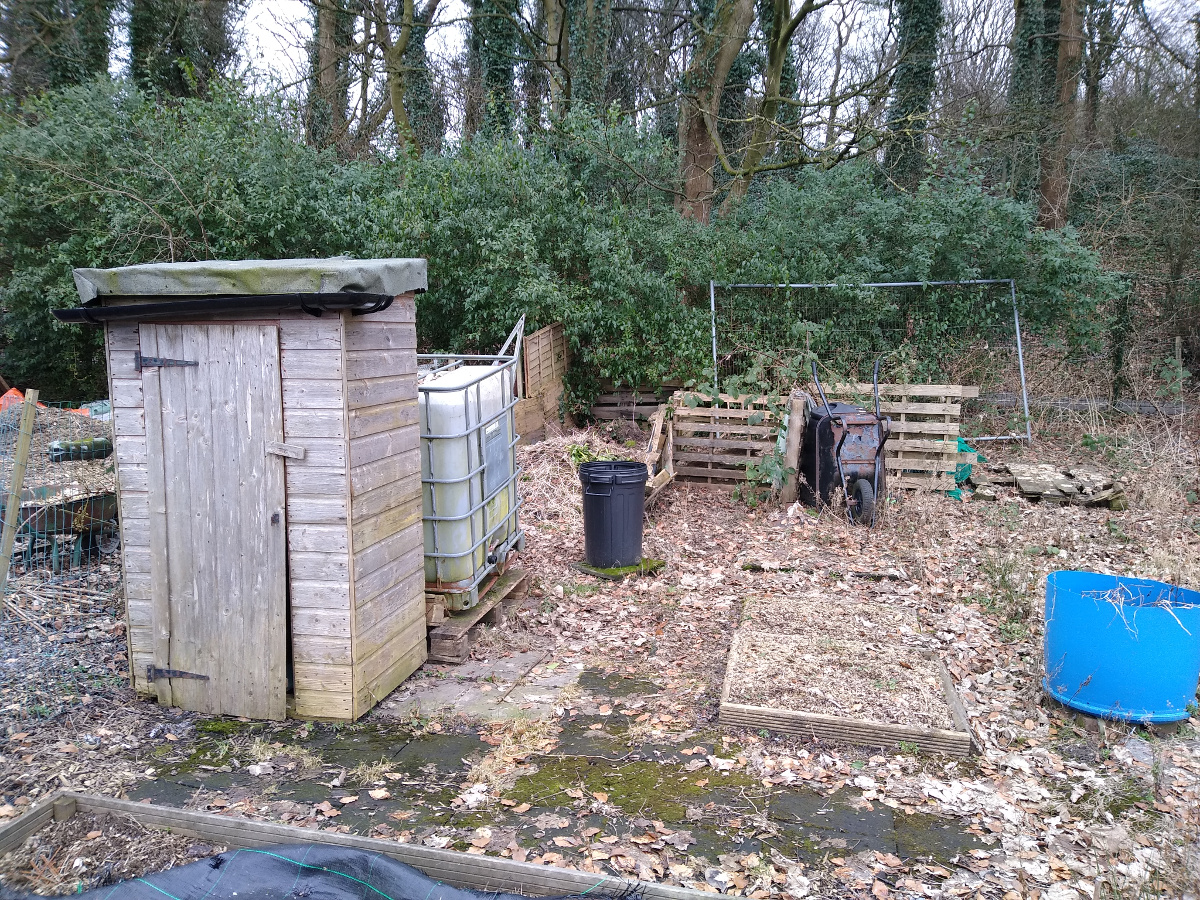
Since I took this photograph I have been clearing the paths, weeding, digging and putting manure on the beds, and chitting my first early potatoes.
I can now call myself an allotmenteer 🙂
*For example Ted Hughes and Alice Oswald whose work is based on their lived experience of working the land. (Although, of course, I do not claim to be as good!).
 The Sanctuary of Vindos