What if it was found by a ragged band of hunters and amongst them was a young man who spoke a single word that rolled like a stone from the back of his throat onto the tip of his tongue recalling the unblocking of a passageway to an ancient cave
where an unknown creature was painted in red ochre with long tusks?
What if, when he spoke its name, those old bones and the ragged chunks of skin and dirty frozen clumps of fur began to shudder and something massive began to raise itself from the ice?
What if, when it shook itself off, the boy climbed onto its back like a monkey?
Would you stare with eyes wide as frozen lakes or would you run or would you take his hand, climb onto mammoth-back, put your arms around his chest and ride away?
I wrote this poem based on a journey I undertook to find out more about my haunting by visions of mammoth graveyards. I have recently found out such places exist, for example at Yana-Indighirka and Volchya Griva in Siberia and that, more disturbingly, as the ice melts due to climate change, more mammoth remains are being exposed. This has sparked a ‘Siberian mammoth tusk gold rush’ and, in Yukatia, guided tours to mammoth graveyards are being offered along with the opportunity to join hunts.
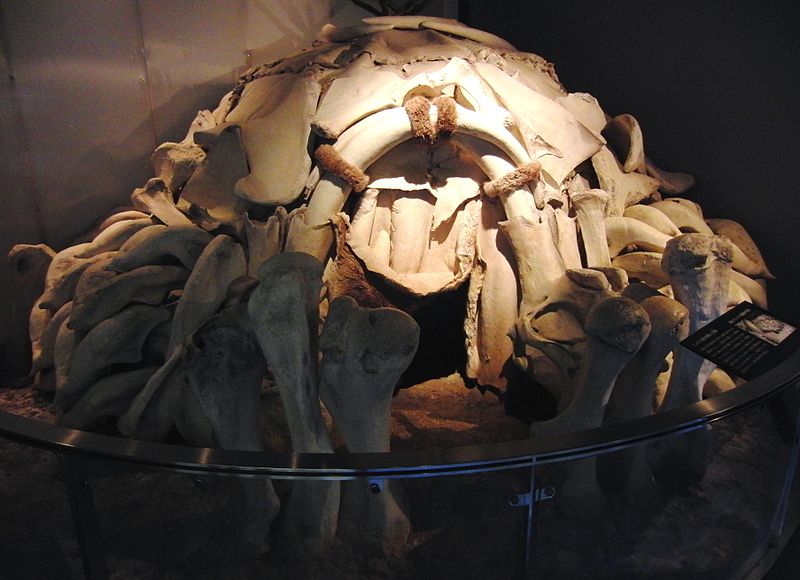
I also discovered that people in Dolní Věstonice, in the Czech Republic, and in Mezherich, in Russia, built houses out of elaborately arranged mammoth bones and that, at Kostenski, a 40 foot circular building created from the bones of 60 mammoths was unearthed – possibly a temple? These buildings are some of our oldest examples of human architecture and are suggestive of a spiritual relationship with the massive creatures with whom they shared their tundral landscape. Such care and shared communal use contrasts with the individualistic money-grabbing in our time.
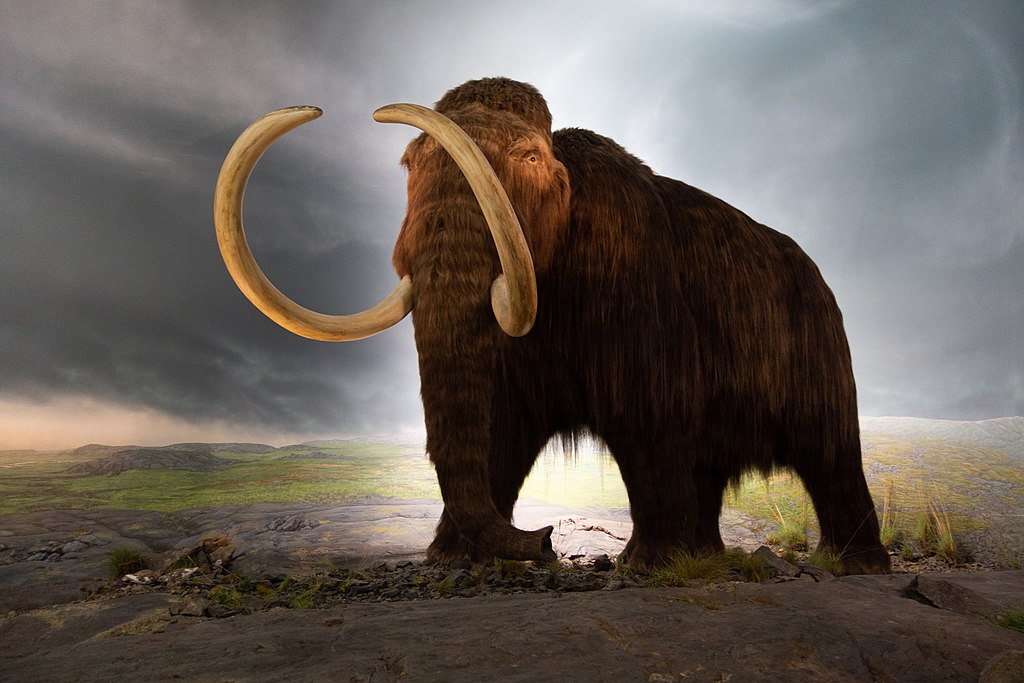
The woolly mammoth (Mammuthus primigenius) roamed not only Siberia but Europe during the Ice Age. Its remains have been found in Scotland but are most concentrated in southern England, where the glaciers did not reach for so long, particularly on the Thames.
Remains of the steppe mammoth (Mammuthus trogontherii), the woolly mammoth’s older larger predecessor, dating back 600,000 years, have been found on West Runton Beach in Norfolk.
It seems likely the mammoth played a central part in the religion and culture of Paleolithic people in Europe too. The Red Lady of Paviland (who was really a male hunter) was buried with mammoth ivory in Paviland Cave, on the Gower Peninsula, 33,000 years ago and is our earliest ritual burial. In the Franco-Cantabrian caves are numerous paintings of mammoths including the Cave of the Hundred Mammoths in Rouffignac.
There is a mammoth-shaped hole in our psyches which cannot be filled in an interglacial. Yet the memories of mammoths continue to speak to us in visions, in dreams, and, more hauntingly, in physical reality as their remains are removed from the ice.
granodiorite from Southern Scotland, Criffel granite, Shap granite, Eskdale granite, granite from Loch Doon, Borrowdale volcanics, Thornton limestone, Chatburn limestone.
Speak to me of glaciers that had no names.
Speak to me not of the death of your children and how they laid their gravestones in a ritual long long lost to us.
Speak to me not of your sacrifice in shaping this land.
We must be as stone and not mourn the snowflakes vanishing from the palms of our hands.
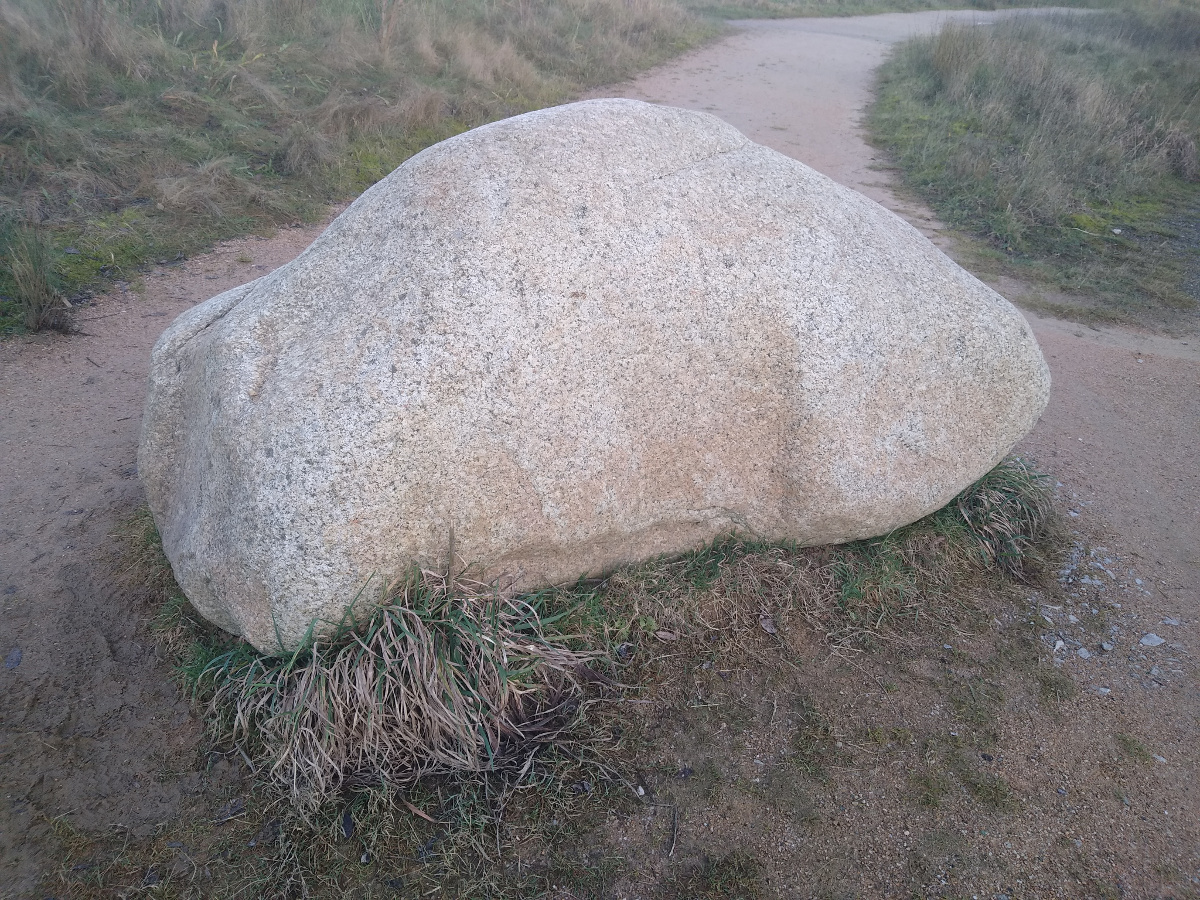
Outside the office at Brockholes Nature Reserve there is a 2.5 tonne boulder made of grandiorite which was extracted from Number One Pit beside the M6. Unlike the sandstone boulders nearby it does not fit with our local geology. This has led geologists to the conclusion it was transported from the Lake District or Southern Scotland by a glacier during the Last Ice Age 115,000– 11,700 years ago.
This reached its maximum 24,000 years ago and two of the ice advances, Heinrich 2 and 4**, extended to and covered Lancashire and Cheshire, whilst Heinrich 1 and Loch Lomond did not. When the glaciers melted they deposited their ‘suspended load’ of ‘boulder clay’ or ‘glacial till’. At Brockholes the sand and gravel were 20 metres thick leading to the area being used a quarry.
With these materials the grandiorite boulder was removed along with other erratics such as granite from South Scotland, Borrowdale Volcanics from the Lake District, and Chatburn Limestone from Clitheroe. The sandstone boulders near the car park may be local or from Pendle Hill or Longridge Fell.
Near Kirkham and Oldham, where ‘the rate of the ice melt’ was ‘equal to the movement of the ice sheet’ for a long period of time, lines of moraine (accumulations of glacial till), were deposited.
The vast volumes of water from the melting glaciers were also responsible for forging the valley of the Ribble – ‘the meander belt between the river cliffs is too wide to have been created’ by the river.
When dead ice was left behind by glaciers, became surrounded by sediment, then melted, it left kettle holes. This resulted in the formation of lakes such as Martin Mere and Marton Mere and the others that formed Lancashire’s Region Linuis ‘Lake Region’ and some of its numerous ponds.***
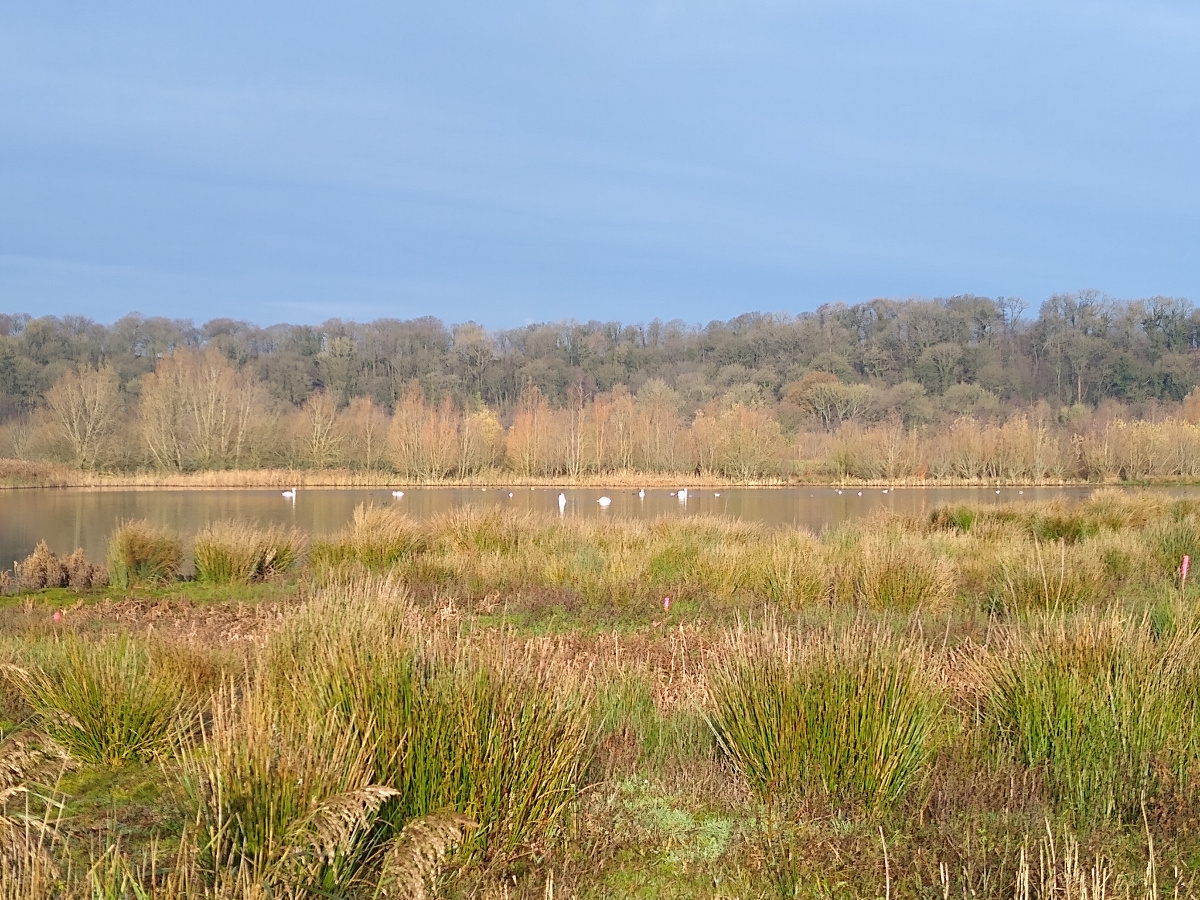
Since then we have dug out the sand and gravel and drained the lakes yet new lakes have formed in old pits. Number One Pit at Brockholes, where the grandiorite boulder was found, is now a lake and 182 species of birds have been recorded there including bittern, curlew, lapwing, and sand martins.
The Nature Reserve as we know it has originated from a combination of geological and man-made factors. In the shaping of the land during the Last Ice Age I see the work of Winter’s King and his glacial children. When I touch the glacial erratics or watch birds descending onto the lakes I see his hand.
*The term ‘erratic’ originates from the Latin errare ‘to wander’. **Heinrich events are caused by the the collapse of northern hemisphere ice shelves and release of icebergs which affect the climate elsewhere. ***Most of the present-day ponds in Lancashire formed in former marl pits dug in the 18th century.
With thanks to Geolancashire from whose Brockholes Geotrail Guide I gained most of this information.
‘I want to live, I want to love But it’s a long hard road out of Hell.’ Marilyn Manson
So it’s December the 31st and we stand at the gateway between one year ending and the next beginning. As ever I feel obliged to write a retrospective. Looking back, quite frankly, 2020 has been a shitter of a year – on global, national, familial, and personal levels.
A global pandemic. A messy Brexit. Life at home has been incredibly difficult with my dad’s ongoing health problems, my mum having a fall and a hip replacement, and my brother having brain surgery and coming to stay with us with us whilst he recovers. And this has all happened on top of me finding out it’s likely I’m autistic for which I’m in the midst of the lengthy process of getting a diagnosis.
I received the first hint that this year would prove portentous in February when I was volunteering on the Wigan Flashes Nature Reserve and noticed a profusion of scarlet elf cups (Sarcoscypha austriaca). In a blog post I posed the question: ‘Will these red cups bring good or bad luck?’
By March we had the answer – coronavirus was spreading rapidly and we entered a national lockdown. This turn of bad luck felt particularly cruel as I had left my supermarket job to volunteer with the Lancashire Wildlife Trust full time as a way into a career in conservation. The first day of the lockdown was meant to be the first day I started a conservation internship at Brockholes Nature Reserve. This got put on hold and all my other volunteering was cancelled. I was left with neither furlough from a paid job or training toward paid work with only the small income from my writing.
During the first lockdown my mum and I agreed that it was like being in Purgatory – a sentiment I have seen echoed elsewhere, for example in the Scarlet Imprint Newsletter. This makes me realise how deeply engrained Christian concepts are within our psyches, even for non-Christians, and how lacking we are in Pagan and Polytheist concepts through which to understand our situation. At several points I have wondered if the gods are punishing us on a global level for our ‘sins’ against nature and whether my family and I have done something to bring about their disfavour.
In the Brythonic tradition it is the fury of the spirits of Annwn that threatens to bring about the destruction of this world and usually this is held back by Gwyn ap Nudd – a King of Annwn. Gwyn’s father, Nudd/Lludd, also played a role in protecting Britain from three plagues – a people called the Coraniaid, a dragon’s scream, and ‘a mighty magician’ – all caused by Annuvian forces.
The term used for these plagues is gormes which also translates as ‘pestilence’, ‘destruction’, ‘oppression by an alien race or conqueror’, ‘oppressor’, ‘oppressive animal or monster’. The coronavirus is a plague and might also be viewed as an alien being or a monster of Annwn.
My prayers, conversations with my gods, meditations, and research have led me to the conclusion that we are experiencing a ‘monstrum event’ (here I resort to Latin as I haven’t found an equivalent Brythonic concept). Monstrum is the root of the word ‘monster’ and also means ‘revelation’ so seems linked with ‘apocalypse’ in its original sense (from the Greek apokaluptein ‘uncover’).
As the Beast with the Fiery Halo has ravaged Britain’s populace, underlying physical and mental health problems have been brought to the fore, accidents waiting to happen have happened, the hidden has surfaced from the deep. Many of the excess deaths were not caused by coronavirus.
If the first lockdown was Purgatory then the past couple of months have felt more like Hell on Earth. Again I struggle to find an equivalent for this oh-so-fitting Christian concept. Perhaps it is possible to see ‘Hell’ as one of the deepest and most unpleasant levels of Annwn, which is described in the medieval Welsh texts both as a paradisal place and a hellish one where souls are imprisoned and tortured in the napes of a Black Forked Toad and within the innards of a Speckled Crested Snake.
It takes a lot of work to undo our associations of these scenes with the Christian concepts notion that unpleasant experiences are the result of our ill doings and are thus punishments for our sins. Gwyn has taught me they are processes of transformation that lie beyond human morality and reason. This is my current understanding of what has been happening with coronavirus.
In the ‘hells’ that I have witnessed others experiencing I have also witnessed the power of healing. Of the miracle of the hip replacement and the remarkable intricacies of brain surgery. In this I have seen the work of Lludd/Nudd/Nodens, a god of healing, to whom I have prayed for my family’s health.
I have also seen the healing hand of Nodens in the advances in treatment for coronavirus and in the creation of the vaccines. It seems to be more than coincidence that, as a more virulent strain emerges in Britain, both the Pfizer-BioNTech and Oxford-AstraZeneca vaccines have been approved. This gives me hope that, even as we face this plague, the gods are equipping us with the tools to deal with it.
In most stories, Christian and non-Christian, a descent into Annwn or Hell is followed by a return. As things slowly improve at home, as the time my parents get vaccinated approaches, I am intuiting that our time of descent is approaching an end and I am starting to catch glimpses of the road ahead.
My internship at Brockholes finally began on the 4th of December and I am predicting it will continue within Lancashire’s current Tier 4 restrictions. I believe that due to people being brought into greater appreciation of nature by the lockdown and, unfortunately, because of the climate crisis, in the future there will be more jobs in conservation and am tentatively hopeful about finding work.
I am beginning to feel, for the first time in a long time, like in the words of a Marilyn Manson song that I listened to a lot at a dark point in my life many years ago, ‘I want to live, I want to love,’ but I am painfully aware it is going to be ‘a long hard road out of Hell.’
For three days she journeyed there and for three days journeyed back
to return a lost son to return a lost brother and I alone stand witness at the standing stone
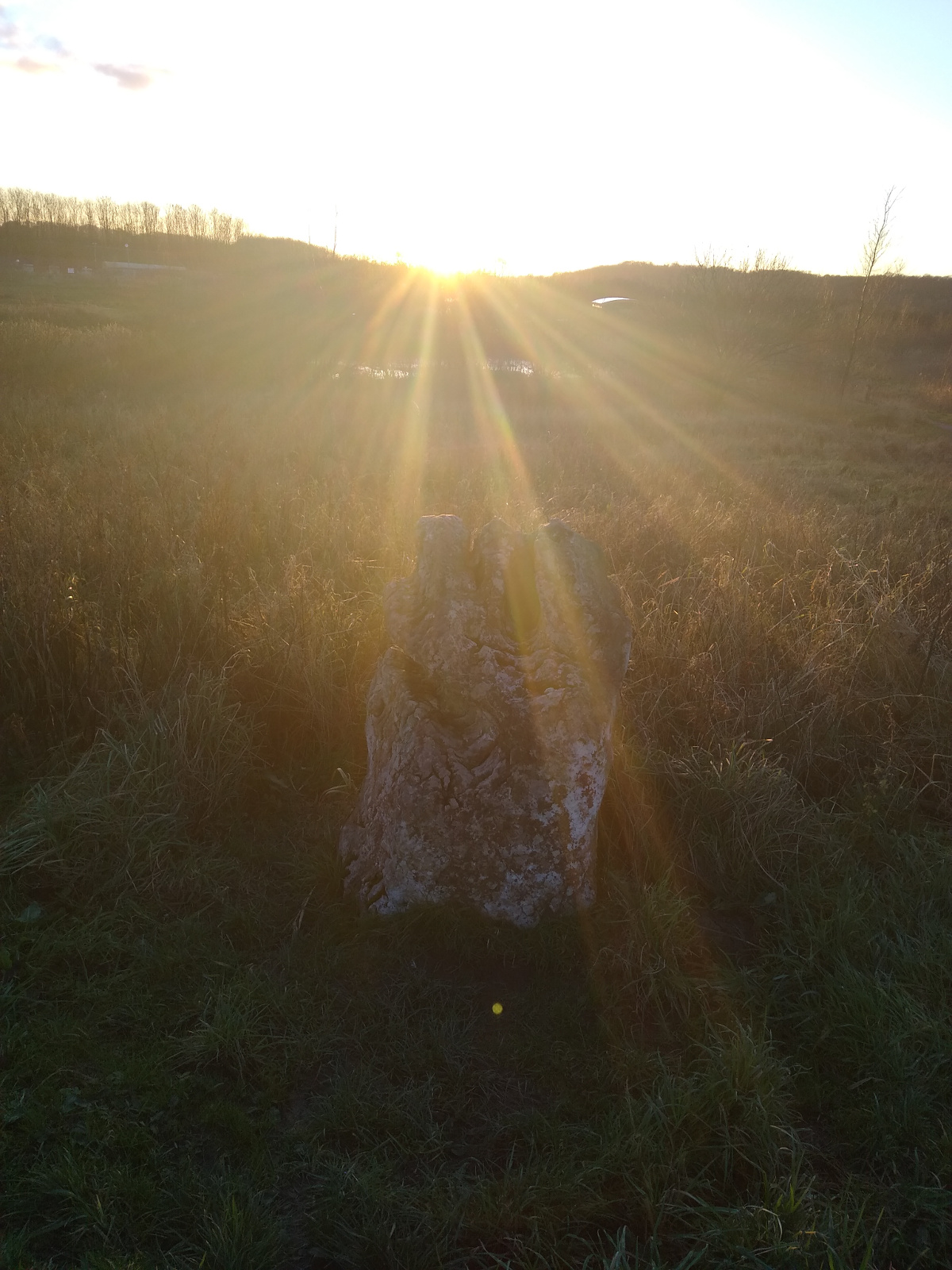
that might have been placed here for this day as his golden rays shine over the marshland.
How did she win him back from Winter’s King? That is for her alone to know and the birds who sing.
This poem is a follow up of my poem ‘I light a candle for Epona‘ based on the journey of the Great Mare to the Otherworld to win back her lost son. I linked this to my brother’s period of hospitalisation. I’m glad to say he is back now and on the road to recovery so many thanks to the mare goddess and to those who sent good wishes and lit candles.
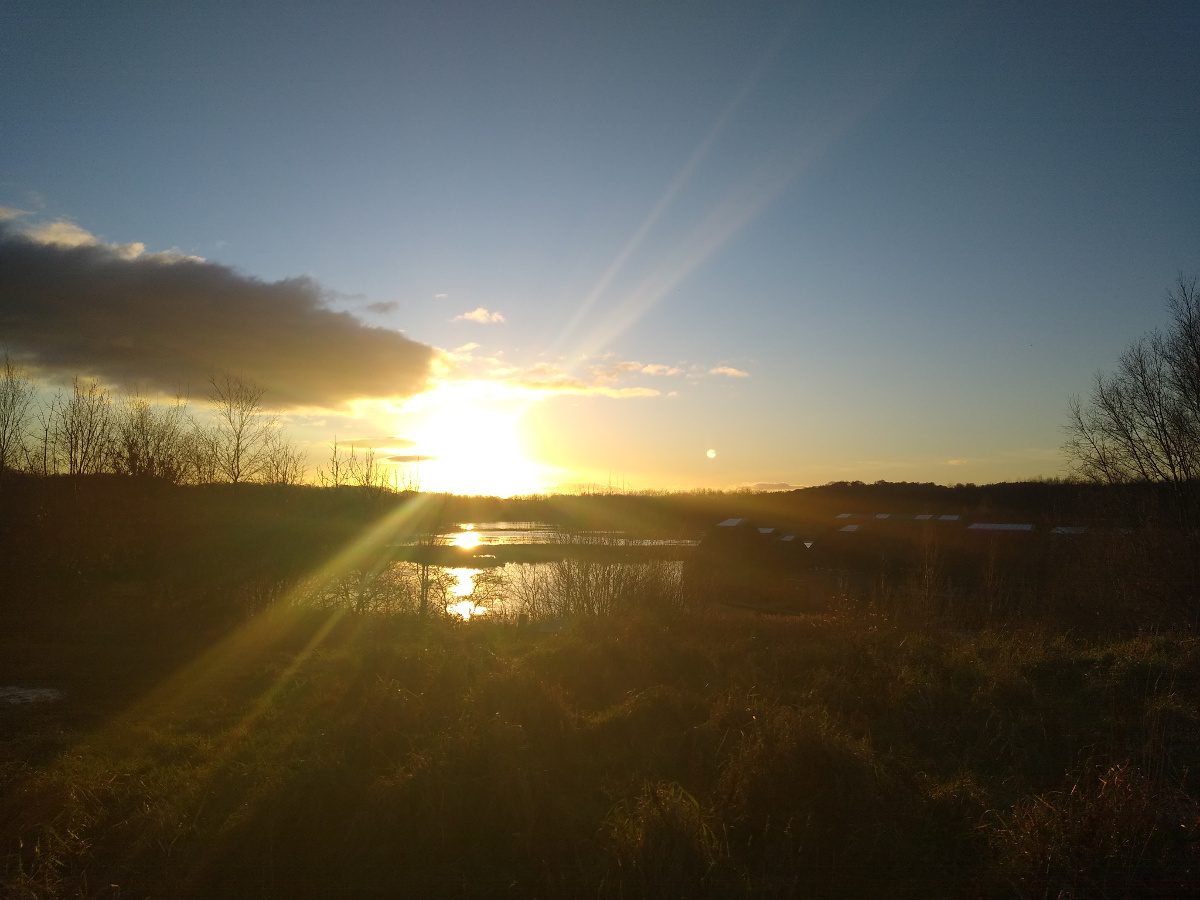
The photographs are of the sun beginning to set over the winter solstice stone at the stone circle at Brockholes Nature Reserve and over the visitor village and Meadow Lake.
with all the sisters who have lost their brothers.
We flit like bats against the walls.
We are searching for our oldest animals
to lead us through the darkness
to the prison of the child now a young man.
On the solstice when the sun stands still by candlelight
we will bring him back.
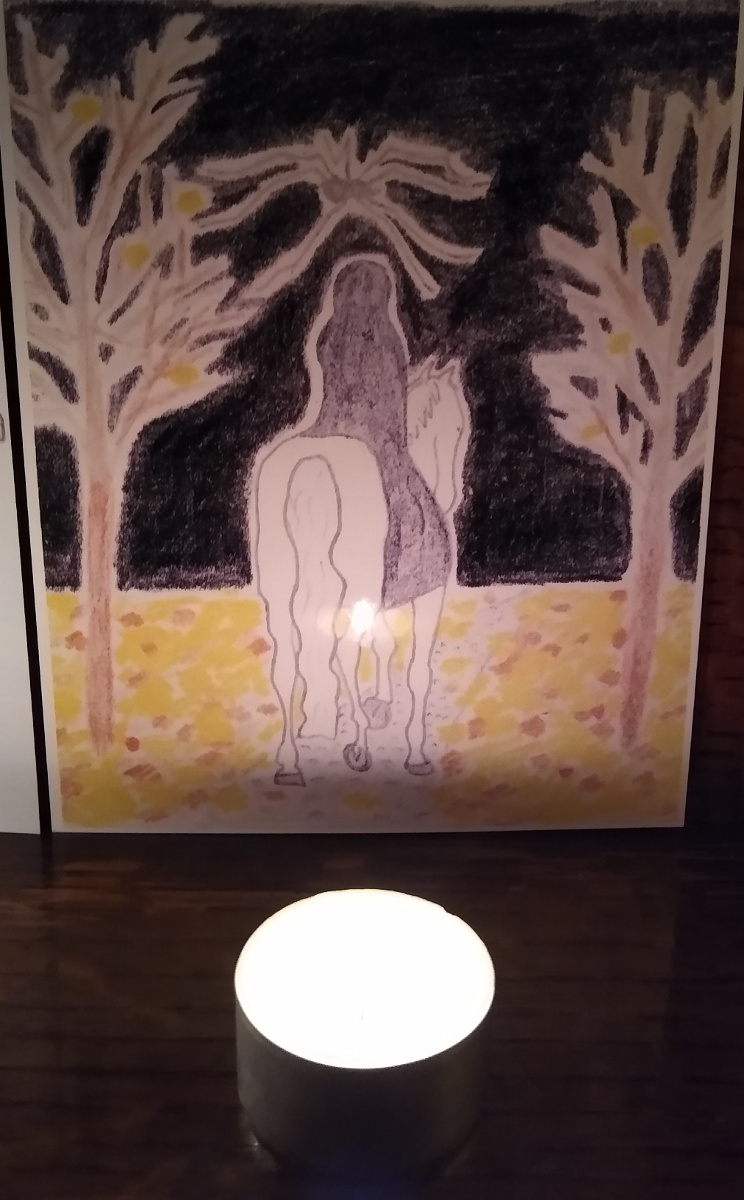
Today, December the 18th, is the festival of Epona, the Great Mare. Over the past few years the story of the search of the Mare Goddess for her lost son has been revealed to me as a relief of Epona riding through the Otherworld with engravings of animals, Rhiannon’s loss of Pryderi, and Modron’s loss of Mabon have sealed into one.
It’s my personal belief the episode in Culhwch ac Olwen featuring the search of Arthur and his men for Mabon with the help of the Oldest Animals and his rescue from the House of Stone replaced an earlier version in which the Great Mare (Epona) / Great Queen (Rigantona) / Great Mother (Matrona) searched for her son and rescued him from Annwn, where he was taken by his father, Annwn’s King. A similar story is told in the modern film, Labyrinth, where Sarah rescues her brother from the Goblin King.
It has taken on a personal meaning for me this year because, at the beginning of the month, my brother was admitted to hospital for brain surgery. It went well and he came back home to stay with me and my parents to recover, but was readmitted due to complications. We are hoping he will be returning from the hospital, a liminal place like the House of Stone that was Mabon’s Annuvian prison, between sickness and health, life and death, some time after his reassessment on the winter solstice.
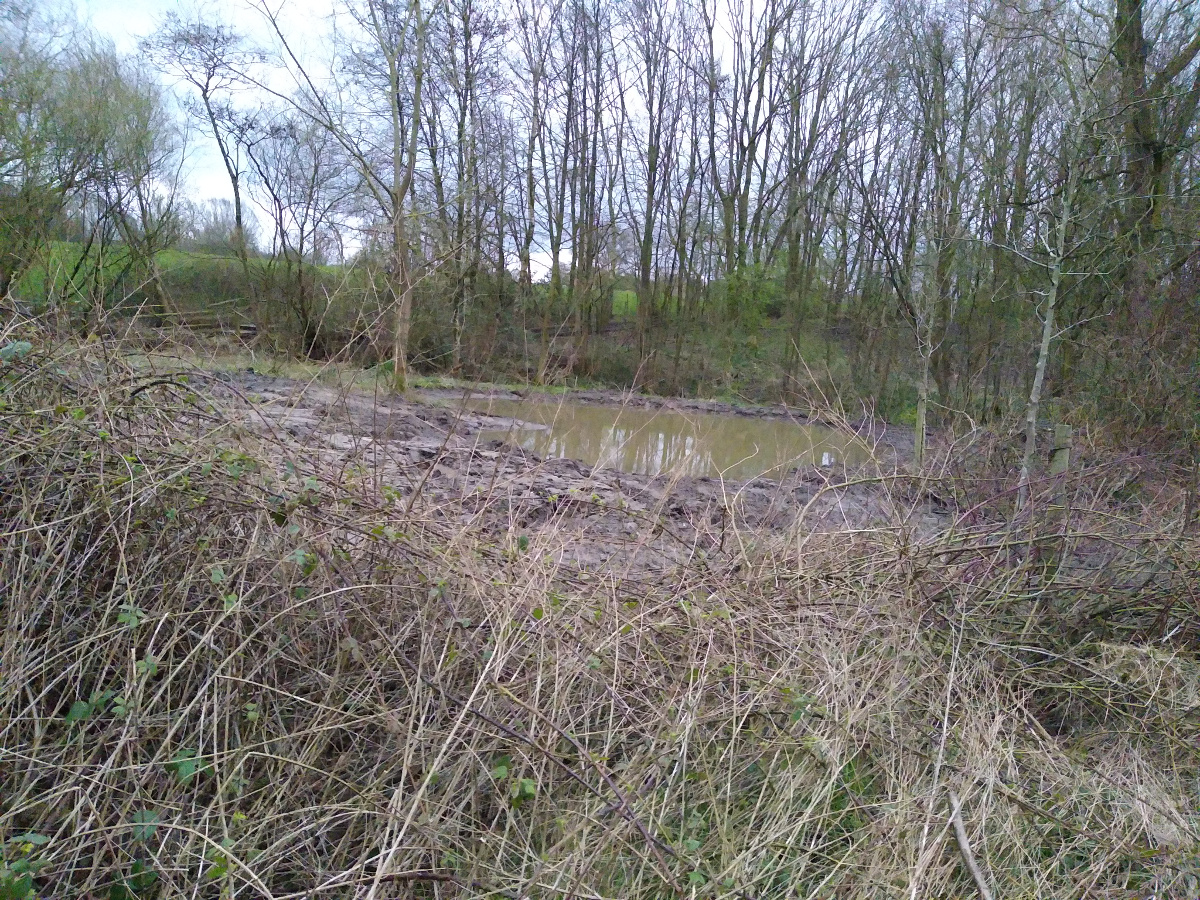
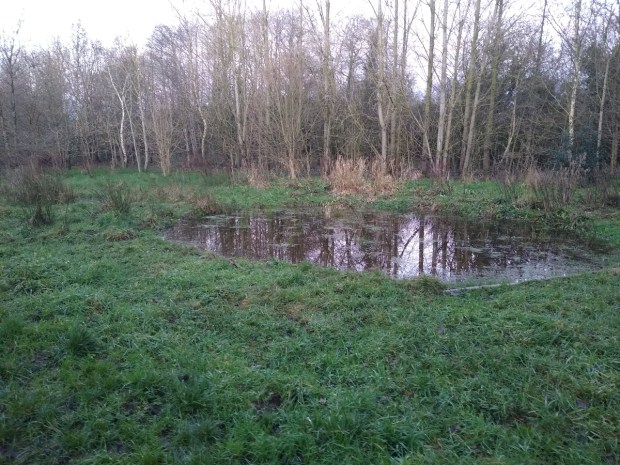
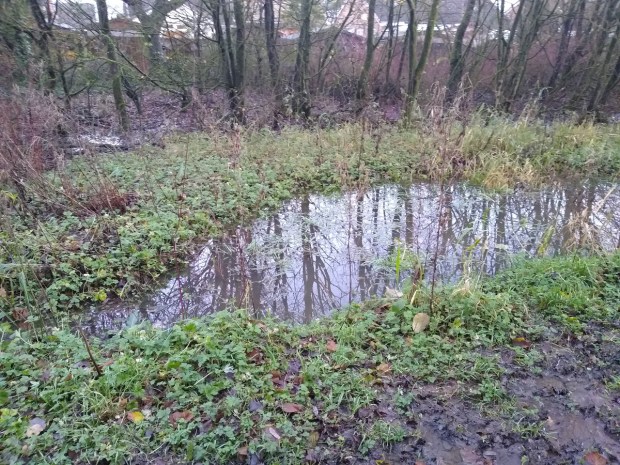
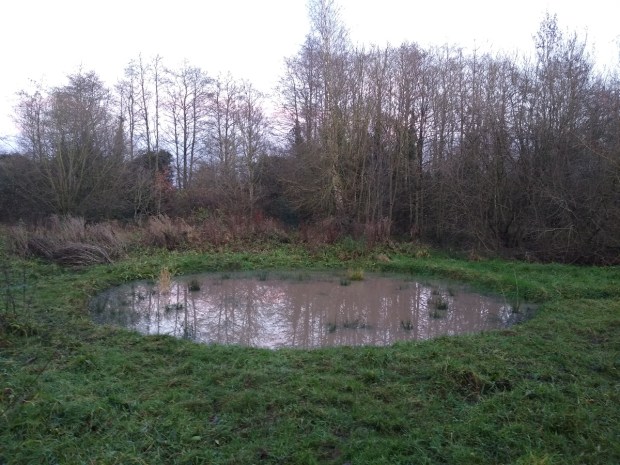
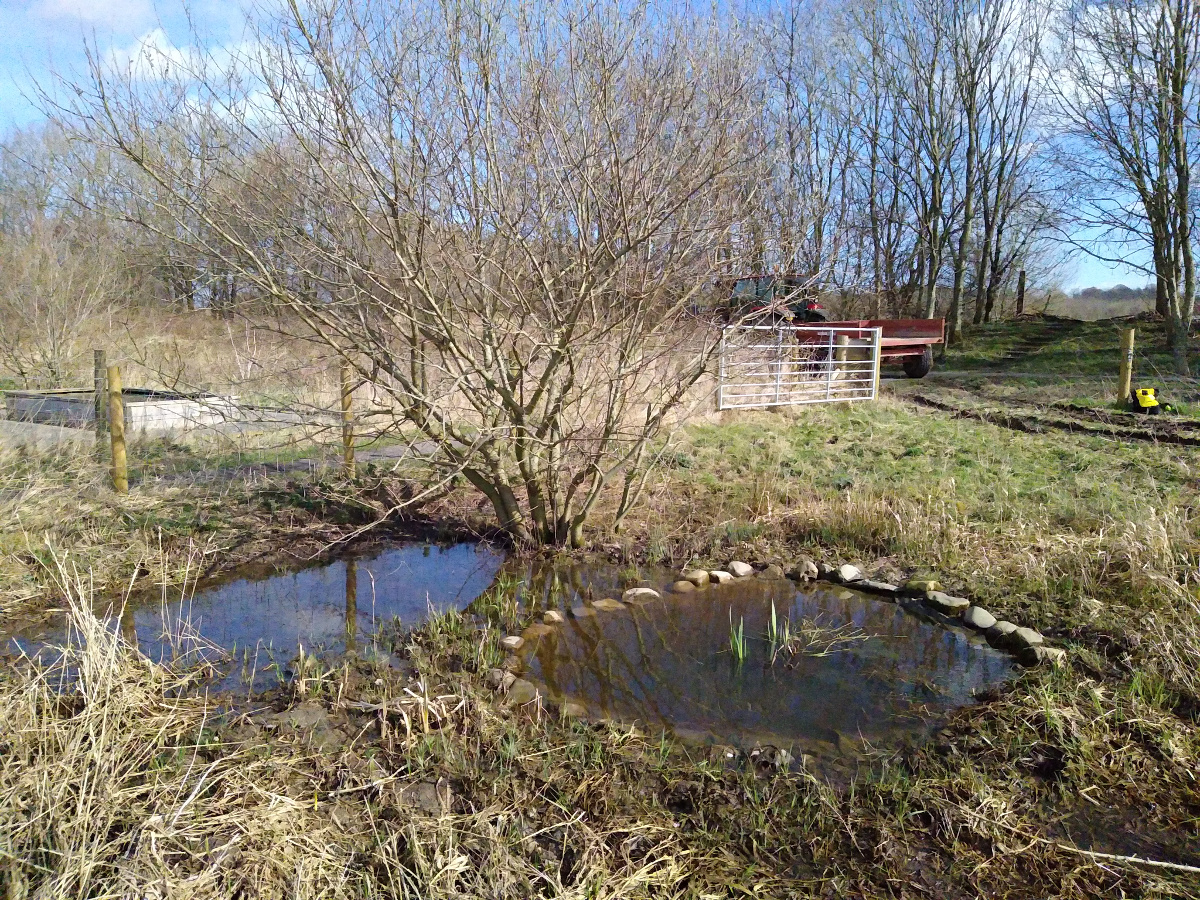
Over the past year I have been observing with interest within my locality the development of a project run by the Lancashire Wildlife Trust and funded by Natural England that aims to create new ponds and improve existing ponds for Great Crested Newts. In Hurst Grange Park, Walton Park, near Dog Kennel Wood, and at Brockholes Nature Reserve I have seen old ponds dug out and new ones created and this is only a small portion of the work that is taking place across Lancashire.
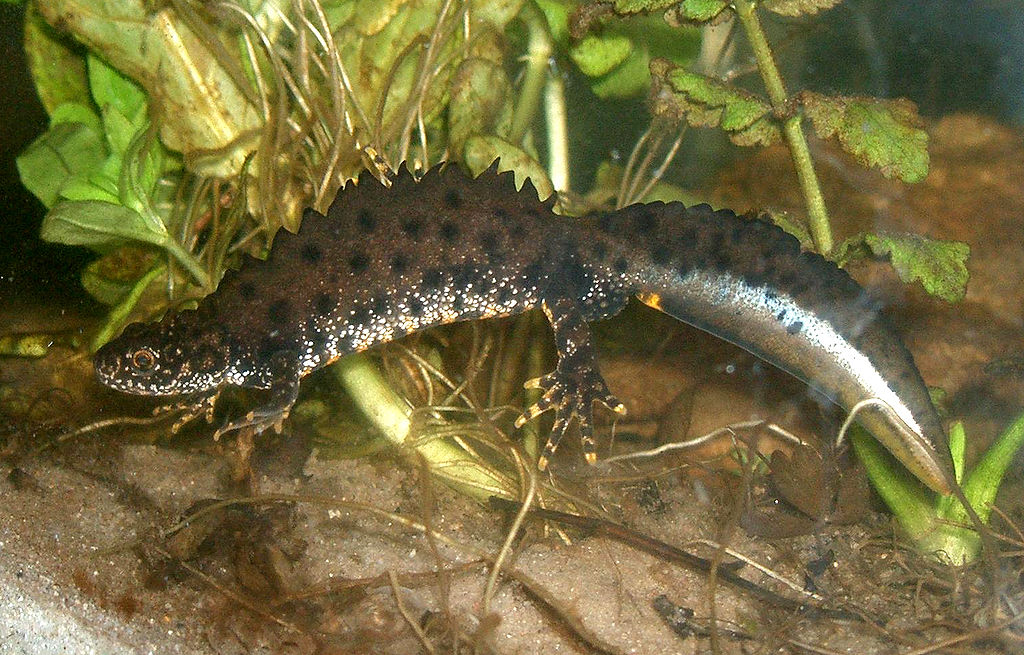
The great crested newt is ‘the UK’s most pond-dependent amphibian’. Since the last half of the twentieth century it has been in decline due to the destruction and loss of the pondscapes it inhabits. Many ponds on agricultural land have been filled in or destroyed because ‘they reduce the extent and crop yield of fields and are no longer needed for livestock due to piped water systems’. More have been got rid of to make way for housing, roads, industry, commerce, and recreation.
Some ponds have been lost to natural succession – if a pond is not regularly cleared of vegetation the dead plant matter builds up and the pond is filled in and dries out. Chemical pollution, nutrification, and the introduction of fish also make ponds unsuitable for great crested newts.
Another factor is the loss of terrestrial habitat – great crested newts favour ‘rough grassland, scrub and woodland’ and need dead wood and underground crevices beneath roots to shelter. Habitat fragmentation caused by human-made obstacles to their movement is another cause of decline.
North West England has ‘the highest pond density’ in England and Wales. Whilst many of these ponds are ‘flooded, abandoned marl pits’ dated to 150 to 200 years ago ‘they are interspersed with ponds of diverse origin’. Some are also man-made such as ‘brick pits, tile pits, pottery clay pits, gravel pits, sand pits, rock quarries, peat diggings, spoil hollows, water mill ponds, bomb craters, saw pits, mine entrances, textile mill lodges, public reservoirs, farm reservoirs, angling ponds, man-made subsidence hollows (flashes)… moats, duck decoys,’ and ‘ornamental ponds’.
Other ponds are much older and of natural origin such as ‘proglacial lakes, meltwater channels, kettleholes, inter-dune slacks, cut-off meanders and ox-bow lakes’ and ‘ancient subsidence hollows’. These could date back to after the Ice Age and have existed for over 10,000 years during which lowland Lancashire was a water country* of marshland, peat bog, reed bed, alder carr, willow scrub, and damp oak woodland interspersed with countless lakes, ponds, and pools – perfect newt habitat.
Great crested newts are one of Europe’s oldest amphibians. They belong to the family Salamandridae. The remains of their ancestors, salamanders, have been dated to the Jurassic (160 million years ago). The great crested newt (Tritutus cristatus) developed as a species 40 million years ago and spent the Ice Age in the Carpathians then expanded its range across the rest of Europe after the glaciers melted.
It is possible to imagine a march of great crested newts moving slowly northwards, much like our ancestors, from pond to pond, crossing the land-bridge of Doggerland, making their homes here in Britain.
The great crested newt is so dependent on ponds because they are central to its life cycle. After hibernating through the winter under dead wood or underground it emerges between February and April and moves to ponds to mate. The male chooses a display area known as a ‘lek’ in an open part of the pond. Displaying his remarkable crest he rocks, leans, and whips and fans his white-striped tail to waft pheromones at the female. Once he has gained her interest, touching his tail with her nose, he deposits his spermatophore, which she collects in her vent before fertilisation takes place internally.
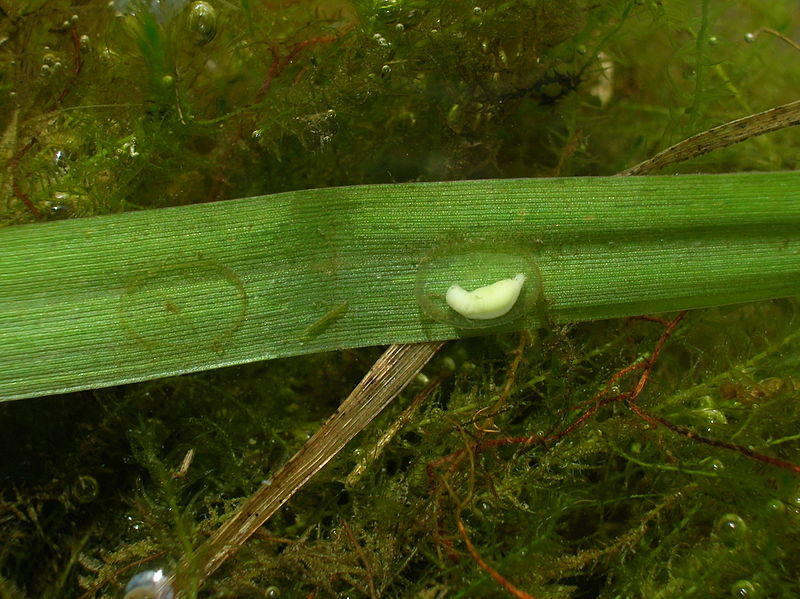
The female lays around 250 eggs in a jelly capsule with a light yellowish centre 4.5 – 6mm long on the submerged leaves of plants, carefully wrapping them with her back legs. Species favoured include grasses such as sweet or flote grasses (Glyceria spp.), small wide-leaved plants such as water mint (Mentha aquatica), and narrow-leaved plants such as water forget-me-not (Myosotisscorpioides).
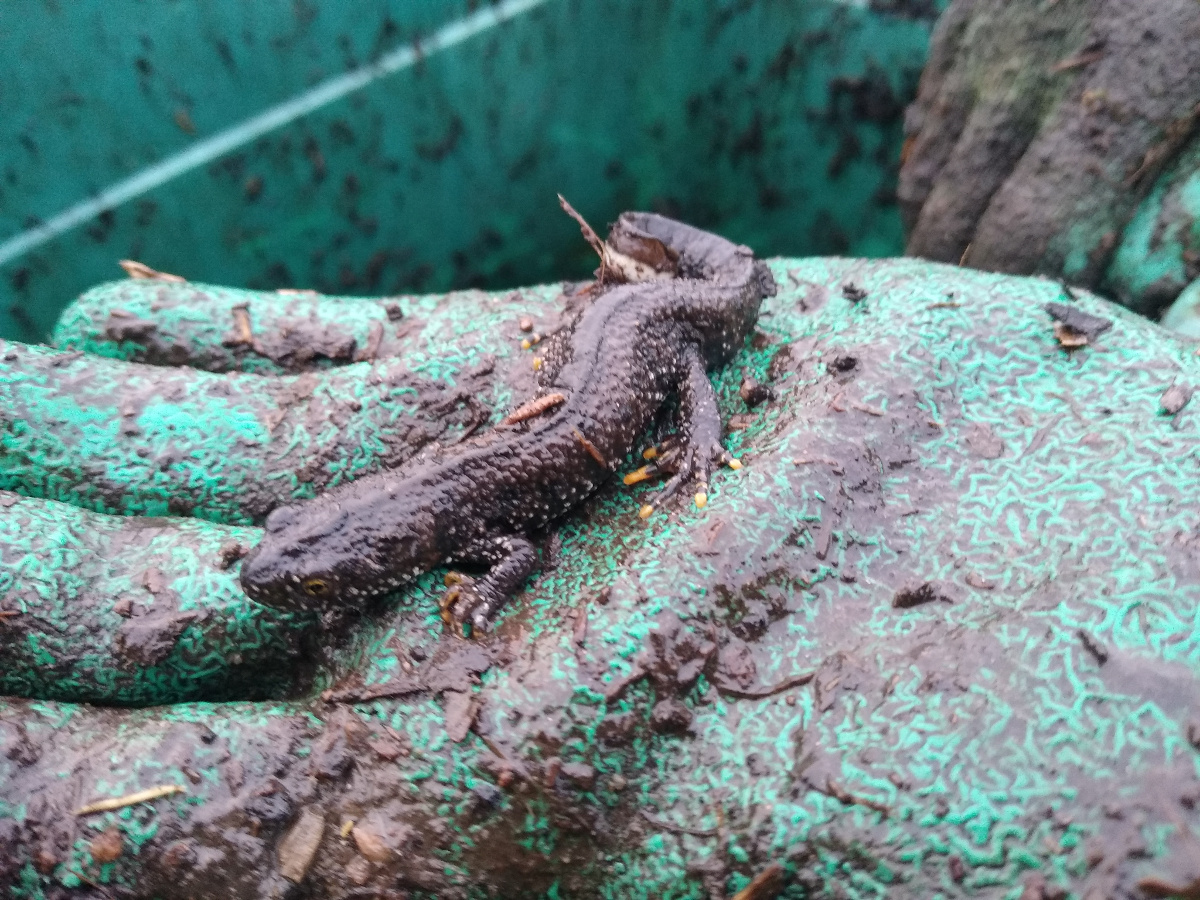
The larvae hatch and develop in the pond and reach a length of 50 – 90mm before metamorphosing into juveniles known as ‘efts’ who grow up to 120mm in length and leave the pond for the first time. They have all the features of adults – black or dark brown skin with a warty appearance and orange ‘nail varnish’ on their claws, but it isn’t until the second season that the distinctive black patterning on their fiery bellies which marks each as an individual becomes fixed and, upon reaching sexual maturity that the male develops his eponymous crest and white tail-stripe. Males reach a maximum length of 170mm and females 130mm and on average they live for around 14 years.
Ponds are the only food source for newt larvae and and are an important part of the diet of adults, who feed on the tadpoles of frogs and sometimes other newts and invertebrates such as ‘water lice (Asellus spp.), water shrimps, small snails, lesser water boatmen (Corixa spp).,’ ‘fly larvae including the phantom midge (Chaoborus spp)’ and also ‘zooplankton such as water fleas (Daphnia spp)’. They also forage above ground, eating invertebrates ‘such as earthworms, insects, spiders and slugs.’
Most of the foraging activities of great crested newts take place within 250m of their breeding pond. When the juvenile newts disperse they may travel up to 1000m to colonise new ponds and attract a mate. Great crested newts fare best in a metapopulation – ‘a group of associated populations’ who ‘breed in, and live around a cluster of ponds.’ This means there is less threat if one or more ponds are lost.
Thus current conservation efforts are focusing on areas that are already well endowed with ponds in the North West. A whole new terminology, coined by Robin F. Grayson in 1994, has developed around this topic. A pondscape is a ‘landscape with six or more ponds shown on Pathfinder maps in each adjacent 1 km square of the National Grid.’ A ‘core pondscape is ‘where the mapped pond density is 15 or more ponds per 1 km square’. A pondway is ‘a linear tract of pondscape, typically 10 or more km in length’. A pond supercluster is ‘a large tract of pondscape, typically covering 100 square km.’
Pondways have been identified across Lancashire. I was delighted to find out there is a South Ribble Pondway, which is located not only in the borough of South Ribble, but covers a strip 25km long and 5km wide from the estuary of the river Douglas to Brockhall Hospital in Blackburn. Grayson links the end of the pondway with the failure of Northern Drift – sands, clays and erratics deposited by glaciers. There is also a North Ribble Pondway 9km long and 2.5km wide, a Wigan Pondway that links to the South Ribble Pondway in Croston that stretches 50km, and a Fylde Supercluster.
The creation of pondscapes for great crested newts fits well with other projects aiming to restore the water country such as the re-wetting of the drained wetlands around Martin Mere (WWT) and Leighton Moss (RSPB) and peat bogs such as Chat Moss and Winmarleigh Moss (LWT).
As winters become cooler and wetter and summers hotter and drier as a result of the climate crisis, the restoration of wetlands will be essential not only for human needs such as flood mitigation and carbon capture, but as homes for the wetland plants and creatures who are at increasing risk due to human and climatic pressures.
*The area around Martin Mere was known as ‘the Region Linuis’ ‘the Lake Region’ and John Porter refers to the Iron Age Setantii tribe of the Lancashire lowlands as ‘the Dwellers in the Water Country’.
SOURCES
Robin F. Grayson, ‘The Distribution and Conservation of the Ponds of North West England’, Lancashire Wildlife Journal, Numbers 2 & 3, (1992/3)
Robin F. Grayson, ‘Surveying and Monitoring Great Crested Newts’, English Nature, vol. 20, (1994)
Tom Langton, Catherine Beckett, and Jim Foster, Great Crested Newt Conservation Handbook, (Froglife, 2001)
‘New life to Europe’s oldest reptile and amphibians’, LIFE-Nature Project, (2006)
white paint spots orange nail varnish road-marking tail
cannot capture his majesty.
When he comes to me with his great tail-question forefeet planted firmly on the floor
waxen crest waving like a dragon’s
and asks me to bear his progeny – in back-leg leaf origami to fold up our eggs
I am tempted by his awesome belly-signature
the colour of fire the setting sun reminding me of his salamandrine past in ponds and pools of the Jurassic
to make his lek my dwelling place and give birth to efts –
each with their unique belly-stamp only one of each in this ever-burning universe
with a fire-tipped tongue give them mystical names – Sun-Spotted, Fire-Born, Gold-Eye, Dragon Crest, Alchemist.
He forgets I am a nun – instead
I promise to renew the pond-ways, the pond-scape, the ecology of land and language so he, his mate, his young will inspire poetry here on and on.
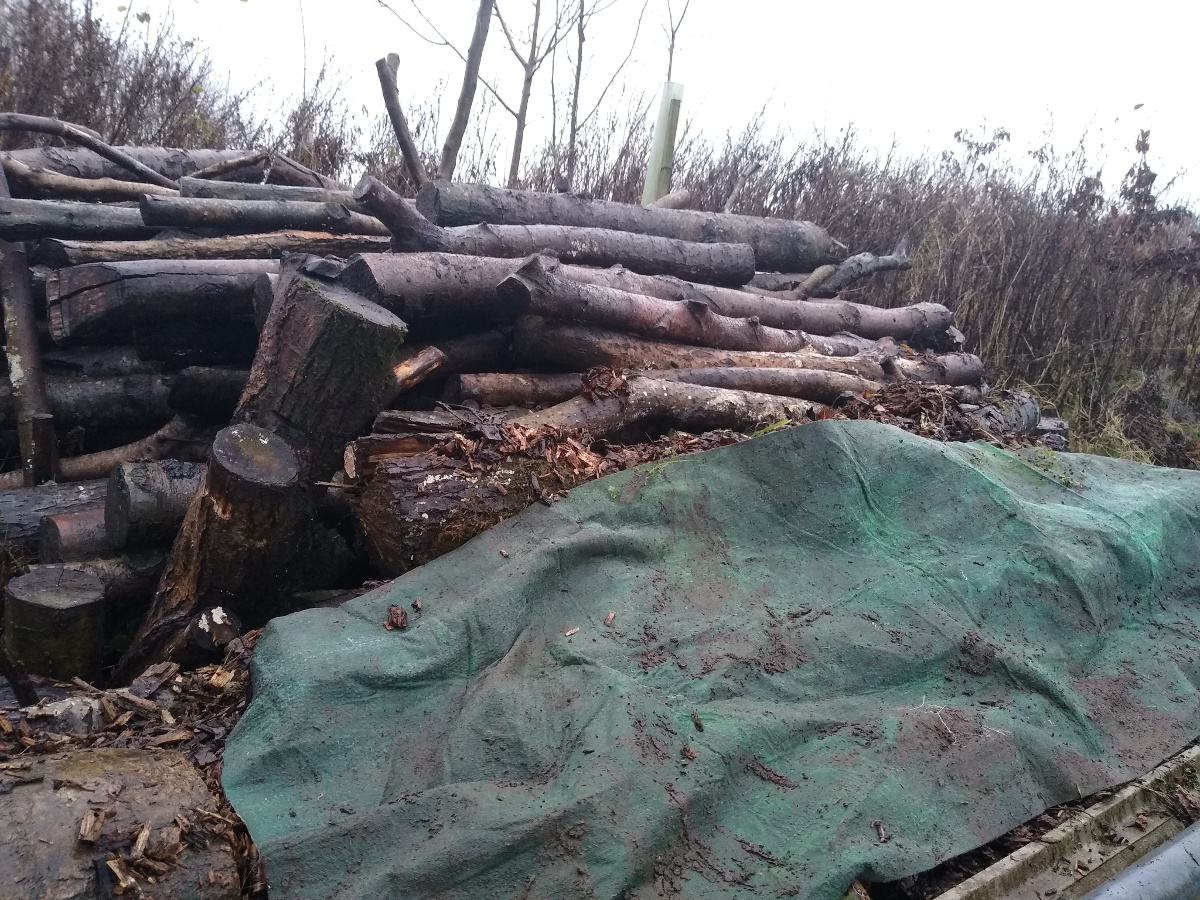
*I recently started a conservation internship at Brockholes Nature Reserve and the task of the volunteer work party on Tuesday was building habitat heaps from alder logs. Later in the day, serendipitously, Lorna Bennett, the reserve officer, found a great crested newt along with approximately 20 adult and juvenile smooth newts, 2 juvenile toads, and 5 frogs whilst moving some old compost bags. These amphibians have been placed safely into a habitat heap to hibernate over winter before they emerge in spring and hopefully head to the new ponds to breed. The ponds were created for them by LWT’s work with Natural England to remedy the decline in great crested newts.
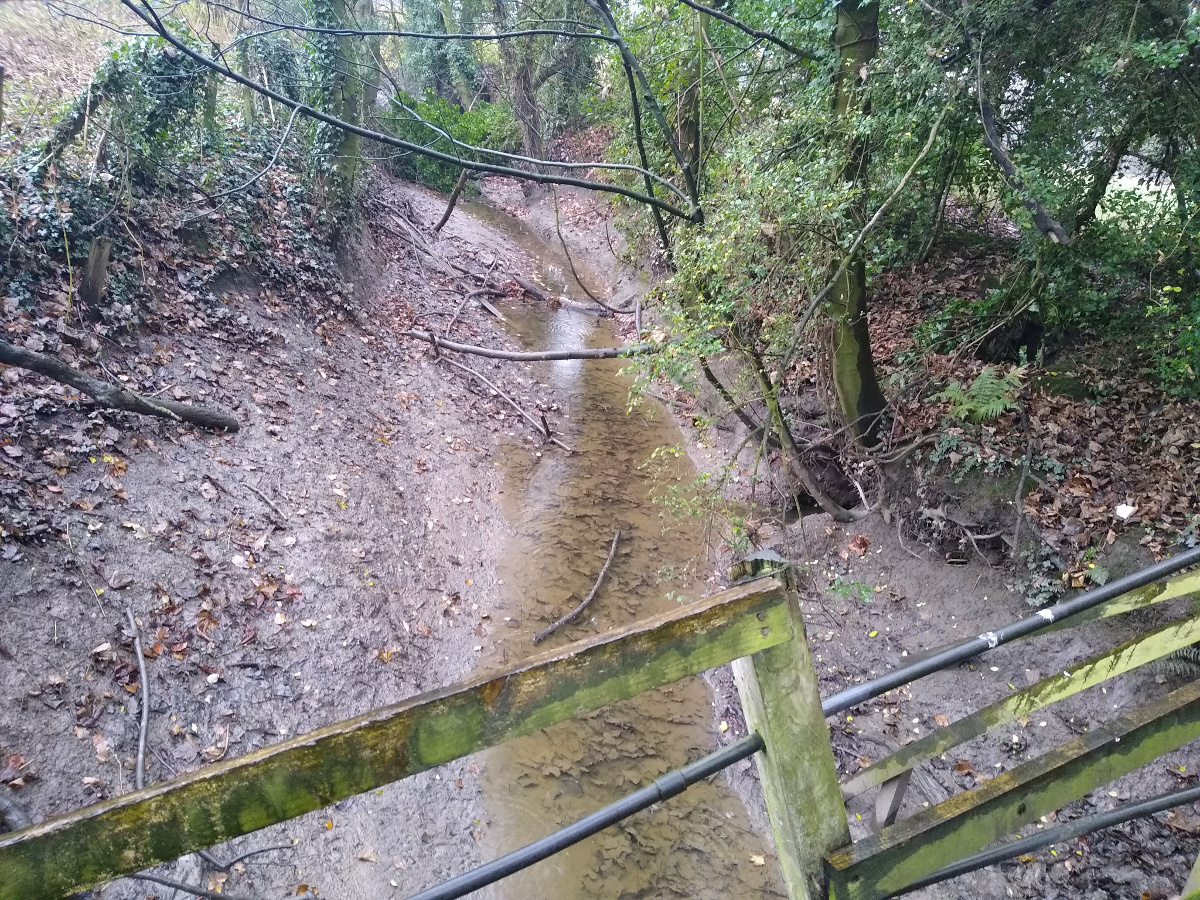
At the beginning of last month, the day after the heavy rain and flooding, I saw an otter. I was crossing a small bridge over one of the tributaries to the Ribble, taking the side route after yet another bridge had been removed or blocked because it had become too dangerous.
As I crossed and looked upstream my eyes were drawn to what, at first, I thought was a tyre. I then realised it was in fact a rump of sleek fur and beneath the water I made out legs and an otter-shape. Thrilled and excited I was torn between the impulses to stay stuck-eyed in this wonderful moment or to try and capture it on the camera of my phone for longevity and unfortunately the latter won out. Having fumbled off my thick gloves, turned my eyes to the screen to enter the pin, and opened the camera, by the time it came into focus, the little hump of the miniature sea monster had all but gone.
I didn’t take a picture at all and, the day after when I returned, the water was much lower – far too low for an otter to swim. I realised the moment I had witnessed had been exceptional, for not often do both heavy flooding and a high tide make it possible for an otter to swim upstream.
Since then I’ve returned to look for paw prints and spraint, but found nothing. I’m guessing I’m unlikely to find anything in areas of the Ribble that might be erased by the tides. Still, I’ve been looking out for other signs such as tunnels in the grass and rolling places. I’m aware the Ribble Rivers Trust have filmed otters on the river and farmland locally.
*
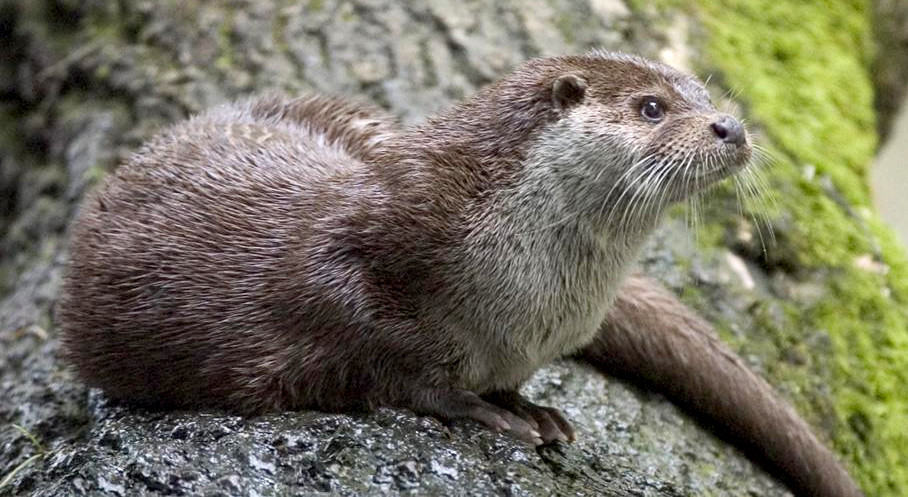
This got me researching the natural history of otters and their cultural representations. Otters belong to the Mustelid family, which includes badgers, weasels, stoats, skunks, and pine martens. They evolved 30 million years ago (in contrast to hominids have only been about for 2.7 million years). There are 13 species of otter and those we see in the wild in Britain are European otters (Lutra lutra).
On average male otters are 140cm long and weigh 10kg and female otters are 105cm long weigh 7kg. The females begin to breed at 2 years old and give birth to 2 – 5 pups. The males leave them to raise the cubs alone and they must be taught to swim and catch fish before they leave home after 18 months. They can live up to 10 years but usually only survive for 5 due to the countless dangers they face.
Otters lead liminal lives between land and water patrolling territories up to 40km long. Within a territory they have a number of holts, underground dens formed in the cavities of tree roots or in old fox earths or rabbit burrow, along with resting-places called hovers, and lying-places called couches.
To survive the wet cold conditions they have developed a thick, thermal, waterproof pelt with two layers – an undercoat of short hairs and a top layer of guard hairs totalling 70,000 hairs per square centimetre.
Their metabolisms are so quick they must eat 15 per cent of their body weight a day – 1 1/2kg. Their favoured food is eels because they move slowly and have plenty of fat on them. They also consume fish, shell fish, and amphibians, turning them inside out to avoid the poison on their skins. Ducklings and rabbits are also occasionally on the menu, along with slugs, snails, and dragonfly larvae.
The end product is spraint, which is used to mark their territories, and is renowned for its sweet smell, like jasmine tea. In an otter’s spraint the shells and bones of their last meals can easily be seen.
In the 1960s it was noticed that otters were disappearing rapidly from our rivers – the result of the use of organochlorines and other chemicals that built up in their reproductive organs and left them blind. These damaging chemicals have been banned and since the 1990s efforts have been made to clear up and restore our rivers. This has led to the reappearance of otters on the Ribble with a 44 percent increase being claimed by the Environment Agency in 2011 (although this was the result of an increase in spraint rather than individual otters). The otter is described by Miriam Darlington as the ‘spirit level’ of our rivers – as an apex predator a measure of their health.
*
The term ‘otter’ derives from the Old English otor which shares similarities with the Norwegian oter, Icelandic otur, and Swedish utter. It originates from the Proto-Indo-European *udrós ‘water animal’.
In the Norse myths we find a dwarf named Ótr who is the son of the king Hreimdar. Ótr takes the form of an otter and is killed by Loki for his pelt. Hreimdar demanded a large weregild for Ótr’s death – his pelt stuffed with yellow gold and covered with red gold. Loki covered all of Ótr but one whisker, which he was forced to conceal with the cursed ring, Andvarinaut. Afterwards greed for these treasures, known as Otter’s Ransom, brings disaster and death to Hreidmar and his other two sons.
In Welsh the otter is known as dŵr-ci, in Irish as dobhar-chú ‘water dog’, and in Scottish as dobhar or beaste dubh (black beast). These names also refer to a folkloric creature known as ‘King Otter’ who, in Ireland, was half-fish and half-dog and resembled an otter, but was five times as large.
The otter is the central character in the literary classics Tarka the Otter by Henry Williamson and Ring of Bright Water by Gavin Maxwell. It appears in poems by Ted Hughes, Seamus Heaney, and Elizabeth Bishop, and recent books by authors tracking its disappearance from and return to our rivers such as Otter Country by Miriam Darlington and The Otter Among Us by James Williams.
In the Wildwood Tarot the otter is the Page of Vessels and John Matthews claims it is one of the oldest animals in the story of the search for Mabon, but I cannot find his source.
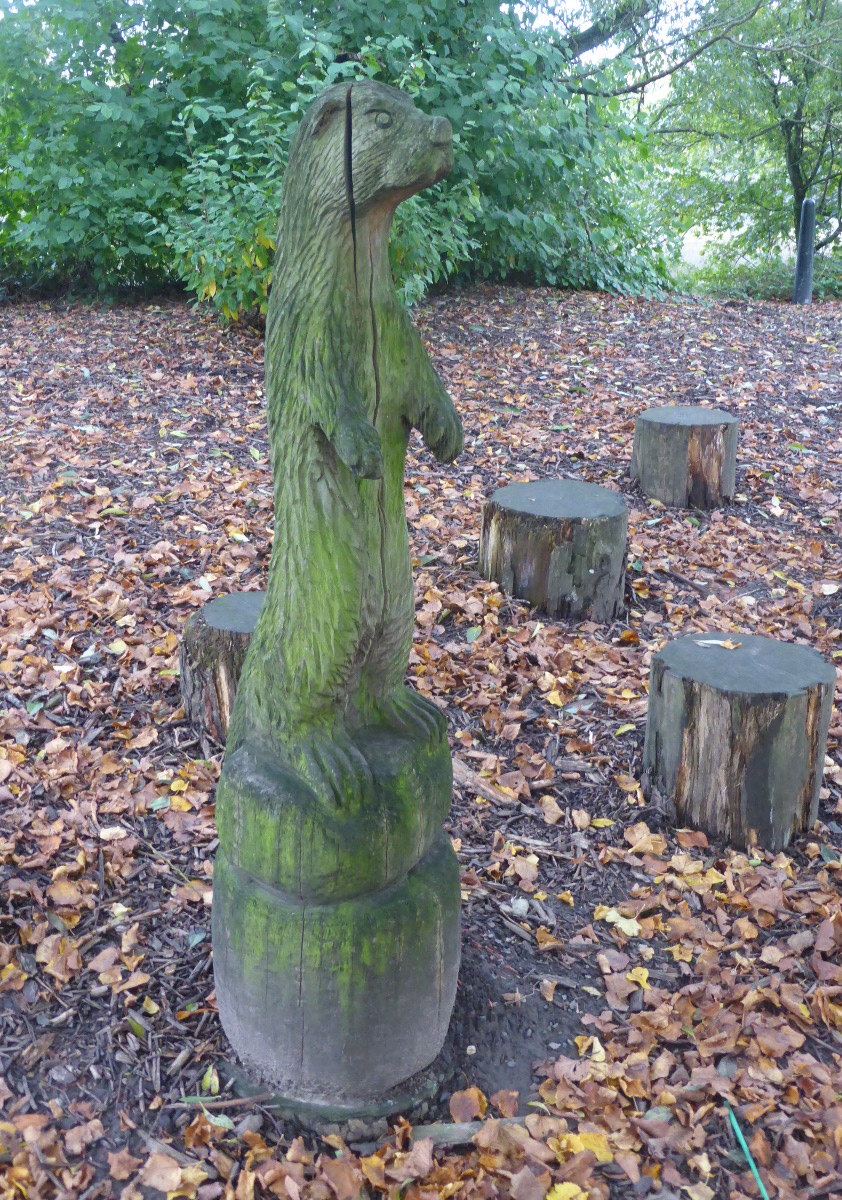
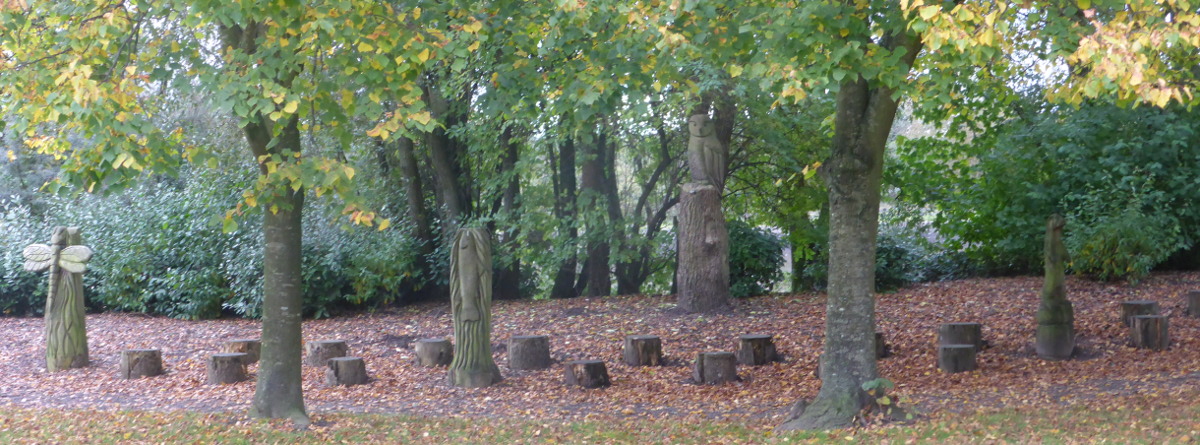
However, on a personal level, his claim relates to my desire to craft an oldest animals story for Mabon/Maponos here on the Ribble (where he was worshiped with his mother, Modron/Matrona, upriver at Ribchester and possibly here on Castle Hill). Beside the river are wooden sculptures of five creatures who I perceive to be ‘the Oldest Animals of Peneverdant’ and they are an owl, a dragonfly, a great crested newt, a trout, and an otter, all vital species within our local ecosystem.
The original story of the search for Mabon ends on the river Severn with Arthur and his men riding upriver on the back of a huge salmon to Mabon’s prison in a House of Stone at Caer Loyw.
Overlooking the Severn is a temple to Nodens/Nudd, ‘the Catcher’, a god of hunting, fishing, water, dreams, and healing. Bronze statuettes of dogs were offered to him in exchange for healing dreams. Nodens has no known associations with otters, but seems to share a kinship with them as a fellow fisher. He is associated with dwarves who might, like Ótr, take otter form. In the reappearance of water dogs on the Ribble, after years of pollution, I detect the healing touch of Nodens’ silver hand.
SOURCES
Environment Agency, “More otters living in the North West than ever before,” August 2011, http://test.environment-agency .gov.uk/cy/new/132443.aspx Nicola Chesters, RSPB Spotlight: Otters, Bloomsbury Natural History (2014) Miriam Darlington, Otter Country: In Search of the Wild Otter, (Granta, 2013) Paul and Katy Yoxton, ‘Estimating Otter Numbers Using Spraints: Is It Possible?’, Journal of Marine Biology, (2014)
 The Sanctuary of Vindos