Orddu and Returning to the Cave

Arthur said, “Are there any of the wonders we have still not obtained?

One of the men said, “Yes, the blood of the Very Black Witch, daughter of the Very White Witch from Pennant Gofid in the uplands of hell.

Arthur set out for the North, and came to where the hag’s cave was.’

– Culhwch ac Olwen

I. The Witch’s Cave

In the medieval Welsh story Culhwch ac Olwen (1090), Orddu ‘Very Black’, a ‘witch’ who lives in a cave in Pennant Gofid ‘the Valley of Grief’, battles against the servants of Arthur and is slaughtered by him in a gristly scene where he cuts her in twain with his knife to drain her blood.

In this tale Gwyn ap Nudd, a Brythonic god of the dead and ruler of Annwn, is dubiously made to appear beside his eternal rival, Gwythyr ap Greidol, as an advisor to Arthur. I judge this to be a move by a Christian interlocutor do demonstrate Arthur’s power not only over Orddu but her god.

It is my personal belief that Orddu was the last of a lineage of ‘witches’ of the Old North who resided in the cave at Pennant Gofid, which is identified with hell, showing Annuvian associations. They were powerful warrior-women and prophets who shared a kinship with the Witches of Caer Loyw who trained Peredur and with Scatach ‘the Shadow’ who schooled Cú Chulainn.

Their martial prowess and ability to commune with Gwyn and the spirits of Annwn to prophecy were seen as a threat to Christianity thus Orddu met her brutal end at the hands of the Christian king.

Orddu’s story has long haunted me. A few years ago it led me to trace her lineage through a series of spirit-journeys and in inspired writing from her mother, Orwen ‘Very White’, back to Snow, the first of her ancestors to arrive in Pennant Gofid (then known as the Valley of Winter) after the Ice Age.

Of all the stories I have written Snow’s has felt the realest, the deepest and the most profound. It tells how she and her people were led by Vindos/Gwyn and his wolves and ravens, following the reindeer and wild horses, to her northern cave, where it is remembered in her lore her ancestors once lived.

I have no idea whether Orddu, Orwen, or Snow are real or mythic persons or whether Pennant Gofid is an actual place in northern Britain (if it is I haven’t found it yet). However, archaeological evidence demonstrates that people lived here in caves after the last Ice Age and in the interstadials.

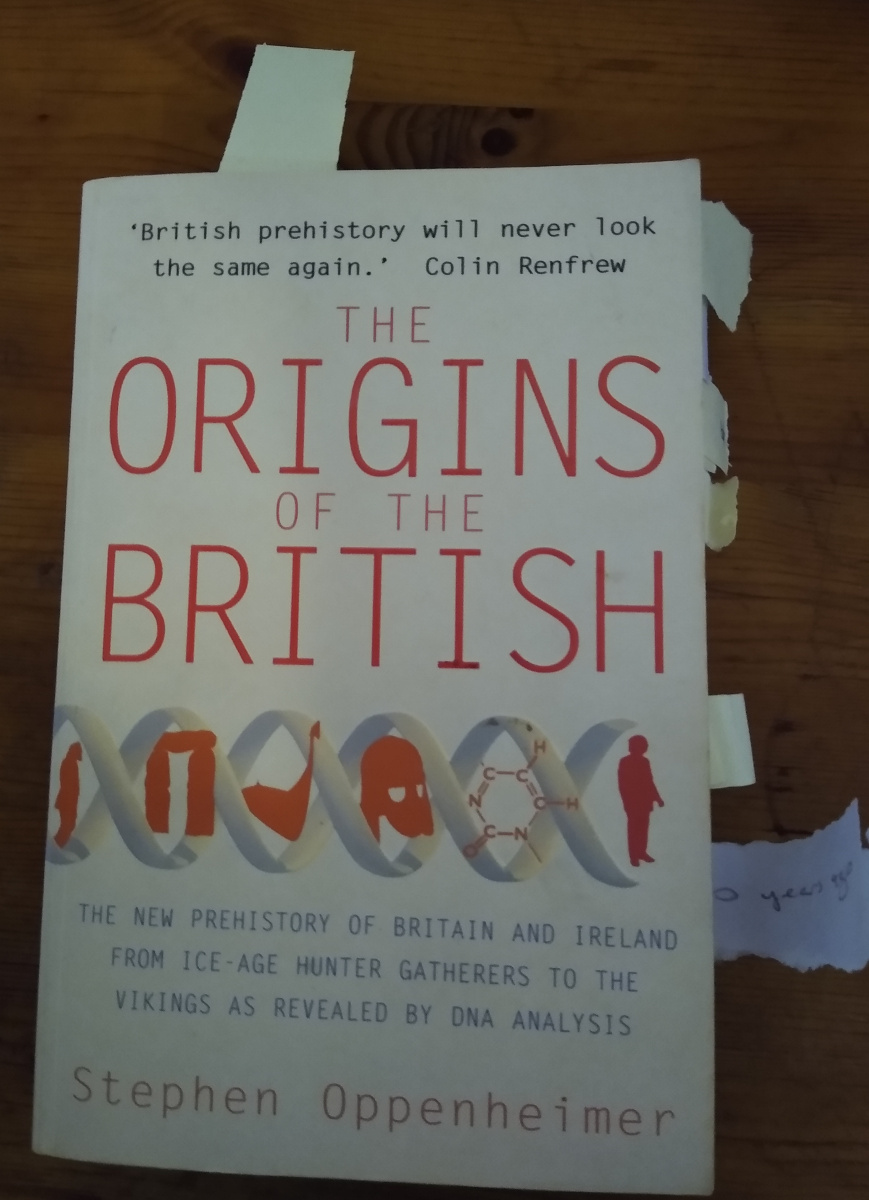
During recent research I found out from Barry Cunliffe’s Britain Begins and Stephen Oppenheimer’s The Origins of the British that a high percentage of the modern population can trace its ancestry back to the period after the last Ice Age when people recolonised Britain from Northern Iberia along the Atlantic seaways and from the North European Plain across Doggerland.

Up until now it had never occurred to me to question who Orddu’s people were and where they came from. To follow their footsteps back to the continent, into older times, and deeper into the cave.

II. After the Ice Age

Following the end of the last Ice Age, the Younger Dryas Stadial, (12,900 to 11,700 BP), the earliest evidence for the inhabitation of Britain comes from caves in south-west Wales. The oldest human remains from Worm’s Head include a human scapula (9920 BP), an ulna (9450 BP), a femur (9420 BP), and a cranium (9360 BP). Human bones dating from between 9000 and 7000 BP have been found at Paviland, Foxhole Cave, Ogof-yr-Ychen ‘Cave of the Oxen’, Potter’s Cave, and Daylight Rock.
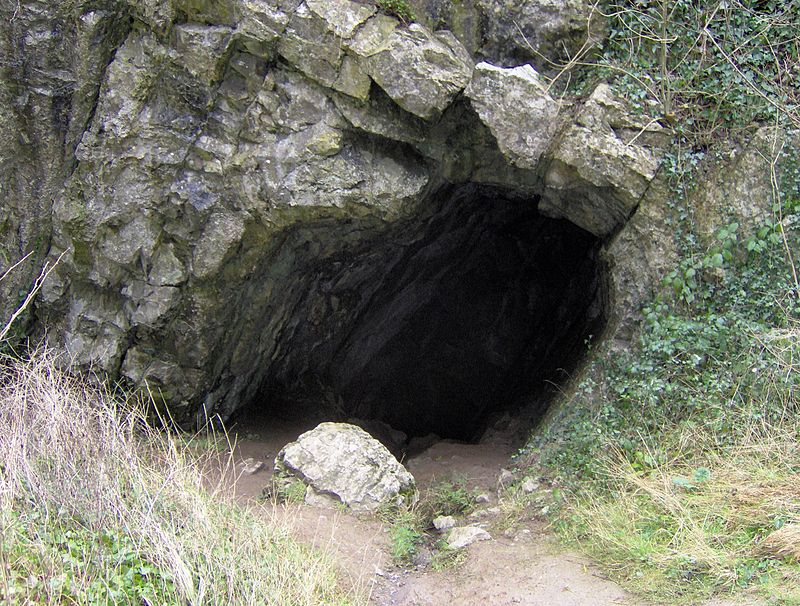
One of the most famous Mesolithic burial sites is Aveline’s Hole in the Mendip Hills of Somerset. It was discovered in 1797 and investigations reported the presence of between 50 and 100 human skeletons. Unfortunately most of the finds and documentation were destroyed by bombing during World War II. Only 21 skeletons remain and they have been dated to between 9115 and 8740 BP.

Most were adults and adolescents, but they also included three children aged between 2 and 7 and an infant of 6 – 18 months. One of the skeletons was buried ceremonially in a disused hearth with ‘red ochre, abundant animal teeth some of which were perforated, and a set of fossil ammonites’.

The cave was sealed after the burial. This may have symbolised closing a connection to relatives become ancestors and to the Otherworld, or may have been a precaution to prevent their return.

In 2003 ‘an engraved panel’ consisting ‘of two rows of crosses with six in the upper row and four in the lower’ was discovered in Aveline’s Hole. Because the cave was sealed after the burial it is suspected this cave art belongs to the Mesolithic. Further art, three engravings taking the form of ‘rectilinear abstract designs’, possibly of a similar date, were found nearby, in Long Hole.

Other finds from the Mendips from this time include a mandible (9360 BP) and cranial fragments (9060 BP) from Badger Hole and the skeleton of Cheddar Man (9100 BP) from Gough’s Cave. Research into DNA has made possible a reconstruction of Cheddar Man’s appearance. His genetic make-up shows he had dark skin of a pigmentation ‘usually associated with sub-Saharan Africa’ and blue eyes.

This suggests that the earliest inhabitants of Britain, including Snow and her people, were dark-skinned. Snow received her name because she was born in a snow storm not because she had snow-white skin. Dark skin is hinted at in the way I describe Snow’s Very Great Grandmother whose face was ‘wrinkled like an old crowberry’, crowberry (empetrum nigrum), being black. Perhaps Orddu ‘Very Black’ was herself black due to a gene that linked her back to oldest ancestors.

In northern Britain a piece of human thigh bone contemporary with the burials in Aveline’s Hole was found in Kent’s Bank Cavern near the Kent estuary where it enters Morecambe Bay. Other evidence of human inhabitation of this area includes microliths and an antler point from Bart’s Shelter.

III. Creswell Crags Cave Art

Snow possessed stories about her cave, passed down by her ancestors, suggesting her people had lived in Britain in the past. Archaeological finds from a number of caves show the landmass, then attached to the continent, had indeed been occupied during the Lateglacial Interstadial (14,670 – 12,890 BP).
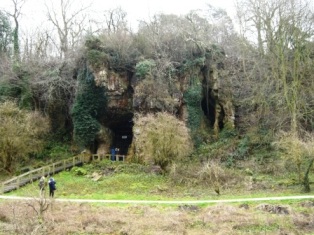
Creswell Crags, a limestone gorge in Derbyshire, is famous for its parietal and portable cave art and stone tools. According to Paul Petitt these have ‘very direct parallels with material from France, Belgium, the Netherlands, and Germany… the term Magdalenian… links these British industries to a much wider population dispersal into empty areas of Europe following the Last Glacial Maximum. This dispersal has its roots in the Magdalenian of south-western Europe… Magdalenian sites in Britain cluster relatively tightly between 12,600 and 12,200 radiocarbon years ago, which places the sites in the relatively mild conditions of the first half of the Lateglacial Interstadial.’

There are 25 examples of parietal art at Creswell; 23 in Church Hole, one in Robin Hood Cave, and one in Mother Grundy’s Parlour. All are engravings that often use the structures of the cave walls.

The clearest engravings are of a stag, bison, and an ibis. The latter is a bird for whom we have no faunal remains in Britain, but would have been seen on the continent by the highly mobile artists.

One of the most intriguing is a bird/woman motif, which has been interpreted as ‘long-necked birds of some kind…. cranes, herons, bitterns, and swans’ and ‘schematic human females, drawn upside down.’

Another, equally ambiguous, is described as ‘a diving bird, a serpentiform or a stylised human female?’ There is a also a ‘headless horse’, ‘small incomplete engraved animal’ and ‘abstract designs such as a ‘boomerang’, ‘engraved triangle’, ‘horn-like motif’ and ‘two small triangles’. ‘Figures of uncertainty’ include a ‘square’, a ‘bison-head profile’, a ‘horse-head’, and a ‘bear’.
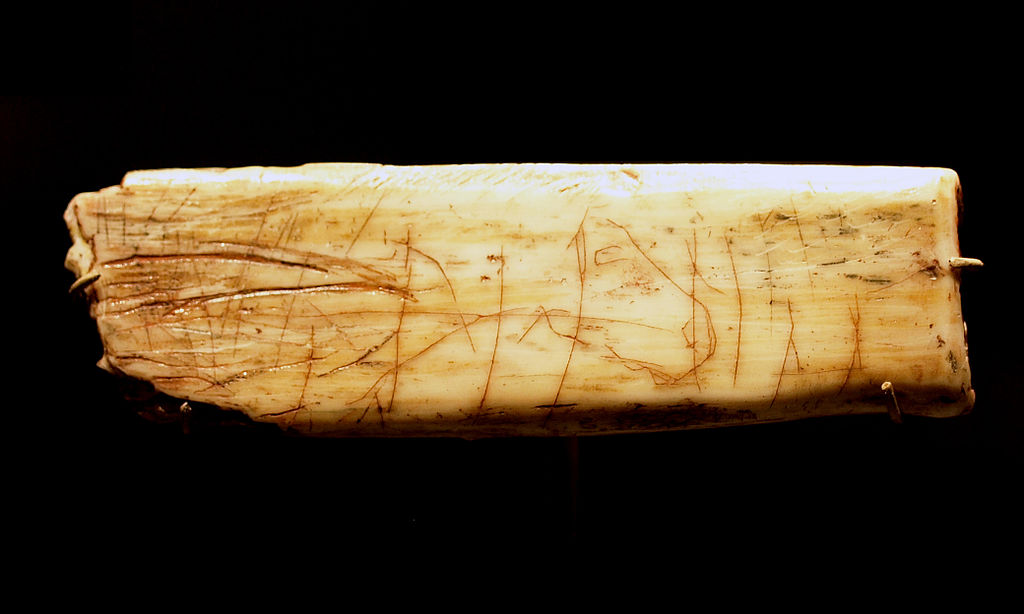
In Robin Hood’s Cave was found a rib engraved with a horse coloured by red ochre. William Boyd Dawkins described it in 1867: ‘the head and fore quarters of a horse incised on a smoothed and rounded fragment of rib, cut short off at one end and broken at the other. On the flat side the head is represented with the nostrils and mouth and neck carefully drawn. A series of fine oblique lines show that the animal was hog-maned. They stop at the bend of the back which is very correctly drawn.’

The Ochre Horse shares parallels with portable Ice Age horse depictions from the caves of Perigord in France and Kesserloch in Switzerland. It is also contemporary with a decorated horse jaw from Kendrick’s Cave, Llandudno, which had five panels of chevrons cut into it creating a zig-zag effect. That people carried these representations with them may suggest horses held a special place in their traditions. Whether this was simply as a prey animal or as a spirit guide or deity remains unknown.

In Pin Hole Cave, engraved on the rib-bone of a woolly rhincoeros, was a masked figure described by Albert Leslie Armstrong as a ‘masked figure in the act of dancing a ceremonial dance.’ Again, the identity of this figure and why he was carried into and left in the cave remains a mystery.

Other British examples include an engraving of a reindeer from Gower Cave in Wales and engraved plaquettes from La Varines in New Jersey featuring abstract designs and ‘zoomorphic representations’, possibly of horses, mammoths, a bovid, and human face, dating to 14,000 years ago.

The art of Creswell Crags shares similarities with Magdalenian art from across south-western Europe. Paul Pettitt links its characteristics artworks at Altamira in Spain and Lascaux in France. He suggests the Creswell Crag artists spent their summers in this area and retreated to the lowlands that now form part of the North Sea or the Netherlands and central Rhine areas and says they would have been in contact with people from Ardennes and the Dordogne, which was also accessible on foot. “The Magdalenian era was the last time that Europe was unified in a real sense and on a grand scale.”

IV. Prehistoric Chapels and Rites of Initiation

The French archaeologist and Catholic Priest, Abbé Breuil, referred to Lascaux as ‘the Sistine chapel of prehistory’. The caves of the Franco-Cantabrian area have long been seen as sacred sites that were central to the religion of the Magdalenian people and their predecessors who made earlier paintings.

According to Bruno David these caves were used for ritual performances and rites of passage. He describes Cougnac: ‘Human engagements in the deep, dark space of the cave are intriguing: here are found animals that take shape along rock walls in a combination of natural concretions and painted red or black lines. At the entrance of chambers, palms of hands were dipped in red ochre and fingers smeared with black pigment, and then pressed against rock walls to leave distinctive marks. Animals were neatly arranged along rock walls, their viewing intentionally and carefully choreographed. Depictions were made of repeatedly speared humans or human-like creatures, and rocky concretions were tapped to make a ringing sound, it appears. This is the stuff of rituals… It formed part of an inner sanctum of knowledge, of an inner life, one that needed to be performed.’

David speaks also of ‘orchestrated performance’ at Tuc d’Audoubert where, adjacent to the Gallery of the Clay Bison, in the Chamber of Heels are found ‘183 impressions of the balls of human heels and myriad shallow impressions of fingertips’ ‘which show that those who walked this space did so on the heels of their feet, carefully avoiding placing the flat of their feet on the ground… The size of the heel imprints… indicates they were not made by adults but by youths probably adolescents.’

‘What we see in the art and imprints in the clay are the products of choreographed actions involving youths walking on the balls of their feet and pressing fingertips into clay along long and sometimes narrow tunnels underground, leading to sculpted clay bison that were never meant to be seen by the broader populace of the outside world. These were rituals along passageways that were, we think, literally rites of passage for youths approaching adulthood. The art was not just to be seen, but to be performed.’

David Williams argues that Lascaux holds ‘the key to major mysteries’ as a place for ‘vision quests’ leading to shamanic initiation. He says ‘different rituals were performed in contrasting areas’. In the ‘Hall of the Bulls’ the only area that can accommodate a large number of people, ‘dancing, music, and chanting’ may have taken place. He describes this area as a ‘vestibule’. In the Axial Gallery the Roaring Bull might have evoked auditory hallucinations and the Falling Horse sensations of falling and descent.
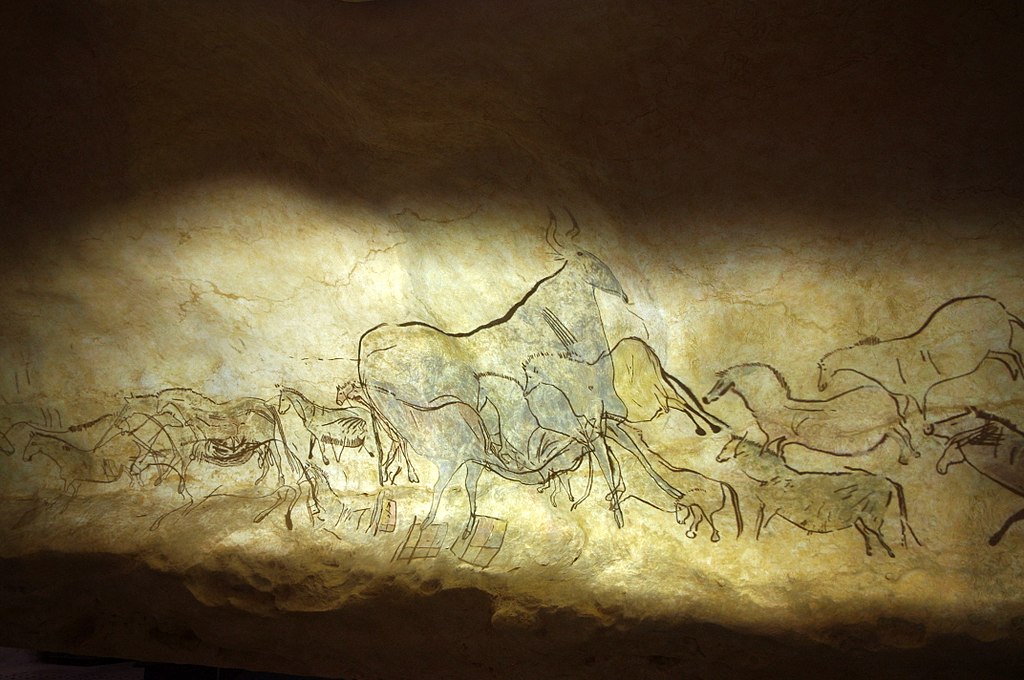
The dense engravings in the Apse featuring ‘crowded images of horses, bison, aurochs, ibexes, deer, and a possible wolf’ etched on top of one another might have provided a glimpse of the spirit world. Having passed a pair of ‘Cerberus-like paired bison’ and crawled down a tunnel to the Diverticule of the Felines to eight formidable cave-lions, ‘a horse seen face-on’, and ‘bison with a raised tail’, ‘questers came face to face with visions of power and made personal contact with the spirit realm.’

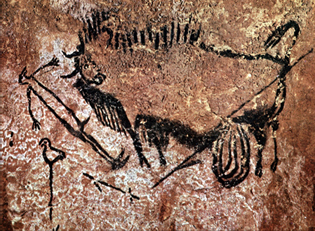
The Shaft, and end area, which falls away into a deep well is where offerings with ‘broken signs’ were left. Here is the famous painting of a bison wounded by a spear charging down a bird-headed man with a bird-staff. Williams says here ‘we have transformation by death: the ‘death’ of the man paralleling the ‘death’ of the eviscerated bison. As both ‘die’, the man fuses with one of his spirit helpers, a bird’. He interprets this as the ‘zoomorphic transformation… becoming a shaman necessitated.’
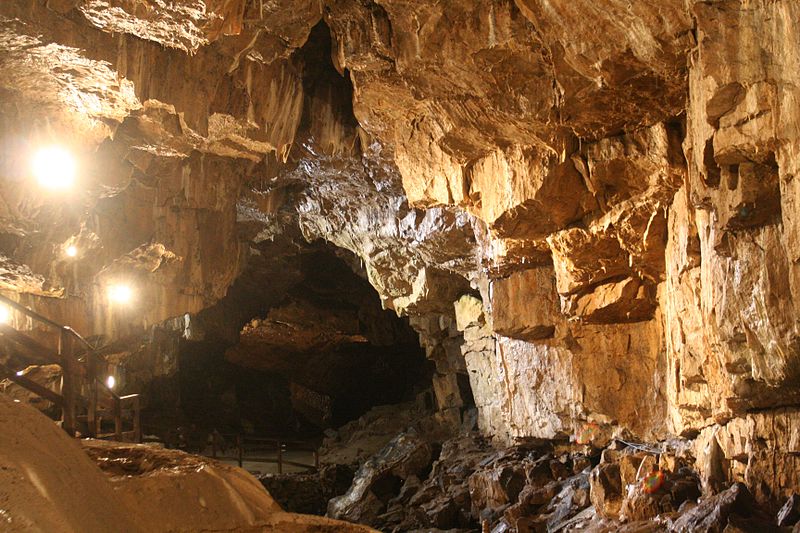
It seems possible that Creswell Crags was also seen as a prehistoric ‘chapel’ where people communed with spirit animals and sought and then engraved visions of the spirit world. Perhaps the witch’s cave at Pennant Gofid was also used for rituals of descent presided over by Orddu and her kin that led to initiates, like them, becoming awenyddion, ‘people inspired’, the Brythonic term for ‘shamans’.

V. Gough’s Cave – Skull Caps and Cannibalism

A discussion of the cave-based rituals of the people living in Britain during the Magdalenian period would not be complete without mention of the skull caps of Gough’s Cave, Somerset, and ritual cannibalism.

There were discovered the skeletal remains of ‘a Minimum Number of six individuals: a child (aged 3.2 years), a young adolescent (approximately 12–14 years old), an older adolescent (approximately 14–16 years old), at least two adults and an older adult’ dating to 14,700 BP. Results of the research by Silvia Bello et al. ‘suggest the processing of cadavers for the consumption of body tissues (bone marrow), accompanied by meticulous shaping of cranial vaults. The distribution of cut-marks and percussion features indicates that the skulls were scrupulously ‘cleaned’ of any soft tissues, and subsequently modified by controlled removal of the facial region and breakage of the cranial base along a sub-horizontal plane. The vaults were also ‘retouched’, possibly to make the broken edges more regular. This manipulation suggests the shaping of skulls to produce skull-cups.’
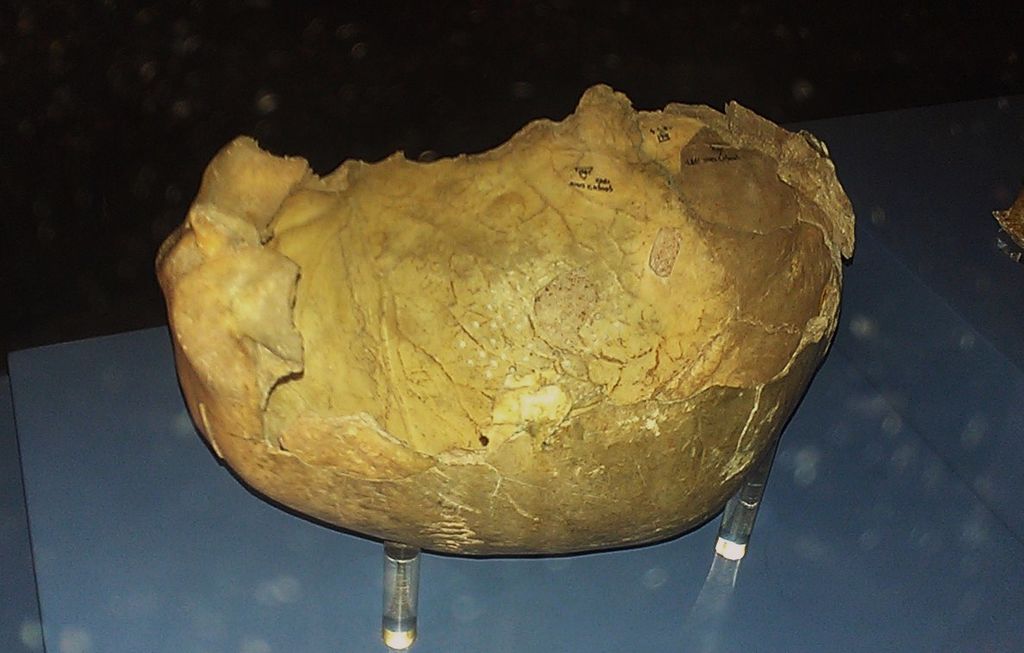
These skull caps resemble those from other Magdalenian sites such as La Placard Cave and Isturitz in France, and from Herxhein, Germany, in the Neolithic period, and El Mirador, Spain, in the Bronze Age.

In Gough’s Cave was also found a human radius engraved with a zig-zag pattern of ‘87 incisions: 33 single-stroke incisions, 32 to-and-fro sawing incisions’, also bearing evidence of cannibalism. What was particularly interesting is that ‘the decorative pattern seems to have been applied in the middle of this process: the break where the bone was snapped to extract marrow cuts across the zig-zag. It seems that the arm’s flesh had been removed, but then the butchery was paused while someone engraved the bone, and only then was it broken to get at its contents.’

This shares similarities with an ulnus from Kent’s Cavern with fine cut marks and percussion marks dating to 8185 BP. The zig-zag also resembles the pattering on the Kendrick’s Cave decorated horse skull.

It is clear that complex rituals and beliefs surrounded these acts of cannibalism and the creating of skull-caps and engraving of bones. Were these acts performed to honour the ancestors? Was eating one’s kindred an act of holy communion through which their life’s essence passed from the dead to the living?

What did the marks on the bones symbolise? Days? Acts? The release of the spirit from the bones? Was the creation of skull caps linked to belief that the soul presided in the head and with its release? What did wearing or drinking from the skull caps mean? Answers to these questions can only be guessed at.

It is worth nothing that, in Culhwch ac Olwen, Gwyn is associated with ritual cannibalism. He feeds the heart of Nwython, the ruler of Strathclyde to his son, Cyledyr, who becomes wyllt ‘mad’ or ‘wild’, but later becomes a rider on the hunt for Twrch Trwyth – a veiled version of the Wild Hunt. Here the consumption of the flesh of an ancestor is initiatory, leading first to madness, then to prowess.

Orddu is associated with Gwyn and witchcraft and her abode is described as hellish. One wonders whether the practice of cannibalism lived on and was practised by her and her ancestors in the Old North.

It certainly continued into the Iron Age in other areas of Britain. In the Bone Cave of Alveston, in Gloucestershire, the remains of seven individuals were found including an individual murdered by a pole-axe. The femur of one these adults ‘had been split longitudinally and the bone marrow scraped out.’

The skeletons were deposited with dog bones, cattle bones, a possible bear vertebra, and wooden twigs.’ Mark Horton says: ‘This was a highly structured deposit that can only have got there as a result of some form of ritual activity. This region was an important centre for underworld cults during the later Iron Age, some of which survived into the Roman period; in particular the Celtic Hound God, Cunomaglus, was represented as a dog guarding the underworld in a local temple sculpture.’

VI. Further Back in Time and Back to Now

The footsteps of Snow and her ancestors might be followed back from Britain to the continent and back again through earlier glacials and interglacials. The famous ‘Paviland Red Lady’, actually a male hunter found in Goat’s Hole Cave, Paviland, on the Gower Peninsula in Wales, his bones stained with red ochre, with mammoth ivory and nerite shells, dates to 33,000 BP. This is our earliest evidence for a ritual burial and thus for beliefs linking caves and the Otherworld.

The first record of Homo sapiens in Britain comes from a maxilla fragment from Kent’s Cavern, Devon, and is dated to between 34,700 and 36,400 BP and an Aurignacian burin busqué from Ffeunon Beuno, Wales, dated to 36,000 BP may have belonged to an early ancestor.

Homo sapiens arrived in Europe in 43,000 years ago having travelled through Israel after dispersing from Africa 120,000 years ago where the earliest evidence, from Omo I, dates to 195,000 years ago.

The stories of Snow and her predecessors remind us of our shared European heritage and its origins in Africa when, as Brexit approaches, Britain is cutting itself off from the EU and limiting foreign aid.

Whilst the cave art of the Magdalenians appears to have been born of a shared culture and religion, much later on, due to Christianity, Orddu, the last carrier of these traditions, appears alone in her cave. Isolated like those of us drawn to the Brythonic tradition today and those isolating due to COVID-19.

Dare we hope, instead of fearing death by Arthur’s knife, for a happier time when we can meet safely in caves and other sacred places to celebrate our bond with the Otherworld and its gods and spirits?
SOURCES

Anon, ‘Gower cave reindeer is Britain’s oldest rock art,’ BBC News, (2012), https://www.bbc.co.uk/news/uk-wales-south-west-wales-18648683
Anon, ‘Cannibalistic Celts discovered in South Gloucestershire’, University of Bristol, (2001), http://www.bristol.ac.uk/news/2001/cannibal.html
Emily Hellewell and Nicky Milner, ‘Burial Practices at the Mesolithic-Neolithic Transition: Change of Continuity’, Documenta Praehistorica, XXXVII, (2011)
Graham Mullan and Linda Wilson, ‘Possible Mesolithic Art in Southern England’, Bradshaw Foundation, http://www.bradshawfoundation.com/british_isles_prehistory_archive/prehistory_mendip_hills/mesolithic_cave_art_southern_england.php
Kathryn Krakowka, ‘More evidence of ritual cannibalism at Gough’s Cave,’ Current Archaeology, (2017), https://www.archaeology.co.uk/articles/evidence-ritual-cannibalism-goughs-cave.htm
Kerry Lotzof, ‘Cheddar Man: Mesolithic Britain’s Blue-Eyed Boy, National History Museum, https://www.nhm.ac.uk/discover/cheddar-man-mesolithic-britain-blue-eyed-boy.html
Paul Rincon, ‘Earliest art in the British Isles discovered on Jersey’, BBC News, https://www.bbc.co.uk/news/science-environment-53835146
Rick Schulting, Worm’s Head and Caldey Island (South Wales, UK) and the question of Mesolithic territories’, Mesolithic Horizons, Oxbow Books, Oxford, (2009)
Rick Schulting and Mick Wysocki, ‘The Mesolithic Human Skeletal Collection from Aveline’s Hole: A preliminary Note’, Proceedings of the University of Bristol Spaelological Society, 22, 3, (2002)
Sean Clarke, ‘Dancing Girls and the Merry Magdalenian,’ The Guardian, (2004), https://www.theguardian.com/uk/2004/apr/15/highereducation.research
Silvia Bello et al., ‘Earliest Directly-Dated Human Skull-Cups’, Plus One, (2011), https://journals.plos.org/plosone/article?id=10.1371/journal.pone.0017026
Silvia Bello et al., ‘A Cut-marked and Fractured Mesolithic Human Bone from Kent’s Cavern, Devon, UK’, International Journal of Osteoarchaeology, (2015)
Silvia Bello et al., ‘An Upper Palaeolithic engraved human bone associated with ritualistic cannibalism,’ Plos One, (2017), https://journals.plos.org/plosone/article?id=10.1371/journal.pone.0182127
Birthday Dragonfly

I.
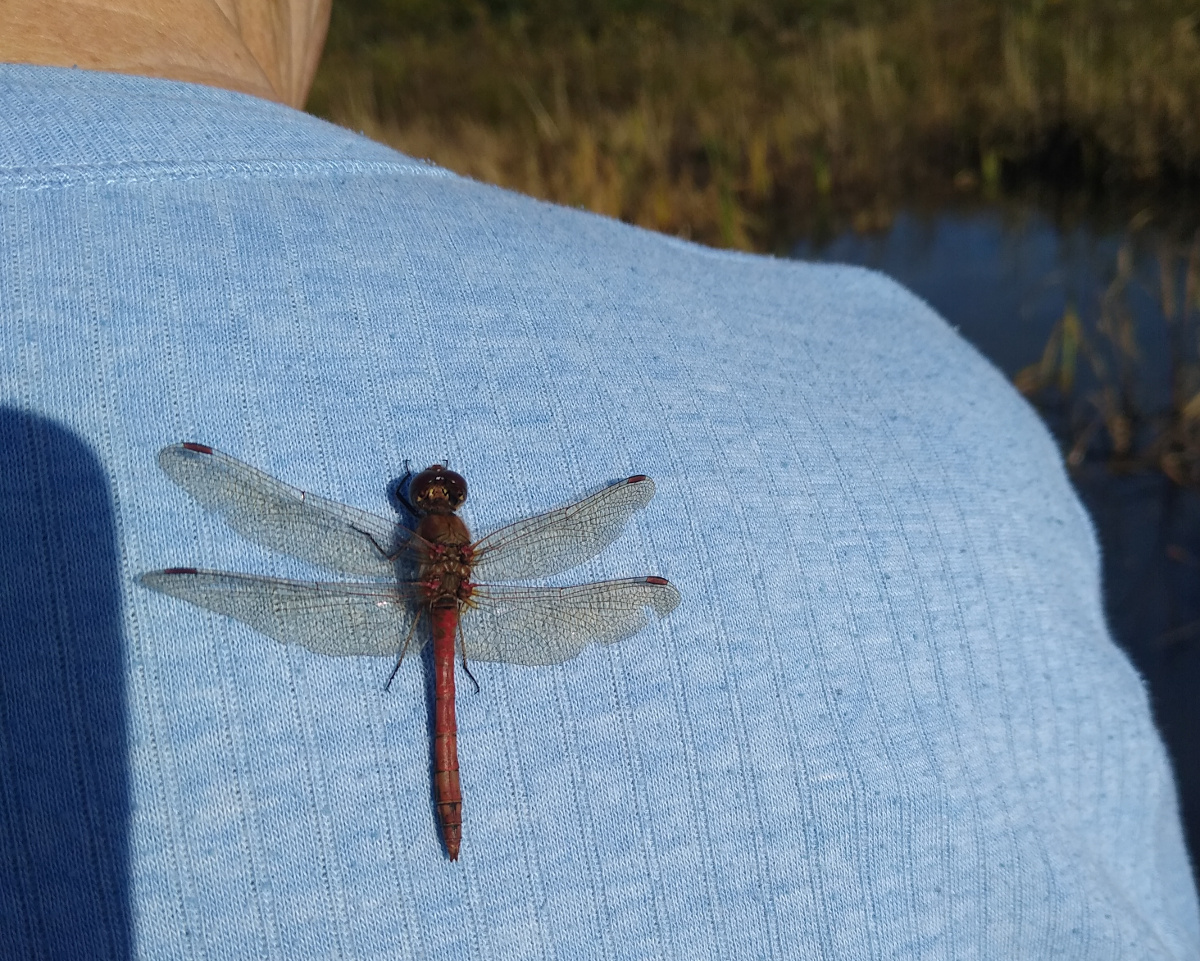
You land
on her sky-blue
shoulder

four red dots
on the webbing
of your wings

red-tailed

eyes brown
and flickering
swivelling

like a rock star
with a guitar

washing soap
from your face
as if preparing
to make

a confession.

II.
It’s the 19th
of November

and over a year
since the accident
when my bike
met wings.

Since I
listened to
your message
and obeyed
the summons
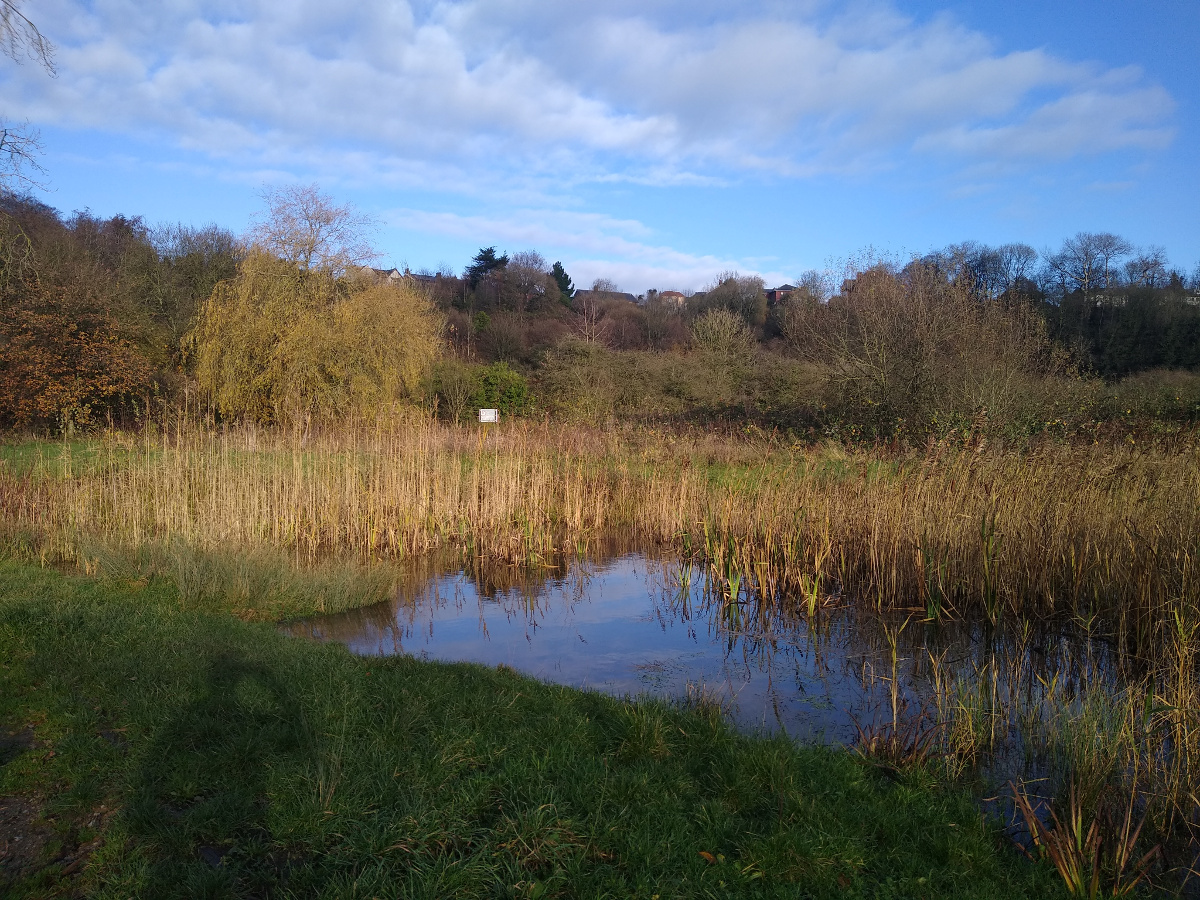
of wetland
things.

III.
It is not you
who needs to confess
to make it up to the land
somehow but I

preserving
your pond from
willow and typha
and phragmites.

In this work
I forget my anxiety.

IV.
I can push
a wheelbarrow,
wield a mattock,
loppers, saw,

not like
technologies.

Weep for the willow
but know it will
survive

far longer
than electricity.

V.
In the midst
of the lockdown
the sun shines on
my birthday.

And you
are red on blue
washing the suds
from my eyes
clearing

the ponds

teaching me joy.

*I record my accidental killing of a common darter and the impact it had on my life HERE.
**These photographs were taken at Fishwick Bottoms Nature Reserve, Preston, where I currently volunteer on a Thursday.

Rigantona’s Departure

I.
The fall of tempered leaves
stamps itself out mid-November
like leaf-shaped arrow heads

the yellow birch my old daggers

distant memories of the ancestors
contort the gloaming wearing

cloaks as grey as your shroud

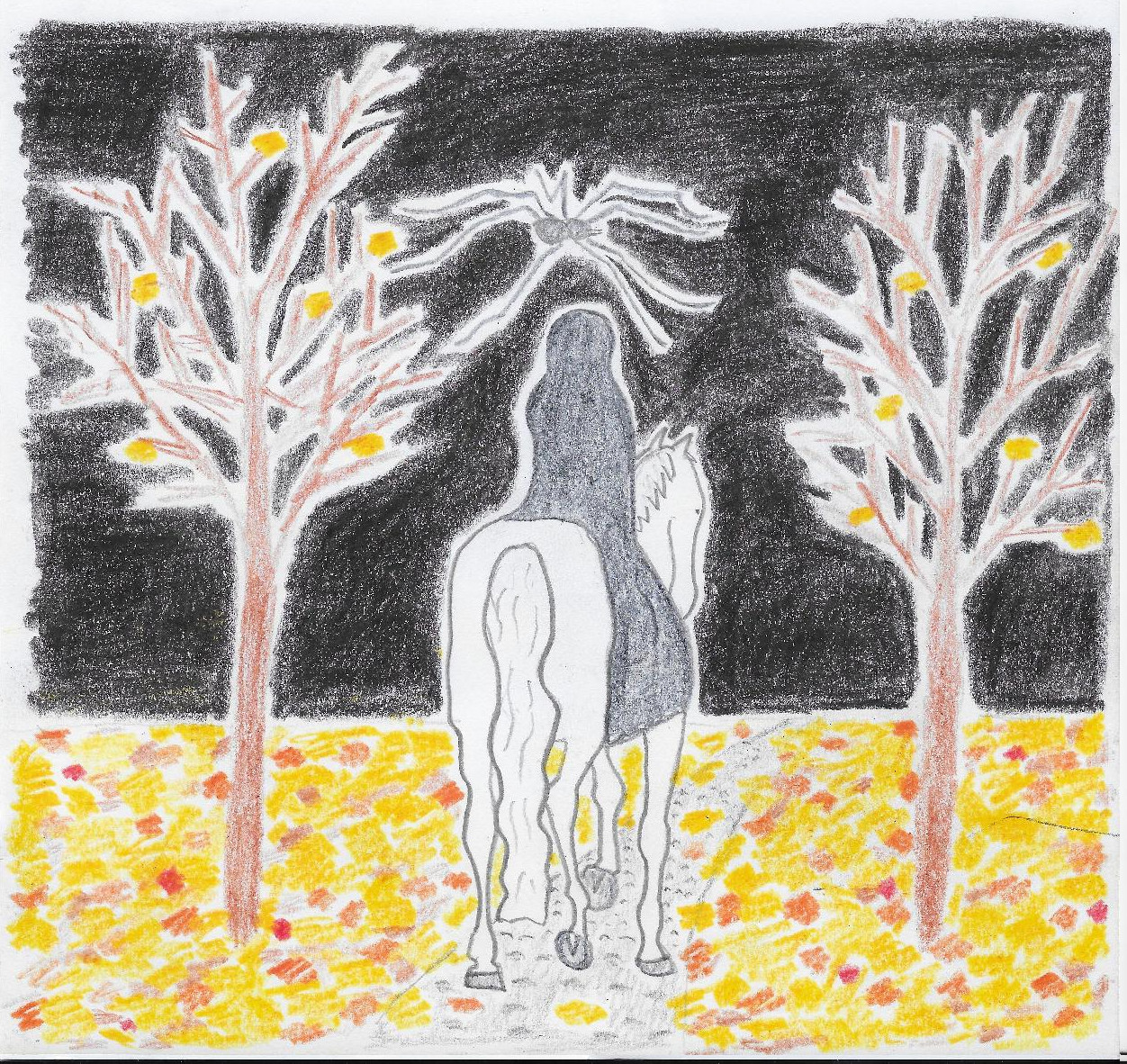
and the grey spider who hangs
above watching you departing from
the darkness without a thread.

II.
I cannot imagine you Great Queen
as the young girl who was taken
against her will when the last leaf

fell by the hunter with the horns

and the ember-eyes headlight bright

before there were cars and cars and cars…
before with the leaves the forest fell…
before Annwn was known as Hell.

III.
You always knew where you were going
didn’t you? Needed no thread to lead
you back to your own home in his arms?

They knew that too – our ancestors

who offered up coins minted like leaves
in fairyland where money grows on trees
and crumbles likes us to grey dust.

IV.
I have no coin the leaves in my pockets
are old and withered as grey spiders.

When my fingers are dust I shall
follow without a thread shrugging into
your shroud joining the contours

of the grey-cloaked ever-marching dead.

Don – the Mother of Primordial Waters

Don is a Brythonic goddess who is best known as the mother of ‘the Children of Don’. In ‘The Fourth Branch’ of The Mabinogi she is named as the sister of Math ap Mathonwy (this shows Mathonwy was her father), and her children are named as Gwydion, Gilfaethwy, and Arianrhod. In the Bonedd yr Arwyr they are listed as Gwydion, Gilfaethwy, Gofannon, Efydd, Amaethon, Hunawg, Idwel, Elestron, Digant, Kynnan, Hedd, Addien, Elawg, and Arianrhod.

In Triad 35. Beli Mawr is named as the father of Arianrhod and this may suggest Beli fathered some or all of her other children. Beli is also named as the father of Nudd/Lludd Llaw Eraint, Caswallon, Nyniaw, and Llefelys in Lludd ac Llefelys and it is possible they too are Children of Don.

Don is likely to be identical with Anna, the consort of Beli, in the Harleian Genealogies, and is thus the grandmother of Afallach (Gwyn ap Nudd), who is the father of Modron and the grandfather of Mabon. Don and Anna are named as the forebears of the lineages of many of the kings of the North and Wales.

Parallels exist between the Children of Don and the Tuatha Dé Danann ‘the Children of Danu’. Unfortunately we know nothing about Danu from inscriptions, place-names, or Irish literature. The nominative *Danu is a hypothetical reconstruction from the genitive ‘Danann’.

However, there are strong parallels between some of their children. Nuada and Nudd/Lludd are both warrior-kings with silver arms, Gofannon and Goibnu are both divine smiths, and Lugh and Lleu (more distant descendants of Danu and Don) are many-skilled gods who wield deadly spears.

I was highly excited when, online, I found claims for links between Don and Bel and Danu and Bile. I was disappointed to find out these are based on a loose claim about ‘British analogies’ from Charles Squire in Celtic Myths and Legends (1905) and there are no etymological or textual grounds for Danu and Bile having been consorts or parents of the Tuatha Dé Danann.

Nothing more is known about Don from medieval Welsh literature or from inscriptions but she gives her name to the rivers Don in Yorkshire and Aberdeen and perhaps to the river Dee. This forms part of the boundary between the the Wirral and Wales and is known is Wales as the Afon Dyfrdwy. This might derive from Dyfrdonwy with Donwy being an earlier name of the goddess Don.

It is possible that there might be connections between the Irish Danu, the Brythonic Don, and the Hindu goddess Danu rooted in a shared Indo-European tradition. Her name may derive from the Proto-Indo-European root *dʰenh₂- ‘to run, to flow’ and be the source of the river-name Danube.

In The Rig Veda Danu is named as the mother of the 100 Danavas – demonic beings known as asuras. One of these is a dragon called Vritra who holds back the water of the world’s rivers. Vritra is slain by the thunderbolt of Indra and the river-water is released. Vritra then attacks and defeats Danu. This suggests Danu and her descendants are associated with primal waters and rivers.

This is of deep interest to me as it suggests parallels between Danu as the mother of the dragon, Vritra, who is slain by Indra, and Don as the mother of the dragon-goddess Anrhuna, who is slain by Lugus. (Anrhuna is not known in any Brythonic sources but she revealed herself to me as the consort of Nodens/Nudd and the mother of Vindos/Gwyn ap Nudd. I was inspired to write a story about how she was killed by Lugus. I hadn’t guessed that Don might be her mother until now. In my story it was not Don who birthed hundreds of demons but Anrhuna who birthed monster-serpents).

The notion that, like Danu, Don is the mother of primordial waters, is one that has long accorded with my intuitions. Several years back I had a vision of Don as the source of generation and I associated her with Fidelma Massey’s ‘Water Mother’ sculpture on the cover of Greg Hill’s Creatures.

The possibility that Don did not only birth the ‘culture gods’ but the dragon-goddess Anrhuna and maybe other dragons and demon-like beings associated with water is one that speaks deeply to me.

As I have been writing this essay the words an dubno have repeatedly come into my mind. When I looked them up I recalled that several years ago I came across the proto-Celtic root *dubno or *dumno meaning ‘the deep’ or ‘dark and gloomy’ and Liz Greene’s claim Danu’s ‘dark face was Dumno’.

An means ‘not’ or ‘very’. The term an dubno thus shares its meaning with Annwn, ‘Very Deep’, the Otherworld. Perhaps this is telling me that Don was originally an Annuvian goddess who proceeded Anrhuna as the Mother of Annwn. In my story both Don and Anrhuna were amongst the oldest children of Old Mother Universe but I am now considering that Anrhuna may be the daughter of Don. This opens new possibilities for when the time returns to resume work on my mythic book.

SOURCES

Alexei Kondratiev, ‘Danu and Bile: The Primordial Parents’, The IMBAS Journal of Celtic Reconstructionism, Vol. 1, No. 4, (1998)Asterope, ‘Danu/Don’, Deity of the Week, (2011), http://deity-of-the-week.blogspot.com/2011/11/danudon.html
Peter Bartrum, A Welsh Classical Dictionary: People in History and Legend up to about A.D. 1000, (National Library of Wales, 1993)
Rachel Bromwich (ed), The Triads of the Island of Britain, (University of Wales Press, 2014)
Sarah E. Zeiser, ‘Performing a Literary Paternity Test: Bonedd yr Arwyr and the Fourth Branch of The Mabinogi’, Proceedings of the Harvard Celtic Colliqiuim, Vol. 28, (2008)
Sioned Davies (transl.), The Mabinogion, (Oxford University Press, 2007)

*Updated 15/11/2020 to include the river Don in Aberdeen following a comment from angharadlois.

The Honey-Isle of Beli

Beli Mawr is an important ancestral figure in the medieval Welsh tradition. I believe he was earlier venerated as Bel ‘Shining’*, a god of the sun, fire, and war, here in Britain and across the continent in Gaul, Noricum, and Iberia, by the Celtic-speaking peoples, particularly the Belgae, from perhaps as early as the Neolithic until the Roman-Celtic period. This is evidenced by inscriptions and place-names.

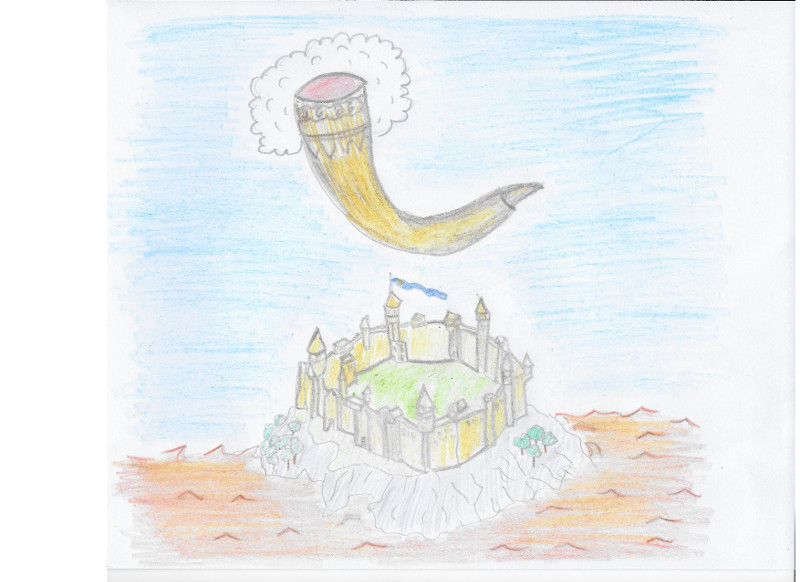
Beli is represented as one of the first of a lineage of god-kings of Britain presiding over a paradisal island. In ‘Kein gyfedwch’, a poem in The Book of Taliesin, ‘Victorious King Beli, / son of King Manogan’ is the ‘rightful ruler’ of ‘the Honey-Isle of Beli’. He resides in ‘an impregnable fortress’, a ‘wondrous retreat’, ‘a well-wrought protection of reinforced stones’. ‘Fair carousing’ takes place around ‘two lakes’ (one is a lake of drink). ‘He with a dragon’s qualities’ watches from above ‘the places of the drinking vessels’ as his people ‘drink in golden horns, golden horns in the hand, a hand (deep in) foam.’

In ‘Glaswawt Taliesin’ we find a reference to Beli wirawt. Marged Haycock notes that the gwirawt ‘alcoholic drink’ (used in conjunction with mead, bragget, and wine) of Beli appears to be a kenning for the sea, ‘Beli’s drink’. This seems linked to the hand (of Beli?) holding the horn deep in foam. The next line refers to a ‘light shield in the depth of night’. Haycock says the yscwyt yscawn ‘light shield’ is ‘collocated with Beli’. Peter Bartrum mentions that in Early Welsh poetry there are ‘several references’ to Beli’s ‘bloody spear’, presenting the image of a warrior.

Thus we can picture Beli above a paradisal isle surrounded by golden seas with a foaming horn of mead in times of peace and, during war, as a shining protector with a light shield and bloody spear. This puts me in mind of Belenus appearing in the air to defend Aquiliea from the Romans in 238 AD.

The most likely location of the Honey-Isle of Beli is the Isle of Ely in Cambridgeshire, although this name is more commonly taken to mean ‘the isle of eels’ from either the Latin elge or the Anglo-Saxon eilig. Frustratingly I have been unable to find out anything about its prehistory, only that the area was under the control of the Anglo-Saxon Gwyras tribe during the early medieval period, and that Saint Etheldreda founded a monastic community on the hill’s summit in 673 AD, which is now the site of Ely Cathedral. We might conjecture this replaced a Romano-British site that was sacred to Beli.

From the Honey-Isle of Beli the Shining One held reign over Britain some time before the Roman invasions. In ‘The Dream of Macsen Wledig’ Macsen, the Roman Emperor, ‘conquered the island of Britain by force from Beli son of Mynogan, and his two sons, and drove them to the sea.’**

In Lludd ac Llefelys we find another story: ‘Beli the Great, son of Manogan, had three sons, Lludd and Caswallon and Nyniaw. And… Llefelys was a fourth son. And after Beli died, the kingdom of the Island of Britain fell into the hands of Lludd, his eldest son, and Lludd ruled it successfully.’

Nudd/Lludd Llaw Eraint is the medieval Welsh name of the Romano-British god Nodens. In this story he defends Britain from three plagues, including the Coraniaid, the Romans, with the help of Llefelys.

Nudd/Lludd is associated with Lydney, ‘Lludd’s Isle’. His son, Gwyn ap Nudd or Afallach, who is named as the grandson of Beli in the Harleian Genealogies, presides over Ynys Afallach, the Isle of Avalon.

Like Beli, the descendants of the Shining One also reside over splendid mead-feasts in liminal places, where it is possible for mortals to feast and drink with their gods and their ancestors. In doing so they might be seen to enter Annwn/Faerie, the Otherworld, for a limited period of time.

In ‘Kadeir Taliesin’ the bard speaks of his seat in Caer Siddi ‘The Fairy Fort’: ‘around its turrets are the wellsprings of the sea; / and (as for) the fruitful fountain which is above it- / its drink is sweeter than white wine.’

In ‘Preiddu Annwn’ Taliesin reports his raid on seven Annuvian fortresses (which I believe may be seven appearances of the fortress of Pen Annwn, ‘the Head of the Otherworld’, Gwyn/Afallach). One is Caer Siddi, another Caer Vedwit ‘The Mead-Feast Fort’ and another is Caer Rigor ‘The Fort of Hardness’ where ‘sparkling wine is their drink, set in front of their battalion.’

The primacy of Beli wirawt ‘Beli’s drink’ suggests alcohol held an important ritual function for our ancestors, effecting the shift in consciousness through which they participated in the feasts of their gods. This remains a reality to this day, when a sip of mead (or more!) and the right rites can take us to the Honey-Isle, Lludd’s Isle, or the Isle of Avalon, or elsewhere, to commune with the Shining Ones.

*This name also takes the forms of Belin, Belinos, Belenos, Belenus.
**This story does not fit well with history as Macsen Wledig (Magnus Maximus) was not Roman Emperor at the time of the invasions but from 383 until 388 AD after which the imperial presence in Britain and Gaul declined.

SOURCES

Marged Haycock (transl), Prophecies from the Book of Taliesin, (CMCS, 2013)
Peter Bartrum, A Welsh Classical Dictionary: People in History and Legend up to about A.D. 1000, (National Library of Wales, 1993)
Rachel Bromwich (ed), The Triads of the Island of Britain, (University of Wales Press, 2014)
Sioned Davies (transl.), The Mabinogion, (Oxford University Press, 2007)

Nos Galan Gaeaf and the Beast with the Fiery Halo

It’s Nos Galan Gaeaf. The night before the first day of winter. An ysbrydnos – ‘a spirit night’. Unlike its counterbalance, Nos Galan Mai, when monsters are slain and dragons calmed this is a night when the ysbrydion Annwn ‘spirits of the Otherworld’ walk abroad at the height of their power.

There is a monster amongst us, COVID-19, the Beast with the Fiery Halo. To represent it as such is in keeping with the traditions of many generations of ancestors who perceived diseases to be caused by malevolent beings, before science and technology revealed they are caused by micro-organisms. From an animistic standpoint, wherein all things are alive and have personhood, these views are not incompatible.

In ‘Hanes Taliesin’ the illustrious bard predicted the death of Maelgwn Gwynedd at the hands of ‘A most strange creature… His hair, his teeth, and his eyes being as gold.’ Maelgwn died after seeing Y Vat Velen, ‘The Yellow Plague’, through the keyhole in the church of Llan Rhos where he was ‘self isolating’.

Malaria, once known as the ague, took the form of a hag. Yr Hen Wrach, ‘The Old Hag’, was a seven foot woman who haunted Cors Fochno, Borth Bog. Her nocturnal visitations caused people to wake with the shakes. Samuel Taylor Coleridge later spoke of ‘the ghastly Dam, / Fev’rish yet freezing, eager paced yet slow, / As she that creeps from forth her swampy reeds, / Ague, the biform Hag!’

Nos Galan Gaeaf is a night when the veil of mist that separates the worlds is thin and the living may commune with the dead and the spirits of Annwn, some of whom we can name, and some whom are beyond categorisation. It is a time for telling stories in which otherworldly beings appear to haunt us and in which journeys to the Otherworld made. There is usually a dispelling or a safe return.

If we had a story about the Beast with the Fiery Halo it might go something like this. Many years ago our ancestors tried to build a world that was very much like the Otherworld, in which there was no want of food, or drink, or light, or heat, where no-one was cold, where no-one went hungry.

And that world was built at a great cost. The land was despoiled by mining and building. The air was polluted by fumes, which caused the temperature to rise. This led to the perishing of millions of trees, plants, animals, fish, and insects and to most of our ancestors living in servitude to the rulers who took power over the resources and machines that made this life possible. To depart from the system and the virtual world created by its technologies meant loneliness and ignominy, and at worst, death.

Most people accepted the cost, whether or not they were happy working at the machines, and turned a blind eye to the despoiling of the natural world because it was the only way to feed their families. Some did not. Some fought for change by protesting on the streets and others created nature reserves and planted trees and wildflowers and started growing their own food as an alternative.

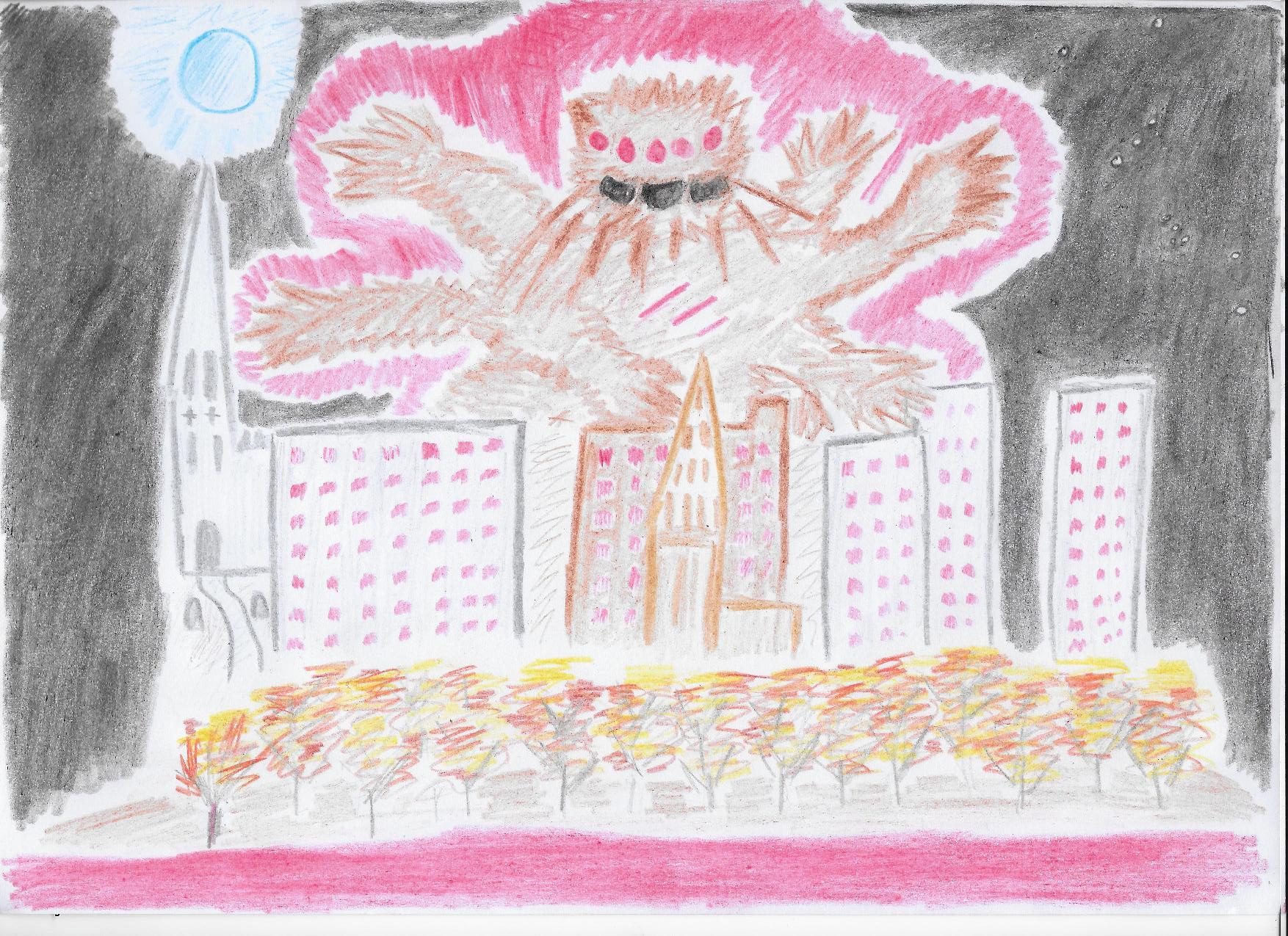
Some prayed, to God, to the old gods, to Mother Earth, to Old Mother Universe, for something that would bring this system to an end. As if in answer to this prayer (and monsters are wily) appeared a beast the size of a sky scraper with limbs of countless animals, bent and twisted, as if trapped in a cage. Its lungs heaved phlegmatically in its scarred and hairy chest. Its many eyes were red and its mouths were gaping holes. Around its head was a blazing halo that burnt without burning the beast.

Like so many of the monsters in our myths it did not have a voice. It did not strike a bargain. It just came silently in the depths of winter and started taking the lives of our oldest most vulnerable people.

Protecting them came at a great cost: maintaining a distance from our friends and family, working less, travelling less, shopping less, to the benefit of the natural world and the detriment of our freedom. Our dependency on the rulers for financial support and the machines connecting us grew.

It felt like the unspoken bargain was this: ‘The lives of your old ones or your lives as you know them.’

Towards the end of summer we saw light shining through our prison bars. Although we all knew we had not defeated the monster we thought our sacrifices had kept it at bay. We dared to hope things might return to ‘normal’ but, as our liberties were restored, the monster took advantage. As winter approached, we saw the light was not sunlight, but the beast’s fiery halo, its triumphal crown.

The death toll is rising again. We are not at the end of the story but in media res, at the ‘crisis’, a Middle English term ‘denoting the turning point of a disease’ which is derived from medical Latin and dates back to the Greek krisis ‘decision’ and krinein ‘decide’. It’s decision time.

It’s as if we’re in a ‘choose your own ending’ book but the endings haven’t yet been written. We can only imagine them, happy or sad, tragic or comedic, apocalyptic or redeeming, guess there may be a twist.

Tonight the light of the blue moon is eclipsed by the beast’s fiery halo burning brighter than bright.

Nos Galan Gaeaf is a night on which, as a Brythonic polytheist devoted to Gwyn ap Nudd, I pray to him as the god who holds back the fury of the spirits of Annwn to prevent their destruction of the world and takes the souls of the lost and the angry dead to the Otherworld.

Countless times I have wondered why he has not held the beast back. Is it because he cannot or he will not? Is it because we are destroying the world? Because we too are monstrous?

We might consider that ‘monster’ originates from the Latin monstrum ‘to reveal’ or ‘to foretell’. Nos Galan Gaeaf, when Gwyn may be implored to part the mists of time, is a time for divination, for monstrous truths to be revealed and upon them our decisions based.

~

Gwyn ap Nudd

Starry Hunter in the Darkness
guide us through these nights of fear.

Midnight Rider on the Storm of Madness
teach us to ride these nights of tears.

Wise Warrior who guards the Cauldron
by the light of the blue moon

lead the living to deeper wisdom
and the dead back to Annwn.

Earthstars

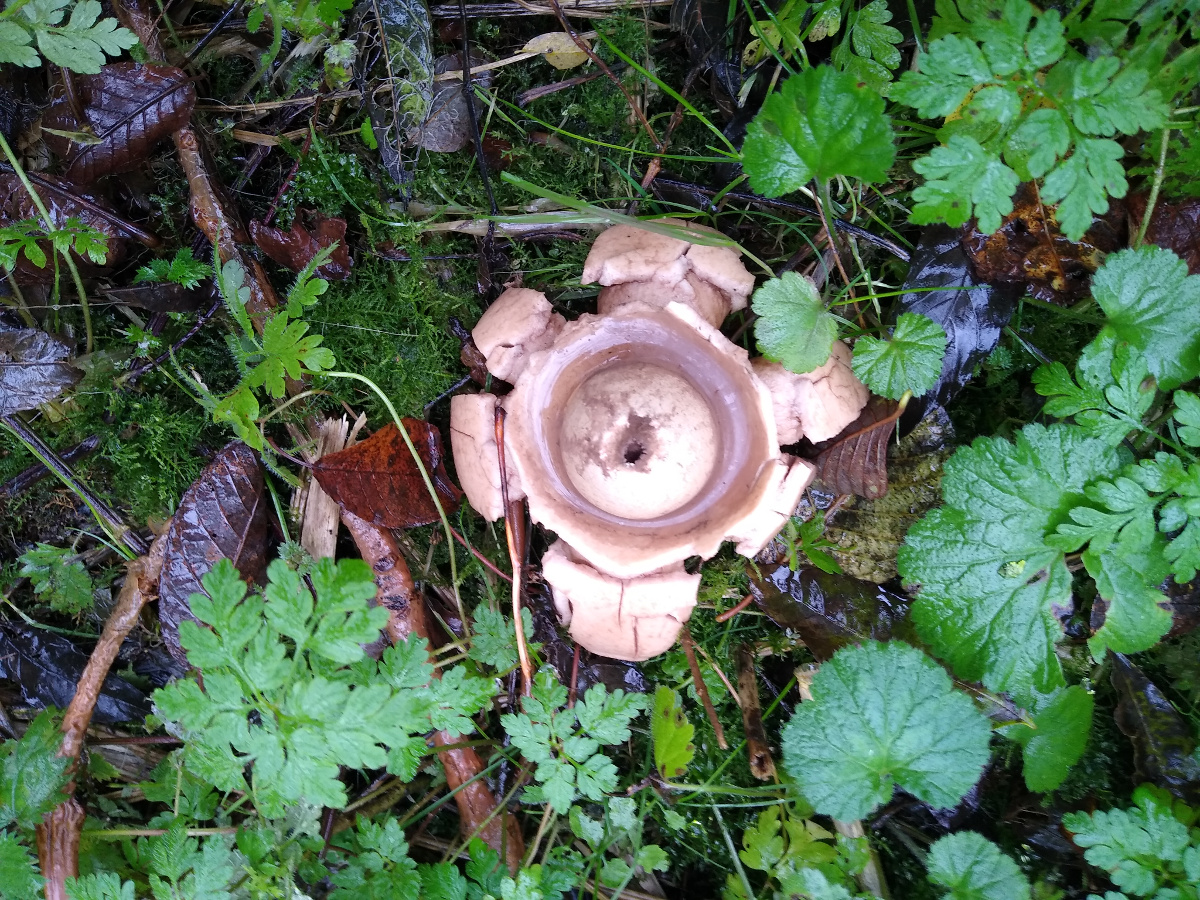
Earthstars fall.

Remind me a little
of polystyrene or an egg box.

Disenchanted I Star Wars child
looking down on a space station,
a puff of magician’s smoke.

I am lost amongst the spores.

Neither mouse nor mycologist
I am back on the stage again.

I am back in my cage feeling
the muscles under my skin.

I am pulling splinters from my palm.

I am becoming a religious mystic,
reminded of the privilege of being here
in this damp woodland in spite of being
fallen, fallen, fallen, like these stars

from the Star of the King of Annwn.

*This poem is based on my first sighting of collared earthstars (Geastrum triplex) at Fishwick Bottoms Nature Reserve in Preston.

Bel and the Belgae

I. The Belgae

Bel (Belin, Belinos, Belenus) ‘Shining’ is a Celtic god whose worship is attested by inscriptions and place-names here in Britain and on the continent. He was likely the patron god of the Belgae tribes.

The term ‘Belgae’ is linked etymologically to the name Bel and to the Proto-Celtic root *belg- or *bolg which means ‘to swell (with anger or battle fury)’. I believe it might also be connected to a tradition amongst the Celts of numerous tribes coming together for the purpose of war and raiding.

The Belgae or Belgi are named as a confederacy of tribes by Strabo and Caesar in the first century BC. Strabo notes that, of the warlike tribes on the northern coast of Gaul, the Belgi ‘are the best.’ He tell us ‘they are divided into fifteen tribes, and live along the ocean between the Rhine and the Loire.’ The best of these tribes are the Bello(v)aci then the Suessiones. He claims ‘the number of the Belgi of former times that can bear arms amounted to about three hundred thousand.’

Caesar tells us: ‘All Gaul is divided into three parts, one of which the Belgae inhabit, the Aquitani another, those who in their own language are called Celts, in ours Gauls, the third.’ He cites a report from the Remi: ‘the Bellovaci were the most powerful among them… these could muster 100,000 armed men… The Suessiones were their nearest neighbors and possessed a very extensive and fertile country… they had promised 50,000 armed men… the Nervii… the most warlike among them… [had promised] as many; the Atrebates 15,000; the Ambiani, 10,000; the Morini, 25,000; the Menapii, 9,000; the Caleti, 10,000; the Velocasses and the Veromandui as many; the Aduatuci 19,000; that the Condrusi, the Eburones, the Caeraesi, the Paemani, who are called by the common name of Germans [had promised], they thought, to the number of 40,000.’

My research has led me to believe that the roots of the Belgae, their worship of Bel, and tradition of hosting and raiding might be traced back to at least to the sixth century, through the places the Celts migrated to from Gaul, which map onto inscriptions to Bel, and back to their Gaulish homeland.

II. Bellovesus and the Birds of Bel

Writing in the first century BC Livy notes that, during the sixth century BC, ‘The Celts, who make up one of the three divisions of Gaul, were under the the domination of the Bituriges’. Their king was Ambigatus and, under his rule, Gaul ‘grew so rich in corn and so populous, that it seemed hardly possible to govern so great a multitude.’ The old king ‘wishing to relieve his kingdom of a burdensome throng’ decided to send his sister’s sons, Bellovesus and Segovesus, to find new homes.

Here we find a swelling of Celtic people and a son named Bellovesus, who may have taken that name because Bel was the patron deity of his people. We are told they are sent ‘to find such homes as the gods might assign them by augury… Whereupon to Segovesus were by lot assigned the Hercynian highlands (the Black Forest and Bohemia), but to Bellovesus the gods proposed a far pleasanter road, into Italy. Taking with him the surplus population – Bituriges, Arverni, Senones, Aedui, Ambarri, Carnutes, Aulerci – he set out with a vast host, some mounted, some on foot.’

They passed through the Alps into the Po Valley, defeated the Etruscans near the river Ticinus, and established Mediolanum ‘the settlement in the middle of the plain’ (Milan). This became the centre of Cisalpine Gaul ‘Gaul this side of the Alps’. Pompeius Trogus, a native of south Gaul also writing in the 1st century, notes that other Celtic settlements included Como, Brescia, Verona, Bergamo, Trento, and Vicenza. He numbers the host of Bellovesus at 300,000. He says that some ‘settled in Italy… some led by birds spread through the head of the Adriatic and settled in Pannonia.’

It is of interest that the new homes of the Celtic people were assigned by the gods by augury and that they were led by birds. This suggests that Bellovesus or someone amongst his people was an augur, someone skilled in reading the signs of nature, particularly those of birds, and that it was by following those signs they reached and won their settlements. It is possible certain birds were associated with Bel and they saw the will of their gods in the direction of their flight and their victories.

Bellovesus’ invasion paved the way for the influx of more of the Celtic tribes: the Laevi, Libicci, Insubres, and Cenomani, Ananes, Boii, Lingones, and Senones, into the Po Valley in 400 BC. In 390 the Celts marched on Rome, defeated the Roman army at the Tiber tributary to the Allia and destroyed the city, leaving only the defended capitol, and departed with 1,000 pounds of gold.

The Romans were initially terrified by the swollen hoards of the Celts and their attack. They later moved against the Senones between 295 and 283 BC and retook the Po Valley between 197 and 189 BC.

That Bel was the god who led the Celts into Cisalpine Gaul and was worshipped there by both the Celtic peoples and the Romans is proved by numerous inscriptions. 22 were found in Aquiliea (where Bel famously appeared to defend the city in 238 AD) and 6 in Altinum, Concordia, and Iulium Carnicum.

III. Bohemia and Beyond – the Raids of Bolgios and Brennos

Whilst Bellovesus led his people to Italy, Segovesus led his, likely following the Danube, to Bohemia. From there, in 400 BC, there were further migrations with the Celtic peoples establishing new communities in ‘Moravia, Lower Austria, western Hungary, and south-west Slovakia.’ This could explain the inscriptions to Bel in Noricum where he was worshipped as the national god.

During the early fourth century the Celtic war bands passed through the mountains of Illyria and entered negotiations with the King of Macedonia, Alexander the Great. 50 years later Alexander died, his empire fell, and a Celtic warlord named Bolgios led a Celtic and Thracian force against the Macedonians. Bolgios triumphed, the leader of their enemies was killed, and his head was paraded on a spear.

It is notable that the name Bolgios comes from the same root, *belg- or *bolg, as Belgae. As a war leader he was perhaps seen to embody the swollen might of the tribes and their battle fury. It is notable that Bolgios and his people participated in the Celtic tradition of head hunting – taking the heads of the most prestigious of the enemies and displaying them as a sign of their prowess.

Bolgios opened the way for a thrust to the south-east led by Brennos who went on to sack Delphi in 279. This included a raid on the temple to Apollo and the theft of its treasure, which ended up in Toulose. In some accounts Brennos and his men were driven off by their adversaries and in others Apollo took revenge. The Celts were defeated and Brennos, fatigued and humiliated, committed suicide

In some inscriptions Bel is equated Apollo. One wonders whether this was an attempt to replace one shining god with another. Whatever the case it seems it was not the will of the gods and the raiders suffered.

IV. Bel and the Belgae in Britain

The expansion of the Roman Empire pressed some of the Celts back north to their homeland in Gaul and it seems possible this resulted in the hosting of the Belgae described by Caesar in the first century.

By this time some of the Belgae had moved even further north, across the channel, to Britain. Caesar writes: ‘The interior portion of Britain is inhabited by those of whom they say that it is handed down by tradition that they were born in the island itself: the maritime portion by those who had passed over from the country of the Belgae for the purpose of plunder and making war; almost all of whom are called by the names of those states from which being sprung they went thither, and having waged war, continued there and began to cultivate the lands.’

Once again we find the Belgae associated with war and plunder before they settled down to work the land. Barry Cunliffe places the event ‘in the late second or early first century BC since the memory was still alive in Caesar’s time.’ ‘The simplest explanation is that they landed somewhere on the Solent coast and settled in Hampshire, where the Roman geographers later located the Belgae, their capital being Venta Belgarum (‘the market of the Belgae’), modern Winchester.’

Their king, Cunobelinus, ‘Hound of Belinus’, ruled not only the Belgae but the Catuvellauni and the Trinovantes from 9 to 40 AD and styled himself as ‘King of the Britons’. He was recognised by Augustus as a client king. His son, Caratacus, expanded his territory into that of the Atrebates, who were also friendly with Rome. The fleeing of their ruler, Verica, to the Emperor Claudius, was the pretext for the Roman invasion of 43 AD. Thenceforth the people of Bel fought against the Romans.

Inscriptions to Bel at Vindolanda and an at unknown site as well as 28 to Belatucadros near Hadrian’s Wall and the dedication of the Ribble, in Lancashire, to Belisama, show Bel and deities who shared the etymology of his name were not only worshipped on the south coast but in the north. Whether Bel’s worship was borne north by the Belgae or whether he was already popular is unknown.

Bel lives on in the medieval Welsh tradition as Beli Mawr and as the consort of Don/Anna he is the father of the Children of Don and, through his daughter, Penarddun, wife of Llyr, an ancestor of the Children of Llyr. He is also listed as an ancestral figure in the genealogies of the Men of the North.

The son of Beli, Caswallon, usurped the throne of Britain from Caradog, the son of Brân the Blessed, a son of Llyr. Another son of Beli, Nudd/Lludd Llaw Eraint (who was worshipped in Iron Age and Roman Britain by the earlier name of Nodens) later took the throne as a god-king of Britain. Internicine warfare was characteristic of the Brythonic gods and their people.

V. Bel the Bellicose

In this article I have traced the history of Bel and the Belgae and it has revealed that by name and by act they were a warrior people whose lives and culture were based around war and raiding. Bel, ‘Shining’, was a bellicose god who inspired invasions and raids, with a love of shining treasures.

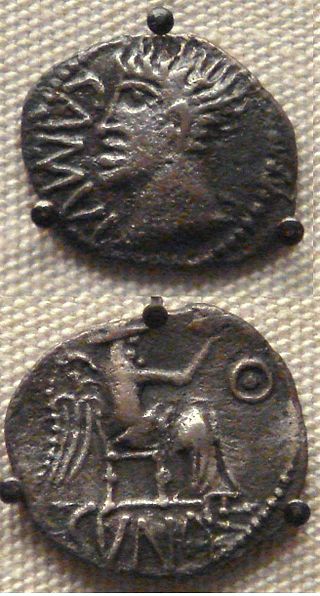
This is perhaps best reflected by the Belgic coins minted during the reign of Cunobelinus.

Their values are at utter odds with my own and many other polytheists living in the twenty-first century for whom war is a source of horror rather than glory and treasure of corruption rather than prestige. My brief encounters with Bel have revealed that he remains a forceful god who likes shiny things.

Bel is also associated with the sun and fire and the Celtic festival of Beltane (1st of May), during which cattle were driven between two ‘Bel-fires’ to purify them before they were moved to summer grazing places. This shows Bel was important not only as a war god for the warrior elite but for cowherds.

The Irish stories suggest, as a bellicose giant with a burning eye, he was slain by his grandson, Lugus/Lugh/Lleu and this is the foundation of the harvest festival of Lughnasadh (1st of August). Thus he held an important position for the people who worked the land in the cross quarter agricultural calendar used in Gaul in the 1st century BC, later in Ireland, and no doubt in Britain too.

The nature of the rites of Bel and how they were practiced and experienced by the Belgae remains unknown. As a devotee of Vindos/Gwyn, son of Nodens/Nudd, grandson of Bel/Beli Mawr I am just beginning to explore these histories and myths and what they might mean for modern polytheists.

SOURCES

Barry Cunliffe, The Ancient Celts (Penguin, 1999)
Barry Cunliffe, Britain Begins, (Oxford University Press, 2013)Sioned Davies (transl.), The Mabinogion, (Oxford University Press, 2007)
Will Parker, The Four Branches of the Mabinogi, (Bardic Press, 2005)
W. A. McDevitte and W. S. Bohn (transl), Julius Caesar, The Gallic Wars, https://www.stcharlesprep.org/01_parents/oneil_j/Useful%20Links/AP%20Latin%20Assignments/HW/The%20Gallic%20Wars.pdf

The Origins of the British – Germanic people here millenia before the Anglo-Saxon invasions

I have just finished reading Stephen Oppenheimer’s The Origins of the British. My purpose, at the outset, was to acquaint myself with how his argument, based on genetic research (first brought to my notice in Barry Cunliffe’s Britain Begins), dispels the myth of Celtic invasions during the Iron Age.

Oppenheimer summarises the main message of his study: ‘three quarters of British ancestors arrived long before the first farmers. This applies in varying proportions to 88% of Irish, 81% of Welsh, 79% of Cornish, 70% of the people of Scotland and its associated islands and 68% (over two-thirds) of the English and their politically associated islands. These figures dwarf any perception of Celtic or Anglo-Saxon ethnicity based on concepts of more recent, massive invasions.’

As cited by Cunliffe, Oppenheimer’s study reveals that the first people to arrive in Britain, and the majority from whom the British are descended, were from Iberian refuges. Then, in the Neolithic, further Iberian influxes occurred along the west coast via the Atlantic seaways and people from the Near East and the Balkans moved up the Danube and crossed the North Sea to arrive on the east coast. It was around this time the Celtic languages developed as a ‘lingua franca’.

Cunliffe leads the reader to believe all of Britain and Ireland were Celtic-speaking before the Roman invasion. The view present-day England, Wales, and southern Scotland were Brythonic-speaking until this time is held by most linguists. It was a presupposition I held myself as a Brythonic polytheist.

A large part of Oppenheimer’s argument, which Cunliffe does not cite, which surprised me, is that the Neolithic people on the south-east coast of Britain may have been Germanic and have lived there and spoken a Germanic language millennia before the Anglo-Saxon invasions.

This is of interest to me as my surname is Smithers, an Anglo-Saxon name, and a DNA analysis confirmed that my paternal line is of Saxon origin*. My descent from the Saxons, who are renowned for invading Britain and replacing the Brythonic culture with their own, has been a source of dissonance and discomfort since I learnt about these histories following my calling by the Brythonic gods.

The notion that the Germanic peoples had a long-standing presence in Britain, which may not always have been one of hostility with their Brythonic neighbours, struck me as an alluring possibility that might explain why the Brythonic gods reached out to me in spite of my Saxon name and ancestry.

I will share Oppenheimer’s argument. His genetic research shows that the Ivan (I) gene group ‘makes the largest non-Iberian contribution to the British Isles (16% of all males), in particular in England, where it is most common.’ Ian (I1a) served the ‘role of the main north-western expanding Early Neolithic Line’ ‘he spread to occupy roughly the present distribution of Germanic languages – that is, southern Scandinavia (e.g. Denmark 37%), Germany (25%), Holland (16.7%), Switzerland (5.6%) and England (10-32%). The British distribution is particularly interesting, since it excludes most of Wales and misses Ireland. In addition, Ian is also found in France, although favouring the north, particularly Caesar’s Belgic Gaul (23%) and Normandy (at 11.9%), rather neatly fitting the ultimate spread of LBK pottery.’ ‘The largest British cluster is I1a-2 (32% of British Ian)… Although this cluster is found throughout Scandinavia, it centres more on Schleswig-Holstein and north-west Germany (part of the putative Anglo-Saxon homeland) at 14%… This cluster dates to the Neolithic in Britain… although 11a-2 features in the so-called Anglo-Saxon homeland, its age, distribution and unique diversity in England suggest that much of the movement had occurred in the Neolithic.’

This counters the traditionally held belief that most of the Anglo-Saxons arrived with the Dark Age invasions. (It has long been accepted that some Germanic people arrived with the Roman armies).

Oppenheimer backs up his claim by citing Caesar who, in the Gallic Wars, says ‘the greater part of the Belgae were sprung, from the Germans’ and that the Germans, who dwell on the southern side of this (southern) side of the Rhine, had joined themselves to them’. He maps the Belgic tribes, according to Caesar, labelling the Remi, Suessiones, Catalauni, and possibly the Treveri as Celtica/Belgae, the Menapii, Morini, Atrebates, Vironmandui, Ambiani, Caleti, Vellocasses, and Bellovaci as ‘Belgic related to the Germani’, and the Nervii, Eburones, Atuatuci, Condrusi, and Paemani as ‘Tribes said to be Germani’. This fits with place-name evidence with the only odd one out being the Treveri whose capital was Triers where there a number of place-names and inscriptions. He notes the Belgae occupied South-East England where Celtic place-names are scarce (there are only six).

This interested me because the Belgae may have been the people of the Celtic god, Bel(inus). This is suggested not only by the name of their tribal confederacy but of one of their leaders, Cunobelinus ‘The Hound of Belinus’. It suggests both Brythonic and Germanic people were drawn together under the name of Bel and that both may have worshipped him as the god of their war-host. Perhaps they were drawn together not only in battle but engaged in other cultural exchanges.

Oppenheimer introduces Forster’s theory that the Germanic peoples may have spoken ‘an Island Germanic’. This is supported by a ‘network analysis’ that ‘reveals a Scandinavian influence on English and apparently a pre-Scandinavian archaic component to Old English. All Germanic lexica spoken today appear to converge in the network on an ancestral Common Germanic lexicon spoken at an unknown time, but constrained to before AD 350 and probably after 3600 BC.’

This is supported by a reference to ‘Saxon Shores’ in ‘a late fourth-century Roman military inventory, the Notitia Dignum (‘Register of Offices’)’ which may not have been defended against but by Saxons. Vortigern invited ‘those Saxons who lived overseas to Britain’ to support the existing populace in their battles against Pictish and Scottish raiders.

Our conception of the Anglo-Saxon invasions is deeply rooted in the sixth century History of the Britons by Gildas. Oppenheimer says: ‘Gildas… describes an inferno of rapine, blood-shed and genocide which has formed a basis for a persisting view of the Dark Ages ethnic cleansing of the ‘Celts’ from England… Despite Gildas’ nationalist agenda and endless religious ranting, this extreme view can still be regarded as an orthodox position’. ‘Thanks to Gildas, our English ancestry was orphaned and stripped of any context beyond the Dark Age threshold.’

Genetic research shows that ‘intrusions from the traditional Anglo-Saxon homelands of Schleswig-Holstein (Angeln) and north-west Germany (Old Saxony)’ certainly took place but that ‘Only an average of 3.8% British male gene types have matches in the Anglo-Saxon homeland region.’

The replacement of the Brythonic by the Anglo-Saxon culture in England was primarily one of culture not genes. However, it has had a profound impact on the cultural landscape of Britain and its legacy lives on in the oppression of the Welsh by the English, which continues to affect the lives of each today.

There is little evidence about how the Brythonic and Germanic peoples related to each other in the millennia prior to the Anglo-Saxon invasions but one might guess, as ever, their relationship consisted of both of periods of conflict and more fruitful alliances and cultural exchange. There were possibly times during which there were crossovers between cultures and the gods they worshipped.

Maybe, just maybe, my Saxon ancestors were amongst those early Germanic peoples who, as well as their own gods, were called to worship Bel, his son, Nodens, and his grandson, my patron, Vindos/Gwyn ap Nudd.

*My Saxon ancestry on my paternal side was no surprise but I was surprised when I found out my maternal line is Yenisei, meaning I am descended from the Ket people of Siberia.

My Lady of the Autumn Flowers

let me ride with you
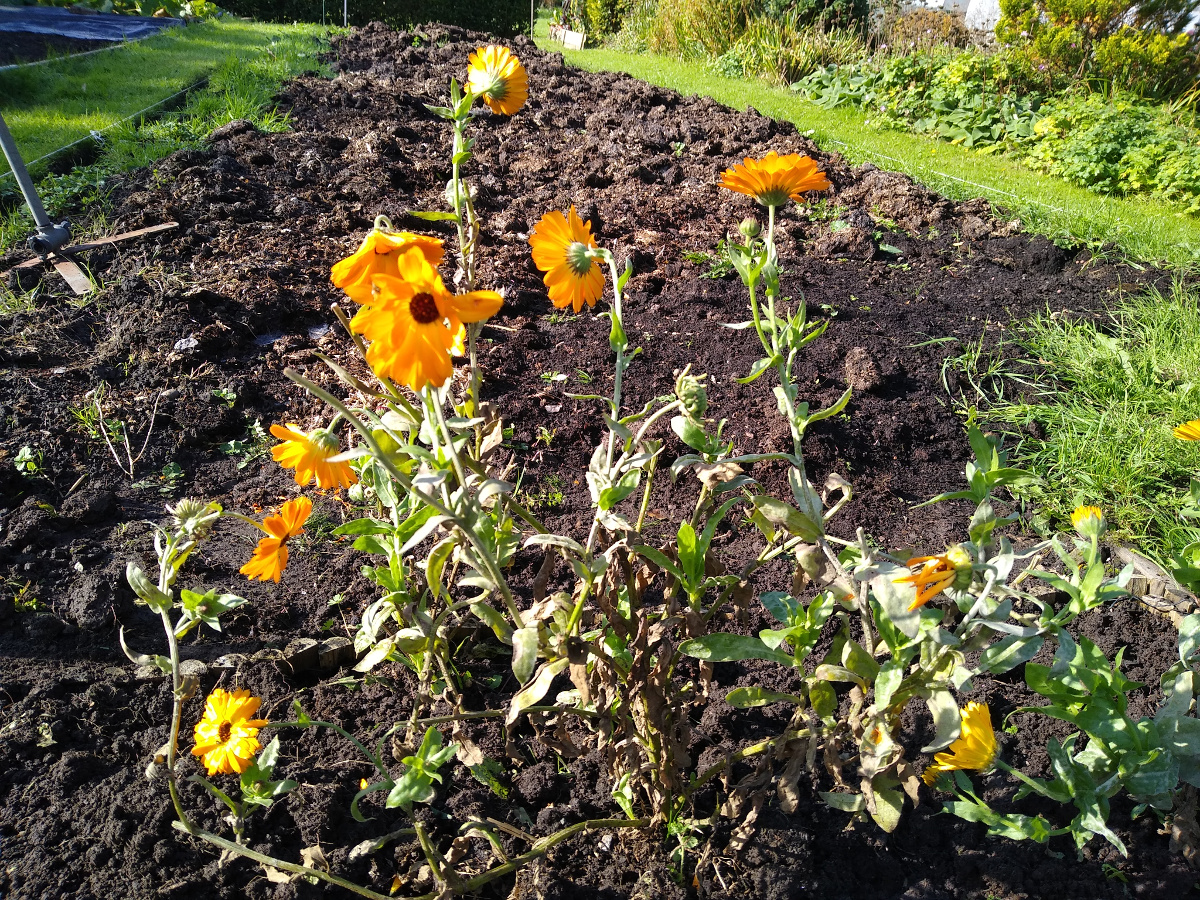
into the sunset of calendula.
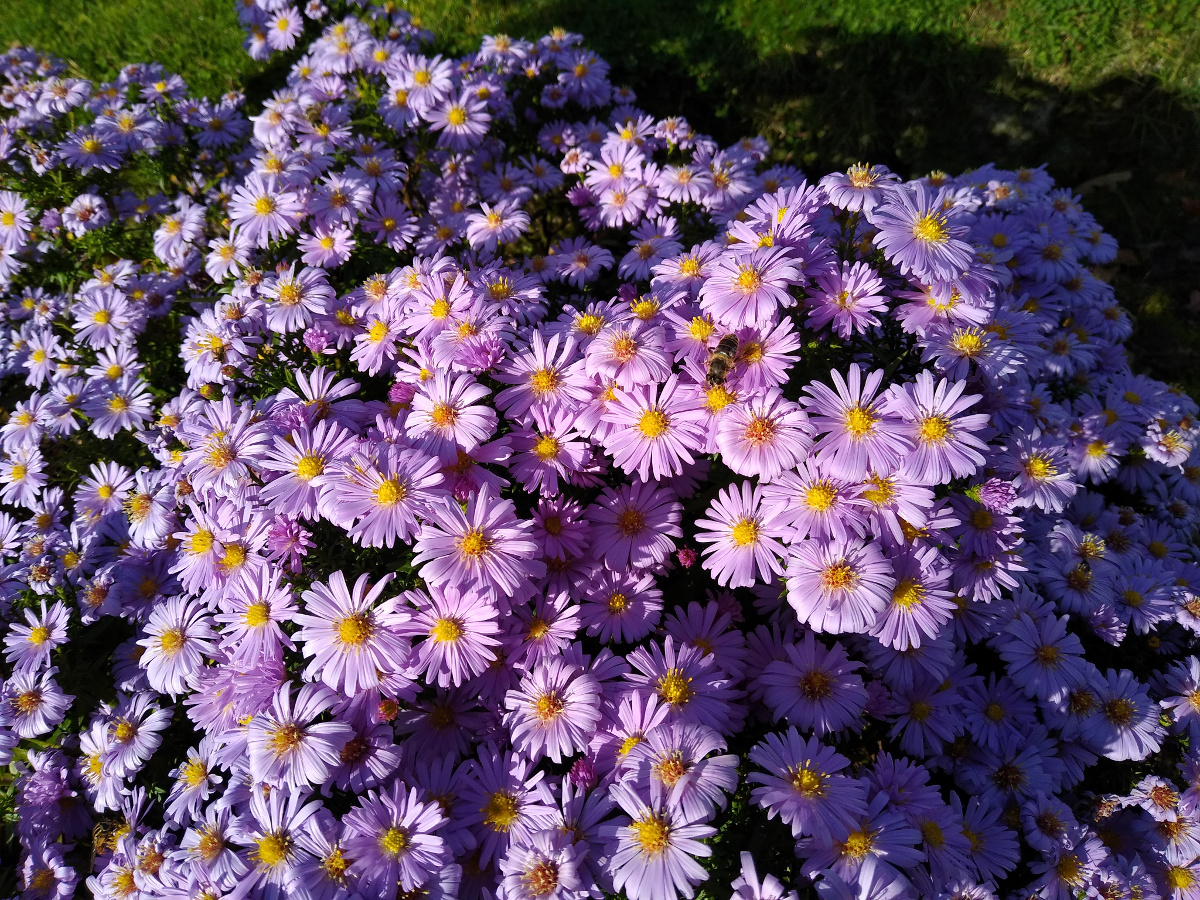
Let me weep Michaelmas daisies
in the purple of dusk.

Let me ride the mountains
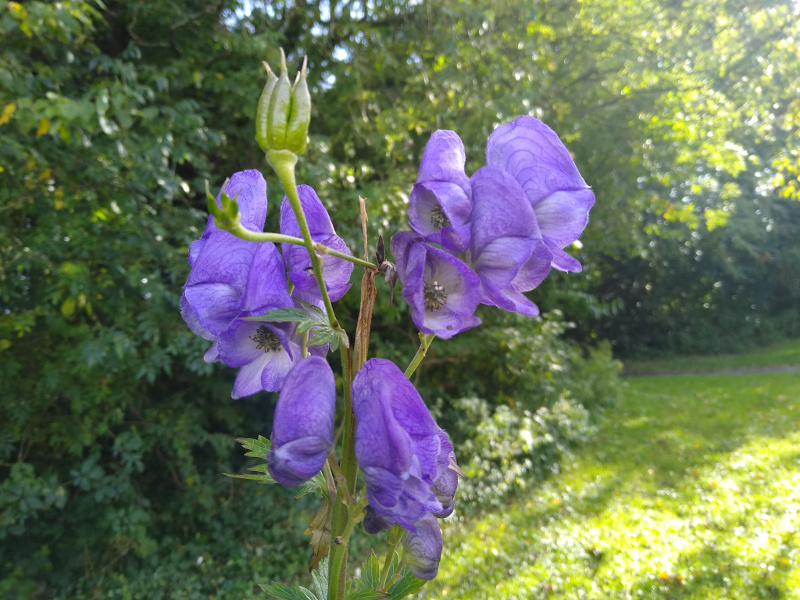
to gather wolfsbane in a distant land
where it was spat from the jaws
of a monstrous hound.

Let me sit and count violas
so delicate as you count the days
down until you leave for the place
from which flowers come.

The Summer King is dead.
Your coffin is waiting in Annwn.
It shall be adorned with flowers.
The Winter King awaits.

We both hear on the crystal wind
the baying of his hounds –
call of the otherplace
growing stronger and stronger.

Let me ride with you
these last moons see your face
in the faces of flowers marking the days
until you return to Annwn.