A figure has been appearing in my journeys back to the time of the ancient Britons to the lake dwelling on the marshland close to the green hill that put the ‘pen’ in my home town of Penwortham.
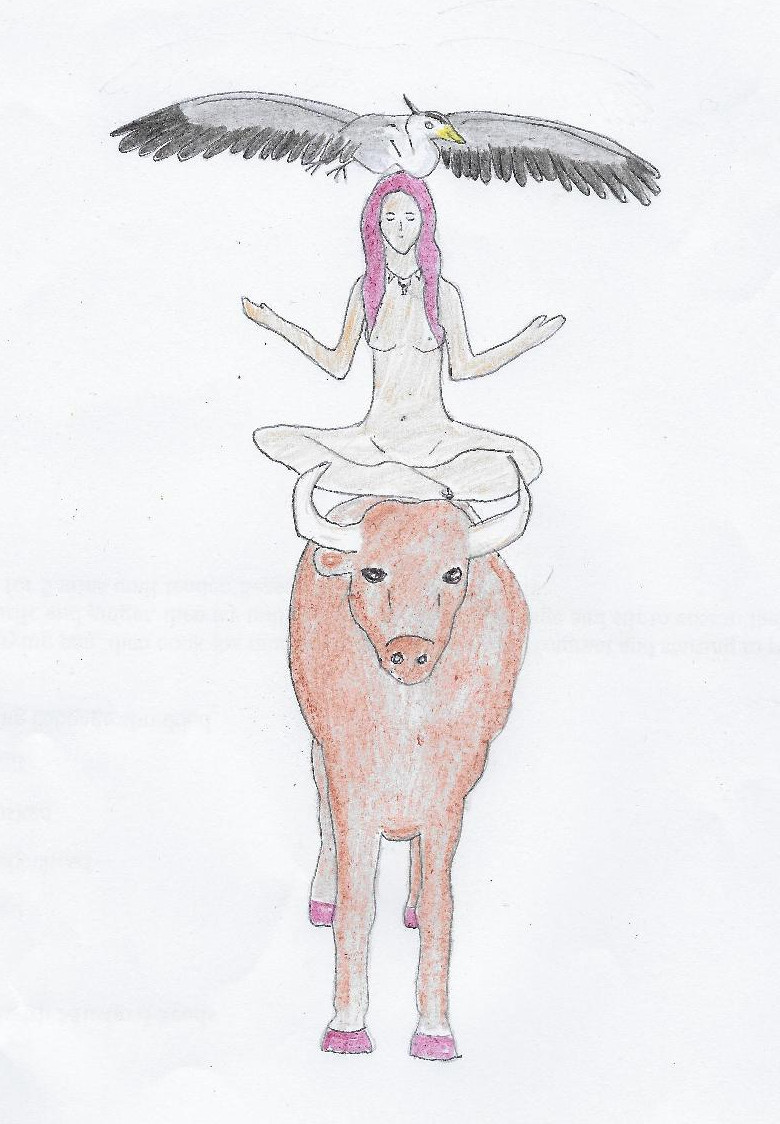
I first saw her as I approached the dwelling on a wooden pole decorated with animals. Amongst them she sat seated cross-legged on a bull with a crane in flight emerging from her head above her.
The second time I encountered her within the dwelling itself, again in a meditative position, a cord of light down her spine shining upward through the smoke hole into the heavens and down into the earth. She was encircled by worlds, flickering in out of existence, like juggling balls or fairy orbs.
Read this and you will probably be put in mind of non-Western traditions. Yet there is evidence that, like the indigenous people of the North-West Pacific Coastal communities of what is now called America and Canada, the ancient Britons carved and erected ‘totem poles’ displaying sacred animals. For example at Stonehenge there were four pits with post holes dated to between 8,500 and 7000 BC.
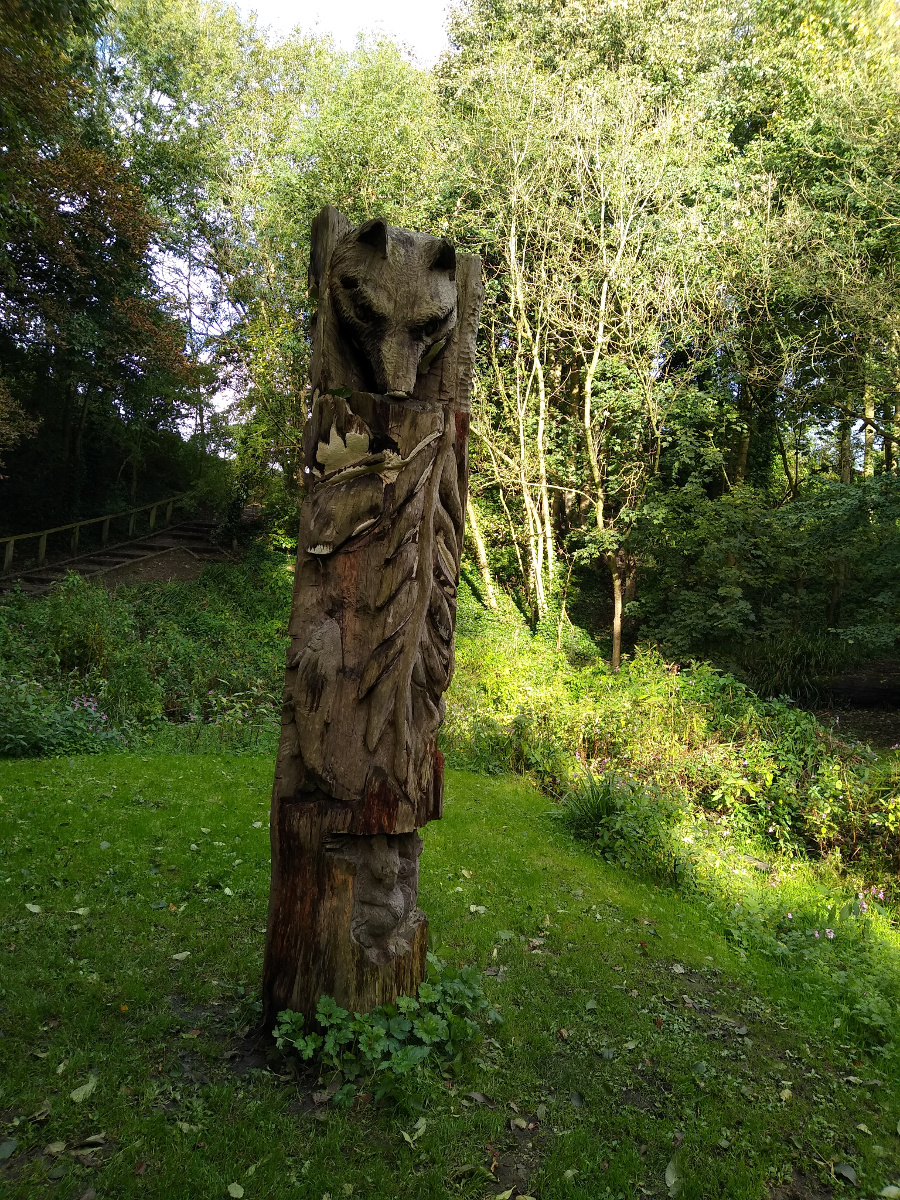
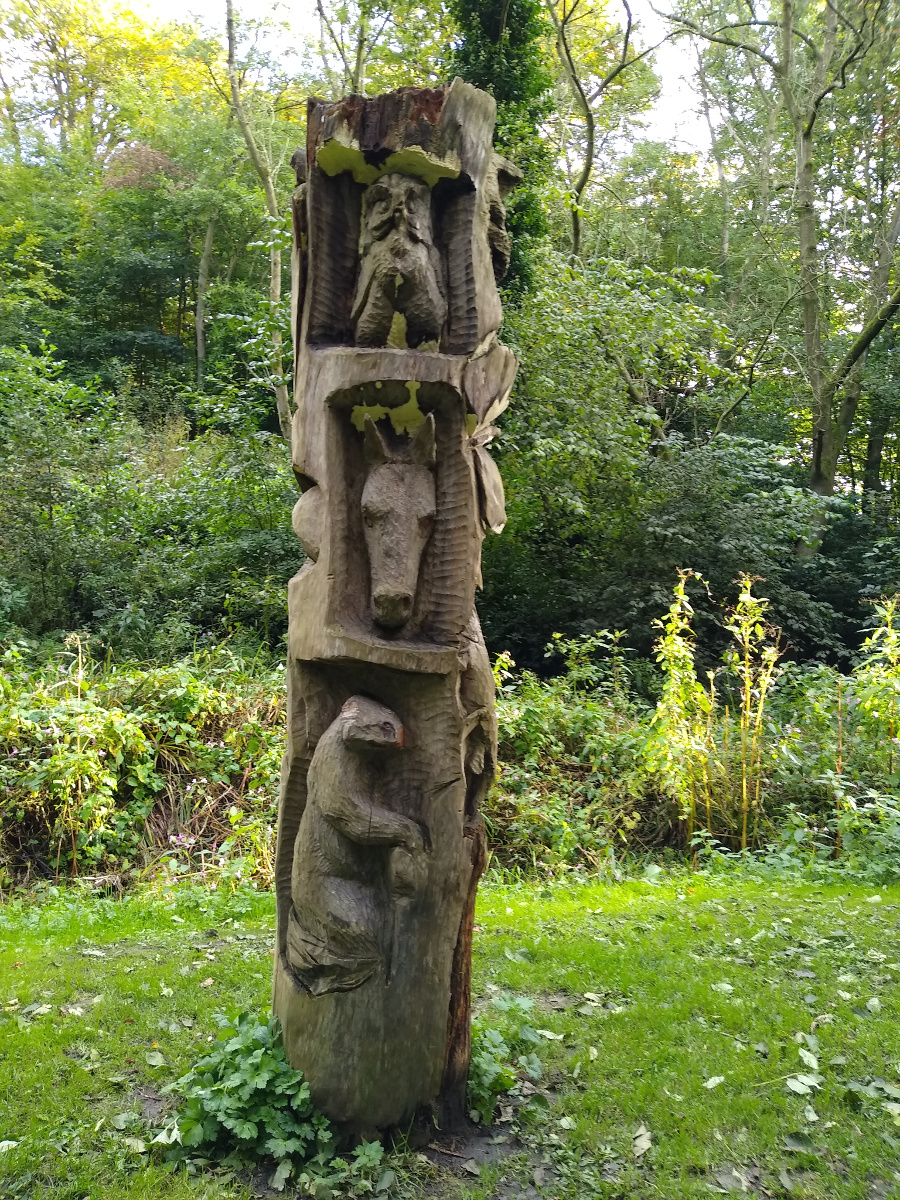
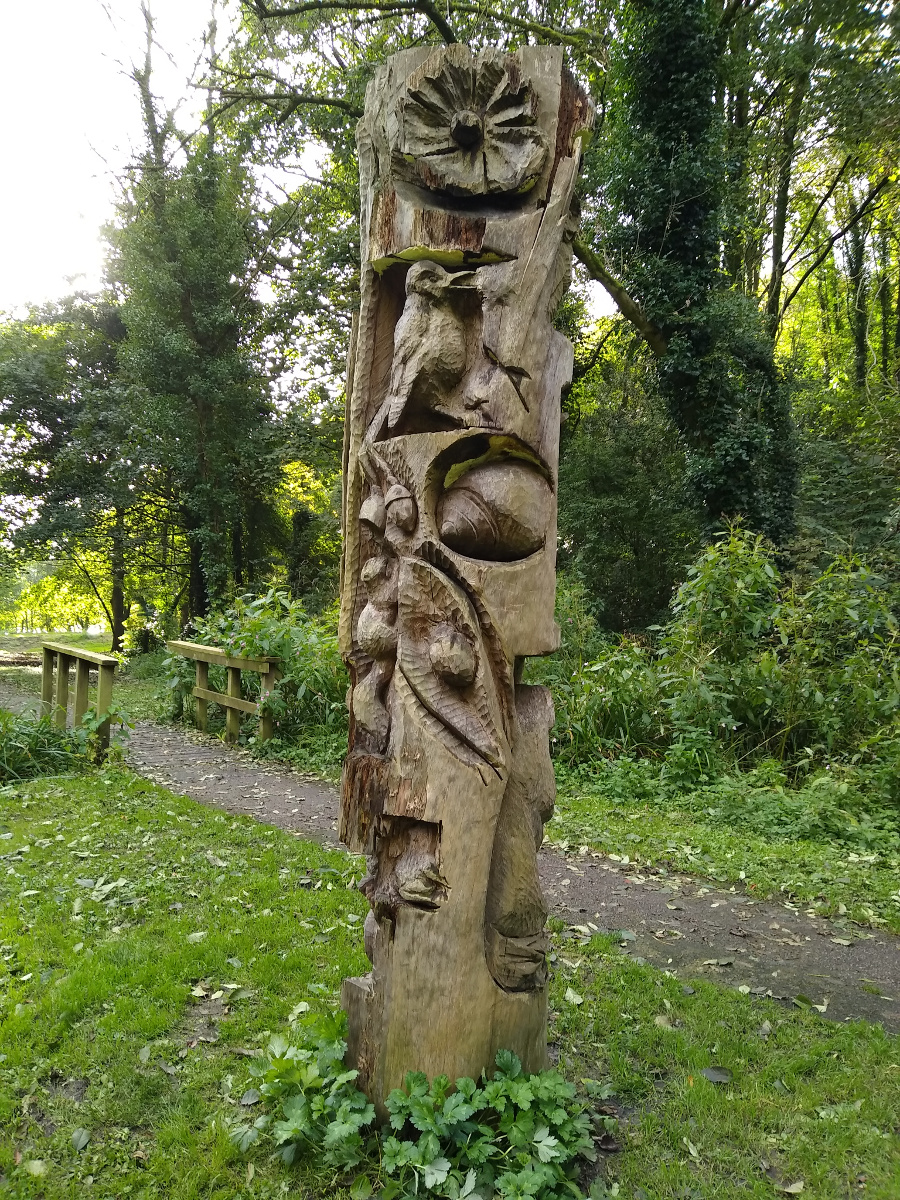
I like to think of the new wooden carvings on poles between the docks and the hill on the Ribble and upriver on Frenchwood Knoll as expressions of animistic relationships with local creatures and as a call from our ancient ancestors to return to their worldview in which the natural world is inspirited.
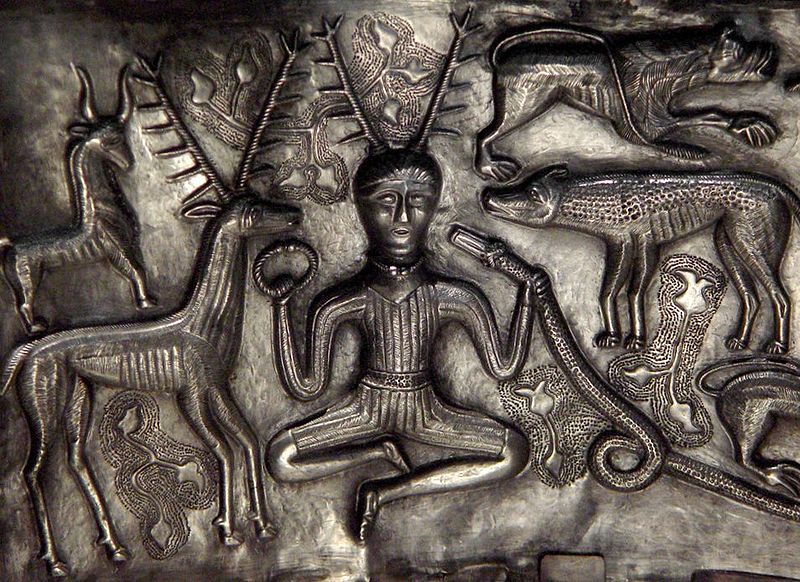
Again, the cross-legged figure will likely put you in mind of the lotus position of the Buddhist and Hindu traditions. Yet, the artwork on the Gundestrup Cauldron, dating to between 200 BC and 300 AD, features Gaulish artwork including an antlered figure sitting cross-legged surrounded by animals.
It seems likely this position was adopted for meditation by the Indo-European and Eastern cultures because it works. It was possibly used in Gaul and in Britain by spirit-workers when journeying into the spirit world to meet with animal spirits and to shift into animal forms and invoke their qualities.
The fluid relationships between human and animal, and shapeshifting, are fundamental to Celtic art. In relation to my vision Tarvos Trigaranus, ‘the Bull with Three Cranes’, appears with the divine woodsman, Esus, on the Pillar of the Boatman from Paris and on a pillar from Trier and may be related to statues of bulls with three horns found at Autun and at Maiden Castle in Dorset.
A bronze bucket mount found at Ribchester, fifteen miles up the river Ribble from Penwortham, features a bull with knobbed horns and a prey bird emerging from its head with a human head on the back.
It has been suggested that the image of the Bull with Three Cranes may have originated from the mutual relationship between cattle and cattle egrets who stand on their backs and eat their lice as well as eating the worms and insects from the soil that is overturned by their great hooves.
Maybe this is the case but I also feel such images are representative of the human impulse to participate in and become one with the wider ecosystem, to feel the strength of aurochs, the joy of crane. To be taken out of oneself, to get out of one’s head, to soar with the wetland and prey birds.
I’ve recently been having a difficult time not only because of the stress of COVID-19 as a threat to the lives of my parents and an obstacle to finding paid work in conservation, but because my mum had a fall and broke her hip and had to have a hip replacement on top of my dad’s ongoing health problems.
Through this time in my morning meditations I have been guided to take the position of this ancestral figure and to invoke the strength of the aurochs and, rather than the qualities of the crane, the patience of the heron. I believe this is because this is a time, not of joyful dancing, but of waiting.
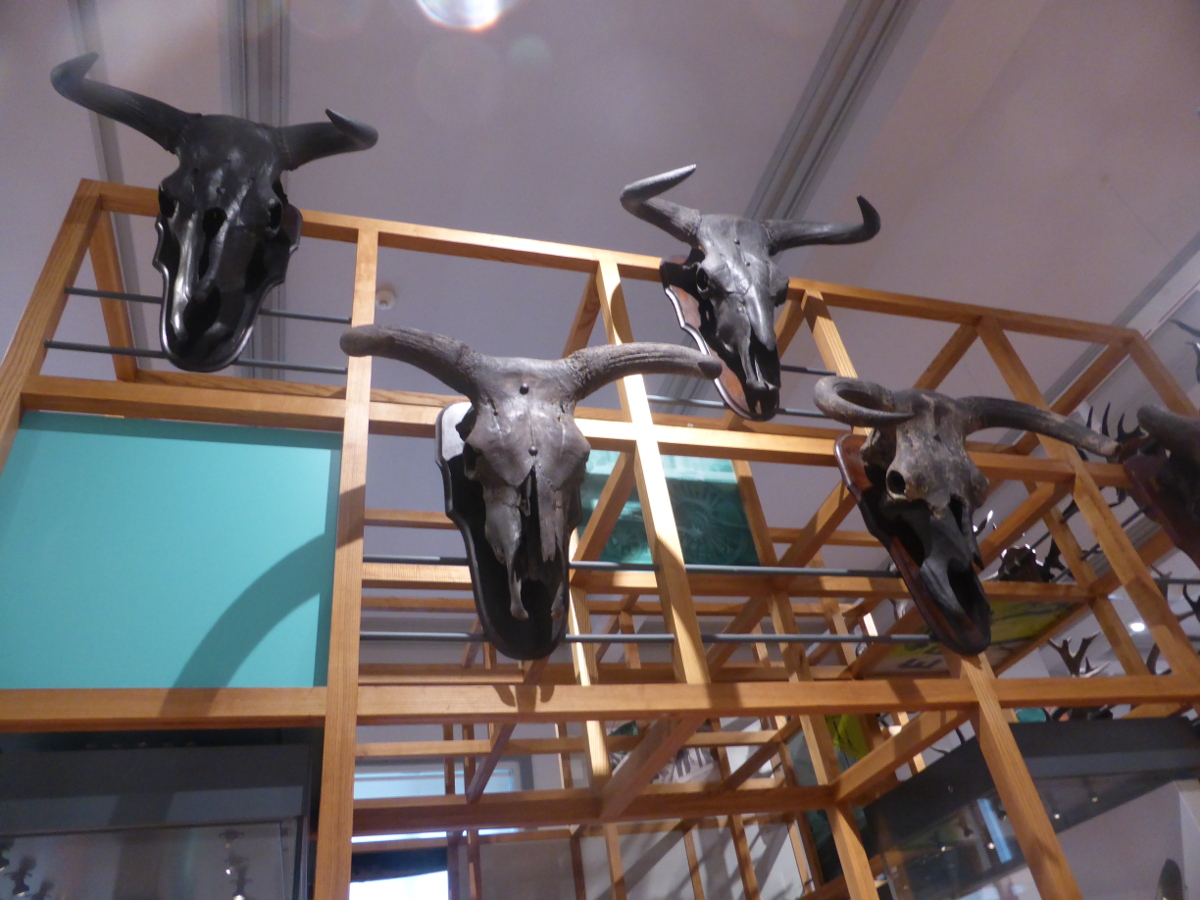
Aurochs is an animal I have long felt a connection with due to early experiences in journeys leading me to the aurochs skulls in the Harris Museum which were found in the vicinity of the lake dwelling. I often wonder whether some were offerings to my patron, Vindos/Gwyn, a hunter god referred to as a ‘bull of battle’. Whatever the case they are primordial and powerful presences.
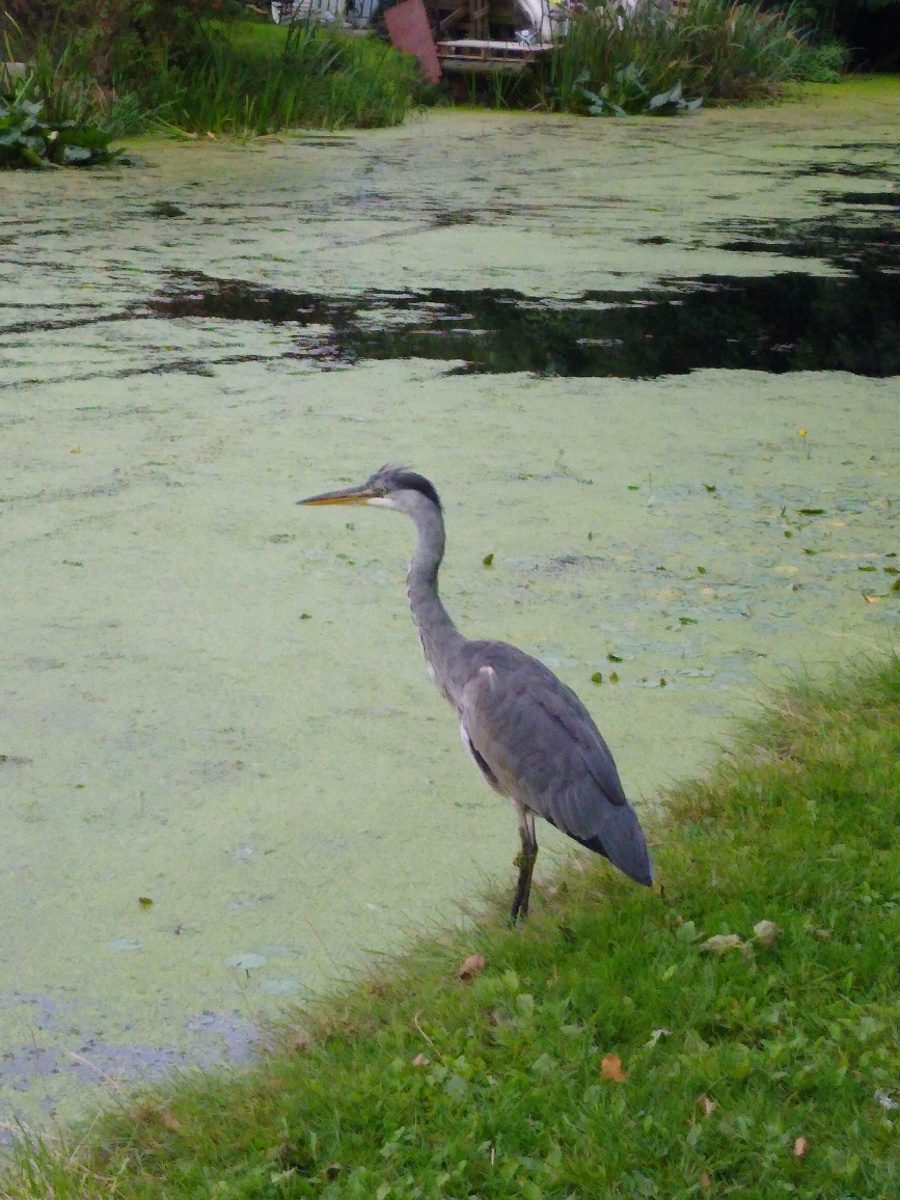
I have been seeing herons in increasing numbers along the Ribble and beside local lakes and ponds for many years. They are a bird I am much in awe of for their quiet waiting and sense of wisdom along with their quickness and determination. I have seen a heron tustling with a huge eel on the riverbank. Recently I came within a foot of a young heron absorbed in fishing beside the Lancaster canal.
‘Strong as an aurochs, patient as a heron,’ is my current chant and this and the image of the awenydd seated on an aurochs bulls with a heron emerging from her head help me get through the days.
I wonder whether the awenyddion of the past worked with and depicted the animal spirits in similar ways?
*With thanks to the Harris Museum for use of the photograph of the aurochs skulls.
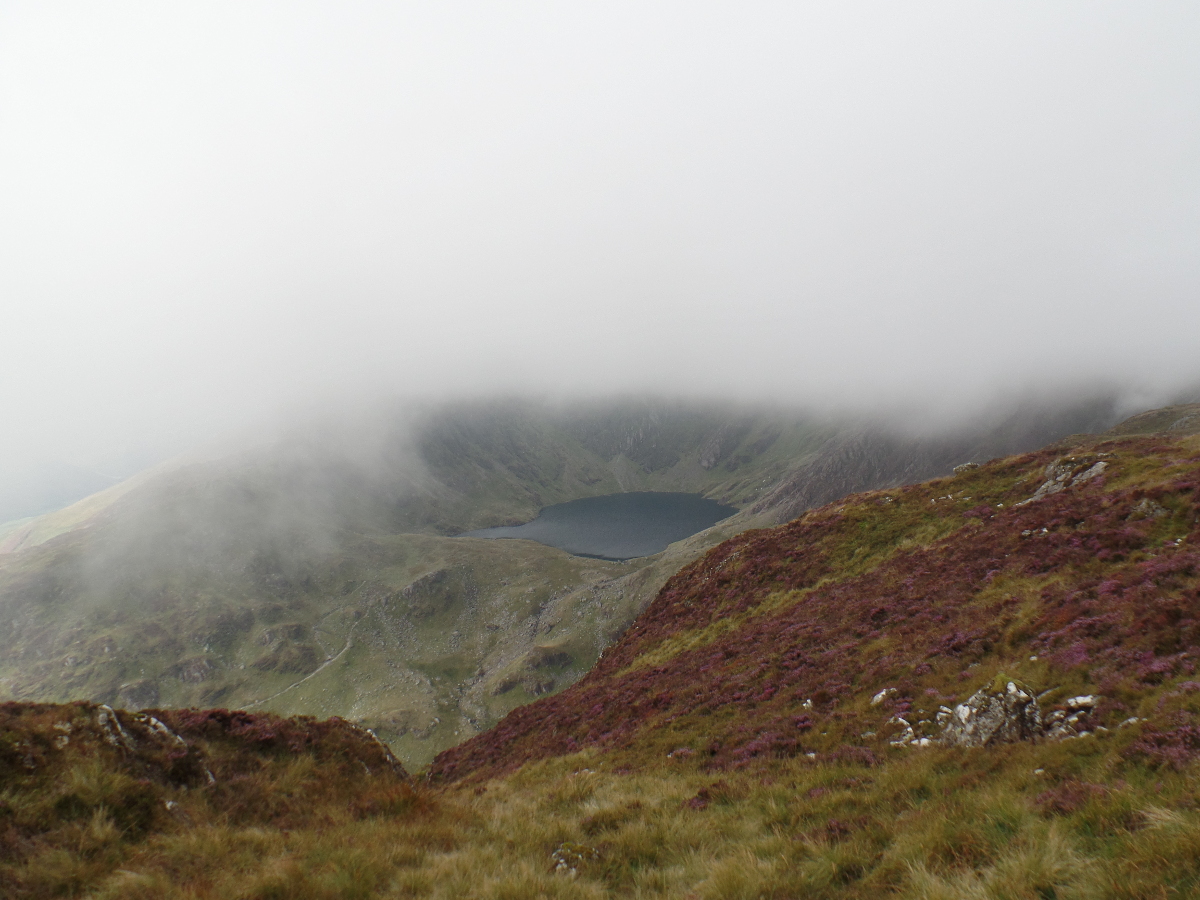
I’m back on Idris again at the edge of Llyn Cau alone with the madness of giants surrounded by the battle-fog of Gwenddolau although Arfderydd is distant, Myrddin, the gwyllon, the seven-score men who lapsed into wyllt-ness when battle-rage fled.
The ravens have left and I am alone pondering the edge of a blade lost in my brain-fog, my little Arfderydd, the small traumas etched on my flesh. Battle-scars, battle-madness, the battle- field I thought I’d escaped long ago when you appeared to Myrddin
as the brightness beyond endurance, tore him out of himself and took him to the forest of Celyddon to be healed. When you walked out of the heroic age and took me not like a maiden but like one of your own taught me to fight with Cyledyr, Cynedyr, Cynfelyn,
wilder than beasts of the mountains, to howl with your hounds and exult in the madness of giants bigger than dream. Bull of Battle, Invincible Lord, teach me again the art of turning pain into poetry, to make this battle-fog my strength not my enemy and this edge my blade.
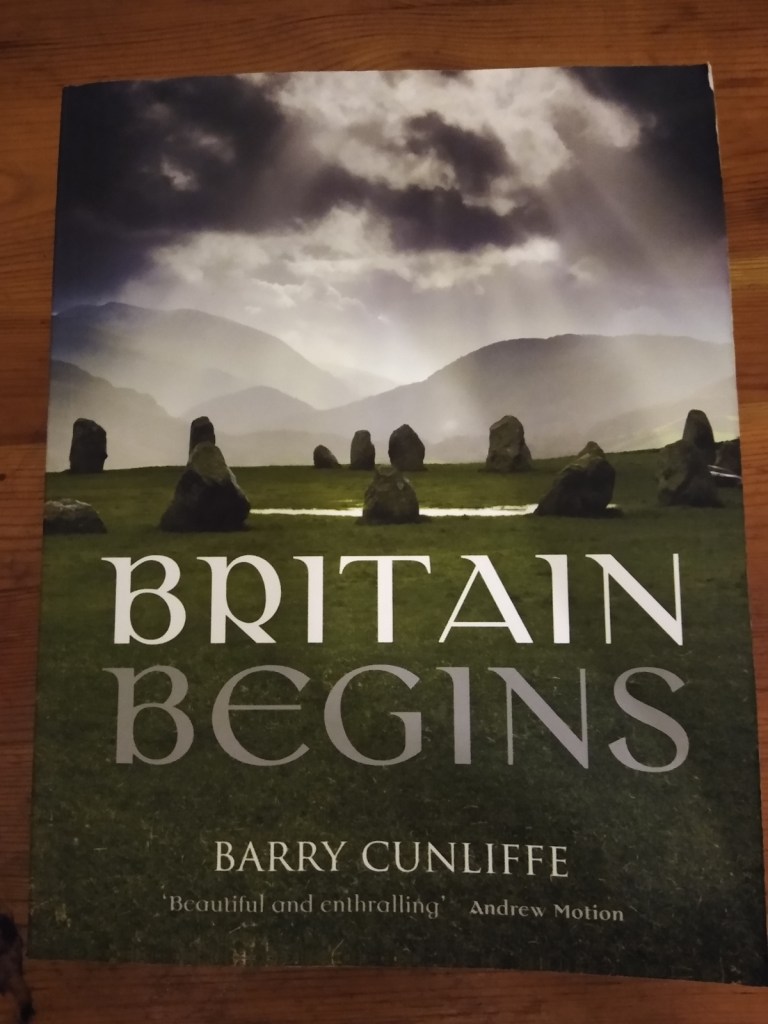
I have recently read Barry Cunliffe’s Britain Begins for the first time as part of my research into the origins of the veneration of the Brythonic gods. This excellent book has overturned one of the faulty preconceptions I have held since coming to Brythonic polytheism – the myth of Celtic invasions.
Up until now I had been working under the popular misconception put forward by earlier scholars that the Celtic people came from the east and migrated across Europe to invade Britain bringing their gods with them at some point during the Iron Age. This was based on the combination of the Biblical story of Noah’s children spreading out after the flood and classical sources recording Celtic migrations into Italy and Greece and the Balkans and Asia Minor. It was problematic for me as it ran against my gnosis that the Brythonic gods have been venerated here far longer and was a source of confusion.
Cunliffe has thankfully debunked this myth. He argues that there is no evidence for Celtic invasions. He begins his account of the beginnings of Britain with the first hunter-gatherer people moving north from Northern Iberia along the Atlantic seaways and west from the North European Plain across Doggerland. His argument is based on contemporary genetic research.
‘There is broad agreement amongst geneticists that a high percentage of the modern population can trace its ancestry back to the period of recolonization between the end of the Last Glacial Maximum and the beginning of the Neolithic period. One study offers quite startling figures for the percentages of the population whose ancestry pre-dates c.4000 BC: 88 per cent of the Irish, 81 per cent of the Welsh, 79 per cent of the Cornish, 70 per cent of the Scots, and 68 per cent of the English.’
‘Genetics… is demonstrating beyond reasonable doubt that a very high percentage of the British population, both male and female, are descended from hunter-gatherer pioneers who arrived before 4000BC, and it is showing that the Atlantic littoral zone provided one of the major corridors of movement.’
Archaeology combined with genetic studies and linguistics shows that the Celtic language, culture and religious system developed in Western Europe, in western and central Iberia, Gaul, Britain and Ireland.
Rather than our religion being imported the evidence suggests its origins may lie with the first people to repopulate Britain after the Ice Age and their networks of interactions with nearby peoples via the Atlantic and North Sea seaways and with settlers who arrived in two main movements.
Firstly people carrying the Linearbandkeramik and Impressed Ware cultures from eastern Europe and the Mediterranean brought ‘the Neolithic package’ – ‘a fully developed food-producing strategy based on the cultivation of barley and emmer wheat and the husbanding of domestic cattle, pigs, and sheep’. This spread amongst the indigenous people between 4200 – 3800. The excess time and energy created by farming led to the communal monument building traditions of long barrows, passage graves, cursus monuments, causewayed camps and later henge monuments and stone circles.
Secondly the influx of ‘Beaker people’ originating from the Tagus Valley in Iberia in 2500 BC brought metallurgy and the tradition of single burials with the famous bell beaker.
Cunliffe argues that the Celtic language developed as a Lingua Franca spoken in the Tagus Valley in Iberia between 4500 and 3000 BC and developed along the Atlantic seaways. Celtic was spoken in Britain and Ireland by 2000 BC and this was when the split appeared between the Goidelic and Brythonic languages.
It would have been at this time that the gods who were honoured in natural places such as rivers, lakes, springs, and groves, and at man-made monuments became known by Brythonic names.
Cunliffe suggests that, as the Celtic language developed in the West, so did the religious system. He says: ‘It may even be that Caesar was correct and that it had originated in Britain. At any event, the practice that became recognised as druidism in the last century of the first millennium BC had its roots deep in prehistory.’
Cunliffe’s argument fits with my gnosis that the veneration of the gods who I worship may have originated with the first people to colonise Britain and that they became known by Brythonic names as the language developed. Rather than, for example, Bel being imported by the Belgic peoples he may long have been a presence in Britain whose veneration spread to a continental tribe who made him their patron.
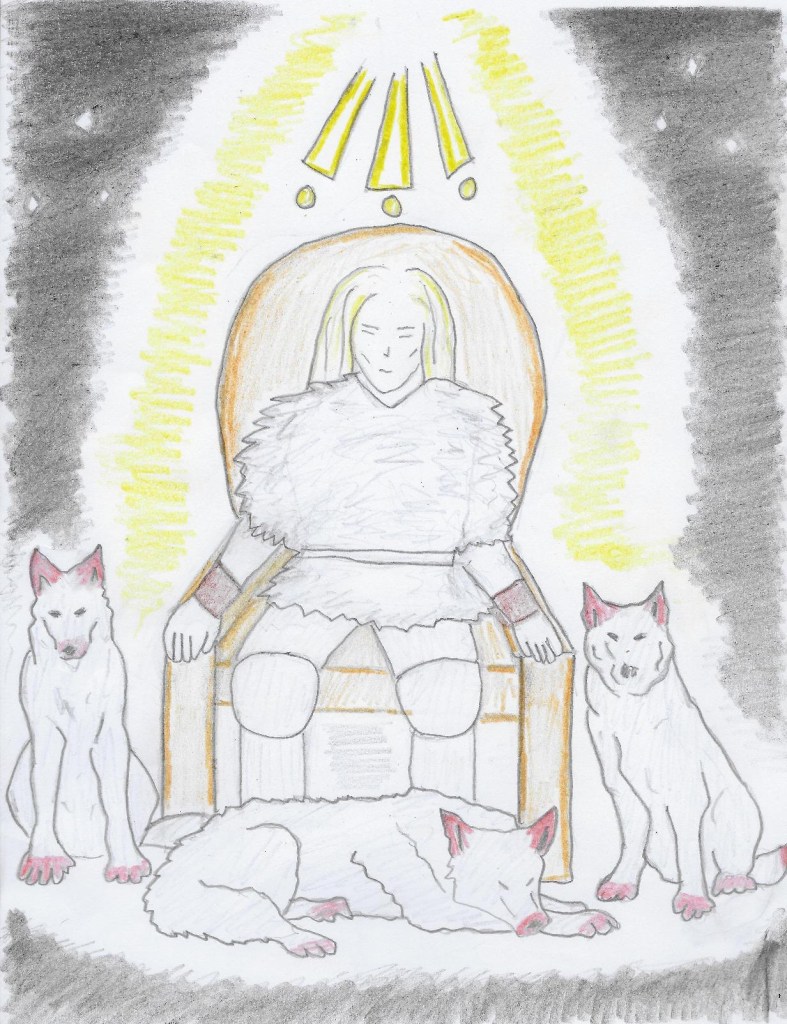
I have long felt that Vindos/Gwyn has been venerated here since at least the Ice Age as a hunter god who led the people back to Britain following the reindeer and wild horses with his wolves and ravens. Also that Rigantona/Rhiannon may have been a leader of these horse followers. Both have felt like very old and primal presences within the land and live on to today as Fairy King and Queen.
Cunliffe’s debunking of the myth of Celtic invasions has not only freed me from a flawed misconception but confirmed that it is legitimate to enquire into the origins of my deities in Britain’s deeper past.
“On an island lives the King of Annwn with a mysterious woman and no-one knows whether she is his sister, his beloved, his wife, his queen, or his daughter.”
These were words gifted to me at the beginning of a drumming journey that I undertook with the guidance of my patron god, Gwyn ap Nudd, a King of Annwn/Faerie, after asking him about the links I have intuited between his sister and beloved, Creiddylad, the mare goddess, Rhiannon, and the mother goddess, Modron.
There is little written about Creiddylad, but we know, like Rhiannon, she is a Queen of Annwn. As I have got to know her Creiddylad has revealed she is also associated with roses and horses. One of her names is ‘First Rose’ and she rides and takes the form of a white winged horse. Parallels exist between Rhiannon giving birth to Pryderi and him disappearing the same night as a foal is captured by a monstrous claw and Modron giving birth to Mabon, who is stolen away when he is three nights old. Whilst Creiddylad and Rhiannon are consorts of the King of Annwn, Modron is his daugher.
My journey resulted in the series of visions recorded in my poem ‘The Baby’s Gone’. My gnosis suggests Creiddylad, Rhiannon, and Modron are the same goddess with shifting identities.
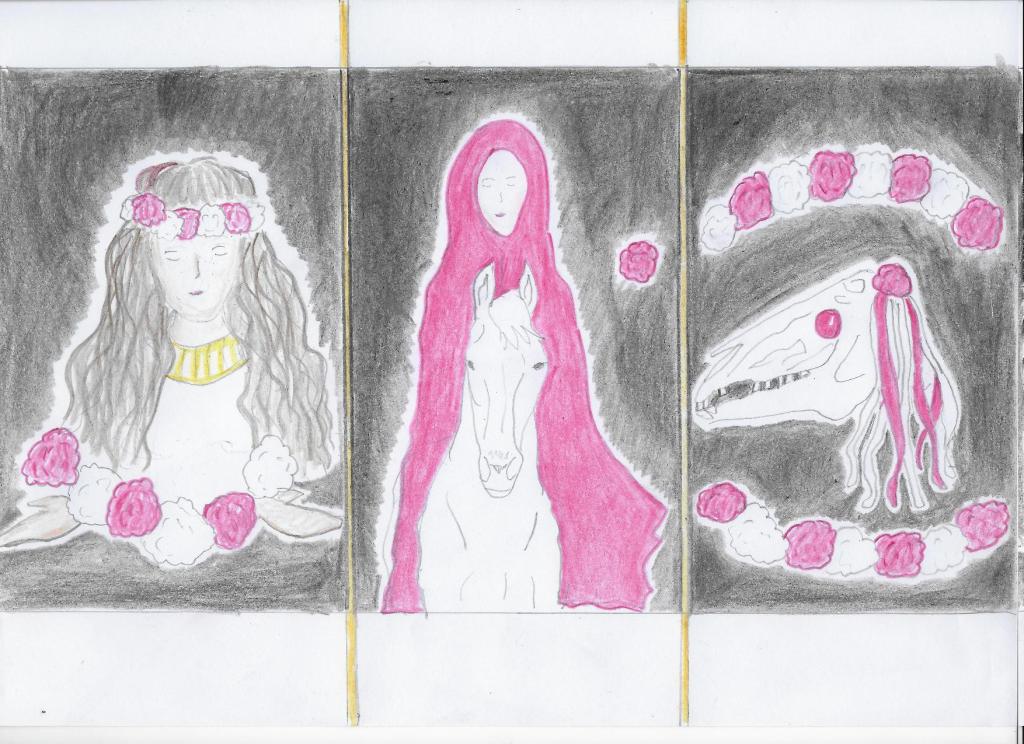
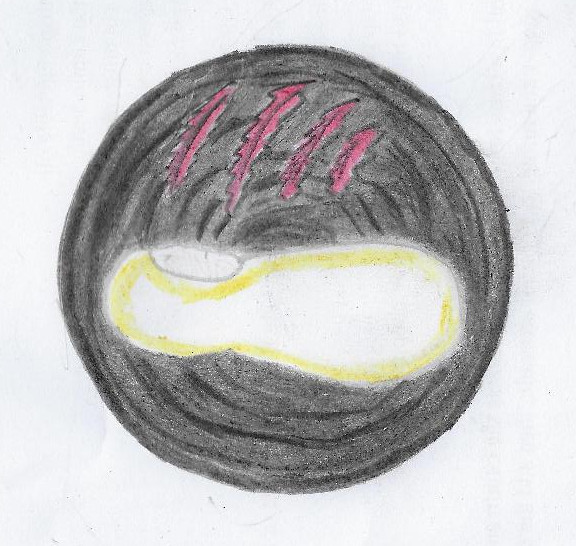
Further, in the ‘Rose Queen Triptych’ I was inspired to draw, Creiddylad, ‘The Rose Maiden’, shifts into Rhiannon, ‘The Rose Queen’, then into the Mari Llwyd, ‘The Bone Mare’.
This didn’t come as a great surprise as I had similar experiences with Gwyn. When I first came to polytheism about ten years ago I regarded myself to be a hard polytheist (someone who believes the gods are real individual persons) as opposed to a soft polytheist (someone who believes the gods are aspects of a single god or goddess or psychological archetypes). I still stand by that belief, however, it has become a lot more fluid.
One of the defining characteristics of the gods across cultures is that individual deities have many names and titles. A prime example is the Norse god, Odin. Over forty of his names are recorded in The Poetic Edda alone and he is known by many more in other texts. The Greek goddess, Demeter, possesses several epithets such as aganippe ‘night mare’ and chloe ‘the green shoot’.
Gwyn first revealed himself to me by that name as the King of Annwn/Faerie in 2012. After our initial meeting I made my main focus the myths in which he is known as Gwyn but swiftly found he lay behind a number of our Fairy King and Wild Huntsman legends in Lancashire and my past experiences with the fay and the faerie realm.
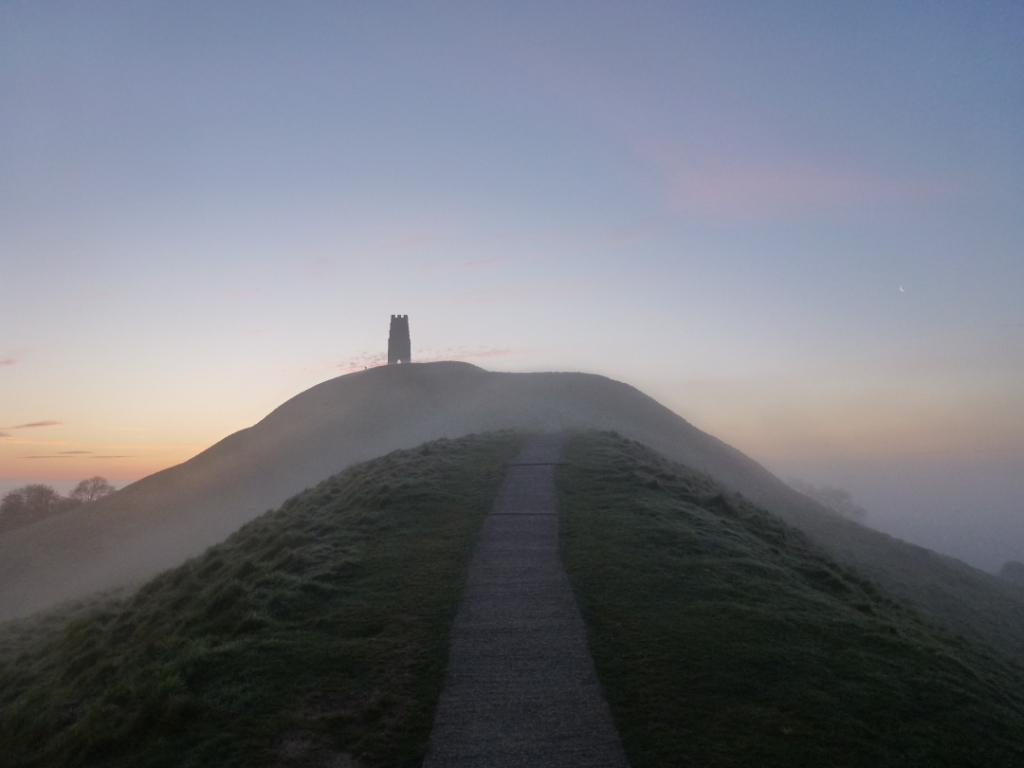
My experience of dedicating myself to Gwyn at the cauldron-like White Spring beneath Glastonbury Tor confirmed the links I had made between Gwyn feasting on Glastonbury Tor in The Life of St Collen and Pen Annwn presiding over a mead-feast with his cauldron were correct.
I was far more cautious about equating Gwyn with other Kings of Annwn. However, as I worked with the myths, intuiting the similarities between Gwyn and Arawn, both of whom are huntsmen who preside over otherworldly feasts, have beautiful brides, and fight a seasonal battle against a summer god each year, I found myself inhabiting their overlapping tales.
In one instance, in a dream, I was thrust into the role of Pwyll, who took the identity of Arawn in Annwn and had to fight Arawn’s battle, in Arawn’s form, against his rival, Hafgan. Only, in my dream I was taking the role of Gwyn and was preparing to battle against Gwythyr. This resulted in my poem ‘If I Had To Fight Your Battle’. In another, as I was walking my local landscape in winter, I felt for a moment like Arawn-as-Pwyll making a circuit of a thiswordly kingdom, only my identity became conjoined, instead, with Gwyn’s as Winter’s King. Again, I recorded my experience in a poem: ‘Winter Kingdom’. To me this proves Gwyn ‘White’ and Arawn (whose name a translation has not been agreed on) are names or titles of the same god who has shifting identities across time and place.
Similar experiences from intuiting links in the myths and being gifted with poems and visions have led me to believe the King of Annwn goes by many other names. These include Afallach, the Apple King who presides over Avalon and Melwas who shares similar associations with Glastonbury, Llwyd ‘Grey’ who puts an enchantment on the land and abducts Rhiannon and Pryderi in The Mabinogion, Brenin Llwyd, ‘The Grey King’ who haunts the misty Snowdonian mountains, Ugnach, a figure with ‘white hounds’ and ‘great horns’ whose otherworld feast Taliesin refuses to attend, and Ogyrven the Giant, who presides over the spirits of inspiration.
Additionally, the King of Annwn spoke to me directly of his shifting identities in this poem:
I speak from the infinite joining of the circle as the snake bites its tail
the moment of awen in every always of the universe
the sea behind the sea the land behind the land the sun behind the sun.
I come from many deaths. From many deaths I am reborn.
Dis, Vindonnus, Vindos, Llwyd, Brenin Llwyd, Arawn, Ugnach, Melwas, Ogyrven.
Across the sea I am Finn. For tonight I am Gwyn.
Thus it is unsurprising his consort, the Queen of Annwn, has many shifting identities too.
Interestingly, when I was involved with Dun Brython, it was very much Rhiannon/Rigantona who brought the group together in the beginning and I came later as a devotee of Gwyn. One of the other members also had a strong relationship with Gwyn and it was member Greg Hill’s translations of poems featuring Ogyrven and Ugnach that helped me decipher the aforementioned connections. When Greg and I set up the Awen ac Awenydd group many other Gwyn devotees were drawn to it and the King and Queen of Annwn feel very central to the Brythonic tradition in the modern day.
I see her, the one I love, surrounded by wilted flowers. Her sheets, her dress, are torn, bloody. It’s as if something with a monstrous claw… Do not awake oh innocent one taste the blood on your lips.
“The baby’s gone.”
She’s sitting bolt upright clutching nothing to her breast staring at her bloody hands sharp nails and has she bitten her tongue?
“Murderer.” “Cannibal.”
And above the accusations the howling of a stag-hound bitch for her six slaughtered pups.
“The baby’s gone.”
The circles beneath her eyes are dark as the moon that has ceased to ride across the night skies as she crawls on her hands and knees through the long dark tunnels.
Upon her back she carries the world as a theatre acting out a mystery play that begins as a nativity and grows dark.
“The baby’s gone.”
And is that his laughter she hears on the other side of the wall or is it some changeling she follows fingers tracing hieroglyphs?
Has this happened before and did she draw these very pictures to remind herself? Seek not the truth at the heart of the labyrinth dear one.
“The baby’s gone.”
In the play I am evil – on my head there are bull’s horns. They dare not admit I am her father or lover or brother reaching out from behind the curtains to take the son who is mine from where she lay with another.
“The baby’s gone.”
Where did I put him this time?
She’s tracing the outline of an otter and she is splashing through the water on the bank of a river with him trying to catch a silver salmon slipping
through his claws turning to stone –
a cold dead speckled fish and next the dragonfly that landed on the end of her nose and how we laughed…
She did not see the wolf in me.
“The baby’s gone.”
Yet I saw her wild horse.
She’s close to touching the truth. She’s reading the symbols like braille. On her back the bone mare is riding to the stable where the claw lies severed fingers clutching neither boy nor foal but emptiness.
(We cannot hold what we love.)
He is the object of her riddles.
“The baby’s gone.”
I am behind her curtains.
On the stage there is a man beneath her skirts and the time of revelation is drawing nigh.
“The baby’s gone.”
When she reaches the heart of the labyrinth the truth is too terrible to behold the centre unfolds.
She gallops back into not-knowing.
She is waiting outside the stable for the old man leading a colt with a boy upon his back.
In May I began work on a new mythic book which developed the working title The Dragon’s Tongue. In it I set out on an ambitious project to weave together a narrative about the formation and ordering of the world from a struggle between the Brythonic culture gods against the deities and monsters of Annwn.
It was woven from my personal intuitions about links between Anrhuna, a Brythonic dragon goddess* and the mother with Nodens/Nudd of Vindos/Gwyn and Kraideti/Creiddylad and Tiamat in Enuma Elish and the slaying of Tiamat and her monster-serpents by the culture hero, Marduk, and the battles between the giants and monsters of the otherworld and the Tuatha Dé Danann/Children of Don in ‘The Battle of Moytura’ and ‘The Battle of the Trees’ in the Irish and Welsh myths.
In the first section ‘Anrhuna and Nodens’ I told the story of the creation of the universe from the crochan – cauldron or womb – of Ceridwen, Old Mother Universe, and of how Anrhuna slipped into Annwn ‘the Deep’ and gave birth to dragon-children who departed to shape worlds including ours.
The Old Mother birthed Bel and Don and from their union came Nodens, Uidianos/Gwydion, Brigantia, Ambactonos/Amaethon, Gobannos/Gofannon, and Aryanrou/Arianrhod. When these deities desired to bring order to the chaos of our world, ruled by dragons, Nodens went to negotiate with them, fell in love with Anrhuna, and this resulted in the birth of Vindos and Kraideti.
When Nodens failed to return his kindred made war against him and the dragons and Lugus/Lleu, who was begotten on Aryanrou by Uidianos by magic, slew Anrhuna, and her nine heads were bound on the Towers of the Wyrms. This resulted in the weakening and binding of the dragons of the world and the imprisonment of the giants (early children of the Old Mother) in their own fortresses.
In the second section ‘Vindos and Kraideti’ the children watched the defeat of their father and slaughter of their mother from the secret place where Nodens had hidden them and Vindos vowed to take vengeance. The pair rescued their mother’s womb from where it had been taken after her death by the winged serpents at the cost of Kraideti sacrificing her own womb in exchange, leaving her infertile.
From her womb Anrhuna was reborn as Matrona and she married Nodens and they brought life to the world. The rest of this section covered how Kraideti came into her power as a fertility goddess and Vindos as a god of the dead and ruler of Annwn and his battle with Graidos/Gwythyr for Kraideti. This resulted in a strange marriage between the three of them. An added twist was that, whilst Kraideti could not give birth to children in this world, in Annwn her womb gave birth to monsters.
In the third section ‘Lugus the Giant Slayer’ I told of release of the giants from imprisonment in their fortresses after the Ice Age and their alliance with Vindos. Uidianos, Lugus, and their kindred came to battle against the giants and Vindos and the monsters of Annwn who were defeated. Yet Vindos finally gained vengeance on Lugus by seducing his wife and mortally wounding him with a poisoned spear, which led to the scene of his epiphany in eagle form on the oak in the Fourth Branch.
I completed the fourth section ‘The Knowledge of Uidianos’ and the fifth section ‘The Black Dragon’ on the first draft but found there were too many problems with the first three sections to make it worth returning to these on the second draft. Plus… I don’t want to give away all my secrets yet…
My main result, to date, is a second draft of the first three sections that is 50,000 words long. I completed this at the beginning of August and have since been reflecting on it – weighing it both against the existing myths and my personal experiences with the deities whose myths I have retold. I also sent it out to my patrons and have had five sets of feedback, which have been invaluable.
My main problem has been with misfits between the story of Lugus, reconstructed from the stories of Lleu in the Welsh myths and Lugh in the Irish myths, and my version of the slaying of Anrhuna and the giants. Having recently returned to re-read the original sources the meaning at the core of the story of Lugus is that the giant he slays is his grandfather, which is an important element missing from my myth. I believe this can be worked, possibly for the better, by having Lugus opposed to Bel. I’m not sure how this would fit with his slaying of Anrhuna or his rivalry with Vindos yet though.
Whilst I have had positive feedback about the primordial power and significance of Anrhuna as a Dragon Mother, who gives birth not only to dragons and monster-serpents the monsters of Annwn, I don’t feel I’ve got her death scene right yet. I not sure she was really slain by Lugus. Or if she was slain at all. For she is very much alive to me in the here and now (something I got round in the book by having the Spirit of Anrhuna tutor Vindos and raise him to the position of King of Annwn).
Another problem I encountered was in my depiction of Anrhuna giving birth to monsters. There is a fundamental difference between viviparity (live birth) and oviparity (egg laying). If she is a dragon, and hence reptilian, would she not be laying eggs rather than giving birth? However I hazarded this could be set aside as I’m working with myth, which contains births from heads and thighs, not biology.
I also wondered whether my story about Kraideti giving up her womb and it birthing monsters in Annwn was a subconscious reflection of my choice not to have real children but to dedicate my life to creativity. In particular to giving voice to the gods and monsters of Annwn whose stories are untold.
Whilst I was reflecting on this Goya’s painting and its title ‘The Sleep of Reason Produces Monsters’ kept popping into my head and it felt like a fitting phrase summarising my decision when I set out to write the first draft of eschewing critical reflection and allowing the awen to flow wherever it willed at the outset.
I produced a lot of monsters. I don’t think that’s a bad thing. It also fits with stories about monstrous births in the Welsh myths. Some are only hinted at. Goleuddydd gives birth to Culhwch ‘Slender Piglet’. Rhiannon, a Queen of Annwn, is punished for suspected cannibalism of her own son who like his mother, the Mare Goddess, may have taken the form of a foal.
Some are more explicit. The brothers Gwydion and Gilfaethwy are forced to shapeshift into male and female animals and together they give birth to a deer, a boar, and a wolf, ‘three hideous sons’. Henwen, the White Sow, births a grain of wheat, a bee, a wolf, an eaglet and the monstrous Cath Palug.
Whilst I am in no way happy with the second draft and am aware I have a lot more reading and reflection ahead I have experienced a number of gains from the process. Firstly I have proved to myself that when I am immersed in something I am capable of working on it almost every hour of the day from when I get up at 5am until I go to bed 9pm and of producing 50,000 words that fit together by their own internal logic within three months.
Secondly, whilst I set out to write a personal myth due to my fears about being unable to write on the Brythonic tradition due to insecurities caused by the debates around cultural appropriation, I’ve found working through the problems with this approach has taken me back to the original sources and deeper. I’ve experienced feelings of acceptance by the family of Bel and Don as I share their stories, this has enlivened my awenydd path, and I’ve started learning Welsh again after a six month hiatus.
Thirdly, my writing of Creiddylad/Kraideti’s story along with personal experiences with her as a goddess of flowers this year in my garden has filled in a black hole in my personal mythos. For a long time I have been aware of the absence of Rhiannon by that name as a horse goddess who I’ve paradoxically felt is very much with me as my white winged mare and the horses who haunt my dreams.
Creiddylad’s revelation of her epithet ‘First Rose’ and her appearance to me riding a white winged mare in association with the moon have suggested she may be identical with Rhiannon. This would fit with both of them being Queens of Annwn who I have perceived giving monstrous births.
This opens the possibility and perhaps the necessity of incorporating material about Gwyn/Arawn and Creiddylad/Rhiannon and their son from the other branches of The Mabinogi into my book. It is implicit that Arawn is the otherworld father of Pryderi in the First Branch and Pryderi’s slaying by Gwydion would certainly provide added meaning to the conflict between Uidianos/Gwydion and Vindos/Gwyn/Arawn.
So this is where I am right now. On the brink of reason, pondering, if not producing monsters. If you would like to hear more about my creative processes, have access to unseen work from my drafts, and play a part in my creations by giving feedback, please consider becoming a patron HERE.
*Anrhuna is not known from existing sources but she has revealed herself to me within my landscape and in the iconography surrounding Nodens/Nudd/Lludd – in a mosaic of sea serpents with intertwined necks from the temple at Lydney and Lludd’s associations with two dragons.
Afallach, a Brythonic god whose name is derived from afal ‘apple’, is best known for his associations with Ynys Afallach ‘The Island of Apples’ or the Isle of Avalon. In his Speculum Ecclesiae (1216)Giraldus Cambrensis says: ‘Avallonia is so called either from the British aval which means apple, because that place abounded with apples, or from a certain (A)vallo, lord of that land’.
Giraldus identifies the Isle of Avalon with Glastonbury, in De Instructione Principium (1193 -9): ‘what is now called Glastonia was anciently called Insula Avallonia, for it is like an island, wholly surrounded by marshes, whence it is called in British Inis Avallon, that is the apple-bearing island.’
William of Mamlesbury, in The Antiquities of Glastonbury (1216), follows this tradition. Glastonbury ‘is also well known as by the name of Insula Avalloniae’. He says it may be ‘named after a certain Avalloc who is said to have lived there with his daughters on account of it being a solitary place. (1)
Ynys Afallach is described as a paradisal island by Geoffrey of Monmouth in his Vita Merlini (1150). ‘The island of apples which men call “The Fortunate Isle” gets its name from the fact that it produces all things of itself; the fields there have no need of the ploughs of the farmers and all cultivation is lacking except what nature provides. Of its own accord it produces grain and grapes, and apple trees grow in its woods from the close-clipped grass. The ground of its own accord produces everything instead of merely grass, and people live there a hundred years or more.’
Geoffrey names the nine daughters of Afallach as Morgen, ‘Moronoe, Mazoe, Gliten, Glitonea, Gliton, Tyronoe, Thitis; Thitis best known for her cither.’ He notes Morgen ‘is first of them’, ‘skilled in the healing art, and excels her sisters in the beauty of her person’. She knows the properties of herbs, is skilled in healing, and mathematics and has the ability to shift shape.
Giraldus Cambrensis, in De Instructione Principium (1193), also writes of,‘Morganis, a noble matron who was the ruler and patron of these parts… the island which is now called Glastonia.”
II. Afallach – King of Annwn
It is significant that Morgan is referred to as a ‘noble matron’ for in the Triads she is otherwise named as ‘Modron daughter of Afallach’. Modron is a later form of Matrona ‘Mother’. The Mothers or Matrons were worshipped across northwestern Europe during the Romano-British period.
In Peniarth MS. 70 Modron speaks of herself as ‘the daughter of the King of Annwn’. Annwn means ‘the Deep’ and is the medieval Welsh name for the Otherworld which is a paradisal location.
In The Life of St Collen (14th C)we find an account of Collen’s visit to the castle of Gwyn ap Nudd, a King of Annwn, on Glastonbury Tor:
‘he saw the fairest castle he had ever beheld, and around it the best appointed troops, and numbers of minstrels, and every kind of music of voice and string, and steeds with youths upon them the comeliest in the world, and maidens of elegant aspect, sprightly, light of foot, of graceful apparel, and in the bloom of youth and every magnificence becoming the court of a puissant sovereign. And he beheld a courteous man on the top of the castle, who bade him enter, saying that the king was waiting for him to come to meat. And Collen went into the castle, and when he came there, the king was sitting in a golden chair. And he welcomed Collen honourably and desired him to eat, assuring him that, besides what he saw, he should have the most luxurious of every dainty and delicacy that the mind could desire, and should be supplied with every drink and liquor that his heart could wish; and that there should be in readiness for him every luxury of courtesy and service, of banquet and of honourable entertainment, of rank and of presents: and every respect and welcome due to a man of his wisdom.’
It seems likely Gwyn and Afallach are the same deity. Both are named as King of Annwn and are associated with Glastonbury/the Island of Avalon. Afallach is named as the grandson of Beli Mawr in the Harleian Genealogies (1100)and we find out that Gwyn is the grandson of Beli Mawr from Lludd ac Llefelys (1225) where his father, Lludd/Nudd, is named as the son of Beli.
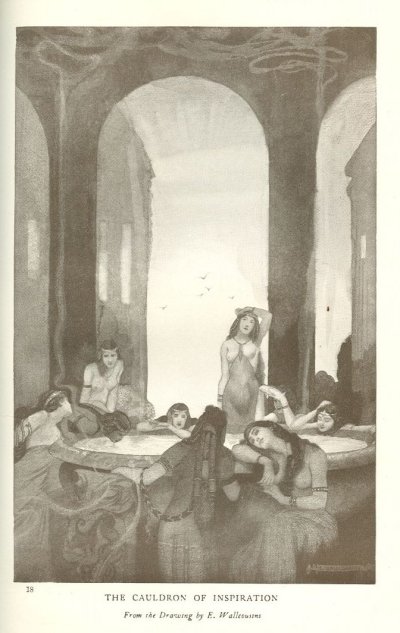
Further traces of his mythos can be found in ‘Preideu Annwn’ where Pen Annwn, ‘the Head of the Otherworld’ is depicted presiding over an otherworldly mead feast and as the owner of countless treasures including a cauldron ‘kindled by the breath of nine maidens’ with ‘a dark trim and pearls’.
Its refusal to ‘boil a coward’s food’ suggests that it is connected with the initiation of bards such as ‘the loyal lad’, Gwair who, in the poem, is singing before the spoils of Annwn in a heavy grey chain.
III. Afallach and Modron in the Old North
In the Triads and Peniarth MS. 70 Afallach’s daughter, Modron, is the mother of the children of Urien. In Triad 70 the second of the ‘Three Fair Womb Burdens’ is the following: ‘Owain, son of Urien and Morfudd his sister who were carried together in the womb of Modron daughter of Afallach’.
In Peniarth MS. 70 we find the full story of the conception of Modron’s children:
‘In Denbighshire there is a parish which is called Llanferes, and there is there Rhyd y Gyfarthfa (the Ford of Barking). In the old days the hounds of the countryside used to come together to the side of that the ford to bark, and nobody dared go to find out what was there until Urien Rheged came. And when he came to the side of the ford he saw nothing except a woman washing. And then the hounds ceased barking, and Urien seized the woman and he had his will of her; and then she said “God’s blessing on the feet which brought thee here.” “Why?” said he. “Because I have been fated to wash here until I should conceive a son by a Christian. And I am daughter to the King of Annwfn, and come thou here at the end of the year and then thou shalt receive that boy.” And so he came and he received there a boy and a girl: that is, Owein son of Urien and Morfudd daughter of Urien.’
The setting of this story in Denbighshire is strange because Urien was the king of the northern kingdom of Rheged during the sixth century. Urien’s seat may have been Luguvalium (present-day Carlisle), on the River Eden, and his realm likely extended throughout the Eden Valley and much of Cumbria to the Solway Firth and perhaps included Dumfries and Galloway. (2)
The name ‘Eden’ holds associations with Paradise and thus with Afallach/Gwyn and his brother Edern. (3) When Rheged was conquered by the Anglo-Saxons some of the fleeing Britons may have taken the tale to Wales.
I believe this story has its basis in the pre-Christian tradition of a human king entering a sacred marriage with the goddess of the land. There is plentiful evidence for the cultus of Modron/Matrona and her son, Mabon/Maponos in the form of altars and place names in northwest England and southern Scotland.
Altars and inscriptions to the Mother Goddesses and the Mothers the Fates have been found at Burgh-by-Sands, Carlise, Old Penrith, Skinburness, Bowness-on-Solway, Ribchester, and Lund. There is an altar to Apollo-Maponus at Ribchester. Lochmaben and the Clochmaben stone are named after him.
In The Harleian Genealogies the kings of Rheged trace their lineage to Coel Hen and ultimately to Afallach and Beli Mawr. This suggests that Beli, Afallach, Modron, and Mabon were their ancestral deities.
The references to Owain as Mabon in the poetry attributed to Urien’s bard, Taliesin, are suggestive not only of his divine birth, but that he possessed the power to invoke and take on the identity of Mabon.
The story from Peniarth MS. 70 demonstrates the turning of the kings of Rheged to Christianity. Here we find Modron depicted as a sinister figure, as the Washer at the Ford, suggesting links with Morgan and possibly with the Irish death-goddess Morrigan, surrounded by equally sinister hounds (who are likely to be the Hounds of Annwn who hunt the souls of the dead with her father). To see a woman washing one’s clothes was a death portent as was hearing or seeing otherwordly hounds.
Urien, a self-proclaimedly Christian King, ignores the portents, seeing ‘nothing but a woman washing’ and rapes Modron. Her words about being fated to wash there until she conceives a son by a Christian have clearly been put into her mouth by a Christian interlocutor to obscure her role as a sovereignty goddess who holds power not over the land and Annwn but fate itself. Following Urien’s abuse it is no surprise he is assassinated and this leads to the fall of Rheged and the Old North.
The connections of Afallach and Modron with the Old North live on in their folkloric associations with the Roman fortresses of Glanoventa (Ravenglass) and Mediobogdum (on the Hard Knott Pass). In these areas of Cumbria Afallach is known as Eveling, which is an Anglicised version of his name.
IV. Afallach and Gwallen in North Wales
Afallach’s associations with Rhyd y Gyfarthfa in Denbighshire have been noted. Near the hill fort of Moel-y-Gaer in Flintshire is a hamlet called Caerfallwch which means ‘the Fortress of Afallach’.
From the ‘Hanesyn Tract’ we learn that Afallach had another daughter called Gwallen. She is referred to as ‘Gwalltwen verch Yvallach’ in ‘Digyniad Pendefigaeth Cymru’ and here we learn that she was mistress of Maelgwn, the ruler of Gwynedd during the sixth century, and the mother of Maelgwn’s son, Rhun, who ‘was not acceptable to some as prince, only as a regent.’
The kings of Gwynedd traced their ancestry through Cunedda to Afallach and Beli Mawr. It is possible that, like Modron, Gwallen was perceived as a sovereignty goddess. Her name might be translated as ‘White Hair’ (from gwallt ‘hair’ and gwyn/(g)wen ‘white’) suggesting Annuvian characteristics shared with her father, Afallach/Gwyn. The rejection of her son may be indicative not only of the laws surrounding illegitimacy, but Christian superstitions surrounding her otherworld nature.
Maelgwn’s wife was Sanan ferch Cyngen. They had a daughter called Eurgain who was married to the northern warlord Elidyr Mwynfawr. According to The Black Book of Chirk (1592 – 1667):
‘After the death of Maelgwn… many of the nobility of Cambria disdained to yield subjection to Rhun his son, being a bastard begot upon Gwallten the daughter of Afallach, Maelgwn’s concubine, especially the nobility of Arfon, who privately sent unto Elidyr Mwynfawr aforesaid to come speedily to Cambria, to aid him in recovery of the kingdom in the right of his children by Eurgain the daughter and heir of Maelgwn’.
The voyage of Elidyr and Eurgain and their companions from the Old North to Wales is recorded in Triad 44 ‘Three Horses who carried the Horse Burdens’. It is memorable because ‘seven and a half’ people are said to have crossed sea on the back of the water horse Du y Moroedd ‘The Black of the Seas’.
‘Du y Moroedd… horse of Elidyr Mwynfawr… carried on his back seven and a half people from Benllech in the north to Benllech (Elidir) in Mon. These were the seven people: Elidyr Mwynfawr and Eurgain his wife, daughter of Maelgwn Gwynedd, and Gwyn Good Companion and Gwyn Good Distributor, and Mynach Naoman his counsellor, and Prydelaw the Cupbearer, his butler, and Silver Staff his servant, and Gelbeinifen, his cook who swam with two hands and on the horse’s crupper – and he was the half person.’
Du y Moroedd is the horse Gwyn ap Nudd rides when hunting for Twrch Trwyth ‘King of Boars’ and likely for the souls of the dead. (4) Elidyr met his end battling against Rhun at Aber Mefydd. Perhaps Du not only carried them to meet their deaths but to the Otherworld afterwards too.
What this story serves to consolidate is that Afallach/Gwyn and his daughter, Gwallen, had strong and longstanding connections with the Brythonic peoples who claimed descent from Beli Mawr.
V. Lugus and the Island of Apples
In the Irish myths we find Emain Ablach ‘The Island of Apples’. In ‘Ar an doirseoir ris an deaghlaoch’ ‘The doorkeeper said to the noble warrior’, a medieval Irish poem based on the arrival of Lugh at the court of the Irish gods, the Tuatha Dé Dannan, Lugh introduces himself as ‘a poet from Emain Ablach / of swans and yews’ before gaining entry due to his mastery of many skills. This suggests Lugh might have undergone some kind of bardic initiation on Ablach/Afallach’s isle.
Lugh is the son of Cian of the Tuatha Dé Danann, and of Ethniu, daughter of the Formorian giant, Balor. After hearing a prophecy that he would be killed by his grandson, Balor locked Eithne away in a tower on Tory Island, but this did not prevent Cian from entering and fathering Lugh. Balor then attempted to stop the child gaining maturity by preventing him from getting a name and a wife.
In ‘Balor of the Evil Eye and Lui Lavada’ Cian takes Lui to Tory Island where numerous apple trees grow. They pose as gardeners. When Lui shows a good deal of skill picking up the apples Balor says: ‘Tog leat Lui Lavada’ ‘take away with you little long hand’ and this is how he receives his name. Lui/Lugh kills Balor with a slingshot or spear through his burning or poisonous eye.
We find a striking parallel in The Mabinogi (1350 – 1410) in the story of Lleu Llaw Gyffes who is cognate with the Irish Lugh. Lleu is the son of Gwydion and Arianrhod, the son and daughter of Beli Mawr and Don. He was likely conceived by magical subterfuge. (5) In this story it is not Lleu’s grandfather, Beli, but his mother, Arianrhod who curses him with three fates: he will never win a name, arms or a wife. This is because of her ‘shame’ at the slight to her virginity caused by Gwydion.
Gwydion helps Lleu win his name by disguising them as shoemakers and luring Arianrhod onto his boat to get a shoe fitted. When she is on board Lleu shoots a wren that lands on the deck ‘in the leg, between the tendon and the bone’ and she exclaims ‘it is with a skilful hand that the fair one has hit it’ and hence he is called Lleu Llaw Gyffes ‘the fair-haired one with the skilful hand’.
Instead of killing his grandfather, Beli, with his spear, Lleu kills Gronw, his rival for his wife, Blodeuwedd. Gronw, a hunter who arrives with a pack of hounds chasing a deer and turns up at night to seduce Lleu’s beloved is likely to be the King of Annwn, Arawn, who displayed his shapeshifting abilities earlier in the text, and may be identified with Afallach/Gwyn, his cousin.
The Welsh and the Irish myths contain suggestions of a shared mythos surrounding Beli/Balor, Ablach/Afallach, Eithne/Arianrhod, Cian/Gwydion, and Lleu/Lugh/Lugus (his pan-Celtic name) that was important to the people of the Brythonic kingdoms who claimed descent from Beli. (6)
VI. The Apple King in Peneverdant
The name of my home town, Penwortham, was Peneverdant in the Domesday Book. The first element, pen, ‘head’ is Brythonic and refers to present-day Castle Hill. Like Glastonbury Tor this headland stood on marshland and is an important sacred site for pagans and Christians.
The dedication of the church on its summit and well at its foot (now dried up) to St Mary Virgin and the fairy funeral legend featuring a fairy leader suggest the presence of a mother goddess and fairy king.
I know from personal experience the fairy king is Afallach/Gwyn. I first intuited the goddess to be Gwyn’s mother, Anrhuna, who I know as the Mother of the Marsh, but am now considering that another presence who better fits the image of Mary in the church with her shining son is Modron with Mabon.
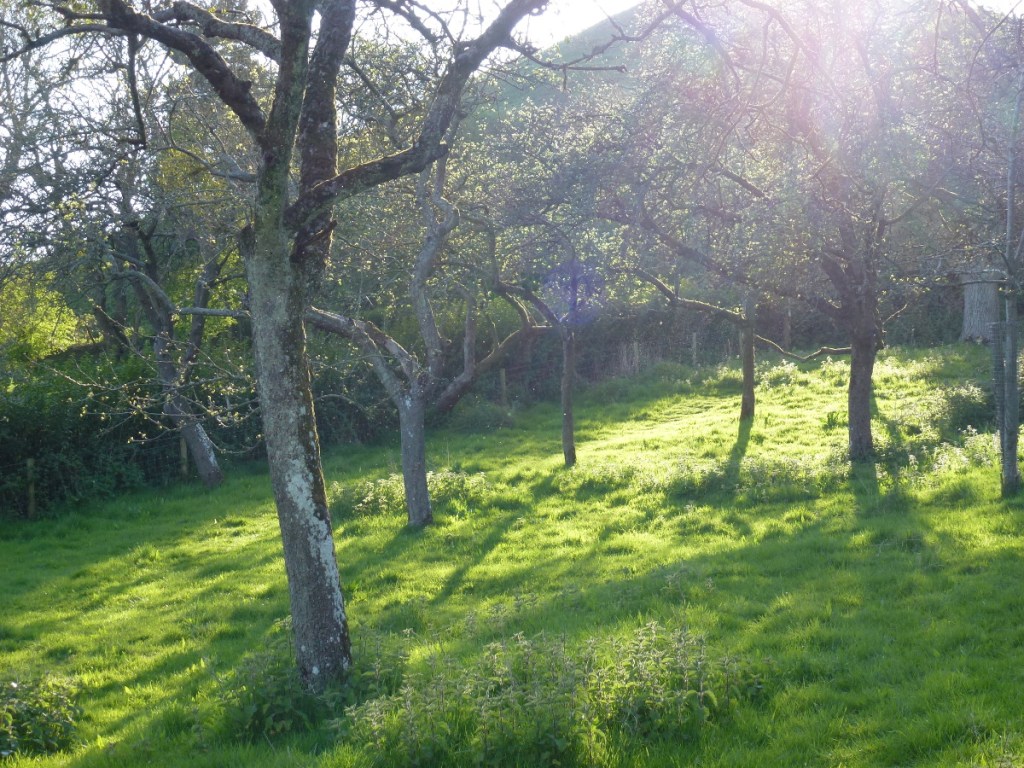
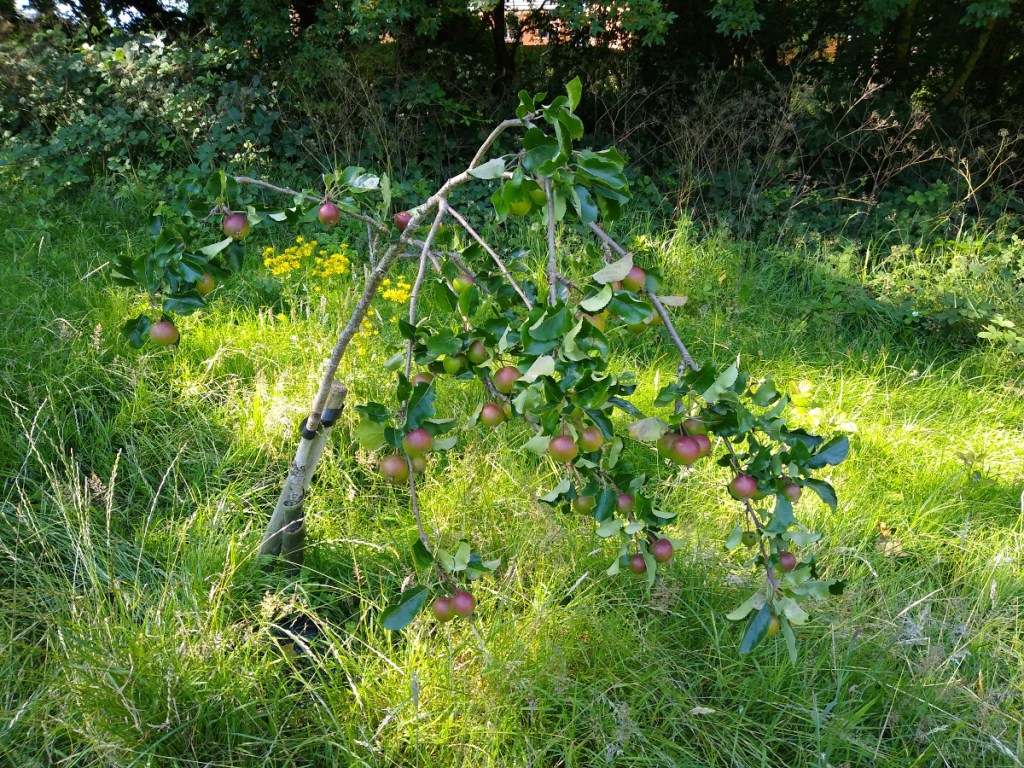
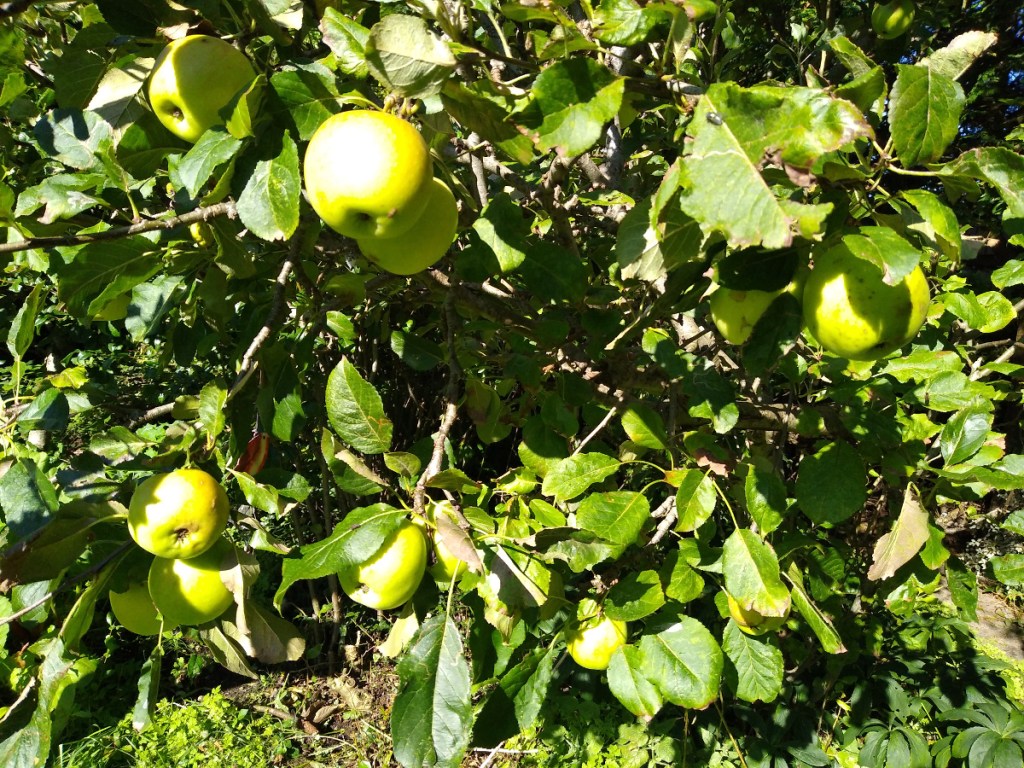
I hadn’t considered this possibility because I hadn’t realised Afallach and Gwyn were the same deity. Looking back I should have realised earlier for I spent a considerable amount of time in the Avalon orchards at Glastonbury when I visited at Calan Mai in 2013 and 2015. On the latter occasion this inspired me to plant five apple trees in Greencroft Valley with the Friends group. Three have survived and two, the Epicure and Sowman’s seedling, have borne apples this year.
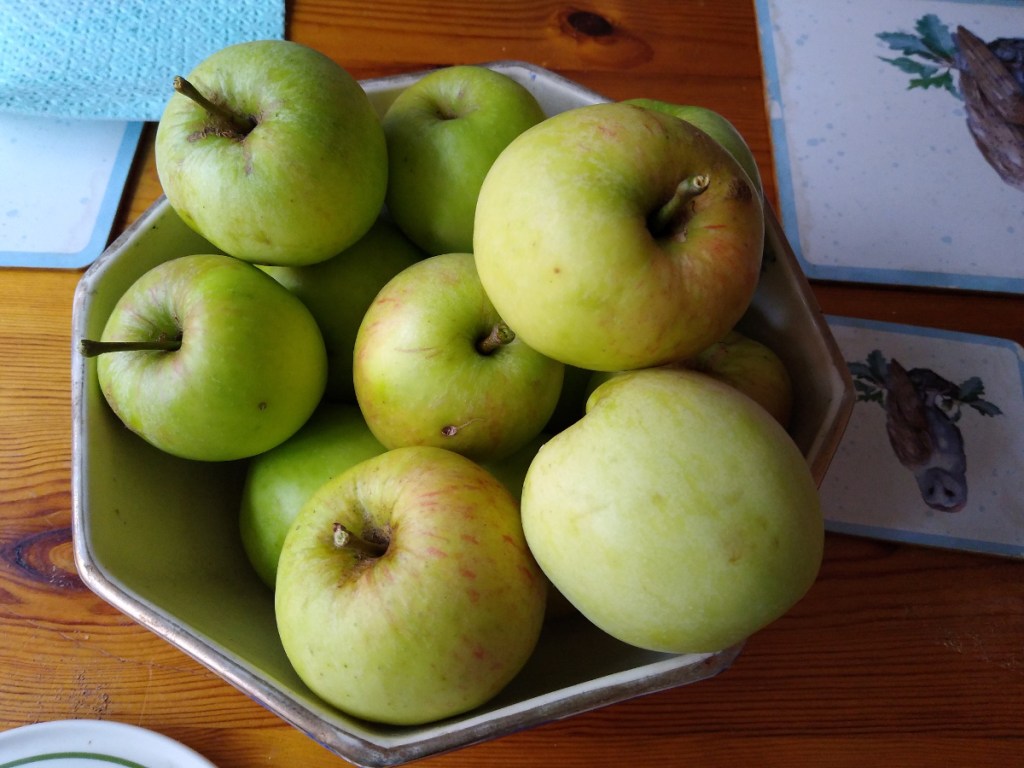
I have been making connections between Afallach and Gwyn as I have harvested these apples and those from the two apple trees in my parent’s garden. I’ve noticed they’ve come earlier this year for I usually gather the last before Gwyn’s Feast on the 29th of September and offer an apple to him with pork.
Of course the sweet and juicy apples we eat in Britain today were imported by the Romans. Yet we do have a native apple tree – the crab apple. Although its fruits are too sour to eat raw there is no doubt our ancient ancestors cooked them and served them with meat as a welcome addition to their diet. The fact that apples are harvested at the time of Gwyn’s Feast further consolidates his identity with Afallach. (7)
Another piece of potentially significant information I first heard orally but only found unreferenced online on a website called ‘Ireland Calling’ is the following: ‘The Celts… were said to bury apples in graves as food for the dead, a practice that is shown to date back over 7,000 years to Europe and West Asia where petrified remains of sliced apple have been found in tombs from 5,000BC.’ However, I haven’t been able to find a trustworthy source naming the date or location of these burials.
If it was proved that the Celtic peoples and in particular the Britons buried their dead with apples this might be suggestive of an offering to Afallach/Gwyn in return for taking the souls of the dead to Annwn.
Whatever the case my offering of an apple to the Apple King at his feast this year will have heightened significance and his relationship with Modron and Mabon opens new horizons to explore.
FOOTNOTES
(1) Malmesbury also provides a fascinating alternative foundation story based around apples. ‘Glasteing found his sow under an apple tree near the ancient church, and because apples were rare in those parts when he first arrived there, he called it Insular Avalloniae in his tongue, that is, Isle of Apples’. (2) Urien’s associations with the Eden Valley are suggested by the poems attributed to Taliesin, Urien’s bard, who refers to Urien as the ‘ruler of Llwyfenedd’, the Lyvennet Valley (the Lyvennet flows into the Eden). (3) However this river was known as Ituna ‘water’ or ‘rushing’during the Roman-British period. Urien was also named ‘ruler of Yrechwedd’. Echwedd means ‘flowing water’ and this could be the origin of this appellation. (4) In Culhwch ac Olwen (1190) Twrch Trwyth was allegedly a human chieftain turned into a boar by God on account of his sins. Behind this story lies his abilities as a shapeshifter and the fact Gwyn’s hunt, ‘the Wild Hunt’, was not really for boar but for human souls. (5) Gwydion’s fathering of Lleu is not explicit in the main source for Lleu’s story, the Fourth Branch of The Mabinogi, but is evidenced in other sources such as a poem by Lewys Môn and Harleian 3859 where Lleu is spoken of as ‘Lou Hen map Guidgen’. (6) The significance of Lugus is supported by his giving his name to Luguvalium (Carlisle) which means ‘Strong in Lugus’ and was ruled by Urien Rheged, to ‘the rock of Lleu’, the seat of the rulers of Gododdin from whom Maelgwn Gwynedd was descended, and to Dinas Lleu in the kingdom of Gwynedd.
In Ireland’s Immortals Mark Williams speaks of Bel as ‘a completely spurious god’ who ‘lingers in popular accounts of Celtic mythology’. When I read these words I sensed the mirth and indignation of Bel, ‘Shining One’, a god I have known for several years whose presence I associate with the sun and its light shining on water. In this article I will argue that Bel is not only not spurious, but is one of our most significant Celtic deities.
The names ‘Bel’, ‘Belino’, ‘Belinos’, ‘Belenus’, are attested on over fifty altars mainly from Gallia Norbenensis, Noricum, and Cisalpine Gaul, showing he was widely worshipped as a continental Celtic god. Belenus was the patron deity of Aquileia and the Historia Augusta (117 – 284 CE) relates that he aided his people in the defence of the city against the Roman armies led by Maximinus.
In Ausonius’ Poems Commemorating the Professors of Bordeaux (395 CE) we find lines about druids serving Belenus:
You are sprung from the Druids of Bayeux, If the report does not lie. To you is a sacred lineage, From the temple of Belenus.
Nor will I forget The old man named Phoebicius, Who through the servant of (the Gaulish god) Belenus Received no profit thereby Sprung, it said, from the Druids Of Armorica (Brittany), He received a chair at Bordeaux Through the help of his son.
Although there are no inscriptions to Bel in Britain the Ptolemy records the estuary of the Ribble as Belisama Aest. in his Geography (150 CE). Belisama means ‘Very Shining One’. She is a Gallo-Brythonic goddess with altars in Vaison-la-Romaine and Saint-Lizier and is perceived as Bel’s consort.
Bel may have been the patron god of the Belgae tribe who inhabited northern Gaul and southern Britain during the Iron Age. Will Parker claims ‘Belinos was a powerful cult figure amongst the Belgic dynasties’ and links him to Beli Mawr ‘the personification of the Belgic peoples’.
Beli was an ancestral deity who fathered Lludd/Nudd who was known as Nodens in Iron Age Britain. Parallels with the Irish Tuatha Dé Danann suggest that, like his Irish cognate, Nuada, Nodens was the ruler of the Children of Don, thus his mother was Don and his father was Beli their other children were the skilled gods Gwydion, Gilfaethwy, Arianrhod, Gofannon, and Amaethon. The marriage of Beli and Don may date back to 250 BCE when people from the Danube joined the Belgae.
As the father of Lludd/Nudd, Beli was the grandfather of Gwyn ap Nudd and Creiddylad, daughter of Lludd, which has particular meaning to me as Gwyn is my patron. As the father of Arianrhod he was the grandfather of Lleu Llaw Gyffes and this may be connected to the Irish tale of Balor and Lugh.
Another of his daughters, likely with Don, was Penarddun. She was the mother of Brân and Manawydan with Llyr. This shows Beli was an ancestral figure both for the Children of Don and the Children of Llyr.
Beli was also the father of Caswallon/Cassivellaunos whose name means ‘lover (i.e. devotee) of Belinos’. His people were known as the Catuvellauni, ‘the Host of Belinos’ and one of their leaders was called Cunobelinos ‘Hound of Belinus’. In the Second Branch of The Mabinogion when Brân takes his armies overseas he leaves his son, Caradog, and seven men in charge. Caswallon dons an invisibility cloak, kills six of the men, excepting Pendaren Dyfed, and is crowned King of Britain.
Parker argues that Beli and Brân may originate from the Belgic warlords Bolgios* and Brennus who were responsible for expeditions in Macedonia and the sacking of Delphi in 279 BCE. They appear as two rival kings, Belinus and Brennus, in Geoffrey of Monmouth’s History of the Britains.
Many of the royal houses of Wales and the Old North (Gwynedd, Powys, Rheged, Strathclyde and the Gododdin) trace their ancestry back to Beli and Don (in the genealogies she is called Anna). Beli is listed as the grandfather of Afallach, a King of Annwn and the father of Modron.
Afallach may be another name of Gwyn, a King of Annwn, who we know is the son of Lludd/Nudd through Beli. Gwyn is associated with Avalon, ‘the island of apples’, one of his sacred seats being Glastonbury Tor. Afallach is anglicised as Eveling and is said to dwell with Modron at the Roman fortresses of Glanoventa (Ravenglass) and Mediobogdum (on the Hard Knott Pass).
Matrona/Modron is the mother of Maponos/Mabon and they are depicted on altars across Britain particularly in the north. Urien, King of Rheged, raped Modron, and she bore his son and daughter, Owain and Morfydd.
Thus, far from being a spurious god, Bel is a deeply significant ancestral god in the lineages of the Children of Don and Llyr and the Welsh and Northern dynasties.
He lives on in later folklore as a giant charming story about how he gave his name to Belgrave. He claimed he could get from Mountsorrel to Leicester in three leaps, but these proved to be his undoing and death. The association of his deed with local place names is recorded in this rhyme:
Mountsorrel he mounted at Rothley he rode by, At Wanlip he leaped o’er, At Birstall he burst his gall, At Belgrave he was buried at.
Bel also gives his name to Belmont and Belthorn here in Lancashire. I believe his associations with Belisama, goddess of the Ribble, run deep. Nodens/Nudd was venerated in Lancashire and likely Gwyn and there are two altars to the Mothers and one to Maponos on the Ribble. This suggests some kind of cultus surrounded this ‘family’ of deities during the Romano-British period and likely in the Iron Age and even earlier.
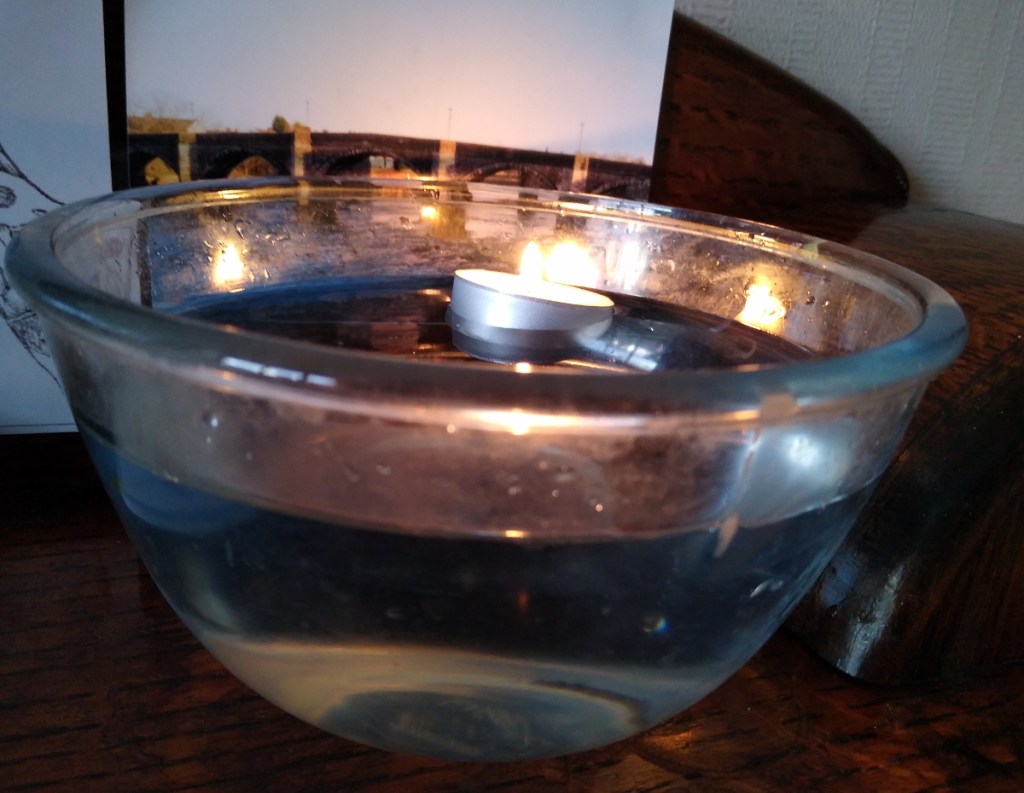
Bel is associated with the Irish fire festival of Beltane which in Britain is known as Nos Galan Mai. One of my first encounters with Bel was at a time when I was planning a ritual for my local Pagan society to mark the occasion and, whilst walking by the Ribble I heard the lines: ‘Bel and Belisama / join together / fire and water / sun on the river’. This led to the creation of a rite to Bel and Belisama centring on the mixing of fire and water and jumping over a bowl with a lit candle in it. This, with the backdrop of the Ribble, is still my representation of Bel and Belisama on my altar now.
*Bolgios means ‘to bulge’ and may relate to him being a giant or swelling with battle rage like the distant descendant of Beli, Cú Chulainn: ‘He swelled and bellied like a bladder full of breath until he arched up over Fer Diad like a monstrously distorted rainbow, tall and horrible as a Formorian giant.’ Brân, his grandson in the genealogies, was also depicted as a giant too big to fit in a house large as a mountain with a ridge for a nose and eyes like lakes.
SOURCES
Blanca María Prósper, ‘The Irreducible Gauls used to swear by Belenos – or did they?’, (The University of Manchester Library, 2017) Esmerelda Mac, ‘Eveling, Cumbria’s Fairy King and Celtic God’, Esmerelda’s Cumbrian History and Folklore, https://esmeraldamac.wordpress.com/2012/01/11/eveling-cumbrias-faery-king-and-celtic-god/ John T. Koch, The Celtic Heroic Age, (Celtic Studies Publications, 2013) Mark Williams, Ireland’s Immortals, (Princeton University Press, 2018) Matthew Simpson, Bel – The Leicester Giant, http://www.thiswasleicestershire.co.uk/2012/09/bel-leicester-giant.html Will Parker, The Four Branches of the Mabinogi, (Bardic Press, 2005)
Today is the first day of September. This name originates from the Latin septum ‘seven’ which derives from a time when it was the seventh month because the Roman calendar began with March.
In Wales this month is known as mis Medi. According to Andrew Breeze this name is related to medaf ‘I reap’ and to met ‘cut, harvest’. This seems to be a fitting etymology for the month when the last of the crops are cut down and harvested and the last of the meadows are mown or reaped.
Breeze claims that the name of my local Iron Age tribe, the Setantii, who inhabited the plains of present-day Cheshire and Lancashire between the Mersey and the Wyre may be corrupted from met.
Breeze suggests they were less reapers of crops than of men. To this our archaeology recording the burials of severed heads and the head-hunting depicted in poetry from the Old North bears testimony.
My patron god, Gwyn ap Nudd, a Brythonic death-god is a reaper of souls. Some of his worshippers, such as Kristoffer Hughes, see him as death himself, as Britain’s original grim reaper.
Gwyn ap Nudd, helper of hosts, Armies fall before the hooves of your horse As swiftly as cut reeds to the ground.
Interestingly, as the Setantii inhabited my local landscape when it was mainly marshland and mossland and there is scarce evidence for agriculture, it seems likely they would have cut and used reeds (although reed cutting usually takes place from December to April rather than in September).
I first met Gwyn on August the 31st 2012 close to sunset. As, for the Celts, days begin at sundown not sunrise, this would be very close to the beginning of September. Since he came into my life I have been involved with the reaping of local wildflower meadows and how this shares a kinship with Gwyn harvesting souls and cutting down his rival, Gwythyr ap Graidol, a god of summer and seed.
In Cornwall September is known as Gwyngala ‘White Fields’ suggesting associations with Gwyn.
Return of the Reaper
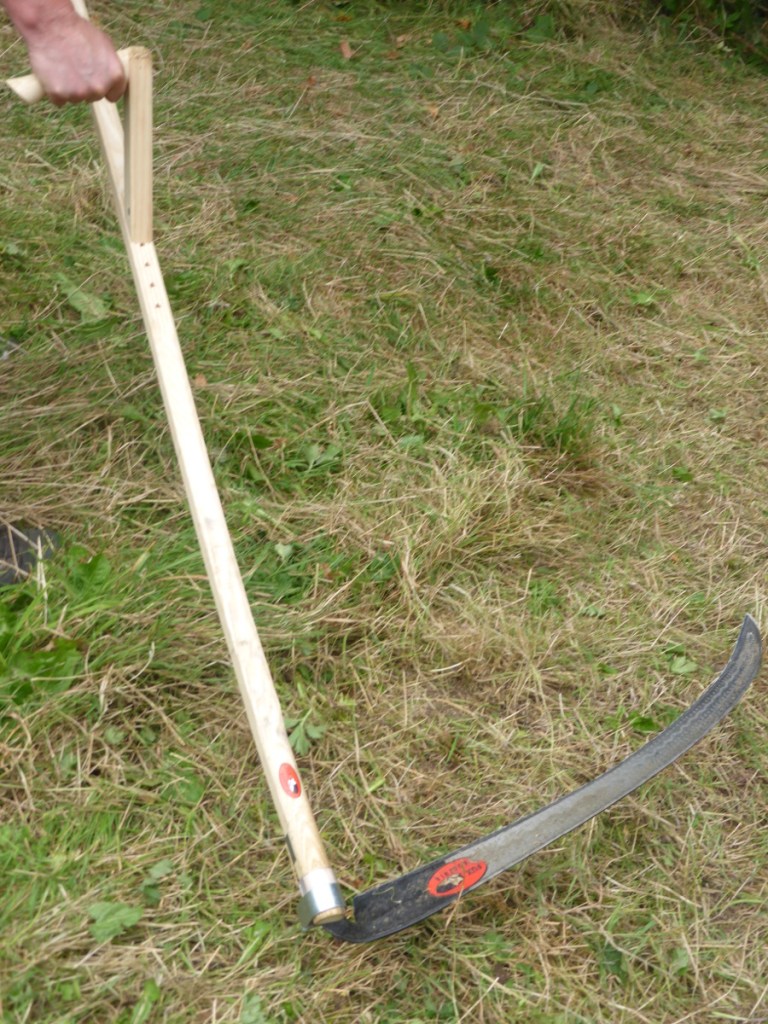
I hear you galloping back your horse’s hooves are like scythes glinting in
the September breeze.
I will pick up the blade again the long-handled rake bend my back with you
reap these armies.
Heads of grass and meadow flowers fall limbs folding. Scattered shields. Bright helms.
A woman weeps.
Your beloved mourns your rival. His headless corpse on the stubble dead again.
Spirits are freed
to join your host mingling in night air in fields of white mist as we stop and drink toast the harvests

 The Sanctuary of Vindos