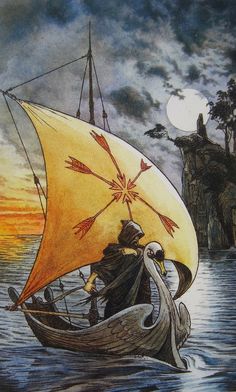
‘guided by Barinthus to whom the waters and the stars of heaven were well known. With him steering the ship we arrived’ Vita Merlini
What stars will you navigate by when they have fallen from the sky? Where is North when there is no North Star? How will the swans fly?
When your boat is stuck on a turning oar in the blackest of midnights shall I tie my blindfold with a sailor’s knot? Trust your sightless eyes?
Speak the words that have never been heard this side of the sunrise? Place my payment shiny and cold in your spitless mouth that never lies?
Your cloak of stars ragged torn will you wrap around my shoulders tight as you swear by dead sea-gods we will arrive on your boat that flies
on the wings of a swan where the sea is filled with the Northern Lights? Find the frost-dark isle of my mysterious god where the sun escapes the sunrise?
Where the living are dead and the dead alive and the blind no longer blind will we find the oar, the compass, the stars, bring them back with the starlight?
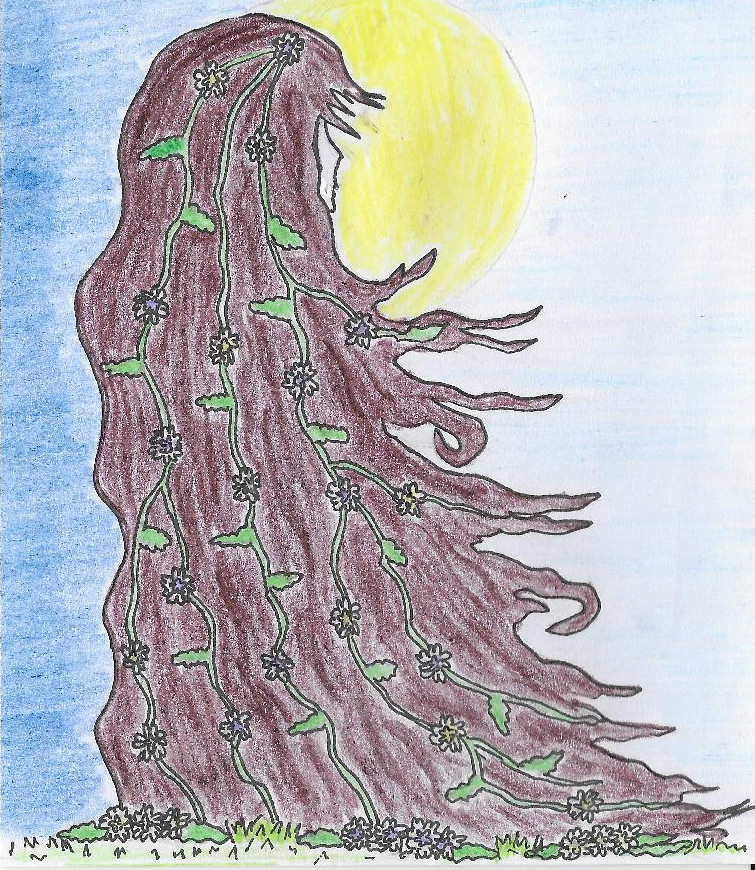
*This image is the Six of Arrows – Transition – from the Wildwood Tarot.
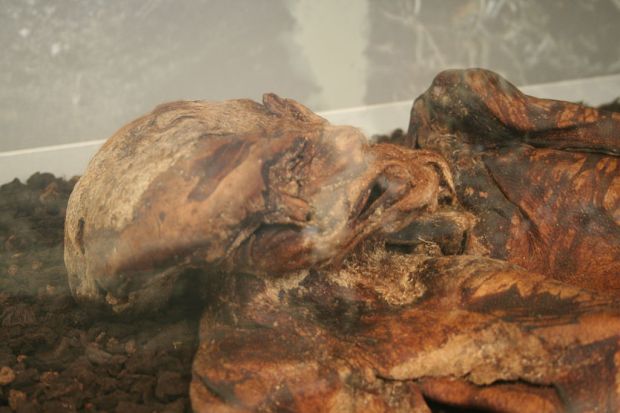
The wetlands of the old counties of Lancashire and Cheshire which were inhabited by the Setantii tribe ‘The Dwellers in the Water Country’ are well known for their bog burials; Lindow Man and Woman, Worsley Man, severed heads from Pilling Moss, Briarfield, Red Moss, Ashton Moss, Birkdale.
The archaeological evidence suggests that Lindow Man and Worsley Man were human sacrifices. Lindow Man (also known as Lindow II) was strangled, hit on the head, and his throat was cut before he was cast into the peat bog. Worsley Man was garotted and his skull fractured before his beheading. These ‘overkill’ injuries are suggestive of ritual killing rather than death in battle or murder.
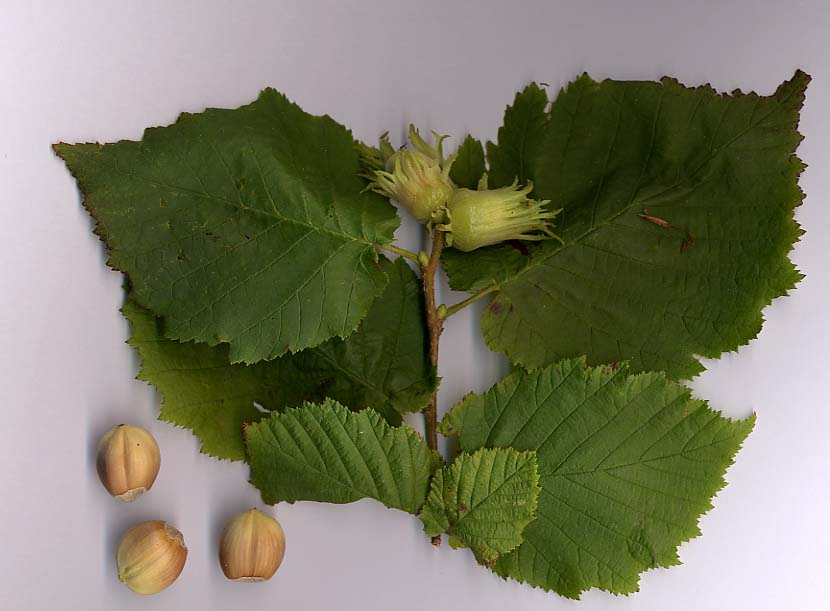
This is supported by the fact many bog burials from Britain and Europe ate special last meals. The last meal of Lindow Man was a griddle cake baked from finely ground wheat and barley. Lindow III, another man whose remains were found nearby, ate a meal of wheat and rye with hazelnuts. Old Croghan man from Ireland, and Grauballe Man and Tollund Man from Denmark also ate similar meals.
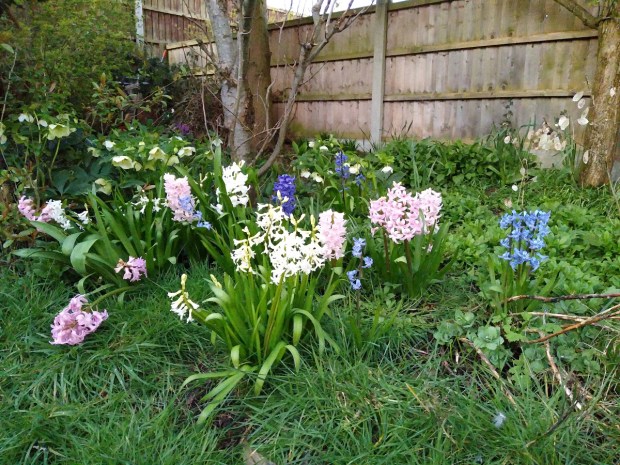
The head from Briarfield was ‘deposited in a defleshed state without the mandible’ ‘with abundant remains of hazel’. Further north, at Seascale Moss in Cumbria, a body was buried in the bog with a hazel walking stick. Miranda Aldhouse Green notes that bog bodies from Gallagh in Ireland and Windeby in Germany wore hazel collars and another from Undelev in Denmark was buried with three hazel rods.
She connects them with a lead defixio of ‘late Roman date’ ‘from the river Ouse near the Hockwold Roman temple’ in Suffolk: ‘Whoever… whether male or female slave, whether freedman or freedwoman… has committed theft of an iron pan, he is to be sacrificed to the god Neptune with hazel’.
The Romans equated Neptune with our ancient British water-god Nodens at Vindolanda on Hadrian’s Wall where an inscription reads ‘DEO NO/NEPTU’. At his Romano-British temple at Lydney, Nodens is depicted on a mural crown driving a chariot pulled by four water-horses accompanied by winged wind-spirits and centaurs with fish-tails and a fish-tailed fisherman.
Nodens gifted pilgrims with healing dreams but was also called upon to remove health. A curse tablet reads: ‘For the god Nodens. Silvianus has lost a ring and has donated one-half [its worth] to Nodens. Among those named Senicianus permit no good-health until it is returned to the temple of Nodens.’
It thus seems possible the people who ingested hazel prior to their deaths or were buried with it were sacrifices to Nodens who was equated with Neptune due to his watery qualities by the Romans.
***
The associations between Nodens and hazel have deep mythic roots. In Ireland Nodens was known as Nuada Airgetlám ‘Silver Hand’ and Nechtan (from the Old Irish necht ‘clean, pure, white’). Nechtan was the keeper of the Tobar Segais ‘Well of Wisdom’. Around it stood nine hazel trees which dropped their hazelnuts, containing imbas ‘inspiration’, into the water. They were eaten by salmon and this special poetic wisdom, known as awen in the Welsh myths, was infused into their flesh.
Only Nechtan and his three cup-bearers: Flesc, Lam, and Luam, were allowed to visit the well. Of those who transgressed their eyes would explode (!) – a possible metaphor for the effects of poetic vision.
When Nechtan’s wife, Boann, disobeyed this command the well overflowed and became the river Boyne. One of its kennings is ‘the forearm of the wife of Nuadhu’ and it was known in the early 2nd century CE as Buvinda (from early Irish *Bou-vinda ‘the white lady with bovine attributes’).
When Finn ‘White’, a descendant of Nuadha, cooked the Salmon of Wisdom for his master, Finnegeas, he burnt his thumb, put it in his mouth, and accidentally imbibed his eye-bursting imbas.
I believe it is likely a similar mythos surrounded Nodens here in Britain. On his mural crown a fisherman is catching a large fish and, on a mosaic on his temple floor at Lydney, two sea monsters are surrounded by salmon. Additionally, in medieval Welsh mythology, Arthur and his men ride up the river Severn, past the Temple of Nodens, on the back of the Salmon of Llyn Llyw, to rescue Mabon.
In the dindsenchas the river flowing from Segais has many names. In Ireland it is not only known as the Boyne, but the Trethnach Tond ‘Ocean Wave’ and Sruth Findchoill ‘Stream of White Hazel’. Abroad it becomes Lunnand in Scotland, the Severn in England, then the Tiber, Jordan, Euphrates and Tigris.
At Lydney we also find iconography depicting Nodens’ wife and our British Boann: a stone statuette, thirty inches in height, left leg crossed over right, holding a cornucopia. Pins were offered to her by women seeking aid with childbirth. Unfortunately we do not know her name but the early Irish Bou-Vinda may relate to Vindos/Gwyn ap Nudd, the son she bore Nodens/Nudd. Gwyn’s name not only means ‘White’, but he is referred to as a ‘bull of battle’ in ‘The Conversation of Gwyn ap Nudd and Gwyddno Garanhir’, suggesting he inherited her bovine attributes.
As Vindonnus, at a spring in Gaul, he was offered bronze plaques depicting eyes. It has been suggested they were for aid curing eye ailments but they may also have been connected with poetic vision.
In medieval Welsh mythology, Gwyn, as Pen Annwn ‘Head of the Otherworld’, is the guardian of a cauldron that is warmed by the breath of nine maidens and will not brew the food of a coward, suggesting it is associated with initiation into the mysteries of the awen tasted from its bubbling waters.
It seems Gwyn, who like Finn, has tasted the wisdom of the salmon from the hazelnuts from the nine hazel trees, and received his awen, later adopts his father’s role as a wisdom-keeper.
***
How, then, does this ancient Celtic mythos appear in and relate to the Water Country? On Cockerham Moss two Romano-British silver statuettes dedicated to Nodens as Mars-Nodontis were found. This suggests that a temple lay nearby. Cockersand Abbey, the closest sacred site, is dedicated to Mary of the Marsh, a Christian overlay on an earlier water-goddess – the wife of Nodens. I know her as Anrhuna which means ‘Very Great’ and is probably only one of her names.
The church on Castle Hill, the pen which gives its name to Penwortham (earlier Peneverdant ‘the Green Hill on the Water’ as it stood on Penwortham Marsh), is dedicated to St Mary the Virgin, as was the holy well at the hill’s foot. The large number of Marian dedications in the marshy areas of Penwortham and Preston with their sacred springs hint at the underlying presence of this water-goddess.
The legend of Penwortham Fairy Funeral, set on Castle Hill, with its fairy leader ringing a passing bell and singing a mournful chant as he leads a procession of little black-clad men in red caps, bearing the fairy-double of an unfortunate young man to his grave suggests the presence of Gwyn.
Past the pen, sacred to Anrhuna, Nodens, and Vindos/Gwyn/Pen Annwn, runs the river Ribble. From Ptolemy’s Geography (2AD)we know Belisama is the goddess of the Ribble. She is the sister and/or consort of Bel, who is later known as Beli Mawr, father of Nudd/Lludd. The Ribble is rich in salmon and Maponos/Mabon and his mother Matrona/Modron were worshipped upriver at Ribchester. Modron is the daughter of Afallach (from afall ‘apple’), King of Annwn, a name of Gwyn.
Here, at the Green Hill on the Water, we find a parallel with Lydney ‘Lludd’s Island’. With salmon swimming upriver past a site associated with Mabon to the source where perhaps once stood nine hazel trees.
These stories run deep through this land as they ran through the land of our ancient British ancestors. Before its draining it was truly a water country of intertidal marshlands, reedbeds, carr, lakes and pools, peat bogs, and a damp oak woodland in which hazel and its nourishing nuts were precious.
It’s no wonder they were associated with Nodens, ‘the Catcher’, the wise fisher-god. Perhaps, by sacrificing their enemies to Nodens with hazel, the water dwellers repaid him for his generosity.
Another possibility is that some of the bog burials were devotees of Nodens sacrificed willingly to their god. Awenyddion who, like his son, had imbibed the hazel-rich awen. Lindow III’s consumption of hazelnuts before his death may have been a last act of communion. The man buried with the hazel staff might have carried it as a symbol of his role as a wisdom-keeper.
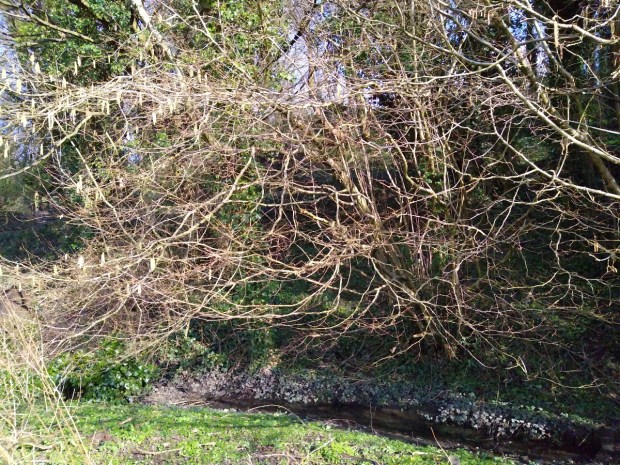
Hazel grows on the banks of Fish House Brook, which runs through the area once known as Fish Pan Field in Greencroft Valley into the river Ribble. In autumn its nuts are eaten by grey squirrels before they can drop into the brook where, due to changes in water level and pollution, fish no longer swim.
Still, as I pass, I think of the myth of Nodens and his nine hazel trees, Anrhuna’s transgression, Vindos/Gwyn eating the salmon imbued with awen from the hazelnut and his eye-bursting poetic vision, which he has gifted to me as his awenydd to pass on and share with my communities.
***
SOURCES
Anne Ross, Pagan Celtic Britain, (Cardinal, 1974) Anne Ross, Life and Death of a Druid Prince: The Story of Lindow Man, an Archaeological Sensation, (Touchstone, 1991) David Barrowclough, Prehistoric Lancashire, (The History Press, 2008) Finnchuill, ‘Catching Wisdom: Nuadha, Nechtan, Nodens’, Finnchuill’s Mast, (2016) Jody Joy, Lindow Man, (The British Museum Press, 2009) Kay Muhr, ‘Water Imagery in Early Irish’, Celtica 23, (1999) Miranda Green, Dying for the Gods, (The History Press, 2002)
Over the years I have done lots of different jobs. Some I have enjoyed – poetry, writing, editing, working with horses, and others less so – packing, cleaning, admin, working in a supermarket.
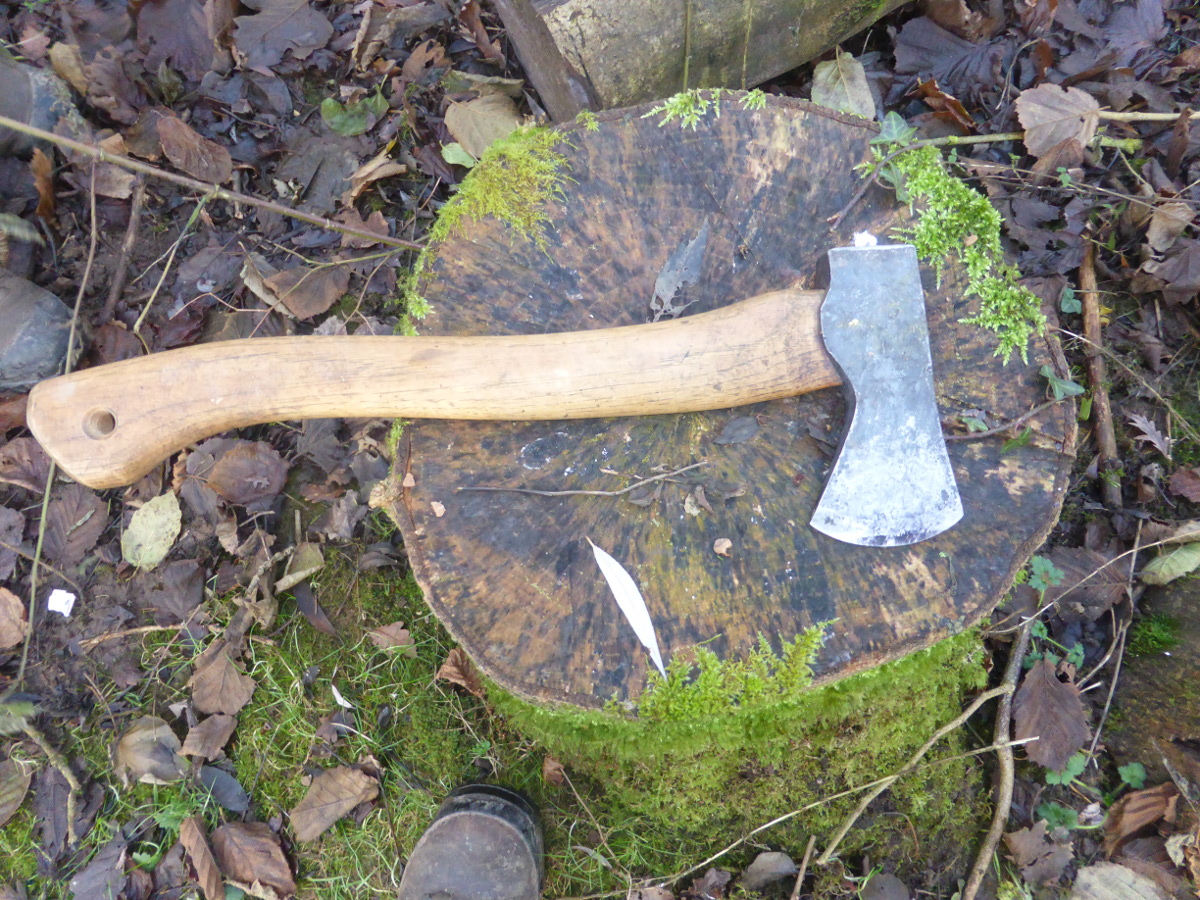
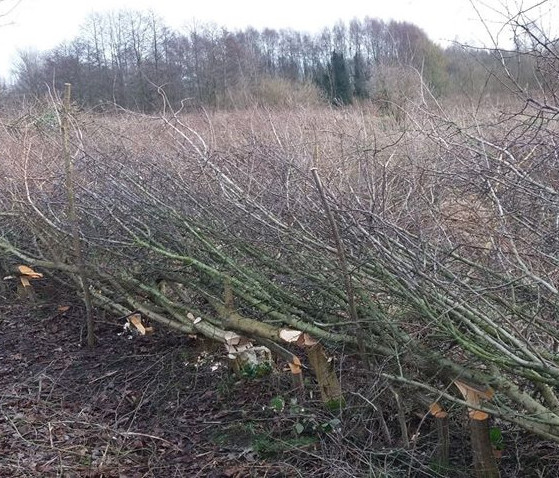
Last year I gave up my supermarket job to begin volunteering with the Lancashire Wildlife Trust as a way into a career in conservation. Since then I have worked on a variety of habitats from meadows to woodlands to wetlands to peatlands. I’ve enjoyed tree planting, coppicing, dead hedging, removing tree stumps, building outdoor classrooms, and learnt how to use an axe and lay a hedge.
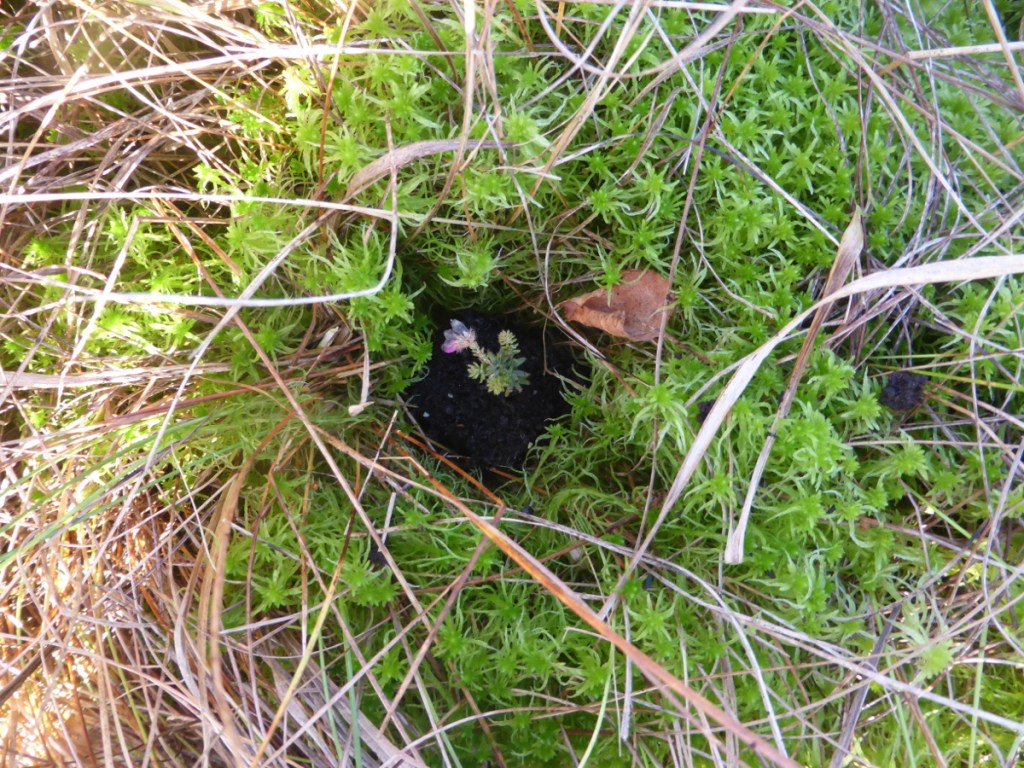
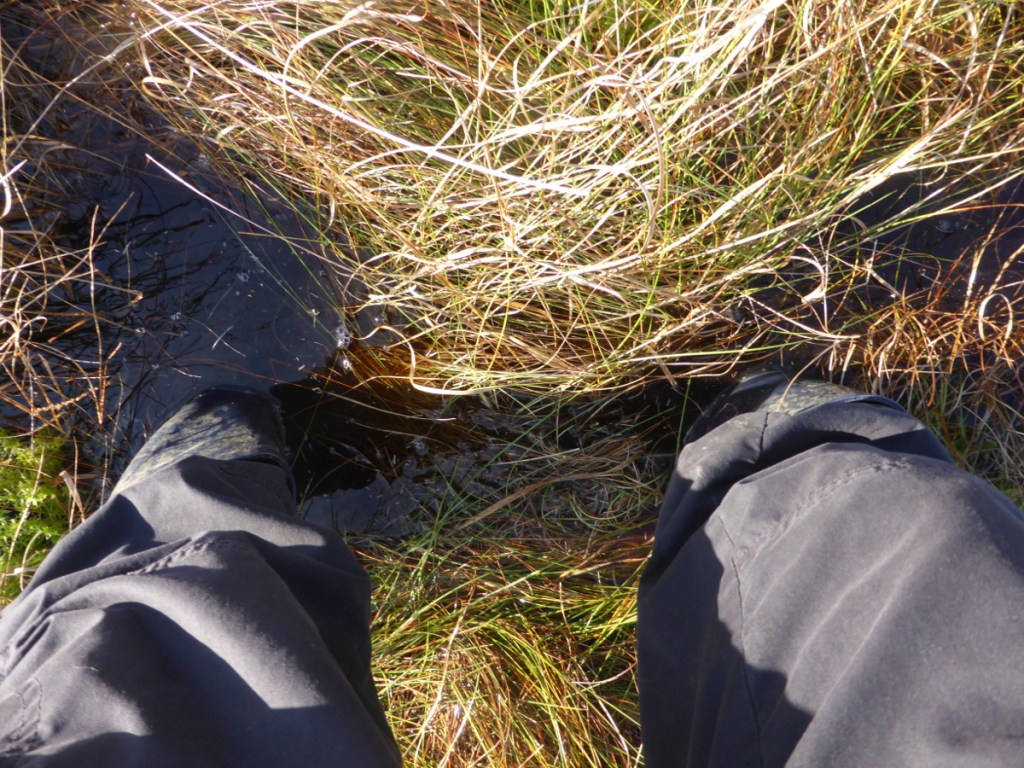
At my Damson Poets committee meeting last November I described my experiences of planting cross-leafed heath and hare’s tail cotton grass for the large heath butterfly on Highfield Moss. It was a tough but fulfilling day, carrying trays of plants over boggy terrain, welly deep in water, to create finger-holes in the sphagnum for the cross-leafed heath and dig larger holes with pokey sticks in drier areas for the hare’s tail cottongrass. Afterwards Terry Quinn commented, “you were in your element.”
Yes! I thought, he’s onto something there. Far more in my element in the mud and water than when I was stacking the shelves beneath the relentless lights or in a room of a million voices at a million screens. And at the same time, I must be one of a very small proportion of people who would rather spend a cold winter day welly deep in a peat bog rather than sitting in what they see to be a cosy office.
We, as human animals, have collectively been taken out of our element. Abducted by the mad rush of commercialism by which we feed and house and clothe ourselves. Taken away from what we saw as slow hard jobs out in nature – scything the meadows, digging vegetables, chopping wood.
At a great cost both to ourselves and the land for the gain of centrally heated houses, warm baths, running water, ready food, clean clothes, instant connections through phone, email, the internet. Comforts I acknowledge as elements of my life as I sit here in my warm room writing this blog post at my laptop, along with the fact that day in a peat bog would look far less appealing if they didn’t exist.
Still, like on the occasions I’ve worked with horses, I’ve found myself pulled away from the glowing screen. Whether I’m raking up meadow grass, planting trees on the muddy banks of a new stream, or chopping stakes for a new fence to the steady drum of rain on my hood I am in my element.
Take me out of solitude in my room or quiet company out in nature and put me in a brightly lit building filled with people rushing about, talking loudly, playing loud music, arguing, I quickly go insane. And I’m probably the odd one in my love of quietude in a society so addicted to noise I knew a girl who couldn’t sleep without the television on and a woman who left a radio on for her horse…
I’m coming to realise that being in my element is essential for both my physical and mental health. The benefits of being out in nature are becoming much more widely recognised in society as a whole with doctors prescribing time outside as an alternative to counselling and medication and eco-therapy and mindfulness and well being walks proliferating. However, it’s troubling to see that these are viewed as therapies and breaks from ‘normal’ life rather than as something essential to our being.
The need to be in my element is a determining factor not only in my choice to pursue a career in conservation but also in the type of job. There are many positions within the Wildlife Trust with different balances between indoors and outdoors and practical work in nature and engaging with the community.
Over the past few months I’ve worked out that, although I’m a writer, I find offices claustrophobic so a communications role wouldn’t suit me. Whilst I’m a poet and run the occasional workshop, as an introvert I find this work incredibly draining, so a community engagement role wouldn’t work either.
What excites me and calls to me and makes me happy is spending time immersed in nature, restoring and maintaining valuable habitats, giving back to the land, in the quiet company of others. Having done a combination of work on reserves and project work I’m beginning to realise that I would prefer to be grounded in a particular place, leading volunteer work parties throughout the year, than restoring somewhere as part of a particular project and then moving on to the next. This has helped me discern that I would be a better ranger, warden, or reserve officer than a project officer.
Another question that has been raised is what kind of habitat I’d like to work on. Where am I in my element? Whilst I enjoyed my day on Highfield Moss, in the Salford area, I recognised it is not ‘my place’. There is an incongruity in driving to a project 30 miles away which aims to help with carbon capture whilst leaving my own carbon footprint.
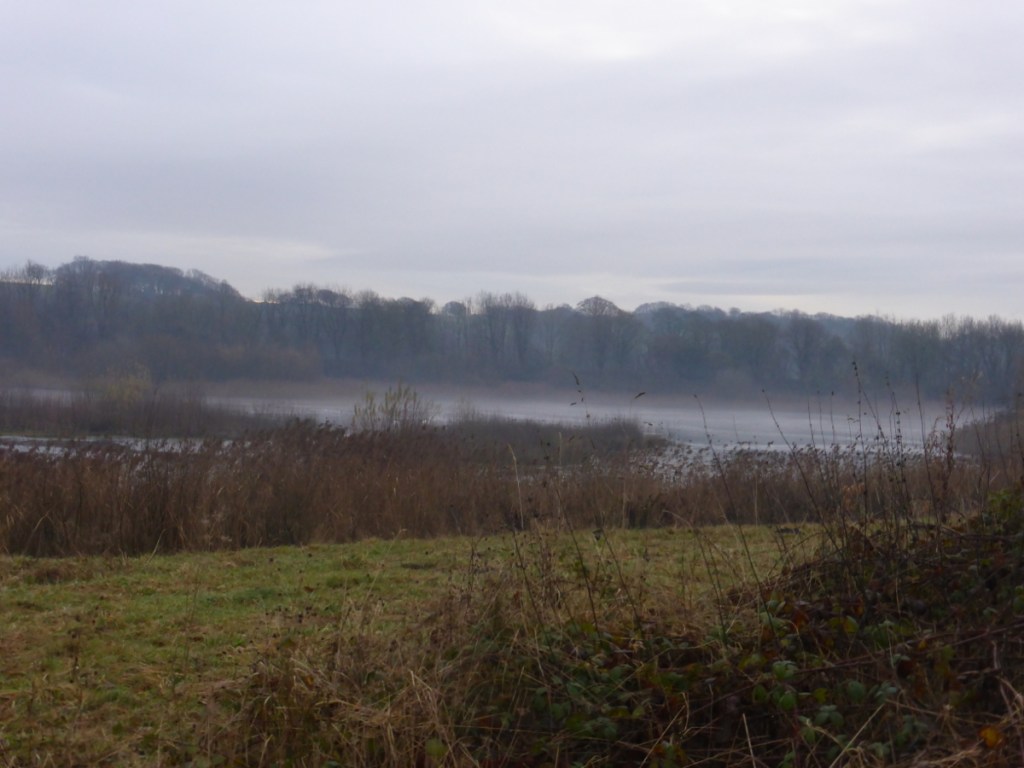
Unfortunately the mosslands that covered Penwortham, Hutton, Longton, and Farington, along with the intertidal marshlands that lay along the banks of the Ribble, have long been drained away. What we have left, in the wake of industry, is a ‘mosaic’ of habitats which are slowly being restored by the Wildlife Trust and other organisations.
Birch and mixed woodlands on the banks of old rail and tram ways or newly planted on landfill sites. Alder carr and willow scrub on the banks of streams too steep to build on and beside old ponds. Wet meadows sandwiched between roads and houses on boggy ground. New lakes in the pits of quarries planted with reed beds and re-wetted marshlands calling to them moorhens, coots, mute swans, widgeon, tufted ducks, reclusive bitterns, beginning to recall the ancient wetlands that once were.
These messy suburban places, too often seen as inferior to urban but not quite rural, as in between but not liminal, where bags of dog shit hang on trees and one can find the weirdest bottle bongs, but also, occasionally, might see the flash of the kingfisher come to feed on the lake or hear a willow tit, are my element. Not glamorous, I know, not unique, like the Manchester mosslands. Yet they are my place.
So it is toward being a ranger or a warden or a reserve officer as locally as possible where nature and industry and people meet in all their messiness and unexpected scraps of grandeur I will strive towards.
In being in my element, striving to be at one with the elements, even as they are seen to turn against us. To reclaiming an old way of being-with humans and non-humans, listening, sharing, before it is too late.
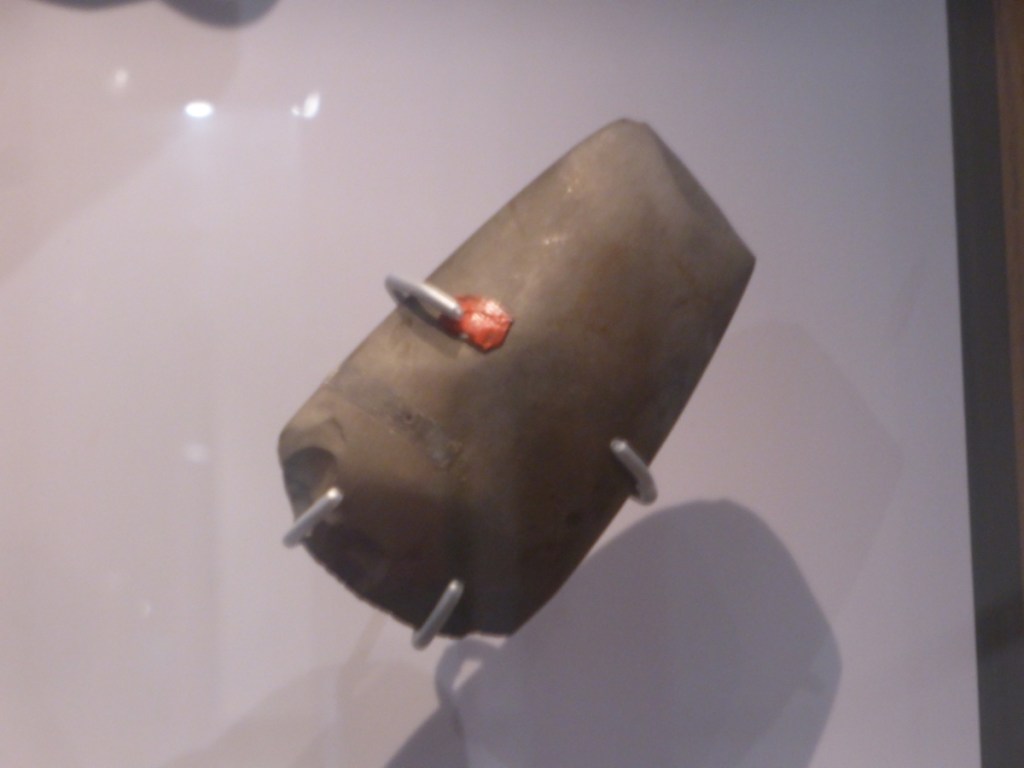
‘These three stone tools date from the Stone Age. They were mainly used to cut down trees and chop wood but sometimes as weapons. The large polished axe was found in the Broadgate area of Preston and the smaller axe and large mace head were found in the Forest of Bowland.’ The Harris Museum
It’s not one of those new born-of-mountain green-blue shiny polished “wrap it up tightly” “do not get it dirty” ceremonial “do not touch” “the Thunder God at the top of the mountain who stands on a bull with a bolt of lightning in his hand will blow your head off” “only she who has bathed in the spring at the foot of the Green Hill on the Water then walked round it sunwise blindfold on one leg after fasting for a year,” kind of things…
No, my father’s axe was split from an old flint abandoned on the hillside slightly lopsided blunt at one end sharp at the other like his temper. He worked at it all his life – knapping, sharpening, polishing between felling trees and splitting heads. Grumbling, cursing, like the odd dwarf who led him to it – a gift of the Sons of Stone, from the Lord of the Mines tapped from his veins.
There was flint in him, my dad, flint and river water, bulls and lightning too when he wanted his own way…
This is my my last piece of him chipped from the hills where he wandered with the cattle brought them home safely with the hornless skulls of men.
Yet I am no axe-wielder. I will bury it within – return it to the mines of the Old Ones. Sharpen and polish the stone axe of this voice instead.
*With thanks to the Harris Museum for use of the photograph.
Taut and tense the ganglia no longer relay the music.
Weak, worn, frayed, spent, the tendrils torn and stretched from the strings of a harp.
Like broken bowstrings they sting and twitch.
II. On the empty frame the ‘devils’ of Annwn sit and mock and chatter.
I cannot take my eyes from their neat little fangs and paper-like origami wings.
I cannot shut out their voices, low, high, squeaking in the wind, fat with my stolen melodies,
for I am strangely in love with my distractions.
I court them feed them daily.
I have become their instrument.
And so I lie broken beneath their claws…
III. And where is my god? Not the harpist or the one who taught him but the one who listens for the song in his eternal hall
where the harp played with no player at all?
Is he still listening? Waiting? For the bow to be restrung? For the song to be sung? For the arrow that will pierce his heart fine and true?
~
The Place Where the Sky is Falling
In the place where the sky is falling and the winged and the wingless ones with it I am galloping. The faster I gallop the faster it falls and the faster they chase me, swishing, swooping, on wings and not on wings (yet still sounding torn and leathery and creaky-jointed), with and without teeth and claws.
As a little experiment I touch a rein, a brief half-halt, steady from a flat-out to a slower gallop. The sky-fall slows, the flight of the ‘devils’ of Annwn who pursue me, the winds of the abyss that drive us all. I slow to a canter, to a trot, to a walk, pull up. The sky is still. The winged and wingless ones hang before me like puppets on strings, immobile in the air, without a single wing-beat. I frown. They frown. I move my left hand. They move to the left. I move my right hand. They move to the right.
“Is this some game?”
An eruption of laughter flows through them, breaking the strange spell. They shift, flap, nudge, jest. Some fly away and others descend to look on this strange phenomenon of an awenydd in Annwn.
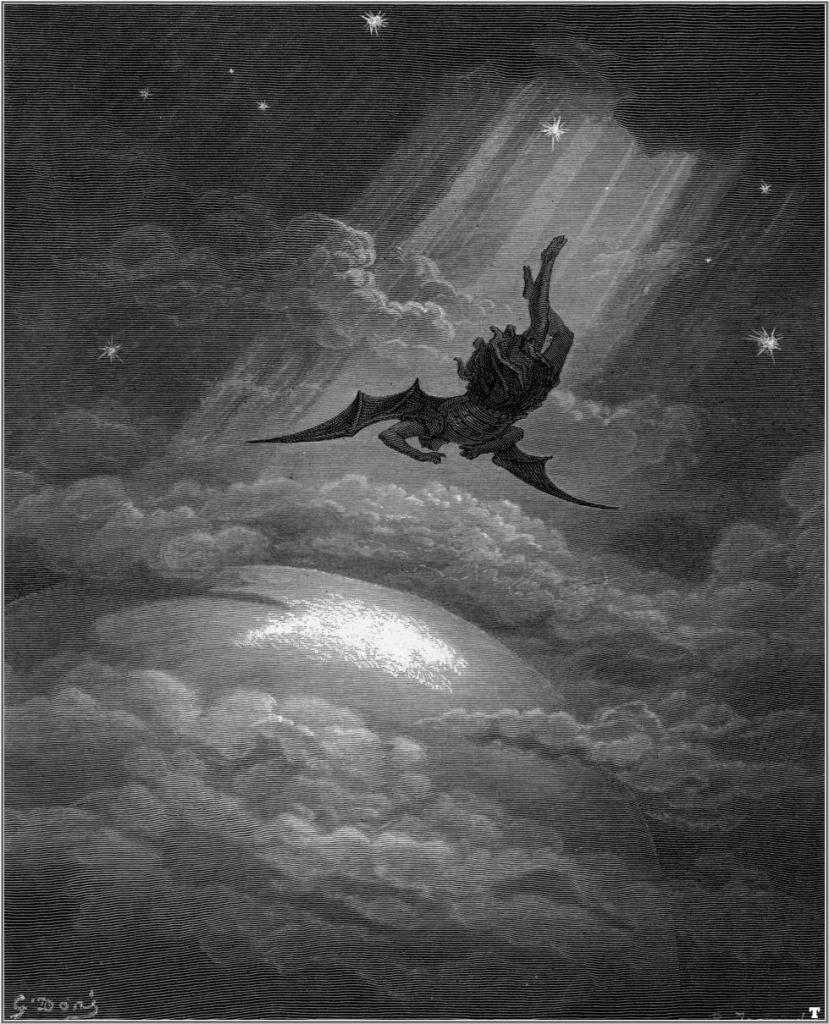
“What are you?” I ask. “Are you devils?” For that is what Christians have called them for hundreds of years and they do look like something out of Doré’s woodcuts for Milton’s Paradise Lost. Yet I have a feeling they have existed in the Otherworld before the Christian imposition of Heaven and Hell.
They laugh and shriek and pull their grins wider with their foreclaws like demonic Cheshire cats.
“Seriously…”
“Fliers,” squeaks one. “Fliers, fliers,” the others echo. “Fliers.” “Clawers.” “Takers.” “We take…” “We take what you feed us.” “We feed.” “We bring the takings.” “We bring what you feed us to the abyss.”
“Cursed, cursed.” “We cannot set down our feet.” “We have no feet.” “We fly between the worlds knowing nothing but taking.” “We even sleep on the wing.” “Ours is the dream-storm over the abyss.”
“What have you taken from me?” I have no wounds but no teeth and no claws leave no mark…
They cackle, grin, smack their lips. “What you fed us.” Their mouths purse like secrets.
“Then you are welcome to it,” I incline my head in acknowledgement, “add it your storm of dreams.”
I depart at a slow walk knowing gratefully in Thisworld I will dismount onto the ground onto two feet.
~
It’s Easy to Fall
and keep on falling when there is nothing to hold on to – no can, no bottle and its easy
soon empty comfort.
Its gentle guidance down into oblivion.
(It is an illusion the abyss has a bottom).
It’s easy to fall and keep on falling when you don’t know how to do anything else. Because no-one taught you how to tread empty air. How to breathe when there is no oxygen. How to balance when there is nothing between your two empty ears.
How to hear what when there is nothing beyond the abyss?
It’s easy to fall and keep on falling unless some unexpected hand reaches out to shake you from
that free fall before you wake with a jolt – upright in your bed.
It’s easy to fall and keep on falling before some person or some god gives
you a task only you can do. HERE. NOW. Where there is land to stand on air to breathe. Hope on the horizon.
~
Why These Worries
I do not need unlike the wind that moves the washing?
Why the fear that if they stop I will be nothing like a lump of a coal in the toe of a Christmas stocking?
Why do I feel worthless when I am wanted by a god?
Why do I feel like a failure when I’ve written three books?
Why does it feel more heroic to be battling on against these thoughts when I could let them go to the graveyards of the winds beneath the towers from which they were born?
How big a grave for a thought?
How great the work of the gravedigger?
How to engrave the gravestones with suitable death’s heads?
And if I should let them slip away… If I should carry them like childhood toys gifted on Christmas morning then broken by bullies in cardboard boxes like little coffins (each has a face like my own like in the fairy funeral and the Fairy King sings a mournful chant as I lower them in)…
how do I know I will let them rest
and not dig them up like a restless hound?
Come, come, a blast on his horn, come away from my graveyards and away from mourning. Spring is here and flowers and hares to chase. In these sunrise mists a new hunt dawning.
~
*These poems are based on journeys to Annwn undertaken during the process of giving up alcohol as self-medication for my anxiety (which I began on New Year’s Day). This forced me to stop falling, face my worries, and see them for what they are – distractions from my work as an awenydd devoted to Gwyn. **The image is Doré’s ‘The Fall of Lucifer’ (courtesy of Wikipedia Commons).
On Thursday I was helping to clear windblown trees from the pathway around Horrocks Flash on the Wigan Flashes on a volunteer work party as part of my placement with the Carbon Landscapes Partnership.
Horrocks Flash (a flash is a lake that formed in a hollow after subsidence – in this case caused by coal mining) is surrounded by wet woodland and is an area that I had never visited before.
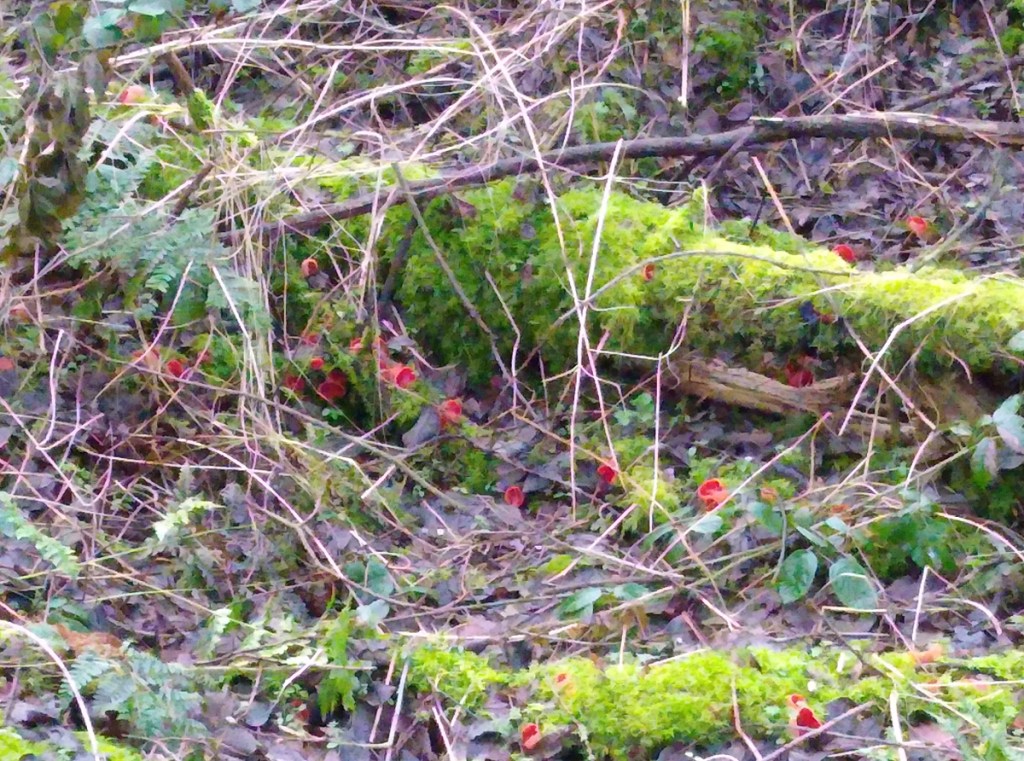
As we walked the pathway and cleared the fallen trees we noticed scarlet elfcups on the dead branches and twigs and the leaf litter on the woodland floor almost everywhere we looked. When I went to use the natural facilities I could barely take a step without treading on them.
I’d seen scarlet elfcups in local woodlands and on the Wigan Flashes, but never in such density or high numbers. The Project Officer and Assistant Project Officer agreed there were more than in past years. So I decided to do some research to see if I could find an explanation for this remarkable occurrence.
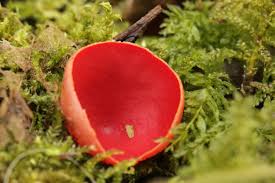
I found out that scarlet elfcups (Sarcoscypha austriaca) are ‘fairly widespread but uncommon in Britain and Ireland’. Sarcoscypha comes from the Greek skyphos ‘drinking bowl’ and austriaca means ‘from Austria’. Their common names ‘scarlet elf cap, scarlet cup, red cup, moss cups, and fairies’ baths’ originate from the widespread European belief that elves and fairies drink from and bathe in them.
They are sacrophytic fungi (from the Latin sapro ‘detritus’ and phage ‘a thing that devours’) which means they gain their nutrition by processing dead matter. The scarlet cup or bowl shaped caps are their fruiting bodies and their ‘barely discernible’ stems attach to leaf litter and dead and decaying wood (particularly willow, alder, hazel, maple, and elm). They usually appear in winter and in early spring and favour ‘areas with high rainfall’ – damp woodland floor, ditches and stream banks.
Here I found clues to the climatic and ecological conditions scarlet elf cups grow best in. Looking further I discovered that for ‘optimal growth’ sacrophytic fungi require the ‘presence of water’, the ‘presence of oxygen’, ‘neutral-acidic pH’ (under 7), and ‘low-medium temperature’ (between 1°C and 35°C).
I conjecture the mildness of this winter, with only a few cold snaps, and the heavy rainfall, are the main causes of such large numbers of scarlet elfcups in this wet woodland, where water and oxygen, and the types of wood they favour are clearly present (the pH of the soil would require testing).
Their appearance in high numbers vividly marks a mild and wet winter brought about by climate change. On a symbolic level their vibrant red bowls speak of both the enchantment and danger of Elfland/Faerieland and its inhabitants, who are renowned for their abilities to curse and bless. Climate change brings curses to some species and blessings to others.
If this is the year of the scarlet elf cup what does this signify for us, for our wet woodlands, for our relationship with the thisworldly and otherworldy persons with whom we share them?
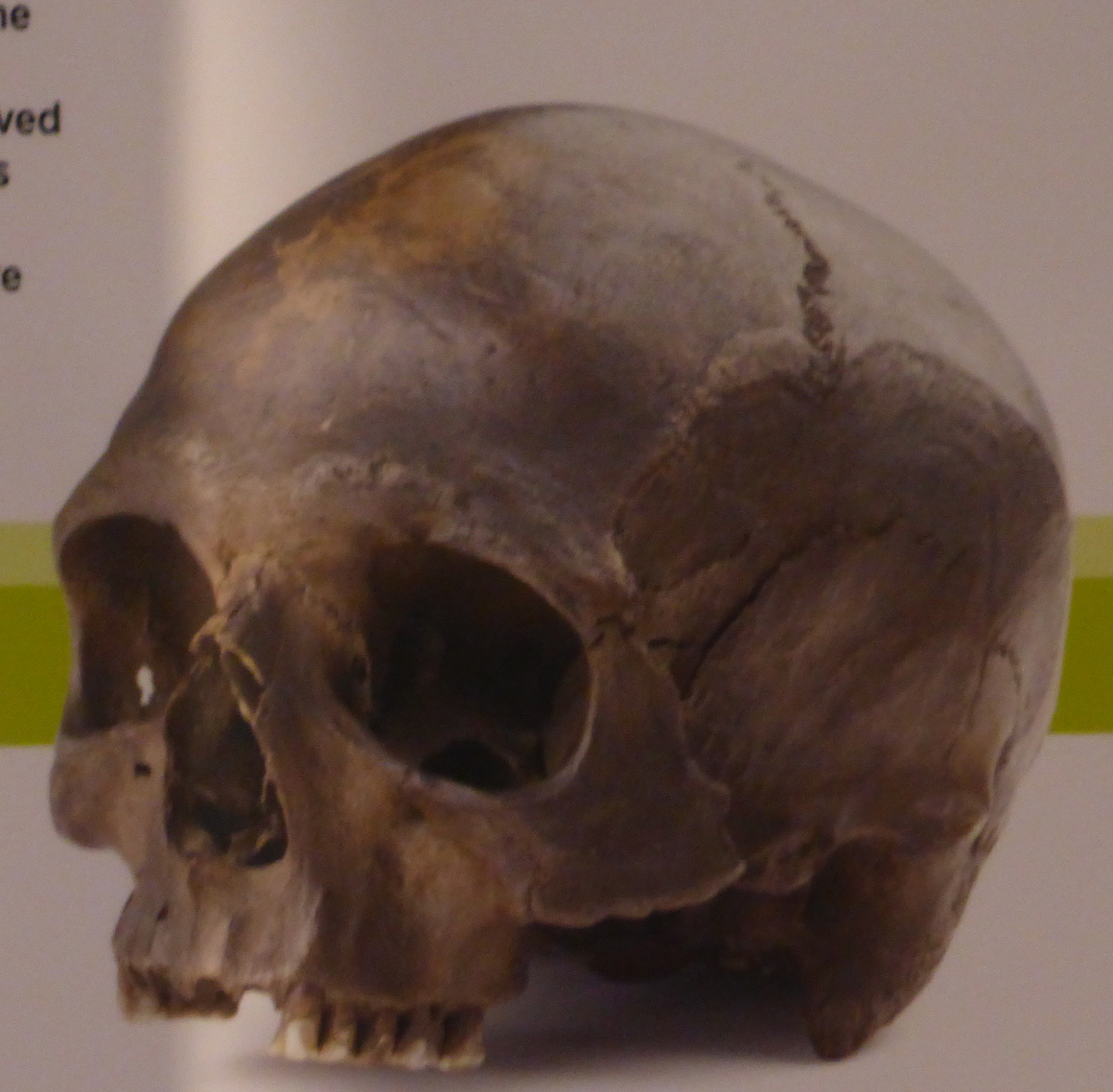
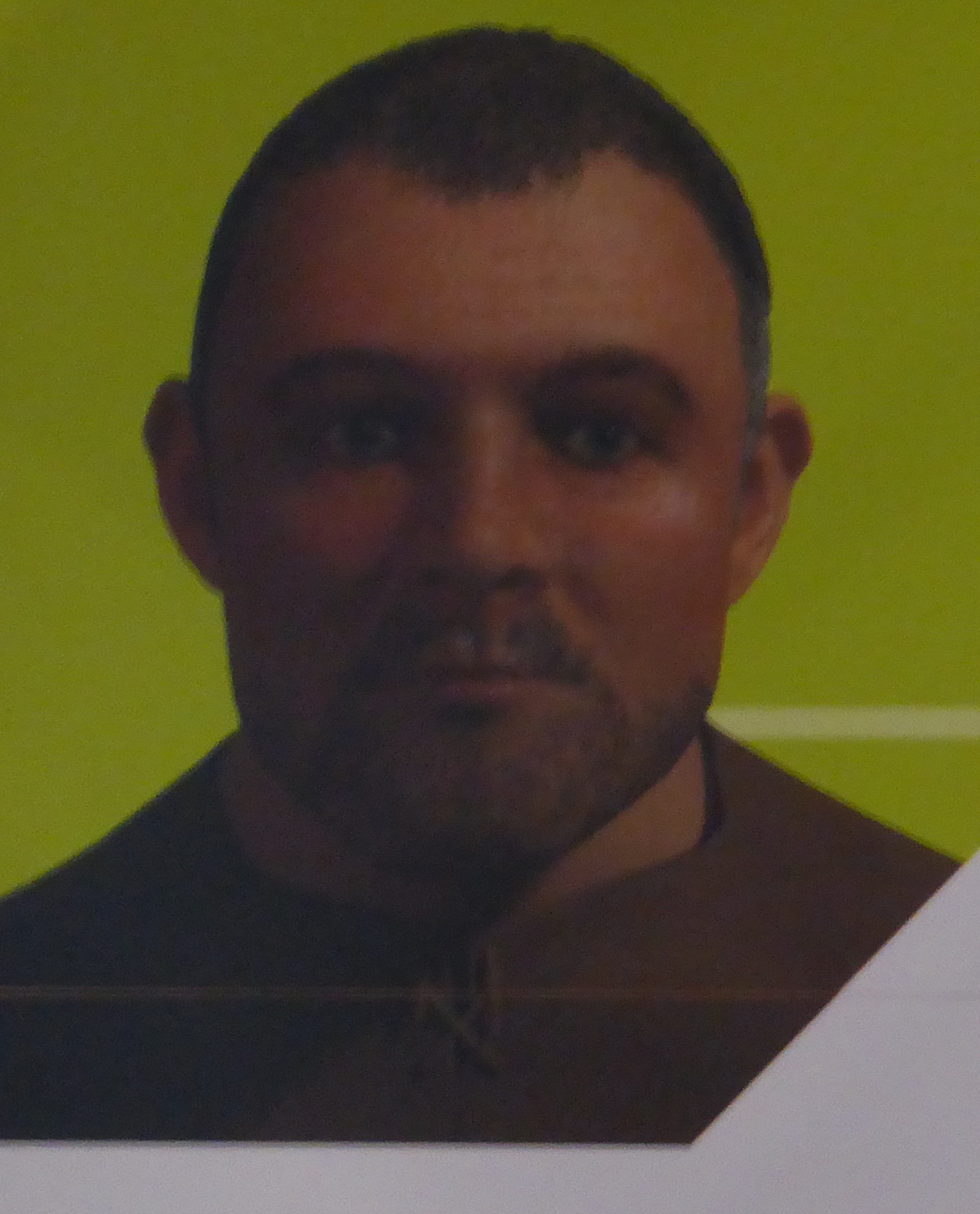
‘The face of a Stone Age man from the North West… about 40 years old when he died’ The Harris Museum
They’ve given you a face.
Taken your 5,500 year old skull, added facial tissue and facial muscles – temporalis, masseter, buccinator, occipito frontals, nose, lips.
Decided upon your expression.
It’s 2019 and the ‘ug’ caricatures and Flintstones references are behind us yet there is flint and stone in your jaw. Your shoulders are like a boxer’s
so I imagine you ‘putting them up’.
Fists of stone – you were a prize fighter. You would have been the strong man of your day, felling old bog oaks with your rough stone axe,
pulling them two at a time,
the muscles in your back – trapezius, rhomboideus, serratus, teres minor and major, thoracolumbar fascia straining as your broad feet sucked in and out of the marsh.
Your children swinging from your broad arms like long-tailed tits – countless, twittering, as you tossed them like juggling balls into the air.
Your wife liked to massage out your knots and twists – tighter more oaklike as you aged, treating each muscle in turn like a polished stone,
tending to your calloused hands –
bathing your blisters, dabbing ointment on your cracked knuckles, mending your broken fingers with oaken splints.
When you fell like a tree, not in battle but quietly on your way back from the woods, little birds in your branches,
muscles knotting one last time,
she did not carve your head but your fists in stone, cast them into the river with the oaklike log of your corpse.
The little pebbles of your pisiform bone, metacarpals and phalanges can be found on the riverbank where she once grieved.
~
Cribra Orbitalia
‘This is the oldest skull so far dated – to between 3820 and 3640BC… This woman may have suffered from anaemia, indicated by an area of pitting in her left eye known as cribra orbitalia.’ The Harris Museum
You were a pale child.
Always the first to tire on the walk from camp to camp, struggling for breath, clutching at your chest. You said your head was light as a wisp of smoke before you lay down and floated away. You said you were a feather.
The reddest of meat failed to bring a blush to your cheeks, to keep you to the ground.
Often you touched the ridge of your left brow and pressed as if probing for the lesion.
When your skin turned yellow as the beak of a whooper swan, your eyes eerie and wolf-like,
you were exalted and they listened
to your visions of flying white-winged to the distant north where frost giants fought with fists of ice and the claws of bears were hungry for your children.
When you returned with seven cygnets ghosting from beneath your right wing
they walked on egg shells fearing you were the daughter of the God of the Otherworld.
When you were found with a single feather on your breast it was said you flew with him to Cygnus, rising on your last swan’s breath.
Now instead they point to the pitting of your left eye and speak of cribra orbitalia – the hypertrophy of red bone marrow, megabolasts, megabolastic anaemia, lack of intrinsic factor, the uptake of coblamin (vitamin B12).
And I try to hold both science and myth in the cavelike porosities of your left orbit….
~
Shades of Blue
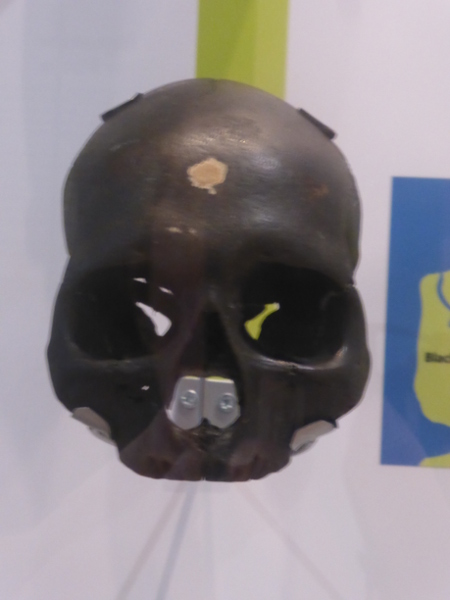
‘an older man who may have lived in the Stone Age as there is evidence that he has been killed with a stone implement, similar to the axes displayed’ The Harris Museum
You had a violent reputation.
It travelled with you across the Water Country like the flies on the back of the aurochs
who buzzed around the heads of your enemies clotting like blood around their pecked out eyes.
She always knew when you were coming back by the noise of the bluebottle… zzz…???
A flicker across the rush light. Zzz… zzz…. zzz… unmistakeable. A rush of dread as it was lit up on the wall shiny iridescent blue.
When she was little she counted its colours and gave them names like New Dawn Blue, Noon Blue, Happy Blue, Deep Waters, Dwellings in the Sea-Sky Blue. As the shadows of her marriage darkened she named them Twilight Blue, Indigo, Bruise Blue, Black Blue of Murder.
Her hand went to her broken cheekbone.
She took the children to the Whistler in the Rushes.
In her hands she took the sharpened stone.
Nobody questioned or regretted your death: “A crash in the night – so many enemies.”
Except the bluebottle who buzzed in circles around your head, spiralling, spiralling upwards. Death Blue, Decision Blue, Tear Blue, Last Bruise, River-mirror Blue, Bright Blue of Freedom.
It disappeared as you sunk into eternal blue.
~
Loose Tongue
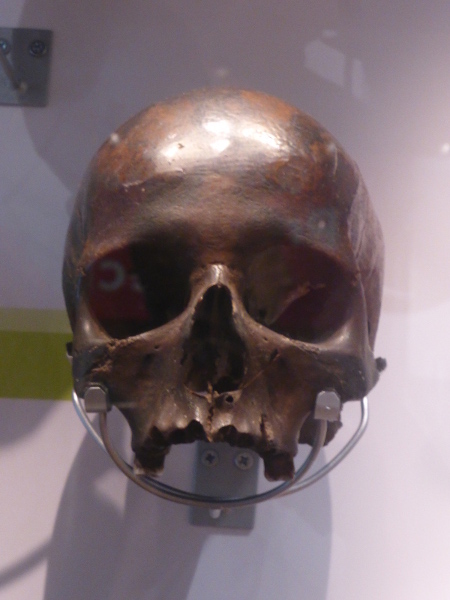
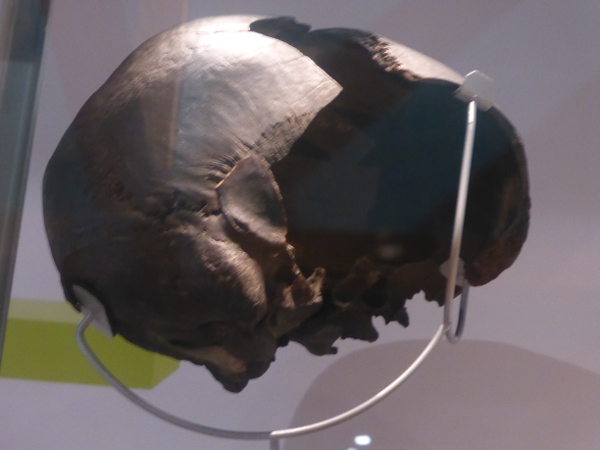
‘Experts disagree whether it is a skull of a woman or man. It’s smaller than other skulls found in the dock, but it has distinct male eyebrow ridges. There is evidence that this person may have died by from a weapon entering their skull. It may be the skull of a Roman settler or someone born in Iron Age Britain.’ The Harris Museum
No-one knew if you were Roman or Briton, noble or commoner, male or female, only that you were not from the North. The names of the gods mixed on your tongue like wine and mead in the fortresses of the Otherworld. “Vindos-Dis, Mars-Nodens, Apollo-Maponus, Belisama-Minerva, Taranis-Jupiter.”
Your tongue got you into trouble stirring the desires of the young but allowing none to lift up your robe.
Everywhere you went there was gossip.
You’d come to the High Hills in purple wearing sandals, golden bangles, golden rings on your fingers and toes and a jewelled golden crown. Come back down like madness to the Water Country, ragged as a beggar, preaching of a world where Roman and Briton lived in unison with no divisions between man and woman or wrong places to put one’s tongue.
A parochial chieftain hated your androgyny and the hateful looseness of your tongue so it was not long before you were stripped naked and fishlike beside the river before the gods.
The spear thrust into your mouth did not stop your brazen tongue from wagging on as the water embraced you as both daughter and son.
*With thanks to the Harris Museum for use of the photographs.

 The Sanctuary of Vindos