River-watcher, what have you
and your predecessors seen
of the water-dwellers?
Was it from you
the tribe was sprung?
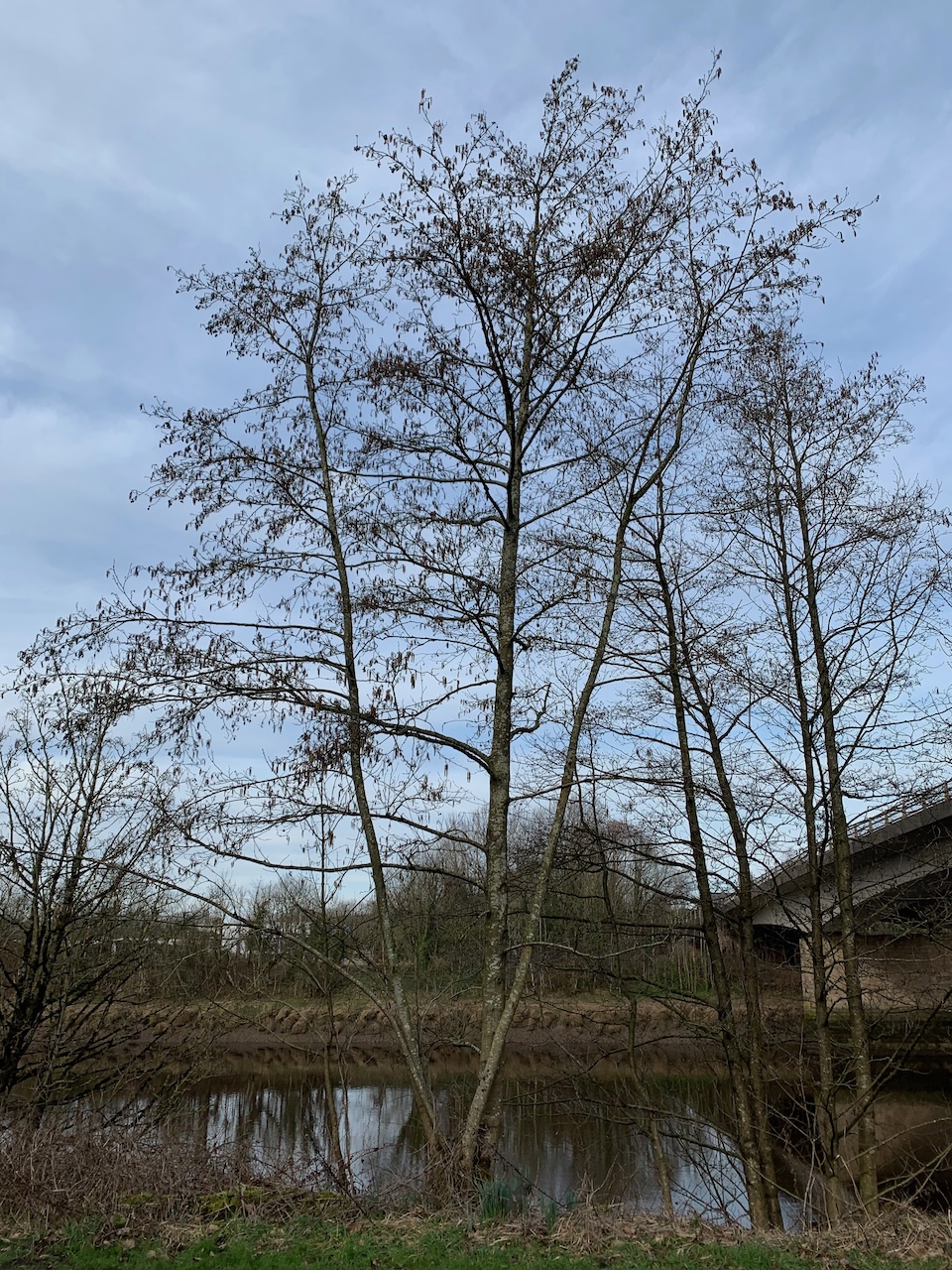
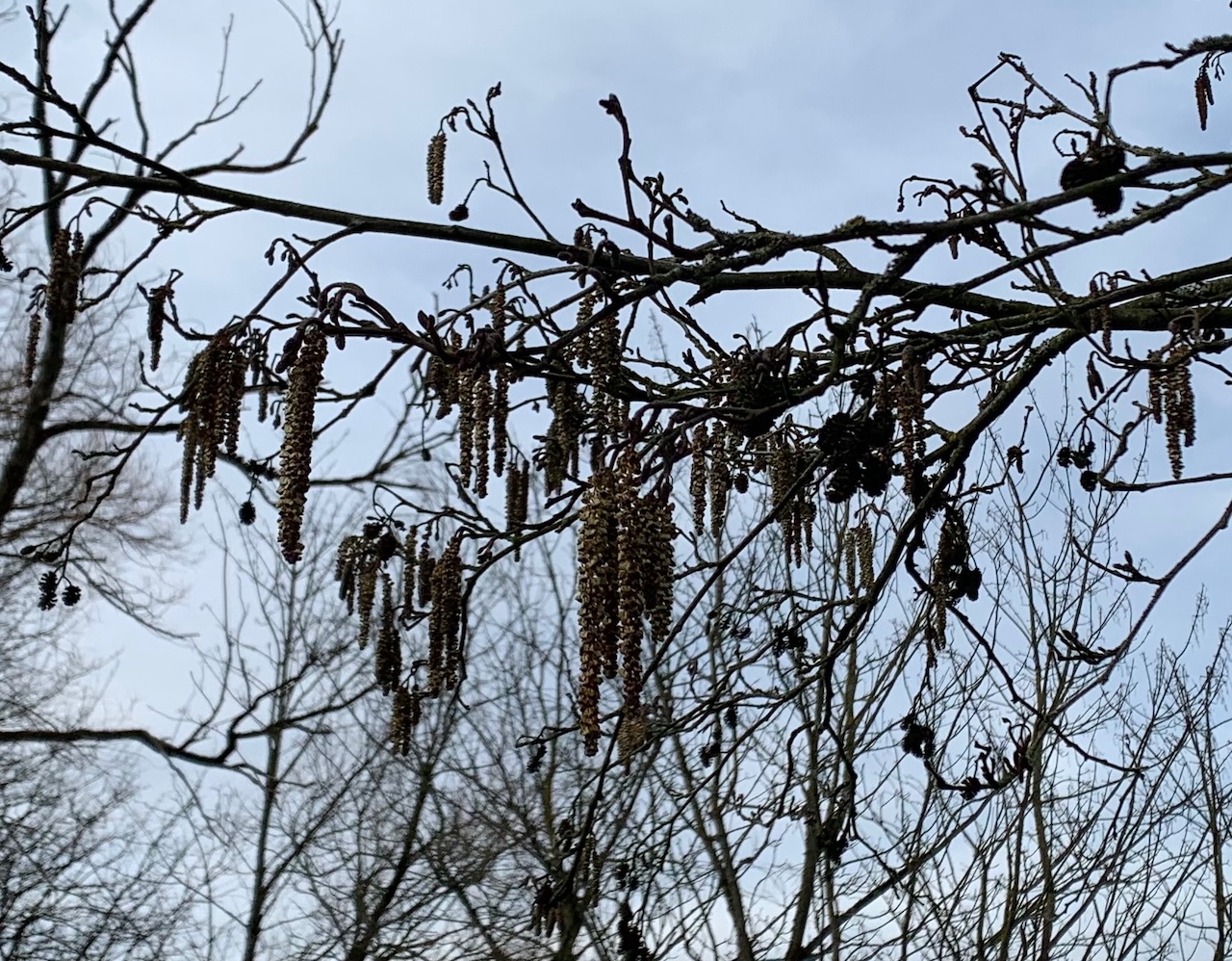
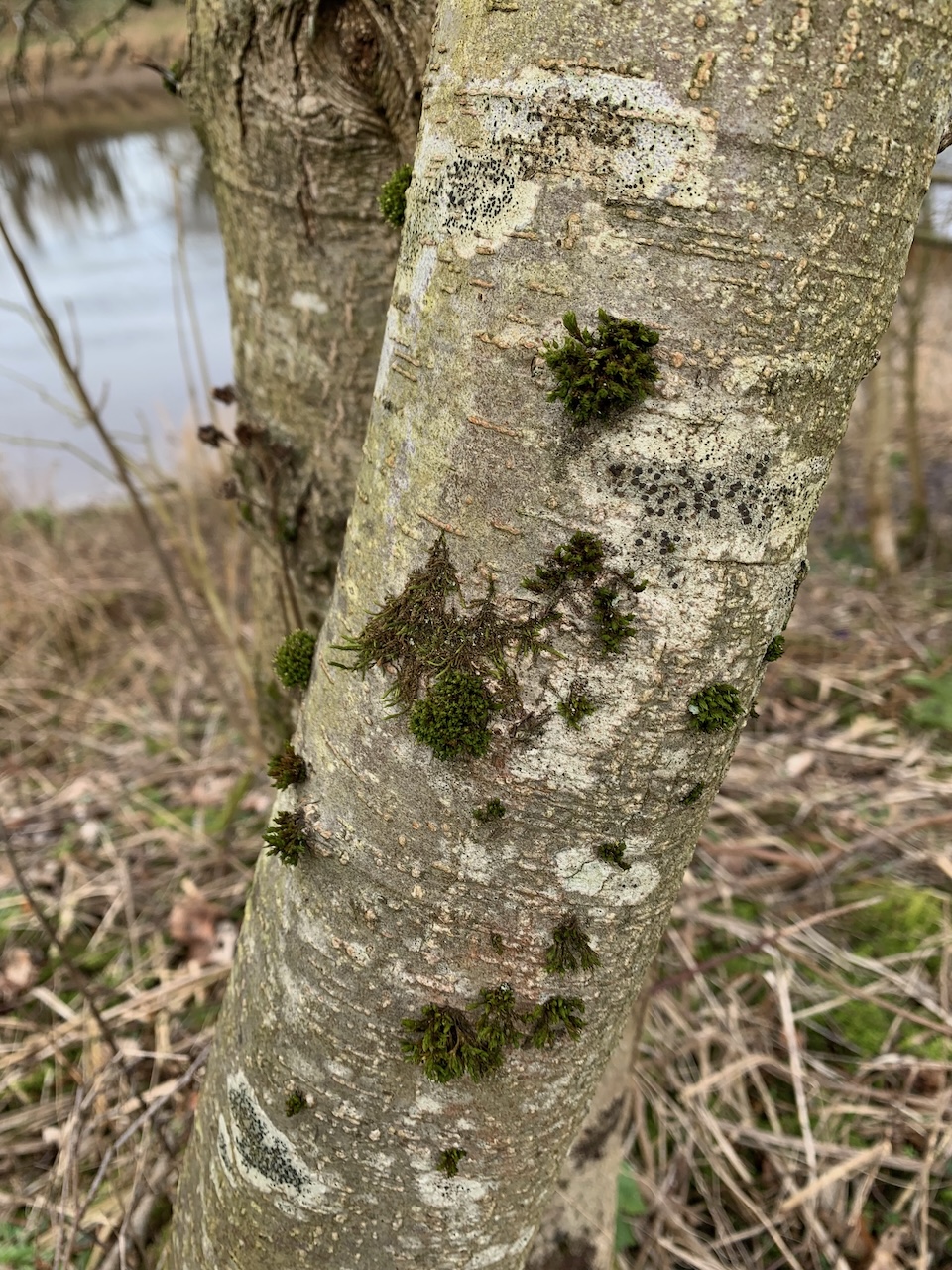
A couple of weeks ago, when I was walking beside the river Ribble, my eyes were drawn to this splendid river-watcher, an alder tree covered with brown-golden catkins and still bearing the dark brown cones from last year. Its trunk was splotchy with a white crustose lichen and bore several mosses.
This got me researching the natural history of alder, its role in myth and folklore, and pondering how it was perceived by the early inhabitants of this land, the Setantii tribe, ‘the Dwellers in the Water Country’, and their successors.
Alder was one of the first trees to re-populate Britain after the Ice Age. A pioneer species, it is able to grow in barren and soggy ground due to its partnership with a bacterium called Frankia alni, which absorbs nitrogen from the air and exchanges it with the tree for sugars produced by photosynthesis. Alder then fixes nitrogen into the soil and enhances the fertility, meaning other trees and plants can follow. The nitrogen-fixing nodules of Frankia alni are visible on the roots.
The wood of alder would have been viewed as particularly sacred across Britain and Ireland, wet and boggy countries, as it does not rot in water. Since prehistoric times, it has been used for the building of crannógs (lake dwellings), in fish sluices, and for building trackways across bogs.
Near the river-watcher, in the location of Riversway Dockland, a brushwood platform, suggesting the presence of a Bronze Age lake dwelling was found. That the twigs and branches hadn’t rotted away suggests they may have been alder.
Alder was also used to make bowls, domestic vessels such as the Pallasboy vessel, and wooden idols. One of the most famous is the ‘Red Man of Kilbeg’ from Ballykean bog in Ireland. It has been suggested that alder was used to craft this idol because red droplets that resemble blood ooze from the wood when it is cut, associating with the human bleeding and with death. In this context it also interesting that, in early Irish lore, the first human was believed to have been born from alder, a story that might be linked with its flesh-like qualities. The Scottish Ballachullish Goddess was also made from alder.
Alder was used to make shields. In medieval Welsh mythology, Bran the Blessed, a gigantic son of the sea-god Llyr, carried an alder shield. Bran and his army were compared to trees when they crossed the sea from Britain to Ireland. Bran, like an alder tree, allowed his body to be used as a bridge by his warriors across the river Shannon. His sister, Branwen, had a son named Gwern (which means alder in Welsh) who was cast into a fire. Alder thus seems to be bound up with the mythos of the Children of Llyr.
Lancashire’s Dwellers in the Water Country were likely, too, to have made their shields from alder and to have traversed the waters between Britain and Ireland. Place-name evidence from my local area such as ‘Alderfield’ and ‘Carr Wood’ (relating to alder carr) suggests that this species has long been held in particular favour and has been abundant.
I did wonder whether the sluices for the canals and for Riversway Dockland were made of alder but the former is Baltic Pine and the latter is Greenheart.
Alder is of value not only to human but other-than-human water dwellers. Where it grows beside water, its roots provide shelter for fish and nesting sites for otters. When its leaves fall, it provides food for river flies and aquatic beetles, who are feasted upon, in turn by fish such as brown trout and salmon.
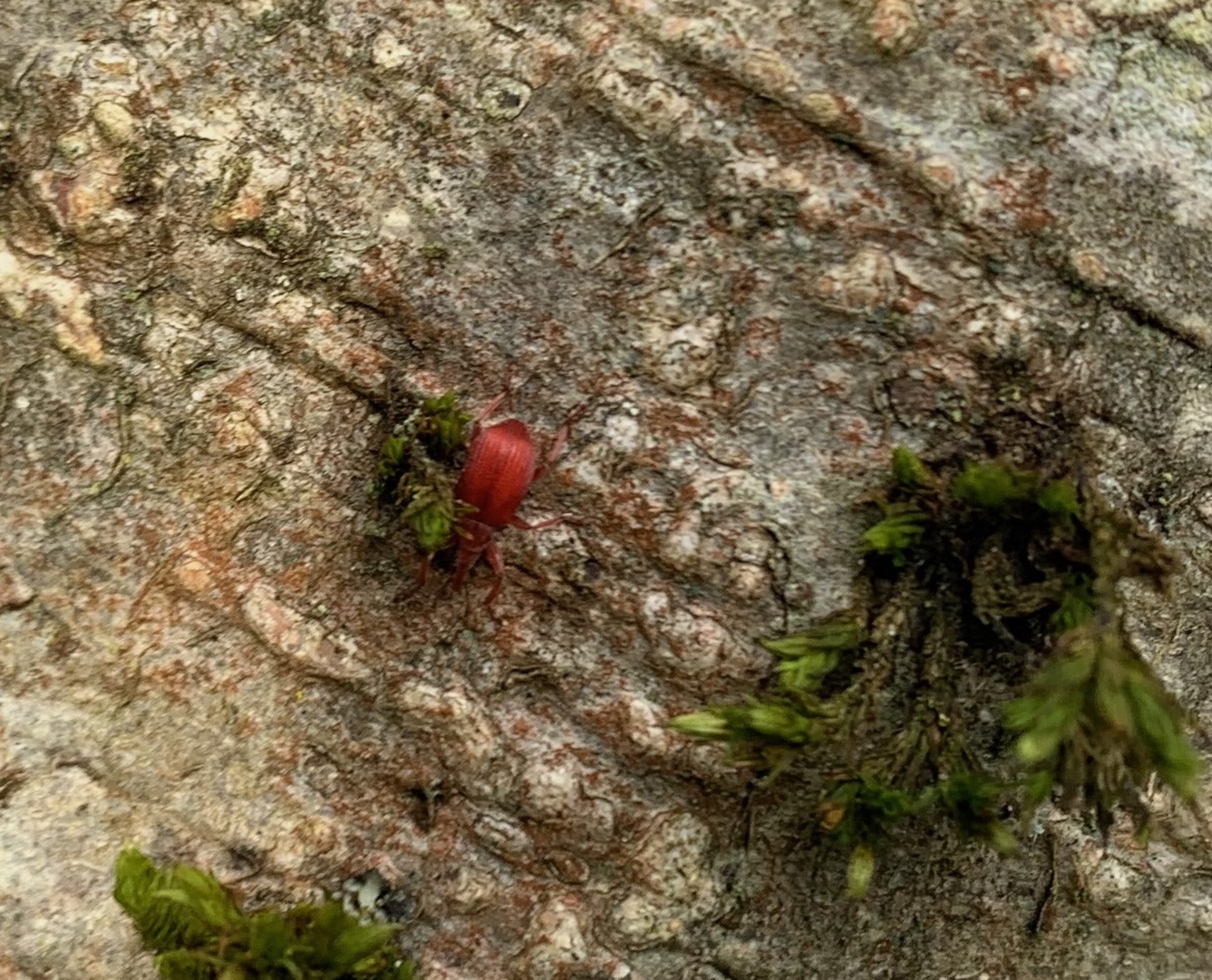
Its catkins provide nectar for bees and its seeds for finches, such as the charms of goldfinches who can frequently be seen beside the Ribble. It is the food plant of insects, such as the alder leaf beetle, which I have seen on alders on peatland nature reserves. I found a red beetle on the river-watcher’s trunk and suspect it is a leaf beetle from the Chrysomelidae family.
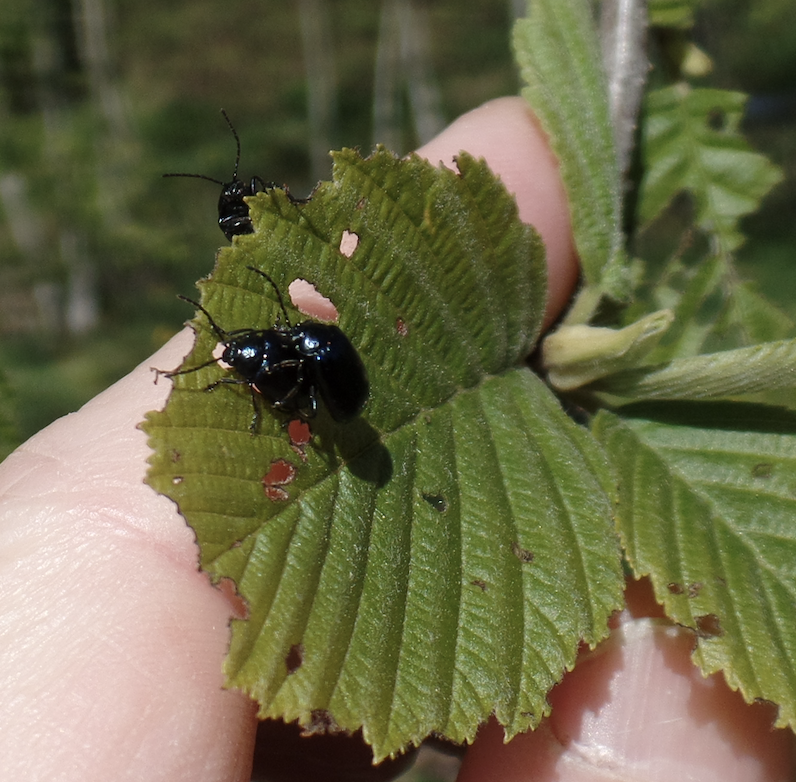
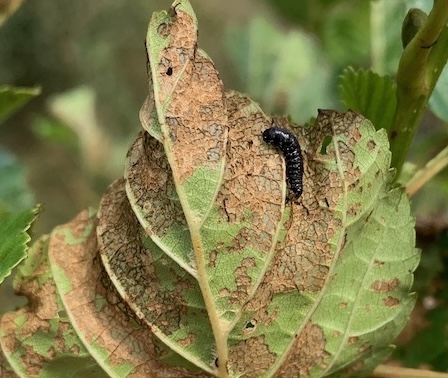
Alder is also the food plant of the larvae of several moths, including alder kitten, pebble hooktip, the autumnal, and the blue bordered carpet moth.
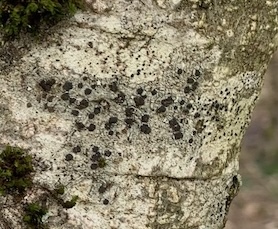
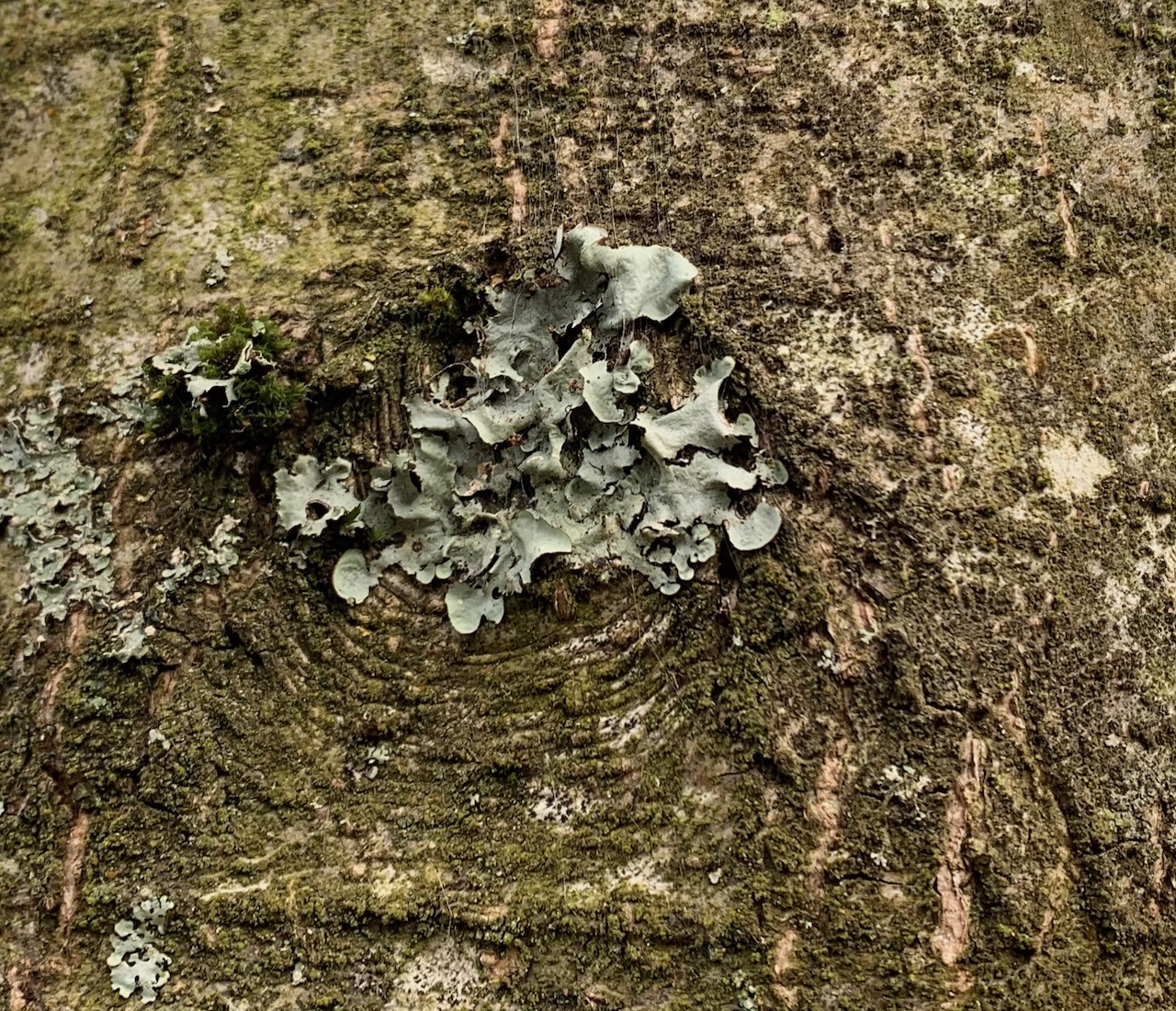
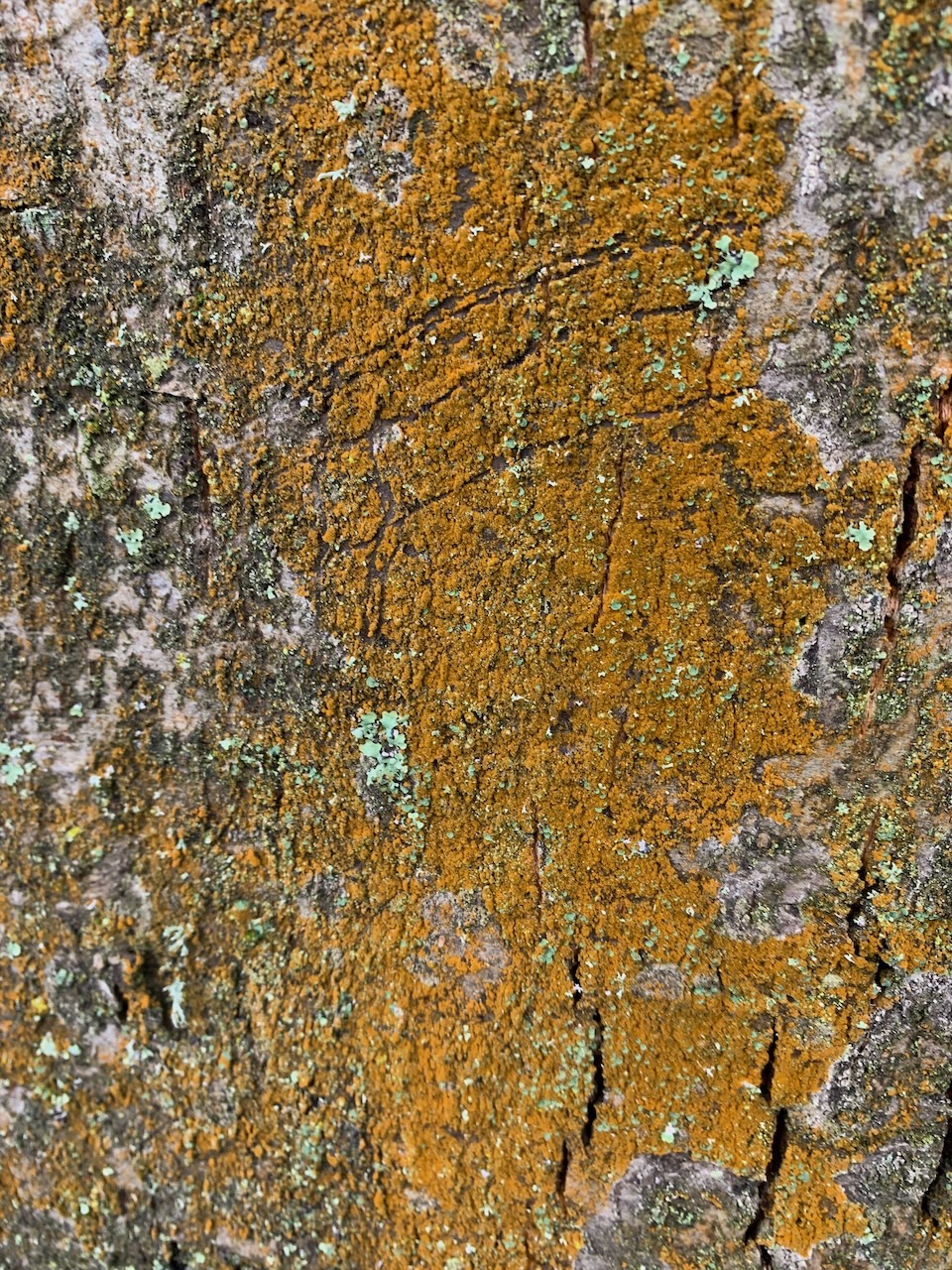
Alder trunks are frequently covered in white splotches which might be mistaken for the colour of the bark but are, in fact, crustose lichens. On the river-watcher, I found a white spotted lichen called Lecidella elaeochroma. Also a patch of Parmelia sulcata. On nearby trees was Trentepholia aurea, a green alga that appears orange and is a photosynthetic partner with Graftis scripta, another lichen that is also often found on alder trees. I identified these with the help of a friend who is studying lichens.
All these factors, together, suggest that alder has long been a special tree to Lancashire’s water dwellers and thus it remains in the hearts of many.
In the Way of the Buzzard Mystery School it is associated with foundations and with being a spiritual warrior. This fits with it providing a platform for lake dwellings and with Bran’s shield and I will be drawing upon its support and protective qualities as I prepare to take my shamanic offerings further into the world.
SOURCES
Alder, The Wildlife Trusts, https://www.wildlifetrusts.org/wildlife-explorer/trees-and-shrubs/alder
Alder, Woodland Trust, https://www.woodlandtrust.org.uk/trees-woods-and-wildlife/british-trees/a-z-of-british-trees/alder/
Alder, Trees for Life, https://treesforlife.org.uk/into-the-forest/trees-plants-animals/trees/alder/alder-mythology-and-folklore/
Alder, Tree Explorers, https://www.ucc.ie/en/tree-explorers/trees/a-z/alnusglutinosa/
‘The Company of Alders’, Salish Magazine, https://salishmagazine.org/in-the-company-of-alders/
The Way of the Buzzard Mystery School, https://thebuzzardtribe.com/

 The Sanctuary of Vindos