The Wishbone of the Lord of Desolation

Wishbone – A forked bone (the furcula) between the neck and breast of a bird. According to a popular custom, this bone from a cooked bird is broken by two people and the holder of the longer portion is then entitled to make a wish.’
Oxford English Dictionary

The Wishless

cry out from the city
where the long lines of cars
and the chugging of exhausts never ends.

It always 9am on a Monday and always the morning rush.

A woman with ruffled feathers is trapped in a lift going up
and down and up and down and up and down,
her image in her compact mirror setting
and sticking like hair spray.

A man wearing headphones
is convulsing like an electrocuted bird.

A manager is on the roof of a tower block
switching off his mobile before taking a final breath.

Oh city of flightless wingless birds how many wishes
have been tugged from your chests and left festering in backyards?

A man is flying now like a bird without a wishbone –
no lift, no ‘strengthening of the thoracic skeleton
to withstand the rigors of flight’.

“How can I help the wishless?”

The Lord of Desolation

“You must find the Wishbone
of the Lord of Desolation.”

I go through the fortress that guards
the mountain pass where the waterwheel
is turned by the river that turns time.

In the Land of Desolation wind
and sand scour the broken skeleton
of the Lord who is the desert land
and the scouring inseparable.

Each rib-bone is an archway
of the cathedral of a once mighty chest
from which the bellow of lungs has fled
to the tortuous winds and the heart
to a dull thud thud like a hammer
in the head slowly fault-lining
the small misshapen skull.

I look for the wishbone between
the neck and the breast – the furcula,
‘little fork’, fused to two scapulae
for stable flight, more lift when
the thoracic cavity is under stress.

The wish lifting the bird until the fall.

The wishbone is gone, stolen, leaving
the Lord wishless, fallen, desolate.

“There is nothing in the Land of Desolation.”

The Endless Scrapyard

The wind that exposed bones blows
back sand to reveal the endless scrapyard –
a sprawling conurbation of tyres, hubcaps,
headlights, broken wing mirrors, windscreens,
the ceaseless grind of the crushing machine.

I crawl over piles of pots, pans, sinks,
laptops, TVs, radios, catch my trouser leg on
an aerial, fighting not to be lulled to sleep
by the fishing forecast or driven mad
by the news or the canned laughter.

Ignoring messages on walkie-talkies,
not running from blaring sirens flashing
blue-and-red blue-and-red blue-and-red,
I reach the household waste and dig
down through the years throwing

away layers of plastic and styrofoam,
digging down to old shell middens and shards
of broken pottery, finding to my frustration
that all the wishbones have been stolen.
“Leave the scrapyard well alone.”

The Thieves of Wishes

I know, of course, where to find to them.

The circle is made whole – the centre
of wishlessness is in the bowels of the city
where brothels, slot machines, casinos,
temples to golden gods are found.

There, in the inner sanctum, they are gathered
around the Wishbone of the Lord of Desolation.

The floor is littered with broken wishbones,
empty bottles, dog ends, silver foil, faeces.

They are bare and empty skeletons arguing
over fake bank notes, gaming chips, the last line
of coke that gets blown off the table sending them
sniffing like desperate dogs amongst the debris.

All except the two who shot each other in the head.
Their skulls are shattered, jaws still jabbering.

White, obdurate, horrible, like a standing stone,
almost holy, it has resisted them completely.

“The thieves have stolen nothing but desolation
and broken everything except this wishbone.”

It is not hard to wrest it back from trembling
phalanges and evade their palsied gun shots as we fly
up, up, up, to where the thieves can never go.

Ceremony

I go through the city banging a pan,
driving the wishlessness from the wishless,
rousing them from their offices and pointing
them to the elevators that fly beyond the rooftops,
grabbing the flightless before they hit concrete,
granting them a set of wings and second life.

When we are assembled on a cloud at noon
around the Wishbone of the Lord of Desolation
the voice box of the wind announces the ceremony
is begun and the stars above nod their assent.

The bird-headed men and women play
xylophones crafted from the bones of their ancestors
and whistles that were once whistling beaks.

The wishless raise their voices recanting
every single wish they have never made remaking
them on the bone as to the exhortation of noise
it breaks and with a thrust of bony wings

the Lord of Desolation flies free and is gone.

The Wishbone of the Lord of Desolation Med


Twrand o’r Gyre

A hen got hold of me –
a red-clawed one, a crested enemy;
I spent nine nights
residing in her womb
The Hostile Confederacy

Bird-Head

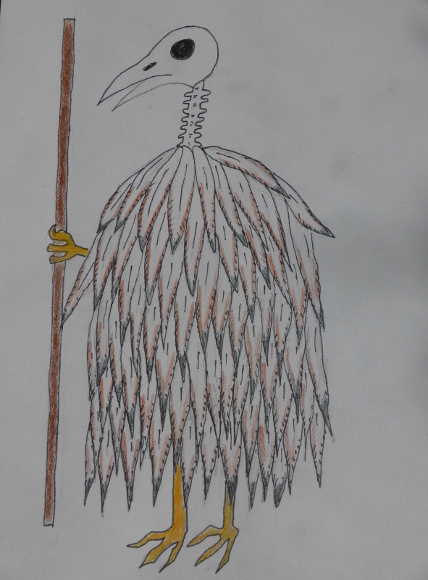
“The witch Ceridwen made me like this.”

He reminds me of one of Baskin’s cave birds:
the bare white skull with its long maxilla,
the sclerotic ring,

the way he stares just ‘so’ like a raptor,
cervical vertebrae twisting down

to feathered shoulders.

Immediately I have questions
I know I shouldn’t ask –

like where he got his cloak,
whether it’s part of him,
what’s beneath.

I keep my beak well shut,

follow with respect up the mountain
to the tap-tap-tap of his stick

as he points out bones picked clean by birds,

the skeleton still sitting waiting for death.

When I grow weary I think of how the dying
made it higher with their last breath
and stumble on to the summit.

Will I fall apart in a heap of bones
or crumble into a pile of dust?

Only his sunken eyes know.

Gyre

I totter like an old woman.

Before I’ve had the chance to look down
at what I’ve left behind I’m swept

into a gyre,
circling and circling
with the last things of Thisworld –
a wardrobe emptying of clothes,
a cupboard spilling chutnies,
jams, ketchups, vinegar.

Things I’ll dimly miss.

A new set of wings
is beating in my chest
carrying me higher higher.
The sun is my new head
illuminating the plains
of a new horizon.

Its brightness is beyond pain,
understanding, words such as ‘firmament’,
‘cloud’,‘cirrocumulus’, ‘Heaven.’

Here

the winged souls are busy,

half human, half bird,

hollowing out their bones
with the chink, chink, chink
of tiny chisels, breaking

and re-fixing humerus,
ulna, radius, fusing carples
and phalanges into wings.

Separating toes into claws.

Stretching lungs into air sacs
and filling lightened bodies full
of soulful air and otherlight.

Far Above

they are greeted by elders
who teach them to build nests

with sticks and clothes pegs,
moss, spit, newspaper cuttings
of past lives they wished they had,
toys, shoes, watch hands, fluff
from the bellies of teddy bears.

Like little old women or foetuses
they climb back into the eggs,

back into a chick-like slumber,

back into the womb of an old hen,
back into the cauldron of Ceridwen,
back into before they were born.

Nine Nights

Finally Twrand tells his story:

“For nine nights and nine days
I resided in her womb asleep like
a feather in the skies drifting from
planet to planet learning stories
of other worlds beyond her dreams
and all her deepest imaginings.

I saw the trajectory of Thisworld.

I plucked the feather of my Awen
from the side of a red-clawed hen.

When I was born she killed me:

wrung my neck, bent me out of shape.
I raised my skeleton from the sand,
fixed my wings and learnt to ride
the winds of the gyre unreturning.”

Twrand o'r Gyre MML

Uffern ar y Ddaear

Uffern ar y Ddaear – Hell on Earth

I’m surrounded by the smell of dead grass
dreaming of a machine that creates water from nothing.
Someone’s got the radio on too loud and always a baby is wailing.

I lift my nose and smell the smoke on the wind and my throat
is already whining for my master dead on the moors
like cottongrass, heather, butterfly, grasshopper,

where the battle that began on the first of May is still going on
between a fire ignited by one who belongs to the inferno
and the fire fighters with hoses, beaters, leaf blowers.

If only they could bring the rains and autumn winds,
summon them into a summer already too hot and too long,
where reservoirs empty and carbon reservoirs bake, burn, reignite.

I hear they’re trying to save the mast, 1000 feet high, which I saw
lit red like a warning sign beneath the full moon transmitting not only
radio, television for the BBC, ITV, C4, signals for mobile phones,

but some kind of howl we’ve somehow got used to between silences.
What if it goes down like the plane that crashed on the 27th of February
in 1958 when the snow was so cold no-one could rescue the 35 dead

who still roam the hill cursing the faulty radio signals and the drones
flying overhead in the way of the helicopter pouring its cauldron
of water from the reservoirs over the baking baking peat?

When the endless chatter ceases will everyone hear the howl
pouring the dead down Winter Hill like radio waves
from the spring where the Douglas starts

and the mourning song for Winter’s King
dead like a bog body amongst the burial mounds
beneath the burning feet of his rival who is ever victorious?

When we try to shut Hell’s gate with torches on each side
and inside red as a death hound’s oesophagus will we realise
the throat will never close and the howl wrenched from it is us?

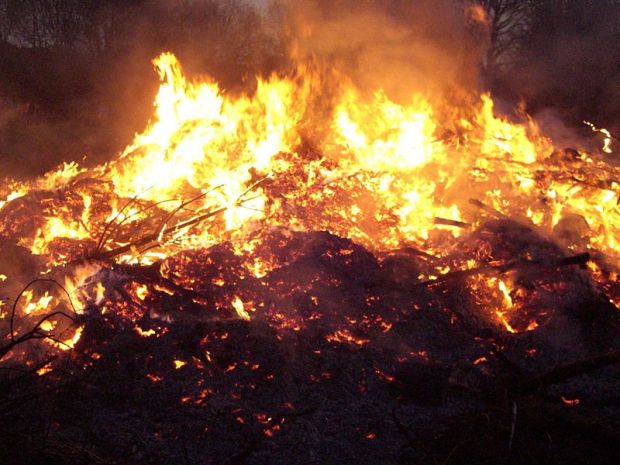
800px-Campfire_flames

*This poem is based on the Winter Hill fire and the mythic battle between Gwyn ap Nudd (Winter) and Gwythyr ap Greidol (Summer).

Between Texto and Gloss

I. The Glosa

As an awenydd and polytheist writing and sharing poetry is an essential part of my path. Of all the poetic forms I have experimented with, including English, Welsh, Irish, French, and Italian metres, I have found the Spanish glosa the most conducive to religious practice.

The glosa was invented by the Spanish court poets during the Golden Age. It takes the form of four lines of text (texto) from an existing poet and four ten line stanzas of commentary (gloss) written by the glosser with the final line taken consecutively from the quatrain. The conventional rhyme scheme is ABBAACCDDC.

This versatile form was popular in Parisian literary salons during the reign of Louis XVI, in Germany in the Romantic period, and in Latin America throughout the struggles for independence. It was introduced into the English language comparatively recently by the Canadian poet P. K. Page in 1994.
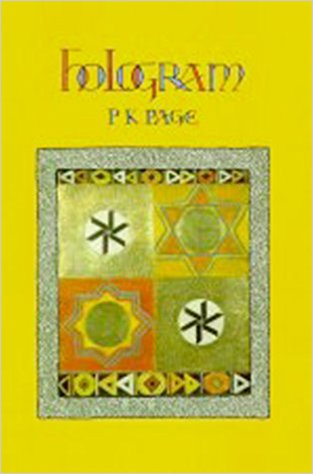
Hologram by P.K.Page

In Hologram, Page used a series of glossae to pay homage to other poets. Her use of a rhyme scheme where the sixth and ninth lines rhyme with the borrowed tenth, and italicisation of the text and its repetitions, has set the form for poetry in English.

Page’s work prepared the ground for Charlotte Hussey, another Canadian poet, who teaches Old Irish and Arthurian literature and studied Celtic Shamanism with Tom Cowan. Her collection of glossae, Glossing the Spoils (2012), glosses the ‘earliest Western European texts’ to ‘mend a break in tradition and time’, thereby reweaving the ancient myths into modernity.
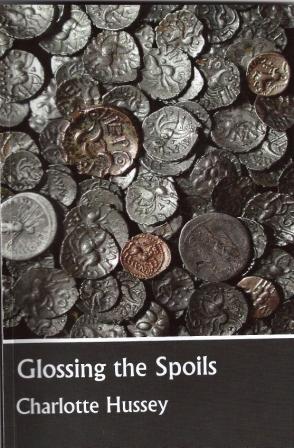
Glossing the Spoils by Charlotte Hussey

In these glossae Hussey opens a visionary space between texto and gloss where it is possible for conversations with mythic personages and experiences of the transformative qualities of ‘the spoils’ to take place. In ‘Lake of the Cauldron’ she glosses lines from ‘Branwen Daughter of Llyr’. After watching a ‘huge man with yellow-red hair’ emerging ‘from the lake with the cauldron on his back’ the narrator is pushed ‘into the boil’ by a woman with ‘dreadlocks’, ‘long breasts’, and ‘a sweaty belly’ who ‘hacks / shoulder blades, buttocks apart, / scrapes off chunks of flesh / bones sinking then surging to the rim’. The ‘great monstrous man’ from the text watches her dismemberment ‘with an evil thieving look about him’.

Many of the poems reveal the subliminal influence of these near-forgotten myths on our time. ‘Trolls’ is based on lines spoken by the Loathly Lady in Parzival. It ends with ‘The knight, lifting his fluted, iron / visor with its narrow sights’ to ‘stare out’ for ‘a crusading convoy / to join, another holocaust to start, / or a melancholic witch to burn’. Glossing Perlesvaus, Hussey draws parallels between the animistic qualities of the ghastly black shield of the knight’s aggressor with its ‘dragon’s head throwing out / fire and flame with a terrible force’ and the atom bomb – a weapon of destruction she notes cannot be contained or exorcised (1).

I read Glossing the Spoils for the first time in 2012. Discovering the glosa and Hussey’s use of it as a gateway to visionary experience has had a profound effect on my spiritual path and my approach to the medieval Welsh texts that are central to my tradition as an awenydd.

II. The Bull of Conflict

I wrote my first glosa in September that year after an initiatory encounter with Gwyn ap Nudd, a god of the dead and ruler of Annwn, the Brythonic Otherworld. Desiring to honour and thank him for pulling me back from the brink of an abyss and to learn more about him, I decided to gloss four lines from ‘The Dialogue of Gwyn ap Nudd and Gwyddno Garanhir’ (2).

This poem, from The Black Book of Carmarthen (1350) documents a conversation that takes place in the misty hinterland between the worlds following Gwyddno’s death. Gwyn appears as a ‘bull of conflict’ – a divine warrior and psychopomp – to guide Gwyddno back to Annwn. Set during the fall of northern Britain to the Anglo-Saxons it contains some of the most powerful and poignant lines in Western European literature, ending with Gwyn’s lament:

I was there when the warriors of Britain were slain
From the east to the north;
I live on; they are in the grave.

I was there when the warriors of Britain were slain
From the east to the south;
I live on; they are dead.

Choosing four lines I started by meditating on the first and was taken back to walking the streets of Preston that afternoon in the aftermath of the Preston Guild Festival (4) and the pervading melancholy. Drifting amongst shadow-people I found myself in the Harris Museum surrounded by the spoils of war and face-to-face with Gwyn stepping from the poem.
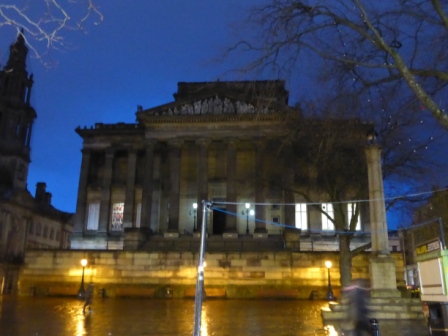
The Harris

The Harris Museum

In this familiar yet unfamiliar space, between texto and gloss, between poet and god a conversation took place that would change my life. Gwyn’s imperative of ‘enchanting the shadowlands’ gave me a purpose, became the title of my first book, and has guided my path ever since.

The Bull of Conflict

I come from battle and conflict
With a shield in my hand;
Broken is the helmet
By the pushing of spears.
‘The Dialogue of Gwyddno Garanhir and Gwyn ap Nudd’

On an empty day automata drift,
Wending suit shapes through the mist.
Touchless I fade like a symbol unhitched.
The spoils of war quake in the museum.
Piercing the grey wearing horns of a bull
A white warrior blackened and bloodied
Disguises his limp in an infinite gloom,
On his spear leans, softly says:
“My comrades are slain and yet I live,
I come from battle and conflict.”

His dire avowal brings howling winds,
Chill clutch at my shoulders their lament dins
Of hero light fading from mortal skin.
In glass cabinets swords clash savage,
Raging figures thrash on ragged pages
Chanting the desolate past of ravaged war bands.
With war-torn wisdom, sombrely he whispers:
“These gathered memories to you I give.
Gone are the days I crossed this land
With a shield in my hand.”

His barrage of sadness barks in my mind
Like hapless hounds on a winter’s night.
Fierce their madness, dark their plight,
For the perishing souls they collect,
The past’s great spirit protect.
Like thundering wind obligation overwhelms me.
The blade of futility threatens to unfasten me.
“How do I cherish and defend these memories
When like the kingdoms of Rheged and Elmet
Broken is the helmet?”

I ask the Bull of Conflict.
His tears run bright with the passing of time,
Chariots wheeling in multihued light,
Victims reflected in star lit skies.
He says: “this shadow land needs enchantment
To banish the blight of despair.
Nurture the memories with magic
And they’ll sing a blessed new year.
Do not be pressed into fear
By the pushing of spears.”

This was a once-in-a-lifetime experience which led me to devote myself to Gwyn as my patron god. Nothing quite like it has happened since and I have written many glosa, good and bad.

III. The Spoils

Hussey’s title, Glossing the Spoils, works on many levels. By ‘the spoils’ it refers to the spoils of war, the spoils of the distant past gathered in museums, and the spoils of our literary heritage. It also subtly alludes to ‘The Spoils of Annwn’, from The Book of Taliesin (14th C). Taliesin, the narrator, accompanies Arthur and his men on a raid on Annwn to plunder its treasures, including the cauldron of Pen Annwn, ‘Head of the Otherworld’ (Gwyn). There a catastrophic battle takes place, which Gwyn later describes to Gwyddno:

And to my sorrow
I saw battle at Caer Fanddwy.

At Caer Fanddwy I saw a host
Shields shattered, spears broken,
Violence inflicted by the honoured and fair.

Arthur assaults ‘the honoured and fair’: the fair folk ruled by Gwyn, who are forced to retaliate. In a moment suggestive of both pillage and rape Lleog thrusts his ‘flashing sword’ into the cauldron and it is ‘left behind in Lleminog’s hand’. Arthur escapes from Annwn with the spoils, slamming ‘Hell’s Gate’ shut. Only seven of three ship-loads of his men survive the conflict.

Analogously most of the spoils in our museums have been plundered violently from other lands. The literary heritage of Western Europe is largely based on a history of the victors, mythic and real, crusading, conquering, colonising. As Walter Benjamin says: ‘There is no document of civilization which is not at the same time a document of barbarism.’

These thoughts were on my mind when I embarked on a quest to explore the contemporary relevance of the Thirteen Treasures of the Island of Britain (3). They include the cauldron (which is kept by Dyrnwch the Giant), the Hamper of Gwyddno Garanhir, vessels for eating and drinking, weapons, items of clothing, and vehicles for transport. It is likely most of them were won or stolen from Annwn by the northern British warlords who own them.

Like the spoils evoked by Hussey the treasures are animate, inspirited, alive, expressing their agency through magical qualities. The cauldron will only brew meat for the brave. Brân’s horn provides any drink one wishes. Morgan’s chariot takes a traveller wherever they wish quickly. Rhydderch’s sword bursts into flames in the hand of any man who is well-born.

The Gwyddbwyll Gwenddolau, ‘Chessboard of Gwenddolau’ (4), is made of gold and has silver gwerin, ‘men’, who play by themselves. The men represent Gwenddolau’s army and his enemy and serve a divinatory function – the outcome of the game predicts the result of real battles.

Writing a glosa based on four lines about the chessboard took me on a visionary journey to Gwenddolau’s seat of rule in Arfderydd (modern day Arthuret in Scotland) and gave me a glimpse of its magic outliving Gwenddolau to predict the outcomes of upcoming wars.
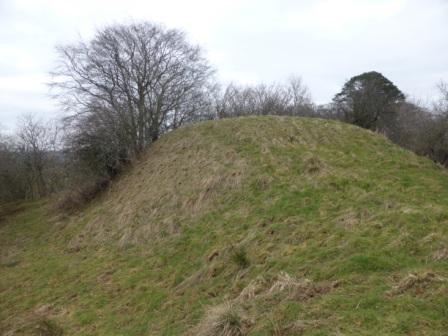
View from Liddel Strength

Caer Gwenddolau

The Chessboard of Gwenddolau

The Chessboard of Gwenddolau…
if the pieces are set,
they play by themselves.
The board is gold and the men silver
(5).
The Thirteen Treasures of the Island of Britain

I leave my world behind at Carwinley Burn
to follow the feral steps of a girl,
red-haired, torqued, coloured-trousered,
a wild thing with fox’s teeth at her neck
down a fox-hole to the grave
of Gwenddolau.
Beside his bull-horned corpse
stands a table and upon it a golden board.
Round its edges silver dead men lie.
The Chessboard of Gwenddolau

has lain here as long as my father,”
she says. “It predicts the outcome of battles.
It played before Arfderydd, Catraeth,
when Britain’s air force clashed
with the Luftwaffe,
on the eve of the invasion of Iraq. As yet
it has never mispredicted an event.
At times of peace it sleeps.
At times of threat
if the pieces are set

they play out every move in the coming conflict.”
As she speaks the eyes of a warrior
jerk open and his spasmodic
hand grips his spear.
A warhorse rises from a tangle of stirrups and mane.
A bishop shakes off his robes and delves
for fireballs and mist in his pockets.
Caers rebuild their ramparts.
Returning to health
they play by themselves

speechless as automata resuming their positions.
Warriors move forward two squares
spearing on the diagonal.
Warhorses leap
over the mounting carnage,
on a fiery blast fall into splinters.
A king drags his queen into a caer.
As the bishops prepare the final spell
I am shaken by a premonitory shiver.
The board is gold and the men silver.

For me this glosa reveals the sad fact that since the war-torn period when Gwenddolau lived and now there has barely been a time when the warriors of Britain have not been at war. The uncanny battles fought between the gwerin, beneath the earth, in Annwn, represent our militant history.

As modern glossers we are faced with a past of ravaging, wounding, spoiling: a world spoilt by Arthurian warlords. How, between texto and gloss, can we enchant its shadows, heal its wounds?

Footnotes

(1) In ‘Glossing Faery
(2) At this point I was working with William Skene’s 1868 translation. I recommend the 2015 translation by Greg Hill. The title and glossed lines are from Skene, but the other two are from Hill.
(3) The Thirteen Treasures of the Island of Britain appear in several medieval Welsh manuscripts. The earliest is the autograph of Gwilym Tew in Peniarth Manuscript 51 (1460).
(4) Gwyddbwyll means ‘wood-sense’. Its translation as ‘Chessboard’ isn’t entirely correct because chess originated in the Arab world and was imported to Britain by the Normans in the 11th century.
(5) Here I took the poetic liberty of changing the form and tense of the original quote.

Sources

Charlotte Hussey, Glossing the Spoils, (Awen Publications, 2012)
Charlotte Hussey, ‘Glossing Faery’, Awen ac Awenydd
Greg Hill, ‘The Conversation Between Gwyn ap Nudd and Gwyddno Garanhir’, Awen ac Awenydd,
Keith Ellis, ‘The Glosa: A Genre to be Noticed for its Constructive Values’, Comparative Literature and World Literature, Vol 1. No. 2 (2016)
Marged Haycock, Legendary Poems from the Book of Taliesin, (CMCS, 2007)
P. K. Page, Hologram, (Brick Books, 1995)
Walter Benjamin, ‘On the Concept of History‘, Marxists.org
William Skene, ‘The Dialogue of Gwyn ap Nudd and Gwyddno Garanhir’, The Four Books of Ancient Wales, (Forgotten Books, 2007)
Burial

A Poem for Calan Mai

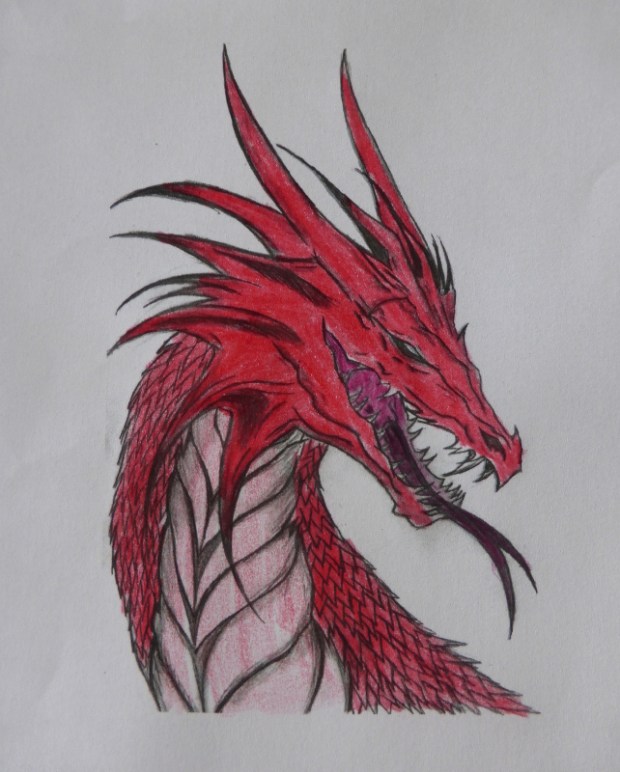
Two gods fight. Two dragons circle the sky.
A scream is in my mouth – soon my god will be gone.

He dies so the bluebells, mayflowers, hawthorn blossoms thrive,
baby birds pecking from eggs stumbling pink into the dawn.

There will be a victory tonight and there will be a wedding.
There will be a death tonight and there will be a burial.

Whilst lovers dance the maypole and tryst in the woods
I will walk alone without a bouquet and in silence

down forgotten paths to the castle of cold stone
where winter is entombed while summer rules

to pay my regards in tears of dew and mourning songs
amongst the kindly fay, the winged horses, the howling hounds.

While others laugh at the wedding I will weep at the funeral.
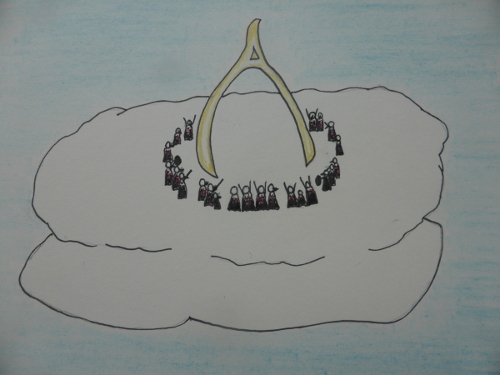
I will bury two dragons in the stone chest of my heart.

I will bury two dragons

My Scream Over Annwn

If the ninth person comes to ask for land, his proprietorship is extinguished, and he gives a shriek… and that is called diasbad uwch Annwfn.’
The Laws of Hywel Dda

Every May Eve… your dragon gives out a horrible scream.’
Lludd and Llefelys

I.
I am not a ninth son.
I am not an only daughter.
I am not dispossessed but I will scream.

I will scream in dragon’s fire.
I will scream in dragon’s blood.
I will scream myself dry

for those who have lost their land,
their kin, their deepest dreams.

II.
I will scream because I have walked
where harpers play in the stars, looked down
on the beauty of our mother earth
and seen her dirtied

by petrochemical giants with top hats of fracking rigs,
oil rigs, gas rigs, refineries, distilleries lit up
like the Blackpool Illuminations
along our coastlines

great big selfish hands throwing plastic into the seas.

III.
I will scream because I have walked
countless cities wrecked by war planes hearts hanging out
like the untied shoelaces of civilians
who had no chance to flee

seen the bombs, the bullets, the missiles,
plastic water bottles bouncing down the streets,
schools and hospitals in flames,
burning aid-workers

and the long long trains of landless refugees.

III.
I will scream because I have walked
where ice caps melt the Polar Vortex melts down
and the Polar Night Jet unravels
unleashing a Yeatsian Beast

leaving a trail of the withered dead –
tired old trees, frail crocuses, the homeless.

How we demonise the weather and refuse to face our demons!

This is madness, madness, madness, madness, madness pumping
through my searing veins and heaving in my dragon’s chest.

V.
I will scream and wish myself possessed by the spirits of Annwn.

Spirits of Annwn I call on you. Spirits of Annwn I summon you.
Bring terror to all who profit from the desecration of our mother.

Spirits of Annwn I call on you. Spirits of Annwn I summon you.
Make their businesses barren, make their money dust and leaves.

Spirits of Annwn I call on you. Spirits of Annwn I summon you.
Drain them of strength and colour and bring them to their knees.

Spirits of Annwn I call on you. Spirits of Annwn I summon you.
Bring them to kneel at altars of compost and resurfacing streams.

Let me be your dragon and I will scream ‘til the end of this world.

Let me be your dragon

You can find out more about the Scream Over Annwn and its connection with the red dragon HERE.

Afagddu’s Declamation

Until death it shall be obscure –
Afagddu’s declamation
The Hostile Confederacy

I am bedraggled tonight, unwelcome,
the one taught to hang his head
in his mother’s court:

Utter Darkness, the Dark Son,
the Ugly One she wishes
utterly forgotten.

I carry no shield, spear, or sword.
The brushing of damp fur
on my thighs

unnerves the courtly women.
My hair hangs like ivies over
the face of a bridge,

disappears like rain into a dark adit.
They compare me to Sanddef
the angelic.

Wings tarred to my back, I am
the sea-bird abandoned
in the oil-slick.

I drag myself in with my shadow,
carping words in metres
they can’t name.

The slow swooshing of my feet
reminds them of wetsuits.
From my feathers

sadness drips like tears of oily rain.
When I shake myself off
like a wet dog

they flinch away from the globules.
Looking into my green eye
they are beholden.

With my reptilian beak I speak
of swallowing sorrow
like stones,

plummeting down to the deep
in search of lands
unpoisoned

by my mother’s toxic cauldron.
From the darkest places
I won my awen.

I cleared the blowholes of whales,
untangled sea turtles
from gillnets.

On islands of bottles, pill packets,
polystyrene, prosthetic limbs,
I laid out the dead.

I learnt to divine from the plastics
in the entrails of copepods,
euphausiids,

mussels, mackerel, jellyfish,
sea gulls who rattled
in flight.

From bottle caps and cotton bud sticks,
pieces of red, green, blue, yellow
Lego bricks,

an alphabet of magnetic letters
stuck to a sunken fridge
I read the future.

Of course they were upside down,
back to front, in another
language.

I was forced to turn myself inside out
like a rabbit unskinning
to decipher it.

I’m still not sure whose future
I brought back in
my pockets.

I empty them out and letters writhe
like sea worms spelling
an inky fate

to the chant of plastic-eating bacteria:
Ideonella sakaiensi I gathered
from the deep.

The courtiers draw back their chairs,
weapons aglinting,
curse me.

I am but the messenger – the angelus.
Nevertheless they take aim.
A terrible poetry

of microbeads spills from my belly
as I fly up like a fury
to declaim…

Cormorant_(Phalacrocorax_carbo)_(17)

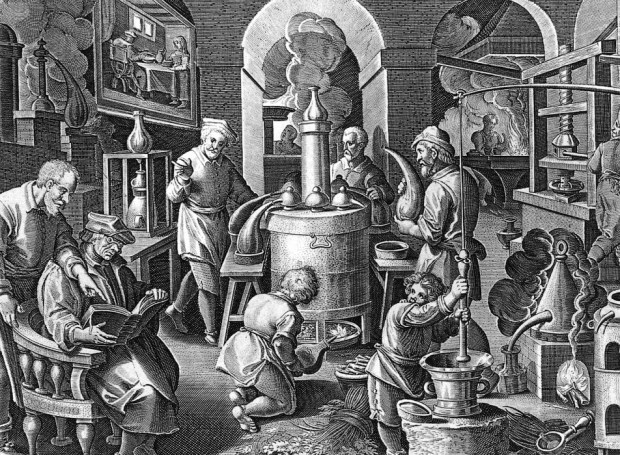
Y Fferllyt / The Alchemists

Gwnëynt eu peiron
a verwynt heb tan
gwnëynt eu delideu
yn oes oesseu.

They’d make their cauldrons
that were boiling without fire;
they’d work their materials
for ever and ever.
The Hostile Confederacy

alchemy

In the blackness of a starless night
I could not stop brow-beating
myself with the hammer
of what is missing
inside me whilst outside
they forged a sky of black iron
with a ringing ringing beat dividing
cosmos from chaos within the metal dome
fixing the crystal constellations.
They’d make their cauldrons

sturdy and strong as they’d make
their crucibles and flasks and funnels
and their chimerical language,
working with the elements,
conjunctions of planets,
365 herbs to inspire,
voices rising like phoenixes
from the ashes of the nigredo
on magical wings higher and higher
that were burning without fire

whilst we burnt everything
and our cauldrons would not boil.
I walked the plains of cold dark vessels;
leaking, cracked, the prima materia
spilling out like poison.
As we emptied the oil wells
and the gas wells and I followed
the dragon ships the emptiness
inside me grew emptier.
Whilst we built our hell
they’d work their materials

in the cauldrons deep inside them.
Thus they’d brew their awen
whilst we pillaged elixirs
from other worlds
and the elements ran wild;
burning, drowning, shaking monsters.
The black sky cracked and with the crystal stars
we fell like charred birds from the heavens
plummeting without feathers
for ever and ever.

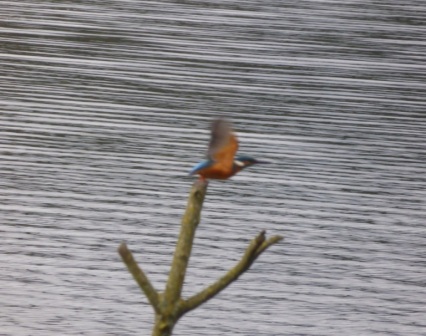
Kingfisher in Flight

For Brian Taylor

An unexpected kingfisher.

I might not have been there
in the hide if it wasn’t for you,
your teachings on the agency of birds,
the transformations of souls,
auspices of sapphire-blue.

The sad news was unexpected too.

It took me back to our brief meetings:
how you always wore binoculars,
showed me my first goosander.

I thought I’d never see a kingfisher
let alone a halcyon wonder so close
whistling from branch to branch.

You’d have called it ‘a showing’.

I e-mailed you to share the news.

Another e-mail flash from the blue
jolts me back to your careful records
on alcedo atthis and ‘the best views’.

You wrote of death with such beauty
citing Ovid’s resurrection of Alcyone:

a kingfisher in flight – ‘a departing light’.

Kingfisher in Flight


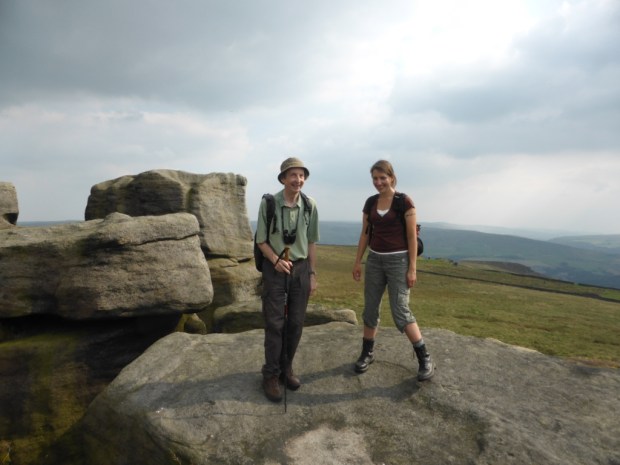
Brian Taylor, a dedicated animist and the author of Animist Jottings, passed away on the 13th of February. I was particularly moved by Brian’s writings on kingfishers and admired his advocation of an animism deeply rooted in the natural world that had room for magical encounters and the otherworldly too. Although we only met in person a few times (most memorably when he came to Penwortham and pointed out a goosander on the Ribble and when we visited Bridestones and marvelled at the expressions of the rocks and the flying ants) we shared many fruitful conversations in the blogosphere and through e-mail. Brian was one of the wisest, most caring, thoughtful, and articulate people I have ever met. He will be missed.

Picture with Brian Taylor Bridestones 5th September 2014

Brian Taylor and myself at Bridestones, September 5th, 2014

In Van Gogh’s Starry Night

I can picture you
with many-headed horses
many-headed hounds

amongst stars unswung
swinging cypress

hear your laughter
in the Mistral ‘the idiot wind’.

But you are not in
Saint-Rémy-de-Provence.

You are here on Castle Hill
swaying beech trees
where St Walburge’s
cannot outspire the Pennines.

Why the stars so bright and loud?
The processions of mist walking on the summits?
The long lapping tongue of a death-hound?

You are silent
but from a small room
in a distant asylum Van Gogh speaks:

“we take death to reach a star”.

1280px-Van_Gogh_-_Starry_Night_-_Google_Art_Project