Apples

For Epona

The blood moon:
an apple in a goddess’ eye
drops and I think of the windfall
crisp autumn mornings when we released
the horses slipping from their halters
twisting away in leaps and bucks
with piquant glint-eyed excitement
to the trees where they’d drop their heads
whuffle up the crispy moons of green and red.

Some days before we turned them out
we whispered to them “apples”
and they knew exactly what we meant…

The blood moon has passed.
The horses are staying out late this year.
Yet the sun has gone down on my stable-yard:
baling freshly-cut hay, stacking barns
with hard-shouldered labour,
stuffing stretching nets
for hungry mouths.

As I cut the meadow and gather orchard fruits
I reminisce about the rural life that didn’t last.

When the horses are tied behind bar and bolt
tugging at hay with meadow-sweet muzzles
I will feed them apple-moons
from my open palm.

*This poem was written after watching September’s lunar eclipse from Greencroft Valley, where we planted apple trees two years ago, and is based on my experience of working with horses. I read it for Epona at a ritual in Glasgow led by Potia at the beginning of October.

The Last Witch of Pennant Gofid

I journeyed for weeks
through mist and hunger
to find the split rack of her bones,
bones stripped, flesh burnt
and boiled in the cauldron,
blood drained and bottled in two jars.

I plundered the ashes where the cauldron stood,
sniffed for blood where the jars were filled.
Played maracas with her bones,
made intricate arrangements,
chanted and sung
but could not raise her ghost.

“She is amongst the spirits of Annwn now,”
spoke the god I called instead.

“Lay her bones to rest. In the fire of poetry
console her burning spirit.”

***

I’m laying her bones to rest. The Last Witch of Pennant Gofid. Her name was Orddu. It meant ‘the Very Black Witch’. Whether she had black skin, black hair or used black magic seem irrelevant now. All that is left is her scapula split in twain, her shattered pelvis, two arms, two legs, her broken skull. Jagged shadows in two orbits retrieved from either side of the cavern.

Her bones are still. I am angry and restless. I cannot abide the story of her death. How Arthur came as he always did into every story every world every myth with his hatred of witches: sword slung over his shoulder like a sundered lightning bolt, a living knife in his hilt, a shield on his thigh adorned with an image of the Virgin Mary, aboard a huge mare.

Caw of Prydyn behind him a giant with a curling beard and the damned jars like heinous milk bottles on each side of his saddle; half a man in size, well-stoppered, thick-glassed, unbreakable. Then the retinue with spear and shield, tawdry banners and flags.

Following to stragglers’ jeers Hygwydd the servant staggering bow-legged bent-backed beneath the gigantic cauldron that brewed food for the brave. Hygwydd’s brother Cacamwri with Hir Amren and Hir Eiddil dragging ponies piled with saddle-bags of food and weapons.

At Arthur’s right Gwythyr ap Greidol, a gristled war-lord with fire and a hundred bloody campaigns in his eyes. A blazing passion. And to Arthur’s left Gwyn ap Nudd, the guide who tricked and dizzied their quest cloaked in mist summoning his hounds to eat the fallen from the mountainside.

Of the host who went to Pennant Gofid only a fragment reached the cave where Orddu plaited her black hair, blackened her skin with war-paint, fastened down her helmet. Sharpened her sword then set it aside like an afterthought. Cracked her knuckles and flexed her talons.

When Arthur blanched a voice mocked from the mist “if you’re scared, witch-killer, why not send your servants in instead?”

Arthur pointed Hygwydd and Cacamwri toward Orddu beckoning. She grabbed Hygwydd by the hair, dragged him to the floor, threw off Cacamwri’s assault, arrested their weapons, beat them out bloody and bruised. Arthur sent Hir Amren and Hir Eiddil in to be crushed in her wrestling hold, torn by her talons, beaten out with broken bones. Arthur fumbled for his knife.

“Why are you afraid, Christian warlord?” Orddu asked. “Far from home. Far from heaven. Do you remember I trained your northern warriors? Without my wisdom, gifts from our gods, they will be nothing but bickering chieftains with a lust for gold and immortality that will bring Prydain’s downfall?”

Overcome by fury Arthur threw his knife in a wrathful arc that sliced down through Orddu’s helmet through her ribs. Dropped to the floor as she fell aside in two halves screaming “Prydain will fall!” “Prydain will fall!” “Prydain will fall!” as the mist writhed and the hounds of Annwn howled.

When her twitching halves lay still Caw filled the bottles with her blood still warm and jammed down the corks. They stripped her of armour and flesh. Boiled a merry meal. Stole her sword. Left with a cauldron filled with northern treasure whilst her spirit watched aghast in the misted arms of Gwyn ap Nudd.

***

I cannot abide the story of Orddu’s death. How Arthur came as he always came into every story every world every myth with his hatred of witches with his living knife to put an end to wild recalcitrant women. Now I’ve laid it to rest I’ll share another story instead.

I shall tell what this fatal blow and the blows on the Witches of Caerloyw cost Prydain (“Prydain will fall!” “Prydain will fall!” “Prydain will fall!”). Not only the fall of the Old North and the Men of the North. The rise and fall of the British Empire (it had to needed to fall). But the splitting and bottling of magical women for over a thousand years.

Draining of our blood. Boiling of our flesh. Testing if we float. Gave us The King James Bible and The Malleus Maleficarum. Took away our prophecies and visions, gods and goddesses, our fighting strength. Gave us virginity and chastity belts. Cut us off from plants and spirits, rocks and rain, rivers and mist, otherworlds.

Over a thousand years on we are but shadows of ourselves. Mirrored pouts tottering on high heels. Watching ourselves on selfie-sticks. Worshipping televisions. Still split in half, bottled, boiling, floating, banging to get out.

Not long ago I split the jars. Escaped to another place. Wandered my estate kissing Himalayan Balsam. Watching Ragwort sway with wasps. Mugwort flowering like coral. But this was not enough. Gods and fairies walked to the world of the dead and called me after them. Since then I have seen the dead walk in the bright eye of the sun.

I could not go back to the jars. To glass windows and tower blocks. To numbers on computer screens. The pencil skirts of offices. To fracking rigs threatening to break both worlds.

So I came to Pennant Gofid searching for answers and companionship on my lonely path. Found only Orddu’s bones and the god who took her spirit. Yet found a link in spirit with a companion and a god in the magical tradition of the Old North.

***

So I constructed a fire of poetry and spoke my words of consolation:

“Orddu Last Witch of Pennant Gofid
know you are not the last
to walk these paths
to caves and mountain ranges,
through otherworlds and distant ages,
seeking visions of the present
the future and past.

The rule of Arthur has fallen.
Though Prydain still falls
we have broken the jars.
Our blood is no longer contained
by the tyrants of Arthur’s court.
We are winning back our flesh.
Our magic. Our strength.

Remembering our gods.
Know your life will be remembered
where there are prophecies and hailstorms,
rain and rivers, caves and heresy,
in the mists of Gwyn ap Nudd
where your spirit burns
forevermore.”

Then I took her bones in my rucksack and crawled through to a dark chamber. On a little shelf beside Orwen ‘the Very White Witch’ I laid Orddu’s bones to rest.

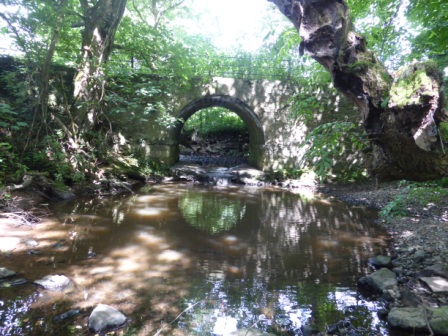
Bezza Bridge

Pink of willowherb
and white of meadowsweet

line the road to Bezza Brook.
Where you cross at Bezza Bridge

step down, step down, step down
in the incantation of the strange-light

hear the brook’s flow see the spirits stream
on the walls of the tunnel of life.

Dwell not on the tunnel of death
lest you hear the Skriker skrike.

Do not look for a rag on the wind
or an eye in the midst of the strange-light.

Bezza Bridge

Four Wells

Four wells at Preston New Road.
Four wells at Roseacre.
Four wells in the darkness
between drilling and decision.

Four wells of steel meets shale.
Four wells boring into the mind.
Four wells of screaming poison.
Four wells of deadly sands of time.

Four wells where gas the question
scorches ears of invisible skies.
Four wells? An uneasy whisper
from underworld gods.

Four wells to decide the future.
Four wells of choice. Four wells of trembling.
By the word on four wells our land
will be saved or destroyed.

~

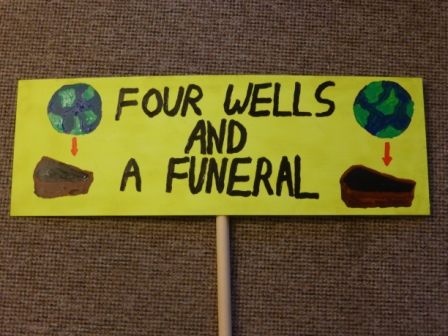
This is a poem I sent to Lancashire County Council’s Development Management Group along with more logical reasons why I am opposed to Caudrilla’s drilling and hydraulic fracturing (fracking) of four wells at Preston New Road and Roseacre. Protests at the County Hall will be beginning tomorrow (Wed 23rd June) as LCC make their final decision about Caudrilla’s application. For more information on how to register opposition by e-mail and join the protest see Frack Free Lancashire’s website.

Sign for fracking protest

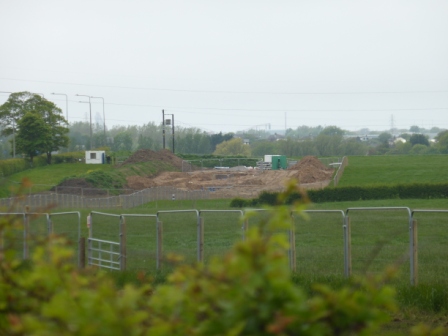
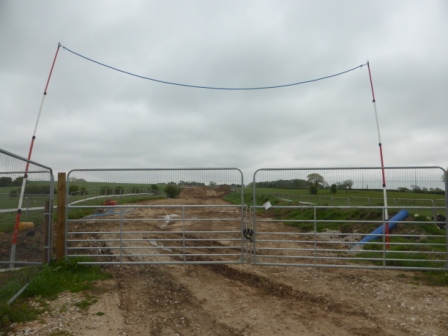
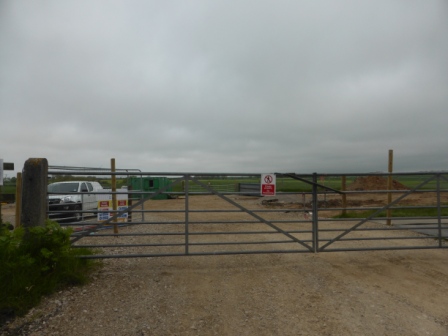
Below are some photos from when I visited the potential fracking site at Preston New Road. The area is cordoned off and anti-trespassing notices are in place. It looks like work has already been done to prepare it for the drilling rig.

Edwina Walk, Penwortham Live 022 - CopyPreston New RoadEdwina Walk, Penwortham Live 028 - CopyEdwina Walk, Penwortham Live 054 - Copy

She Walks Between Worlds and Lovers (Calan Mai)

It is summer in this-world when she is here
winter in this-world without her.
In Gwythyr’s arms she is Lady Life:
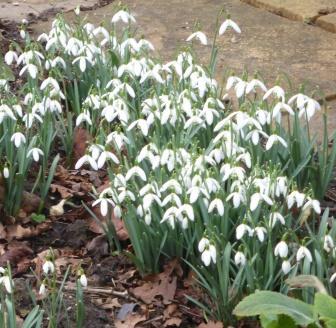
coming to be as the first snowdrop
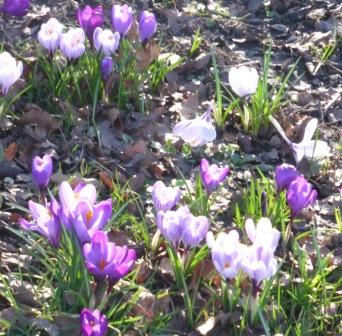
purple yellow crocuses are her slippers
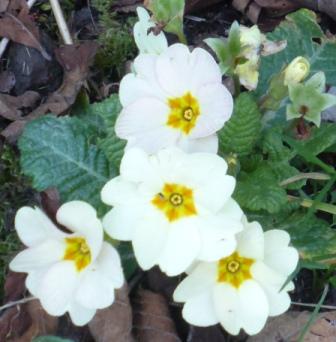
pink red primroses her cloak. Her smile
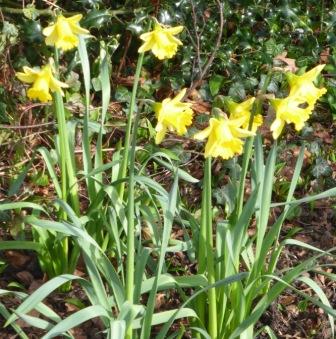
her lips are daffodils’ long trumpets.
May flowers weave her grassy hair
as she embraces this-world’s ruler.
In dewy glades Creiddylad is May Queen
in sacred marriage headdress a veil of hawthorn
wedding dress woven from wood anemone
wood sorrel she lies with him in woodlands
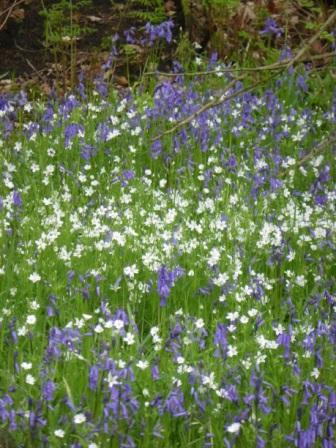
of bluebells starwort becoming buzzing fields
heliotropic gaze of ox-eye daisies poppies
face alive with vibrant butterflies and bees
exulting in the dance of pollen’s gold dust
until the seasons turn and cold winds come
she sees her time in this-world is over
and walks between worlds and lovers.

Blubells and Starwort

She who was jealous of flowers

How jealous I am fragile flowers
of how you only arrive
once a year
how you are always beautiful
vibrant coloured
how you do not have to labour
on and on pink-fleshed at the modern wheel.

How ignorant you are of everything beneath you
of the effortfulness of soil
worms with their moon rakes
bent double like miners in midnight toil
the dung beetle rolling his ball
to the edge of the world.
Look down and see beauty costs the earth.
It is made of broken snail shells.

But you pretty flowers are not labourers.

Have you ever tried to sprout from a cold hard bulb?
Endured the underworld’s permafrost?
Seen miniscules of worms die?
Do you know the origin of minerals or miracles?

We are told they come from God.

They come from years and the bones of dinosaurs.
Do you know how many continents
it takes to make a flower?
How many extinctions?
How the rumbling of plague carts
served us before you were here?
How like you we come from many deaths?

I did not know you could talk or how
we have grown together.
I am amazed.
My widening eyes
are brimming with forbidden knowledge.

Then be beautiful in your petals for us
tread lightly on the dead
for these are short hours
of spring sun
before we cast our bodies
on the ground and are together again.

The Fairies Chapel

I.
Where factories
are washed into the earth,

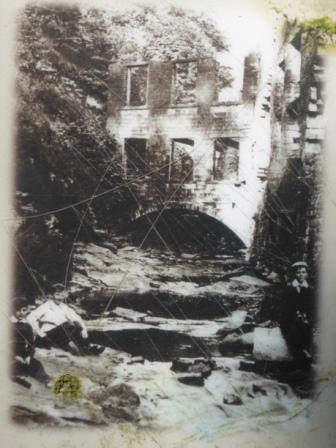
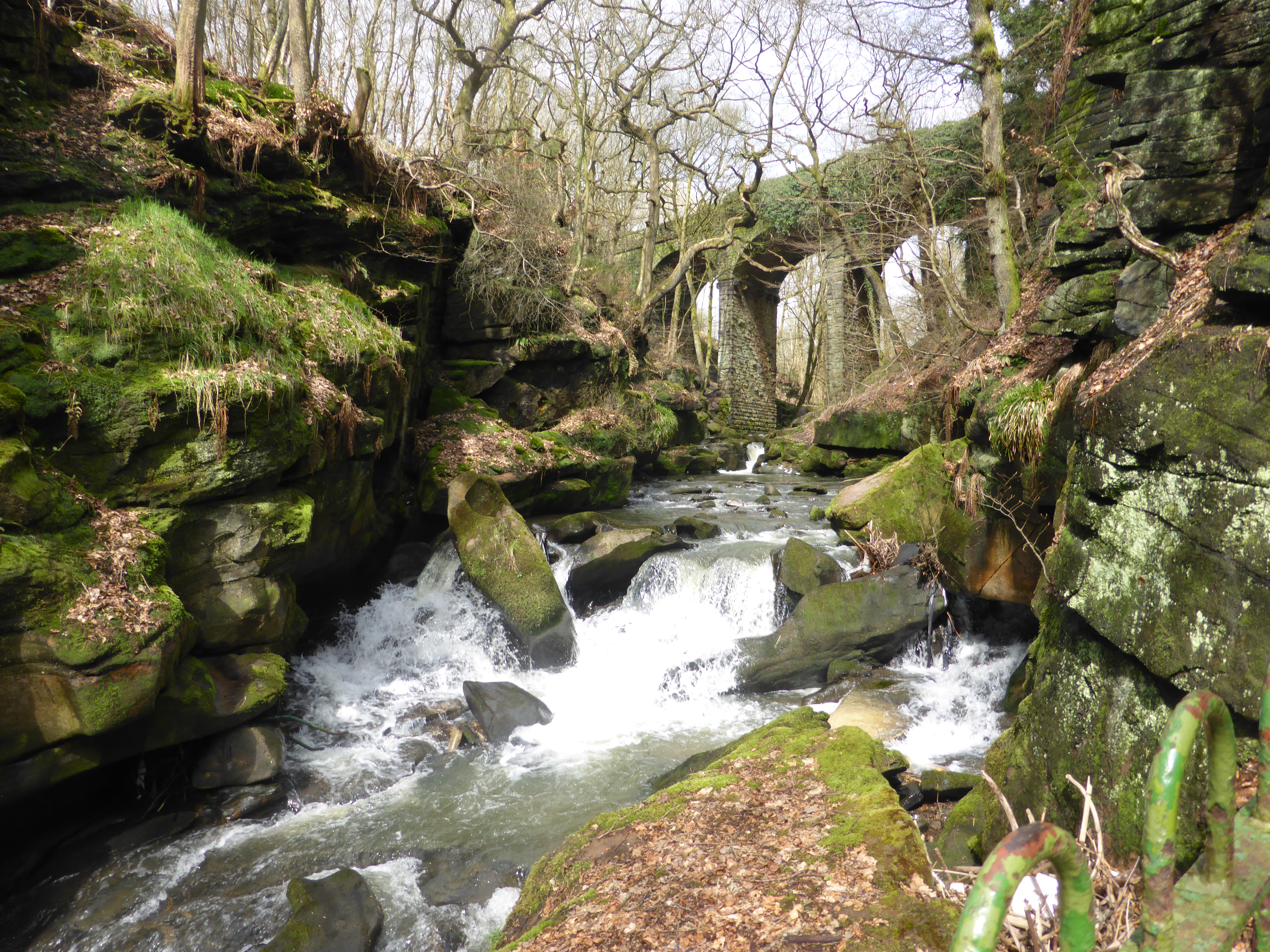
the old mill in the thrutch
over-run by rolling rapids,

white waters stir
in a wind-swept cauldron.

A voice between drops of water,
lichen and rocks

offers a glimpse
of another piece of world;

a handful of light,
sarcophagus and broken chair,

scattered flowers
offerings of souls

worshipful in a shared space,
remains of fairies and giants.

II.
When I think I have left
the voice calls me back

to speak my testimony
in that memory-place

cleft between dripping water,
rocks and lichen:

the fairies chapel
I will make my home.

GCV and Fairies Chapel Healey Dell 050 - CopyGCV and Fairies Chapel Healey Dell 125 - Copy

GCV and Fairies Chapel Healey Dell 062 - CopyGCV and Fairies Chapel Healey Dell 076

Invernith

My arrival is slow to wonder
initial disbelief
fading into silver-lined water
the mirror imprint
of Nith’s name a god in glass
becoming grey cloud
in the ether says
BELIEVE BELIEVE.

In the netherworld gloaming birds
shriek BELIEVE BELIEVE:
barnacle geese beat
black and white hearts against Crifell.
As the dark moon starts her slow pull
downward to Invernith
my fingers brush water
and touch a silver hand.

Invernith with Crifell

The Old Grey Man of Lancashire

He wears twigs for antlers,
a long wolfish face
and smile or grimace
trapped somewhere between.

His coat is staring and grey
as something dead for years.

A bottomless cloak
covers what he’d call his feet.

When he moves, he sways
like something blown in on the wind.

He staggers,
tilting like a chess piece,
holds out a black pad with yellow claws,
unable to unlock heavy jaws,
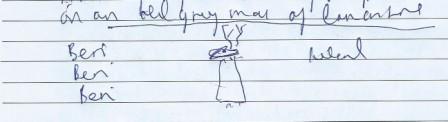
mumbles, “beri, beri, beri.”

His words are grey as the melting moor
fading with the sense
of his request or question.

Does he want berries,
or does he want me to bury him?

He shivers with the hills,
passes away into a crack of light.

~

I wrote this poem in July after a vivd dream where I saw the sketchy image below, there labelled ‘an old grey man of lancashire,’ in vivid purple on a black computer screen. After waking, I scribbled it in my dream journal.

The Old Grey Man of Lancashire


In the space between waking and dream before my alarm clock went off the scene in the poem came to me. Fans of Ted Hughes may recognise that I was immersed in ‘The Remains of Elmet’ at the time and this colours the imagery.

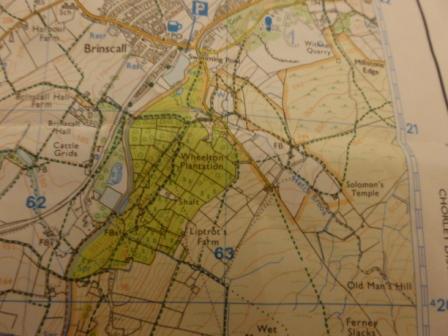
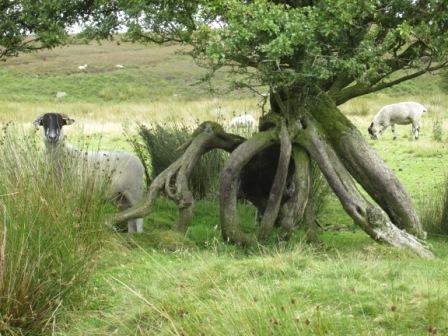
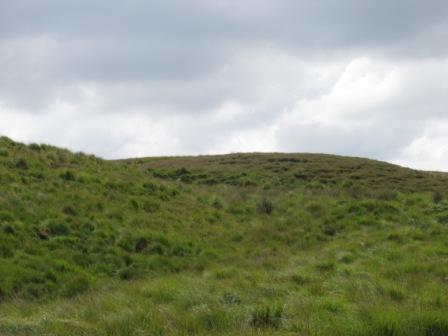
A couple of days later, planning a walk, I had an impulse to visit Brinscall. Getting the map out, I noticed nearby was Old Man’s Hill, which became the destination on a suitably grey Lancashire day. I encountered a ram beside a strangely rooted hawthorn but nothing extraordinary happened and I received no clear answer to my pondery.

Brinscall and Old Man's HillSheep, Brinscall MoorsOld Man's Hill

Spirits of Annwn fly over reaped fields

Spurned birds circle
fields weeping
for all that is good
in the world
gone

dry harvest
all the legions of the dead
strewn fallen scattered
let them seed
this world in the arms of their loved ones

the circles begin again
hearts cut in twain

by the reapers’ blades
hear them come
softly sweeping bare-footed
with the silence of a love song

pile straw onto carts

the hallowed dead
ascending in a cloud of wings

spirits of Annwn fly over reaped fields

then down and under
circling circling