Contemplating the Abyss Part Three – Abyss Mysticism

Abyssum abyssum invocat’ ‘Deep calls to Deep’
– Psalm 42:7

In the previous part of this series I wrote about the links I perceived between the Brythonic term for the ‘otherworld’, Annwn, ‘Very Deep’ and the Hebrew tehom ‘deep’ which is translated as abyssum ‘abyss’, ‘bottomless depth’ in Greek. 

My personal experiences with the Abyss and its appearances in the visions that formed the core of my attempted novel In the Deep suggest it holds profound significance for my calling as a nun of Annwn. Yet I’ve rarely come across other Polytheists and Pagans speaking of encounters with the Abyss*.

Therefore I was intrigued to find out not only that ‘abyss language’ occurs in the writings of medieval Christian mystics but that it has been conceived as ‘abyss mysticism’.

Bernard McGinn traces this movement from the twelth to the sixteenth century. ‘In the Psalm phase ‘abssyum abyssum invocat’ medieval mystics found a mantra for their meditations in the startling claim that the unknowable God and the human person could somehow become a single pure Abyss.’

One of the earliest proponents of these ideas was the Flemish Beguine Hadewijch of Antwerp (13th C). In Vision 11 she says:

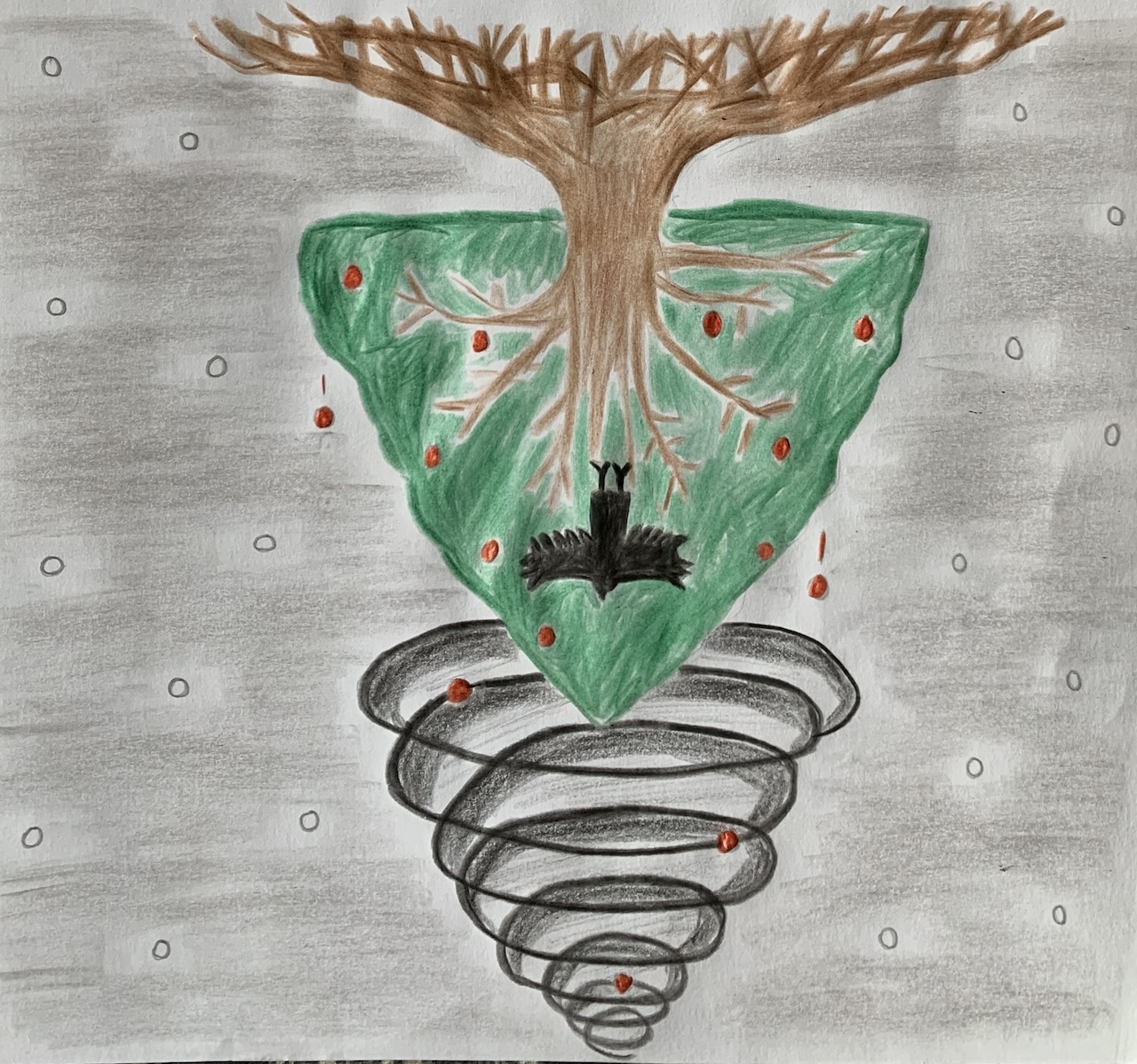
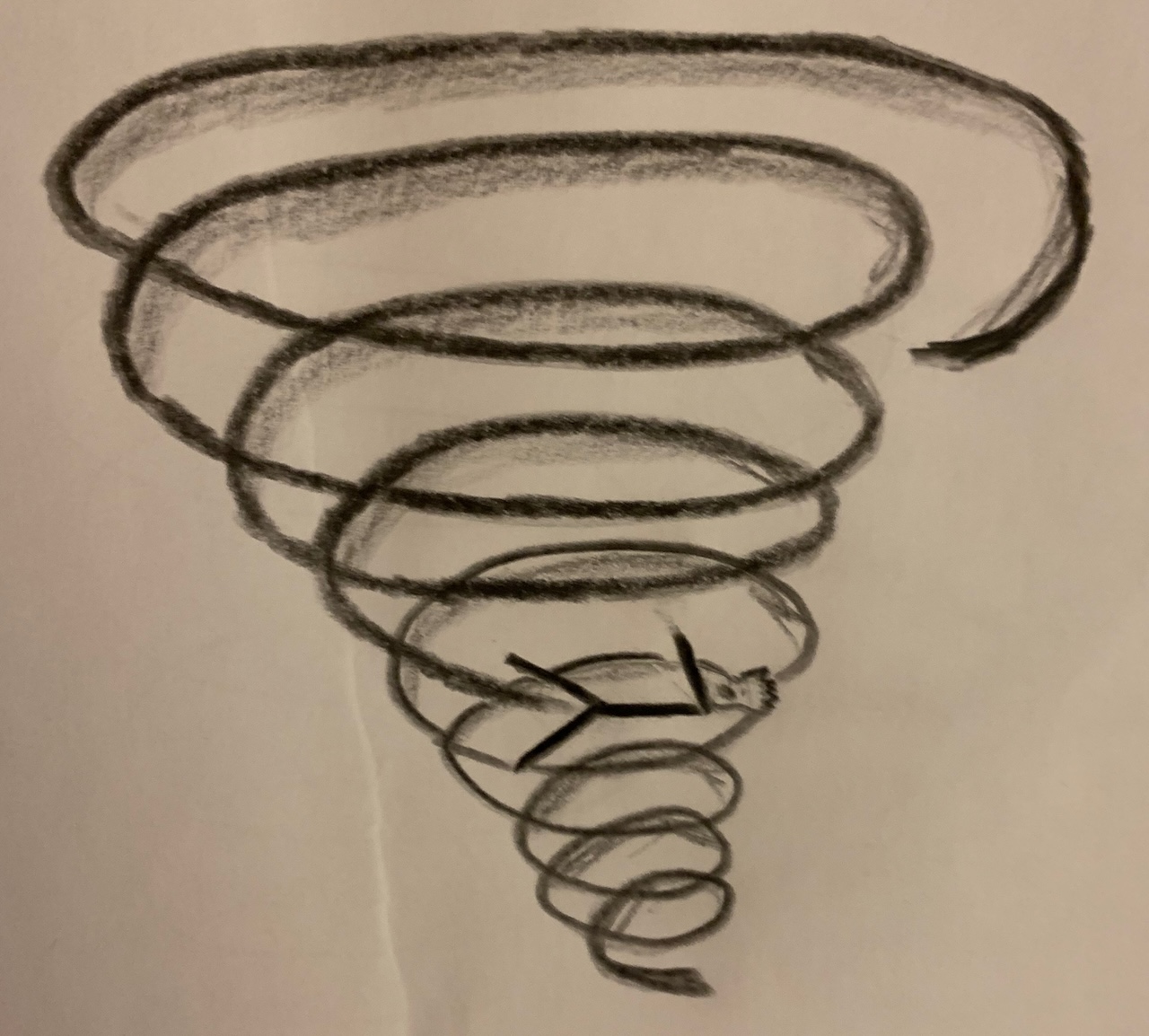
‘I was in a very depressed frame of mind one Christmas night when I was taken up in the spirit. There I saw a very deep whirlpool, wide and exceedingly dark; in this abyss all beings were included, crowded together and compressed. The darkness illuminated and penetrated everything. The unfathomable depth of the abyss was so high that no-one could reach it… It was the entire ominoptence of the beloved.’ 

And in Song 7:

‘My soul melts away
in the madness of Love;
the Abyss into which she hurls me
is deeper than the sea;
for love’s deep new abyss
renews my wound.’

Marguerite Porete, a French Beguine executed as a heretic in 1310 writes of her experiences of the Abyss in The Mirror of Annihilated Souls. For her love leads through six levels of purificatory practices to a state of self-annihilation in which she becomes ‘nothing’ and ‘finds there is neither beginning, middle nor end, but only an abyssal abyss without bottom.’ Finally the soul, ‘purified, clarified, sees neither God nor herself, but God sees himself in her, for her, without her.’ God sees himself in the mirror of her soul. 

The practice of annhilatio as a path to the Abyss and union with God also appears in the Liber specialis gratiae of Mechtilde of Hackeborn (1242 – 1298). Her friend, Gertrud, at her death bed realises why she cannot pass. She ‘would not be received into heaven until her strength had been utterly consumed and annihilated by divine power… Then putting off all insipidity of human nature, she would be plunged into that abyss of blessedness and deserve to be made one spirit with God.’

Angela of Foligno (1248 – 1309) follows a more penential practice of self-annihilation, following Christ in ‘poverty, suffering and contempt’, leading to the revelation of Christ as ‘Uncreated Love’ and a state of ecstasy referred not as annihilation but inabyssare. Angela speaks of a vision of her spiritual children ‘transformed into God… now glorious, now suffering… abyssated’ ‘into himself.’

The ideas of these radical medieval nuns were taken up by Meister Eckhart and his successors. The Dominican priest John Tauler (1300 – 1361) speaks of Psalm 42:7 in his sermons. In Sermon 21: ‘Here the word the prophet taught in the Psalter becomes true: “Abyssum abyssum invocat, the abyss draws the abyss into itself.” The abyss that is the created (thing) draws the Uncreated Abyss into itself, and the two abysses become a Single One… a pure divine being, so that the spirit is lost in God’s Spirit. It is drowned in the bottomless sea.’ In Sermon 45 he speaks of how annihilation leads into ‘the divine Abyss.’

Dominican friar Henry Suso (1295 – 1366) was the first to pray to God as Abyss. ‘O endless Abyss, come to my aid or I am lost.’ In the Life he speaks of the goal of the soul as ‘the Deep Abyss’. Intriguingly he speaks of a ‘God beyond God’. ‘In this wild mountain region of the where beyond God there is an abyss full of play and feeling for all pure spirits, and the spirit enters into this secret namelessness… it is a deep bottomless abyss for all creatures and is intelligible to God alone.’

In the work of Flemish canon Jan Van Ruusbroec (1233 – 1381) the Abyss performs a healing function. In a poem in Seven Enclosures he addresses God:

‘O mighty jaw
without any mouth,
conduct us into your abyss
and make us know your love,
for though we be wounded mortally
when grasped by love we are sound.’

When reading about these medieval conceptions of the Abyss I was struck by the notion of the soul annhilating itself for love to gain union with God. I found Van Ruusbroec’s idea of the Abyss as a ‘God beyond God’ (or beyond the Gods) fascinating. I was also surprised to see the Abyss, which for me has been terrifying, to be described as ‘divine’ and ‘blessed’, as a place ‘full of play’ and healing. 

In the final two parts I will be speaking about how the experiences of these medieval mystics relate to my own and to the Brythonic tradition.

*An exception is fellow polytheistic monastic Danica Swanson who writes of her encounter with ‘the Void, the Abyss’ in her essay ‘Of Hearth and Shadow’ in Polytheistic Monasticism (2022).

SOURCES

Barbara Newman, ‘Annihilation and Authorship: Three Women Mystics of the 1290s’, Speculum, Volume 91, No 3, (2016)

Bernard McGinn, ‘Lost in the Abyss: The Function of Abyss Language in Medieval Mysticism’, Franciscan Studies, Vol. 72 (2014), pp. 433-452

Grace M. Jantzen, ‘Eros and the Abyss: Reading Medieval Mystics in Postmodernity’, Literature and Theology, Vol 17, No. 3,pp. 244-264
Contemplating the Abyss Part One – ‘In the Deep’

The Abyss was its spiralling core and its beginning and its end. 

The Beginning

It began with a boy falling, falling, falling into the Abyss.

The boy dreamt of the birth of his Dragon Mother from the infinite waters of the Deep with nine heads and nine-hundred-and-ninety-nine coils and her giving birth to an infinitude of dragons, serpents, monster-serpents and monsters.

*

The boy dreamt of the birth of the stars – each the eye of a fiery giant. He watched them mating, spawning bright gods, who built their fortresses in the skies. The King of the Gods ordering the constellations with a turning sword. This god cast out, plummeting like a comet with an icy tail, down to the Deep. 

*

The boy dreamt of the god hanging in his mother’s coils over the Abyss to gain its wisdom. ‘There is no up or down or before or after – everything meets here in you the Dragon Mother.’ He watched them mate and knew he was conceived.

*

The boy dreamt of the Children of the Don descending from the stars to slaughter the Dragons of the Deep. Lugus, their leader, cut off the arm of his father, Nodens and slaughtered his Dragon Mother, Anrhuna. Lugus then tore the boy, Vindos, and his sister, Kraideti, from the womb. He stole Kraideti ‘the Girl who will Bring Life’ to the stars and threw Vindos ‘the Boy who will bring Death’ into the Abyss.

*

The boy awoke and crawled from the Abyss to eat his Dragon Mother’s heart in a rite that made him King of Annwn (he later gained his name – Vindos / Gwyn ‘White, Blessed, Holy’).

The End

Vindos killed Lugus as vengeance for slaying his Dragon Mother. Lugus took flight in the form of an eagle and perched wounded in an oak tree for nine nights with a sow beneath feasting on the rotten flesh and maggots from his wound. 

Uidianos sang Lugus down from the oak with three englyns and restored him to life.

Lugus returned the blow, shattering the Stone of Vindos, to pierce his enemy’s side. Vindos took the form of a raven and flew to Annwn where he hung wounded on a yew tree upside down over the Abyss and answered its riddles.

Night One: 

“Tell me
the hour the King
and Queen of Annwn
were born.”

“Not easy –
we were not born 
but ripped from the womb 
on the hour of the death 
of dragons.”

*

Night Two:

“Tell me
in your eternal
battle who killed
who?

“Not easy,
summer and winter
are mirrors – when one
kills the other kills 
too.”

*

Night Three:

“Tell Me
how many trees
are in the forests
of Annwn?”

“Not easy,
for they are without
number but ask me again
and I will name
them.”

*

Night Four: 

“Tell me
how many doors
there are to
Annwn.”

“Not easy,
for they are without
number but ask me again
and I will open
them.”

*

Night Five:

“Tell me
where divide 
darkness and light,
day and night?”

“Not easy,
for there are no
divisions – each follows
each in an endless
procession.”

*

Night Six: 

“Tell me
where the restless wind 
comes from and where
he rests.”

“Not easy,
for no-one but he
knows the location of the Lands
of the First and Last
Breaths.”

*

Night Seven:

“Tell me
how many 
stars are in the
Heavens.”

“Not easy,
for they will not
be counted until all
souls are in the
cauldron.”

*

Night Eight:

“Tell me
the fate of
your last drop 
of blood.”

“Not easy,
for I cannot divide it
from the ocean of blood
that will drown
the world.”

*

Night Nine:

“Tell Me
the hour the King 
and Queen of Annwn
will die.”

“Not easy –
we cannot live without 
each other and thus will die
together when all souls
are gathered.”

*

Vindos then fell into the Abyss.

These scenes had a basis in my personal encounters with the Abyss. I will be talking about those in part two, then in part three and four presenting my recent discovery of ‘Abyss Mysticism’ in the writing on medieval monastics and how this has helped me make a little sense of the abyssal visions behind this book.

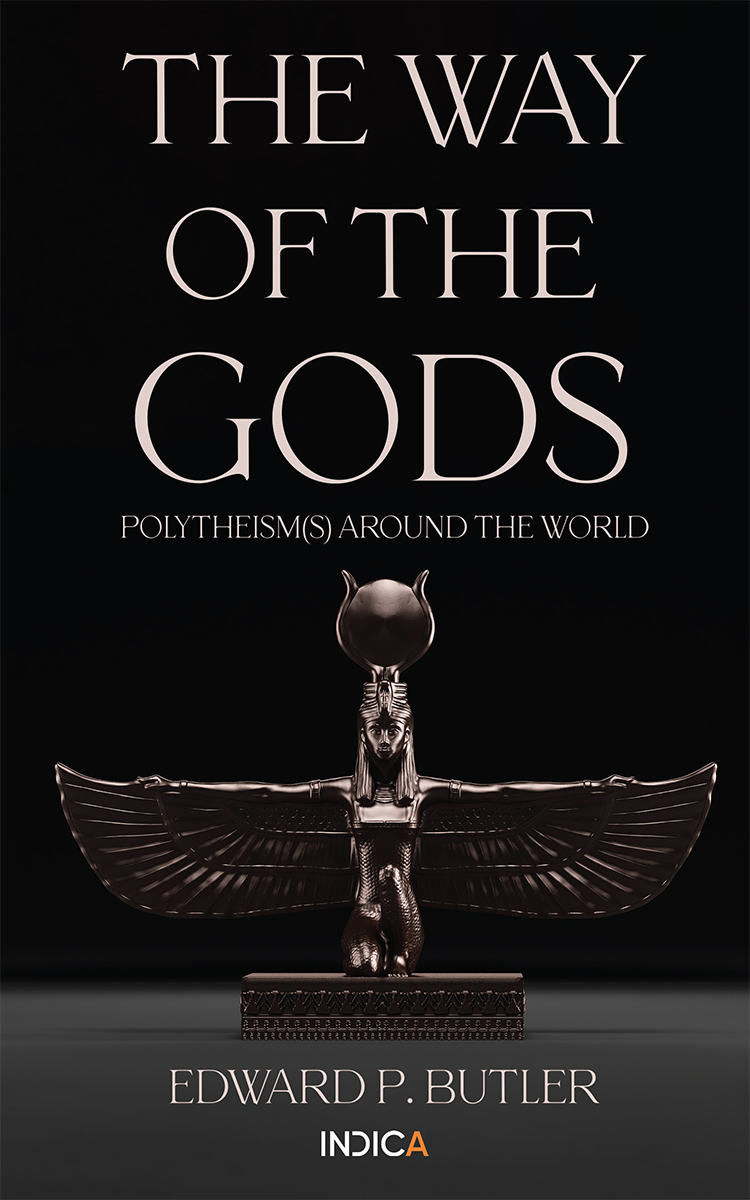
Review – The Way of the Gods by Edward Butler

In The Way of the Gods philosopher and polytheist Edward P. Butler provides an introduction to polytheisms around the world. This book originated as a course he delivered for the Center for Global Polytheist and Indigenous Traditions at INDICA*.

It contains fifteen chapters covering India, the Mideast, Hellenic and Roman Polytheism, Northern Europe, Ancient Egypt, African Traditional Religions, South America, Mesoamerica, the African Diaspora, North America, Oceania and New Zealand, Australia, Southeast Asia, Japan and Korea and China. 

It is unique within academia as, from the start, Butler states his standpoint as a polytheist who believes the Gods of all the world’s traditions are real**. Thus for him these religions are not ‘solely a matter for historical study’ but embody ‘eternal relationships to the Gods whom they address.’ 

Throughout the book Butler makes clear that the terms ‘polytheism’ and ‘Gods’ are not used to ‘determine the self-understanding’ of non-Western cultures. Consistently he provides the indigenous terms for the religions and deities of each culture. He notes his use of ‘Gods’ is to ensure their divinities are not seen as lesser than the Christian God or reduced to pantheistic concepts. He also notes the Western mistake in the labelling of cultures as animistic in a way that sets up a false opposition between animism and polytheism, leading to the supposition that cultures that have spirits have no Gods.

In each chapter Butler provides a history of the polytheistic traditions of the cultures of his chosen geographical areas. It is noted that whilst some have continuity (such as ‘India, ‘home of the largest polytheistic tradition in the world… Hinduism’ and Australia ‘the longest continuous tradition on Earth) many others (such as Greek and Roman and Egyptian) are sundered. Butler does not flinch from speaking of the oppression most polytheistic traditions have suffered, and some still suffer, under the hegemony of Christianity. 

The chapters begin with core readings and many are on creation myths such as Enuma Elish, Theogony, Gylfaginning, Kumalipo and the Popol Vuh. Butler provides studies of these cosmogonies showing how several originate with ‘water’ as ‘a much broader cosmic phenomenon’ and ‘result in the emergence of a hierarchical or layered reality’. ‘Every cosmogonic myth is a doctrine concerning Being’. He notes the similarities and differences between the African cosmogonies where the Creator withdraws into the sky opening up a space for further action and the threat of the falling sky in South America due to the decline of spiritwork which maintains the supports. 

Throughout Butler emphasises that myth does not relate to some distant past but is ‘always now’. Western scholarship has tended to favour diachronic interpretations and linear narratives to those that are synchronic. Rituals, such as the recitation of Enuma Elish ‘on the fourth day of the Babylonian New Year’, allow for participation in this eternal now with the Gods.

Different approaches to ritual and spiritwork are presented. One of these is the Yoruba tradition of Vodou from the African Diaspora. Herein there is a single pantheon of Orishas (from ori ‘head’ and sa ‘selection or choice’). Divination reveals the patron deity as ‘the owner of the head’. One of the practices is the mounting or possession of the devotee by one’s God.

This book provides a fascinating introduction to polytheisms around the world. It is meticulately researched and respectful to each of the cultures and their Gods. As a philosophy post-graduate I particularly enjoyed Butler’s analyses of the cosmogonies in the creation myths and discussions about the rich philosophical traditions these polytheisms have given birth to.

I would recommend The Way of the Gods to all polytheists who want to learn more about our world-wide polytheisms and to anyone interested in the subject. I found having prior knowledge of basic philosophical concepts helpful but it is accessible to all with a dictionary to hand.

It also a beautiful act of devotion in itself from a practicing polytheist who states his ‘life work is the study of polytheism and polytheistic traditions’.

*https://indica.in/
** This contrasts with the majority of academics who keep their personal spiritual and religious beliefs separate from their academic work.

Composting with Ceridwen

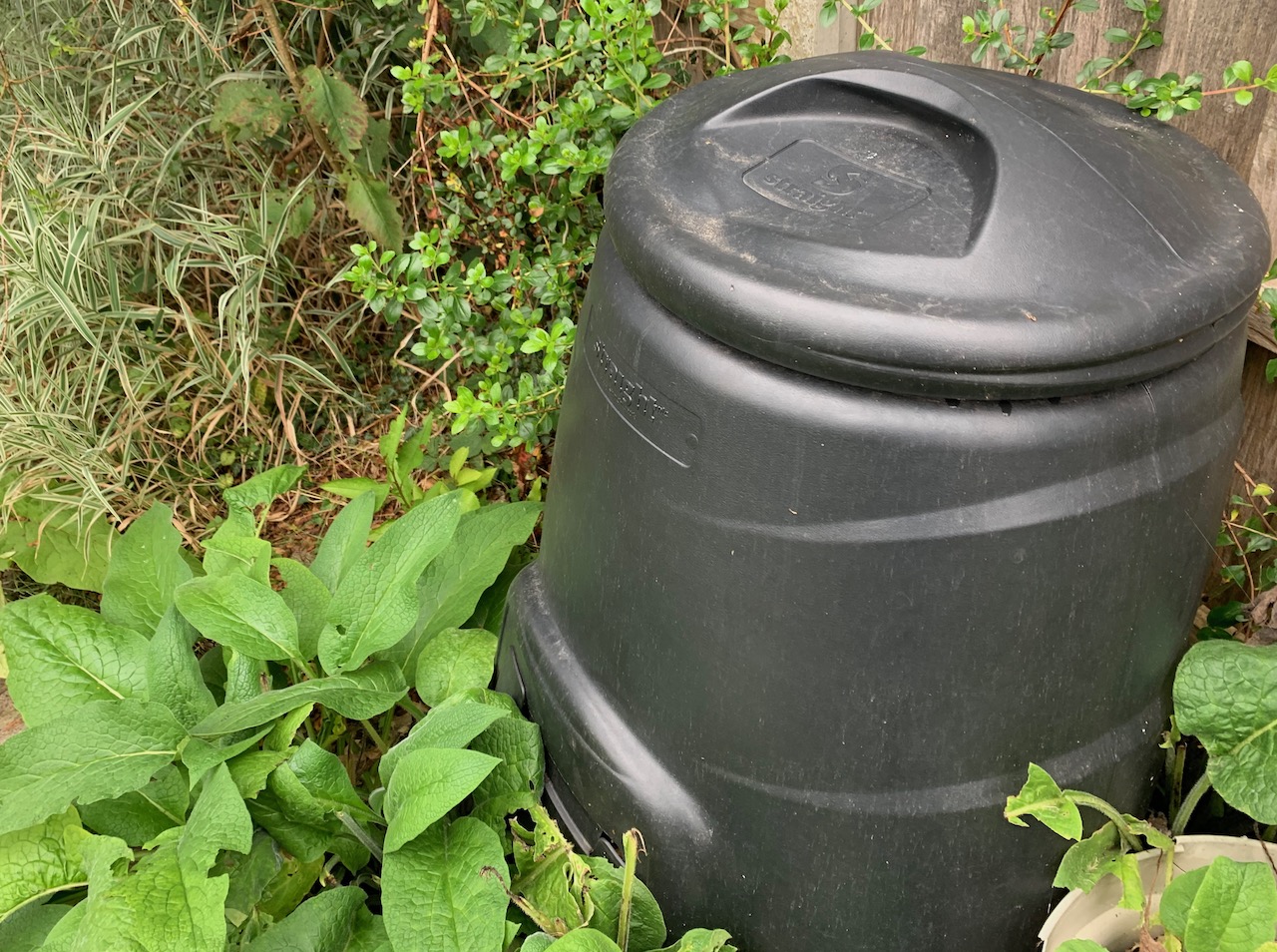
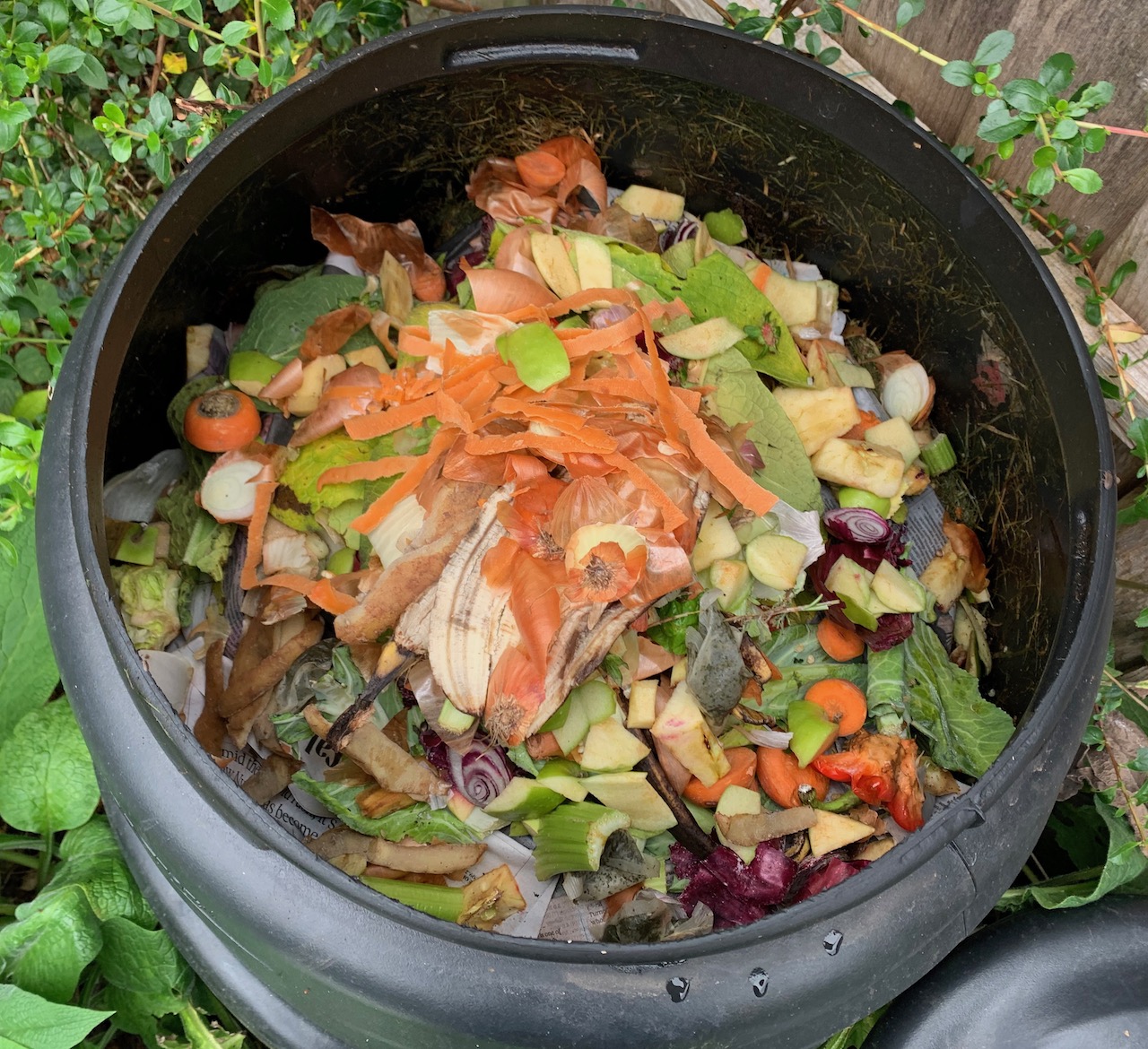
A couple of years ago our local council stopped taking our food waste for recycling so we decided to get a compost bin. Over this period I have come to associate it with Ceridwen. She has revealed Herself to be not only a Goddess of the Cauldron, a vessel used for cooking, but of a number of other vessels of transformation including our compost bin which takes the bits of food that don’t go in the cauldron (apple cores, onion skins, potato peelings, carrot tops etc.) and turns it into compost for our garden.

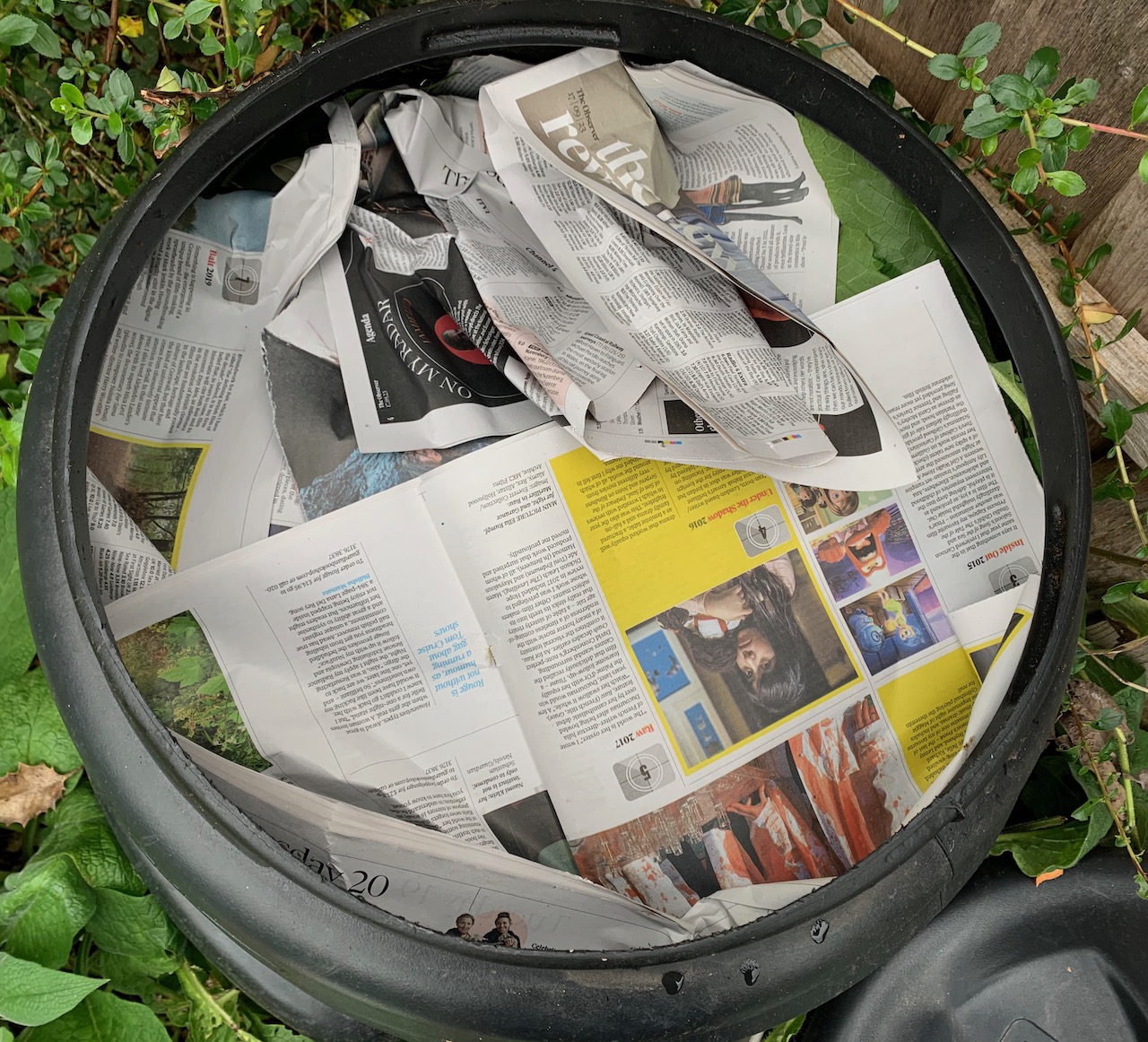
I’ve felt Her presence as I’ve learnt how it works, what it likes and dislikes, how to get a healthy balance of the food waste with greens (vegetative material) and browns (paper and cardboard) to make good compost.

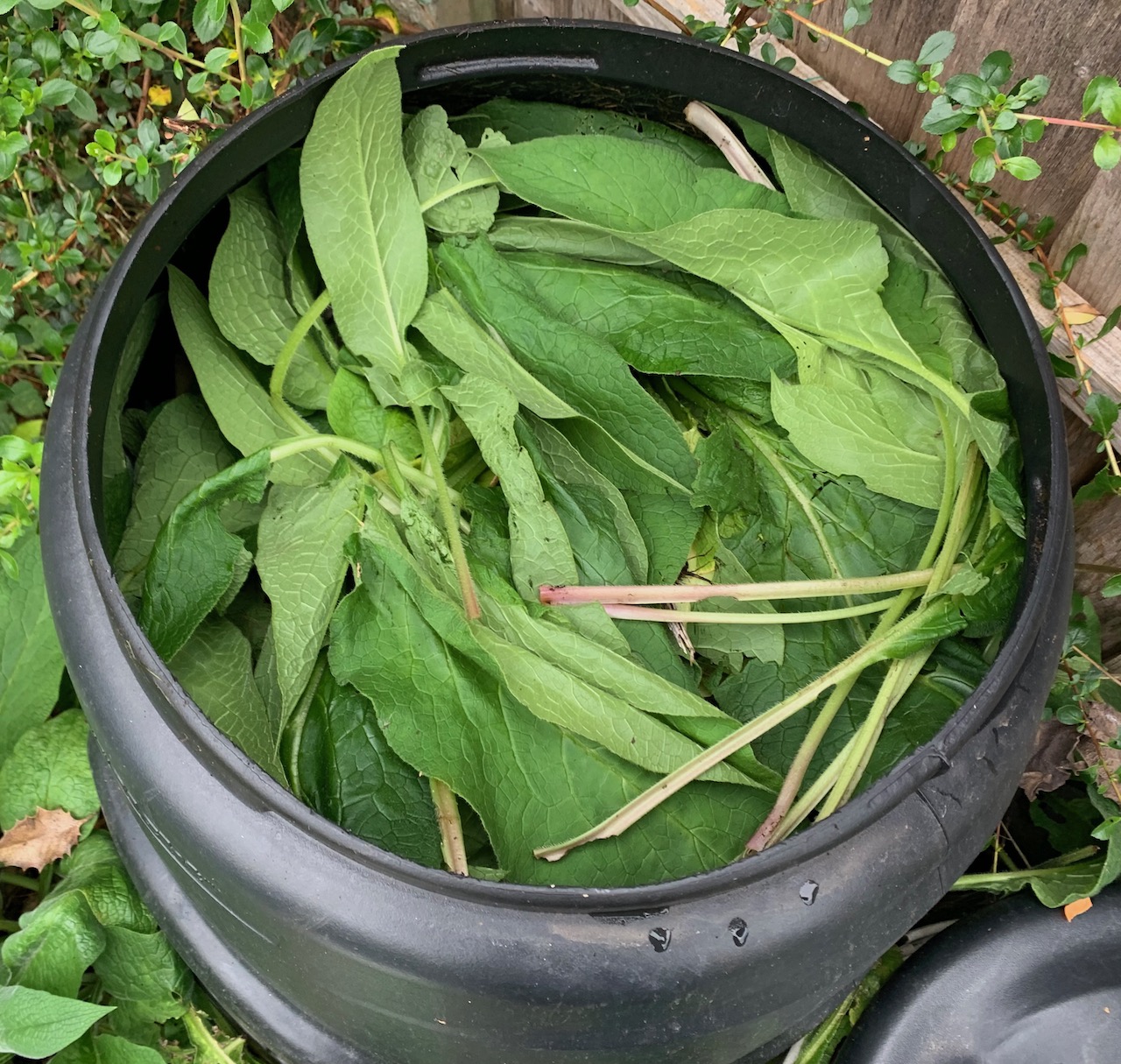
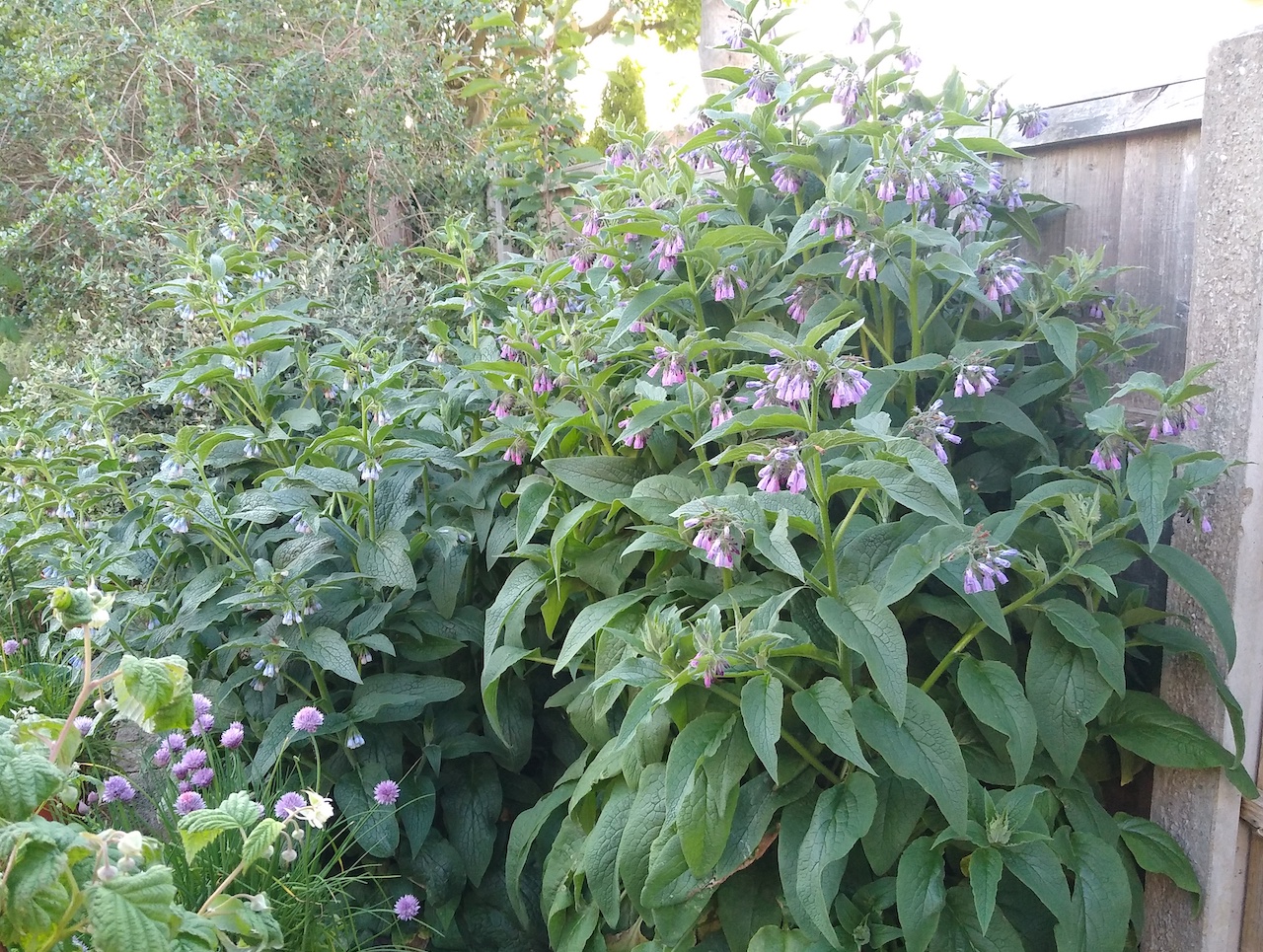
One of the startling things that happened was that the comfrey plant I have kept in a pot nearby for many years seeded a number of new plants in the cracks around the compost bin. I thought about pulling them up before I realised comfrey leaves make really good compost and the plants had come to help. They felt like a gift and I believe they are likely to be included in the 365 herbs from which Ceridwen brewed awen.

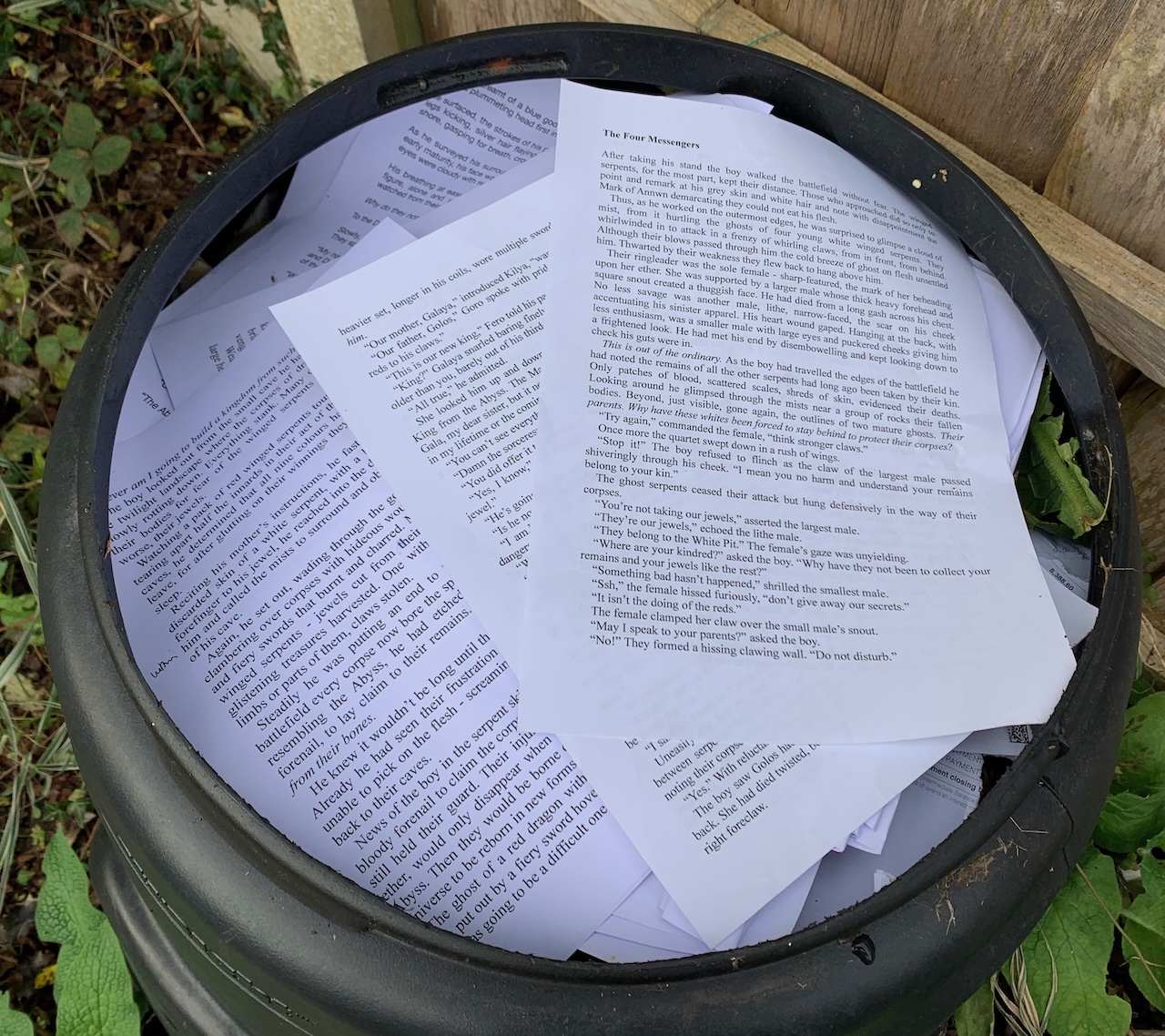
As the weather grows colder composting time has to an end. The last thing I put into the bin were the pages from my novel-in-progress, In the Deep, which isn’t to be, at least in that format. It feels right to be returning them to Ceridwen, Goddess of the Awen. I pray they will make good compost.

Evidence of Monks of Annwn in The Book of Taliesin?

Inbetween my decision to rewrite In the Deep and beginning I decided to return to some of the source material. I had been avoiding The Book of Taliesin for a long long time because, as a devotee of Gwyn ap Nudd, a King of Annwn, I find his support of Arthur in the raiding of Annwn (1) and of Lleu and Gwydion in battling against Annuvian monsters (2) incredibly emotive.

Still, I took another look, and didn’t find anything I hadn’t remembered. And Taliesin’s warmongering and bragging had got no less annoying.

Then, when, I was out running this morning I found my mind wandering to Taliesin mocking ‘pathetic men’ (monks) who do not know when God / the Lord, potentially Pen Annwn ‘Head of the Otherworld (3), was born / created then referring to monks who ‘congregate’ or ‘howl’ (4) like a pack of dogs’ and ‘like wolves’ ‘because of the masters who know’ the answers to certain riddles such as ‘the wind’s course’, ‘how the light and darkness divide’.

I had always assumed those monks were Christians but as I was running the question came into my mind, ‘What if they were monks of Annwn?’ 

*

My first intimation of the possibility of the existence of previous monks and nuns of Annwn occurred during my night long vigil for my lifelong dedication to Gwyn.

I spent the first six hours alone in my friend’s living room drawing a card from the Wildwood Tarot for each hour. My first card was the Four of Vessels – Boredom. Disappointing. But not unexpected. So I sat and surrendered to the likelihood the first hour was likely to be very boring. But instead of getting bored I got very lonely and found myself lamenting that I had no tradition to follow, no-one else for support in making such deep vows to Gwyn.

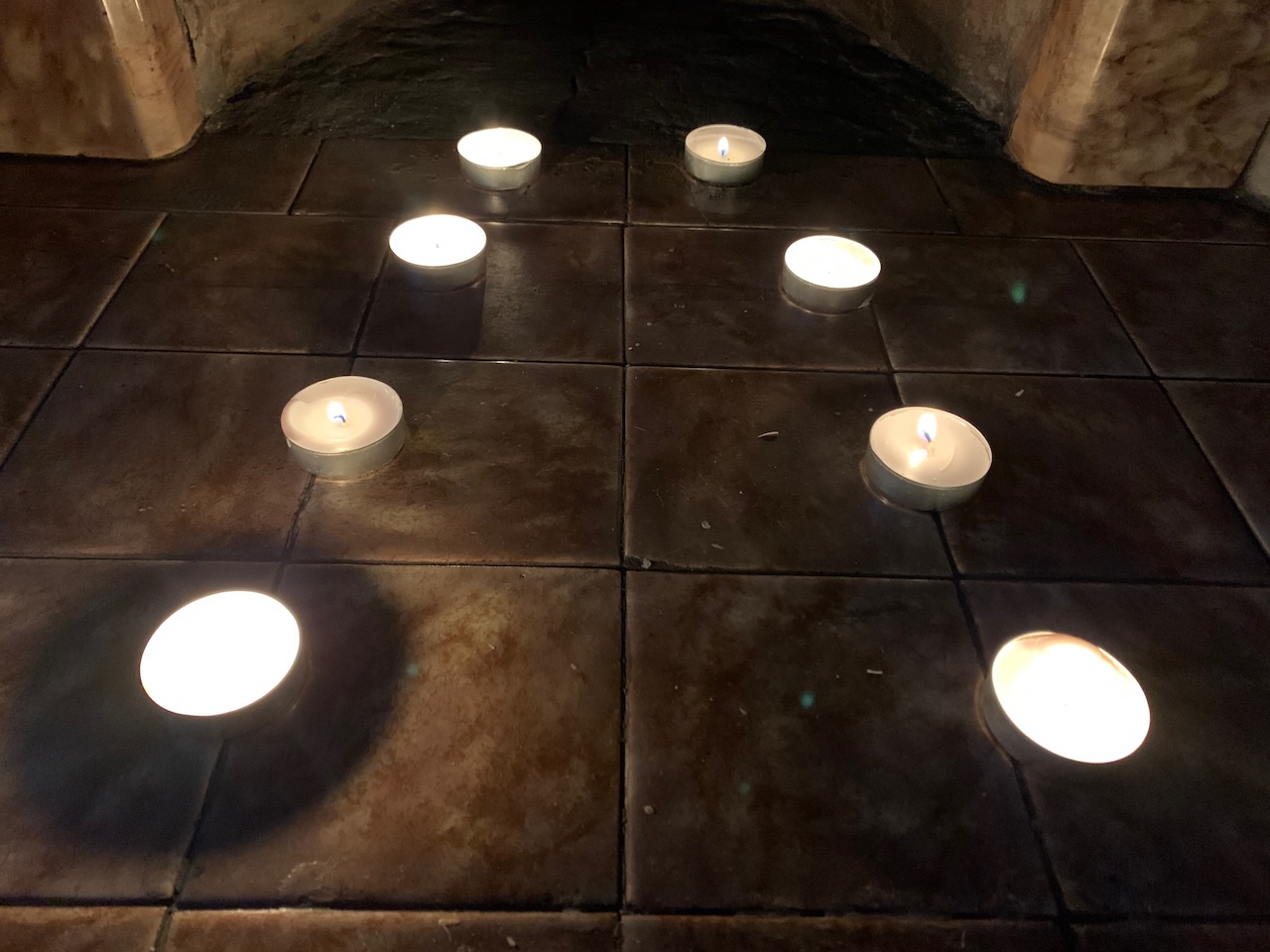
Then I had a vision. I was no longer alone. I was in some kind of underground shrine, chapel, or tomb, with long lines of monks and nuns wearing dark robes carrying candles before and behind me. 

I had always thought they were monastics from other traditions who walked similar paths and had come to provide me with company but now I’m wondering if they might have been past and future monastic devotees of Annwn.

*

This reasoning might seem a bit wild particularly considering there is no evidence for monks or nuns of Annwn in Brythonic literature or lore. 

However, if we look at those lines from Talieisn, first off we find them in Preiddeu Annwn ‘The Spoils of Annwn’ wherein the bard accompanies Arthur on his devastating raid on Gwyn’s realm from which only seven return. 

Secondly, the monks are exhibiting extremely strange behaviour for Christians – congregating or howling like dogs or wolves. This would make far more sense if they were devotees of Gwyn who is associated with a red-nosed hound called Dormach (5) and the Cwn Annwn ‘Hounds of the Otherworld’ (6) and whose father, Nudd, is referred to as ‘the superior wolf lord’ (7).

Thus, it might be argued, Taliesin is taunting monks of Annwn with accusations of not knowing the mysteries of their God – Pen Annwn – when He was born / created, of the source of the wind, the division of light and darkness. These seem bound up with Annw(f)n (from an ‘very’ and dwyfn ‘Deep) as the primordial reality that ‘underlies or underpins our known universe’ (8).

*

Even further, another of Taliesin’s taunts, is that they do not know ‘how many saints are in the void, and how many altars’. Again it would seem odd if saints and altars were consigned to ‘the void’ rather than raised to the Christian Heaven. If they were Christians… yet the consignment to the void of Annuvian saints and altars would make a lot more sense. 

Read into this more deeply and we find the disturbing possibility there existed monastic devotees of Annwn with saint-like qualities who with the altars of their Gods were committed by the likes of Taliesin and Arthur to the void. 

It is notable here ‘void’ is translated from diuant ‘space, void, annihliation, death’. These monastics have not returned to Annwn, ‘the Deep’, the regenerative deep home of their God but have instead been annihilated. Their names and memories chillingly wiped by Christianity from existence. 

Could it be their voices I hear from the void at this time the veil is thin?

(1) In ‘The Spoils of Annwn’, 
(2) In ‘The Battle of the Trees’.
(3) Potentially the Christian God but another possibility is Pen Annwn, the Head of the Otherworld, as in the second instance ‘Lord’ is translated from Pen.
(4) Margeret Haycock’s translation reads ‘congregate’ and Sarah Higley’s ‘howl.’
(5) In ‘The Conversation of Gwyn ap Nudd and Gwyddno Garanhir’.
(6) In the story of Iolo ap Huw in John Rhys Celtic Folklore. 
(7) In ‘The Pleasant Things of Taliesin’. 
(8) Kristoffer Hughes, ‘The Thirteenth Mount Haemus Lecture: Magical Transformation in the Book of Taliesin and The Spoils of Annwn’.

Meditating Gwyn

My breath with Your breath,
my heart with Your heart,
my feet on Your path,
You and I as one.

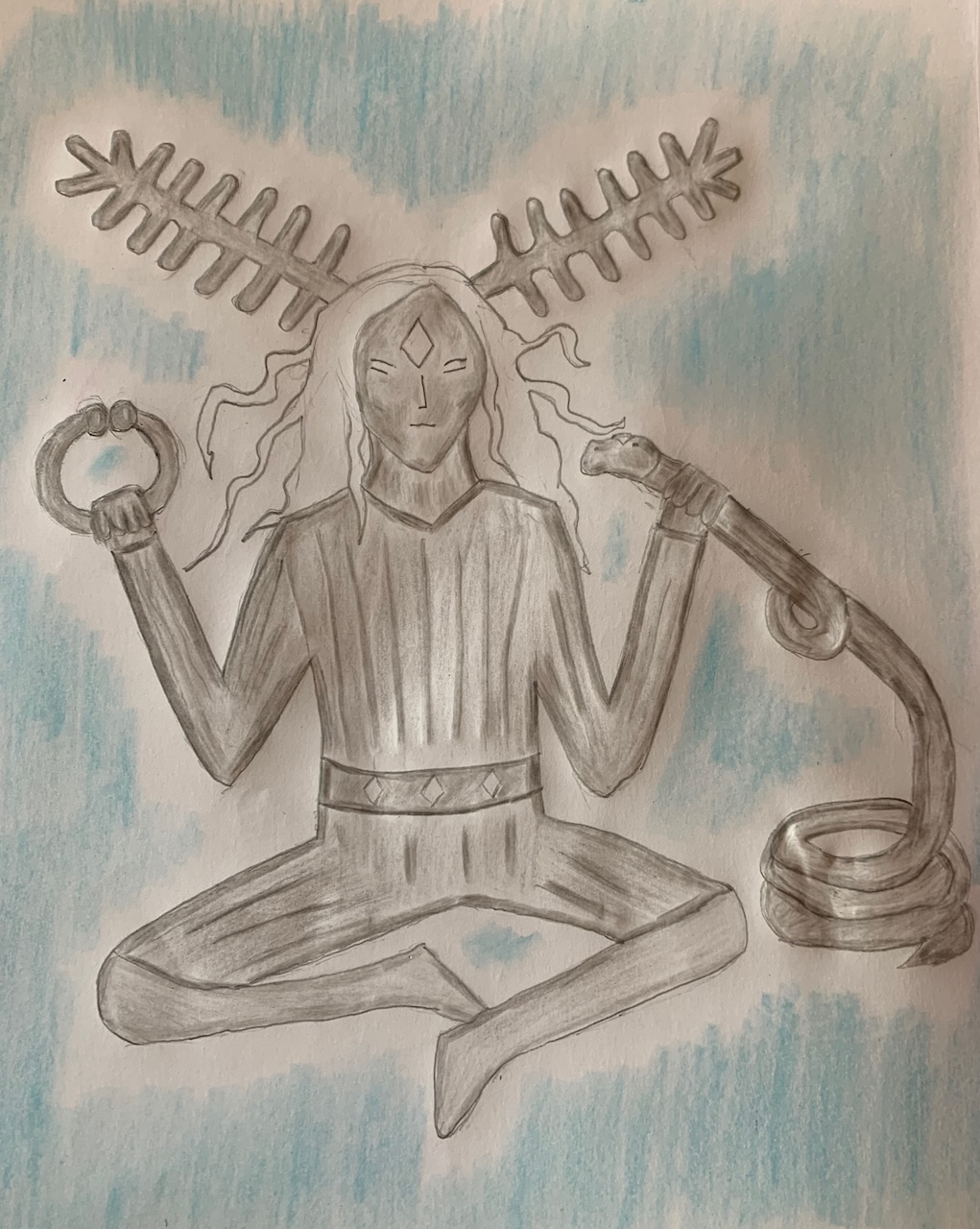
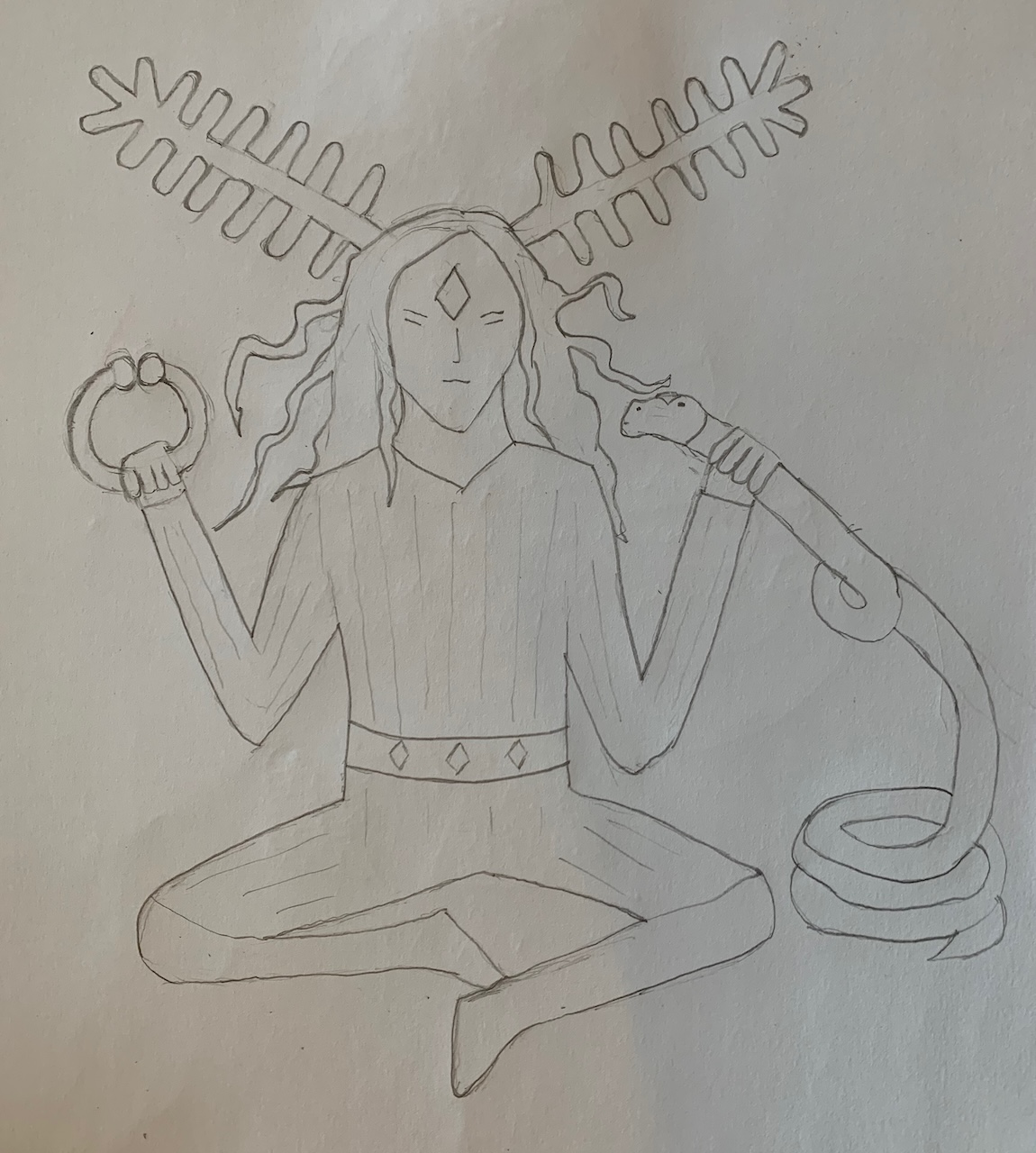
This piece of devotional art represents a face of my patron God, Gwyn ap Nudd, who I know as Meditating Gwyn and the Inspirer. Gwyn first appeared to me in this form when I started to take seated breathing meditation seriously after finding techniques that worked for me from yoga.

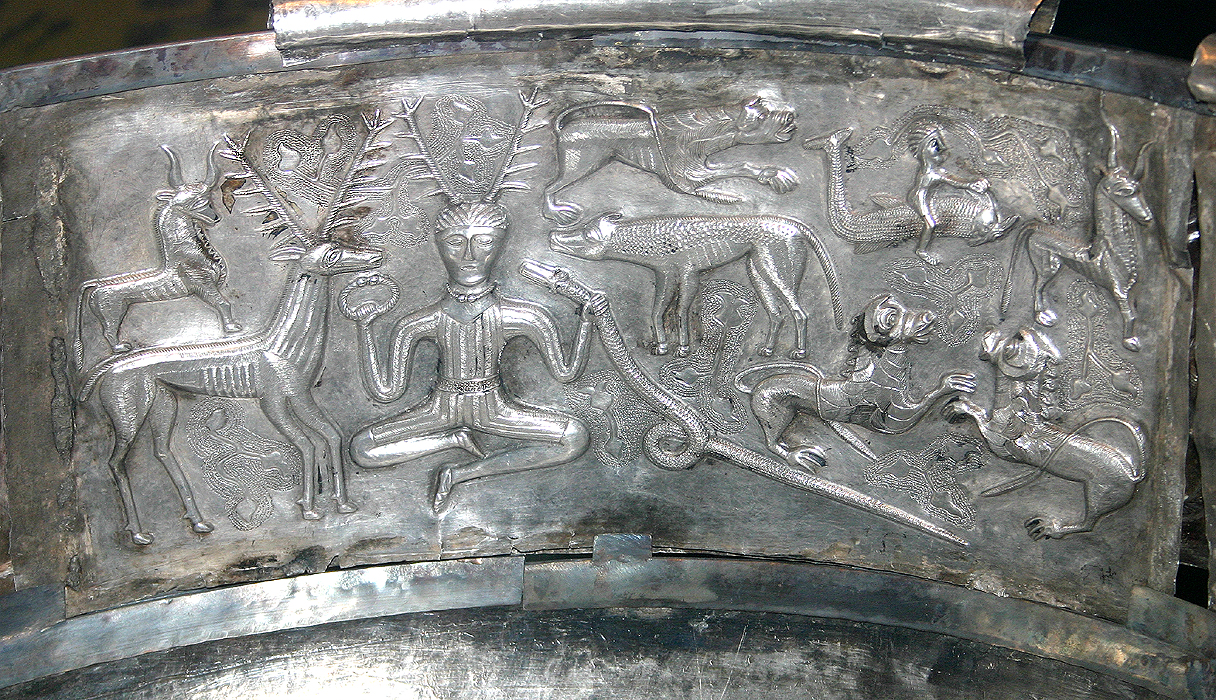
Several years ago I received the gnosis that the meditating deity on the Gundestrup Cauldron is likely to be Gwyn (who may also be Cernunnos ‘Horned’ by another title) and Gwyn’s appearance in this guise confirmed it.

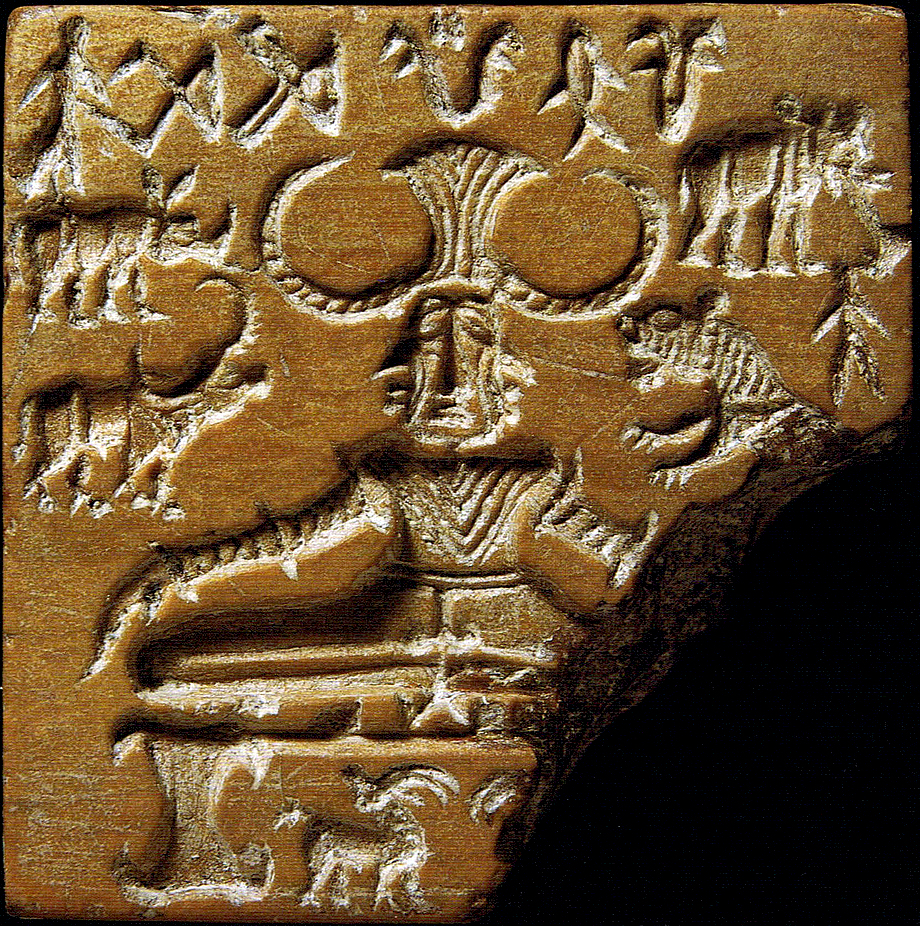
I had not thought of Gwyn, as a warrior-hunter God who gathers the souls of the dead, as being associated with meditation until He took this apparel. Yet it made sense in terms of my experience of Him paradoxically being not only the storm of the Wild Hunt but the calm at the heart of the storm. It also ties in with His likeness with Shiva, the Hindu Lord of Yoga, with them both being creator-destroyers with connections with bulls and snakes/serpents depicted in similar poses.

Since then Gwyn has continued appearing to me in this guise when I meditate, helping me to align my breath with His breath, my heart with His heart, keep my feet on His path and enter union with Him.

Whilst this image resembles the image on the Gundestrup Cauldron in many ways, it differs in others. You will probably notice Gwyn’s antlers don’t look like real antlers. They look more like radio antennas. I asked Him about that and He said it represents His ability, when meditating, to tune into what is happening in Thisworld and the Otherworld and sense the deaths of those whose souls He needs to gather.

Gwyn and the serpents have jewels in their foreheads. This addition has come to me in personal gnosis as I’ve journeyed with Him into the deep past, before the world was created, before humans, when He lived in Annwn amongst serpents. He and the serpents all had these magical jewels. I found no evidence of this for a long while until I saw a bronze head with a forehead jewel from Furness, Lancashire in Pagan Celtic Britain. I then learnt the serpent associated with Shiva, Nandi, has a magical forehead jewel. There are also three jewels in Gwyn’s belt which, to me, are the three stars in the belt of His constellation, the Hunter (Orion).

He wanted hair. Although Gwyn is not pictured on a cauldron I kept His silver-grey apparel as I see Him as having grey skin in His more primordial form (Creiddylad has green skin, Nodens/Nudd blue, Anrhuna grey) which I later realised fits with representations of the Gods in the Hindu and Buddhist yogic traditions.

This image on the Gundestrup Cauldron has also been associated with awenyddion ‘people inspired’ who likely used meditation and journeywork to travel to Annwn to bring back inspiration for their poetry. I see it as an image of Gwyn as the Inspirer which can be imitated by His Inspired Ones.

Vow Beads

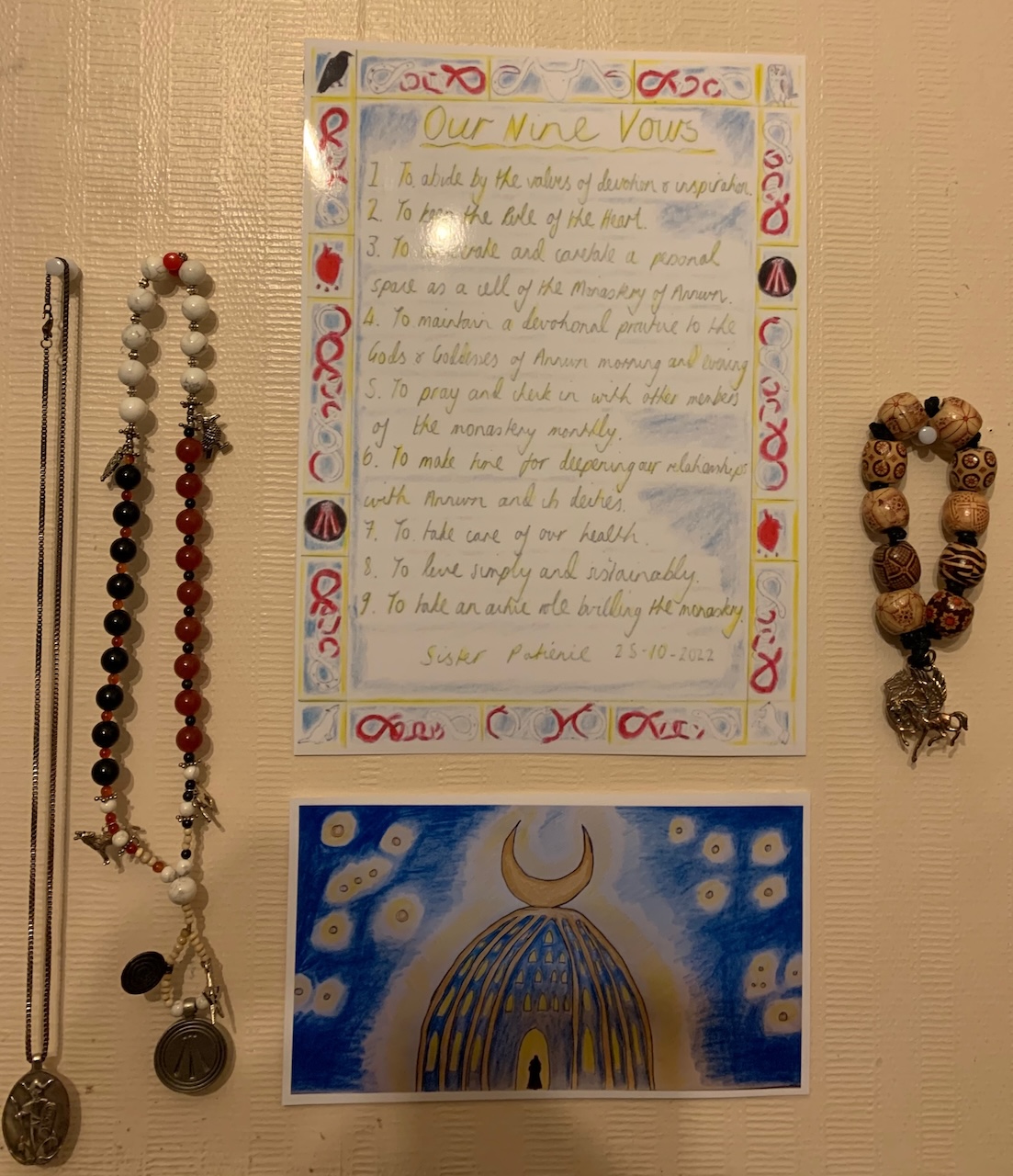
Last week, in preparation for taking or retaking vows at the Monastery of Annwn, one of our monastic devotees led an online prayer beading session threading beads relating to our nine vows.

I received my first set of beautifully crafted prayer beads from my friend, Aurora J Stone, as a gift for taking my initial vows. I use this set to connect more deeply with Gwyn and the mysteries of Annwn.

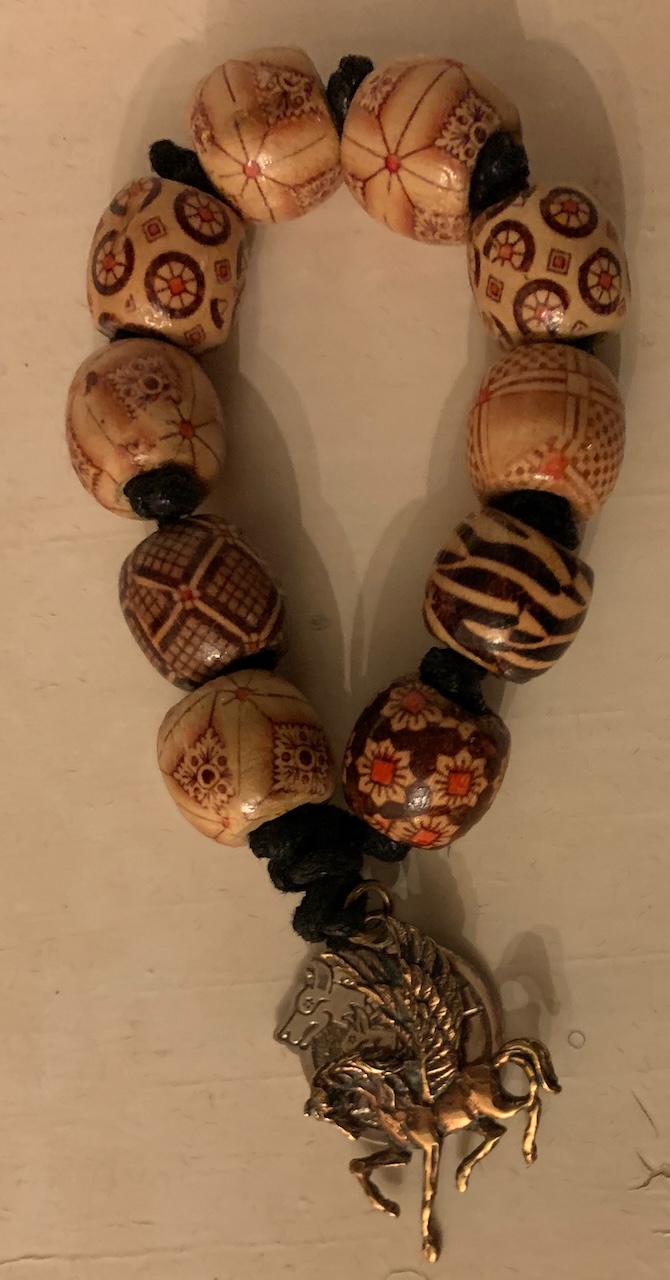
Therefore I decided to make a simpler set to represent the vows. I chose nine wooden beads from a local supplier, with knots between them, and added the pendants of my winged horse and Annuvian hound spirits (which had lost their original ‘home’ as the necklace I wore them on had broken). For me this represented a physical binding, with the black cotton string, of my monastic vows with my spirit guides.

I am hoping that, together, they will guide me through the next three years of my temporary vows. I will be consecrating them when I take those vows on the new moon on Saturday.

On Not Feeling Monastic Enough

During my discernment process around my temporary vows I have been struggling with not feeling monastic enough. Worrying our vows at the Monastery of Annwn are too ‘lite’. That I haven’t suffered enough, sacrificed enough, that my life of devotional creativity is too much like fun.

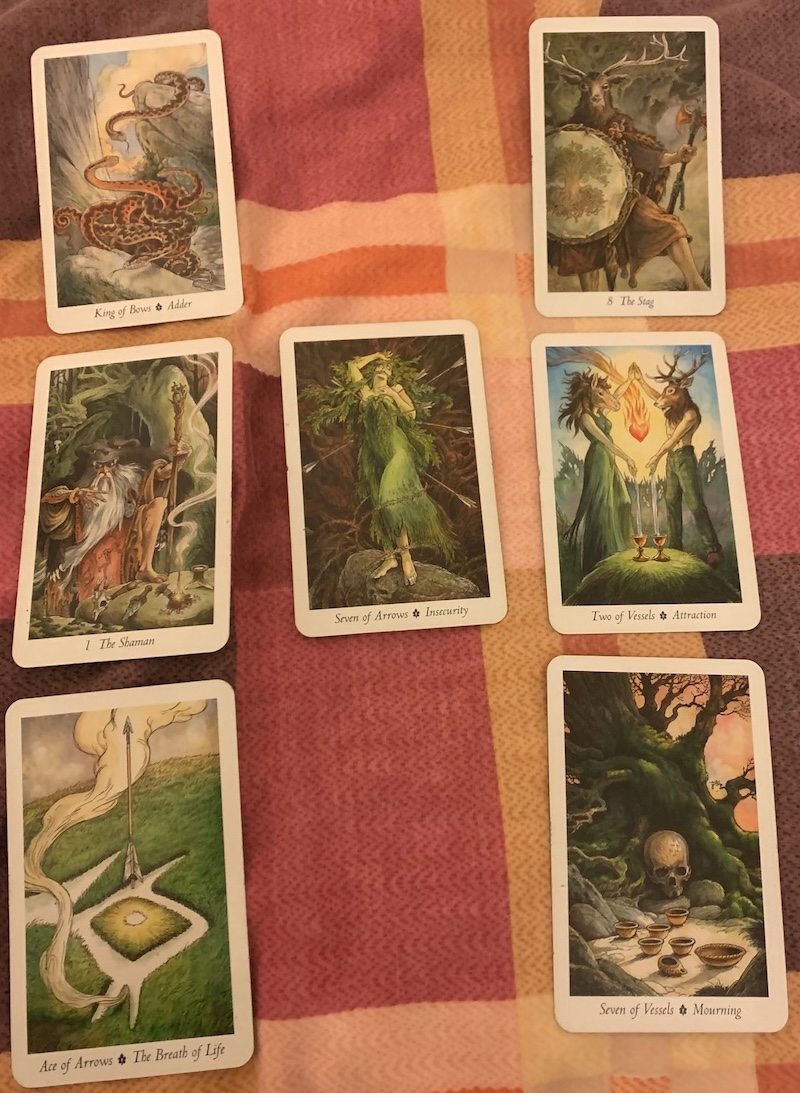
Reflecting on whether my life is monastic enough in relation to other traditions such as Benedictine and Carmelite Christians who pray Divine Office seven times a day I asked Gwyn by divination whether He is happy for me to continue focusing on devotional creativity or if he wanted me to give up more of my time to regulated prayer. I received the following answer.

For myself as querent (centre) I got 7 of Arrows Insecurity. This suggested my asking this question is based on insecurities around not feeling monastic enough.

For creativity (left) I first got Ace of Arrows – The Breath of Life. A clear sign this is where my inspiration lies. Secondly 1. The Shaman. A powerful card showing I must continue to bring wisdom from the Otherworld through my writing. Thirdly King of Bows – Adder representing magical and serpentine energies and the snakes and serpents prominent in my books. 

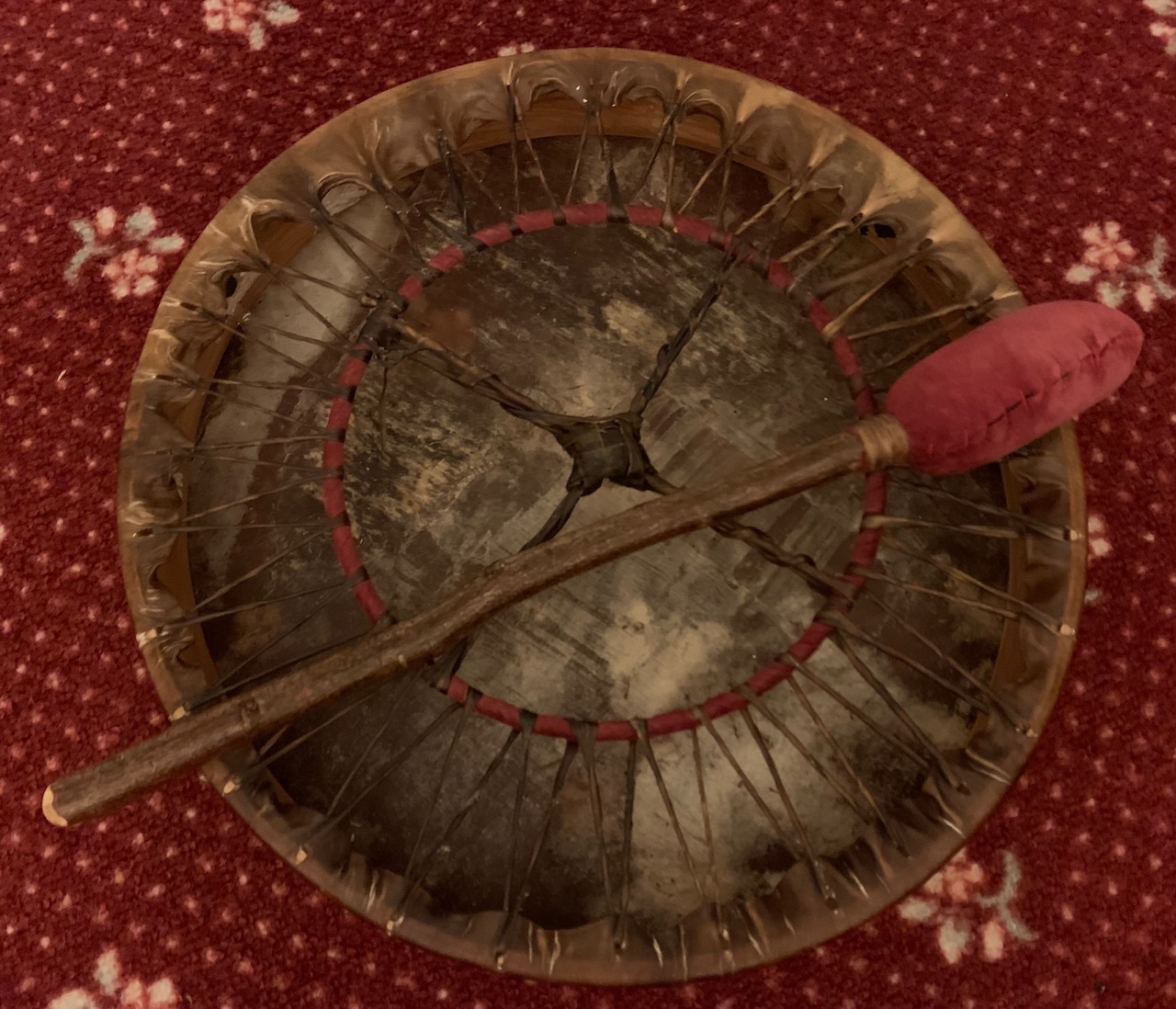
For shifting focus to contemplative prayer in a formal monastic way I first got 7 of Vessels – Mourning. This shows I am mourning having no existing tradition to follow in relation to my questions about spiritual direction. Secondly 2 of Vessels – Attraction. Rather than looking to more formal traditions I should keep my focus on the relationship between Gwyn (the stag-headed man) and Creiddylad (the horse-headed woman) and their relationship and the Heart of Annwn. Thirdly 8. Stag. I should remain focused on Gwyn and my shamanistic path as an awenydd (represented by stag and drum).

Shortly afterwards Gwyn asked me why, when I have my devotional relationship with Him and all the Otherworld to explore, I’m hankering after Christianity for guidance rather than asking Him and journeying for answers. He asked me to give up looking to Christianity and I agreed. 

A scary thing about this was when I was researching Christian prayer my horse and hound spirits disappeared from my life and I didn’t notice until I made my agreement with Gwyn and they returned to me afterwards on my run.

On further reflection I have been thinking about how the restrictions and rules of Christianity drive us towards physical and mental self-flagellation and cutting off parts of ourselves, in acts of martyrdom, in aspiration to saint-like ideals. Not good particularly if you’ve got a history of self-harm.

In contrast shamanistic traditions encourage us to be whole. To recover the soul parts we have cut off, that have been cut off from us through centuries of Christianity and more recently by industrialisation, rationalism, science, capitalism. 

To undo our internalisation of harmful social constructs and to heal. 

Our environmental crisis is underpinned by one of spiritual crisis. As Paul Francis describes it ‘an epidemic of soul loss’*. Our being cut off from the land and its spirits and the Gods has led to the hegemony of the exploitative world view that has allowed the ravaging of the earth that has brought about climate change to happen.

These insights have led me to see that if I am to be a polytheistic monastic and have a leading role in the development of the Monastery of Annwn I must put aside existing ideals that are harmful and focus on those that help us heal.

My work in relation to soul loss is reclaiming the myths of the deities of Annwn (the Brythonic Otherworld/Underworld) from demonisation by Christianity. Exposing the wounds and also working towards healing them.

Thus filling the myth-shaped and God-shaped holes**, the voids at the heart of modernity, that drive our endless consumption and consumerism.

Is this monastic enough? Is this monasticism? Perhaps not as we know it. 

Yet Gwyn has told me I am a nun of Annwn and this ‘title’ refers to my depth of devotion and service to Him. That it is fitting for one who lives a life centred on Him and to the awen from His cauldron.

I feel that in my soul I have always been a nun and this essential part of my being has been denied to me by society and my internalisation of society’s norms and accepting and becoming it is now the core of my journey.

*In his video on ‘Soul Loss and Soul Retrieval’ HERE.
**Terms used by myth teller Martin Shaw in a number of his video appearances on Youtube.

Nun of Annwn Morning and Evening Devotions

These are the morning and evening devotions I have developed over the past year living as a nun of Annwn honouring my patron God, Vindos/Gwyn ap Nudd and His family and my local deities and spirits and my ancestors. It has become important that Gwyn’s name is the first thing I speak when I wake up and the last thing I speak before I go to bed.

Morning Devotions

Opening

3 deep breaths

Gwyn ap Nudd, 
White Son of Mist, 
I, Sister Patience, 
nun of Annwn, 
come this morning 
to honour You, 

my horse inside me, 
my hounds beside me, 
my crows behind me.

Song: 

Vindos*, Holy Vindos,
You are my patron, inspiration and my truth.

Vindos, Holy Vindos, 
make me yours in deep Annwn.

Prayer for at-one-ment with Vindos/Gwyn:

My breath with Your breath,
my heart with Your heart,
my feet on Your path,
You and I as one.

Breathwork meditation aligning my breath and heartbeat with the Heart of Annwn (Gwyn’s heart)

Thanksgiving prayer: 

I give thanks to the Spirit of Monastery of Annwn.

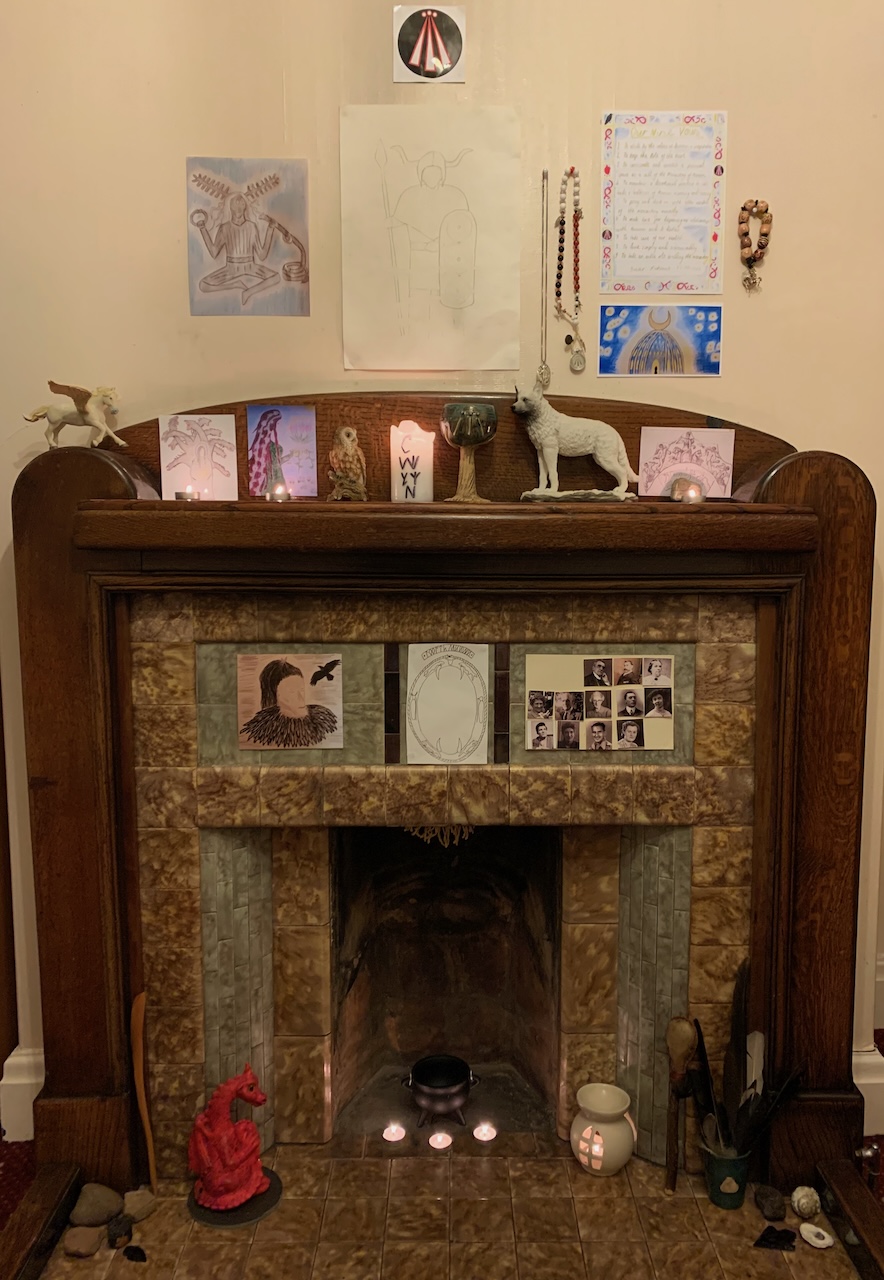
I give thanks for this monastic cell where I come in devotion to the Gods and Goddesses of Annwn, practice my practices, incubate my dreams and visions. 

I give thanks to the people who support the monastery and pray for… (space for prayers for members who need support).

I give thanks to my ancestors of spirit, land and blood and to my parents for me being here. 

I give thanks to the guardian of this place, to the spirits of this house, of our garden, to all the trees, plants and creatures, to Greencroft Valley, Fish House Brook, this land of Penwortham, to Belisama, Goddess of the Ribble. 

I give thanks to the spirits of my gym and the people who support me there.

I give thanks for my health.

I give thanks to Ceridwen, Old Mother Universe, from whose crochan (womb / cauldron) the stars were born.

I give thanks to Anrhuna, Mother of Annwn, Dragon Mother, to Your dragon children for shaping this land, to Your womb for bringing life. 

I give thanks to Kraideti/Creiddylad for flowers and fertility. 

I give thanks to Nodens/Nudd and the weather shapers for today’s weather.

I give thanks to Vindos/Gwyn for guiding and gathering the dead.

Prayer to Gwyn:

I Hail You in the Morning HERE.

Meditation

Prayer for Awen

Either Annuvian Awen HERE or Prayer to Gwyn for Awen HERE.

~

Evening Devotions

Opening (replacing ‘morning with evening’), song, prayer for at-one-ment and breathwork meditation as above

Prayer to Gwyn: 

I Hail You in the Evening HERE.

Communion with Gwyn reflecting on my day. 

Song for Gwyn: 

All My Devotion HERE

Drumming – slow heartbeat – the beat of the Heart of Annwn.

Cleansing of body and energy centres.

Prayer and communion with Nodens:

I give thanks to you, Nodens, Lord of Dreams, for this sanctuary of sleep and for the dreams you gift me. These were last night’s dreams… I pray to you for a good night’s sleep and for dreams from the Deep.

Guide me through the land of dream and back to waking the next day my Lord Gwyn.

*Vindos is the Romano-British name of Gwyn and also means ‘White, Blessed’.

Nun of Annwn Daily Routine

This is the daily routine I have been keeping as a nun of Annwn since taking my initial vows. My living at my parents’ house off savings from environmental work makes it possible for me to live a full time monastic life centred on devotional creativity in service to my patron God, Gwyn ap Nudd.

Weekdays

4am Get up and breakfast

4.30am Morning devotions and meditation

5.30am Devotional creativity – work on The King of Annwn Cycle

7.30am Run or gym, shower, snack

9.30am  Devotional creativity – work on The King of Annwn Cycle

12 noon Lunch

12.30 Devotional creativity – work on The King of Annwn Cycle

2.30pm Housework / gardening / outdoor volunteering / walk

4.30pm Bath

5.00pm Tea

6.00pm Reading – Fantasy / Myth

6.45pm Yoga

7.15pm Evening devotions

8.00pm Bed

*On a Wednesday morning in my 5.30am slot I check emails, the Monastery of Annwn forum and sometimes post on my blog.

Weekends

Saturday – Outward facing

4am Get up and breakfast

4.30am Morning devotions and meditation

5.30am Monastery of Annwn, emails, work on blog / internet catchup

7.30am Long run, shower, snack

10.00am  Work on blog / internet catchup

12 noon Lunch

12.30  Work on blog / internet catchup

1.00pm Meal planning and food shopping

3.00pm Meditation in garden / drumming / journeywork

5.00pm Tea

6.00pm Reading – Fantasy / Myth

6.45pm Yoga

7.15pm Evening devotions

8.00pm Bed

Sunday – Inward Facing

4am Get up and breakfast

4.30am Morning devotions and meditation

5.30am Prayer with beads and divination / journeywork

8.00am Yoga and snack

9.00am Devotional creativity – poems, songs, art

10.00am Housework

12 noon Lunch

12.30 Reading – Myth / Spiritual

2.30pm Sacred walk to Fairy Lane

4.30pm Bath

5.00pm Tea

6.00pm Reading – Fantasy / Myth

6.45pm Yoga

7.15pm Evening devotions

8.00pm Bed

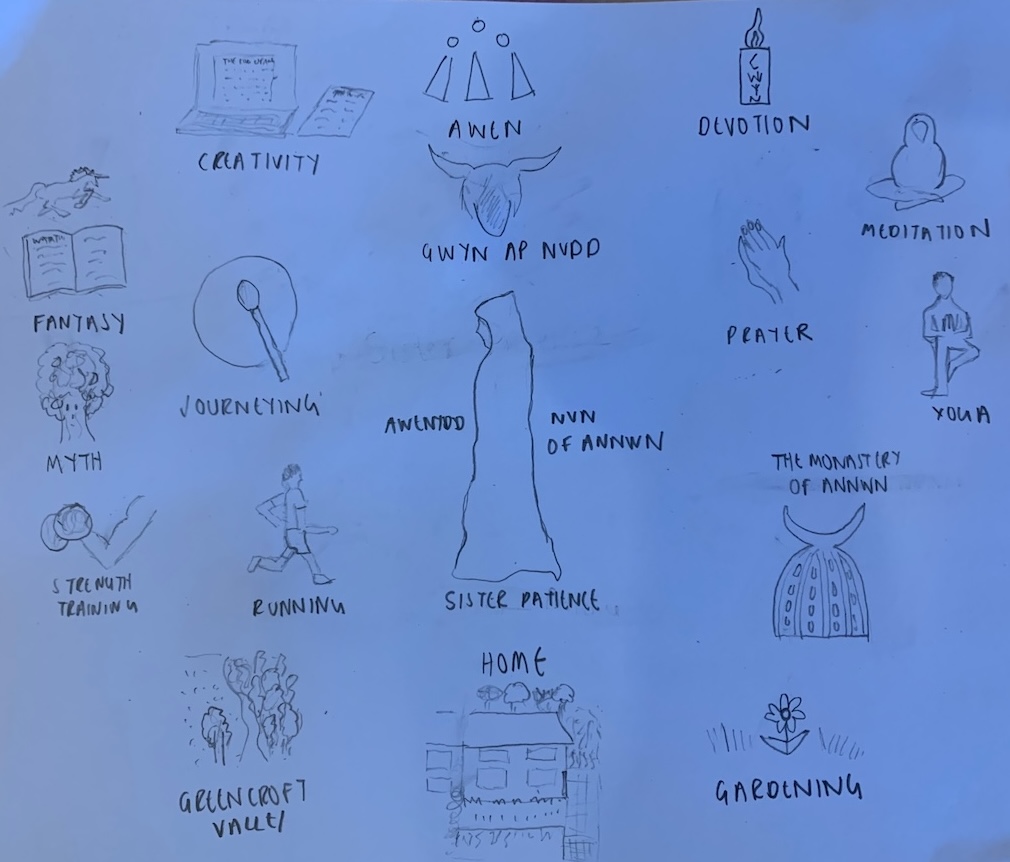
In preparation for taking my vows one of my spirit guides instructed me to draw a map of the essential parts of my life as a nun of Annwn I intend to carry with me through the next three years.