Naming the Beast

I. The Polar Vortex

And so it begins….
circling in the polar night
pulling its coldness into itself
building its turning lair in the sky
an icy serpent howling around it
where the sun never shines.

II. Breakdown

Hot waves rise
from the warming Arctic
confusing the serpent who flies
like a stream of jet through the polar night.
She pauses, reverses her motion.
The castle falls from the sky.

III. The East Wind

Falling falling southward
this broken abode of a beast so cold
shaking out and flexing uncountable limbs.
When it meets the blast of the east wind
that long-haired traveller revels in
his chance to beat the west wind.

IV. The Beast from the East

So many eyes of snow
so many teeth that bite and rend
so many claws that rattle under doors
to bring the chill of the poles biting in.
The beast is born. The beast is born.
The beast is born again.

***

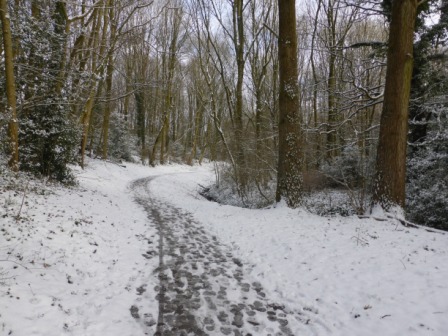
A few days ago I was out running in a T-shirt. On ‘the last day of winter’ (in meterological terms) I’m back to my winter woollens. Yesterday I woke up to the rare sight of my home town of Penwortham, which is a low-lying suburb near the Ribble estuary, blanketed in snow.
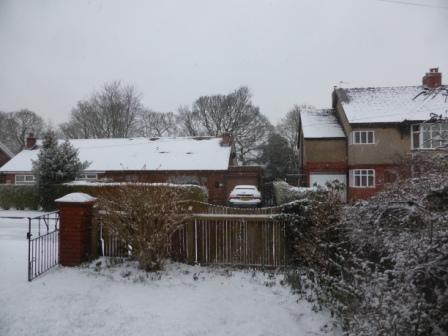
Suburban Penwortham

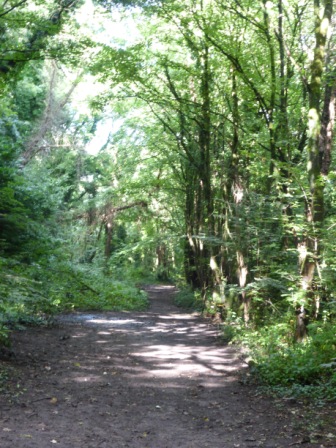
Greencroft Valley snow

The north west of England has not been hit as badly as places in the east where schools have been closed and transport has been disrupted. Everybody’s talking about the Hollywood-esquely named ‘Beast from the East’ and I don’t think I’m the only one trying to get my head around the polar vortex, the polar night jet, polar vortex weakening, polar vortex breakdown, and the recent phenomenon of the polar vortex splitting due to sudden stratospheric warming.

The science behind it is fascinating, awe-inspiring, and troubling. Before I looked into it I wasn’t aware the polar vortex existed, let alone that it’s strongest in the dead of winter when the North Pole is utterly immersed in darkness, and that it is encircled by the enigmatic polar night jet.

An area of low pressure spinning counter-clockwise over the pole(s) due to the Coriolis effect, its strength and position in the mid to upper troposphere and stratosphere are based on the transfer of heat by the polar jet stream and by oceanic currents. Every year it strengthens and grows higher in winter and breaks down between mid-March and mid-May, issuing in spring.

This year’s breakdown was particularly dramatic due to a sudden stratospheric warming. Last week temperatures in the Arctic rose rapidly by twenty degrees. Waves of warm air rising into the stratosphere caused the polar vortex to reverse, split, and move southward and downward into the troposphere to meet the easterly winds. Thus the Beast was born.

This sudden stratospheric warming has been linked to climate change. The shrinking of Arctic sea ice (which is at ‘a record low for late February at 14.1 million square kilometers’) means more water is exposed, releasing heat into the atmosphere, disrupting the polar jet stream and causing the polar vortex and its encircling polar night jet to reverse and break down. Another factor is changes in the North Atlantic Drift, which flows north from the Gulf Stream.

***

Thinking back, this is not the first time we’ve experienced ‘freak’ weather around this time of year. In 2013, on the 23rd of March, I recall walking through a blizzard near to Denham Hill knee-deep in snow and seeing a pair of snow men and a snow dog outside Hill Top Farm.

My guess is this was probably caused by a breakdown of the polar vortex too. Perhaps also the cold snap in February 2009 when I was working at Red Lion Farm in Sarratt as a groom and we had to water the horses from the sink in our mobile home because all the taps were frozen.
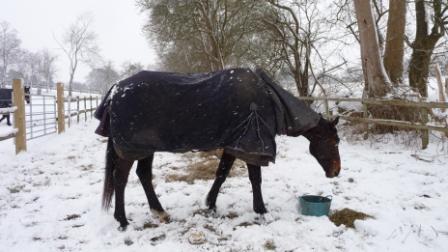
Danny, Red Lion Farm, Sarratt 2009

For the past few years I’ve been aware the seeming arrival of spring is often followed by bitter winds, hail, snow, frost. In this I’ve seen signs of the battle of our Brythonic seasonal gods, Gwyn (Winter) and Gwythyr (Summer), for Creiddylad (a fertility goddess).

Gwythyr defeats Gwyn on May Day when the polar vortex breaks or has already broken down. The ancient Britons saw Calan Mai (1st May) as the beginning of summer and Calan Gaeaf (1st November) as the beginning of winter. Would such weather have surprised them?

What would they have made of the naming of the beast?

The naming of storms is a new phenomenon designed to identify and remember them and to alert people to their dangers. Give something a name, an identity, acknowledge its personhood and immediately it is treated with respect. This is rooted in the old magic of naming.

Our earliest storytellers knew this when they gave names and forms to the forces of nature. Only when they named the gods and the monsters they were not following a catalogue of pre-given names, but responding to revelatory visions whose source was these deities themselves.

In ‘Reading Harvey’s Dark Ecology’ Finnchuill notes that ‘monster’ comes from the Latin word monstrum, ‘a showing of divine portent’. Our Brythonic texts are packed with monsters with hundreds of heads, shimmering scales, and the wind itself is invoked as: ‘a strong creature / with no flesh or bone, / no veins, no blood, / no head, no feet.’

‘The Beast from the East’, unlike the pre-chosen alphabetical names ‘Aileen, Brian, Caroline, Dylan’… (for 2017/2018) at least has a poetic ring to it even if it smacks of ‘Hollywood makeover’. It won’t be forgotten and in coming years I wouldn’t be surprised to see further headlines such as ‘The Return of the Beast’ or ‘The Beast Bites Back Again’.

What does the name reveal about its nature? How might we read its appearance as a portent? In the past people might have seen such a monster as originating from Annwn, the Otherworld. Now instead we follow its tracks from the east to its lair in the dark, cold, abyssal place in the stratosphere from which, with the polar vortex, it has departed and to which it will return. This location, like Annwn, might also be associated with Gwyn, Winter’s King.

In the warming of the Arctic ocean we find man-driven climate change lending strength to Gwythyr. Gwyn strikes back by releasing the beast. Our ‘wacky’ (from WACC – warm Arctic cool continent) weather reflects the balancing measures taken by the seasonal gods which may be less a boyish battle for a maiden than an attempt to save her life on order of the goddess of the earth.

As we continue to pump carbon into the atmosphere and the oceans continue to warm we can expect to see earlier and fiercer appearances of the Beast. With eyes of snow and icy claws and rending teeth it will return again from the East.

SOURCES

Alister Doyle, ‘Wacky weather makes Arctic warmer than parts of Europe’, Reuters
Duncan Middleton, ‘Beast from the East: How the weather got a Hollywood makeover’, BBC News
Finncuill, ‘Reading Harvey’s Dark Ecology’, Pagan Bloggers
Jesse Zhang, ‘Understanding Climate Change: Polar Vortex Weakening’, TedxMileHigh
Marged Haycock, Legendary Poems from the Book of Taliesin, (CMCS, 2007)
Polar Vortex’, Wikipedia
Why do hurricanes have names?’, BBC News
Nodens and the Weather Shapers

I. The Mural Crown

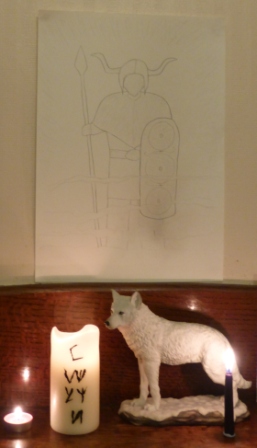
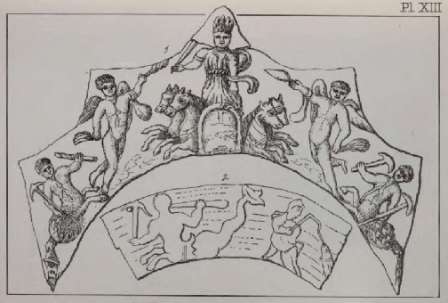
At Lydney overlooking the Severn stands a Romano-British temple dedicated to Nodens. From it was recovered a mural crown. It depicts him riding from the waves on a chariot pulled by four water-horses. Flanking him are wind-spirits and water-spirits.

Plate XIII Bathurst


I had used this image on my altar to Nodens for several months before thinking to pose the question of who these mysterious spirits are. Out walking in my locality in the voices of the winds I received the answers: ‘weather-shapers’ and ‘shapers of dream’.

My meditations have led me to the intuition that the spear-bearing wind spirit on the right is the piercing east wind. The spirit on the left with the spiralling rag is the west wind who brings both the warm moist air that keeps our climate temperature and storms and hurricanes.

Both water-spirits have the bodies of men, the frontlegs of horses, and the tails of serpents. The spirit on the right carries two pick axes and the spirit on the left a hammer and chisel. They are the shapers of the cloud formations that arise from evaporating waters approaching from the east (across the Continent and North Sea) and the west (the Atlantic Ocean and Irish Sea).

One of the translations of ‘Nodens’ is ‘the Cloud Maker’ from the Proto-Celtic stem *snoudo ‘mist, clouds’. He is later known as Nudd ‘Mist’. He and his spirits are the shapers of Britain’s weather.

II. The Cry of the West Wind

Whereas the east wind came across as quick-witted, clear-minded and bold, the west wind struck me as inconsistent and troubled, like a misunderstood youth: smiling, enthusiastic, and eager to please, but also moody, prone to fits of violence, brooding on some kind of trauma.

This reminded me of the words of Nimue Brown in her evocative essay ‘Watching for the winds’. Nimue lives ‘Where the Cotswolds meet the Severn / And the Severn seeks the sea’. She witnessed the tryst of the east and west winds last March on Swift’s Hill and noted their parting was ‘hesitant and regretful’ as if ‘they might not meet again’ or feared the circumstances of their next meeting. After the east wind departed the west wind remained, uneasy, not knowing what to do with himself, and shared ‘a warning, perhaps, or a cry for help.’

To interpret this cry I had to look beyond Britain to the direction from which the west wind blows: across the Irish Ocean (the domain of the sea-god Manawydan) to the Atlantic Ocean (associated with the sea-goddess Iwerydd and her consort the sea-god Llyr – Manawydan’s parents).

III. The North Atlantic Gyre

The warmth of the west wind is connected with the complex system of the North Atlantic Gyre, one of four gyres that form the ‘global conveyor belt’ of oceanic currents that determine the earth’s climate. It begins near the equator off the west coast of Africa where warm water driven by the easterly trade winds becomes the North Atlantic Current.

In the Gulf of Mexico it becomes the Gulf Stream. Joining the Antilles Current in the Straits of Florida it gains strength before the westerly anti-trade winds drive it toward Europe bringing 300,000,000 kWh/s of warm air – equivalent to the heat of a million nuclear power stations.

It then splits into the Irminger Current, which heads toward Greenland, and the North Atlantic Drift, which continues to Europe. The interactions of the west wind and the Gulf Stream and North Atlantic Drift raise Britain’s temperatures 5 – 10 degrees Celsius higher than other continents at the same latitude and play a large role in shaping our mild, wet weather.

When these currents have lost their heat the cold water sinks (in the Denmark Strait it drops dramatically 11,500 feet as the world’s biggest waterfall) and returns as the Labrador Current beneath the Gulf Stream and the Canary Current past Africa.

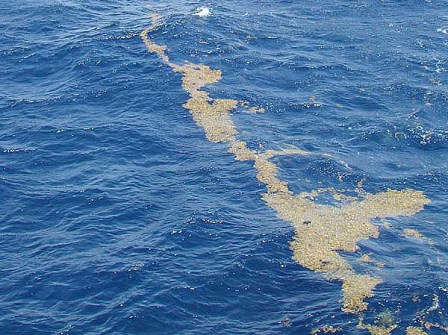
Lines_of_sargassum_Sargasso_Sea - Copy_By Unknown - Ocean ExplorerNOAA, Public Domain, httpscommons.wikimedia.orgwindex.phpcurid1175629

In the centre of the gyre lies the calm deep blue Sargasso Sea, which is named after its unique sargassum seaweed. The bounding currents deposit the refuse they carry in its midst disturbingly creating the ever-growing North Atlantic Garbage Patch.

IV. The Re-Shaping of the Weather

It’s well known that anthropogenic global warming is having a drastic effect on our climate, which has been relatively stable since the last Ice Age. The rise in sea temperature has led to storms and hurricanes forming further north buffeting Britain’s coast and to more rain and flooding.

Some scientists claim that the melting of the ice caps will lead to the water around Greenland cooling and becoming less saline. Salinity is one of the factors that causes cold currents to sink. If their circulation stops this will shut down the North Atlantic Gyre issuing in a new Ice Age.

Even the gods and spirits are in trouble. The west wind, impelled to bring storms, his nature threatened by the cessation of the warm currents cries out for help, but his voice falls on deaf ears.

Centuries of Christianity and reliance on the predictions of science have cut us off from the weather-shapers. The arguments of our modern aeromancers, ‘weather-diviners’: the meteorologists and climate scientists who strike up a conversation of sorts with the gods through their instruments have not been listened to and now it’s too late to turn back the clock.

V. The Last Salmon? The Last Eel?

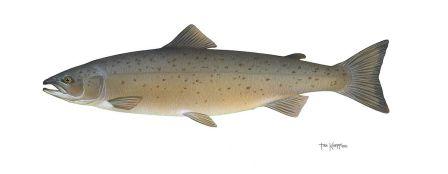
Atlantic_salmon_fish_Wikipedia_Commons

On the mural crown beneath Nodens and the weather-shapers is an enigmatic figure with a short tail hooking an enormous salmon. Salmon also appear on the mosaic in the centre of the temple.

The Severn was once renowned for its migrations of salmon leaping upriver to their spawning grounds. Atlantic salmon are now in decline due to the lethal combination of weirs preventing them returning and spawning, damage to habitat, industrial fishing, and global warming.

Changes in the currents of the North Atlantic Gyre due to rising sea temperatures have affected Atlantic salmon who use them to swim to and from their feeding grounds in Greenland.

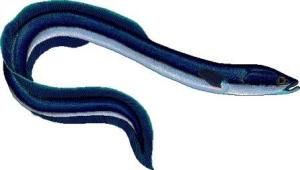
European_eel__Anguilla_anguilla_clipart_web

Eels, who spend part of their life in the Severn, use the cold currents of the gyre to swim to their breeding grounds in the Sargasso sea. Their larvae utilise the warm currents.

Could the snake-like creature wrapped around Nodens’ arm be an eel?

Both these creatures, sacred to Nodens, whose lives have been intrinsically connected with the Severn for thousands of years, are currently in decline. New fish passes have been placed in the weirs. This might help, but the changes in the North Atlantic Gyre lie beyond human repair.

V. The Broken Crown

The image of Nodens and the weather-shapers provides us with a picture of the ‘beauty and integrity’ of Britain’s climate and the fecundity of its rivers during the Romano-British period.

If the mural crown was crafted again today its vision of wholeness would be broken by the agony of the west wind torn between two fates – stormbringer and bringer of a New Ice Age. The water-spirit in the west would be the crafter of ominous storm or snow-clouds. The salmon would be in distress, the eel wriggling nervously, both on the brink of disappearance. Nodens, ‘the Cloud-Maker’, would be a troubled god, riding far less victoriously on his chariot.

This crown was once worn by a priest of Nodens who had the task of interpreting pilgrims’ dreams. Who would wear it today? Who would interpret the dreams shaped by the beings shaping Britain’s weather – hurricanes of garbage, seas rising over coastal towns, salmon lost in sealanes, stranded elvers wrapped in sargassum? Who could bear the cries of distress?

SOURCES

David Righton, ‘Empirical observations of the spawning migration of European eels’, Science Advances, Vol 2, No. 10, (2016)
D. Freidland, ‘Oceanic changes in the Sargasso sea and declines in recruitment of the European eel’, ICES Journal of Marine Science, Volume 64, Issue 3, (2007)
J. Dadswell, ‘The North Atlantic subpolar gyre and the marine migration of Atlantic salmon Salmo salar: the ‘Merry-Go-Round’ hypothesis’, Journal of Fish Biology, 77, (2010)
Nimue Brown, ‘Watching for the winds’, A Beautiful Resistance, (Gods & Radicals, 2016)
Renee Cho, ‘Could Climate Change Shut Down The Gulf Stream?’, State of the Planet, (2016)
Nodens’, Wikipedia
Scheme to re-open Severn to fish wins almost £20m in funding’, The Guardian
The North Atlantic Gyre’, Eduspace,
The Gulf Stream Explained’, In a Nutshell

Mist and Darkness and the Road to Joy – The Completion of Gatherer of Souls

P1240462 - Copy - Copy - Copy

Over the past three years I have been working on a book for Gwyn ap Nudd, my patron god, to whom I devoted myself five years ago in January at the White Spring in Glastonbury.

At first I wasn’t sure what it was going to be about. It began simply as ‘Gwyn’s Book’. Because I am based in Lancashire and so many other writers have explored his connections with Glastonbury and Wales I decided to focus on his stories originating from the Old North, which are found in The Black Book of Carmarthen and Culhwch and Olwen.

After some time he made it clear that he did not want me to write an academic book (I therefore published my research on my website HERE) or  simply repeat the old tales penned by Christian scribes. Instead he wanted me to peel back the golden patina, expose the atrocities committed against him and the people of Annwn by Arthur, and journey back to the roots of his mythos in pre-Christian times when he was venerated as a god of the dead and gatherer of souls.

I met with other Inspired Ones who served him and whose souls he gathered such as the ancient ancestors of Orddu, ‘Very Black’, the Last Witch of Pennant Gofid; the northern British prophets Myrddin and his sister Gwenddydd; witches who flew with him between sky and air; wild women, madmen, poets, broken dreamers whose dreams have never been recorded.

I was prompted to explore how the closing of the doors of Annwn led to the sense of disconnection and soul loss that forms the void at the heart of the Anthropocene and to see the wonder in Gwyn’s reappearance on the brink of time as the Anglo-American Empire, which has its roots in Arthur uniting Britain under ‘One King, One God, One Law’, begins to fall.

My devotional journey has had its ups and downs. Sometimes it has felt like an endless ‘wow’ as I’ve discovered faces of Gwyn as yet unrecorded and hidden facets of his nature. At others, when I’ve been stuck in the Arthurian stories, unable to see beneath or get a break through, or I’ve written Gwyn’s voice wrong, I’ve felt frustrated, awkward, unworthy, and utterly inept. Yet I never once thought about giving up as I knew it was something I had to do.

Because there are no groups in the North West of England who venerate the Brythonic gods and goddesses or work experientially with our native myths my journey has been a lonely one. At low points I have contemplated joining the Anglesey Druid Order and even becoming a nun (when I hit thirty-five I realised it was my last chance!) although within I have known that my path in life is to walk with Gwyn even when all he can offer is “mist, darkness, and uncertainty”.

I’ve seen writing this book through to the end because serving him as an awenydd, although sometimes tough – Gwyn is the god who contains the fury of the spirits of Annwn and he is that fury just as he is the god who gathers the dead with love and compassion – is a source of deep and profound joy. Walking with him, whether through the starlit skies, or industrial smog, or blood-strewn battlefields, or the healing woodlands of Celyddon has always felt utterly right.

Gatherer of Souls is a book of new visions of the forgotten mythos of Gwyn ap Nudd  recorded in poems and stories to be published on Gwyn’s Feast, September the 29th, this year.

Over the past week I have read it out loud to Gwyn and it feels fitting that he has approved it as we approach the eclipse of the super blue wolf moon.

Missing God

For Gwyn

I knew you were there from the day I was born
because I needed you.

I could not find your name in The Bible
or scrawled on church walls,

there was something about the Devil,
but no…

The feeling in my navel kept tugging me
through the portals in the books I read about sundered worlds.

They opened something and I fell into you
but I didn’t know what you were,

(that a god could be the underworld).

I searched the absences
and filled my hands with empty air

and filled my ears with words without sound.
I danced and raised my hands to the sky

but only found you when I fell to the ground.
I drank my way back to you living

in the epoché where the rules of thisworld
fall away like empty shells

and all the hidden people are revealed,
the times piled on top of one another like broken cars.

You showed me silver spaceships,
three shining gateways,

pathways to the stars that always led back down.
Your world – you – were so beautiful you frightened me.

I returned to my shell
but could not deny what you are or what I am.

Eventually you showed me your face and told me your name.

P1220706 - Copy

She Walks Between Worlds and Lovers (Calan Gaeaf)

It is summer in the otherworld when she is there
winter in the otherworld without her.
In Gwyn’s arms she is Lady Death:
petals fading wilting perishing discoloured
returning to the earth with work of insects,
seeds descending into soft and loamy soil,
sinking down with the work of worms.
Into his fateful embrace he takes her
down beneath bones of the dead,
fallen trunks and golden pollen.
In ancientmost forests Creiddylad
is Annwn’s Queen in sacred marriage.
Their passion in the unseen summer
stirs the dreams of sleeping corm,
bulb, knotty seed: movement
of potential, hidden, dormant
until the explosion to life. Each
underground power puts out shoot, stem, leaf,
reaching upward through snow for another sun.
She is their secret growth until the moment of flowering
when she sees her time in the otherworld is over
and walks between worlds and lovers.

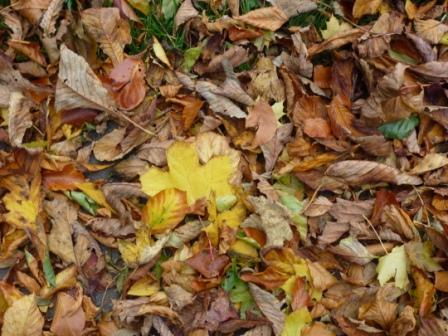
Leaves in Greencroft Valley

Breaking the Silence

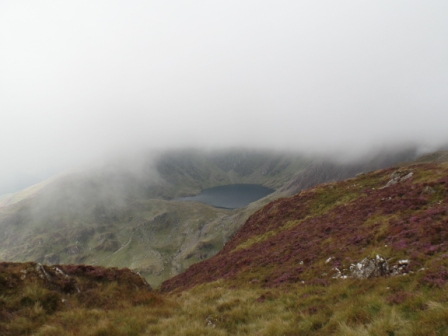
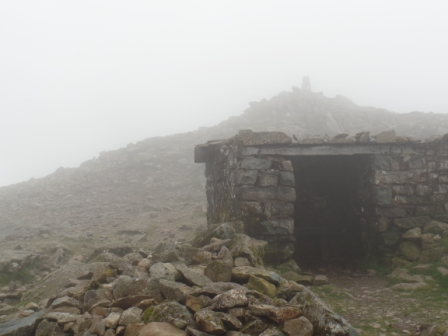
Two months ago I decided to take a break from blogging. I’d returned from Wales after climbing mist-ensorcelled hound-haunted Cadair Idris. Standing on the shoulder of a giant dizzied by his mad dreams. Staring down into Llyn Cau and Llyn y Gadair. Finding refuge in the hut of the mountain guide.

In Wales the gods are huge. Their names and stories echo from deep valleys and massive mountains and are carried in streams and rivers to where the immensity of the sky meets the immaculate sea on the western coast. From Pen y Gadair the mists of Gwyn ap Nudd never leave.

On Borth beach I read Heron’s new translation of ‘The Dialogue of Gwyn ap Nudd and Gwyddno Garanhir’. The name Borth derives from Porth Wyddno and is the location of Cantre’r Gwaelod (The Bottom Hundred); Gwyddno’s drowned kingdom. It was my intuition Gwyddno died there and the poem records a conversation between the worlds where Gwyn offers Gwyddno protection and guides him to Annwn (the Brythonic otherworld).

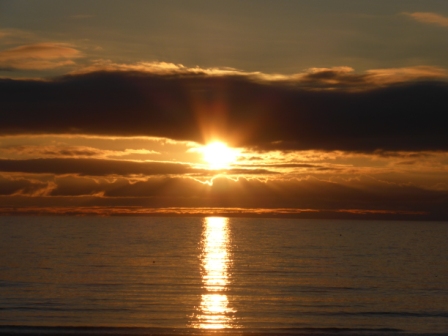
Reading the poem was immensely powerful. I experienced vividly the presence of these two great mythic figures speaking against the backdrop of the pebbled beach and roaring sea. Afterward at sunset I saw the otherland of which Gwyn speaks ‘where the tide ebbs fiercely on the shore’ appear on the horizon.

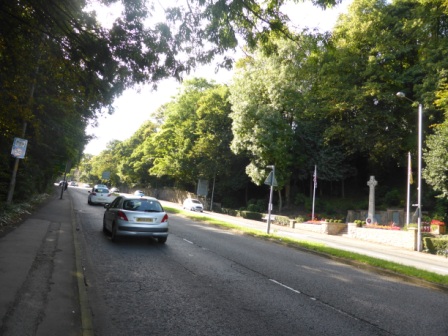
Borth VI returned to Penwortham mind-blown with much to absorb in thought and dream only to experience another immensity. This time a crushing one. Walking the section of the old pilgrim’s path that leads across the A59 from the site of St Mary’s Well to the War Memorial I got trapped in the middle of the road: unable to cross because of the heavy rush of traffic at school pick-up time.

A59 between site of St Mary's Well and Penwortham War MemorialI knew this was the result of the widening of Penwortham By-Pass. A rush which will only increase when a new stretch of by-pass is built leading over the river Ribble to Junction 2 of the M55 (which exists only in name having been planned over 40 years ago). That this was linked to the expansion of BAE, the University of Central Lancashire, to the building of new housing developments and employment sites throughout Preston and South Ribble.

I was struck by the overwhelming gnosis it was beyond me to stop the growth of this monster. I could not stop the City Deal. I’d known for a while the City Deal was something not even the most seasoned campaigners would dare take on as a whole. That each of us must find our own way of protecting what we value within the realms of possibility whether it’s by campaigning against individual developments, fracking (which will not only ruin the landscape and poison our sacred watercourses but fuel the monster), austerity, defending and caring for an area of green space or growing and nurturing a community group.

Acknowledging this insight has taken a lot of readjustment during which I realised attempting not even to save the world but just South Ribble and Preston, Penwortham even, was beyond my capability and making me ill. Not only that, Peneverdant ‘the green hill on the water’ with its aquifer shattered in 1884, its holy wells dry, its banks subsiding with falling trees and gravestones under increasing duress from the By-Pass wanted to close down. Hence the closure of ‘From Peneverdant.’

What did I have left? The Friends group I run in Greencroft Valley with its wildflowers and apple trees. The monthly poetry night I play a lead role in organising at Korova Arts Cafe & Bar which provides a safe and welcoming space for newcomers and established poets to perform. The Oak and Feather Grove.

My relationship with the land and the gods which my recent travels north and to Wales have taught me need not be limited to Penwortham. The inspiration and awe I find in my path as an awenydd devoted to Gwyn ap Nudd. The depth and magic of his known and unknown stories. A growing awareness of other Brythonic gods and goddesses and their myths.

Whilst I’ve had support and companionship from friends and family and other poets and pagans, until the past couple of months my path as an awenydd and Brythonic polytheist has been a lonely one. However, in October I went to Glasgow to a ritual to Epona-Rigantona led by Potia and last week returned to Borth and finally met Heron, whose writing has guided and inspired me for several years.

Together on Borth beach Heron and I read my story ‘The Crossing of Gwyddno Garanhir’ which I wrote after my previous visit to Borth based on his translation of Gwyn and Gwyddno’s dialogue. It was moving and beautiful reading and listening to the words, born from the place, from an ancient poem passed on from poet to poet, feeling it live on the sea breeze and the rolling tides, honouring Gwyn’s role as a psychopomp, Gwyddno’s passing and the absent cranes (‘garan’ from Garanhir means crane in Welsh) who I gave the role of soul-birds. Afterward we walked across Cors Fochno (Borth Bog), where cranes may have nested, up Cwm Clettwr and to Taliesin’s grave.

I returned nourished with my feeling of the increasing import of the Brythonic myths juxtaposed with my frustration so few people have an interest in them. Of having much to share but no-one to share with. Which led once again to despair until I had a dream which somehow I knew took place ten years in the future.

I was leading a guided tour of one or two disinterested people to ‘Cockersand Fields’ (which I interpreted to be the fields near Cockersand Abbey where a statue to Mars-Nodens was found) and was feeling ready to give up on this task and life altogether. I hadn’t put my heart into it for several years. Then I saw a group of young backpackers approaching from boats on a sunset beach with smiles and eyes filled with hope. They’d come searching for stories about Gwyn, which I’d failed to write: a failure I suddenly regretted and a friend pushed me to rectify.

The dream seemed to be telling me not to lose hope in a vocation that nurtures my soul, brings me joy and could likewise bring meaning and purpose to others because my writing doesn’t provoke immediate responses or recognition. To think of the long term rather than satisfaction in the now.

Thus for the first time since the closure of ‘From Peneverdant’ I break my silence. Whilst I can’t promise my words will save the world or even Penwortham, I hope for others led down strange paths by little-known gods they may provide signposts in the mist that lead to the strength and inspiration to live with joy and depth in this troubled world.

Borth III