‘Arthur said, “Are there any of the wonders we have still not obtained?
One of the men said, “Yes, the blood of the Very Black Witch, daughter of the Very White Witch from Pennant Gofid in the uplands of hell.
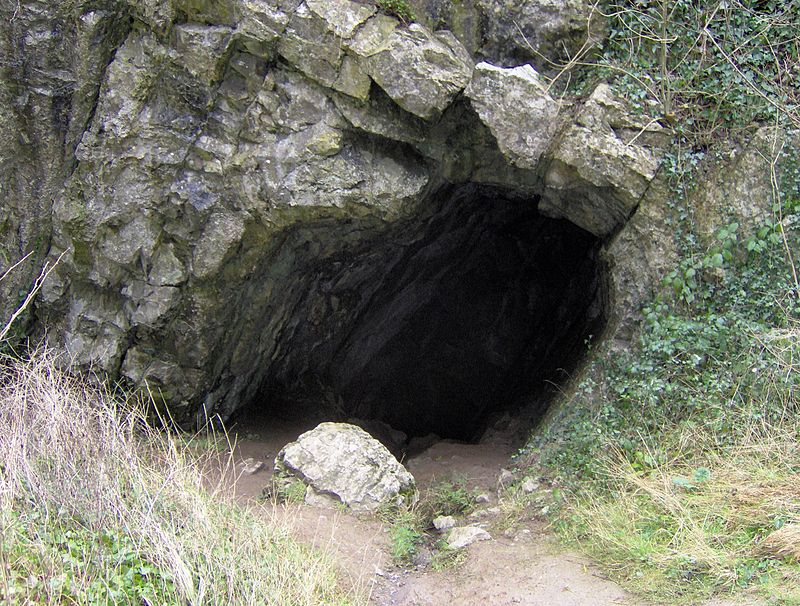
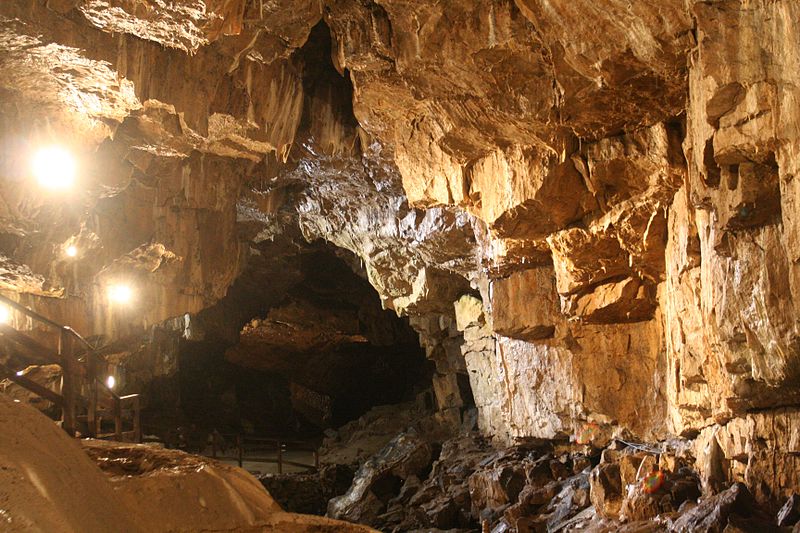
Arthur set out for the North, and came to where the hag’s cave was.’
– Culhwch ac Olwen
I. The Witch’s Cave
In the medieval Welsh story Culhwch ac Olwen (1090), Orddu ‘Very Black’, a ‘witch’ who lives in a cave in Pennant Gofid ‘the Valley of Grief’, battles against the servants of Arthur and is slaughtered by him in a gristly scene where he cuts her in twain with his knife to drain her blood.
In this tale Gwyn ap Nudd, a Brythonic god of the dead and ruler of Annwn, is dubiously made to appear beside his eternal rival, Gwythyr ap Greidol, as an advisor to Arthur. I judge this to be a move by a Christian interlocutor do demonstrate Arthur’s power not only over Orddu but her god.
It is my personal belief that Orddu was the last of a lineage of ‘witches’ of the Old North who resided in the cave at Pennant Gofid, which is identified with hell, showing Annuvian associations. They were powerful warrior-women and prophets who shared a kinship with the Witches of Caer Loyw who trained Peredur and with Scatach ‘the Shadow’ who schooled Cú Chulainn.
Their martial prowess and ability to commune with Gwyn and the spirits of Annwn to prophecy were seen as a threat to Christianity thus Orddu met her brutal end at the hands of the Christian king.
Orddu’s story has long haunted me. A few years ago it led me to trace her lineage through a series of spirit-journeys and in inspired writing from her mother, Orwen ‘Very White’, back to Snow, the first of her ancestors to arrive in Pennant Gofid (then known as the Valley of Winter) after the Ice Age.
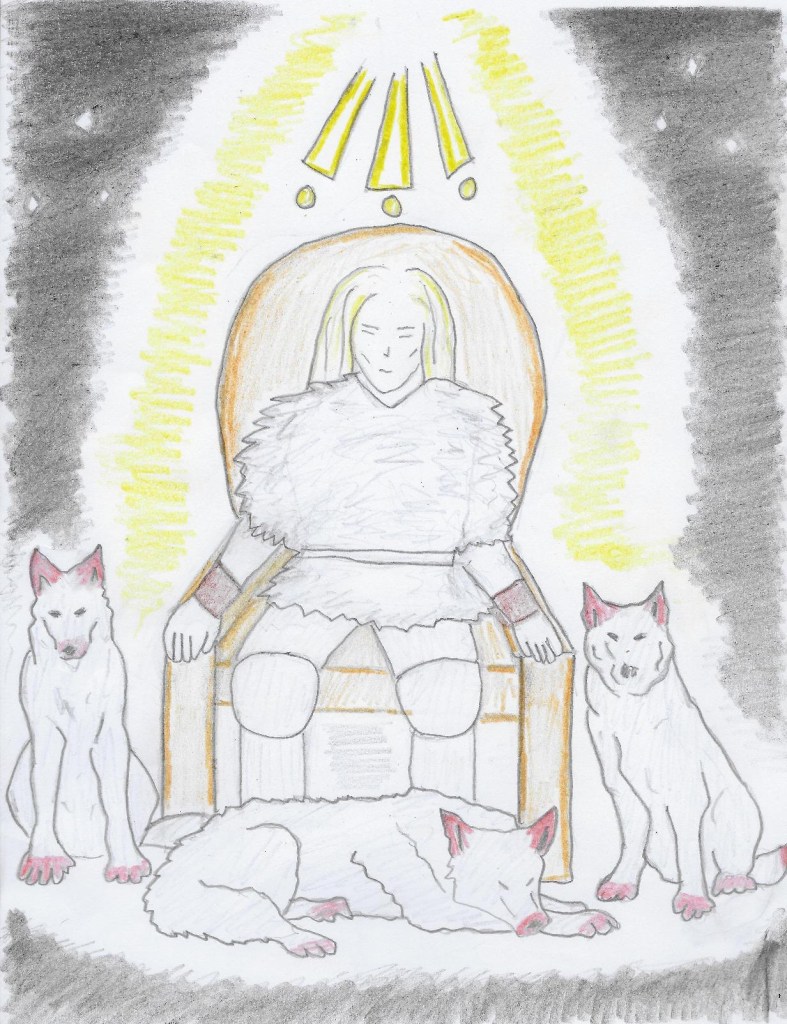
Of all the stories I have written Snow’s has felt the realest, the deepest and the most profound. It tells how she and her people were led by Vindos/Gwyn and his wolves and ravens, following the reindeer and wild horses, to her northern cave, where it is remembered in her lore her ancestors once lived.
I have no idea whether Orddu, Orwen, or Snow are real or mythic persons or whether Pennant Gofid is an actual place in northern Britain (if it is I haven’t found it yet). However, archaeological evidence demonstrates that people lived here in caves after the last Ice Age and in the interstadials.
During recent research I found out from Barry Cunliffe’s Britain Begins and Stephen Oppenheimer’s The Origins of the British that a high percentage of the modern population can trace its ancestry back to the period after the last Ice Age when people recolonised Britain from Northern Iberia along the Atlantic seaways and from the North European Plain across Doggerland.
Up until now it had never occurred to me to question who Orddu’s people were and where they came from. To follow their footsteps back to the continent, into older times, and deeper into the cave.
II. After the Ice Age
Following the end of the last Ice Age, the Younger Dryas Stadial, (12,900 to 11,700 BP), the earliest evidence for the inhabitation of Britain comes from caves in south-west Wales. The oldest human remains from Worm’s Head include a human scapula (9920 BP), an ulna (9450 BP), a femur (9420 BP), and a cranium (9360 BP). Human bones dating from between 9000 and 7000 BP have been found at Paviland, Foxhole Cave, Ogof-yr-Ychen ‘Cave of the Oxen’, Potter’s Cave, and Daylight Rock.
One of the most famous Mesolithic burial sites is Aveline’s Hole in the Mendip Hills of Somerset. It was discovered in 1797 and investigations reported the presence of between 50 and 100 human skeletons. Unfortunately most of the finds and documentation were destroyed by bombing during World War II. Only 21 skeletons remain and they have been dated to between 9115 and 8740 BP.
Most were adults and adolescents, but they also included three children aged between 2 and 7 and an infant of 6 – 18 months. One of the skeletons was buried ceremonially in a disused hearth with ‘red ochre, abundant animal teeth some of which were perforated, and a set of fossil ammonites’.
The cave was sealed after the burial. This may have symbolised closing a connection to relatives become ancestors and to the Otherworld, or may have been a precaution to prevent their return.
In 2003 ‘an engraved panel’ consisting ‘of two rows of crosses with six in the upper row and four in the lower’ was discovered in Aveline’s Hole. Because the cave was sealed after the burial it is suspected this cave art belongs to the Mesolithic. Further art, three engravings taking the form of ‘rectilinear abstract designs’, possibly of a similar date, were found nearby, in Long Hole.
Other finds from the Mendips from this time include a mandible (9360 BP) and cranial fragments (9060 BP) from Badger Hole and the skeleton of Cheddar Man (9100 BP) from Gough’s Cave. Research into DNA has made possible a reconstruction of Cheddar Man’s appearance. His genetic make-up shows he had dark skin of a pigmentation ‘usually associated with sub-Saharan Africa’ and blue eyes.
This suggests that the earliest inhabitants of Britain, including Snow and her people, were dark-skinned. Snow received her name because she was born in a snow storm not because she had snow-white skin. Dark skin is hinted at in the way I describe Snow’s Very Great Grandmother whose face was ‘wrinkled like an old crowberry’, crowberry (empetrum nigrum), being black. Perhaps Orddu ‘Very Black’ was herself black due to a gene that linked her back to oldest ancestors.
In northern Britain a piece of human thigh bone contemporary with the burials in Aveline’s Hole was found in Kent’s Bank Cavern near the Kent estuary where it enters Morecambe Bay. Other evidence of human inhabitation of this area includes microliths and an antler point from Bart’s Shelter.
III. Creswell Crags Cave Art
Snow possessed stories about her cave, passed down by her ancestors, suggesting her people had lived in Britain in the past. Archaeological finds from a number of caves show the landmass, then attached to the continent, had indeed been occupied during the Lateglacial Interstadial (14,670 – 12,890 BP).
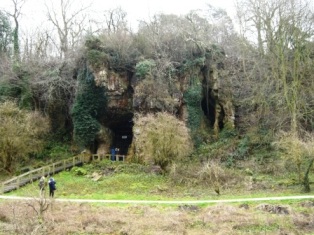
Creswell Crags, a limestone gorge in Derbyshire, is famous for its parietal and portable cave art and stone tools. According to Paul Petitt these have ‘very direct parallels with material from France, Belgium, the Netherlands, and Germany… the term Magdalenian… links these British industries to a much wider population dispersal into empty areas of Europe following the Last Glacial Maximum. This dispersal has its roots in the Magdalenian of south-western Europe… Magdalenian sites in Britain cluster relatively tightly between 12,600 and 12,200 radiocarbon years ago, which places the sites in the relatively mild conditions of the first half of the Lateglacial Interstadial.’
There are 25 examples of parietal art at Creswell; 23 in Church Hole, one in Robin Hood Cave, and one in Mother Grundy’s Parlour. All are engravings that often use the structures of the cave walls.
The clearest engravings are of a stag, bison, and an ibis. The latter is a bird for whom we have no faunal remains in Britain, but would have been seen on the continent by the highly mobile artists.
One of the most intriguing is a bird/woman motif, which has been interpreted as ‘long-necked birds of some kind…. cranes, herons, bitterns, and swans’ and ‘schematic human females, drawn upside down.’
Another, equally ambiguous, is described as ‘a diving bird, a serpentiform or a stylised human female?’ There is a also a ‘headless horse’, ‘small incomplete engraved animal’ and ‘abstract designs such as a ‘boomerang’, ‘engraved triangle’, ‘horn-like motif’ and ‘two small triangles’. ‘Figures of uncertainty’ include a ‘square’, a ‘bison-head profile’, a ‘horse-head’, and a ‘bear’.
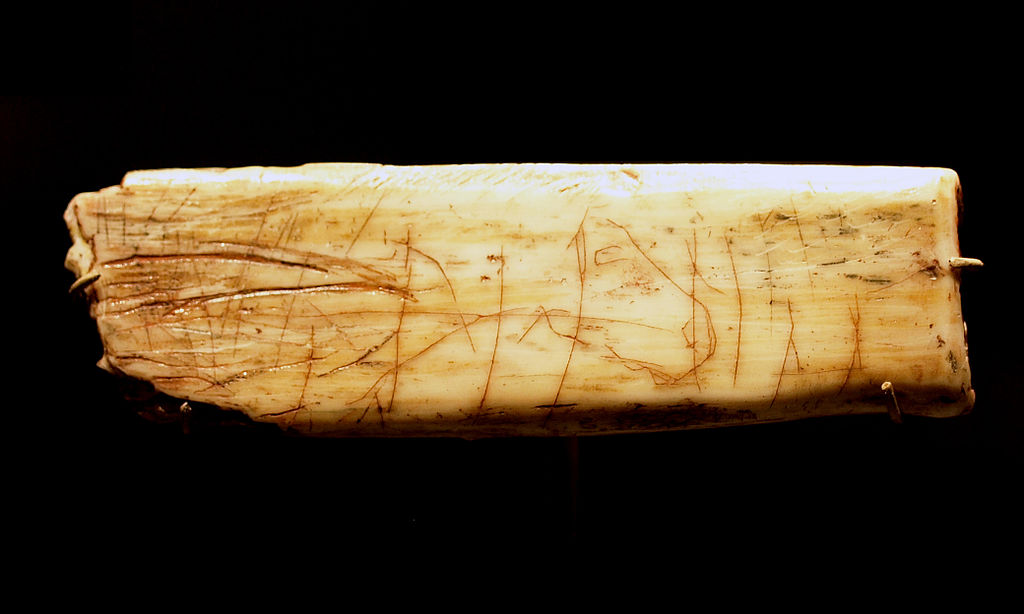
In Robin Hood’s Cave was found a rib engraved with a horse coloured by red ochre. William Boyd Dawkins described it in 1867: ‘the head and fore quarters of a horse incised on a smoothed and rounded fragment of rib, cut short off at one end and broken at the other. On the flat side the head is represented with the nostrils and mouth and neck carefully drawn. A series of fine oblique lines show that the animal was hog-maned. They stop at the bend of the back which is very correctly drawn.’
The Ochre Horse shares parallels with portable Ice Age horse depictions from the caves of Perigord in France and Kesserloch in Switzerland. It is also contemporary with a decorated horse jaw from Kendrick’s Cave, Llandudno, which had five panels of chevrons cut into it creating a zig-zag effect. That people carried these representations with them may suggest horses held a special place in their traditions. Whether this was simply as a prey animal or as a spirit guide or deity remains unknown.
In Pin Hole Cave, engraved on the rib-bone of a woolly rhincoeros, was a masked figure described by Albert Leslie Armstrong as a ‘masked figure in the act of dancing a ceremonial dance.’ Again, the identity of this figure and why he was carried into and left in the cave remains a mystery.
Other British examples include an engraving of a reindeer from Gower Cave in Wales and engraved plaquettes from La Varines in New Jersey featuring abstract designs and ‘zoomorphic representations’, possibly of horses, mammoths, a bovid, and human face, dating to 14,000 years ago.
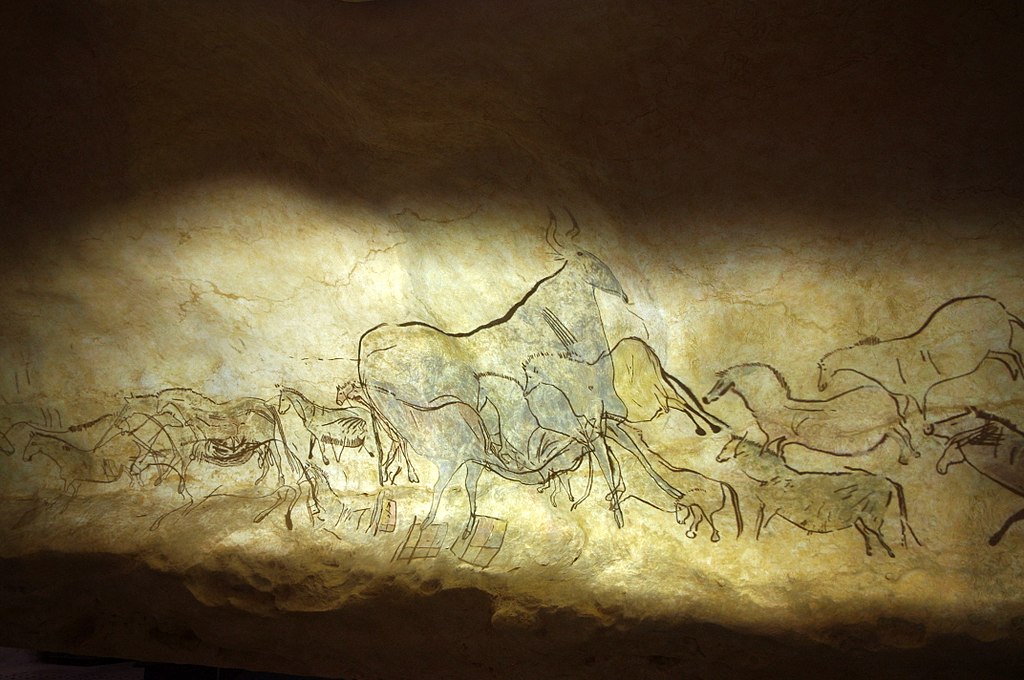
The art of Creswell Crags shares similarities with Magdalenian art from across south-western Europe. Paul Pettitt links its characteristics artworks at Altamira in Spain and Lascaux in France. He suggests the Creswell Crag artists spent their summers in this area and retreated to the lowlands that now form part of the North Sea or the Netherlands and central Rhine areas and says they would have been in contact with people from Ardennes and the Dordogne, which was also accessible on foot. “The Magdalenian era was the last time that Europe was unified in a real sense and on a grand scale.”
IV. Prehistoric Chapels and Rites of Initiation
The French archaeologist and Catholic Priest, Abbé Breuil, referred to Lascaux as ‘the Sistine chapel of prehistory’. The caves of the Franco-Cantabrian area have long been seen as sacred sites that were central to the religion of the Magdalenian people and their predecessors who made earlier paintings.
According to Bruno David these caves were used for ritual performances and rites of passage. He describes Cougnac: ‘Human engagements in the deep, dark space of the cave are intriguing: here are found animals that take shape along rock walls in a combination of natural concretions and painted red or black lines. At the entrance of chambers, palms of hands were dipped in red ochre and fingers smeared with black pigment, and then pressed against rock walls to leave distinctive marks. Animals were neatly arranged along rock walls, their viewing intentionally and carefully choreographed. Depictions were made of repeatedly speared humans or human-like creatures, and rocky concretions were tapped to make a ringing sound, it appears. This is the stuff of rituals… It formed part of an inner sanctum of knowledge, of an inner life, one that needed to be performed.’
David speaks also of ‘orchestrated performance’ at Tuc d’Audoubert where, adjacent to the Gallery of the Clay Bison, in the Chamber of Heels are found ‘183 impressions of the balls of human heels and myriad shallow impressions of fingertips’ ‘which show that those who walked this space did so on the heels of their feet, carefully avoiding placing the flat of their feet on the ground… The size of the heel imprints… indicates they were not made by adults but by youths probably adolescents.’
‘What we see in the art and imprints in the clay are the products of choreographed actions involving youths walking on the balls of their feet and pressing fingertips into clay along long and sometimes narrow tunnels underground, leading to sculpted clay bison that were never meant to be seen by the broader populace of the outside world. These were rituals along passageways that were, we think, literally rites of passage for youths approaching adulthood. The art was not just to be seen, but to be performed.’
David Williams argues that Lascaux holds ‘the key to major mysteries’ as a place for ‘vision quests’ leading to shamanic initiation. He says ‘different rituals were performed in contrasting areas’. In the ‘Hall of the Bulls’ the only area that can accommodate a large number of people, ‘dancing, music, and chanting’ may have taken place. He describes this area as a ‘vestibule’. In the Axial Gallery the Roaring Bull might have evoked auditory hallucinations and the Falling Horse sensations of falling and descent.
The dense engravings in the Apse featuring ‘crowded images of horses, bison, aurochs, ibexes, deer, and a possible wolf’ etched on top of one another might have provided a glimpse of the spirit world. Having passed a pair of ‘Cerberus-like paired bison’ and crawled down a tunnel to the Diverticule of the Felines to eight formidable cave-lions, ‘a horse seen face-on’, and ‘bison with a raised tail’, ‘questers came face to face with visions of power and made personal contact with the spirit realm.’
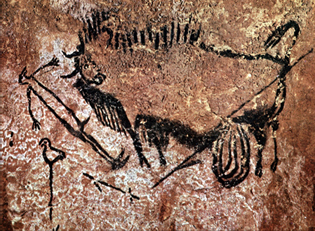
The Shaft, and end area, which falls away into a deep well is where offerings with ‘broken signs’ were left. Here is the famous painting of a bison wounded by a spear charging down a bird-headed man with a bird-staff. Williams says here ‘we have transformation by death: the ‘death’ of the man paralleling the ‘death’ of the eviscerated bison. As both ‘die’, the man fuses with one of his spirit helpers, a bird’. He interprets this as the ‘zoomorphic transformation… becoming a shaman necessitated.’
It seems possible that Creswell Crags was also seen as a prehistoric ‘chapel’ where people communed with spirit animals and sought and then engraved visions of the spirit world. Perhaps the witch’s cave at Pennant Gofid was also used for rituals of descent presided over by Orddu and her kin that led to initiates, like them, becoming awenyddion, ‘people inspired’, the Brythonic term for ‘shamans’.
V. Gough’s Cave – Skull Caps and Cannibalism
A discussion of the cave-based rituals of the people living in Britain during the Magdalenian period would not be complete without mention of the skull caps of Gough’s Cave, Somerset, and ritual cannibalism.
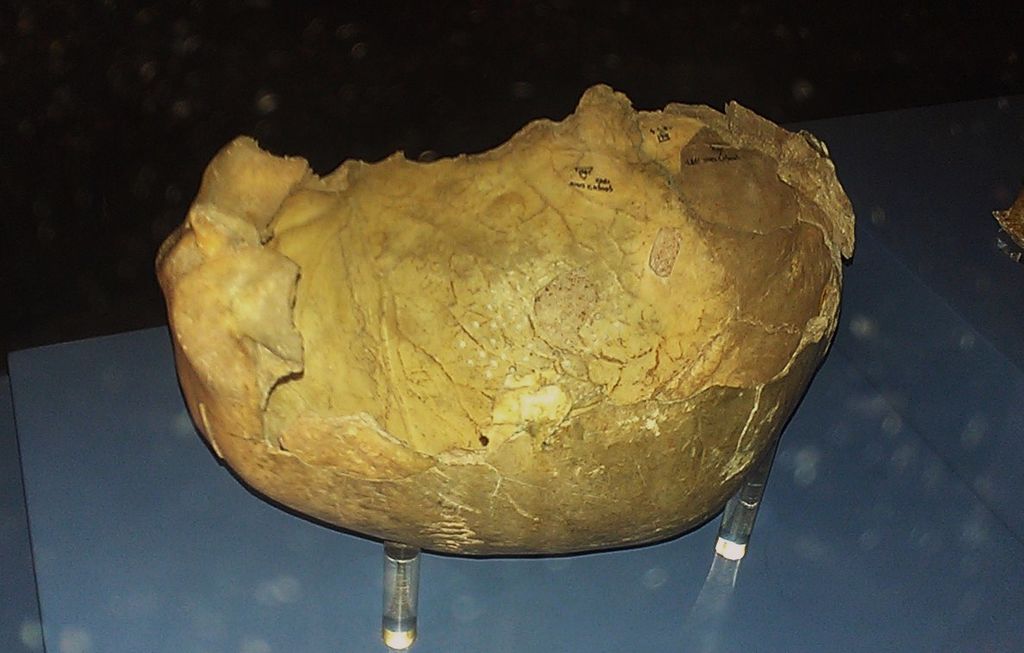
There were discovered the skeletal remains of ‘a Minimum Number of six individuals: a child (aged 3.2 years), a young adolescent (approximately 12–14 years old), an older adolescent (approximately 14–16 years old), at least two adults and an older adult’ dating to 14,700 BP. Results of the research by Silvia Bello et al. ‘suggest the processing of cadavers for the consumption of body tissues (bone marrow), accompanied by meticulous shaping of cranial vaults. The distribution of cut-marks and percussion features indicates that the skulls were scrupulously ‘cleaned’ of any soft tissues, and subsequently modified by controlled removal of the facial region and breakage of the cranial base along a sub-horizontal plane. The vaults were also ‘retouched’, possibly to make the broken edges more regular. This manipulation suggests the shaping of skulls to produce skull-cups.’
These skull caps resemble those from other Magdalenian sites such as La Placard Cave and Isturitz in France, and from Herxhein, Germany, in the Neolithic period, and El Mirador, Spain, in the Bronze Age.
In Gough’s Cave was also found a human radius engraved with a zig-zag pattern of ‘87 incisions: 33 single-stroke incisions, 32 to-and-fro sawing incisions’, also bearing evidence of cannibalism. What was particularly interesting is that ‘the decorative pattern seems to have been applied in the middle of this process: the break where the bone was snapped to extract marrow cuts across the zig-zag. It seems that the arm’s flesh had been removed, but then the butchery was paused while someone engraved the bone, and only then was it broken to get at its contents.’
This shares similarities with an ulnus from Kent’s Cavern with fine cut marks and percussion marks dating to 8185 BP. The zig-zag also resembles the pattering on the Kendrick’s Cave decorated horse skull.
It is clear that complex rituals and beliefs surrounded these acts of cannibalism and the creating of skull-caps and engraving of bones. Were these acts performed to honour the ancestors? Was eating one’s kindred an act of holy communion through which their life’s essence passed from the dead to the living?
What did the marks on the bones symbolise? Days? Acts? The release of the spirit from the bones? Was the creation of skull caps linked to belief that the soul presided in the head and with its release? What did wearing or drinking from the skull caps mean? Answers to these questions can only be guessed at.
It is worth nothing that, in Culhwch ac Olwen, Gwyn is associated with ritual cannibalism. He feeds the heart of Nwython, the ruler of Strathclyde to his son, Cyledyr, who becomes wyllt ‘mad’ or ‘wild’, but later becomes a rider on the hunt for Twrch Trwyth – a veiled version of the Wild Hunt. Here the consumption of the flesh of an ancestor is initiatory, leading first to madness, then to prowess.
Orddu is associated with Gwyn and witchcraft and her abode is described as hellish. One wonders whether the practice of cannibalism lived on and was practised by her and her ancestors in the Old North.
It certainly continued into the Iron Age in other areas of Britain. In the Bone Cave of Alveston, in Gloucestershire, the remains of seven individuals were found including an individual murdered by a pole-axe. The femur of one these adults ‘had been split longitudinally and the bone marrow scraped out.’
The skeletons were deposited with dog bones, cattle bones, a possible bear vertebra, and wooden twigs.’ Mark Horton says: ‘This was a highly structured deposit that can only have got there as a result of some form of ritual activity. This region was an important centre for underworld cults during the later Iron Age, some of which survived into the Roman period; in particular the Celtic Hound God, Cunomaglus, was represented as a dog guarding the underworld in a local temple sculpture.’
VI. Further Back in Time and Back to Now
The footsteps of Snow and her ancestors might be followed back from Britain to the continent and back again through earlier glacials and interglacials. The famous ‘Paviland Red Lady’, actually a male hunter found in Goat’s Hole Cave, Paviland, on the Gower Peninsula in Wales, his bones stained with red ochre, with mammoth ivory and nerite shells, dates to 33,000 BP. This is our earliest evidence for a ritual burial and thus for beliefs linking caves and the Otherworld.
The first record of Homo sapiens in Britain comes from a maxilla fragment from Kent’s Cavern, Devon, and is dated to between 34,700 and 36,400 BP and an Aurignacian burin busqué from Ffeunon Beuno, Wales, dated to 36,000 BP may have belonged to an early ancestor.
Homo sapiens arrived in Europe in 43,000 years ago having travelled through Israel after dispersing from Africa 120,000 years ago where the earliest evidence, from Omo I, dates to 195,000 years ago.
The stories of Snow and her predecessors remind us of our shared European heritage and its origins in Africa when, as Brexit approaches, Britain is cutting itself off from the EU and limiting foreign aid.
Whilst the cave art of the Magdalenians appears to have been born of a shared culture and religion, much later on, due to Christianity, Orddu, the last carrier of these traditions, appears alone in her cave. Isolated like those of us drawn to the Brythonic tradition today and those isolating due to COVID-19.
Dare we hope, instead of fearing death by Arthur’s knife, for a happier time when we can meet safely in caves and other sacred places to celebrate our bond with the Otherworld and its gods and spirits?
It’s Nos Galan Gaeaf. The night before the first day of winter. An ysbrydnos – ‘a spirit night’. Unlike its counterbalance, Nos Galan Mai, when monsters are slain and dragons calmed this is a night when the ysbrydion Annwn ‘spirits of the Otherworld’ walk abroad at the height of their power.
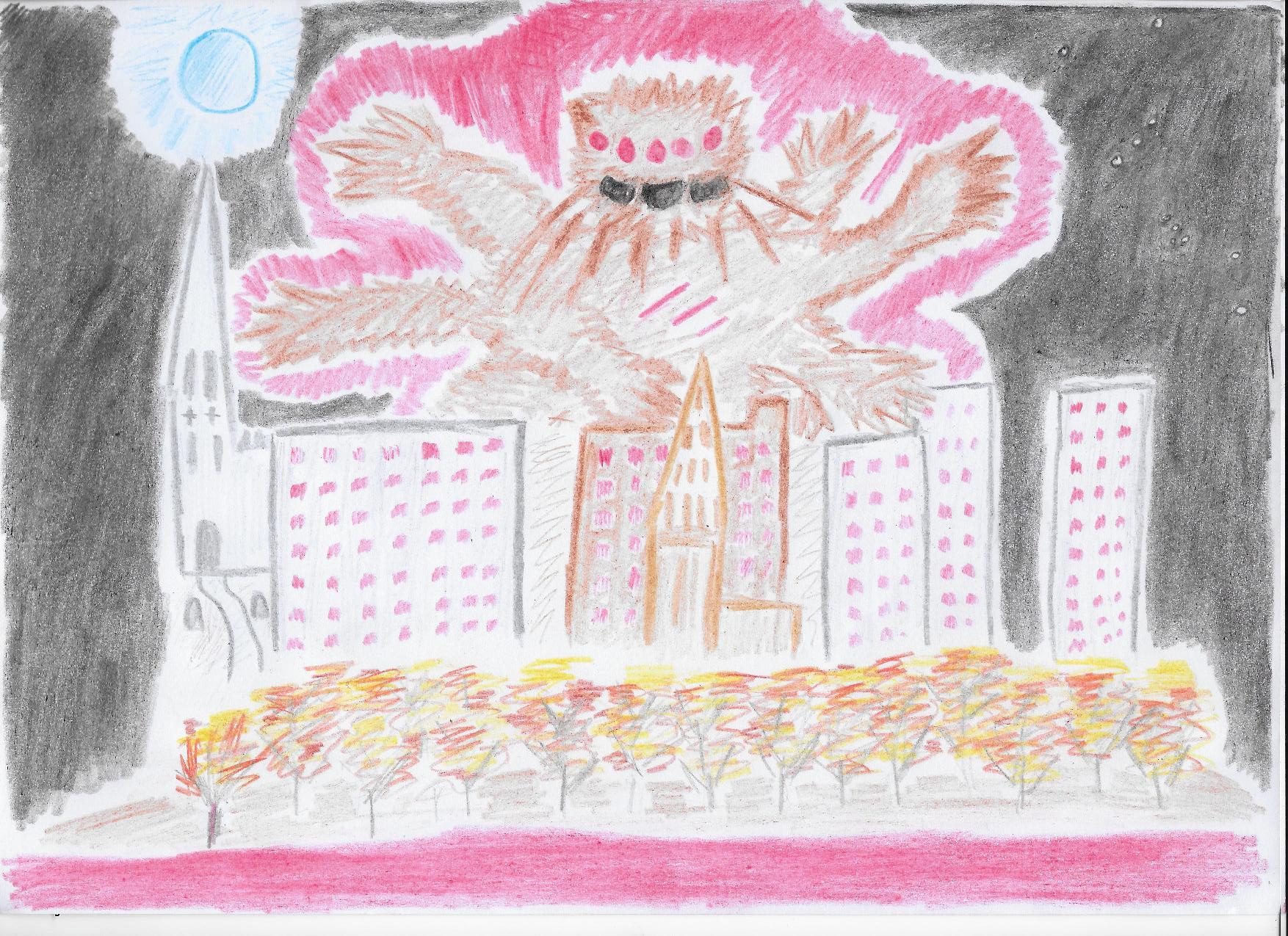
There is a monster amongst us, COVID-19, the Beast with the Fiery Halo. To represent it as such is in keeping with the traditions of many generations of ancestors who perceived diseases to be caused by malevolent beings, before science and technology revealed they are caused by micro-organisms. From an animistic standpoint, wherein all things are alive and have personhood, these views are not incompatible.
In ‘Hanes Taliesin’ the illustrious bard predicted the death of Maelgwn Gwynedd at the hands of ‘A most strange creature… His hair, his teeth, and his eyes being as gold.’ Maelgwn died after seeing Y Vat Velen, ‘The Yellow Plague’, through the keyhole in the church of Llan Rhos where he was ‘self isolating’.
Malaria, once known as the ague, took the form of a hag. Yr Hen Wrach, ‘The Old Hag’, was a seven foot woman who haunted Cors Fochno, Borth Bog. Her nocturnal visitations caused people to wake with the shakes. Samuel Taylor Coleridge later spoke of ‘the ghastly Dam, / Fev’rish yet freezing, eager paced yet slow, / As she that creeps from forth her swampy reeds, / Ague, the biform Hag!’
Nos Galan Gaeaf is a night when the veil of mist that separates the worlds is thin and the living may commune with the dead and the spirits of Annwn, some of whom we can name, and some whom are beyond categorisation. It is a time for telling stories in which otherworldly beings appear to haunt us and in which journeys to the Otherworld made. There is usually a dispelling or a safe return.
If we had a story about the Beast with the Fiery Halo it might go something like this. Many years ago our ancestors tried to build a world that was very much like the Otherworld, in which there was no want of food, or drink, or light, or heat, where no-one was cold, where no-one went hungry.
And that world was built at a great cost. The land was despoiled by mining and building. The air was polluted by fumes, which caused the temperature to rise. This led to the perishing of millions of trees, plants, animals, fish, and insects and to most of our ancestors living in servitude to the rulers who took power over the resources and machines that made this life possible. To depart from the system and the virtual world created by its technologies meant loneliness and ignominy, and at worst, death.
Most people accepted the cost, whether or not they were happy working at the machines, and turned a blind eye to the despoiling of the natural world because it was the only way to feed their families. Some did not. Some fought for change by protesting on the streets and others created nature reserves and planted trees and wildflowers and started growing their own food as an alternative.
Some prayed, to God, to the old gods, to Mother Earth, to Old Mother Universe, for something that would bring this system to an end. As if in answer to this prayer (and monsters are wily) appeared a beast the size of a sky scraper with limbs of countless animals, bent and twisted, as if trapped in a cage. Its lungs heaved phlegmatically in its scarred and hairy chest. Its many eyes were red and its mouths were gaping holes. Around its head was a blazing halo that burnt without burning the beast.
Like so many of the monsters in our myths it did not have a voice. It did not strike a bargain. It just came silently in the depths of winter and started taking the lives of our oldest most vulnerable people.
Protecting them came at a great cost: maintaining a distance from our friends and family, working less, travelling less, shopping less, to the benefit of the natural world and the detriment of our freedom. Our dependency on the rulers for financial support and the machines connecting us grew.
It felt like the unspoken bargain was this: ‘The lives of your old ones or your lives as you know them.’
Towards the end of summer we saw light shining through our prison bars. Although we all knew we had not defeated the monster we thought our sacrifices had kept it at bay. We dared to hope things might return to ‘normal’ but, as our liberties were restored, the monster took advantage. As winter approached, we saw the light was not sunlight, but the beast’s fiery halo, its triumphal crown.
The death toll is rising again. We are not at the end of the story but in media res, at the ‘crisis’, a Middle English term ‘denoting the turning point of a disease’ which is derived from medical Latin and dates back to the Greek krisis ‘decision’ and krinein ‘decide’. It’s decision time.
It’s as if we’re in a ‘choose your own ending’ book but the endings haven’t yet been written. We can only imagine them, happy or sad, tragic or comedic, apocalyptic or redeeming, guess there may be a twist.
Tonight the light of the blue moon is eclipsed by the beast’s fiery halo burning brighter than bright.
Nos Galan Gaeaf is a night on which, as a Brythonic polytheist devoted to Gwyn ap Nudd, I pray to him as the god who holds back the fury of the spirits of Annwn to prevent their destruction of the world and takes the souls of the lost and the angry dead to the Otherworld.
Countless times I have wondered why he has not held the beast back. Is it because he cannot or he will not? Is it because we are destroying the world? Because we too are monstrous?
We might consider that ‘monster’ originates from the Latin monstrum ‘to reveal’ or ‘to foretell’. Nos Galan Gaeaf, when Gwyn may be implored to part the mists of time, is a time for divination, for monstrous truths to be revealed and upon them our decisions based.
~
Gwyn ap Nudd
Starry Hunter in the Darkness guide us through these nights of fear.
Midnight Rider on the Storm of Madness teach us to ride these nights of tears.
Wise Warrior who guards the Cauldron by the light of the blue moon
lead the living to deeper wisdom and the dead back to Annwn.
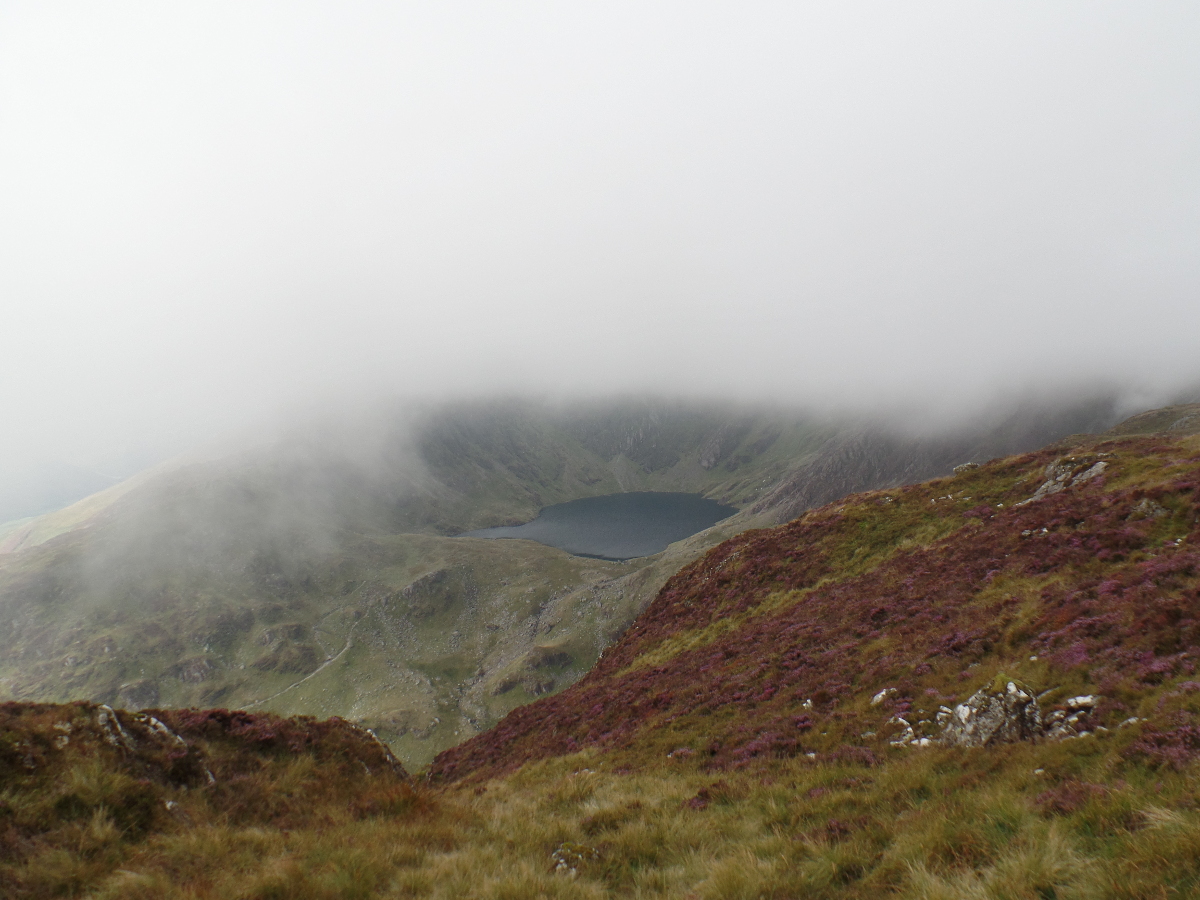
I’m back on Idris again at the edge of Llyn Cau alone with the madness of giants surrounded by the battle-fog of Gwenddolau although Arfderydd is distant, Myrddin, the gwyllon, the seven-score men who lapsed into wyllt-ness when battle-rage fled.
The ravens have left and I am alone pondering the edge of a blade lost in my brain-fog, my little Arfderydd, the small traumas etched on my flesh. Battle-scars, battle-madness, the battle- field I thought I’d escaped long ago when you appeared to Myrddin
as the brightness beyond endurance, tore him out of himself and took him to the forest of Celyddon to be healed. When you walked out of the heroic age and took me not like a maiden but like one of your own taught me to fight with Cyledyr, Cynedyr, Cynfelyn,
wilder than beasts of the mountains, to howl with your hounds and exult in the madness of giants bigger than dream. Bull of Battle, Invincible Lord, teach me again the art of turning pain into poetry, to make this battle-fog my strength not my enemy and this edge my blade.
“On an island lives the King of Annwn with a mysterious woman and no-one knows whether she is his sister, his beloved, his wife, his queen, or his daughter.”
These were words gifted to me at the beginning of a drumming journey that I undertook with the guidance of my patron god, Gwyn ap Nudd, a King of Annwn/Faerie, after asking him about the links I have intuited between his sister and beloved, Creiddylad, the mare goddess, Rhiannon, and the mother goddess, Modron.
There is little written about Creiddylad, but we know, like Rhiannon, she is a Queen of Annwn. As I have got to know her Creiddylad has revealed she is also associated with roses and horses. One of her names is ‘First Rose’ and she rides and takes the form of a white winged horse. Parallels exist between Rhiannon giving birth to Pryderi and him disappearing the same night as a foal is captured by a monstrous claw and Modron giving birth to Mabon, who is stolen away when he is three nights old. Whilst Creiddylad and Rhiannon are consorts of the King of Annwn, Modron is his daugher.
My journey resulted in the series of visions recorded in my poem ‘The Baby’s Gone’. My gnosis suggests Creiddylad, Rhiannon, and Modron are the same goddess with shifting identities.
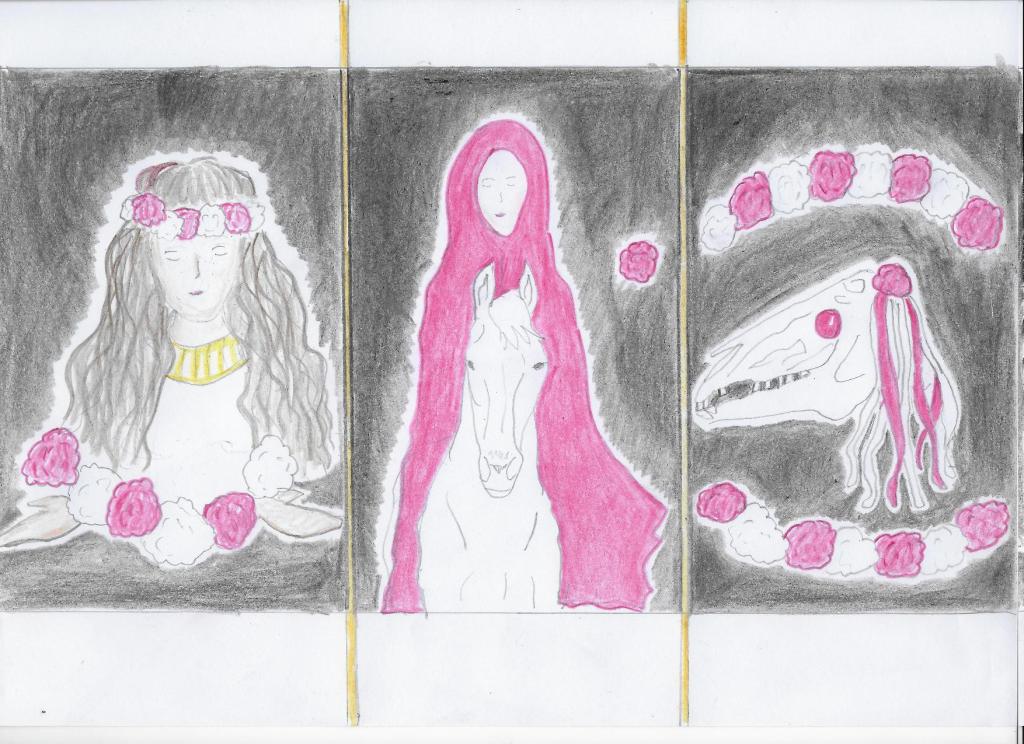
Further, in the ‘Rose Queen Triptych’ I was inspired to draw, Creiddylad, ‘The Rose Maiden’, shifts into Rhiannon, ‘The Rose Queen’, then into the Mari Llwyd, ‘The Bone Mare’.
This didn’t come as a great surprise as I had similar experiences with Gwyn. When I first came to polytheism about ten years ago I regarded myself to be a hard polytheist (someone who believes the gods are real individual persons) as opposed to a soft polytheist (someone who believes the gods are aspects of a single god or goddess or psychological archetypes). I still stand by that belief, however, it has become a lot more fluid.
One of the defining characteristics of the gods across cultures is that individual deities have many names and titles. A prime example is the Norse god, Odin. Over forty of his names are recorded in The Poetic Edda alone and he is known by many more in other texts. The Greek goddess, Demeter, possesses several epithets such as aganippe ‘night mare’ and chloe ‘the green shoot’.
Gwyn first revealed himself to me by that name as the King of Annwn/Faerie in 2012. After our initial meeting I made my main focus the myths in which he is known as Gwyn but swiftly found he lay behind a number of our Fairy King and Wild Huntsman legends in Lancashire and my past experiences with the fay and the faerie realm.
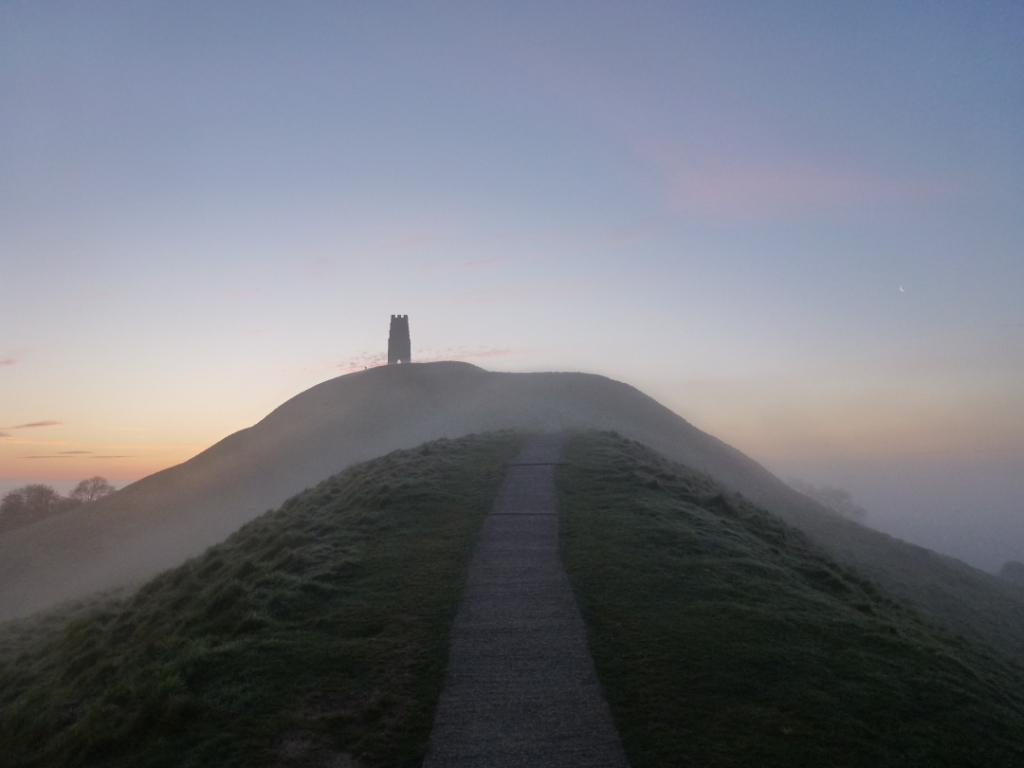
My experience of dedicating myself to Gwyn at the cauldron-like White Spring beneath Glastonbury Tor confirmed the links I had made between Gwyn feasting on Glastonbury Tor in The Life of St Collen and Pen Annwn presiding over a mead-feast with his cauldron were correct.
I was far more cautious about equating Gwyn with other Kings of Annwn. However, as I worked with the myths, intuiting the similarities between Gwyn and Arawn, both of whom are huntsmen who preside over otherworldly feasts, have beautiful brides, and fight a seasonal battle against a summer god each year, I found myself inhabiting their overlapping tales.
In one instance, in a dream, I was thrust into the role of Pwyll, who took the identity of Arawn in Annwn and had to fight Arawn’s battle, in Arawn’s form, against his rival, Hafgan. Only, in my dream I was taking the role of Gwyn and was preparing to battle against Gwythyr. This resulted in my poem ‘If I Had To Fight Your Battle’. In another, as I was walking my local landscape in winter, I felt for a moment like Arawn-as-Pwyll making a circuit of a thiswordly kingdom, only my identity became conjoined, instead, with Gwyn’s as Winter’s King. Again, I recorded my experience in a poem: ‘Winter Kingdom’. To me this proves Gwyn ‘White’ and Arawn (whose name a translation has not been agreed on) are names or titles of the same god who has shifting identities across time and place.
Similar experiences from intuiting links in the myths and being gifted with poems and visions have led me to believe the King of Annwn goes by many other names. These include Afallach, the Apple King who presides over Avalon and Melwas who shares similar associations with Glastonbury, Llwyd ‘Grey’ who puts an enchantment on the land and abducts Rhiannon and Pryderi in The Mabinogion, Brenin Llwyd, ‘The Grey King’ who haunts the misty Snowdonian mountains, Ugnach, a figure with ‘white hounds’ and ‘great horns’ whose otherworld feast Taliesin refuses to attend, and Ogyrven the Giant, who presides over the spirits of inspiration.
Additionally, the King of Annwn spoke to me directly of his shifting identities in this poem:
I speak from the infinite joining of the circle as the snake bites its tail
the moment of awen in every always of the universe
the sea behind the sea the land behind the land the sun behind the sun.
I come from many deaths. From many deaths I am reborn.
Dis, Vindonnus, Vindos, Llwyd, Brenin Llwyd, Arawn, Ugnach, Melwas, Ogyrven.
Across the sea I am Finn. For tonight I am Gwyn.
Thus it is unsurprising his consort, the Queen of Annwn, has many shifting identities too.
Interestingly, when I was involved with Dun Brython, it was very much Rhiannon/Rigantona who brought the group together in the beginning and I came later as a devotee of Gwyn. One of the other members also had a strong relationship with Gwyn and it was member Greg Hill’s translations of poems featuring Ogyrven and Ugnach that helped me decipher the aforementioned connections. When Greg and I set up the Awen ac Awenydd group many other Gwyn devotees were drawn to it and the King and Queen of Annwn feel very central to the Brythonic tradition in the modern day.
Afallach, a Brythonic god whose name is derived from afal ‘apple’, is best known for his associations with Ynys Afallach ‘The Island of Apples’ or the Isle of Avalon. In his Speculum Ecclesiae (1216)Giraldus Cambrensis says: ‘Avallonia is so called either from the British aval which means apple, because that place abounded with apples, or from a certain (A)vallo, lord of that land’.
Giraldus identifies the Isle of Avalon with Glastonbury, in De Instructione Principium (1193 -9): ‘what is now called Glastonia was anciently called Insula Avallonia, for it is like an island, wholly surrounded by marshes, whence it is called in British Inis Avallon, that is the apple-bearing island.’
William of Mamlesbury, in The Antiquities of Glastonbury (1216), follows this tradition. Glastonbury ‘is also well known as by the name of Insula Avalloniae’. He says it may be ‘named after a certain Avalloc who is said to have lived there with his daughters on account of it being a solitary place. (1)
Ynys Afallach is described as a paradisal island by Geoffrey of Monmouth in his Vita Merlini (1150). ‘The island of apples which men call “The Fortunate Isle” gets its name from the fact that it produces all things of itself; the fields there have no need of the ploughs of the farmers and all cultivation is lacking except what nature provides. Of its own accord it produces grain and grapes, and apple trees grow in its woods from the close-clipped grass. The ground of its own accord produces everything instead of merely grass, and people live there a hundred years or more.’
Geoffrey names the nine daughters of Afallach as Morgen, ‘Moronoe, Mazoe, Gliten, Glitonea, Gliton, Tyronoe, Thitis; Thitis best known for her cither.’ He notes Morgen ‘is first of them’, ‘skilled in the healing art, and excels her sisters in the beauty of her person’. She knows the properties of herbs, is skilled in healing, and mathematics and has the ability to shift shape.
Giraldus Cambrensis, in De Instructione Principium (1193), also writes of,‘Morganis, a noble matron who was the ruler and patron of these parts… the island which is now called Glastonia.”
II. Afallach – King of Annwn
It is significant that Morgan is referred to as a ‘noble matron’ for in the Triads she is otherwise named as ‘Modron daughter of Afallach’. Modron is a later form of Matrona ‘Mother’. The Mothers or Matrons were worshipped across northwestern Europe during the Romano-British period.
In Peniarth MS. 70 Modron speaks of herself as ‘the daughter of the King of Annwn’. Annwn means ‘the Deep’ and is the medieval Welsh name for the Otherworld which is a paradisal location.
In The Life of St Collen (14th C)we find an account of Collen’s visit to the castle of Gwyn ap Nudd, a King of Annwn, on Glastonbury Tor:
‘he saw the fairest castle he had ever beheld, and around it the best appointed troops, and numbers of minstrels, and every kind of music of voice and string, and steeds with youths upon them the comeliest in the world, and maidens of elegant aspect, sprightly, light of foot, of graceful apparel, and in the bloom of youth and every magnificence becoming the court of a puissant sovereign. And he beheld a courteous man on the top of the castle, who bade him enter, saying that the king was waiting for him to come to meat. And Collen went into the castle, and when he came there, the king was sitting in a golden chair. And he welcomed Collen honourably and desired him to eat, assuring him that, besides what he saw, he should have the most luxurious of every dainty and delicacy that the mind could desire, and should be supplied with every drink and liquor that his heart could wish; and that there should be in readiness for him every luxury of courtesy and service, of banquet and of honourable entertainment, of rank and of presents: and every respect and welcome due to a man of his wisdom.’
It seems likely Gwyn and Afallach are the same deity. Both are named as King of Annwn and are associated with Glastonbury/the Island of Avalon. Afallach is named as the grandson of Beli Mawr in the Harleian Genealogies (1100)and we find out that Gwyn is the grandson of Beli Mawr from Lludd ac Llefelys (1225) where his father, Lludd/Nudd, is named as the son of Beli.
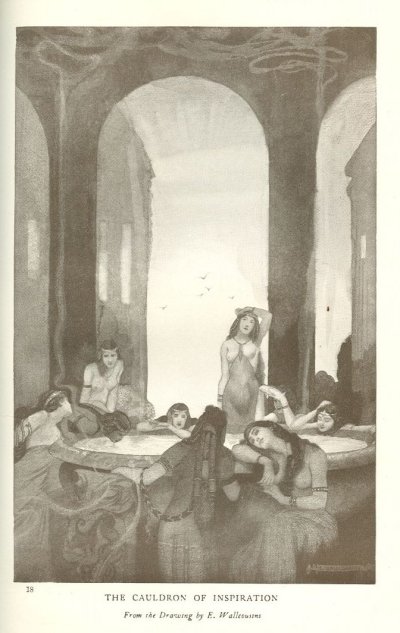
Further traces of his mythos can be found in ‘Preideu Annwn’ where Pen Annwn, ‘the Head of the Otherworld’ is depicted presiding over an otherworldly mead feast and as the owner of countless treasures including a cauldron ‘kindled by the breath of nine maidens’ with ‘a dark trim and pearls’.
Its refusal to ‘boil a coward’s food’ suggests that it is connected with the initiation of bards such as ‘the loyal lad’, Gwair who, in the poem, is singing before the spoils of Annwn in a heavy grey chain.
III. Afallach and Modron in the Old North
In the Triads and Peniarth MS. 70 Afallach’s daughter, Modron, is the mother of the children of Urien. In Triad 70 the second of the ‘Three Fair Womb Burdens’ is the following: ‘Owain, son of Urien and Morfudd his sister who were carried together in the womb of Modron daughter of Afallach’.
In Peniarth MS. 70 we find the full story of the conception of Modron’s children:
‘In Denbighshire there is a parish which is called Llanferes, and there is there Rhyd y Gyfarthfa (the Ford of Barking). In the old days the hounds of the countryside used to come together to the side of that the ford to bark, and nobody dared go to find out what was there until Urien Rheged came. And when he came to the side of the ford he saw nothing except a woman washing. And then the hounds ceased barking, and Urien seized the woman and he had his will of her; and then she said “God’s blessing on the feet which brought thee here.” “Why?” said he. “Because I have been fated to wash here until I should conceive a son by a Christian. And I am daughter to the King of Annwfn, and come thou here at the end of the year and then thou shalt receive that boy.” And so he came and he received there a boy and a girl: that is, Owein son of Urien and Morfudd daughter of Urien.’
The setting of this story in Denbighshire is strange because Urien was the king of the northern kingdom of Rheged during the sixth century. Urien’s seat may have been Luguvalium (present-day Carlisle), on the River Eden, and his realm likely extended throughout the Eden Valley and much of Cumbria to the Solway Firth and perhaps included Dumfries and Galloway. (2)
The name ‘Eden’ holds associations with Paradise and thus with Afallach/Gwyn and his brother Edern. (3) When Rheged was conquered by the Anglo-Saxons some of the fleeing Britons may have taken the tale to Wales.
I believe this story has its basis in the pre-Christian tradition of a human king entering a sacred marriage with the goddess of the land. There is plentiful evidence for the cultus of Modron/Matrona and her son, Mabon/Maponos in the form of altars and place names in northwest England and southern Scotland.
Altars and inscriptions to the Mother Goddesses and the Mothers the Fates have been found at Burgh-by-Sands, Carlise, Old Penrith, Skinburness, Bowness-on-Solway, Ribchester, and Lund. There is an altar to Apollo-Maponus at Ribchester. Lochmaben and the Clochmaben stone are named after him.
In The Harleian Genealogies the kings of Rheged trace their lineage to Coel Hen and ultimately to Afallach and Beli Mawr. This suggests that Beli, Afallach, Modron, and Mabon were their ancestral deities.
The references to Owain as Mabon in the poetry attributed to Urien’s bard, Taliesin, are suggestive not only of his divine birth, but that he possessed the power to invoke and take on the identity of Mabon.
The story from Peniarth MS. 70 demonstrates the turning of the kings of Rheged to Christianity. Here we find Modron depicted as a sinister figure, as the Washer at the Ford, suggesting links with Morgan and possibly with the Irish death-goddess Morrigan, surrounded by equally sinister hounds (who are likely to be the Hounds of Annwn who hunt the souls of the dead with her father). To see a woman washing one’s clothes was a death portent as was hearing or seeing otherwordly hounds.
Urien, a self-proclaimedly Christian King, ignores the portents, seeing ‘nothing but a woman washing’ and rapes Modron. Her words about being fated to wash there until she conceives a son by a Christian have clearly been put into her mouth by a Christian interlocutor to obscure her role as a sovereignty goddess who holds power not over the land and Annwn but fate itself. Following Urien’s abuse it is no surprise he is assassinated and this leads to the fall of Rheged and the Old North.
The connections of Afallach and Modron with the Old North live on in their folkloric associations with the Roman fortresses of Glanoventa (Ravenglass) and Mediobogdum (on the Hard Knott Pass). In these areas of Cumbria Afallach is known as Eveling, which is an Anglicised version of his name.
IV. Afallach and Gwallen in North Wales
Afallach’s associations with Rhyd y Gyfarthfa in Denbighshire have been noted. Near the hill fort of Moel-y-Gaer in Flintshire is a hamlet called Caerfallwch which means ‘the Fortress of Afallach’.
From the ‘Hanesyn Tract’ we learn that Afallach had another daughter called Gwallen. She is referred to as ‘Gwalltwen verch Yvallach’ in ‘Digyniad Pendefigaeth Cymru’ and here we learn that she was mistress of Maelgwn, the ruler of Gwynedd during the sixth century, and the mother of Maelgwn’s son, Rhun, who ‘was not acceptable to some as prince, only as a regent.’
The kings of Gwynedd traced their ancestry through Cunedda to Afallach and Beli Mawr. It is possible that, like Modron, Gwallen was perceived as a sovereignty goddess. Her name might be translated as ‘White Hair’ (from gwallt ‘hair’ and gwyn/(g)wen ‘white’) suggesting Annuvian characteristics shared with her father, Afallach/Gwyn. The rejection of her son may be indicative not only of the laws surrounding illegitimacy, but Christian superstitions surrounding her otherworld nature.
Maelgwn’s wife was Sanan ferch Cyngen. They had a daughter called Eurgain who was married to the northern warlord Elidyr Mwynfawr. According to The Black Book of Chirk (1592 – 1667):
‘After the death of Maelgwn… many of the nobility of Cambria disdained to yield subjection to Rhun his son, being a bastard begot upon Gwallten the daughter of Afallach, Maelgwn’s concubine, especially the nobility of Arfon, who privately sent unto Elidyr Mwynfawr aforesaid to come speedily to Cambria, to aid him in recovery of the kingdom in the right of his children by Eurgain the daughter and heir of Maelgwn’.
The voyage of Elidyr and Eurgain and their companions from the Old North to Wales is recorded in Triad 44 ‘Three Horses who carried the Horse Burdens’. It is memorable because ‘seven and a half’ people are said to have crossed sea on the back of the water horse Du y Moroedd ‘The Black of the Seas’.
‘Du y Moroedd… horse of Elidyr Mwynfawr… carried on his back seven and a half people from Benllech in the north to Benllech (Elidir) in Mon. These were the seven people: Elidyr Mwynfawr and Eurgain his wife, daughter of Maelgwn Gwynedd, and Gwyn Good Companion and Gwyn Good Distributor, and Mynach Naoman his counsellor, and Prydelaw the Cupbearer, his butler, and Silver Staff his servant, and Gelbeinifen, his cook who swam with two hands and on the horse’s crupper – and he was the half person.’
Du y Moroedd is the horse Gwyn ap Nudd rides when hunting for Twrch Trwyth ‘King of Boars’ and likely for the souls of the dead. (4) Elidyr met his end battling against Rhun at Aber Mefydd. Perhaps Du not only carried them to meet their deaths but to the Otherworld afterwards too.
What this story serves to consolidate is that Afallach/Gwyn and his daughter, Gwallen, had strong and longstanding connections with the Brythonic peoples who claimed descent from Beli Mawr.
V. Lugus and the Island of Apples
In the Irish myths we find Emain Ablach ‘The Island of Apples’. In ‘Ar an doirseoir ris an deaghlaoch’ ‘The doorkeeper said to the noble warrior’, a medieval Irish poem based on the arrival of Lugh at the court of the Irish gods, the Tuatha Dé Dannan, Lugh introduces himself as ‘a poet from Emain Ablach / of swans and yews’ before gaining entry due to his mastery of many skills. This suggests Lugh might have undergone some kind of bardic initiation on Ablach/Afallach’s isle.
Lugh is the son of Cian of the Tuatha Dé Danann, and of Ethniu, daughter of the Formorian giant, Balor. After hearing a prophecy that he would be killed by his grandson, Balor locked Eithne away in a tower on Tory Island, but this did not prevent Cian from entering and fathering Lugh. Balor then attempted to stop the child gaining maturity by preventing him from getting a name and a wife.
In ‘Balor of the Evil Eye and Lui Lavada’ Cian takes Lui to Tory Island where numerous apple trees grow. They pose as gardeners. When Lui shows a good deal of skill picking up the apples Balor says: ‘Tog leat Lui Lavada’ ‘take away with you little long hand’ and this is how he receives his name. Lui/Lugh kills Balor with a slingshot or spear through his burning or poisonous eye.
We find a striking parallel in The Mabinogi (1350 – 1410) in the story of Lleu Llaw Gyffes who is cognate with the Irish Lugh. Lleu is the son of Gwydion and Arianrhod, the son and daughter of Beli Mawr and Don. He was likely conceived by magical subterfuge. (5) In this story it is not Lleu’s grandfather, Beli, but his mother, Arianrhod who curses him with three fates: he will never win a name, arms or a wife. This is because of her ‘shame’ at the slight to her virginity caused by Gwydion.
Gwydion helps Lleu win his name by disguising them as shoemakers and luring Arianrhod onto his boat to get a shoe fitted. When she is on board Lleu shoots a wren that lands on the deck ‘in the leg, between the tendon and the bone’ and she exclaims ‘it is with a skilful hand that the fair one has hit it’ and hence he is called Lleu Llaw Gyffes ‘the fair-haired one with the skilful hand’.
Instead of killing his grandfather, Beli, with his spear, Lleu kills Gronw, his rival for his wife, Blodeuwedd. Gronw, a hunter who arrives with a pack of hounds chasing a deer and turns up at night to seduce Lleu’s beloved is likely to be the King of Annwn, Arawn, who displayed his shapeshifting abilities earlier in the text, and may be identified with Afallach/Gwyn, his cousin.
The Welsh and the Irish myths contain suggestions of a shared mythos surrounding Beli/Balor, Ablach/Afallach, Eithne/Arianrhod, Cian/Gwydion, and Lleu/Lugh/Lugus (his pan-Celtic name) that was important to the people of the Brythonic kingdoms who claimed descent from Beli. (6)
VI. The Apple King in Peneverdant
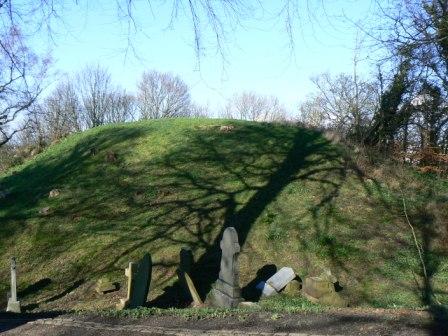
The name of my home town, Penwortham, was Peneverdant in the Domesday Book. The first element, pen, ‘head’ is Brythonic and refers to present-day Castle Hill. Like Glastonbury Tor this headland stood on marshland and is an important sacred site for pagans and Christians.
The dedication of the church on its summit and well at its foot (now dried up) to St Mary Virgin and the fairy funeral legend featuring a fairy leader suggest the presence of a mother goddess and fairy king.
I know from personal experience the fairy king is Afallach/Gwyn. I first intuited the goddess to be Gwyn’s mother, Anrhuna, who I know as the Mother of the Marsh, but am now considering that another presence who better fits the image of Mary in the church with her shining son is Modron with Mabon.
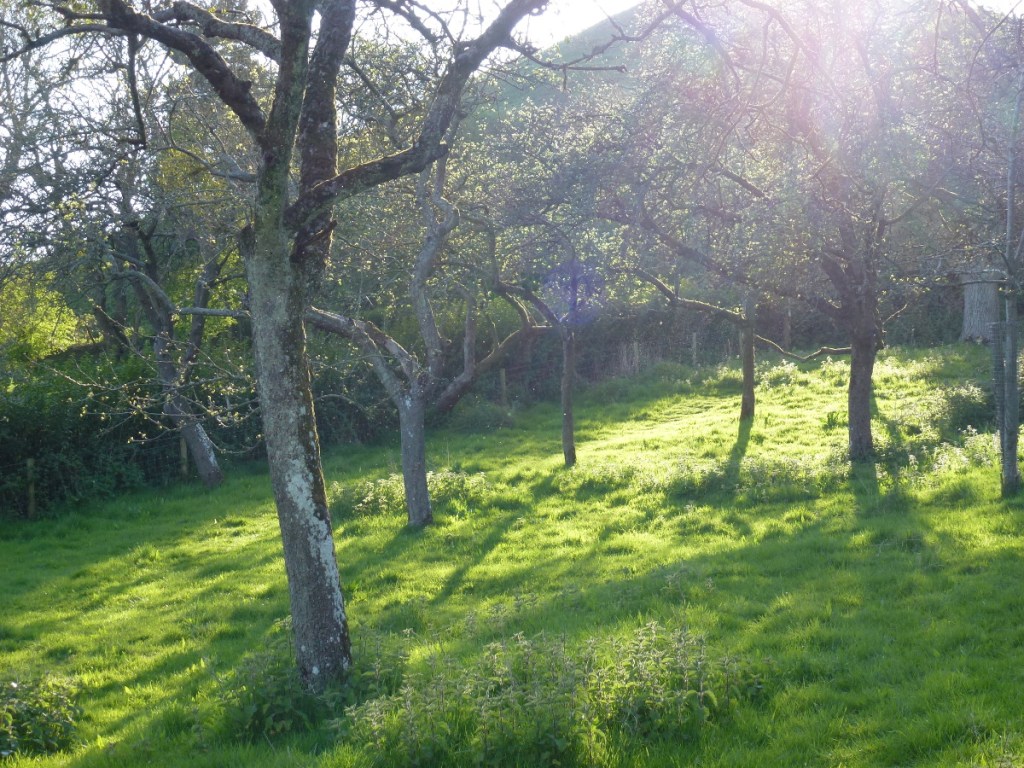
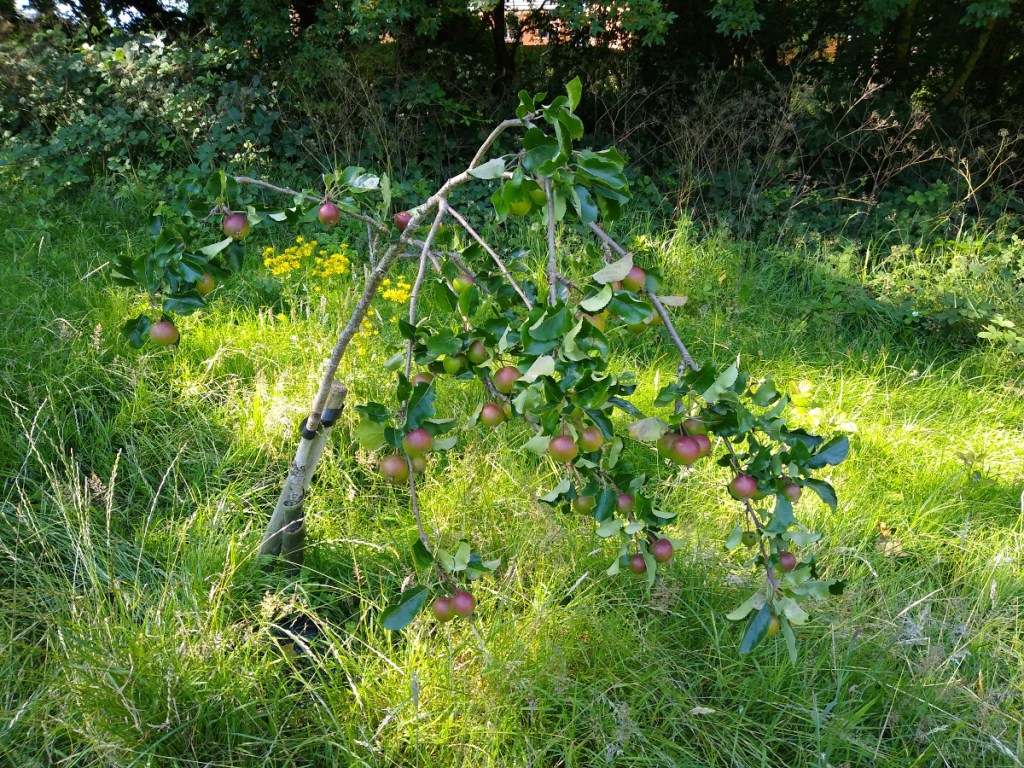
I hadn’t considered this possibility because I hadn’t realised Afallach and Gwyn were the same deity. Looking back I should have realised earlier for I spent a considerable amount of time in the Avalon orchards at Glastonbury when I visited at Calan Mai in 2013 and 2015. On the latter occasion this inspired me to plant five apple trees in Greencroft Valley with the Friends group. Three have survived and two, the Epicure and Sowman’s seedling, have borne apples this year.
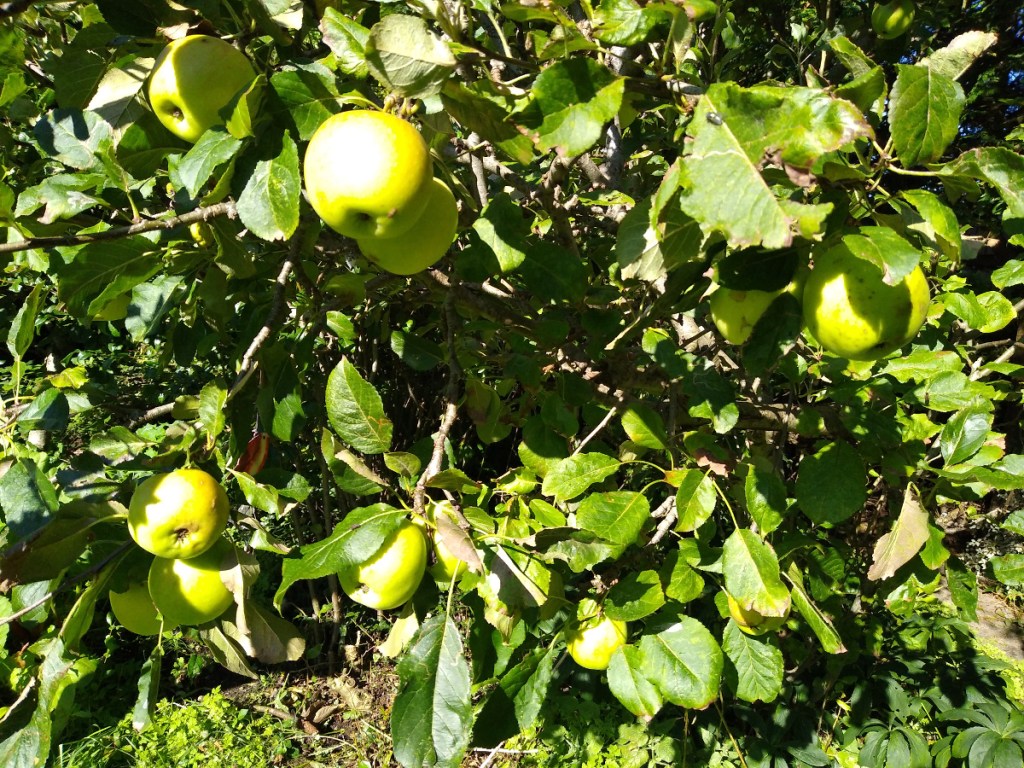
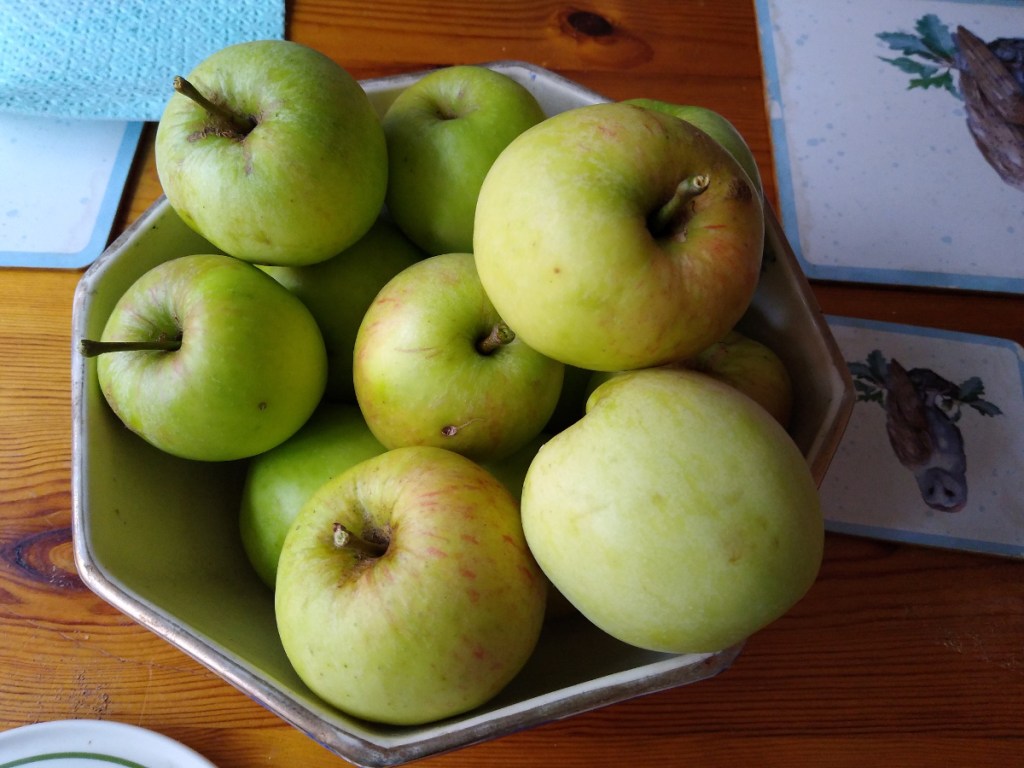
I have been making connections between Afallach and Gwyn as I have harvested these apples and those from the two apple trees in my parent’s garden. I’ve noticed they’ve come earlier this year for I usually gather the last before Gwyn’s Feast on the 29th of September and offer an apple to him with pork.
Of course the sweet and juicy apples we eat in Britain today were imported by the Romans. Yet we do have a native apple tree – the crab apple. Although its fruits are too sour to eat raw there is no doubt our ancient ancestors cooked them and served them with meat as a welcome addition to their diet. The fact that apples are harvested at the time of Gwyn’s Feast further consolidates his identity with Afallach. (7)
Another piece of potentially significant information I first heard orally but only found unreferenced online on a website called ‘Ireland Calling’ is the following: ‘The Celts… were said to bury apples in graves as food for the dead, a practice that is shown to date back over 7,000 years to Europe and West Asia where petrified remains of sliced apple have been found in tombs from 5,000BC.’ However, I haven’t been able to find a trustworthy source naming the date or location of these burials.
If it was proved that the Celtic peoples and in particular the Britons buried their dead with apples this might be suggestive of an offering to Afallach/Gwyn in return for taking the souls of the dead to Annwn.
Whatever the case my offering of an apple to the Apple King at his feast this year will have heightened significance and his relationship with Modron and Mabon opens new horizons to explore.
FOOTNOTES
(1) Malmesbury also provides a fascinating alternative foundation story based around apples. ‘Glasteing found his sow under an apple tree near the ancient church, and because apples were rare in those parts when he first arrived there, he called it Insular Avalloniae in his tongue, that is, Isle of Apples’. (2) Urien’s associations with the Eden Valley are suggested by the poems attributed to Taliesin, Urien’s bard, who refers to Urien as the ‘ruler of Llwyfenedd’, the Lyvennet Valley (the Lyvennet flows into the Eden). (3) However this river was known as Ituna ‘water’ or ‘rushing’during the Roman-British period. Urien was also named ‘ruler of Yrechwedd’. Echwedd means ‘flowing water’ and this could be the origin of this appellation. (4) In Culhwch ac Olwen (1190) Twrch Trwyth was allegedly a human chieftain turned into a boar by God on account of his sins. Behind this story lies his abilities as a shapeshifter and the fact Gwyn’s hunt, ‘the Wild Hunt’, was not really for boar but for human souls. (5) Gwydion’s fathering of Lleu is not explicit in the main source for Lleu’s story, the Fourth Branch of The Mabinogi, but is evidenced in other sources such as a poem by Lewys Môn and Harleian 3859 where Lleu is spoken of as ‘Lou Hen map Guidgen’. (6) The significance of Lugus is supported by his giving his name to Luguvalium (Carlisle) which means ‘Strong in Lugus’ and was ruled by Urien Rheged, to ‘the rock of Lleu’, the seat of the rulers of Gododdin from whom Maelgwn Gwynedd was descended, and to Dinas Lleu in the kingdom of Gwynedd.
Today is the first day of September. This name originates from the Latin septum ‘seven’ which derives from a time when it was the seventh month because the Roman calendar began with March.
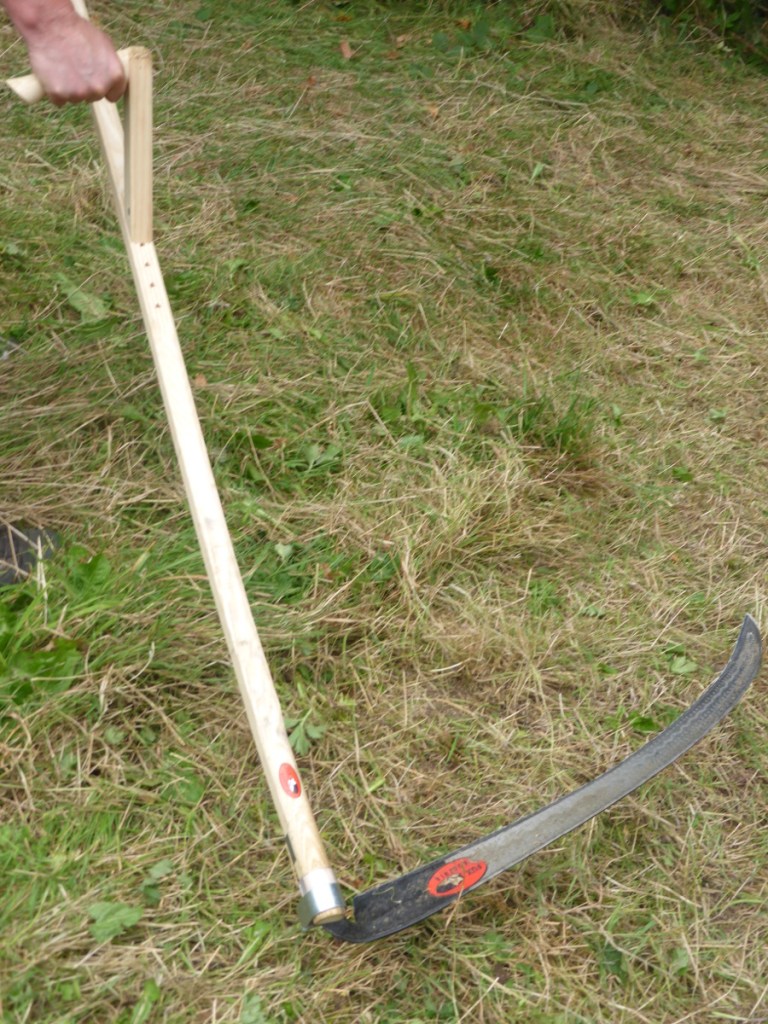
In Wales this month is known as mis Medi. According to Andrew Breeze this name is related to medaf ‘I reap’ and to met ‘cut, harvest’. This seems to be a fitting etymology for the month when the last of the crops are cut down and harvested and the last of the meadows are mown or reaped.
Breeze claims that the name of my local Iron Age tribe, the Setantii, who inhabited the plains of present-day Cheshire and Lancashire between the Mersey and the Wyre may be corrupted from met.
Breeze suggests they were less reapers of crops than of men. To this our archaeology recording the burials of severed heads and the head-hunting depicted in poetry from the Old North bears testimony.
My patron god, Gwyn ap Nudd, a Brythonic death-god is a reaper of souls. Some of his worshippers, such as Kristoffer Hughes, see him as death himself, as Britain’s original grim reaper.
Gwyn ap Nudd, helper of hosts, Armies fall before the hooves of your horse As swiftly as cut reeds to the ground.
Interestingly, as the Setantii inhabited my local landscape when it was mainly marshland and mossland and there is scarce evidence for agriculture, it seems likely they would have cut and used reeds (although reed cutting usually takes place from December to April rather than in September).
I first met Gwyn on August the 31st 2012 close to sunset. As, for the Celts, days begin at sundown not sunrise, this would be very close to the beginning of September. Since he came into my life I have been involved with the reaping of local wildflower meadows and how this shares a kinship with Gwyn harvesting souls and cutting down his rival, Gwythyr ap Graidol, a god of summer and seed.
In Cornwall September is known as Gwyngala ‘White Fields’ suggesting associations with Gwyn.
Return of the Reaper
I hear you galloping back your horse’s hooves are like scythes glinting in
the September breeze.
I will pick up the blade again the long-handled rake bend my back with you
reap these armies.
Heads of grass and meadow flowers fall limbs folding. Scattered shields. Bright helms.
A woman weeps.
Your beloved mourns your rival. His headless corpse on the stubble dead again.
Spirits are freed
to join your host mingling in night air in fields of white mist as we stop and drink toast the harvests
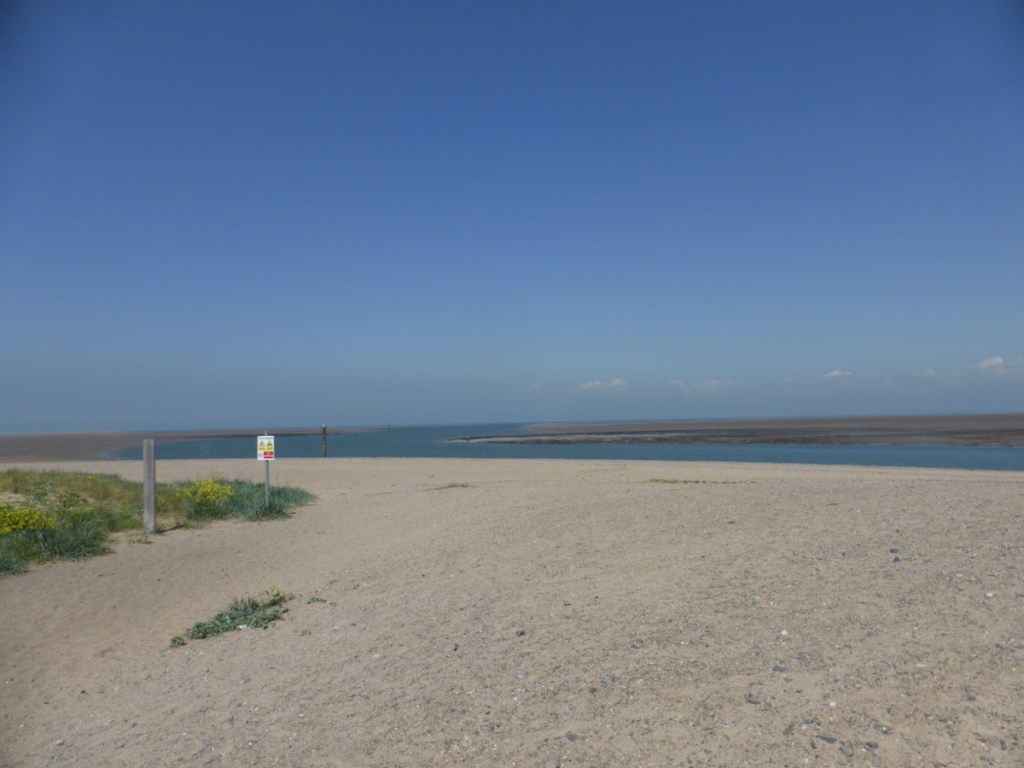
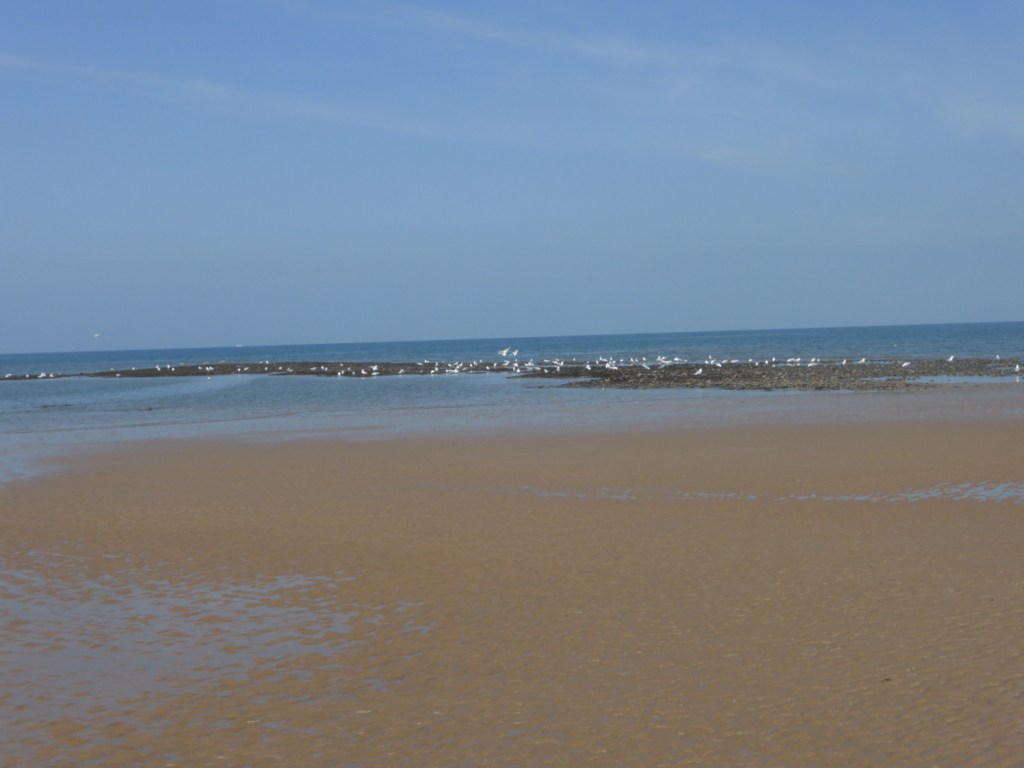
I have recently been revisiting the theory that Sétanta (later Cú Chulainn), a hero and perhaps a deity the Irish myths, was associated with the Iron Age Setantii tribe of northern Britain. Writing in 2CE the Roman geographer, Ptolemy, refers to Portus Setantiorum ‘the Port of the Setantii’, which was located at the mouth of the river Wyre, and also to Seteia, the river Mersey. This suggests the Setantii occupied the lowlands of present-day Cheshire and Lancashire from the Mersey to the Wyre.
The etymology of Setantii is one of much debate. Graham Isaac suggests it is emended from sego ‘strong’ and Andrew Breeze that is corrupted from ‘the Celtic *met “cut, harvest”, as in Welsh medaf “I reap”, Medi “September” (when corn is cut), Middle Irish methel “reaping party”’. Breeze notes these people were not ‘harmless agriculturalists’ and ‘Welsh literature indicates a bloodier sense’. Medel means ‘reaper’ ‘killer, mower down (of enemies in combat)’. The warrior-prince Owain Rheged is referred to by Taliesin as medel galon ‘a reaper of enemies’. Thus Metantii or Setantii is best translated as ‘reapers (of men), cutters down (in battle)’ and Meteia or Seteia as ‘reaper’.
In Celtic and Manx Folklore John Rhys puts forward the theory that Sétanta Beg means ‘the Little Setantian’, which we might translate as ‘reaping one’, and this would certainly fit with his ferocity in battle.
Rhys associates both Sétanta and Seithenin with the lost lands between Ireland and Wales. In Welsh legend Seithenin caused the flooding of the lands of Gwyddno Garanhir (1) when he failed to close the flood gates due to his liason with Mererid, the ‘fountain cup-bearer’, whose waters were loosed. Traditionally this story is associated with Cantre’r Gwaelod, ‘the Bottom Hundred’, ‘the shallows of Cardigan Bay’. Yet this area extended ‘northwards… off the coast of Cheshire and Lancashire, and occupied Morecambe Bay with a dense growth of oak, Scotch fir, alder, birch, and hazel’.
Gwyddno had two ports – Porth Wyddno (Borth) in Wales and ‘Porth Wyddno in the North’, one of Three Chief Ports in The Triads of the Island of Britain, which was likely Portus Setantiorum.
Holder theorises that Sétanta derives from Setantios and he was originally a Celtic god. Is it possible his mythos, the best developed of all the Irish deities, originated from the people who occupied the lost lands off the Lancashire coast and were later known as the Setantii?
Sétanta’s Birth and Boyhood
The stories of Sétanta/Cú Chulainn were written down by medieval Irish scribes during the 12th century in The Book of the Dun Cow and The Book of Leinster andare now firmly embedded in the Irish landscape. He is associated with Ulster, the Ulstermen, and their king, Conchobar.
‘The Birth of Cú Chulainn’ is a story with much mythic depth. Conchobar rules Ireland from Emain Macha. The plain is devastated by a flock of magical birds, ‘nine-score’ ‘each pair… linked by a silver chain’. Conchobar, his daughter and charioteer, Deichtine, and nine other charioteers hunt them. A heavy snow falls and they are forced to seek refuge in a storehouse where they are welcomed to feast by its owner. His wife is in labour and Deichtine helps her give birth to a son. At the same time a mare gives birth to two colts outside. Deichtine nurses the boy and he is given the colts.
Afterwards Conchobar and his company find themselves east of the Bruig (Newgrange) ‘no house, no birds, only their horses and the boy and his colts’. Deichtine takes the boy to Emain Macha and continues to nurse him but, to her heart break, he dies. Afterwards she drinks a ‘tiny creature’ from a copper vessel. That evening the god, Lug, appears to her and tells her she is pregnant by him and must call their son Sétanta. Because she is engaged to Sualtam mac Róich and fears he may suspect she slept with Conchobar she aborts the child, then becomes pregnant by Sualtam and bears a son. He is called Sétanta and thus has both thisworldly and otherworldly fathers – Sualtam and Lug. His dual paternity, like that of Pryderi, son of Pwyll and Arawn in the Welsh myths, marks him as a ‘special son’.
Lug is an Irish deity who is descended from Cian of the Tuatha Dé Danann, the Irish gods, and Eithne, daughter of Balor, one of the monstrous Formorians ‘Undersea Dwellers’. Sétanta’s descent from a human woman on one side and gods and giants on the other goes a long way to explain his superhuman qualities.
As a mere boy he is described as going to play with the others and fending off fifty javelins with his toy shield, stopping fifty hurling balls with his chest, and warding off fifty hurleys with his one hurley.
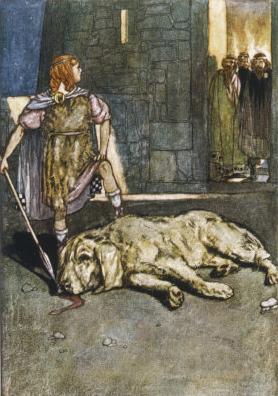
Sétanta receives the name Cú Chulainn after being attacked by a hound belonging to Culann the smith. He puts an end to it in a grotesque manner. ‘The lad struck his ball with his hurley so that the ball shot down the throat of the hound and carried its insides out through its backside. Then he grabbed two of its legs and smashed it to pieces against a nearby pillar stone’. As recompense to Culann, he offers to be Culann’s hound and guard Muirthemne Plain until a pup has been raised to take his place. From then he is known as Cú Chulainn – the Hound of Culann.
Training with Scáthach
Cú Chulainn trains with the warrior-woman Scáthach ‘the Shadow’ at Dún Scáith ‘The Fortress of Shadows’ on the Isle of Skye in Scotland. From her he learns the arts of war including ‘the apple-feat, the thunder-feat, the blade-feat, the foen-feat, and the spear-feat, the rope-feat, the body-feat, the cat’s feat, the salmon-feat of a chariot-chief, the throw of the staff, the jump over […], the whirl of a brave chariot-chief, the spear of the bellows, the boi of swiftness, the wheel-feat, the othar-feat, the breath-feat, the brud geme, the hero’s whoop, the blow […], the counter-blow, running up a lance and righting the body on its point, the scythe-chariot, and the hero’s twisting round the points of spears’.
Most fearsome is his use of the barbed spear known as the gae bolga: ‘thrown from the fork of the foot; it made a single wound when it entered a man’s body, whereupon it opened into thirty barbs, and it could not be taken from a man’s body without the flesh being cut away around it’.
During this period Cú Chulainn battles against Scáthach’s rival, another warrior-woman called Aife, defeats her, and offers to spare her life but only on the condition that she bears him a son.
The story of Cú Chulainn’s training with Scáthach shows links with Britain and the existence of a tradition where male warriors were trained by warrior women. This is also found in the Welsh myths where Peredur is trained by the Nine Witches of Caer Loyw and it might be suggested that Orddu, the Very Black Witch, of Pennant Gofid, in the North, fulfilled a similar role.
The Battle Rage of Cú Chulainn
After his training Cú Chulainn’s feats are many and his greatest is defending Ulster and the Brown Bull single handedly against the armies of Connacht whilst the Ulstermen are laid up with the Curse of Macha (1). This is recorded in The Tain. After putting them off by magic, picking them off with guerilla tactics and fighting against them in single combat he defeats them in three great massacres.
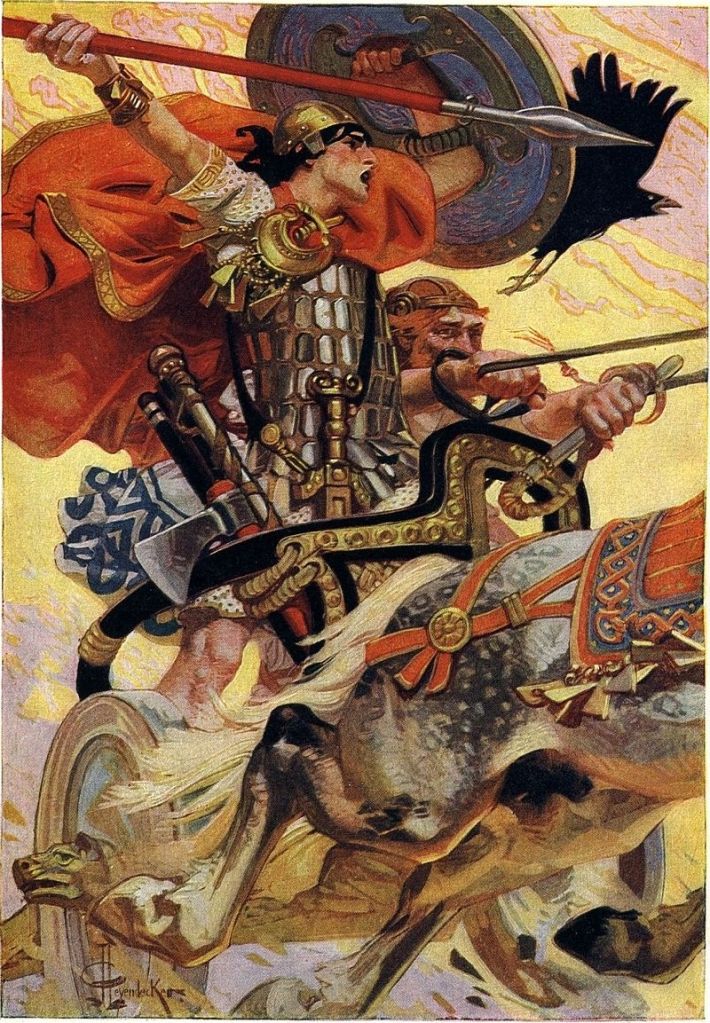
Here we witness his ability to cause incredible violence. With ‘his scythed chariot that glittered with iron tangs, blades, hooks, hard prongs and brutal spikes, barbs and sharp nails on every shaft, strut, strap and truss’ he drives into the ranks ‘three times encircling them with great ramparts of their own corpses piled sole to sole and headless neck to headless neck’, slaying ‘seven-score and ten kings’.
When he fights, Cú Chulainn is taken over by a battle rage known as his ‘warp spasm’ or ‘torque’. Its vivid descriptions, no doubt a delight to storytellers, driven to greater exaggerations, are worth citing.
‘The first Torque seized Cú Chulainn and turned him into a contorted thing, unrecognisably horrible and grotesque. Every slab and every sinew of him, joint and muscle, shuddered from head to foot like a tree in a storm or a reed in a stream. His body revolved furiously inside his skin. His feet and his shins and his knees jumped to the back; his heels and his calves and his hams to the front. The bunched sinews of his calves jumped to the front of his shins, bulging with knots the size of a warrior’s clenched fist. The ropes of his neck rippled from ear to nape in an immense, monstrous, incalculable knobs, each as big as the head of a month-old child.
Then he made a red cauldron of his face and features: he sucked one of his eyes so deep into his head that a wild crane would find it difficult to plumb the depths of his skull to drag that eye back to its socket; the other popped out on to his cheek. His mouth became a terrifying, twisted grin. His cheek peeled back from his jaws so you could see his lungs and liver flapping in his throat… The hero’s light sprang from his forehead… thick, steady, strong as the mast of a tall ship was the straight spout of dark blood that rose up from the fount of his skull to dissolve in an otherworldly mist…’
In his battle fury Cú Chulainn is described as warped and monstrous and these transformations may derive from his Formorian heritage. This is hinted at in a further passage: ‘Cú Chulainn torqued himself a hundredfold. He swelled and bellied like a bladder full of breath until he arched up over Fer Diad like a monstrously distorted rainbow, tall and horrible as a Formorian giant or a deep-sea merman’.
He also displays the ability to call up otherworldly spirits. His ‘roar of a hundred warriors’ is ‘echoed by the goblins and ghouls and sprites of the glen and the fiends of the air, for their howls would resound before him, above him, and around him any time he shed the blood of warriors and heroes’. ‘The clouds that boiled above him in his fury glimmered and flickered with malignant flares and sultry smoke – the torches of the Badb.’ This puts us in mind of the Scream over Annwn.
Even when he displays his ‘true beauty’ he is otherworldly with his hair in three layers, dark, blood-red and yellow, ‘four dimples in each cheek – yellow, green, blue and purple. Seven brilliant gems gleamed in each regal eye. Each foot had seven toes and each hand seven fingers, the nails or claws or talons of each with the grip of a hawk or griffin… He held nine human heads in one hand, ten in the other’.
Sétanta/Cú Chulainn is depicted a monstrous reaper of men and as a hunter of heads. Head-hunting was common amongst the Celtic peoples, particularly the Setantii, which is evidenced by the large number of severed heads ritually buried across their territories. It has been noted, whilst there is an absence of chariot burials in Ireland, there are many in northern Britain. So there is, at least, an argument that this otherworldly figure, like a giant or merman, originates from the people who once occupied the drowned lands between Britain and Ireland and may have been a Setantian god or hero.
The Tragedies of Cú Chulainn
Amidst the relentless violence endemic to a warrior culture whose greatest aim was winning everlasting fame through battle prowess we find some moving scenes based around Cú Chulainn’s relationships. When Cú Chulainn is badly wounded during his battle against the armies of Connacht his otherworld father, Lug, appears to fight his battle for three nights and days whilst he heals.
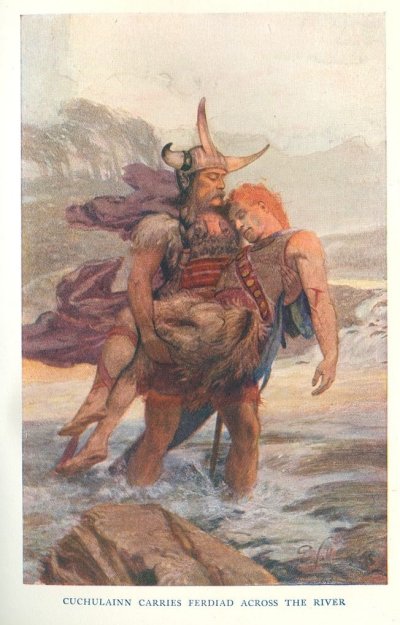
Tragically Cú Chulainn kills his son by Aife because he does not know who he is until he sees his ring. In an equally tragic scene Cú Chulainn faces and kills his foster-brother who was also possibly his lover, Fer Diad, with whom he trained with Scáthach. Their relationship is described in poignant verse:
Two hearts that beat as one, we were comrades in the woods, men who shared a bed and the same deep sleep after heavy fighting in strange territories. Apprentices of Scáthach, we would ride out together to explore the dark woods.
After many days of battle with various weapons Cú Chulainn puts an end to Fer Diad with the gae bolga.
His lament is heart wrenching:
Sad is the thing that became Scáthach’s two brave foster-sons – I wounded and dripping with gore, your chariot standing empty.
Sad is the thing that became Scáthach’s two brave foster-sons – I leak blood from every pore and you lie dead forever.
Sad is the thing that became Scáthach’s two brave foster-sons – you dead, I bursting with life. Courage has a brutal core.
It puts me in mind of the lines spoken by Gwyn, our British death-god and gatherer of souls, who is doomed to live on whilst the warriors of Britain perish in ‘The Conversation of Gwyn ap Nudd and Gwyddno Garanhir’ (2), which perhaps speaks of a shared origin to these poems.
Cú Chulainn’s love life also contains tragedy. His main lover is Emer but their relationship is put into jeopardy when Cú Chulainn goes to hunt her one of two magical birds ‘coupled with a red-gold chain’. He shoots but does not kill one. They turn out to be fairy women and, when he falls asleep against a stone, they take revenge by beating him with horsewhips until ‘there is no life left in him’.
He takes to his sick bed for a year and learns the only cure is to help one of them, Fand, to battle against her enemies. They fall in love and sleep together yet she is the wife of the sea-god, Manannan. Cú Chulainn returns to Emer but both are heart-broken. Cú Chulainn wanders the mountains neither sleeping nor drinking (3) until Manannan shakes his cloak between Cú Chulainn and Fand so she is forgotten.
Cú Chulainn’s death is fittingly tragic. His old enemy, Queen Medb of Connacht conspires to kill him with the sons of her enemies. He is tricked into breaking his geis of not eating the meat of his sacred animal, the dog, and by this he is weakened. He is killed by Lugaid, the son of Cú Roí, another otherworldy figure with whom he battles and defeats to win a maiden called Blathnat (4).
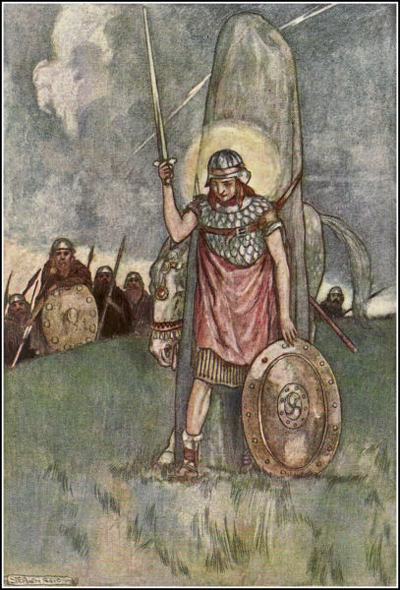
With a magical spear destined to kill three ‘kings’, Lugaid kills Láeg, Cú Chulainn’s charioteer, Liath Macha, Cú Chulainn’s horse and finally Cú Chulainn himself. Mortally wounded, Cú Chulainn ties himself to a standing stone so he can die on his feet facing his enemies. They remain afraid of him even after his death, not daring to approach until a raven lands on his shoulder. This symbolises he has been beaten by the only opponent worthy of defeating him, the death goddess, the Morrigan (5).
A Hero of the Setantii?
Here I have provided only glimpses into the rich mythos surrounding Sétanta/Cú Chulainn: his birth and dual paternity, his naming as Culann’s Hound, his training with Scáthach, his feats as a warrior, his love life (which features a number of women and possibly a man), and his death.
As we have seen, these stories are now firmly embedded within the Irish landscape. However, we know that many centuries ago Britain and Ireland were near joined together and that the gods, the Tuatha Dé Danann and the Children of Don, share many similarities. Nodens/Nuada, the king of the gods, was worshipped on the Lancashire coast and his son, Gwyn, might have conversed here with Gwyddno. Lug(us) was the patron god of Carlisle (Luguvalium) further north. If he was venerated here it would make sense his son, Sétanta/Setantios, was also viewed also an important deity or hero.
The evidence suggests there is at least a possibility the stories of Sétanta originated from the lost lands off the coast of Lancashire where gods and giants gave birth to monsters, that this monstrous and beguiling head-reaping hero was one of the deities of the Setantii, the reapers of men.
(1) After Macha raced against the horses of the king of Ulster and won she gave birth and screamed that for five days and four nights any man who heard her would be afflicted by her labour pains. She then died. Her curse was passed on for nine generations. Macha’s name was given to Emain Macha. (2) I was there when the warriors of Britain were slain From the east to the north; I live on, they are in the grave.
I was there when the warriors of Britain were slain From the east to the south; I live on, they are dead. (3) His state resembles geilt/wyllt ‘mad’ or ‘wild’ in the Welsh and Irish myths where we find Suibhne Geilt and Myrddin Wyllt taking on bird transformations and Cynedyr Wyllt ‘nine times wilder than the wildest beast on the mountain’. (4) ‘The contention of Corroi and Cocholyn’ (Cú Roí and Cú Chulainn) is referred to in the medieval Welsh poem ‘The Death Song of Corroi’ in The Book of Taliesin and the beheading game Cú Chulainn plays with Cú Roí perhaps depicts a conflict with the Head of the Otherworld, here known as Gwyn. (5) The Morrigan appears earlier in the stories as young prophet then fights against him as an eel, a she-wolf, and a hornless red heifer. After the battle she tricks him into healing her when she appears as a one-eyed hag milking a cow with three teats by drinking from each which heals her three wounds.
SOURCES
Andrew Breeze, ‘Three Celtic Toponyms: Setantii, Blencathra, and Pen-Y-Ghent, Northern History, XLII: 1, (University of Leeds, 2006) Ciaran Carson (transl.), The Tain, (Penguin, 2008) Eoin Mac Neill, Varia. I, Eriu, Vol. 11, (Royal Irish Academy 1932) Greg Hill, (transl.) ‘The Conversation of Gwyn ap Nudd and Gwyddno Garanhir’, https://awenydd.cymru/the-conversation-between-gwyn-ap-nudd-and-gwyddno-garanhir/ Jeffrey Ganz, Early Irish Myths and Sagas, (Penguin, 1981) John Rhys, Celtic and Manx Folklore: Volume One, (Project Gutenberg, 2017) Rachel Bromwich (ed), The Triads of the Island of Britain, (University of Wales Press, 2014) Sioned Davies (transl.), The Mabinogion, (Oxford University Press, 2007)
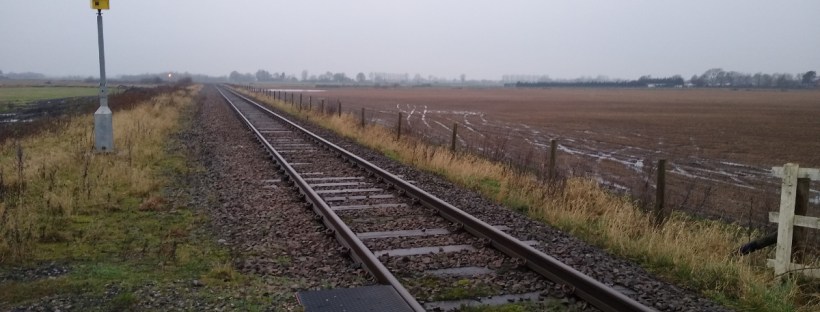
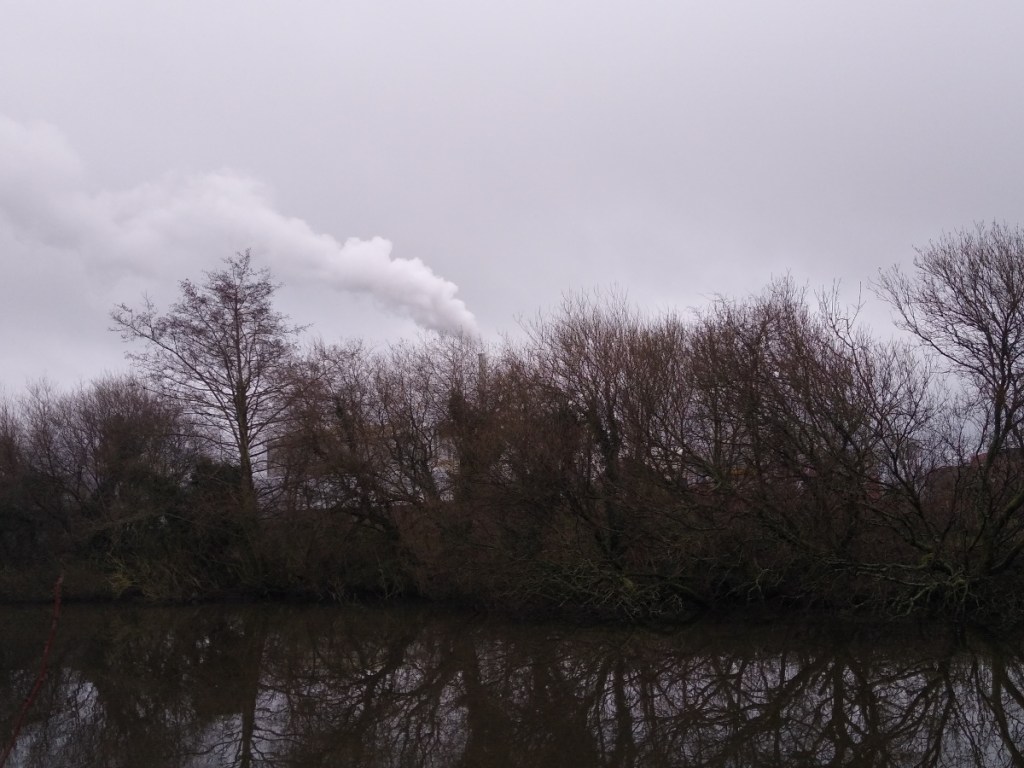
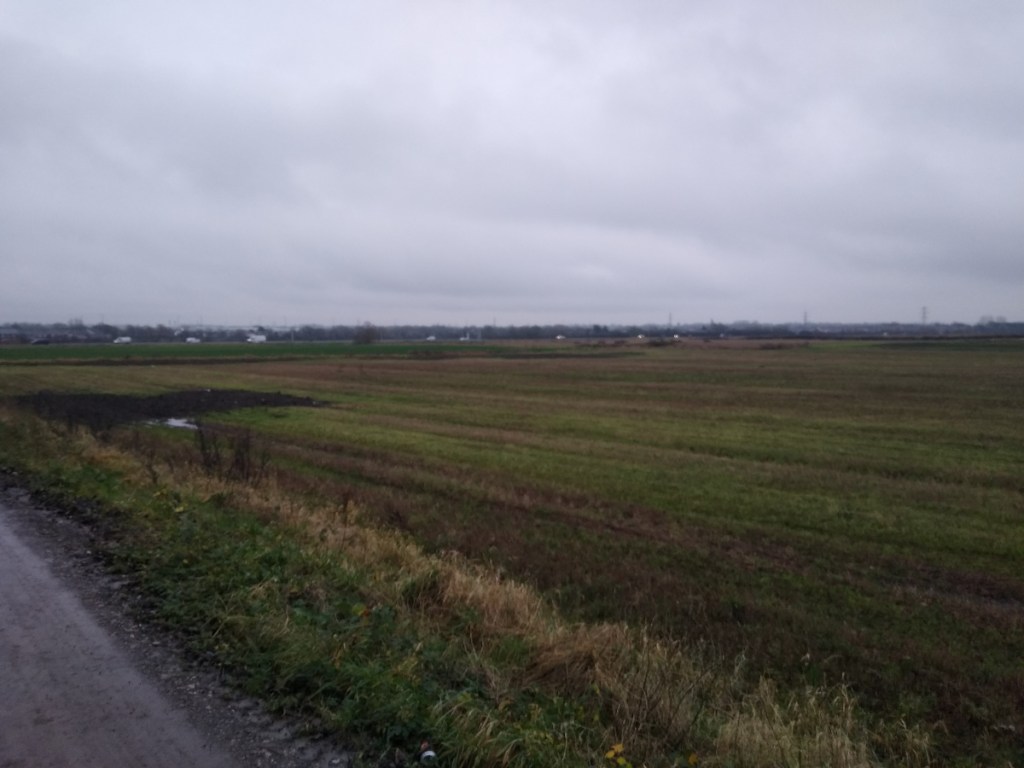
With thanks to Wikipedia for the images of Cú Chulainn. The photographs of the former site of Portus Setantiorum near the mouth of the river Wyre and the coast from Rossall Point where the remnants of the forest have been seen are my own.
 The Sanctuary of Vindos