Sétanta – A Hero of the Setantii?

Sétanta and the Setantii

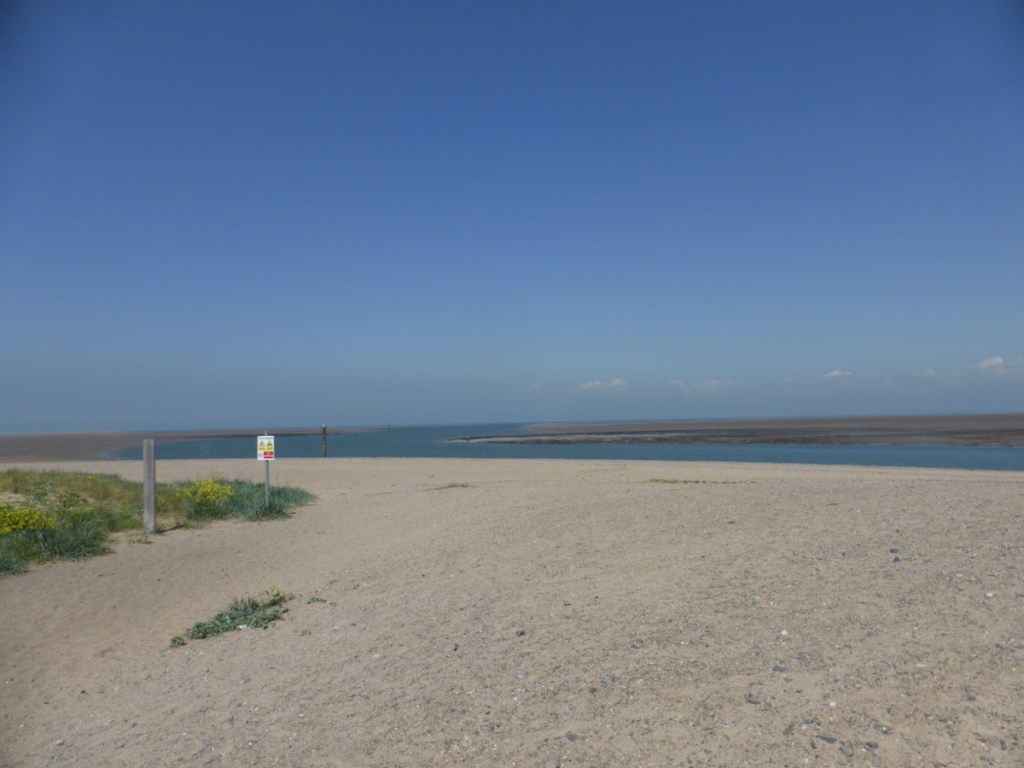
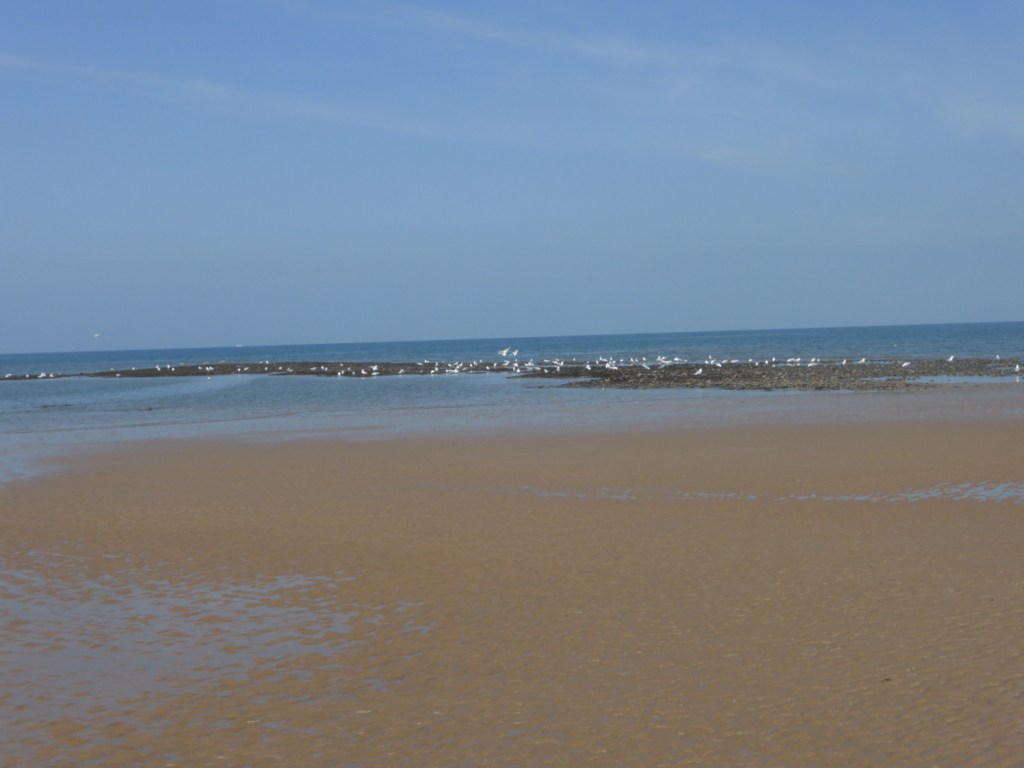
I have recently been revisiting the theory that Sétanta (later Cú Chulainn), a hero and perhaps a deity the Irish myths, was associated with the Iron Age Setantii tribe of northern Britain. Writing in 2CE the Roman geographer, Ptolemy, refers to Portus Setantiorum ‘the Port of the Setantii’, which was located at the mouth of the river Wyre, and also to Seteia, the river Mersey. This suggests the Setantii occupied the lowlands of present-day Cheshire and Lancashire from the Mersey to the Wyre.

The etymology of Setantii is one of much debate. Graham Isaac suggests it is emended from sego ‘strong’ and Andrew Breeze that is corrupted from ‘the Celtic *met “cut, harvest”, as in Welsh medaf “I reap”, Medi “September” (when corn is cut), Middle Irish methel “reaping party”’. Breeze notes these people were not ‘harmless agriculturalists’ and ‘Welsh literature indicates a bloodier sense’. Medel means ‘reaper’ ‘killer, mower down (of enemies in combat)’. The warrior-prince Owain Rheged is referred to by Taliesin as medel galon ‘a reaper of enemies’. Thus Metantii or Setantii is best translated as ‘reapers (of men), cutters down (in battle)’ and Meteia or Seteia as ‘reaper’.

In Celtic and Manx Folklore John Rhys puts forward the theory that Sétanta Beg means ‘the Little Setantian’, which we might translate as ‘reaping one’, and this would certainly fit with his ferocity in battle.

Rhys associates both Sétanta and Seithenin with the lost lands between Ireland and Wales. In Welsh legend Seithenin caused the flooding of the lands of Gwyddno Garanhir (1) when he failed to close the flood gates due to his liason with Mererid, the ‘fountain cup-bearer’, whose waters were loosed. Traditionally this story is associated with Cantre’r Gwaelod, ‘the Bottom Hundred’, ‘the shallows of Cardigan Bay’. Yet this area extended ‘northwards… off the coast of Cheshire and Lancashire, and occupied Morecambe Bay with a dense growth of oak, Scotch fir, alder, birch, and hazel’.

Gwyddno had two ports – Porth Wyddno (Borth) in Wales and ‘Porth Wyddno in the North’, one of Three Chief Ports in The Triads of the Island of Britain, which was likely Portus Setantiorum.
Holder theorises that Sétanta derives from Setantios and he was originally a Celtic god. Is it possible his mythos, the best developed of all the Irish deities, originated from the people who occupied the lost lands off the Lancashire coast and were later known as the Setantii?

Sétanta’s Birth and Boyhood

The stories of Sétanta/Cú Chulainn were written down by medieval Irish scribes during the 12th century in The Book of the Dun Cow and The Book of Leinster and are now firmly embedded in the Irish landscape. He is associated with Ulster, the Ulstermen, and their king, Conchobar.

‘The Birth of Cú Chulainn’ is a story with much mythic depth. Conchobar rules Ireland from Emain Macha. The plain is devastated by a flock of magical birds, ‘nine-score’ ‘each pair… linked by a silver chain’. Conchobar, his daughter and charioteer, Deichtine, and nine other charioteers hunt them. A heavy snow falls and they are forced to seek refuge in a storehouse where they are welcomed to feast by its owner. His wife is in labour and Deichtine helps her give birth to a son. At the same time a mare gives birth to two colts outside. Deichtine nurses the boy and he is given the colts.

Afterwards Conchobar and his company find themselves east of the Bruig (Newgrange) ‘no house, no birds, only their horses and the boy and his colts’. Deichtine takes the boy to Emain Macha and continues to nurse him but, to her heart break, he dies. Afterwards she drinks a ‘tiny creature’ from a copper vessel. That evening the god, Lug, appears to her and tells her she is pregnant by him and must call their son Sétanta. Because she is engaged to Sualtam mac Róich and fears he may suspect she slept with Conchobar she aborts the child, then becomes pregnant by Sualtam and bears a son. He is called Sétanta and thus has both thisworldly and otherworldly fathers – Sualtam and Lug. His dual paternity, like that of Pryderi, son of Pwyll and Arawn in the Welsh myths, marks him as a ‘special son’.

Lug is an Irish deity who is descended from Cian of the Tuatha Dé Danann, the Irish gods, and Eithne, daughter of Balor, one of the monstrous Formorians ‘Undersea Dwellers’. Sétanta’s descent from a human woman on one side and gods and giants on the other goes a long way to explain his superhuman qualities.

As a mere boy he is described as going to play with the others and fending off fifty javelins with his toy shield, stopping fifty hurling balls with his chest, and warding off fifty hurleys with his one hurley.

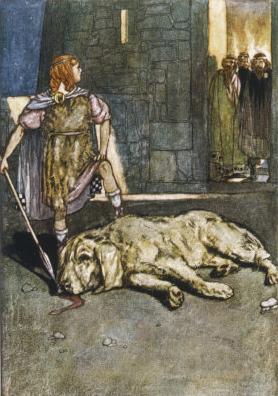
Sétanta receives the name Cú Chulainn after being attacked by a hound belonging to Culann the smith. He puts an end to it in a grotesque manner. ‘The lad struck his ball with his hurley so that the ball shot down the throat of the hound and carried its insides out through its backside. Then he grabbed two of its legs and smashed it to pieces against a nearby pillar stone’. As recompense to Culann, he offers to be Culann’s hound and guard Muirthemne Plain until a pup has been raised to take his place. From then he is known as Cú Chulainn – the Hound of Culann.
Training with Scáthach

Cú Chulainn trains with the warrior-woman Scáthach ‘the Shadow’ at Dún Scáith ‘The Fortress of Shadows’ on the Isle of Skye in Scotland. From her he learns the arts of war including ‘the apple-feat, the thunder-feat, the blade-feat, the foen-feat, and the spear-feat, the rope-feat, the body-feat, the cat’s feat, the salmon-feat of a chariot-chief, the throw of the staff, the jump over […], the whirl of a brave chariot-chief, the spear of the bellows, the boi of swiftness, the wheel-feat, the othar-feat, the breath-feat, the brud geme, the hero’s whoop, the blow […], the counter-blow, running up a lance and righting the body on its point, the scythe-chariot, and the hero’s twisting round the points of spears’.

Most fearsome is his use of the barbed spear known as the gae bolga:thrown from the fork of the foot; it made a single wound when it entered a man’s body, whereupon it opened into thirty barbs, and it could not be taken from a man’s body without the flesh being cut away around it’.

During this period Cú Chulainn battles against Scáthach’s rival, another warrior-woman called Aife, defeats her, and offers to spare her life but only on the condition that she bears him a son.

The story of Cú Chulainn’s training with Scáthach shows links with Britain and the existence of a tradition where male warriors were trained by warrior women. This is also found in the Welsh myths where Peredur is trained by the Nine Witches of Caer Loyw and it might be suggested that Orddu, the Very Black Witch, of Pennant Gofid, in the North, fulfilled a similar role.

The Battle Rage of Cú Chulainn

After his training Cú Chulainn’s feats are many and his greatest is defending Ulster and the Brown Bull single handedly against the armies of Connacht whilst the Ulstermen are laid up with the Curse of Macha (1). This is recorded in The Tain. After putting them off by magic, picking them off with guerilla tactics and fighting against them in single combat he defeats them in three great massacres.

Here we witness his ability to cause incredible violence. With ‘his scythed chariot that glittered with iron tangs, blades, hooks, hard prongs and brutal spikes, barbs and sharp nails on every shaft, strut, strap and truss’ he drives into the ranks ‘three times encircling them with great ramparts of their own corpses piled sole to sole and headless neck to headless neck’, slaying ‘seven-score and ten kings’.
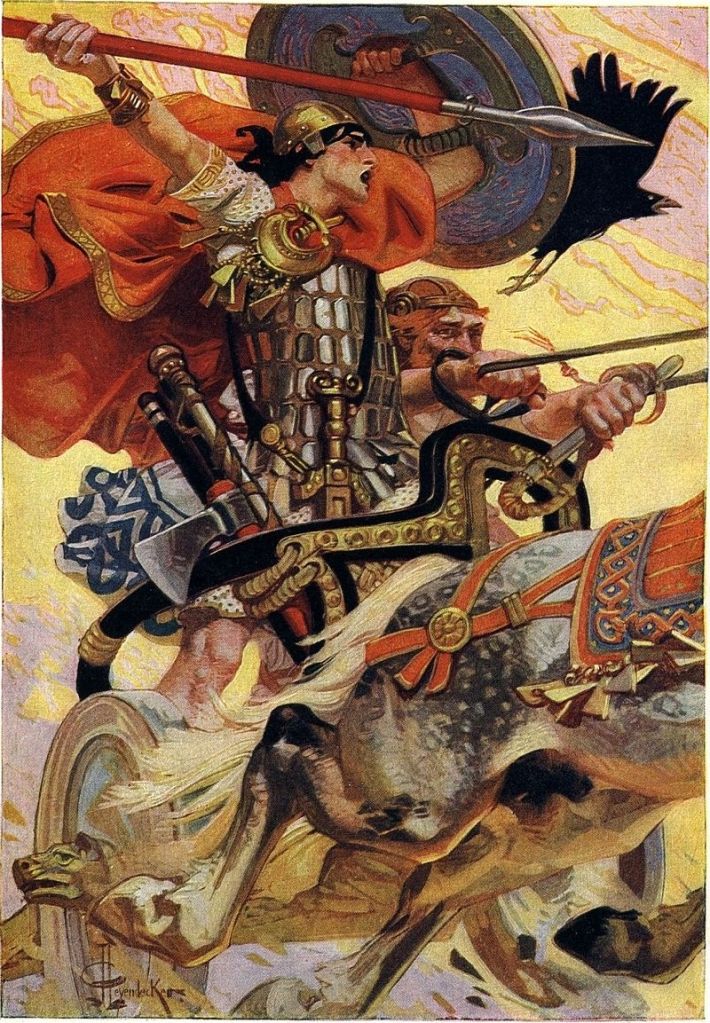
When he fights, Cú Chulainn is taken over by a battle rage known as his ‘warp spasm’ or ‘torque’. Its vivid descriptions, no doubt a delight to storytellers, driven to greater exaggerations, are worth citing.

‘The first Torque seized Cú Chulainn and turned him into a contorted thing, unrecognisably horrible and grotesque. Every slab and every sinew of him, joint and muscle, shuddered from head to foot like a tree in a storm or a reed in a stream. His body revolved furiously inside his skin. His feet and his shins and his knees jumped to the back; his heels and his calves and his hams to the front. The bunched sinews of his calves jumped to the front of his shins, bulging with knots the size of a warrior’s clenched fist. The ropes of his neck rippled from ear to nape in an immense, monstrous, incalculable knobs, each as big as the head of a month-old child.

Then he made a red cauldron of his face and features: he sucked one of his eyes so deep into his head that a wild crane would find it difficult to plumb the depths of his skull to drag that eye back to its socket; the other popped out on to his cheek. His mouth became a terrifying, twisted grin. His cheek peeled back from his jaws so you could see his lungs and liver flapping in his throat… The hero’s light sprang from his forehead… thick, steady, strong as the mast of a tall ship was the straight spout of dark blood that rose up from the fount of his skull to dissolve in an otherworldly mist…’

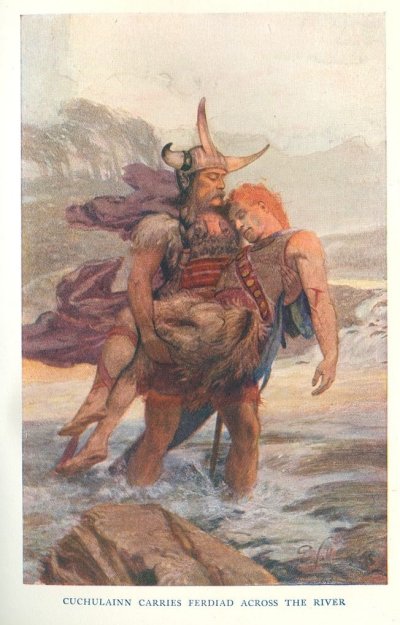
In his battle fury Cú Chulainn is described as warped and monstrous and these transformations may derive from his Formorian heritage. This is hinted at in a further passage: ‘Cú Chulainn torqued himself a hundredfold. He swelled and bellied like a bladder full of breath until he arched up over Fer Diad like a monstrously distorted rainbow, tall and horrible as a Formorian giant or a deep-sea merman’.

He also displays the ability to call up otherworldly spirits. His ‘roar of a hundred warriors’ is ‘echoed by the goblins and ghouls and sprites of the glen and the fiends of the air, for their howls would resound before him, above him, and around him any time he shed the blood of warriors and heroes’. ‘The clouds that boiled above him in his fury glimmered and flickered with malignant flares and sultry smoke – the torches of the Badb.’ This puts us in mind of the Scream over Annwn.

Even when he displays his ‘true beauty’ he is otherworldly with his hair in three layers, dark, blood-red and yellow, ‘four dimples in each cheek – yellow, green, blue and purple. Seven brilliant gems gleamed in each regal eye. Each foot had seven toes and each hand seven fingers, the nails or claws or talons of each with the grip of a hawk or griffin… He held nine human heads in one hand, ten in the other’.

Sétanta/Cú Chulainn is depicted a monstrous reaper of men and as a hunter of heads. Head-hunting was common amongst the Celtic peoples, particularly the Setantii, which is evidenced by the large number of severed heads ritually buried across their territories. It has been noted, whilst there is an absence of chariot burials in Ireland, there are many in northern Britain. So there is, at least, an argument that this otherworldly figure, like a giant or merman, originates from the people who once occupied the drowned lands between Britain and Ireland and may have been a Setantian god or hero.

The Tragedies of Cú Chulainn

Amidst the relentless violence endemic to a warrior culture whose greatest aim was winning everlasting fame through battle prowess we find some moving scenes based around Cú Chulainn’s relationships. When Cú Chulainn is badly wounded during his battle against the armies of Connacht his otherworld father, Lug, appears to fight his battle for three nights and days whilst he heals.

Tragically Cú Chulainn kills his son by Aife because he does not know who he is until he sees his ring. In an equally tragic scene Cú Chulainn faces and kills his foster-brother who was also possibly his lover, Fer Diad, with whom he trained with Scáthach. Their relationship is described in poignant verse:

Two hearts that beat as one,
we were comrades in the woods,
men who shared a bed
and the same deep sleep
after heavy fighting
in strange territories.
Apprentices of Scáthach,
we would ride out together
to explore the dark woods.

After many days of battle with various weapons Cú Chulainn puts an end to Fer Diad with the gae bolga.

His lament is heart wrenching:

Sad is the thing that became
Scáthach’s two brave foster-sons –
I wounded and dripping with gore,
your chariot standing empty.

Sad is the thing that became
Scáthach’s two brave foster-sons –
I leak blood from every pore
and you lie dead forever.

Sad is the thing that became
Scáthach’s two brave foster-sons –
you dead, I bursting with life.
Courage has a brutal core.

It puts me in mind of the lines spoken by Gwyn, our British death-god and gatherer of souls, who is doomed to live on whilst the warriors of Britain perish in ‘The Conversation of Gwyn ap Nudd and Gwyddno Garanhir’ (2), which perhaps speaks of a shared origin to these poems.
Cú Chulainn’s love life also contains tragedy. His main lover is Emer but their relationship is put into jeopardy when Cú Chulainn goes to hunt her one of two magical birds ‘coupled with a red-gold chain’. He shoots but does not kill one. They turn out to be fairy women and, when he falls asleep against a stone, they take revenge by beating him with horsewhips until ‘there is no life left in him’.

He takes to his sick bed for a year and learns the only cure is to help one of them, Fand, to battle against her enemies. They fall in love and sleep together yet she is the wife of the sea-god, Manannan. Cú Chulainn returns to Emer but both are heart-broken. Cú Chulainn wanders the mountains neither sleeping nor drinking (3) until Manannan shakes his cloak between Cú Chulainn and Fand so she is forgotten.

Cú Chulainn’s death is fittingly tragic. His old enemy, Queen Medb of Connacht conspires to kill him with the sons of her enemies. He is tricked into breaking his geis of not eating the meat of his sacred animal, the dog, and by this he is weakened. He is killed by Lugaid, the son of Cú Roí, another otherworldy figure with whom he battles and defeats to win a maiden called Blathnat (4).

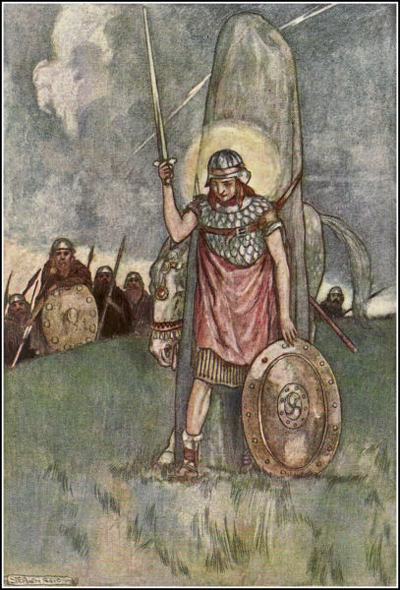
With a magical spear destined to kill three ‘kings’, Lugaid kills Láeg, Cú Chulainn’s charioteer, Liath Macha, Cú Chulainn’s horse and finally Cú Chulainn himself. Mortally wounded, Cú Chulainn ties himself to a standing stone so he can die on his feet facing his enemies. They remain afraid of him even after his death, not daring to approach until a raven lands on his shoulder. This symbolises he has been beaten by the only opponent worthy of defeating him, the death goddess, the Morrigan (5).
A Hero of the Setantii?

Here I have provided only glimpses into the rich mythos surrounding Sétanta/Cú Chulainn: his birth and dual paternity, his naming as Culann’s Hound, his training with Scáthach, his feats as a warrior, his love life (which features a number of women and possibly a man), and his death.

As we have seen, these stories are now firmly embedded within the Irish landscape. However, we know that many centuries ago Britain and Ireland were near joined together and that the gods, the Tuatha Dé Danann and the Children of Don, share many similarities. Nodens/Nuada, the king of the gods, was worshipped on the Lancashire coast and his son, Gwyn, might have conversed here with Gwyddno. Lug(us) was the patron god of Carlisle (Luguvalium) further north. If he was venerated here it would make sense his son, Sétanta/Setantios, was also viewed also an important deity or hero.

The evidence suggests there is at least a possibility the stories of Sétanta originated from the lost lands off the coast of Lancashire where gods and giants gave birth to monsters, that this monstrous and beguiling head-reaping hero was one of the deities of the Setantii, the reapers of men.
(1) After Macha raced against the horses of the king of Ulster and won she gave birth and screamed that for five days and four nights any man who heard her would be afflicted by her labour pains. She then died. Her curse was passed on for nine generations. Macha’s name was given to Emain Macha.
(2) I was there when the warriors of Britain were slain
From the east to the north;
I live on, they are in the grave.

I was there when the warriors of Britain were slain
From the east to the south;
I live on, they are dead.
(3) His state resembles geilt/wyllt ‘mad’ or ‘wild’ in the Welsh and Irish myths where we find Suibhne Geilt and Myrddin Wyllt taking on bird transformations and Cynedyr Wyllt ‘nine times wilder than the wildest beast on the mountain’.
(4) ‘The contention of Corroi and Cocholyn’ (Cú Roí and Cú Chulainn) is referred to in the medieval Welsh poem ‘The Death Song of Corroi’ in The Book of Taliesin and the beheading game Cú Chulainn plays with Cú Roí perhaps depicts a conflict with the Head of the Otherworld, here known as Gwyn.
(5) The Morrigan appears earlier in the stories as young prophet then fights against him as an eel, a she-wolf, and a hornless red heifer. After the battle she tricks him into healing her when she appears as a one-eyed hag milking a cow with three teats by drinking from each which heals her three wounds.

SOURCES

Andrew Breeze, ‘Three Celtic Toponyms: Setantii, Blencathra, and Pen-Y-Ghent, Northern History, XLII: 1, (University of Leeds, 2006)
Ciaran Carson (transl.), The Tain, (Penguin, 2008)
Eoin Mac Neill, Varia. I, Eriu, Vol. 11, (Royal Irish Academy 1932)
Greg Hill, (transl.) ‘The Conversation of Gwyn ap Nudd and Gwyddno Garanhir’, https://awenydd.cymru/the-conversation-between-gwyn-ap-nudd-and-gwyddno-garanhir/
Jeffrey Ganz, Early Irish Myths and Sagas, (Penguin, 1981)
John Rhys, Celtic and Manx Folklore: Volume One, (Project Gutenberg, 2017)
Rachel Bromwich (ed), The Triads of the Island of Britain, (University of Wales Press, 2014)
Sioned Davies (transl.), The Mabinogion, (Oxford University Press, 2007)

With thanks to Wikipedia for the images of Cú Chulainn. The photographs of the former site of Portus Setantiorum near the mouth of the river Wyre and the coast from Rossall Point where the remnants of the forest have been seen are my own.
On Eating Hearts

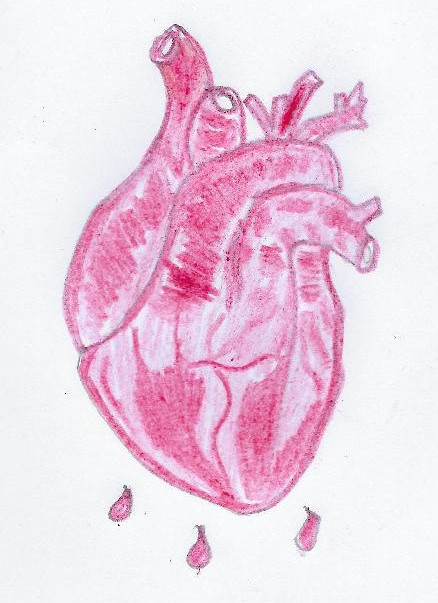
Gwyn son of Nudd… forced Cyldedyr to eat his father’s heart… Cyledyr went mad.’
How Culhwch Won Olwen

We have eaten the hearts of our ancestors.

We have bitten them down in pieces.
We have choked on them, retched on them,
tried to refuse to eat them at our peril.

We have swallowed them whole.

We have made them palatable with condiments –
ketchups squeezed from blood and mustards from bile.

We have been unable to stop eating even when told to stop.

We have seen our faces with blood dripping from our mouths
on the front of the newspapers and pointed our fingers
at everyone else – those heartless heart-eaters.

We have blamed the gods who told us to do it.

We have gone mad with grief and guilt.

We have wandered the Forest of Celyddon
with Cyledyr, with Culhwch, with Myrddin Wyllt,
tried to become poets and we have failed.

We have not heard your whisper in the woods~
in the little cavern within our right atrium,
thought of the hunger of the future.

I have no children so to who
will you feed my heart?

Gwythyr ap Greidol: An Ancient British God of Fire, Sun, Summer, and Seed

Gwythyr ap Greidol ‘Victor son of Scorcher’ appears in the medieval Welsh story Culhwch and Olwen as the rival of Gwyn ap Nudd ‘White son of Mist’ for the love of Creiddylad ‘Heart’s Desire’. That he is a fitting opponent for Gwyn and consort for Creiddylad, who are the son and daughter of the ancient British god Lludd/Nudd/Nodens, suggests he is also an important British deity.

Strip away the Christian veneer from Culhwch and Olwen and we have a story in which Gwyn (Winter’s King) and Gwythyr (Summer’s King) battle for Creiddylad (a fertility goddess). On Nos Galan Gaeaf, Winter’s Eve, Gwyn abducts Creiddylad to Annwn* and Gwythyr rides to Annwn and attempts to rescue her and is imprisoned. The abduction of Creiddylad and imprisonment of Gwythyr explain the coming of winter. On Calan Mai, the First Day of Summer, Gwythyr battles Gwyn for Creiddylad, wins, and she returns with him to Thisworld and together they bring fertility to the land. This explains the coming of summer. Gwyn and Gwythyr may earlier have been seen to slay one another on Nos Galan Gaeaf and Calan Mai and take it in turns to enter a sacred marriage with Creiddylad, who acted as a powerful sovereignty figure rather than just a maiden to be fought over.

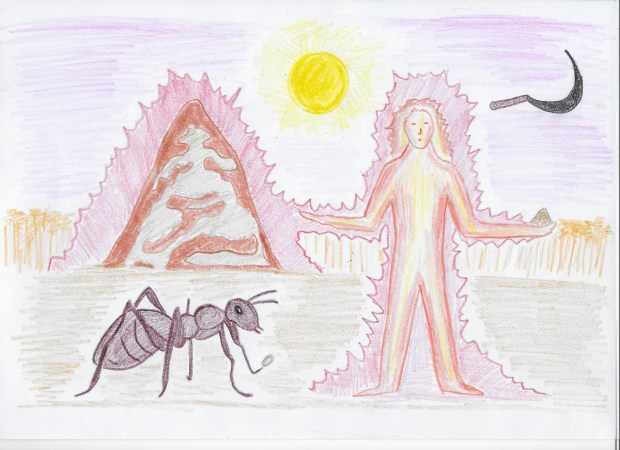
It is clear from this tale that Gwythyr is our ancient British god of summer. In another episode in Culhwch and Olwen we catch a glimpse of Gwythyr’s associations with fire and sunshine. As he is walking over a mountain he hears ‘weeping and wailing’ and sees its source is a burning anthill. He cuts the anthill off at ground level and rescues the ants from the blaze. We do not know what caused the fire. Did their nest, which ants orientate toward the sun, a little like solar panels, in a summer day, absorb too much heat? Or was the fire caused by Gwythyr’s scorching feet? We have seen that one translation of his father’s name, Greidol, is Scorcher, and we know wildfires break out in the summer. Here we see the dangers of fire and the sun and Gwythyr’s attempt at remediation.

The ants go on to help Gwythyr to gather nine hestors of flax seed which was sown in ‘tilled red soil’, in a field that has remained barren, so it can be ploughed into a new field, to provide the linen for Olwen’s veil in preparation for her marriage to Culhwch. It is possible to read Gwythyr’s association with seed being linked to the ‘male’ side of fertility and with doing the groundwork for the arrival of summer for his bride, Creiddylad, might also require a linen veil for her wedding dress.

The ancient Britons used fire to clear the forest to plant hazel trees and wildfires bring about new growth – in Gwythyr’s associations with fire and seed we find these processes.

These stories show that Gwythyr is a god of summer, fire, and generation in Thisworld who is opposed to Gwyn, a god of winter, ice, and the destructive forces of Annwn, the Otherworld. On the surface one is a bringer of life and the other a bringer of death yet their relationship is one of interdependence. It is necessary they take it in turns to enter a sacred marriage with Creiddylad as an eternal summer or an endless winter would have equally deadly consequences for both worlds.

As Gwythyr’s story was passed on through the oral tradition he and his father were depicted as allying with Arthur against Gwyn and the ‘demons’ of Annwn and playing a role in their demise. Thus Gwythyr is associated with other culture gods like Amaethon, the Divine Ploughman, and Gofannon, the Divine Smith, who help the Christian king to civilise the wild and shut out the Annuvian.

This process may be traced back to the Neolithic revolution when farming began to replace the hunter-gatherer lifestyle, the cultivation of seed hunting and foraging, the grain god (Gwythyr) the hunter (Gwyn). Christians did their best to eliminate the veneration of Gwyn by depicting him and his spirits as demons yet they continued to be loved in folk culture as the fairies and their king.

The stories of Gwythyr, by name, did not survive in the folk tradition, but it possible to find a likeness between him and other grain gods** who die a ritual death at the end of the harvest – when Gwyn, the harvester of souls, reaps down his rival and Gwythyr and the seed return to Annwn.

From the Neolithic period our society as a whole has favoured Gwythyr over Gwyn. We have created an eternal summer with the fire of Gwythyr in the engines of industry creating a society in which the cold and darkness of winter has been eliminated by electric lighting and central heating. Crops grow all year round under artificial lights. This has unsurprisingly led to global heating, to the climate crisis, to the scorching fires on Winter Hill where I perceive Gwythyr battling his rival. Ironically, and tellingly, these two great gods and the great goddess they battle for have been forgotten.

Yet, slowly, the worship of Gwyn and Creiddylad is reviving amongst modern polytheists. I know few who venerate Gwythyr and believe this is because his stories have been subsumed by those of other grain gods. This is a shame, for Gwythyr’s stories contain deep wisdom relating how fire, sun, summer and seed have played a role in the climate crisis from a polytheist perspective.

As a devotee of Gwyn, committed to the otherside, to the Annuvian, to redressing the balance, Gwythyr is a god whose powers I acknowledge through the summer and during the harvest period although I do not worship him. I would be interested to hear how and whether other polytheists relate to Gwythyr at this time.

*Annwn has been translated as ‘the Deep’ and the ‘Not-World’ and is the medieval Welsh Otherworld or Underworld.
**Such as Lleu Llaw Gyffes/Lugus and John Barleycorn.

The Dragon’s Tongue

How Can I

speak of dragons
when dragons from the world are gone?

How can I
be your inspired one
when the myths of the gods are lost?

To sing them back from the void before creation
I will need a dragon’s tongue!

Lord of Annwn
grant me the strength
by the breath of dragons
to write this book.

Over the past few weeks I have known possession by the awen; the inspiration, the divine breath that flows from Annwn, the breath of the gods, the breath of dragons; like I have never known it before.

It’s come after a couple of fallow years; sowing, reaping, dissatisfaction with flawed and failed crops.

I was beginning to fear that, after making my lifelong vows to Gwyn ap Nudd, to serve him as his awenydd, that the awen had dried up. What irony! A tiny part of me had begun to wonder if I’d made a mistake. Whether my powers of discernment were off. Whether he’d been having a laugh with me.

But my soul, to him eternally present, spoke otherwise. Only now I’ve realised I’d experienced a time of labouring, harrowing, preparing the ground for the oak to rise and the lightning to strike. For my fall from the tree amidst this collective shattering of the grounds of our society brought about by COVID-19 and into Annwn, the Deep, where I was to find the Prophet with the Dragon’s Tongue.

Thus has been born my next mythic book – The Dragon’s Tongue. Much of it has been gifted to me at dawn, in response, I believe to my evening prayers, in particular to Gwyn, Gwyn’s father, Nodens, Lord of Dream, Gwyn’s mother, Anrhuna, Dragon Mother of Annwn, and Gwyn’s beloved, Creiddylad.

You will probably not be surprised when I say their stories are central, with those of the dragons, and their conflict with the Children of the Stars*. There isn’t much evidence for dragons in the Brythonic/Welsh myths aside for an episode where Lludd/Nudd/Nodens ends a plague by ending the battle between two dragons and another where they appear, red and white, in a vision of Merlin Emrys. But there is the red dragon is on the Welsh flag and dragons are all around us in our folklore.

I’ve been reading mythic literature, journeying with the deep gods, the dragon-gods, long enough to know, when you get to the bottom of any myth, as Gordon White says, it is ‘dragons all the way down’.

I have long wanted to write the story of Anrhuna, the forgotten Dragon Mother, and also a creation myth. I have wanted what is lacking in the Brythonic/Welsh stories penned by medieval Welsh scribes. Something polytheistic, something penned by an inspired one of the gods, that provides insights into the mysteries of creation, of life, death, and rebirth, without the patriarchal Christian overlay.

Finding nothing else I realised I would have to do it myself. Following being gifted with the voice of the Prophet with the Dragon’s Tongue I started in the beginning, in the Deep, with Old Mother Universe and her Cauldron and how a dragon slipped from it and fell into the Abyss. How, from formlessness, she gave birth to the elements in dragon-form to form the world (yes – the world was made by dragons and not by God or some other demiurge). How the Children of the Stars slew Anrhuna, cut off her nine dragon heads with their long necks, and bound them on the Towers of the Wyrms…

From this flowed the story of the conflict between the Children of Annwn and the Children of the Stars, a tale of love and war, the mysteries of birth, death, and rebirth, of the coming of the Black Dragon.

After I swore to Gwyn that I would complete it beneath the leaning yew, where I met him, I got most of the first draft written over those days of thunder. When the lightning from the Spear of Lugus which killed Anrhuna lit the skies, when the rain poured, when the energy was strange and high.

This, I believe, would not have been possible if we were not in lockdown due to COVID-19. If I had not had this time without the pressures of finding paid work by volunteering with the Wildlife Trust and helping organise local poetry nights. If I had not stopped drinking, got off social media, started counselling for my anxiety and found out its root is having Asperger’s, which has helped me to stop blaming myself for my failures in ‘the real world’ and to cultivate space for my gods and my soul.

The birth of this book has restored by faith in my gods and through it I finally feel reborn as Gwyn’s awenydd. The first draft is complete, but is far from perfect, and I am predicting it may take months, even a year or so to firm it up. But, it has been born, and I am incredibly excited about it.

So if you’re interested watch this space and if you’re really interested you can find out more about my creative processes and see unseen work, including some of the drafts, by supporting me on Patreon HERE.

*My name for the Children of Bel(i) and Don.

Last Night

was the night
you were furthest
away from the world
like a distant asteroid
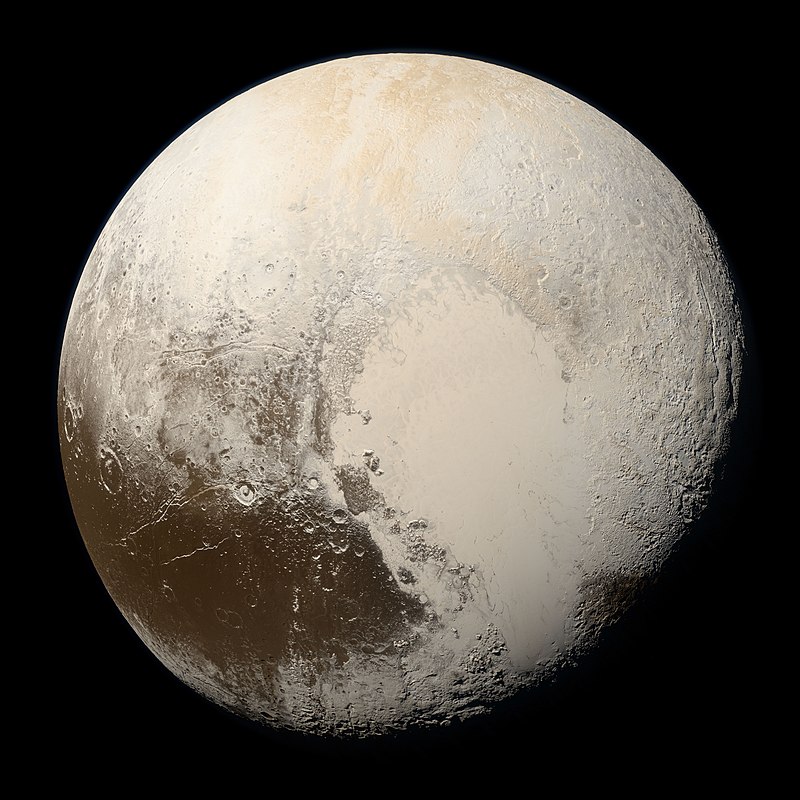
– like Pluto.

From now
you’re coming back
– your land of ice and darkness
will thaw and the mists will make it beautiful again.

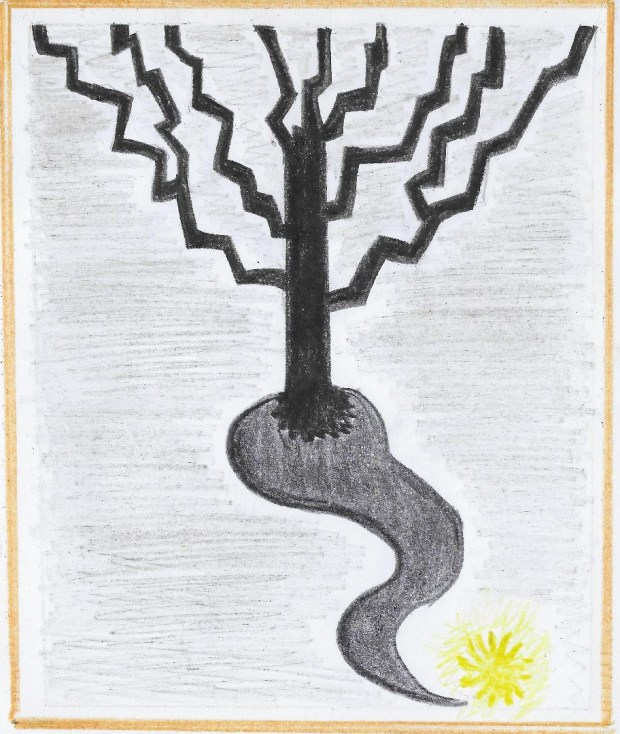
From the coffin where you dream of nuclear winter
you will step into a new suit of armour.

Summer is a’coming to Annwn
and winter is already
on its way here.

This poem is based on my gnosis that whilst it is summer in Thisworld it is winter in the Otherworld. It is addressed to Gwyn ap Nudd, a Brythonic ruler of the Otherworld and Winter’s King, who is killed by his rival, Gwythyr ap Greidol, Summer’s King, on Calan Mai, and sleeps through the Summer.

After I received this poem in a vision this morning I looked up Pluto, a planet named after the Roman King of the Underworld and saw that, in Japanese its name is Meiōsei – ‘Star of the King of the Underworld’. I thought this was very beautiful and apt for the planet that rules my birth sign, Scorpio, much as Gwyn, my patron god, is the ruling force in my life.

I then returned to an essay by Brian Taylor called ‘Photographing the Underworld? A Note of NASA’s Pluto Fly-by’ which has had a big influence on me. Here he speaks of how the photographing of Pluto ‘ruler of occultation, and protector of the integrity of mystery’ may have been saved from being an act of ‘casual intrusion’ by the plutonium powered spaceship carrying the ashes of Clyde Tombaugh ‘discoverer of Pluto’ (as a kind of offering to the underworld gods?).

Brian also speaks of how he ‘traced the exteriorisation of Pluto in the history of the nuclear era, and found the planet’s signature etched into the geography of the discovery region, most notably in an extraordinary spatial co-incidence. Pluto was discovered in 1930 at the Percevall Lowell Observatory in Flagstaff Arizona. Ten years later Plutonium was manufactured at the Lawrence Livermore Laboratory in California, and five years after that the first atomic bomb was detonated at the Trinity Test Site north of Alamagordo in New Mexico. Curiously these three sites fall in an almost perfect straight line, about a thousand miles long, that maps the connection between the planet and the nuclear project on to the land in the most unexpectedly graphic way.’

Coincidentally I have been returning to these themes, which I touched on in The Broken Cauldron, in the later sections of the new book I am writing, which explores more deeply the influence of the gods within the modern world and Gwyn’s connections with nuclear war and nuclear winter.

At the bottom of the essay I saw an old comment I left for Brian in 2015 mentioning a dream I had about Gwyn and nuclear winter, leading me to recall it. Brian notes that the spaceship made closest contact with Pluto on a dark moon and the moon was dark last night.

The Spirit of the Depths and the Service of the Soul

My soul, where are you? Do you hear me? I speak, I call you – are you there? I have returned. I am here again.’
Carl Jung

In his Red Book Carl Jung speaks of refinding his soul and rebuilding his relationship with her after a period of soul loss. He was called to do this by ‘the spirit of the depths’ who is opposed to ‘the spirit of this time’:

‘The spirit of this time would like to hear of use and value… that other spirit forces me nevertheless to speak beyond justification, use, and meaning… He took away my belief in science… my understanding and all my knowledge and placed them at the service of the inexplicable and the paradoxical. He robbed me of speaking and writing for everything that was not in his service.’

Jung records how the spirit of the depths opened his eyes to vision – to his soul, the things of the soul, and the soul world. This spirit forced Jung to stop treating his soul as a ‘scientific object’ and told him to ‘call upon her as a living and self-existing being. I had to become aware that I had lost my soul.’

Once he reached that awareness Jung called out to his soul and encountered her as a person and as a living landscape. She appeared to him in a number of guises (all female) – as Salome, as the spirit of a dead girl (who forced him to eat her liver!), as a serpent, and as a ‘small white bird’. She showed him a variety of visions, some of which predicted the First World War, some beautiful, most Hellish. She appeared to him as a desert, and, it may be argued, as the many places in Hell he explored.

Jung learnt that he is merely the ‘symbol and expression’ of his soul. She taught him that everything he does and says ‘comes from and belongs to me’. Ultimately he entered ‘the service of the soul’.

***

Jung’s words are of interest not only because they contain a great deal of mystical depth and wisdom but because they remind me of my own calling to serve Gwyn ap Nudd, a god of Annwn (‘the Deep’ – the soul world in the Brythonic tradition) and to restore my relationship with my own soul.

Like Jung I was called away from service to ‘the spirit of the times’ by ‘the spirit of the depths’.

From doing something ‘of use and value’ to the ‘inexplicable’ and ‘paradoxical’ – to ‘the service of the soul’. This happened when I decided to write my PhD thesis on ‘Imagination’ in William Blake’s prophetic books rather than trending topics and in my choice to write books based on personal visions that challenge the grounds of already obscure Brythonic/Welsh myths rather than a ‘how to’.

It’s only since I’ve accepted I’m never going to be able to make a living from such work and stopped using social media to publicise it I’ve managed to make space to journey and write more deeply.

Over the past month I’ve begun a quest, like Jung’s, for ‘a myth to live by’, that has been calling me even further away from the myths that others recognise from the medieval Welsh texts. To visions of my gods that are more direct, unfiltered by Christianised narratives, but less recognisable and hence relatable (unless, as I hope, I ultimately succeed on touching, through the personal, on the universal…).

In this space, as a way of repairing my own soul loss, I have been reconsidering my relationship with my soul. This began the day I met Gwyn leading the fairy funeral procession on Fairy Lane in my home town of Penwortham. Unlike in the original legend in which the fairies were tiny black-clad men clad with red caps they were taller than me and dressed in Victorian funeral garments. Gwyn, who I didn’t recognise, was wearing a black hat and leaning on a walking cane, his only recognisable feature being his long, silky white hair. As in the original the ‘fairies’ carried a coffin. And, like the hapless protagonist, I looked into the coffin and saw my own corpse. Only she looked ‘other’. Gwyn told me “a part of your soul is trapped in Annwn” before revealing his identity.

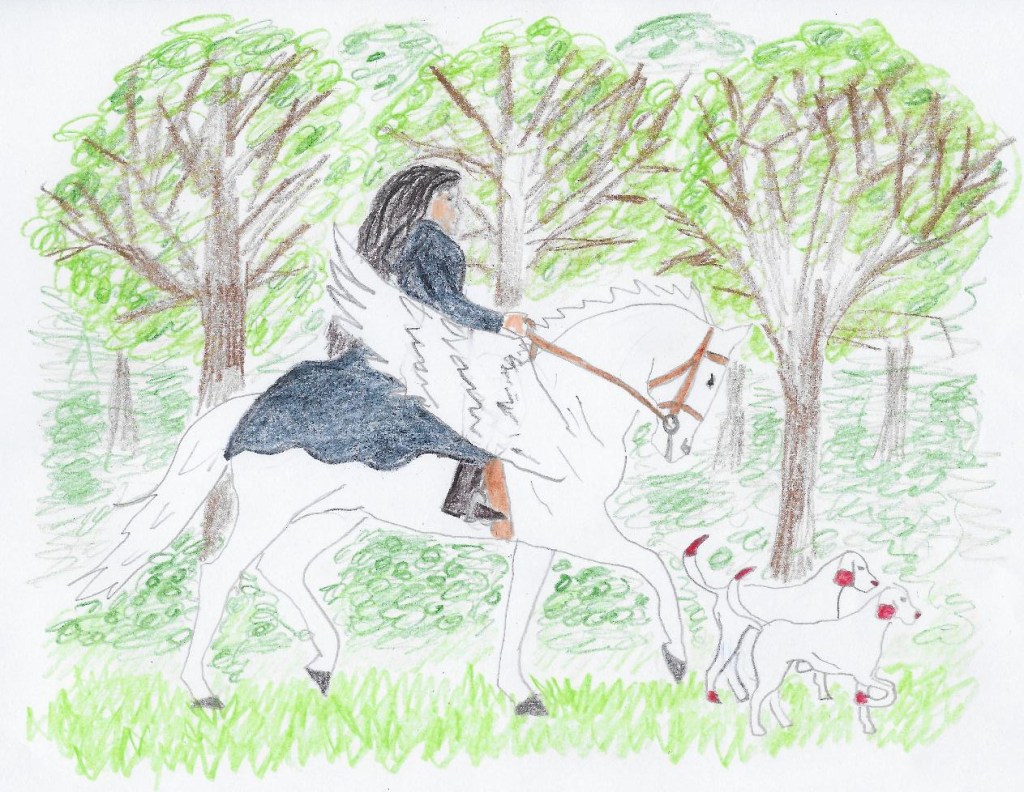
When I started journeying to Annwn with Gwyn I was reunited with this lost part of my soul. She appears as a warrior-huntress (who I am and/or watch) aboard my white winged mare with hounds. She’s everything I’m not – practical, courageous, able to fight, hunt her own food, survive in the forest.

At first I wondered whether this is simply facile wish fulfilment. Shouldn’t I, a suburban muppet, be more like my usual bumbling, clumsy, scatter-brained self? To this Gwyn replied with a resounding “No!” and told me this is the exact form my soul needs to take to get work done in his world.

I wasn’t completely certain she was my soul at first and I’m still not sure she’s the whole of my soul. Yet I haven’t found any other parts yet. I’ve has inklings in intuitions and dreams of past lives as a soldier and a nun but they feel like past selves my soul has inhabited rather than soul parts.

There is also the dark magician who sometimes shows up in my dreams and who I’ve chased through a number of books and who I’ve always kind of wanted to be if only I was good at magic. I spent a while wondering if he is my animus* but have reached the conclusion he has his own enigmatic existence, that dark magicians don’t give away their secrets, and accepted him as a guide of sorts.

In contrast to Jung I’ve found that my soul rarely speaks to me. For the past eight years since I’ve journeyed with/as her she hasn’t said a word and it’s only since reading Jung I’ve tried to speak to her. This resulted in her telling me to ‘be silent’ and ‘to come’ (to see what she had to show me). This demonstrates it’s not that she can’t speak but she’s not very talkative. I’m guessing this may be because I’m so full of words and chatter and her silence compensates like with our other qualities.

I think it’s possible that my white winged mare and perhaps my hounds are also parts of my soul. I believe my mare has been with me since birth and am tentatively referring to her as ‘my soul animal’ or ‘my spirit animal’ (as opposed to ‘a spirit animal’) to avoid terms from other cultures such as power animal’ or ‘totem animal’. This manifested early on in me galloping round and round the playground on my own pretending to be a horse when the other children were playing games. Eventually I started horse riding and spending all my time at a local riding school working for rides, training as a riding instructor, and later returning to a career in horses after finishing my PhD.

And with horses there were always yard dogs – labradors, terriers, the crazy cocker spaniel I shared a mobile home with. Unlike with horses I’ve never had my own dog (my parents are cat people) so I’ve never got to know dogs that intimately. Whilst I generally feel at one with my horse I often feel like I’m full of yappy excitable hounds jumping up and down inside me that refuse to calm down. Like the dogs that come and shake all over me or out me when I’m meditating I find them annoying. Whilst I’ve only got one horse** my first hound guide was an old shaggy wolf hound and he was replaced by two young Hounds of Annwn when I decided to make my lifelong dedication to Gwyn.

So my current view contrasts with Jung’s in that my soul appears as many parts at once. Also my soul is both male and female – my huntress is female, my mare is female, and both my hounds are male.

My main challenge in this deepening ‘service of the soul’ is learning to trust my soul. Putting aside my feelings of bitterness and resentment that my soul will never earn me any money and my fears that by following my soul away from known Brythonic mythology I may lose my already small audience.

But what are these fears compared to losing one’s soul?

*Mainly because Jung states that that men have a female anima and women have a male animus – a gendered binary logic that doesn’t ring true to me.
**Ok there’s ‘the dark horse’ but I think he’s a water-horse, a land spirit, rather than a part of my soul.

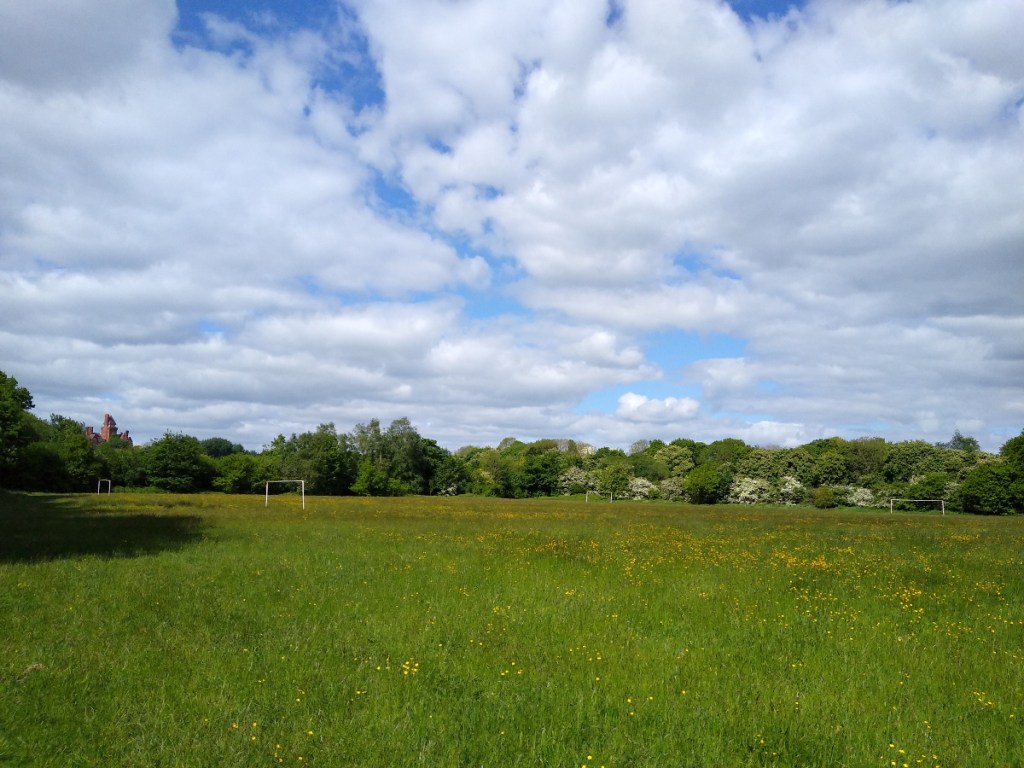
The Buttercup Meadows

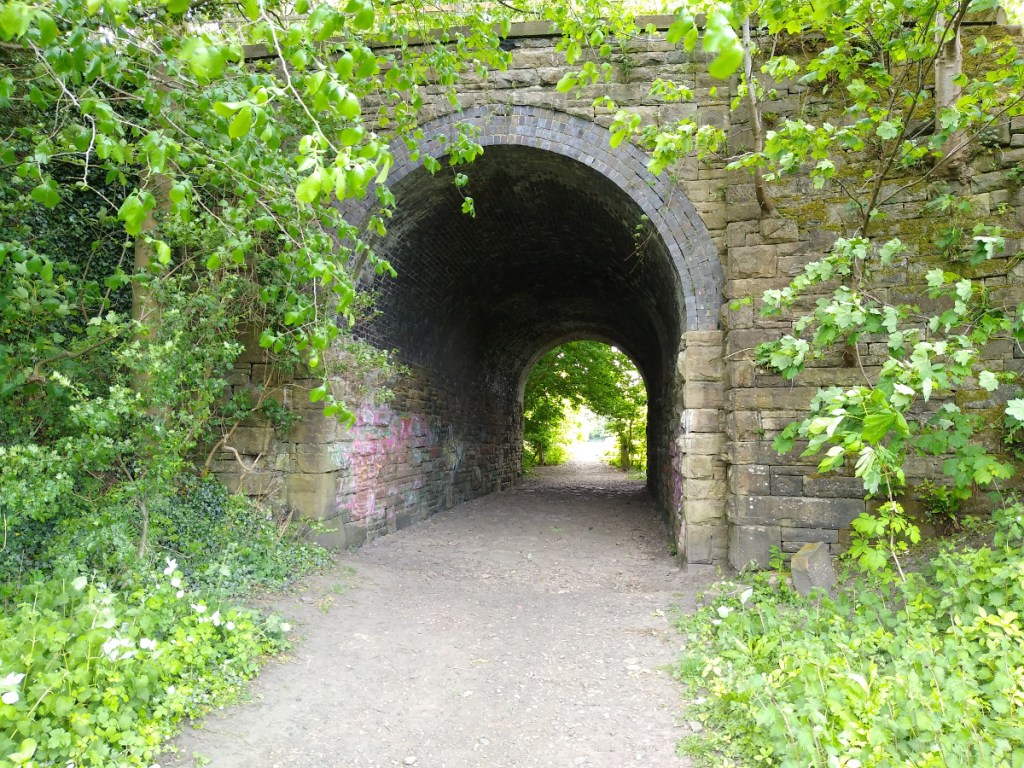
The tunnel
leads to Paradise.

To the buttercup meadows
where the goalposts
have no goals.

Although the bike sheds
and the mural of St Teresa
in her ecstasy are gone
her sigh lingers on.

The last gasp of a steam train
on the railway lines
overgrown.

The smoke no longer stains
the city walls.

I walk here like a dog
without a master

thrown by life’s curve balls

whilst he sleeps in
deep Annwn.

In the future
will I be your guide dog
or the one that went barking
into the unknown?

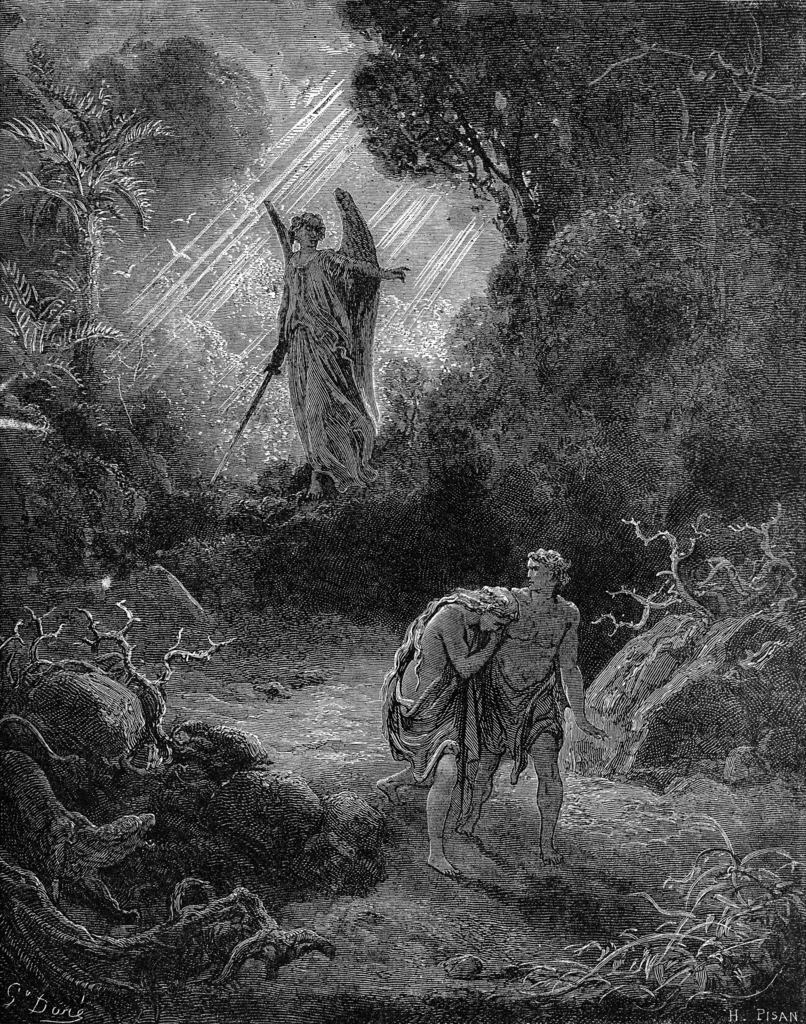
‘From the Well of Life Three Drops Instilled’

‘… to nobler sights
Michael from Adam’s eyes the film removed
Which that false fruit that promised clearer sight
Had bred, then purged with euphrasy and rue
The visual nerve (for he had much to see)
And from the Well of Life three drops instilled.
So deep the power of these ingredients pierced
Even to the inmost seat of mental sight
That Adam now enforced to close his eyes
Sunk down and all his spirits became entranced.
But him the gentle angel by the hand
Soon raised and his attention thus recalled:
Adam, now ope thine eyes and first behold
The effects which thy original crime hath wrought…’
Paradise Lost

I’ve recently been re-reading John Milton’s Paradise Lost (1667). The third or fourth time round this epic vision seems no less powerful in its depictions of Heaven and Hell and Earth both pre and post fall or radical in Milton’s writing the perspective of Satan and his inner motivations and turmoil.

As an Annuvian kind of person I will admit to feeling more sympathy with Milton’s rather magnificent Satan, refusing to serve in Heaven preferring to reign in Hell, the only one amongst the fallen angels (who include many pre-Christian gods) who dares travel to Paradise to thwart God’s plans by bringing about the fall, than the brainless Adam and Eve, Milton’s spoilsport God, or his Son.

The ending, with its deus ex machina, again was disappointing. It turns out the fall was not only predicted but designed by God to make possible and all the more powerful Jesus’ redemption of humanity. Paradise Lost is, in essence, a work of theodicy, written ‘to justify the ways of God to men’.

I’m sharing this because, whilst re-reading the book, I found the lines cited above that seem to contain Christian and pre-Christian Brythonic lore. When the archangel, Michael, purges Adam’s fallen sight he not only uses traditional plants – euphrasy, or eyebright, and rue were used for treating eye ailments – but ‘three drops’ from ‘the Well of Life’. This grants Adam visions of the future, mainly the ill-doings of his offspring until the Flood. As far as I know there is a Tree of Life but not a Well of Life in Paradise in Christian literature, which makes me wonder if it comes from another source.

The most obvious is the Welsh ‘Story of Taliesin’. In this tale Gwion Bach steals three drops of awen ‘inspiration’ from the cauldron of Ceridwen, which grant him omniscience as the all-seeing Taliesin. Milton’s evocative description of these ‘ingredients’ piercing ‘to the inmost seat of mental sight’ and putting Adam into a trance before he opens his eyes to see the future fit shares similarities with the prophetic visions of Taliesin and other awenyddion, ‘persons inspired’ referred to by Gerald of Wales.

However, although this story had been published in Welsh in the mid-16th century, it was not available in English at Milton’s time. Whether he had travelled to Wales (Milton was born in London, studied at Cambridge, lived in Berkshire, and travelled extensively throughout Europe before returning to London) or had heard the story in England in some form remains unknown.

The resemblances are so uncanny that, if he had not, it seems possible he was tapping into some deeper source. It is of interest that Milton refers not to a cauldron, but to a well, a far older image. Throughout the British and Irish myths cauldrons and wells are associated with inspiration and rebirth.

After Gwion tastes the awen Ceridwen pursues him in a shapeshifting chase and swallows him into her crochan ‘cauldron’ or ‘womb’ from which he is reborn, shining-browed, and omniscient as Taliesin. In ‘The Second Branch’ the cauldron brings dead warriors to life. In ‘The Spoils of Annwn’, refusing to ‘boil the food of a coward’ it is associated with the bardic initiation rites of Pen Annwn.

In the Irish myths the Well of Segais is associated with imbas ‘inspiration’. No-one was allowed to approach it except its keeper, Nechtan, and his three cup-bearers on pain of their eyes exploding. However, Boann, Nechtan’s wife, disobeyed. It overflowed and she was dismembered and died. The river created took her name – the Boyne. When Finn burnt his thumb whilst cooking a salmon from this river he received the imbas. In The Battle of Moytura the Tuatha Dé Dannan dig Wells of Healing and throw in their mortally wounded, who not only come out whole but more ‘fiery’ than before (!).

It seems that Milton is, indeed, tapping into a deep source. Here, in Peneverdant we once had a Well of Healing, dedicated to St Mary at the foot of Castle Hill, which I believe was associated with an earlier Brythonic mother goddess of healing waters who has revealed her name to me as Anrhuna. I believe she is the consort of Nodens (cognate with Nechtan) and the mother of Gwyn ap Nudd (cognate with Finn), Pen Annwn. Perhaps we once had a myth based around these deities that has now been lost.

In Paradise Lost, for Adam, as for many who taste the three drops of inspiration (aside perhaps for Taliesin) possessing foreknowledge is both a blessing and curse. At first he laments Michael’s gift:

‘O visions ill foreseen! Better had I
Lived ignorant of future, so had borne
My part of evil only, each day’s lot
Enough to bear! Those now that were dispensed,
The burden of many ages, on me light
At once, by my foreknowledge gaining birth
Abortive to torment me, ere their being,
With thought that they must be! Let no man seek
Henceforth to be foretold what shall befall
Him or his children…’

He is then reconciled by his perception of God’s purpose:

‘… Now I find
Mine eyes true op’ning and my heart much eased,
Erewhile perplexed with thoughts what would become
Of me and all mankind, but now I see
His Day in whom all nations shall be blest.’

‘O goodness infinite, goodness immense!
That all this good of evil shall produce
And evil turn to good more wonderful
Than that which by Creation first brought forth
Light out of darkness!’

Adam’s visions give him the strength to depart with Eve from Paradise to Earth to beget humankind. The gate to Paradise, to the Tree of Life and the Tree of Knowledge, and no doubt to the Well of Life is barred and guarded by a ‘flaming brand’ ‘the brandished Sword of God’ ‘fierce as a comet’.

In Christian literature, in contrast to the simplistic notion preached to school children that the souls of good people go to Heaven and those of bad people go to Hell, Paradise is not truly regained until after the Apocalypse and Jesus’ harrowing of Hell and the resurrection of the dead.

It may be suggested that, in our Brythonic myths, all souls return to the Well of Life. That, with a little awen to awaken ‘mental sight’, the living can travel in spirit to Annwn and be reborn as awenyddion.

Here, in Peneverdant, where the well has run dry due to the foolishness of humans shattering the aquifer when moving the river Ribble to create Riversway Dockland, it remains possible to traverse the waters of the past, of the Otherworld, to return to the unfathomable source from which Milton drew.

My Hawthorn Mind

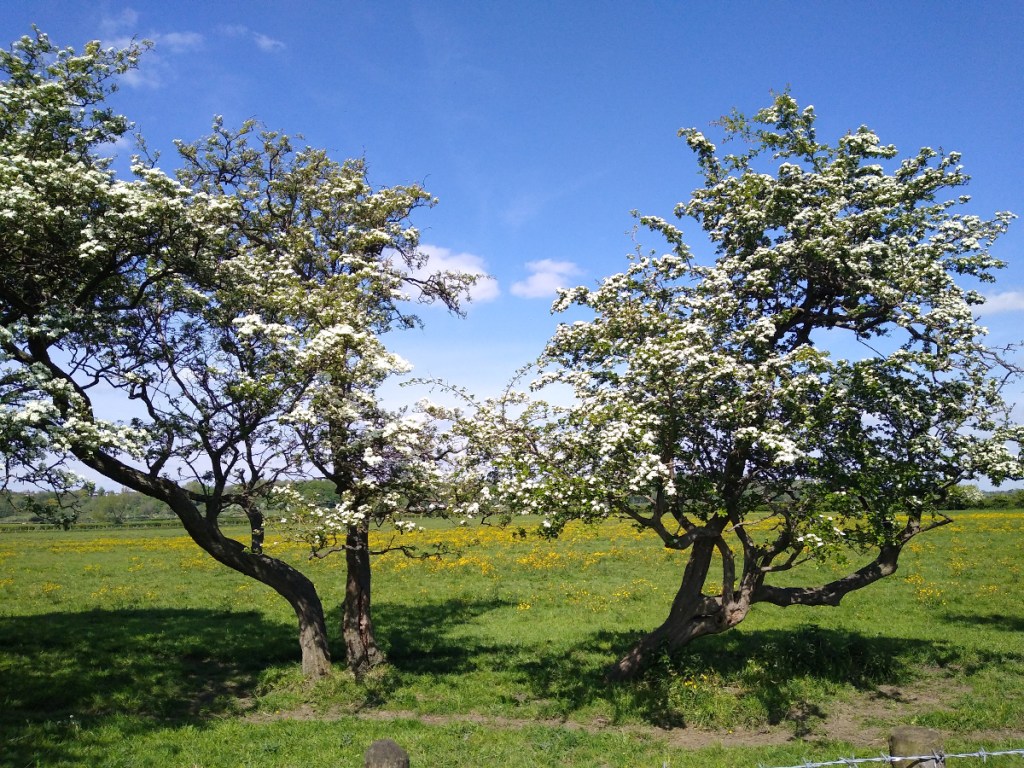
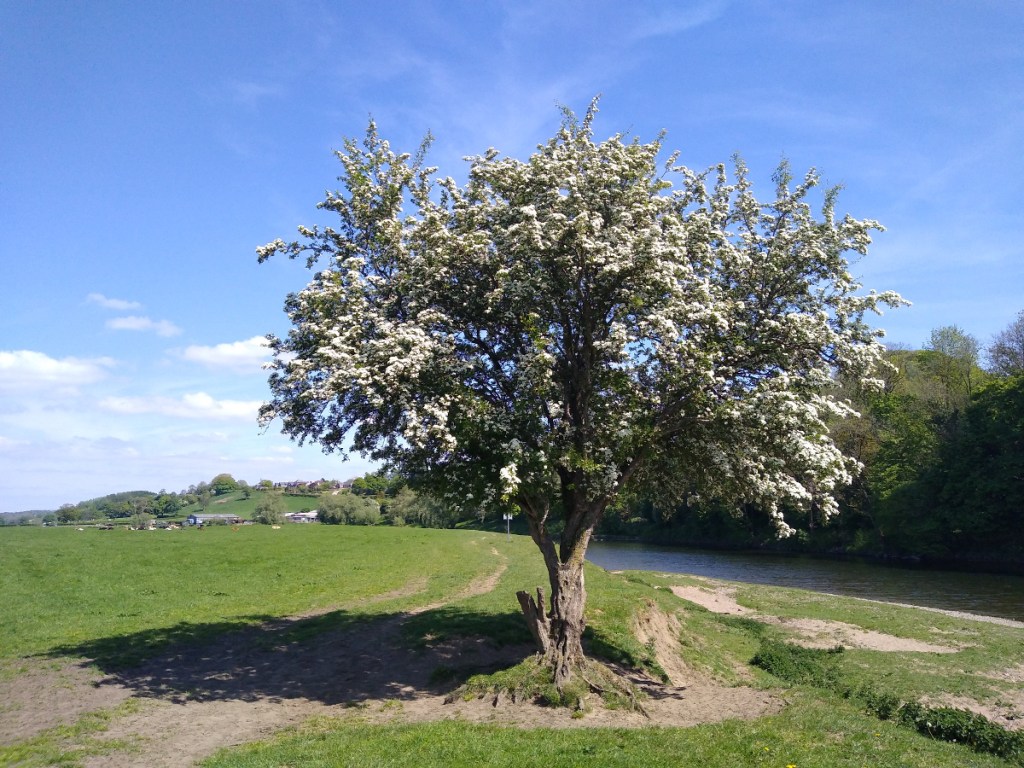
Beneath the tall blue sky the white-blossomed hawthorns dance. Twisted, gnarled, they are beautiful in their imperfection. They cast no judgement on themselves or others.

People are not like trees with their constrictive norms of body and mind. Look at me from the outside and (aside from the lockdown hair which resembles something between a hedgehog, a mushroom, and a duck’s arse) and you will see a ‘normal’ thirty-eight-year-old woman – able-bodied, physically fit, average-looking. Talk to me at a Pagan or poetry event and I might pass. Get to know me over a few days, a month, a couple of years and you may notice the scars, physical and psychological, catch a glimpse of my hawthorn mind. The twists, the gnarls, the thorns turned out and in.

Since primary school I’ve felt mentally crippled. Highly intelligent but socially inept. Being speccy-four-eyed, pot-bellied in my puppy fat, and lower middle-class with a southern accent at a school on a northern council estate (which was once referred to as ‘the Beirut of Preston’) didn’t help. I was mercilessly bullied.

Eventually I learnt not to talk about the fairies at the bottom of my garden or my imaginary friends. To feign an interest in the other children’s gossip about each other and celebs and to watch the soaps so I could join in (even though I hated them and would much rather have been lost in the imaginal worlds of the Faraway Tree, Narnia, or Krynn).

When I hit my teens I found a crutch. Alcohol. It helped me disguise my social limp, to keep limping along when otherwise I’d have fallen flat on my face in a gormless heap. It quickly became a cure-all. It obliviated, for a while, my feeling of being different. It helped me find words when I had none, to kiss boys when I had no desire to, to find oblivion when I could not sleep, to dance when I wanted to lie down and die.

Between the drink and the drugs and working hard toward my philosophy and English degree I sometimes wondered what was wrong. It wasn’t until my third year when I had a particularly bad meltdown during which, in vision, I was sitting on a rock at the end of the world unable to decide whether to live or die, that I decided to seek help.

I got a standard diagnosis of ‘anxiety and depression’, a packet of anti-depressants, and a referral to a psychiatrist who refused to help me because I wasn’t suicidal at the time, despite having constant panic attacks, suffering from insomnia, and self-harming.

The anti-depressants worked and, perhaps partly because I couldn’t drink on them, I excelled in my final year. I gained a first by getting 80% on my dissertation on the sublime, the writing of which, unknown to my tutors, was my way of understanding the undoing of my own mind by panic brought about by social and/or sensory overwhelm.

After failing to get funding for my PhD, with a career in horses, and to write a fantasy novel, all the while continuing to battle with anxiety and depression and using alcohol again as crutch, I finally met my patron god, Gwyn ap Nudd. He helped me find meaning and purpose in my life as his awenydd, taking me to other worlds, and out of myself to perform poetry. For the first time in my life, in service to him, I did not fail. I wrote three books and the climax was the performance for Gatherer of Souls.

My depression lifted. I found I didn’t hate myself, others, or the world so much any more. When I discovered the possibility of finding paid work that fit with my vocation and hoped wouldn’t be too taxing on my mental health through volunteering with the Lancashire Wildlife Trust I found the strength to kick away the crutch.

Yet the anxiety I had been using alcohol to medicate remained and threatened to be my undoing as my dread of social situations and feeling of being overwhelmed grew. I tried the doctors again and, this time, refusing anti-depressants, was offered counselling.

Three months on, in the midst of lockdown, I’ve started CBT and, during this period, had a revelation that came not from my counsellor but from my mum which explains why I feel so different: she’d always thought I had Asperger’s, but didn’t know how to tell me!

Suddenly everything made sense. My highly focused interests: philosophy, horses, visionary poetry, Brythonic polytheism, my singular devotion to Gwyn. My problems with social communication and human relationships and inability to understand how other people can want to talk about each other and celebrities rather than pursuing ‘that one thing’. That my feelings of panic and overwhelm are symptoms of autistic meltdown.

That this is the reason I have been stuck in a constant cycle of wanting to find paid work and to have a small role in my communities locally and online, but failing because I don’t recognise the limitations brought about by Asperger’s, which lead to me getting anxious, overwhelmed, and burnt out, and giving up, and feeling like a failure.

That it’s likely I have Asperger’s was confirmed when I scored 7/10* in the AQ10 test on the phone with my counsellor a couple of days ago. I’m hoping for a referral to the Lancashire Autism Service (which I understand will take a while particularly at this time).

Looking back a part of me feels bitter. If I’d received a diagnosis as a child perhaps I would have recognised my limitations, wouldn’t have hated myself so much for being different, wouldn’t have got so anxious and depressed, (yet another whispers perhaps I’d have felt worse…).

Another part says I wouldn’t have learnt the lessons I’ve learnt. It’s possible that, living a more sheltered life, ‘the doors of the perception’ to the visionary realms would never have opened, that I’d never have met Gwyn and never become his awenydd.

My gut feeling is that now, during the lockdown, when I’ve got plenty of time to reflect on and process it and work through how it might affect me in the future and plan ahead, is the perfect time to find out. I might have gone to pieces otherwise.

As I walk beside the twisted white-blossomed hawthorns I come to understand my differences. To not only accept but celebrate the twists and gnarls of my hawthorn mind.

*6/10 or above suggests somebody has Asperger’s.