The King of Annwn’s Treasures

The golden horn of endless mead.
The golden plates that make even leaves edible.
The golden cauldron that boils the flesh of the dead.
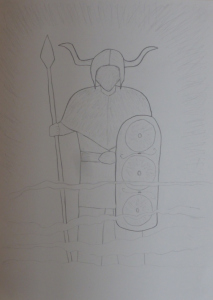
The golden helmet that lends the strength of the bull.
The golden armour that makes its wearer invincible.
The golden shield that deflects not only blows.
The golden spear that pierces every heart.
The golden leashes that hold back the hounds
and the spirits who strain against the possible.
The golden horseshoes for the horse that runs
between worlds and his golden saddle and bridle.
The golden ring that turns time into a circle.
The golden mist that makes terror beautiful.
The golden keys to the gates of every soul.
The golden secret in the stone chest that rattles
and bleats and sings a strange prophetic song.

~

This poem is based around the depiction of Gwyn ap Nudd as a ‘bull of battle’ in ‘The Conversation of Gwyn ap Nudd and Gwyddno Garanhir’ and his role as a King of Annwn presiding over its spoils. It is one of the poems in the narrative of Y Darogan Annwn.

The Awenydd Identity and Cultural Appropriation

Introduction

I’m writing this essay because, over the past few months, I have noticed a number of people speaking either of their reluctance to identify as awenyddion due to fears of cultural appropriation or more generally voicing their concerns about English and American Pagans appropriating the term.

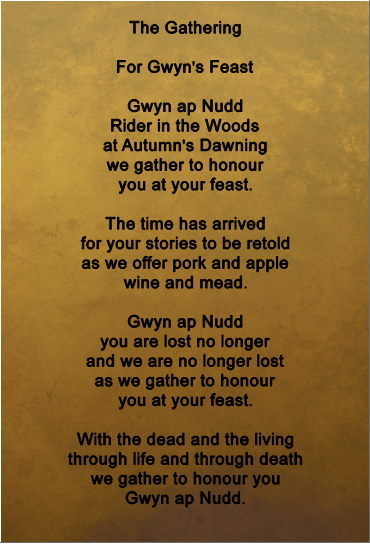
I first came across the term awenydd ‘person inspired’ in Natural Druidry by Kristoffer Hughes. In its lightning-like connection to the awen ‘poetic inspiration’ and used as a descriptor of one who quests and gives voice to this divine breath in poetry I intuited it was the word I’d been searching for to describe my spiritual path (I had formerly identified as a bard). This was confirmed by my patron god, Gwyn ap Nudd, on the Winter Solstice in 2013. Since then I have served Gwyn as an awenydd by giving voice to his myths and those of other Brythonic deities, the lore of the land, and the ancestors. With Greg Hill I co-founded the Awen ac Awenydd website and, with Lia Hunter, we have been working on compiling an anthology featuring the voices of other modern awenyddion.

So it came as a bit of a shock that my adoption of the awenydd identity might be seen as cultural appropriation. And that, much worse, I might have unwittingly influenced the choice of others to appropriate the term. Over the past few weeks I have led discussions on the topic on the Awen ac Awenydd Facebook page and discussed it with Greg by email and would like to share some conclusions.

The Awenydd Identity

Firstly I will provide an introduction to the awenydd identity. The earliest use of the term awen is found in Nennius’ History of the Britons (828) where he refers to Talhearn ‘Tad Awen’ ‘Father of Inspiration’, chief of the famous bards Aneirin, Taliesin, and Cian. This may be our first reference to an awenydd.

Here it is important to note that bardism has its roots in an older Brythonic tradition. From the Iron Age, throughout the Roman-British period, until the Anglo-Saxon invasions all of present-day England, Wales, and southern Scotland were part of a shared Brythonic culture. Taliesin and Aneirin composed poems about the battles between the Brythonic rulers and the Anglo-Saxons which gave rise to the fall of Yr Hen Ogledd ‘The Old North’. As the invaders pushed the Brythonic peoples west they took their stories and traditions with them, leading to them being maintained in Wales.

In his Description of Wales (1194) Gerald of Wales speaks of awenyddion ‘people inspired’ who ‘when consulted upon any doubtful event, they roar out violently, are rendered beside themselves, and become, as it were, possessed by a spirit.’ Their answers are described as ‘nugatory’, ‘incoherent’, and ‘ornamented’ yet can be explained the ‘turn of a word’. These are hallmarks of both poetic and prophetic language. Their inspiration comes from states of ecstasy and dreams. The awenydd is depicted as a solitary spirit-worker and soothsayer.

In medieval Welsh poetry awen originates from the cauldron of Ceridwen and/or from God. It is seen to flow from Annwn, ‘the Deep’ or ‘the Otherworld’, where the cauldron is guarded by Pen Annwn. In The Story of Taliesin receiving (or in some versions stealing!) awen from the cauldron, thereby becoming an awenydd, is the source of Taliesin’s omniscience and mastery of the bardic arts.

The term awenydd is consistently used as a synonym for an inspired poet. For example the fourteenth century poet Dafydd ap Gwilym describes himself as an ‘awenydd gwyrdd’ ‘green poet’. Lewis Glyn Cothi, in the fifteenth century, refers to Grufydd ab Rhys and his kinsmen as ‘awenyddion’.

In a letter to his cousin (1694) the Welsh poet Henry Vaughan speaks of an orphaned shepherd receiving awen when the ‘hawk upon the fist’ of ‘a beautiful young man with a garland of green leaves upon his head… a quiver of arrows att his back’ flies into his mouth and awakes in him ‘fear’, ‘consternation’ and ‘the gift of poetrie’. This of interest because it is suggestive of awen being gifted by a numinous figure – perhaps Maponos/Mabon, a god of youth, hunting, and music/poetry.

During the Druidic revival, awenyddion are conceived radically differently. In hisBarddas (written in the late 18th century but published in 1862), Iolo Morganwg speaks of Awenyddion as ‘Aspirants’ who have ‘no privileges’ within the Gorsedd of the Bards of the Island of Britain until they have completed three years of discipleship. Only then may they graduate from the lowly status of Awenydd to ‘Primitive Bard Positive’. Iolo states that Awen comes ‘from God’.

Following Iolo, in his introduction to the heroic elegies of Llywarch Hen (1792) William Pughe refers to Awenyddion as ‘disciples’ who are examined for their ‘understanding, affections, morals, and principles’, undergo ‘severe trials’, and must ‘learn such verbs and adages as contained the maxims of the institution, and to compose others himself, on any relative subject, doctrinal or moral’ to gain the the degree of ‘Bardd Braint’ a ‘Bard of Privilege’.

Here we find the awenydd as the lowest position within a highly moralistic order based on Christian concepts. We are miles away from the shepherd lad being gifted with inspiration by an unnamed god.

The term awenydd is defined today in The Dictionary of the Welsh Language as an ‘(inspired) poet; bardic pupil; inspired person, genius’. In modern Wales it is used to refer to poets who write in strict metre.

Like many terms some parts of the meaning of awenydd have changed through the centuries, but its essence remains the same. It consistently refers to somebody who receives awen from the divine (be it the Brythonic gods and spirits or the Christian God) and expresses it in well crafted poetry.

Last year, on the basis of these two underlying currents, at Awen ac Awenydd we created our own definition of the awenydd identity – ‘an awenydd is a spirit-worker and inspired poet in the Brythonic tradition’.

Cultural Appropriation

Awen ac Awenydd is a community of self-identified awenyddion. Some of us, such as Greg, live in Wales and are Welsh speakers. Others, such as myself, live in other parts of the UK, or in America, and are learning Welsh. For us the question has risen of whether we are appropriating the awenydd identity.

To answer this question we need to understand the concept of cultural appropriation. This came into use in the 1980s as part of the discourse critiquing Western expansionism and colonialism. It entered the Oxford Dictionaries in 2017 where it is defined as ‘the unacknowledged or inappropriate adoption of the customs, practices, ideas, etc. of one people or society by members of another and typically more dominant people or society.’

Cultural appropriation involves a dominant culture taking elements from a minority culture and using them to make a profit, for fun, or for fashion, without giving anything back. This is often done without knowledge of or sensitivity to their meaning within the culture they are taken from and is a form of colonialism. This differs from cultural exchange in which the interchange is mutually beneficial.

Examples of cultural appropriation include the adoption of ‘exotic’ aspects of Indian culture following the economic exploitation of the Indian subcontinent by the British Empire, the claiming of the religious term ‘Shaman’ outside the indigenous religion of Siberia and its neighbouring peoples, and the use of ‘Sweat Lodges’ from the Amerindian tradition against the wishes of the Lakota elders (who suggest casually employing their techniques may be harmful to the participants).

Unfortunately, since the term has become fashionable, there have been a proliferation of more superficial examples such as an eighteen-year-old girl wearing a cheongsam to her high school prom and the row over Jamie Oliver’s ‘punchy jerk rice’.

Am I Appropriating?

So the question arises of whether English and American Pagans (members of dominant cultures) are appropriating the term awenydd from the Welsh (a minority culture) thus engaging in an act of colonialism.

First off I’d like to say that this question is based on the presuppositions that there is an absolute distinction between England and Wales and that Wales has been colonised by the English. There is a strong argument for the English colonisation of Wales over the last thousand years. There are numerous examples of military (Anglo-Norman castles), economic (mines, reservoirs), religious (the English Prayer Book), and linguistic (the Welsh Not) oppression. However, Wales along with England and Scotland, has benefited from oppressing other countries as part of the British Empire. More positively there are numerous examples of mutually beneficial cultural exchange between Wales and England (such as the Anglo-Welsh poetry of Henry Vaughan, David Jones, and Dylan Thomas).

These issues are complex, thorny, put our presuppositions into question, and do not take into consideration that for many centuries beforehand present-day England, Wales, and southern Scotland were part of a Brythonic culture which remains alive within the land and our shared heritage.

During our conversations Greg suggested, as a general condition, that an English or American Pagan would be appropriating the awenydd identity if they were doing so without knowledge of the Welsh culture and its Brythonic roots and were profiting in some way without giving anything back. For example an English Pagan selling courses on becoming an awenydd without knowing the background of the Welsh myths and mispronouncing the names would be appropriating.

Since I discovered that the stories of the Brythonic deities have been preserved in the Welsh myths I have been studying them and sharing them online and through performances in my local community. I’ve written three books based on the lore of the land and Brythonic mythology. I occasionally give talks and workshops sharing my knowledge and facilitating connection with the Brythonic gods. I am slowly learning Welsh, am a member of Preston’s Welsh Club, and for the past few years have made sure that Welsh poetry is included in the World Poetry Day event I help organise.

I believe I’m making the necessary effort to learn about the Welsh/Brythonic culture and language. Yet could it be said I’m profiting financially and in terms of status from selling it to other English people? Possibly, but my financial gains from books, talks/workshops,and poetry performances are miniscule in contrast to the amount of time and effort I’ve put into research and creative writing, plus the majority of my work is available for free online to people of all nationalities. And there is really nothing to be gained in terms of status by identifying with a little known path – it’s not like I’m declaring myself Arch High Druid of the Old North or Chief Bard of Gwyn ap Nudd or something.

Conclusion – In the Eyes of the Gods

More fundamentally it’s my personal belief that what we call the awen and the deities associated with it are much older and deeper than human concepts and distinctions. When Gwyn appeared in my life seven years ago I was completely befuddled by the question of why a wild Welsh god would want anything to do with a suburban English poet. It’s taken me that long to unravel his connections with the Old North and role as a psychopomp guiding the dead and the living back to Annwn and presiding over the mysteries of the awen as the guardian of the cauldron of Ceridwen.

For me being an awenydd is a religious calling based on my relationship with my patron god. It’s not something I can give up because I’m afraid someone will accuse me of cultural appropriation.

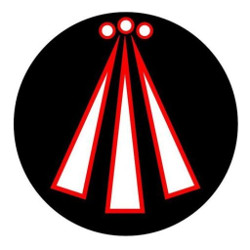
This was proven when I tried taking down the term ‘awenydd’ from my blog and the Annuvian Awen symbol I’d been gifted. It hurt. Both are essential to my relationship with my god and to my soul.

My personal decision to continue identifying as an awenydd is based on this feeling rather than logical and political arguments, which always break down into meaninglessness in the eyes of the gods.
cropped-annuvian-awen1-250

*With thanks to discussion and feedback from Greg Hill, who is a paradigmatic example of an awenydd who honours and serves the Brythonic gods and is engaged in modern Welsh culture, having learnt Early Welsh and provided translations of many Welsh texts into English as part of his vocation.
Fragments of Annwn – Petrifactions

The Towers of the Wyrms

Nine towers of stone.
Around each coils a wyrm.
No way in – no door, lock, key,
but a single row of windows at the top
where I think I glimpse the face of a madman.
They are old as the grey mountains.
I want to claim they were built
by the haulers of scree,
the wyrms summoned and bound
by the might of magicians or that they came
of their own free will raising the towers
from some secret land underground
that has never been seen. Share rumours
of a sibylline prophetess who consulted the wyrm’s heads
but whose words are not recorded in dusty books
in an arcane language eaten by bookworms.
But no explanation rings true or exists.
I feel like banging my head against
the stone demanding an answer
from the inexplicable unblinking eyes
and long stony tongues silent as the purple

In the Shadows of the Ogres

There is a village in the Shadows of the Ogres – Orius, Oron, Thoronius – whose march through the mountains clubs in hand wading through stone was put to an end to by some unknown magician countless years ago. Now the time is told by their shadows as they loom across the village as the sun moves from east to south to west then sinks back down again and at night they are shadowier still. There is a village fifty miles away in the shadows an ogress. I tend a small garden, growing rosemary and thyme where one by one the clubs fall but no damage is done to the tender leaves.

A Sword in a Stone

I travel as a breath over a land of dark rock until I see something silver glint, sweep down, and see, to my consternation, it is a sword. It’s a tall sword, nearly as tall as me. It’s impossible to know whether someone plunged it into the stone or the living stone claimed it. The pommel is embroidered with a a pair of intertwined serpents and on the blade are runes in the language of an unknown culture. Tied around the hilt there is a lock of hair – the hair of a dead man.

It’s like an adolescent boy’s dream and it makes me uneasy although I’ve never prayed for peace on a full moon. I know what you do with swords stuck in stones and what happens afterwards. I don’t want to be King or Queen and I don’t want to reduce it to a symbol of my own sovereignty. Whereas others would either try what is begging to be done or simply walk away I circle around it like a mill horse, try to philosophise it away, wonder if I can get away with just writing a poem about it.

“If you don’t pull it from the stone another will – you can’t just leave it lying about for another Arthur.”

I don’t know whose voice that is, most likely Temptation’s, that of a secret part of me that wants a sword.

“Ok, whoever you are,” I know if I don’t do it now I’ll be back and utterly furious with myself if it’s gone. Like all the other chances I got that I failed to take, like all those missed opportunities.

A part of me is laughing at myself for assuming that I might be able to pull it out at all. What a relief that would be – another proof that I’m doomed to fail, might as well stop trying, return to the supermarket. Another part has already guessed it will slide out as easily as if from dark magma.

It’s astonishing light, easy to wield, as if I’d wielded it in another life. When I sit down cross legged with it across my knees and run my hands over the runes I realise each marks a life taken and I weep.

The Soul Watcher

A land of stone. A giant’s sword abandoned. A stony citadel lit by cobwebs of pulsing green light. Inside I find a work station with a gigantic swivel chair in the middle. There are billions and billions of monitors, only a quarter of them working, tracking graphs in countless glowing colours. Frequently one flickers out and occasionally another one flickers on. A machine that reminds me of a fruit machine has either broken or been smashed. The screen is shattered and it gapes black behind. At the work station there are databases with flashing figures and I see the names of various species: Acetobacter aurantius, Acinetobacter baumannii, Actinomyces israeliiLycaena boldenarum, Lycaena epixanthe, Lycaena rauparahaVulpes velox, Vulpes vulpes, Vulpes chama, Homo sapiens… for one the figures are rising and most of the rest are rapidly going down. On a stone plinth is a book with a last scrawled note: ‘steep decline… can’t reboot the machine… the well.’ As I depart I notice the green light is fading and know soon the citadel, the sword, we will be gone.

A Worm

You give me

a worm
no longer than
my palm

but alive
so very alive
it pulses

like a heart
it is packed
with life

with light
I know it can
fly through

the night
through stone
bring the dead

back to life
awaken giants
bring back

the morning
if only I can
let it go.

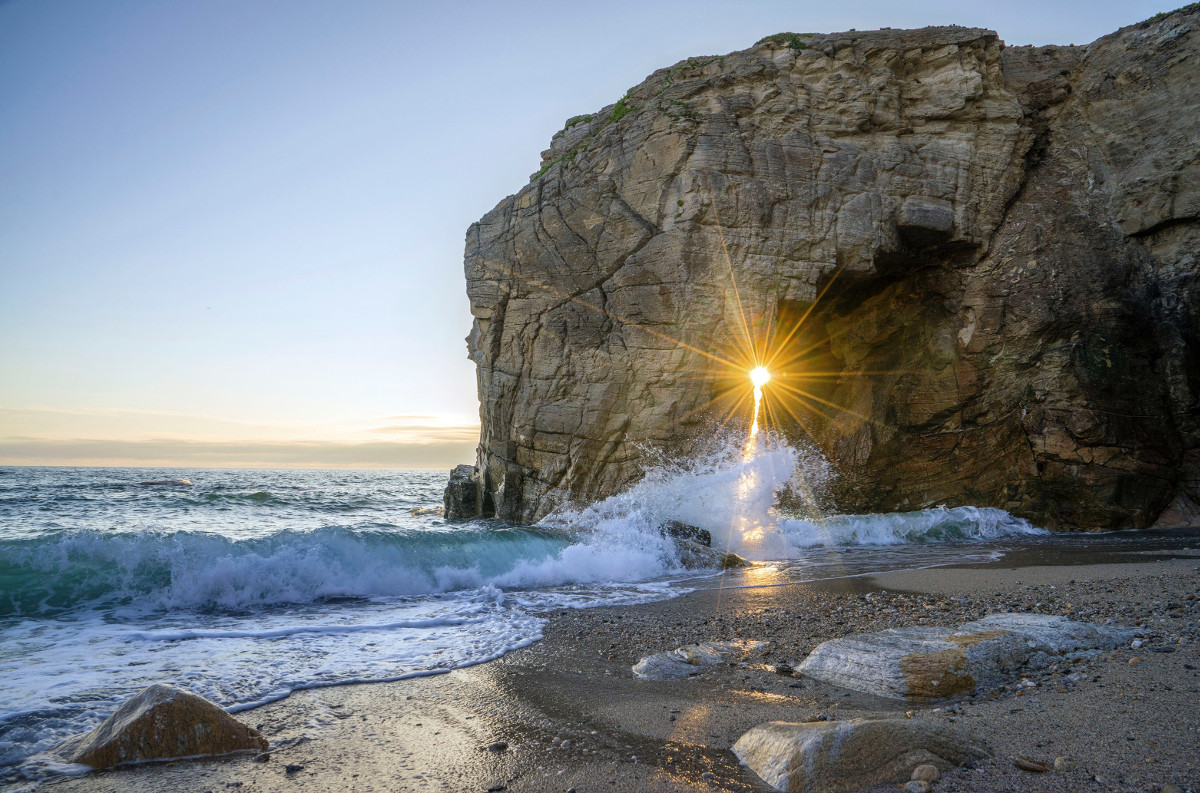
pedro-lastra-cotesauvageatsunset-unsplash

Image ‘Cote Sauvage at sunset’ by Pedro Lasta on Unsplash.

The Magician of the Orme V -The Vessel and the Lake

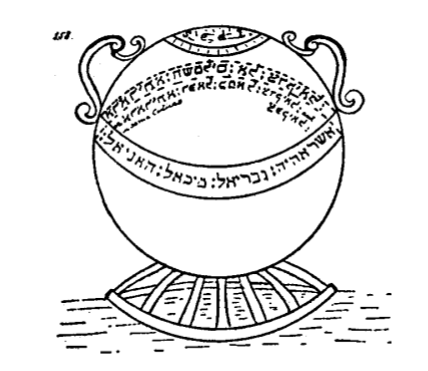
In The Lesser Key of Solomon my attention was arrested by the foundation story in which Solomon imprisoned the 72 spirits in a a brazen vessel with a magical seal and threw it into the Lake of Babylon. Unfortunately, the people of Babylon, hungry to see its wonders and suspecting ‘to find great store of treasure within’, found it, broke it open, and let the demons out to return to their original places. The order of the demons in the text relates to the order in which they were imprisoned. The ‘Vessel of Brass’ and its seal are depicted in the text with instructions for making the seal.

Vessel of Brass

Immediately I thought of the similarities with the Cauldron of the King of Annwn. This magical vessel is described in ‘The Spoils of Annwn’ as also being intricately decorated having a ‘dark trim and pearls’. It is likely to have been made of brass as the people of Annwn/fairies dislike iron. In the Second Branch of The Mabinogion it is brought from a lake in Ireland by two monstrous giants. It is later used by Matholhwch, King of Ireland, to bring dead warriors back to life. Speechless, near-demonic, their battle with the British brings devastation to Ireland – only five women remain  in caves in the wild. It is likewise deleterious for the British – only seven warriors survive.

Gwyn ap Nudd, a King of Annwn, and keeper of the cauldron is described in Culhwch and Olwen as containing the fury of the ‘devils’ of Annwn in order to prevent their destruction of the world. Could it be possible that he was seen as containing them not only in his realm but in the cauldron which, when not being used to boil the meat of the brave* at his fairy feast, was kept carefully sealed?

Could it be possible that, like Solomon, the Magician of the Orme had somehow learned the names of the spirits of Annwn who are contained in the cauldron and how to summon and to command them? That he had attempted to create his own cauldron in imitation of the King of Annwn’s to seal them in? And this is the information contained in ‘The Book the Living Hand’? That, as always, when magicians have the hubris to think they can control spirits who can only truly be contained by the gods, something had gone wrong, and this led to him cutting off his hand to seal it shut?

Whether the Magician of the Orme and his book existed or not I think I have the seeds of a story that remains to be told…

*In ‘The Spoils of Annwn’ we are told the cauldron ‘does not boil a coward’s food, it has not been destined to do so’. The food within may be the flesh of Twrch Trwyth ‘Chief of Boars’ a human shapeshifter hunted by Gwyn. Eating his flesh may represent consuming ancestral wisdom.

The Magician of the Orme II – The Great Orme

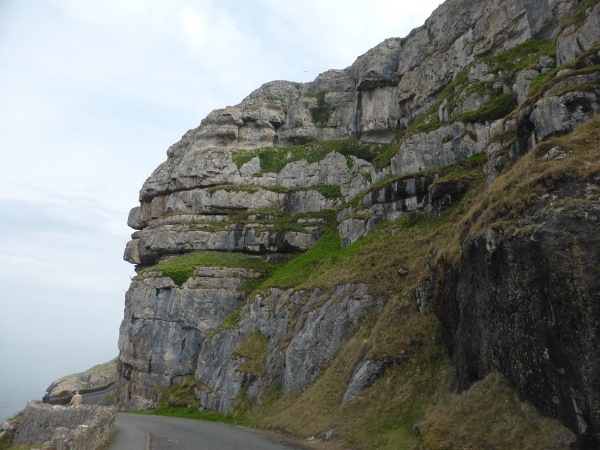
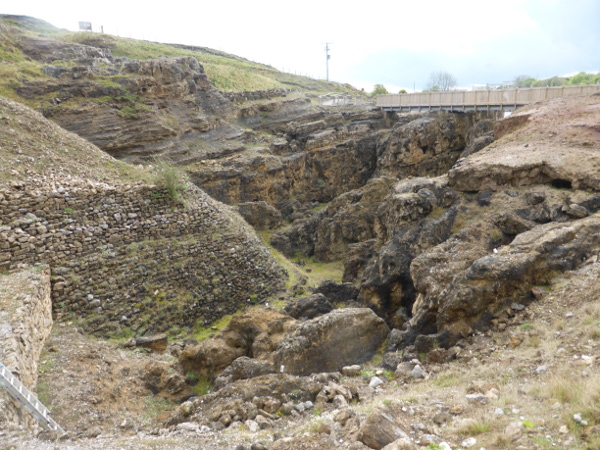
Before starting my historical research I visited the Great Orme. I discovered that Orme is a Norse word meaning ‘sea serpent’ suggesting it was seen as a serpent living in the stone and guarding the coast. The Welsh name is, more prosaically, Y Gogarth which means ‘terraced rock’ and is equally fitting.

P1310756

As I walked around the Orme, seeing the many heads of the serpent in the rock, admiring the rock flowers, searching for the springs (I only found Fynnon Gogarth and Fynnon Gaseg) I could imagine how a magician might have traversed the land, knowing all its features and the serpent intimately.

On the beach near Llandudno I found a shell that reminded me of the eye on the back of the magician’s hand.

I found out from a leaflet at the visitor centre the area has been inhabited since the Paleolithic period with flint tools and an intricately carved horse’s skull being found in the limestone caves. There is a Neolithic Cromlech, Bronze Age Mines, the remains of an Iron Age hill fort, and St Tudno lived in a cave (Tudno’s Cave) and built a church during the 6th century. Ridges and furrows provide evidence of a medieval farming community. Mining was resumed in the 17th century. The miners were housed at Cwlach and Maes y Fachell. I didn’t find any evidence of people living on the Orme during the period the magician might have lived or any lore suggesting the existence of a magician.

P1310681

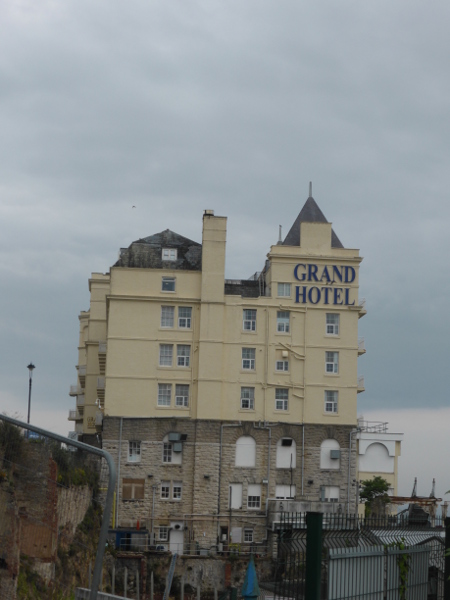
Yet on May Eve I had a dream that the magician was sleeping where I stayed in the Grand Hotel (I got a cheap room on the top floor – no doubt cheap because the lights in the bathroom flashed on and off like a disco and there were noisy seagulls nesting on the roof above!) and I had somehow missed him and was chasing him up down the stairs and lifts and looking behind the trolleys of the house keepers. On waking I had a vision of the magician invoking spirits in a huge cave underground.

P1310842

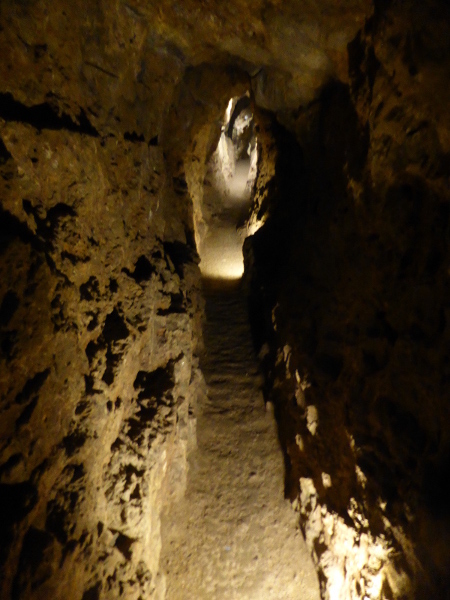
This was significant because that day (May Day) I visited the Bronze Age mines. I hadn’t been before and did not know that, with over 5 miles over of tunnels, they are the largest mines in Europe or that they contain the largest man-made cave. The tunnels leading into the cave are open to the public.

P1310832

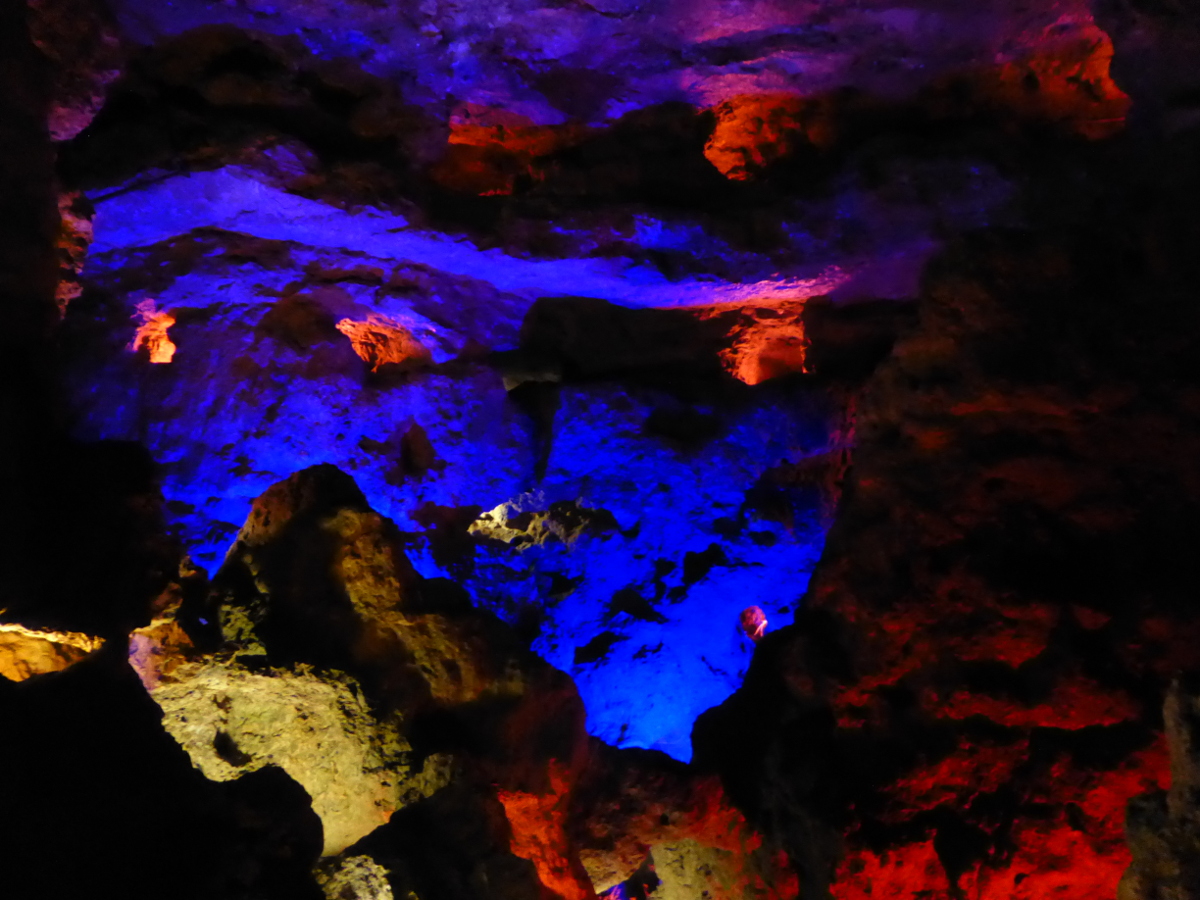
When I entered I struck with awe not only by this finding but the numinosity of the great cavern, with its music of dripping calcite, illuminated by lighting that changed colour to accentuate the features of the rock. I could sense the press of the presence of the spirits, see their shifting forms, their faces.

P1310836

I had the sense that, although it was made for mining bronze, it was seen as sacred – perhaps as the belly of the great sea serpent. It also seemed possible that Nodens/Nudd ‘Lord of the Mines’, his son Gwyn, and the spirits of Annwn along with the dead were revered and their fury was placated there.

That rituals took place to appease the underworld gods and spirits in the mines was evidenced by the burial of a cat surrounded by blackberry seeds 60 metres down. Uncannily, after I left the mines, crossing a field in search of the cromlech, a black cat approached and rubbed around my legs.

I found no direct evidence of the existence of a magician, but it certainly seemed possible he might have existed, found his way into the cavern and used it to invoke the spirits of Annwn.


The Magician of the Orme I – The Book of the Living Hand

The Book of the Living Hand
now lies closed.

Who closed it?

The Hand itself
or the hand of another?

Who will dare
try to bring the Living Hand to life,
to ask it to open the pages,
to fold them back,

to reveal the names
of the terrible beings who will answer,
to risk releasing their fury
into the world again?

What will lie within?
Will the names be the same
or will the pages have been rewritten
in the Living Hand’s sleep?

Do you see its colour returning?

The dim pulse of a vein?

The opening of the eyelid
on the back of the hand?

The twitch of a finger?

The Book of the Living Hand

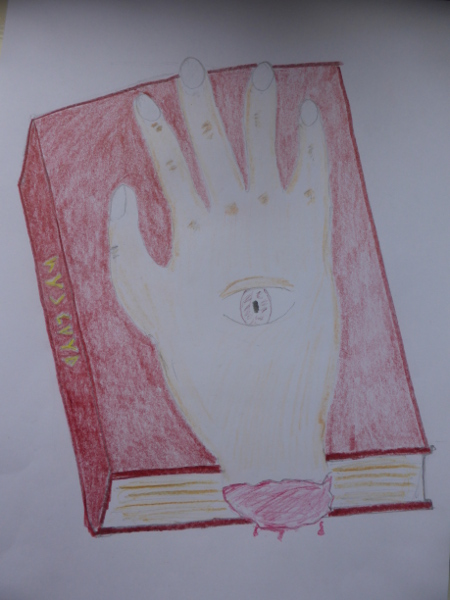
This poem and sketch are based on a vision I had several months ago of a book whose cover had been closed by a human hand with an eye on the back. The hand had become part of the book. This roused a series of questions. Who did it belong to? Who are the furious spirits within its pages? How did its owner lose their hand and how did it become part of the book? What is the significance of the eye?

In a series of gnoses it was revealed that it belonged to ‘the Magician of the Orme’ (the Great Orme in North Wales). Within are the names of the spirits of Annwn whose fury Gwyn ap Nudd holds back to prevent their destruction of the world. The magician cut off his hand in a desperate act of magic to seal the book shut before being arrested on the grounds of practicing witchcraft involving the aid of ‘devils’ and was hung in Ruthin in 1679. The meaning of the eye, as yet, remains concealed.

This inspired me to set out doing some research into whether such a magician and his book could have existed. It’s led me on an interesting adventure to the Orme and through the history of spirit aid magic in seventeenth century Wales and beyond. In the following posts I will be sharing my findings.

Seeing Face to Face

broken-549087_960_720_Pixabay Free Image

In Corinthians Paul famously contrasts seeing ‘through a glass, darkly’ with seeing ‘face to face’. In Revelations we find a series of glassy images leading up to the servants of God seeing his face. We are told, before the throne of God, is ‘a sea of glass like unto crystal’. This is later described as ‘a sea of glass mingled with fire’ with those who have gained ‘victory over the beast’ standing upon it with ‘the harps of God’. The harpers play the song of Moses who ‘the Lord knew face to face’.

The city of New Jersualem is described as ‘pure gold like unto clear glass’, its street ‘pure gold, as it were transparent glass’ and the river of life, running through it, proceeding from the Throne of God ‘clear as crystal’. We are told the Throne of God is in the city and here, where his servants serve him, ‘they shall see his face’.

These images of glass, no longer dark but crystal clear, are bound up with the process of revelation. Of the revealing of the face of God, which is never described, of which his servants are forbidden to make graven images.

This imagery interests me, as a Brythonic polytheist and devotee of Gwyn ap Nudd, because in a number of texts his castle is described as being made of glass or crystal and surrounded by water. In The Life of St Collen, Gwyn is depicted seated on a golden throne in ‘the fairest castle’ Collen ‘had ever beheld’ on Glastonbury Tor. Gerald of Wales notes Glastonbury ‘used to be called Ynys Gutrin… the Island of Glass, no doubt from the glassy colour of the river which flows around it in the marshland.’

In ‘The Spoils of Annwn’ Arthur sails across the sea in his ship, Prydwen, to raid seven otherworldly forts on otherworldy islands. It is my belief they are appearances of the same fort – the abode of Pen Annwn ‘the Head of the Otherworld’ (an older name for the King of Annwn/Faery – Gwyn).

One of the fortresses is named Caer Wydyr ‘the Glass Fort’. The narrator, Taliesin, mocks ‘pathetic men’ (monks) ‘who hadn’t seen Arthur’s feat beyond the Glass Fort’. He tells us ‘six thousand men were standing on its wall; it was hard to communicate with their watchman’. In Nennius’ History of the Britons thirty ships of Spaniards sailing to Ireland find in the midst of the sea ‘a tower of glass, the summit of which was covered with men, to whom they often spoke, but received no answer.’

The Fairy King’s castle is described as being made of crystal in Sir Orfeo:

‘Amid the land a castle tall
And rich and proud and wondrous high
Uprose, and all the outmost wall
Shone as crystal to the eye.
A hundred towers lit up the sky,
Of diamond all battled stout;
And buttresses rose up near by
Arched with red gold and broad about.’

In the Biblical and Brythonic traditions the paradisal abodes where the gods are enthroned, the centres of the mysteries where their faces are revealed, are associated with glassy waters and crystal walls.

One wonders whether there are any stories of people meeting the gods of Annwn face to face. In Sir Orfeo we are told he could not look upon the Fairy King or Queen ‘their crowns, their garments, glistened bright… so hot they shone’. This ‘noble sight’ brings him to his knees before the throne. Afterwards he takes up his ‘merry harp’ and sings the lay that wins his wife, Heurodis, back from Fairyland.

This reverent response is echoed in the First Branch of The Mabinogion when Rhiannon, a Queen of Annwn, unveils herself to Pwyll. This does not take place within a crystal castle, but near the fairy mound Gorsedd Arberth. We are told she ‘drew back the part of her headdress that should cover her face, and fixed her gaze upon him’. ‘And then he thought that the face of every maiden and every woman he had ever seen was unattractive compared with her face.’ He immediately falls in love with her and agrees to marry her, choosing her above all other women.

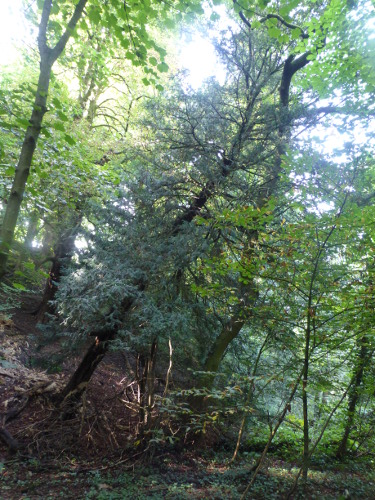
When I first met Gwyn, he did not reveal his face to me in his glass fortress, but beneath the shadows of a leaning yew tree on Fairy Lane in Penwortham. My response was similar. I recognised him as my patron deity, a god who I chose above all gods, who I could not help but love and serve.

In Ethics and Infinity the French philosopher Emmanuel Levinas notes that the face to face to encounter draws us into service to the Other. Also ‘the face… signifies: “Do not kill me.”’

In the Welsh myths we find this ordainment repeatedly broken by Arthur and his warriors who commit a panoply of acts of defacing. The heads of the witches of Caer Loyw and Pennant Gofid are split in twain. The beard of Dillus Farfog is plucked out whilst he is still alive before his head is cut off. The giants Diwrnach and Wrnach are beheaded. Most horrifically, before Ysbaddaden Bencawr is beheaded, his face is mutilated – Caw of Prydyn shaves off his beard, ‘flesh and skin to the bone, and both ears completely’.

Because Arthur cannot bear the thought of the head of Brân being beneath White Hill as a threat to his sovereignty over Britain he orders it to be dug up and removed. Interestingly Brân’s head lives after his death for eighty-seven years and only when it starts to decay, when he loses his face, is it buried. It seems that Arthur cannot abide even the distant memory of Brân’s face evoked by his head.

The surrounding stories suggest that either Arthur himself or (Llen)lleog beheaded Pen Annwn with Caledfwlch during his raid on Annwn and this was how he gained his cauldron, the leadership of his hunt, and usurped his role as the warrior-protector of Britain. One might see the beheading of the Head of the Otherworld, ‘Arthur’s feat beyond the glass fort’, as the ultimate crime against the Other and the face of the numinous.

This killing blow, with the thrusting of Lleog’s flashing sword into the cauldron, may be seen to bring about the shattering of the glass fortress, the fragmenting of the mythos of Pen Annwn. We are left only with pieces of the narrative like shards of broken glass, the images within like creatures trapped in amber; seeing through glass darkly as the Dark Age is ushered in.

Yet beyond the glass walls Pen Annwn picks up his head and makes himself whole again.

I see his face and he is laughing.

In Moments of Terror

For beauty is nothing but the beginning of terror
which we are barely able to endure, and it amazes us so,
because it serenely disdains to destroy us
– Rilke

I grew up with negative connotations of prayer and still do not fully understand what it is, only that I prayed reflexively at frightening times in my life and someone answered. It was a long while until I found out who that was, began exploring prayer as a regular practice, and came to realise prayer is a fundamental means of reaching out to the gods essential to our being.

Brought up in a nominally Christian family I was never forced to pray, but vaguely recall sleeping at a friend’s house and both us having to say ‘The Lord’s Prayer’ before we went to bed. We jabbered through it as quickly as we could, not thinking about its meaning. She thought God was called Harold, mistaking ‘hallowed’ for ‘Harold’ in ‘hallowed be thy name’.

I went to Sunday School and attended church parade at St Leonard’s C of E Church with Brownies. Some part of my soul rebelled against the rigid services, punitive black-and-white theology, and the patriarchal presence of the Christian God. Eventually I refused outright to go.

Refusing to worship Jahweh I considered myself an atheist for a number of years even though I was looking for something… somebody… I was drawn to the deities of our world myths, but the mainstream worldview taught they belonged to a naive past, even though I could sense their presences dancing in the back of my mind like sunspots long after I’d put down a book.

Without knowing of the existence of modern Paganism or Polytheism I had no context for the sense of the divine I felt in the landscape, for otherworldly experiences some beautiful, some troubling. In moments of terror I prayed although I did not know who I was praying to.

The root of ‘prayer’ is the Latin precarius, ‘obtained by treaty’, which gives us ‘precarious’, suggesting such treaties are made in ‘risky, dangerous, uncertain’ situations. Non-religious people often pray when their lives or those of their loved ones are threatened; like it’s a base instinct, a mechanism deep-wired within our souls to reach out to the divine when faced with peril.

At times when I had panic attacks or thought I was going mad I prayed. Driving on the motorway in the midst of panic, thinking I was going to lose consciousness or control, I felt strangely held. Despite fears I would never get back I always did. When I was convinced I was mad, that I couldn’t tell what was real and what was not anymore, into my mind came the words, “So you’re mad, what difference does it make?” (I’d thought this was a quote remembered from Nietzsche, who walked with mad gods, but have never been able to find it). Nothing, I realised, nothing at all, and since then madness has held no fear for me.

It wasn’t until I was thirty I met the god who was behind my visions of the Otherworld; who’d led me a chase through poetry, philosophy, drink, dancing, to the brink of the abyss and back: Gwyn ap Nudd, the Hunter, Rider of Insomniac Nights, Gatherer of Souls, Light of the Mist.

This happened at a nadir of despair. After failing to become a philosophy lecturer and succeed in a career with horses, I had realised the fantasy novel I spent two years writing was unpublishable. I couldn’t think of anything else I wanted to do with my life or any reason to go on. Yet something within me put out an entreaty, ‘a cry from the heart’. Summoned by tolling bells I went to weep beneath a leaning yew tree at an old fairy site and sang a sad song.

Leaning Yew

When Gwyn appeared to me I was struck by a sense of awe bordering on panic by his terrible beauty:

His spectral shine shimmers white as moonlight
His hair floats fair about his phantom limbs
His warrior attire is black as night.
The eyes of the hunter of souls are grim
As the howl of his hounds on Annwn’s winds.

This was followed immediately by recognition. It was he who swept me away on the winds of terror like the riders on his hunt – I often felt like I was flying ‘between sky and air’ – yet also held me and taught me I was safe. He was the storm and the calm at its centre. He, the god of the dead, the mad, and poets, was the source of the words that cured my fear of madness. He was the somebody I’d always been looking for. Always. Since the beginning of time.

Some soul-deep entreaty/prayer had been answered. A treaty between us soon followed. I dedicated myself to Gwyn as my patron, vowing to honour him daily, stand by my truth, and walk between Thisworld and Annwn (the Brythonic Otherworld which he rules) with reverence. I became his awenydd ‘person inspired’ and have been praying to him every day since.

My initial cries of “Please, please, please help me!” opened a gateway of communication between my god and I, unlocked my heart to the divine, to sacred relationship. In Judaism prayer is defined as ‘a service of the heart’ (from Deuteronomy ‘You will serve God with your whole heart’), describing beautifully the depth of service my knee-jerk prayers have led to.

Not only do I pray to Gwyn for inspiration and guidance, but I see my role of journeying with him between the worlds to recover the lost stories of my landscape from the mists of time and reveal the roots of his forgotten myths as a heartfelt and prayerful process essential to my being.

Sadly, in secular society, even when prayers are answered too few of us question by whom or fulfil our side of the treaty. Our potential for relationship with the divine – to reach outside our everyday lives and enter the service of somebody or something greater – remains unfulfilled.

Obscured by oppressive state religions and secular norms our ability to pray remains dormant until precarious times when somebody opens a door. Could it be that we are fundamentally prayerful creatures? That prayer is the heart-root of all purpose, meaning, our relationships with the gods?

*This article was published in ‘People of Prayer‘, Isis-Seshat, Issue 41, Vol. 13, Spring 2018
**I will be speaking on ‘Becoming a Devotee of Gwyn ap Nudd’ at the Pagan Federation North West Conference at Preston Grasshoppers on Saturday.

For Tonight

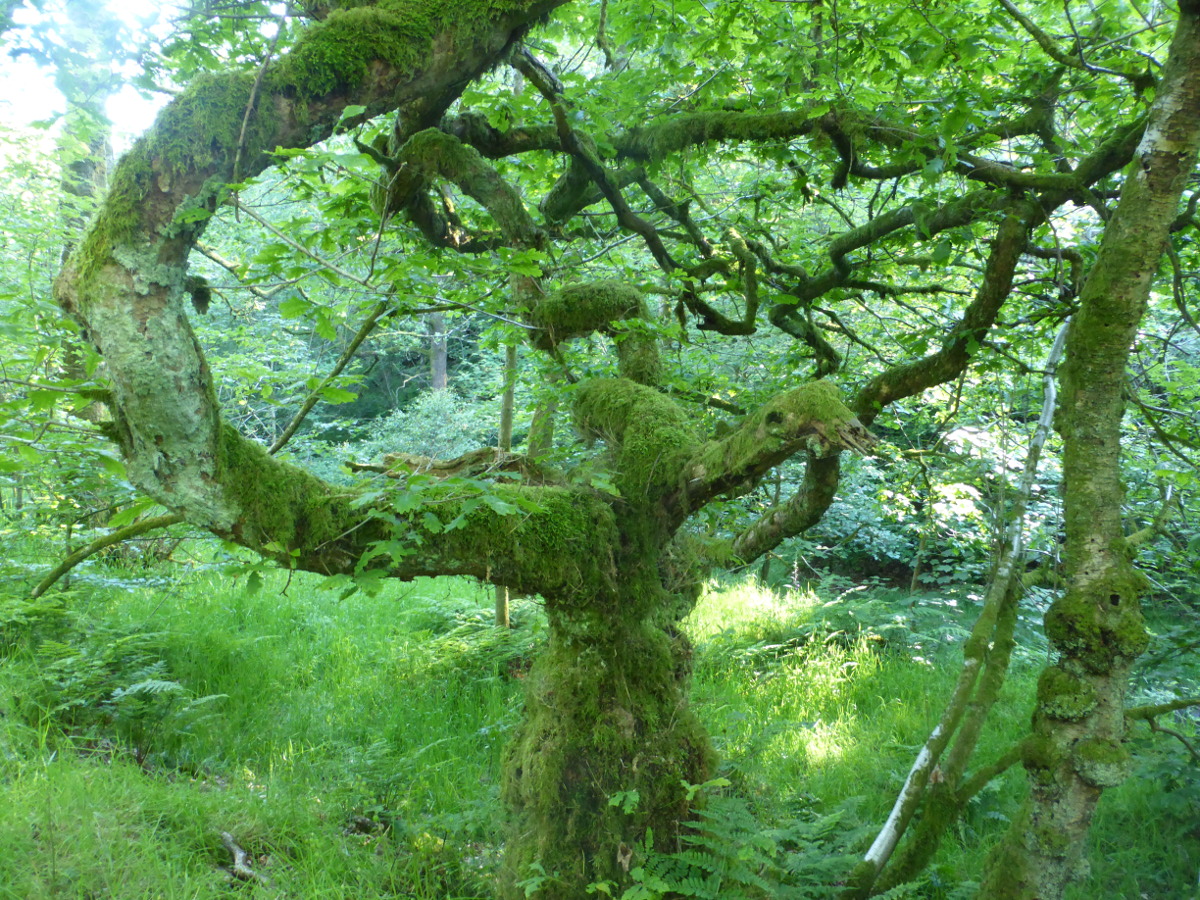
I am a shape who shifts
like the costumes of mosses
like the rabbit eyes of trees

Tockholes I

leaping out of my skin
plunging into the dark arms
of underwater trees

Tockholes III

for once knowing beauty and fluidity
as I run down stairs without
missing a single step.

Tockholes IV

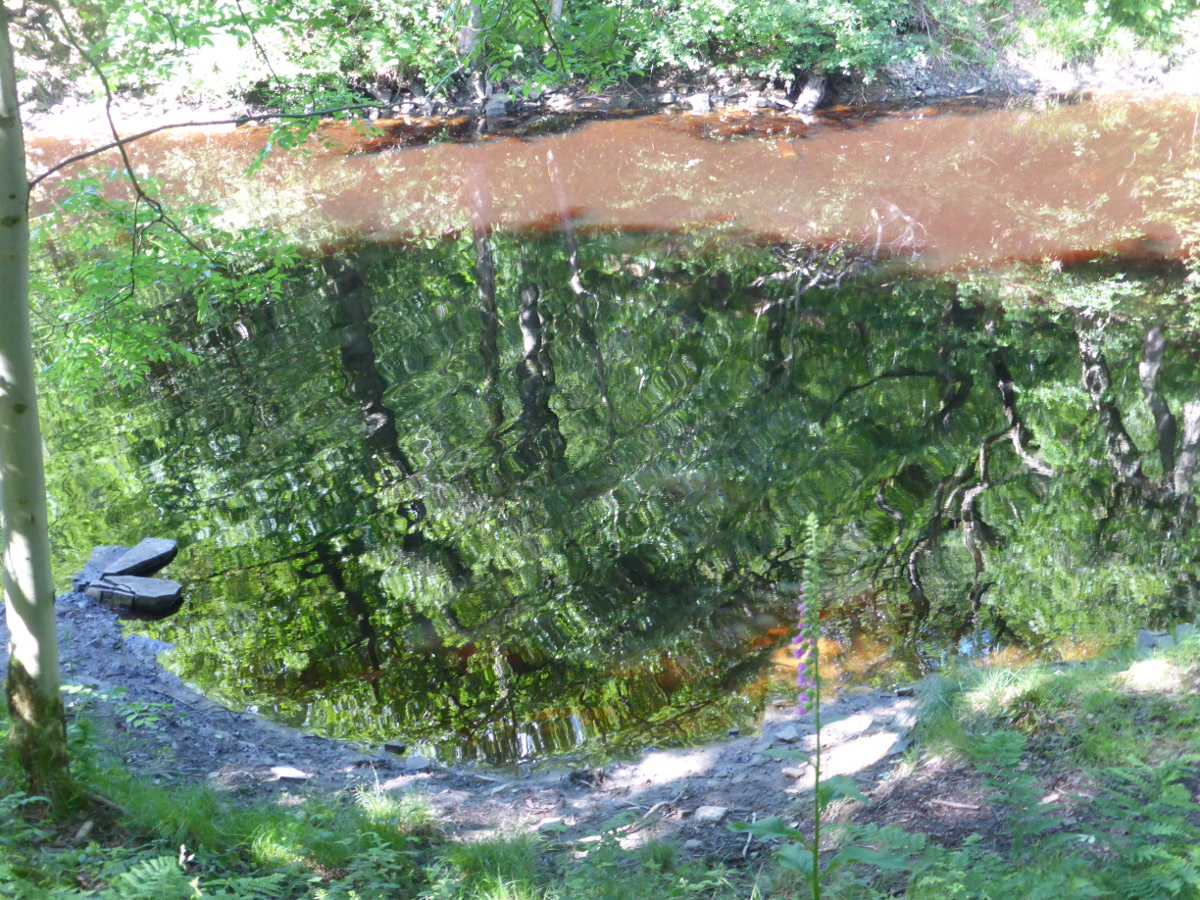
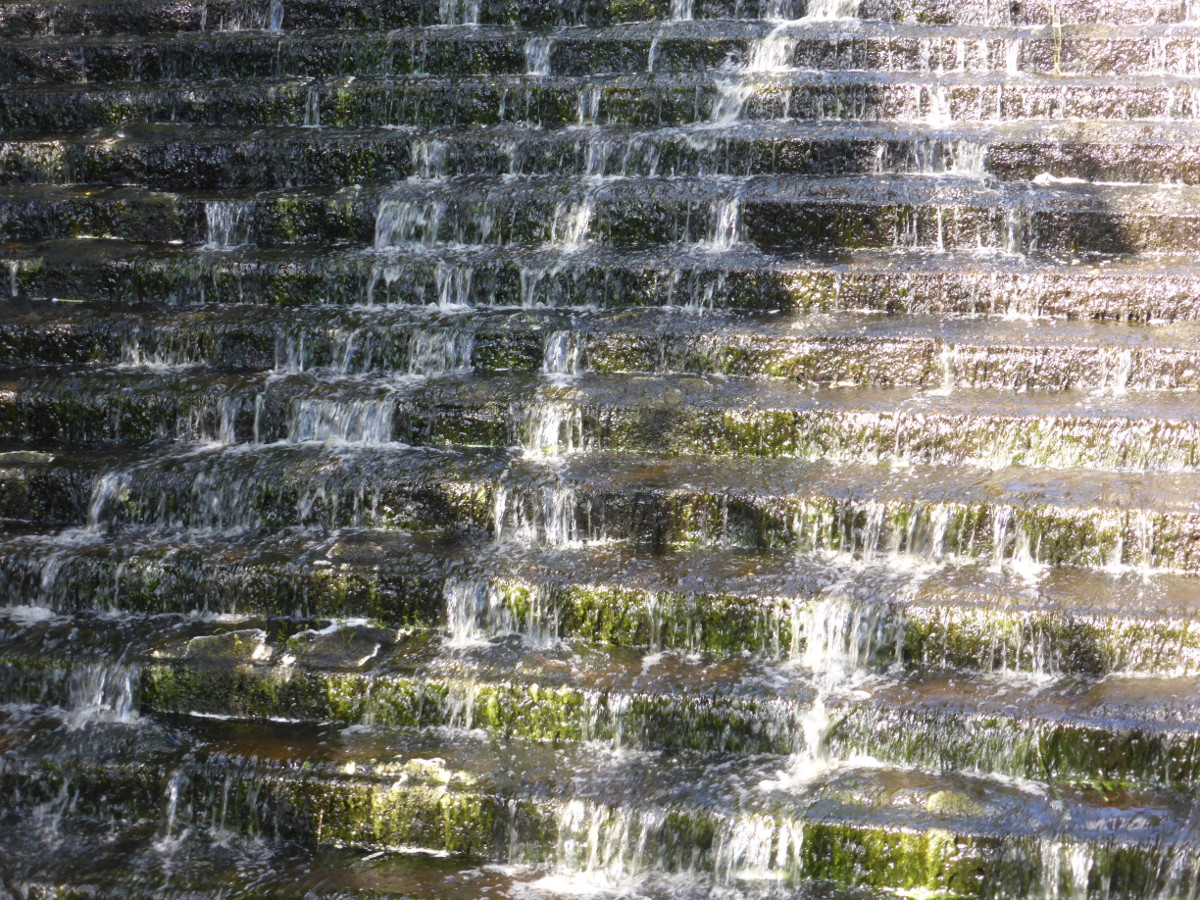
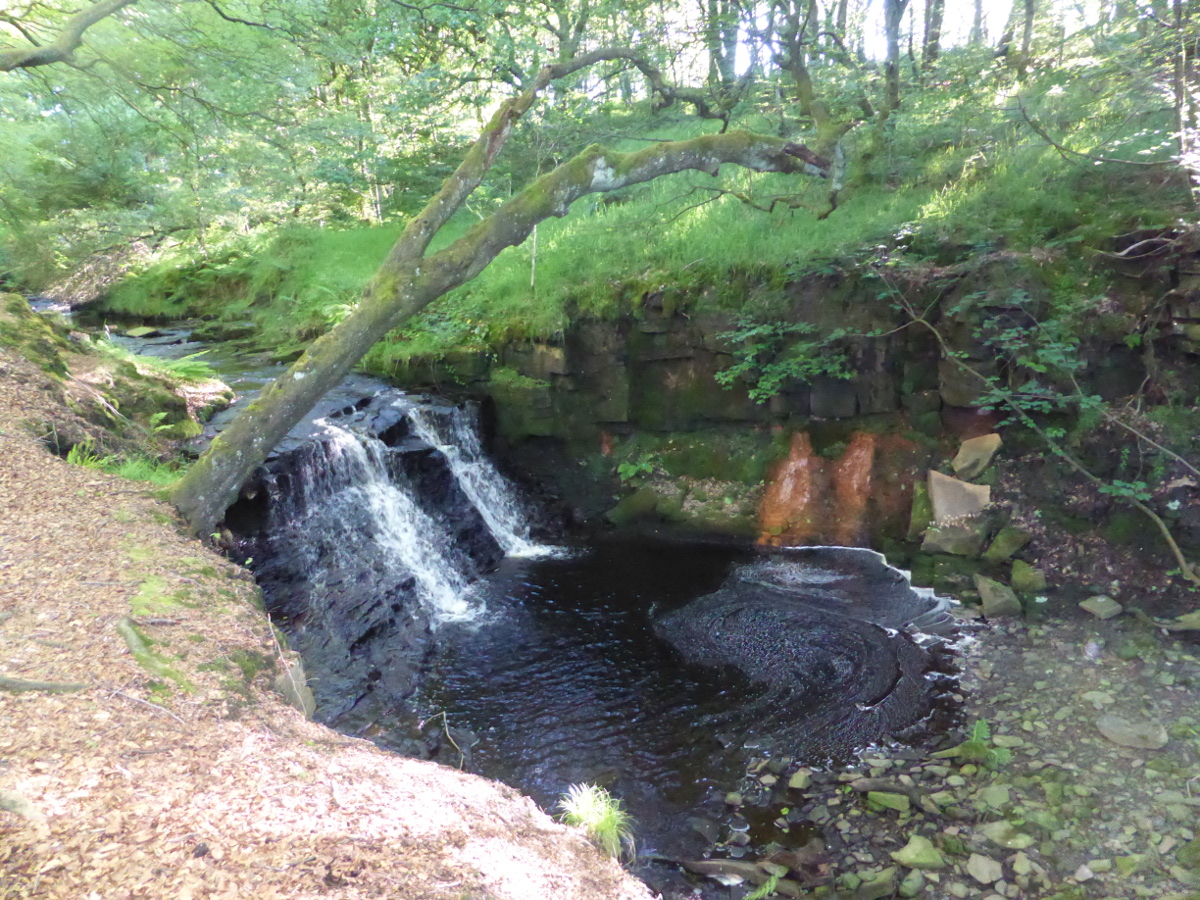
I am the waterfall and its deep pool,
the sun reflected and the fear
of loss surrounding him
like the magic of Faerie,
the golden ball,

Tockholes V

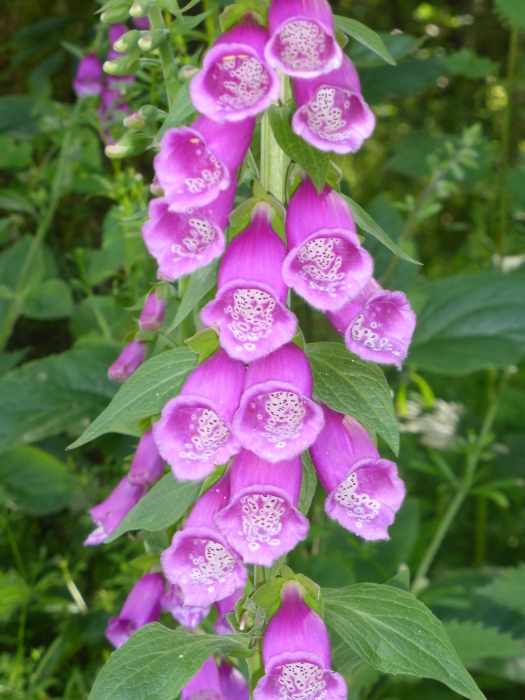
the secrets found by bees
crawling into the purple caverns
of foxgloves emerging centuries later
coated in dusty wisdom.

Tockholes VII (copy)

Can it be possible
that I am wide awake
like your rival as you dream
these enchantments

and here, now, even
at midsummer

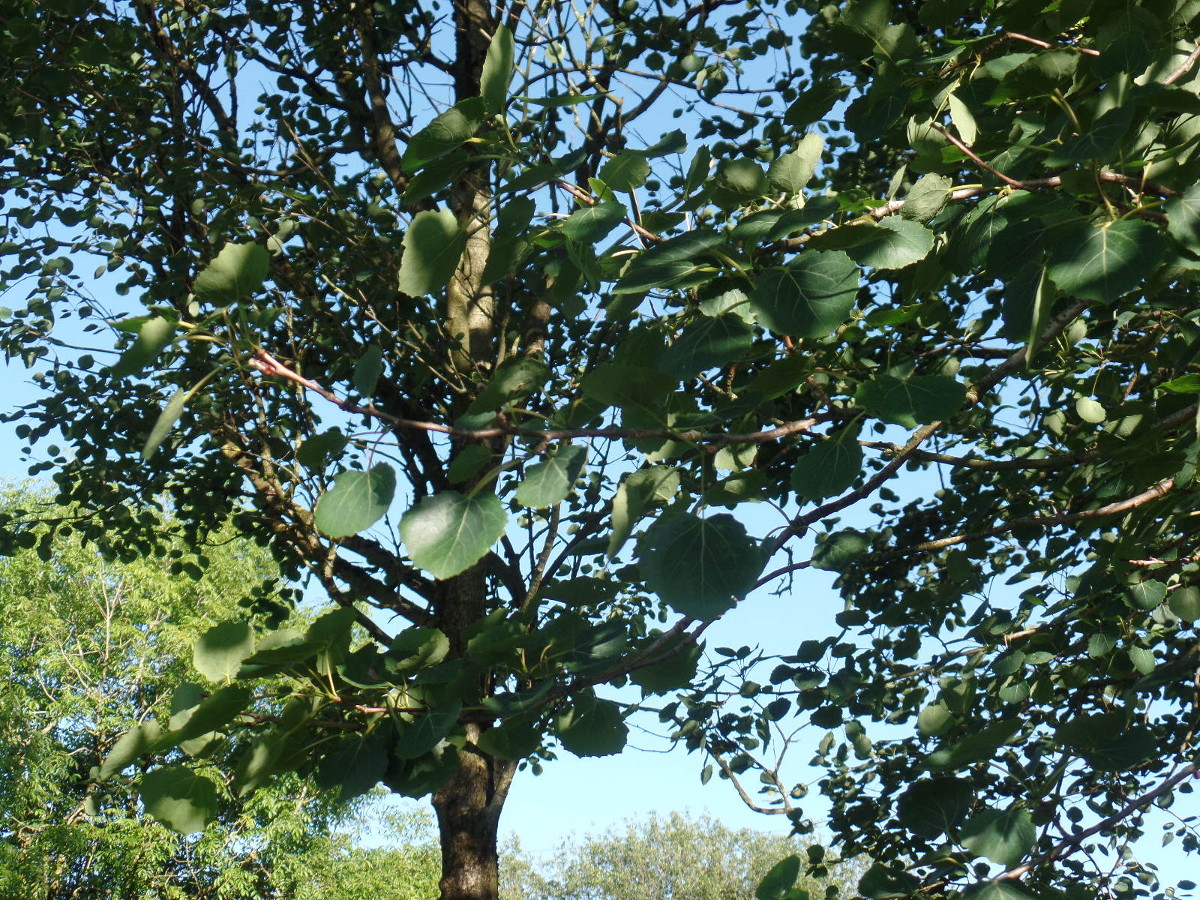
the aspen trembles
at your name?

SAMSUNG CAMERA PICTURES

*This poem is based on a walk in Tockholes Wood on Midsummer Eve and is addressed to Gwyn, who remains a presence in my life even in his absence from the landscape.