Gwyn’s Apprenticeship and the Role of the Awenydd

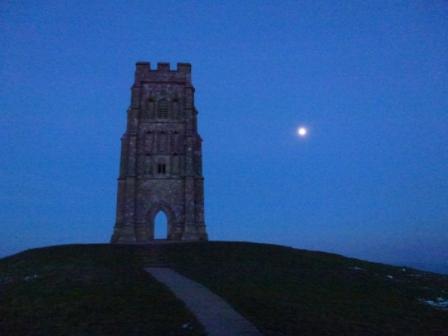
Moon over Castle HillAfter two years studying Druidry (and many years prior to this of searching) on the morning of the winter solstice I received a name for my spiritual path- Awenydd. It was a gift, bestowed by Gwyn ap Nudd (1) and the spirits of my local landscape.

Over the past year my path has grown to centre on my apprenticeship to Gwyn, which began when I made a vow to him as my patron at Glastonbury’s White Spring last January. This role has involved learning more deeply the life cycles of the trees, plants and wildlife of my local area, journeying to meet their spirits and travelling into the land’s past to learn its history. With Gwyn’s guidance I have journeyed the Otherworld, gaining direct experience of realms such as Annwn and Faery, met their inhabitants and borne witness to mythic events.

In exchange I have strived to share this magic through poetry with the aim of revealing my local landscape as inspirited and communicating my vision of the Otherworld. I believe this serves Gwyn for it his task as a king of the Otherworld and leader of the Wild Hunt to maintain the dynamic between the worlds lest this one be destroyed (2). Being gifted with the role of the Awenydd seems to be a natural development of this relationship.

An early description of the Awenyddion can be found in Giraldus Cambrensis’ 12th century manuscript, Description of Wales.

‘There are certain persons in Cambria, whom you will find nowhere else, called Awenyddion, or people inspired; when consulted upon any doubtful event, they roar out violently, are rendered beside themselves, and become, as it were, possessed by a spirit. They do not deliver the answer to what is required in a connected manner; but the person who skilfully observes them, will find, after many preambles, and many nugatory and incoherent, though ornamented speeches, the desired explanation conveyed in some turn of a word: they are then roused from their ecstasy, as from a deep sleep, and, as it were, by violence compelled to return to their proper senses. After having answered the questions, they do not recover till violently shaken by other people; nor can they remember the replies they have given. If consulted a second or third time upon the same point, they will make use of expressions totally different; perhaps they speak by the means of fanatic and ignorant spirits. These gifts are usually conferred upon them in dreams: some seem to have sweet milk or honey poured on their lips; others fancy that a written schedule is applied to their mouths and on awaking they publicly declare that they have received this gift.’ (3)

When I first read this passage a couple of years back I found little I could relate to. Returning to consider it now I find the ideas more resonant.

A phrase which immediately stands out is that the Awenyddion are people inspired. Within the Bardic Tradition I have found the predominance of structured courses of training and people’s preconceptions about the role of the Bard problematic. Experience has taught me I cannot learn stories or poems by rote. Myths and the deities within them have a life of their own, calling through Bardic, folkloric and contemporary texts, or revealing themselves in the landscapes of either world to impart the gifts of inspiration and transformation when the time is right.

Following a conversation with a visiting speaker at my local pagan society, who when I named my path as “Druid Bard” assumed I was of the ‘Bardic Grade’ and completing a ‘gwers’ within OBOD I began to question (and not for the first time) whether this name was a true fit with my spirituality.

During this period I asked Gwyn how my apprenticeship related to Druidry. He told me my role is bound up with the primal Awen, which flows before thought through all things. This supported my suspicion that true inspiration can only speak when systems, concepts and fear of other people’s opinions are set aside. Only by listening directly to the Awen and my own intuition could I become a person inspired and create works worthy of sharing with others.

Another point of resonance is that inspiration is a gift from the spirits, through possession, dreams, milk or honey or a ‘written schedule.’

I’ve never been possessed in the sense of losing my senses and being unable to recall what happened afterward. However I have channelled the voices of spirits and deities whilst writing poetry. During a writing trance visions have appeared where they have revealed themselves in new ways and I’ve recognised their guiding hand even when making finishing touches, in the gift of a completing image or right feeling of a word.

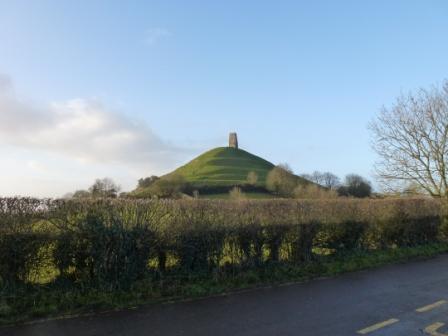
I’ve also been gifted with inspiration in dreams. One of my most significant dreams was when I learnt the identity of my white totem mare. She appeared to me winged and I joined consciousness with her to fly to the top of Castle Hill, a local sacred site. Another important dream occurred the night before my birthday. After seeing a moon bridge in the river Ribble I dreamt of questioning a series of gnarled fay in a cave in Castle Hill. When I realised the process was futile Gwyn appeared and inquired why I hadn’t asked him. By this time I had forgotten the question. The dream conveyed a powerful message about the ethos of questioning in the realms of Faery and dream.

The mention of milk or honey puts me in mind of mead, which in my experience certainly inspires connection with the spirits, writing processes, performances and rituals. The image of the ‘written schedule’ touching an Awenydd’s lips seems to symbolize direct inspiration through the written word.

In the modern world the role of the Awenydd is not limited to ecstatic prophets. Kristoffer Hughes places ‘becoming Awenydd’ – ‘becoming the inspirer’ at the core of Druidry. He says ‘they were the enlightened ones, those who serve, those who inspire to bring others into the mystery of spirit and the great song… by inspiration.’ (4)

Elen Sentier is an ‘awenydd, a spirit keeper and taleweaver from a long family lineage.’ She describes this path as ‘British native shamanism.’ (5) Alongside her reindeer goddess, Elen of the Ways she works with Gwyn as ‘the goddess’ guardian.’ Part of her work involves tracing Elen’s Deer Trods which are also the ‘energy roads’ down which Gwyn leads the Wild Hunt. Many of these are ‘spirit paths’ taking souls to the Otherworld (6) and correspond with corpse roads such as Church Avenue on Castle Hill.

For me the name Awenydd has a magic born of its direct connection with the spiritual source which flows through the land defying all systems and can only be spoken in poetry. My role as an Awenydd is one that I only have intimations of at present- small clues to the potential of learning with the leader of the wild chase and king of the Otherworld to travel the spirit paths and experience the mysteries of the primal Awen in order to return as the inspirer.

(1) Gwyn ap Nudd is a Brythonic deity. His name means White Son of Mist. He is a king of the Otherworld, leader of the wild hunt and guide of souls.
(2) Evidence of this role is found in The Mabinogion, ‘Twrch Trwyth will not be hunted until Gwyn son of Nudd is found- God has put the spirit of the demons of Annwfn in him, lest the world be destroyed. He will not be spared from there.’ Sioned Davies, ‘How Culhwch won Olwen,’ The Mabinogion, (2007), p199
(3) http://www.gutenberg.org/cache/epub/1092/pg1092.html
(4) Kristoffer Hughes, Natural Druidry, (2007), p67
(5) Elen Sentier, Elen of the Ways, (2013), pvii
(6) Ibid. p26-28
Awenydd

I.
As the longest night looses
darkest claws I walk amongst shadows
at dawn where moonlight floods
through the arms of trees
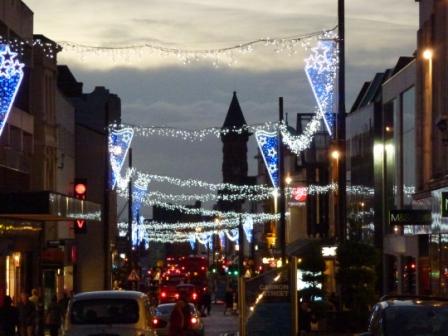
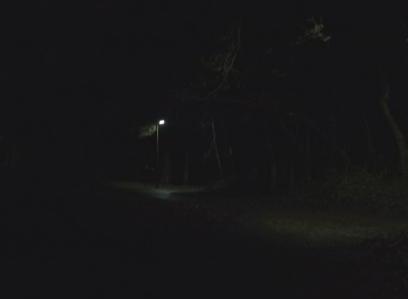
and a solitary lamppost lights the vale.

Lamppost, Greencroft ValleyII.
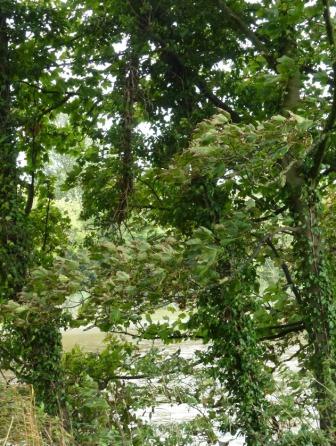
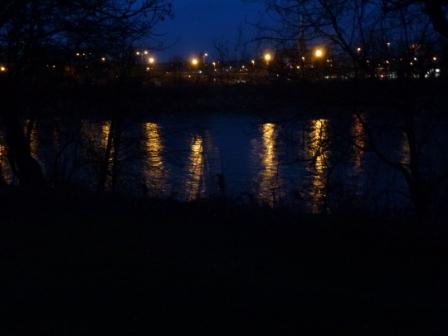
River-trees stand stark and tall,
consistent in her mind’s
unravelling of currents and tides,
cormorants and gulls,
a ragged heron.

RibbleIII.
The host’s roar to a lullaby
quells as moon leads dawn
over chiming hills to be swallowed
by cloud as the hunt returns
to graveyard and mound.

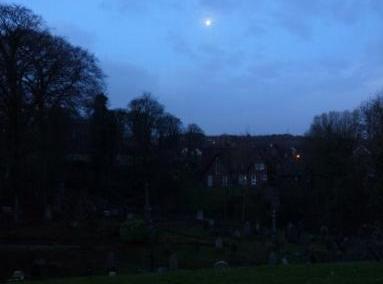
Moon over Castle HillIV.
My lord of the fay
makes his presence known.
He speaks to the mist within my bones
like the lych gate unfastening,
awenydd– my magic word.

Lych gate, St Mary's ChurchV.
The spirit paths are mine
to walk for an evanescent pulse
of dawn. Time stands still
from vale to hill and the stream
sings: awenydd, awenydd.

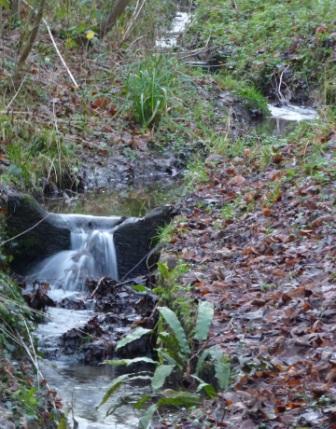
Fish House Brook

Honouring Gwyn ap Nudd

Glastonbury Tor, January 2013On the Winter Solstice a post for Winter’s King.

Samhain has passed. We’re in the dead season. The wild hunt rides the passageways of time and spirit paths lie open. Communities gather and ancestors draw close. Here I feel called to honour Gwyn ap Nudd by telling the story of how he became my muse and patron and made my life whole.

My first meeting with Gwyn took place at the nadir of a crisis. At the end of August 2012 I reached a point of conflict between my spiritual path and ambition to become a professional writer. After two years work completing a fantasy novel I realised its world was too complex and the language too heavy, it held little relevance or hope for a contemporary audience and was at odds with my developing relationship with the land and its myths.

His first appearance was at the head of a fairy procession at a local sacred site. Although I knew of the legend of the fairy funeral I didn’t think I’d encounter it directly nor did I suspect it would be led by a Welsh Fairy King. Yet Gwyn made his name and message clear. The myths of this land are real and he could help me access them. He challenged me to journey with him to the Otherworld, the condition of his guidance being that I lay aside my personal ambitions.

I spent several days considering- could I truly give up my ambition to become a professional writer? How would this change my life? How did I know I could trust him? What if I didn’t come back? Yet this experience, although it was confusing and terrifying felt more powerful and real than anything that had ever happened to me. I knew it was a once in a life time opportunity and I’d only get one chance. I returned to the fairy site and agreed.

Gwyn opened the gates to the past of this land and its myths. With his guidance I learnt how to ride the skies and ancestral pathways on my white mare, viewing the landscape’s lineaments from contemporary suburbia to medieval farmland, oak wood and peat bog to tundra and the age of ice. I met with ancestral people, the ghosts of trees and stampeding aurochs. I entered Faery and descended to Annwn.

Yet I still questioned what a deity associated with Wales and Glastonbury was doing in Lancashire. Reading his myths I realised two of Gwyn’s main stories- the abduction of Creiddylad and Arthur’s slaying of Orddu take place in the North. In the conversation with Gwyddno Garanhir, which depicts his role gathering the souls of the battle dead Gwyn says:

‘I have been where the soldiers of Prydain were slain,
From the East to the North;
I am alive, they in their graves!
I have been where the soldiers of Prydain were slain,
From the East to the South
I am alive, they in death!’

Gwyn is not only a king of Annwn and the fairies but a traveller between the worlds and across the landscape of Britain, maintaining the bonds between nature and humanity, the living and the dead. As a ruler and guide of this isle’s ancestral people his turning up at the head of a local fairy procession was not out of place.

Reassessing my past experiences I realised this wasn’t the first time I’d felt his influence. At Glastonbury festival in my late teens the veil had been lifted to reveal a vision of the Otherworld, a place I now recognise as Gwynfyd, which was coupled with a feeling of truth and ecstatic unity. Thirteen years later he had finally made his presence known, leading me from the cycle of aspiration, failure and frustration caused by my ambition to be a writer back to this magical unison with the land and its myths. He had made my life whole. In January I returned to Glastonbury and made my vow to him at the White Spring.

Since then my relationship with Gwyn has been a constant source of support and inspiration. Whilst the only piece of literature I know of that might link him with the Bardic Tradition is a reference in ‘The Spoils of Annwn’ to the Chief of Annwn possessing a cauldron warmed by the breath of nine maidens, I see him as a god of primal poetry- the wild Awen that thunders like the hunt through space and time and exists in the magic of nature, the songs of the fay and wisdom of the ancestors.

With his guidance I have discovered ways of connecting more deeply with the land and its spirits, its known myths and some unknown ones (a couple of which correspond with factual evidence!). In return I strive to communicate what I have learnt through written and spoken words to maintain the bonds between nature and humanity, this world and the Otherworlds.

And so, as we gather in the dead season, the wild hunt rides and spirit paths lie open I choose this time to tell this story to thank and honour Gwyn ap Nudd.

Wild Hunt Villanelle

When the wild hunt rides on a thundering night
Hurtling from the deeps and bowers of unseen Annwn
They raze all life with their sundering might,

Sweeping heavens black warriors of starry white
Unite with rebel cries to form a spectral fugue.
When the wild hunt rides on a thundering night

Cities tremble as the harrowing horns descry
Ghost white horses, hounds of death and long lost truth.
They raze all life with their sundering might

As they gather up the souls of the dead in flight
Striking with a fear none but their kindred can endure.
When the wild hunt rides on a thundering night

Bringing down the skies and singing back the light
Around our fires only hope can see us through.
They raze all life with their sundering might

Then vanish to Annwn from tumultuous heights
Ending the old year and heralding in the new.
When the wild hunt rides on a thundering night
They raze all life with their sundering might.

Gwyn’s Feast

Welcome guest, make yourself at home,
My processions are coming home for autumn.
There is no lack of wood upon the hearth,
The hounds are calm, the horses fed and watered.
Put knife to meat, drink your share from the horn,
There is endless plenty in my cauldron.
Join and dream to the songs of my bards,
They play a magic from the world’s beginning.
Beneath the Faery moon and Annwn’s stars
All things are sung back to wonder.
Welcome guest, make yourself at home,
My processions are coming home for autumn.

*The original manuscript ‘Gwyn ap Nudd and St Collen’ (1536) relating Gwyn’s feast on Glastonbury Tor can be found here:  http://www.maryjones.us/ctexts/collen.html It’s possible it took place on Michaelmas day, September 29th, which marks the last day of summer and beginning of Autumn.

Forest

Faery Lane, May 2013


I.

A forest
holds a very small possibility
in the sigla of trees
and in a ruddock’s song.

Raindrops lace the ivy,
in a cinema of shade
fairytales catch hands
with desperate grace.

II.

For in my nightmare
the leaning yew fell down.
The door to Annwn closed,
although the wolves still howl.

The people were dead,
the gods were gone
and the ghosts no longer mourned
their shadowed passing.

III.

Yet the forest
kept alive the possibility
of hope emerging
from its bowers

like a white stag bounding
from Annwn’s mounds
with red-eared hounds
and antlered huntsmen.

IV.

Now we read
the sigla from the trees
and listen out
for a ruddock’s song.

In the cinema of ivy
our myths still dance
a forest of possibility
in a raindrop’s glance.

Faery Lane, May 2013

The Other Side

Looking beyond the embers of bridges glowing behind us
To a glimpse of how green it was on the other side
Steps taken forwards but sleepwalking back again
Dragged by the force of some inner tide
– Pink Floyd High Hopes

Glastonbury 2000

The world was ours, the moment all that mattered.
Our hopes were high in the mist of dawn.
We flung our friendship over the wildest horizons
riding rainbow lights and drums to distant haunts
that never satisfied the fire in our souls
nor the loneliness that lay its pall between us.
Strung out on stars, burning everything of value
we reached the ravaged borderlands and paused
so far gone even astronomers couldn’t find us.
Looking beyond the embers of bridges glowing behind us

they saw the stone circle and distant Tor,
the penumbra of a festival vanished to the night.
At last we staggered home lost and nearly blind,
dazzled by the sun we couldn’t find to tiny houses
with stiff front doors surrendering hope for certainty.
The return was hard, obeying the constant grind
of re-learning how to put one foot in front
of the other one. Re-mastering the system, unseeing
starry skies. Yet on the odd occasion reality elides
to a glimpse of how green it was on the other side.

I fought onward, eventually alone
as the division bell began to toll, making happy
families with freshly ironed clothes, polished homes
and forced smiles. From a dusty library I looked out
across the hills- a glimpse of green and beacon fire.
My feet trod through cotton grass to broken remains
of tribal ruins drawn by chants on the west wind.
The other side returned to life in the vestibules of trees.
I saw a river goddess wash her hair in the rain.
Steps taken forwards but sleepwalking back again

the fragments stayed broken, my vision incomplete.
Stunned by the Tor redrawing itself on the backdrop
of my mind I relit the embers on the Ribble’s bank
and recalled the last hint of paradise before everything
went black and time took our dreams away. Guided
by the voice of an otherworldy king I reclaimed my pride
at the Tor’s white spring. Time performed its circle,
gave back my starlit dream. The world is mine again.
To the other side and spiralling back I ride
dragged by the force of some inner tide.

Glastonbury Tor 2013

Winter Ride

Preston


Fay bells chime. You ride a pale horse tonight.
My white mare pines for infinite horizons.

From this false security’s plastic peace
I breathe a prayer for ecstatic release.

Wrenched like tendons, reality is severed.
You open a snow storm, marvel and terror,

suburb stripped bare, hung trees and glittering ice,
a spectral host bathed in sweeping starlight.

Some people don’t see them. The rest run scared.
With my reckless steed I join the nightmare.

Our heart beats quicken to Annwn’s dread trance.
Street lamps flicker. Roofs slip into the distance.

Fairy lights and festive chants spread the county
from Blackpool Tower to Winter Hill, bright fountains

dissolve to torch parades. The present falters
revealing a past of village and bonfire,

chill chapped hands, hungry gatherings at cauldrons,
a labyrinth of padways mazed across Pilling

buried by snow fall, entombed beneath glaciers.
A cold unbearable sets in to kill.

And I fear I’m trapped in the Age of Ice
on the day of doom at the end of time

I cannot move my frozen mind. I scream
“Why? Winter King, bear me to these extremes?”

Your look commands; survey this fragile land,
ice crafting the mythos you toil to grasp,

reshaping the hills, renaming the towns,
creating the isle you know as Britain.

Wild laughter rings from the hollow landscape.
The fate of worlds tilts on a teetering brink.

I see your task, unruly guardian
of streaming vast ancestral tradition.

History rushes back and my course is clear,
My return to Penwortham swiftly steered,

shaking off snow, flexing my cold fingers,
I whisper thanks for your winter visions.

Song for Gwyn

Penwortham HolmeHero of hosts, perpetual wild huntsman,
Wind through the trees, in the leaves, in my blood.
King of the fair folk and darkest of demons,
Keeper of Annwn and Gwynfyd’s High Courts.

CloudsLover of Creiddylad, render of veils,
Mover of seasons rides billowing tides,
Black One of the Seas swings round and sails,
A flash of wild horses cross thundering skies.

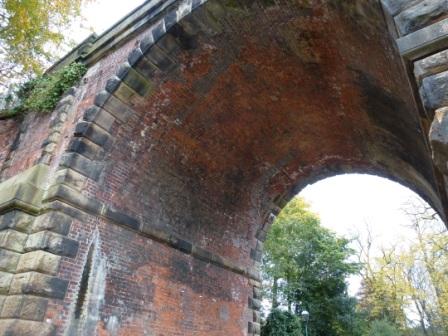
Old railway bridge, Avenham ParkWith Dormarth traverses the wefts of the worlds,
Horse saddled bright, ancestral guide,
Wending a way twixt dead and live souls,
Maintaining the magic lest worlds be destroyed.