Ancestor Work – Remembrance and Healing

Introduction – Gwyn and Remembrance

I have been working with the ancestors since I discovered Paganism in 2010 and, more deeply, since meeting my patron God, Vindos / Gwyn ap Nudd, in 2012 and dedicating myself to Him as His awenydd ‘person inspired’.

Gwyn is a Brythonic God of the dead who gathers the souls of the deceased to His realm, Annwn (‘Very Deep’, the Otherworld). Ancestry is significant in the Brythonic tradition. This is shown in the medieval Welsh poem, ‘The Conversation of Gwyn ap Nudd and Gwyddno Garanhir’, wherein one of the first questions that Gwyddno asks Gwyn is about His descent. The genealogies of the Men of the North trace the lineages of sixth century rulers, such as Gwyddno himself, through seven generations, to common ancestors. The role of the bard was to keep alive the name of his lord and his predecessors, to tell their stories, exult their victories, and deride their enemies. Their legacies were tightly intertwined with the land where they lived, as shown by the names Urien Rheged and Maelgwn Gwynedd.

Whilst this tradition focuses on male wealthy male warlords, it would have been likely that that, during this period, ordinary people also had their share of ancestral stories that were passed down from generation to generation. Their tales, too would have been inextricably bound up with their local landscape.

Ancestors of the Land

When my service to Gwyn began, I was called to honour the ancestors of my locality – my hometown of Penwortham and the nearby city of Preston. Through a combination of research and shamanic journeying with Gwyn, I recovered the lost memories of the ‘Dwellers in the Water Country’ from the prehistoric period through medieval times and industrialisation to now. 

Learning about the prominent landowners and lords of the manor, such as the Fleetwood and Rawstorne families and cotton lords such as John Watson and John Horrocks, was unavoidable. However, I was inspired to focus more on those who had been oppressed and those who dissented, such as the orphans who worked in Penwortham Mill and the Preston Cotton Martyrs.
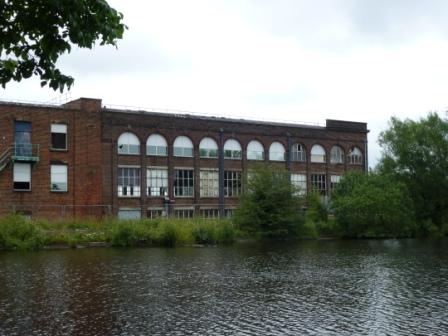
Penwortham Mill (now demolished) where John Watson’s orphans worked.

For me, giving voice to their memories was a magical act that honoured their lives and resistance, making them heard, making them visible. It struck me that Nudd or Lludd, Gwyn’s father, was associated with the Luddites in the form of King Lud and was a rallying figure for their rebellion.

Ancestors of Spirit – Orddu
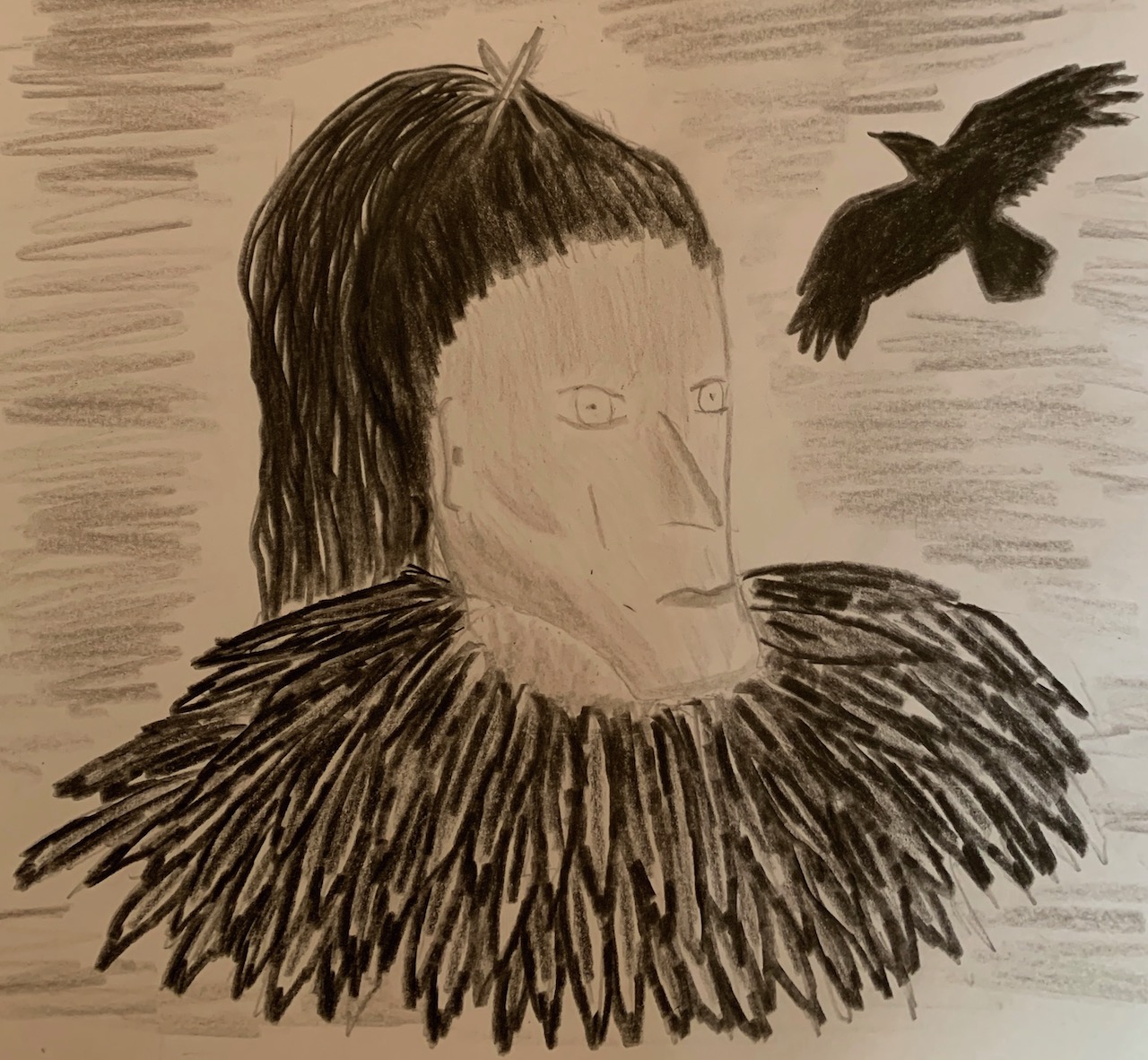
Orddu

I was also called to work with and honour spiritual ancestors. An example of this is how I won the favour of my spirit teacher, Orddu, ‘Very Black’, a ‘witch’, who lived in a cave in Pennant Gofid, ‘the Valley of Grief’, in an unnamed location in northern Britain. Orddu’s story is recorded in Culhwch and Olwen. Herein, Arthur kills her by cutting her in twain with his knife, then drains her blood and uses it to grease the beard of the giant, Ysbaddaden Bencawr. 

This gristly story appalled me. After reading it, I couldn’t stop hearing Orddu’s screams. I journeyed to the cave in Pennant Gofid and found her remains. I was made aware that she had become one of the spirits of Annwn, the restless dead, whose fury Gwyn holds back to prevent the destruction of the world. 

This led me to doing further journeywork to recover and tell the story of Orddu and her lineage, from her mother, Orwen, ‘Very White’, back to their foremother, Eira, ‘Snow’ who I was shown was the first of their lineage to inhabit the cave in Pennant Gofid after the Ice Age. Their stories formed a central thread in my books, The Broken Cauldron and Gatherer of Souls. They recorded journeys in which I laid Orddu’s bones to rest, recovered the last drop of her blood and returned it to Pennant Gofid. Through these acts of bardic and shamanic magic, I placated her spirit, and she left the spirits of Annwn and returned to her home to become a spirit teacher.

Ancestors of Blood

I have honoured my blood ancestors for a while, but it’s only recently that I’ve started working with them on a deeper level for healing purposes. I started out with putting their photographs in an ancestral space on my mantelpiece. When I went to Samhain rituals with a local Druid grove it was notable that my grandfather on my mum’s side, Henry Collison, always wanted to go. When I took his photo everybody admired him and said he was a handsome man. He liked that a lot – he was always a lady’s man. I sensed my grandmothers were less willing. When I considered taking my grandad on my dad’s side, his photo fell down the back of the fire, showing he did not want to go to a Druid rite.
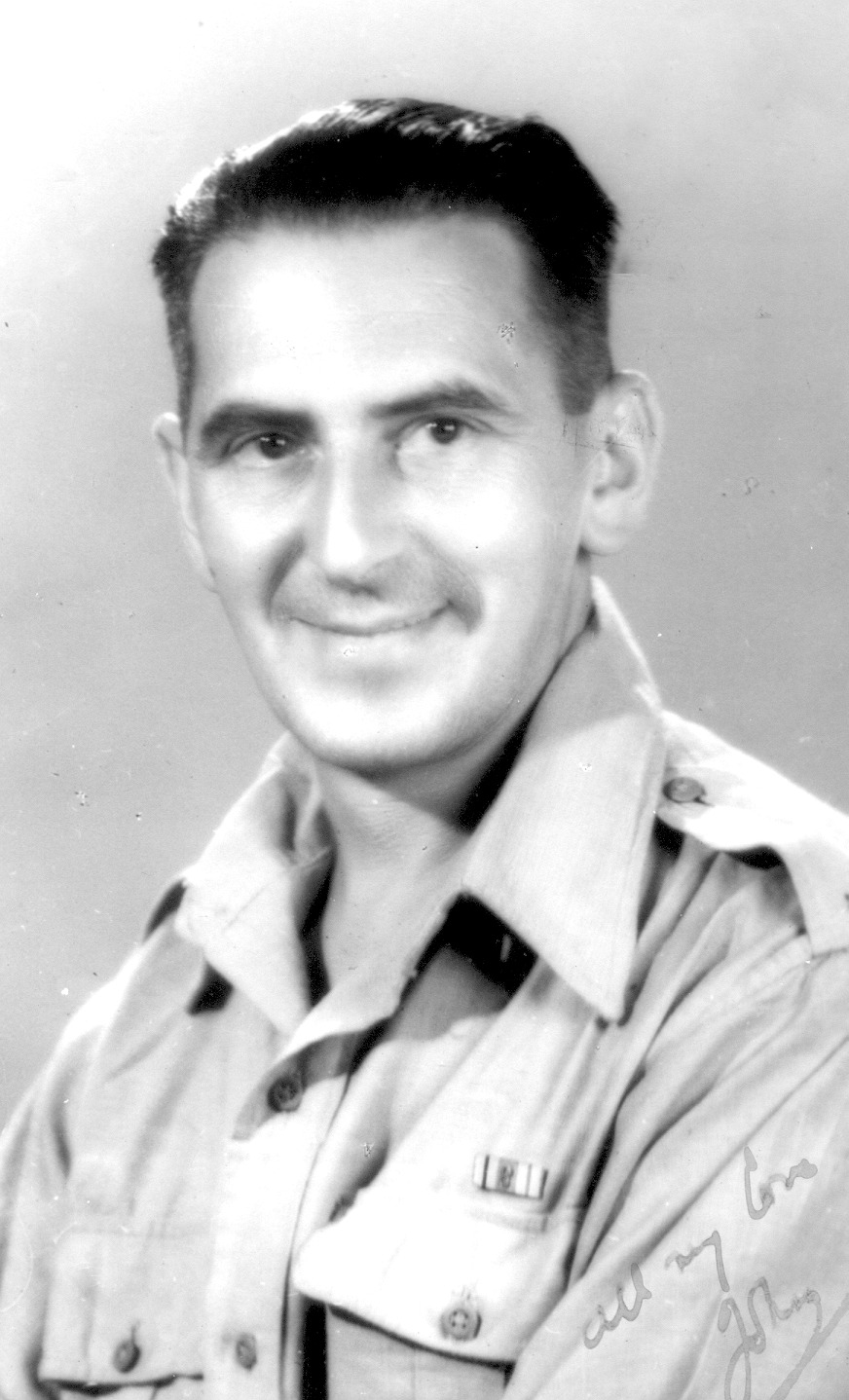
Henry Collison – Grandad on mum’s side

I’ve long sensed that my grandad, Henry, remains quite close to me. He died of a heart attack whilst my mum was pregnant with me and I intuit our souls met. When I attended a local spiritualist church for the first time, in 2024, and one of the members got a Henry, being autistic and having better relationships with household objects than other humans, my mind went straight to our new extra-large Henry hoover with super suction. By the time I’d recalled that my grandad was called Henry, I’d lost the chance to receive a message and dared not speak up and admit my late realisation because of the hoover. The next morning, when I woke up, my hair dryer had been turned round the wrong way and the nozzle had been taken off. I sensed Henry laughing. I admitted to what had happened the next week. 

At this time, I had decided to start working with my family ancestors in earnest through the Way of the Buzzard ‘Ancestral Echoes’ course and with my shamanic mentor, Jayne Johnson, as part of my apprenticeship. 

The reason I had delayed working with them for so long was because I have a difficult relationship with my dad and feared it would place limitations on my how well I would be able to relate to my ancestors on his side. There have been a few blocks, but I’ve discovered most have been open to contact. 

I began with the basic step of finding an ancestor ally to guide this work. I then started doing some ancestral research but, unfortunately found that the Ancestry site which most researchers used was too confusing for my autistic brain. Luckily, my mum, who I introduced to shamanism a few years ago and is techy, fell in love with this area and got hooked on researching our ancestors. She’s managed to get back seven generations along most of our bloodlines and followed some back to as early as the fourteenth century. 

We’ve since been journeying to our ancestors, starting with my grandmothers and grandfathers, then moving on to my great grandparents and beyond, to check whether they’ve passed safely and any of them need healing and, with the help of our guides, carrying out any work that has been needed. This has, so far included basic healings, soul retrieval, and psychopomping.

I have also learnt that our ancestors not only live on in the otherworlds and in other lives in which they have been reincarnated, but within us. That means their healing can take place within us. For example, I feel that overcoming binge eating and not being overweight for too long and becoming diabetic (as happened to my grandmother on my mum’s side and my mum) has helped heal this tendency within our lineage. Likewise, my giving up of alcohol has helped heal this addictive trait on both sides. My grandmother on my dad’s side was an alcoholic and my great grandfather on my mum’s side died an alcoholic in a mental hospital when he was in his 30s. I believe some of my fears about becoming an alcoholic and going mad came from him. 

Client Work

Although I am not officially offering ancestral healing, as I’m only just starting out myself, I have done ancestral work with clients as and when it’s come up. I have provided clients with guidance on how to research ancestors of land, blood, and spirit, held space for clients to journey to ancestors, and journeyed with and for clients to gather ancestral information. I have also helped a client to meet and build a relationship with an ancestor ally.

Conclusion – Ancestral Healing as a Lifelong Process

My work with ancestral healing to date has shown that it isn’t a quick fix, but a lifelong process. The work is long as the ancestral lines, leading back generation by generation, doubling (by the formula 2n) each time. 

I feel I have a reasonable knowledge of working with and honouring land ancestors and a strong relationship with one lineage of spiritual ancestors, Orddu and her kindred, who as ‘witches of Annwn’ are fellow followers of Gwyn. 

My work with my family ancestors remains ongoing. I am slowly getting to know them better. As an autistic person, unlike my mum, I’m never going to have a cup of tea and make small talk with them as it isn’t in my nature, but I feel they appreciate that I have made the effort to reach out and learn their stories.

I am confident that I can provide basic guidance to clients on ancestral work when it comes up, but for more in-depth ancestral healing, I would suggest finding a shamanic practitioner who specialises in this subject.
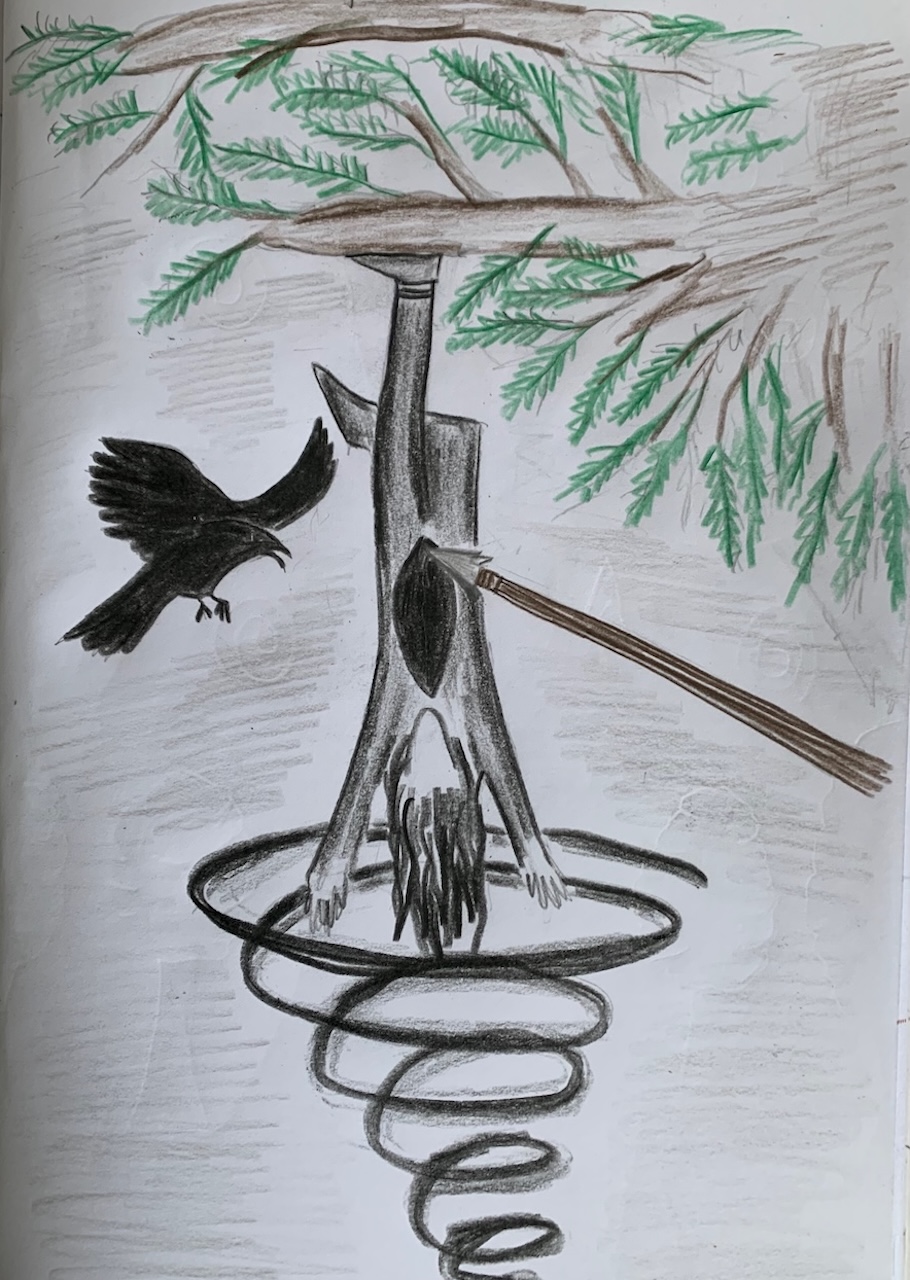
Hanged Woman

Suddenly,
from out of nowhere,
flying at me like a mad dog,
just one tooth at the end of a wooden haft,
the spear that was thrown long ago,
that should have pierced me
before I started running.

It’s finally caught up.

It opens me
and inside I am empty
and hollow as the old yew tree
on which my ragged carcass is hung.

And of course the ravens come.

And of course He’s amongst them –
my God who hung on the yew 
in raven form for nine nights
pierced by the same damn spear.

I always knew my turn would come.

And so He comes to sit beside me
and I go to visit Him and we are one –
the tree, the spear, the hung, the void,
the hollowness within and without.

And this moment is within us. 

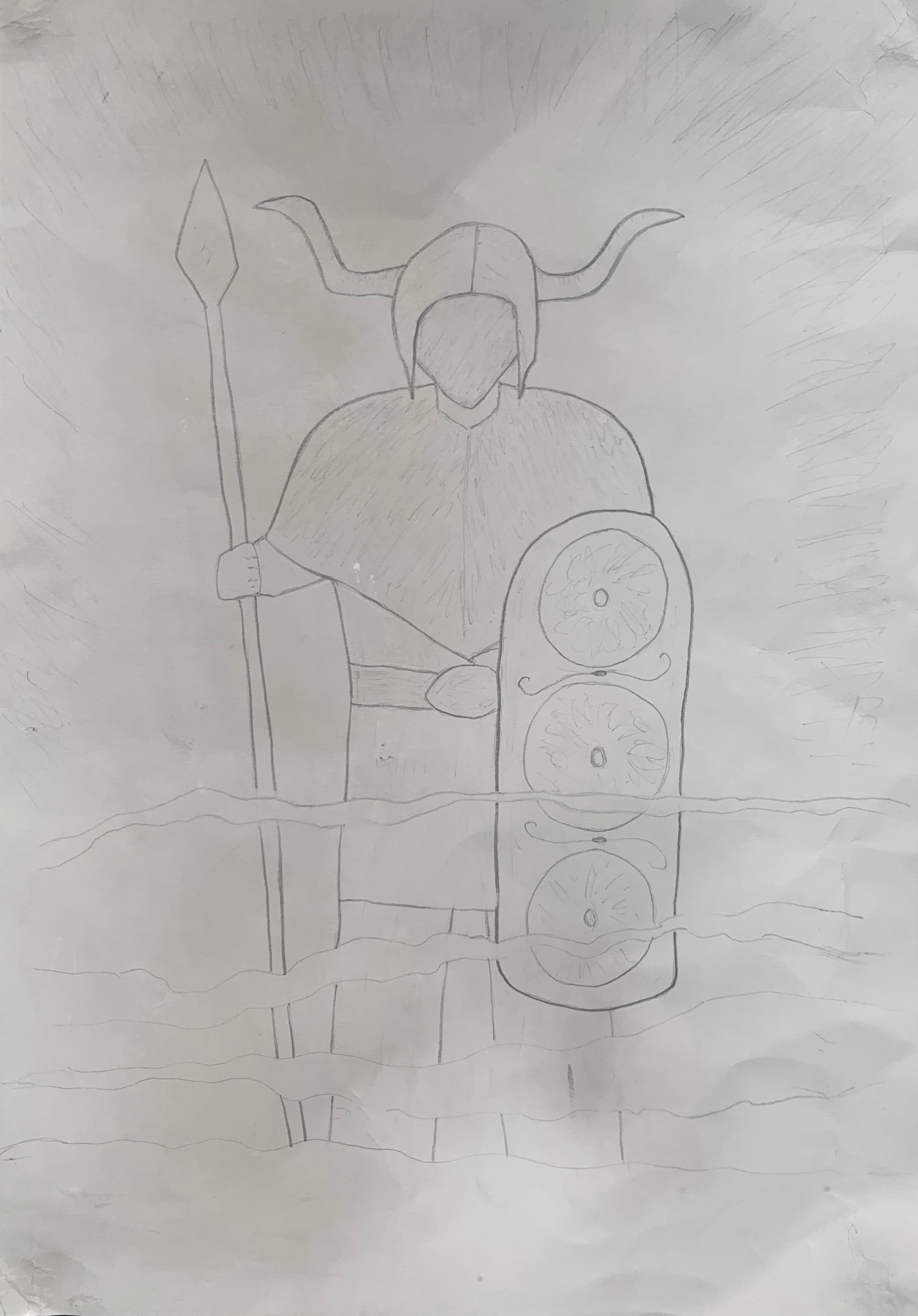
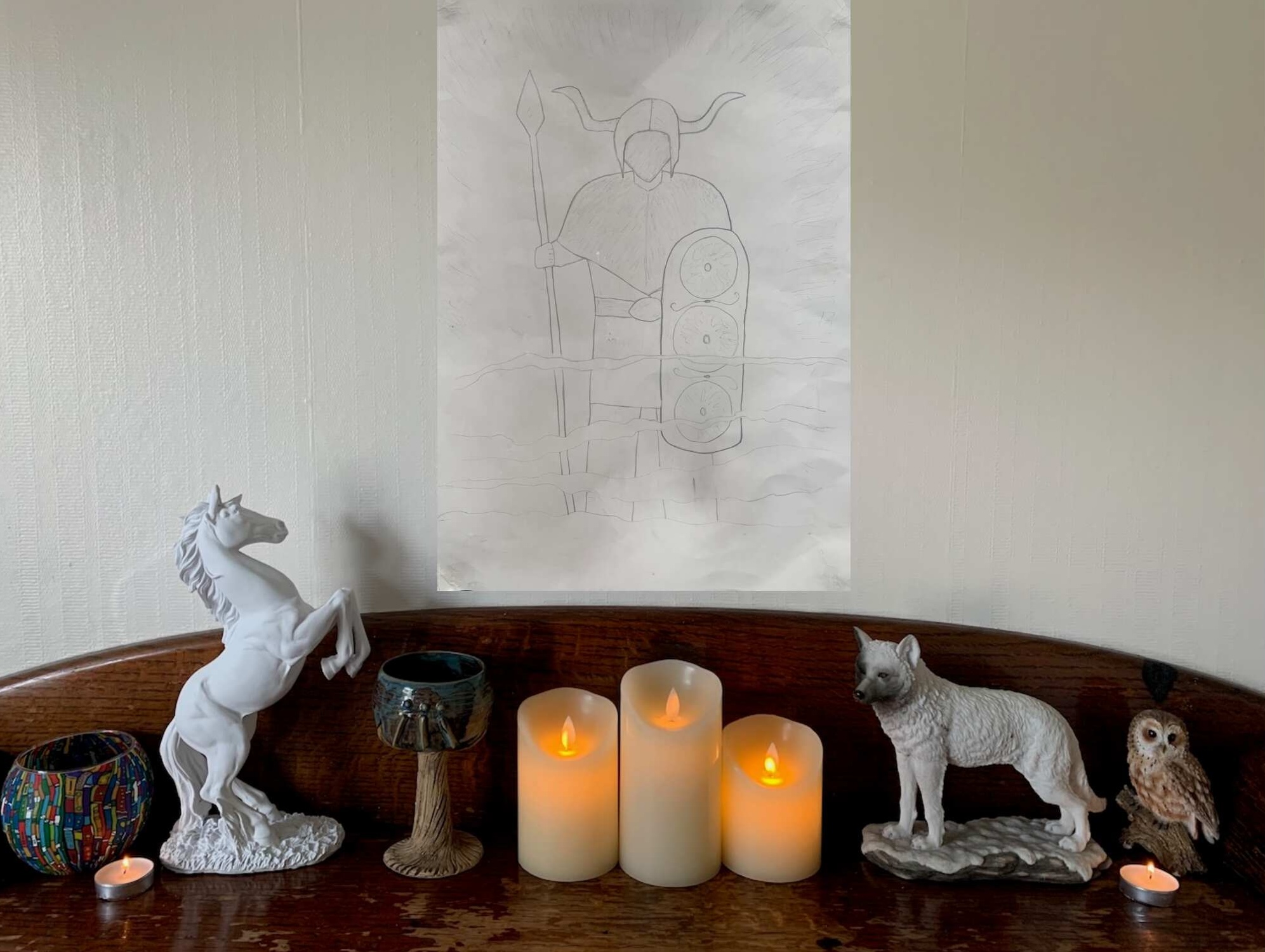
This drawing and poem record a rite I undertook before the Winter Solstice in 2025 – nine days in meditation at the Abyss with my God. Looking back, on the one hand it had worth as a devotional offering, but on the other it wasn’t the healthiest of impulses. It opened a can of worms leading to my recent insights about how my monasticism and asceticism had partly been driven by the unhealthy restrictive and self-destructive impulses that also drove my eating disorder.

The Art of Transforming Suffering

‘In Annwn below the earth…
there is one who knows
what sadness
is better than joy.’
~ ‘The Hostile Confederacy’

‘No mud, no lotus.’
~ Thich Nhat Hahn

If I was to define my core purpose in life at present, I would say that it is transforming suffering, within myself and within others, in service to my Gods. When I met my patron God, Vindos / Gwyn ap Nudd, I was struggling with suicidal ideation. He showed me the Brythonic Otherworld. He made me His awenydd ‘person inspired’ – a poet and spirit worker in the Brythonic tradition. He gave me meaning and purpose. My vocation has given me the strength to begin to heal my own wounds and, more recently, to help others.

Gwyn is a ruler of Annwn (the Otherworld) and a guide of souls. In  a medieval Welsh poem (1), He speaks of gathering the souls of the battle dead. He and His people, the spirits of Annwn, later known as fairies, who also appear as the Wild Hunt, are depicted taking the souls of those who have died suddenly or traumatically to the Otherworld. 

I believe Gwyn is the one in Annwn, in the poem ‘The Hostile Confederacy’, attributed to Taliesin, who knows ‘what sadness / is better than joy’. He’s seen countless sorrows, carries the weight of the battle dead, has gathered the souls of countless suicides, murder victims, those who have died in tragic accidents. Thus, He has an investment in the transformation of suffering so that such untimely deaths are less likely to happen.

Gwyn, as the Fairy King, and the fairies, are also renowned for taking living people, often those who have suffered trauma, to Their realm, or for leading them to wild places, where they mostly recover and then return. (2)

Gwyn and His people are associated with trauma and its healing. This usually takes place in the Otherworld or the wild. This is also shown in a fragment from the fourteenth century Latin document, Speculum Christiani, which describes how common folk in Wales invoked Gwyn to cure the evil eye: ‘Some stupid people also go stupidly to the door holding fire and iron in the hands when someone has inflicted illness, and call to the King of the Benevolent Ones and his Queen, who are evil spirits, saying: ‘Gwyn ap Nudd who are far in the forests for the love of your mate allow us to come home.’ This passage suggests that those suffering from the evil eye are ‘away’ and that Gwyn, who has a distant abode in the wild, is able to bring them home. 

In medieval Welsh literature and later folklore, the Otherworld is depicted as a place of green hills and lush forests where there are sparkling rivers of wine and mead. The fortress of its king, with towers of glass, lit from within, is the centrepiece. Within are shining treasures, an endless feast of meat, fruit and mead.

Activities in the Otherworld include: hunting, feasting, dancing and carousing. Coming back from the land of no pain is difficult. Some people crumble to dust, some go insane, others pine away, those who survive become poets. The saying ‘Dead, mad, or a poet’ summarises the outcomes.

In the Brythonic tradition, poetry provides the means of processing trauma, transforming suffering and giving voice to experiences of ecstasis and healing. Medieval Welsh bards, such as Taliesin, Aneirin, Myrddin Wyllt, and Llywarch Hen all gave voice to personal and cultural trauma. In, and through them, their suffering and the suffering of their people was transformed into some of the most tragic, beautiful and potent works of poetry within our heritage.

I also found that poetry could help me to transform my suffering and that of the land and the ancestors but, alone, it was not enough. A bardic lifestyle of drinking too much and writing and performing poetry, unsurprisingly, proved to be detrimental to both my mental and physical health. At this point in time, I was very good at having ecstatic, often drunken experiences, and writing lots of poems, but not very good at coming home.

I began building a better relationship with my body and a meditation and mindfulness practice during the period I was a nun and began training as a shamanic practitioner. ‘Being present for Gwyn’ became one of my core practices.

Gwyn, through His likeness with Shiva, guided me to the yogic and Buddhist traditions. Over the last few months, I have been greatly inspired by the works of Thich Nhat Hahn and the Dharma teachings from Plum Village. Unlike other forms of Buddhism I have come across that preach negation of the body and the world to achieve enlightenment and view animals as inferior, the Plum Village tradition is embodied, trauma informed, and is based on inter-being in respectful relationship with the world and all beings. Joy and enlightenment can be found in the present moment at any place and time.

The Plum Village teachings centre on mindfulness, which involves the practice of coming home to our breath and to our bodies in the here-and-now. Mindfulness is the key to transforming suffering. In his book, No Mud, No Lotus: The Art of Transforming Suffering, Thich Nhat Hahn outlines the Buddha’s teachings on suffering and its transformation in the Four Noble Truths.

The first Noble Truth is that there is suffering. Suffering exists within us on physical, mental and spiritual levels and outside us, in our families, friendship circles, within our ancestry, within our culture and within the environment. In the West, rather than being taught how to handle our suffering, we are sold countless forms of numbing and distraction. We drink it away, stuff it down, or lose ourselves in social media and other virtual entertainment.

In the place of distraction, Buddhism posits mindfulness – ‘the capacity to dwell in the present moment, to know what’s happening in the here and now… with mindfulness you can recognise the presence of suffering… it’s with that same energy that you can tenderly embrace the suffering.’ He speaks of taking care of our suffering as being like a mother holding her child.

The second Noble Truth is: ‘there is a course of action that generates suffering’. We are encouraged to look deeply at the roots of our suffering. These often lie in past trauma, ancestral trauma, and the fears and habits that result. They can also lie in our attachments to materialist ideals. Gaining insight into the causes of our suffering helps to prevent us from making the same mistakes.

The Third Noble Truth is: ‘suffering ceases (ie. there is happiness)’. The key to true happiness is that it isn’t an aim for the future, ‘I will be happy when this problem is sorted, I have my dream job, my health is better.’ Happiness lies in dwelling mindfully in the present moment and if we can’t do it now, this very minute, we won’t be able to do it when that future moment arrives either.

This was a big learning for me because I have always been future orientated and placed my happiness in the future at the expense of ignoring the now. ‘I will be happy when I have my shamanic practitioner qualification’. ‘I will be happy when I am earning a living from my vocation’. No. ‘If I can’t be happy with my life now I won’t be happy if I achieve these aims in the future.’

The Fourth Noble Truth is: ‘there is a course of action leading to the cessation of suffering (the arising of happiness’)’. The Noble Eightfold Path, provides a tried and tested framework for generating happiness. It consists of Right View, Right Intention, Right Speech, Right Action, Right Livelihood, Right Effort, Right Mindfulness and Right Concentration. Mindfulness and ethical living form its core.

For me, the art of transforming suffering lies in a combination of mindfulness and shamanic work. Being able to go to the Otherworld and come home. Then, once I am home, making art out of the insights I have been gifted with.

When I gave up being Sister Patience, it was a shock to the system coming back to Lorna Smithers and all her shit (which I thought I’d transcended). Yet the shit has made good compost and flowers have grown from it in the form of three books (3) written in the last few months as well as recent articles.

If you’re interested in the process of transforming your own suffering through shamanic work, creativity, and coming home, I’m currently providing shamanic guidance sessions for £15 an hour at a student rate (contact lornasmithers81@gmail.com). 

(1) The Conversation of Gwyn ap Nudd and Gwyddno Garanhir (HERE).
(2) For example, see Sir Orfeo and the mythos surrounding Myrrdin Wyllt (HERE).
(3) A memoir – The Edge of the Dark (HERE), a poetry collection – They Called Me Pig (soon to come), and an epic novel called The Lost Shrine of Nodens, which will be published through Sul Books in May 2017.

What is Brythonic Polytheism?

This is an article for those who are new to this website explaining what Brythonic polytheism is and its significance for me as someone living in present-day Lancashire.

Brythonic polytheism is the worship of one more of the many Gods venerated by the Brythonic peoples who inhabited most of Britain from around 4000 BCE to around 800 CE. During the Anglo-Saxon invasions, the Brythonic culture and language were replaced by English in what is now England, but continued to live on in Wales.

There are various sources of evidence attesting the veneration of the Brythonic Gods. The first is archaeological and includes Romano-British temples, shrines, inscriptions, statues and altars. The second is place names (such as Luguvalium which means ‘Strong in Lugus’). The third is Roman records. Although the Roman writers don’t say anything about the Brythonic Gods they do speak about how the Gallo-Brythonic Deities were worshipped in Gaul. The fourth is medieval Welsh literature and later folklore. Herein we find the myths of the Brythonic Deities rewritten by Christian scribes and traditions of interactions with the spirits of the Brythonic Otherworld (Annwn ‘Very Deep’ or Faery) recorded by folklorists. 

During the post-Roman period northern Britain and southern Scotland were known as Yr Hen Ogledd ‘the Old North’. In medieval Welsh literature there are numerous poems documenting the fall of the Old North to the Anglo-Saxons and recording the lore associated with it.

Early on my path to Brythonic polytheism I was called to look to the evidence for the veneration of the Brythonic Gods and spirits in my local area and to construct a practice based around it. I first found out that the Goddess of my local river, the Ribble, is Belisama, as evidenced by Ptolemy’s Geography, which labels the estuary Belisama aest. I discovered that there are altars to Matrona ‘the Mother’ and Maponos ‘the Son’ at Ribchester and to the Mothers at Lund, that Brigantia was worshipped in the Pennines and that two Romano-British statuettes dedicated to Nodens (as Mars-Nodontis) were discovered on Cockersand Moss. I began praying to and making offerings to these Deities and writing poetry for Them. I made contact and established relationships. Vindos / Gwyn ap Nudd (the son of Nodens / Nudd) appeared to me at a local fairy site in an intense theophany that led to me devoting myself to Him as my patron God. I also built relationships with the spirits of my house, garden and local valley.

I was initially surpised by Gwyn’s appearance even though the site mentioned is associated with a local fairy funeral legend. I didn’t realise He, the a Brythonic King of Annwn / Faery, was the fairy leader. It made further sense in relation to the statuettes dedicated to His father and to the place name Netholme (Nudd’s islet) near Martin Mere. Then, even more, when I read ‘the Conversation of Gwyn ap Nudd and Gwyddno Garanhir’ and discovered that Gwyn gathered the souls of several famous northern warriors and Culhwch and Olwen wherein Gwyn appears in two episodes (the Battle for Creiddylad and the Very Black Witch) that take place in the North.

Having a relationship with Gwyn and other Brythonic Gods rooted in the myths and lore of the Lancashire landscape and more widely of the Old North is significant to me for a number of reasons. These relationships are valuable in themselves as a source of companionship, joy, wonder and awe which moves my soul on the deepest of levels. They are also of value because they offer an alternative way of being rooted in connection with the land and local tales in opposition to the monoculture of modern technocratic capitalist society. The inspiration and guidance of these Gods and spirits provides meaning and purpose beyond the norms and rules that have led to our exploitation of the earth and both non-humans and other humans. Simply taking time out to pray, meditate, journey or create art is an act of resistance to productivity and constant screen time, as is walking, gardening and working on the land in communion with the spirits.

In Gwyn’s mythos I found a different seasonal cycle to work with – Calan Mai (Gwyn and Gwythyr’s Battle for Creiddylad), 29th Sept Gwyn’s Feast, Nos Galan Gaeaf (Gwyn’s Hunt) – as an alternative to celebrating the commercial festivals and the Wiccan / Druidic Wheel of the Year.

I’ve been a Brythonic polytheist for over thirteen years. My path has shifted and changed from being a performing poet and conference speaker, to working in conservation, to experimenting with monasticism, to my current shamanic work. Throughout, my constants have been devotion to Gwyn, creativity and having a shamanic practice and these remain my lifelines in a changing catastrophic world.

Prayer to Vindos for Clear Sight

Vindos God of Clear Light
grant to me Your Clear Sight.
Free me from the fog of self-deception
and remind me of my deathless nature.

Audio HERE.

~

This prayer, which can also be sung as a chant, is based on the famous Hindu Mahamrityunjaya ‘Great Death-Conquering’ Mantra HERE – a prayer to Shiva for liberation from our attachments to ignorance and untruth and a reminder of our immortality. When I was studying yoga with the Mandala Ashram I sung it for 20 minutes every week. I have started singing this prayer / chant to Vindos for 20 minutes each morning for clearer vision as I face a difficult period after giving up being Sister Patience.

Black poplars who do you grieve?

We have not the myth of a son
of the sun who got burnt
by the sun and fell.

When Maponos
stole the horses of Bel
and rode skywards to the horror
of His mother He did not come to grief.

Although Maponos burned He was not burnt.

He returned instead alive and ablaze,
replenished, youth renewed,
as the Sun-Child.

So, why, black poplars, do You grieve?

Do You grieve because Your brother lives?
Do You grieve because You are jealous?
Do You grieve because You got no grief?

Or is there a story of another brother?

A forgotten son of Matrona,
daughter of the King of Annwn,
who mounted a black horse and rode
after the black sun when it set and sunk
to the depths of the Underworld?

Did He drown in a black lake?
Was He eaten by a black dragon?
Or does He still wander lost in sorrow
through a labyrinth unillumined
by the rays of the black sun?

Poor brothers, did You search 
for Him and almost lose yourselves?
Did You get trapped in a dark prison
and scrape Your bloody fingers
against the walls and weep?

If so, how did You get here?

Did You ride with the black sun
or with the King of Annwn on the back
of His black horse who carries lost souls?

Did He plant You here, He and His Queen,
with labyrinthine roots winding down?

Did He seal Your tears deep within?

Did He kiss Your fingers like His Bride’s,
tuck them into a yellow bud
to emerge again
only in the spring to reach
not for the black sun but the love of a mate?

Did He bring You here to tell me when
I grieve my fingers are not talons
to scrape the walls
and my tears are not sap
to entrap the insects who get in their way?

Did He bring You here so I could learn
from Your clawing, Your crying,
my clawing, my weeping,
to turn my grief inward in winter
and then, in spring, to reach out in love?


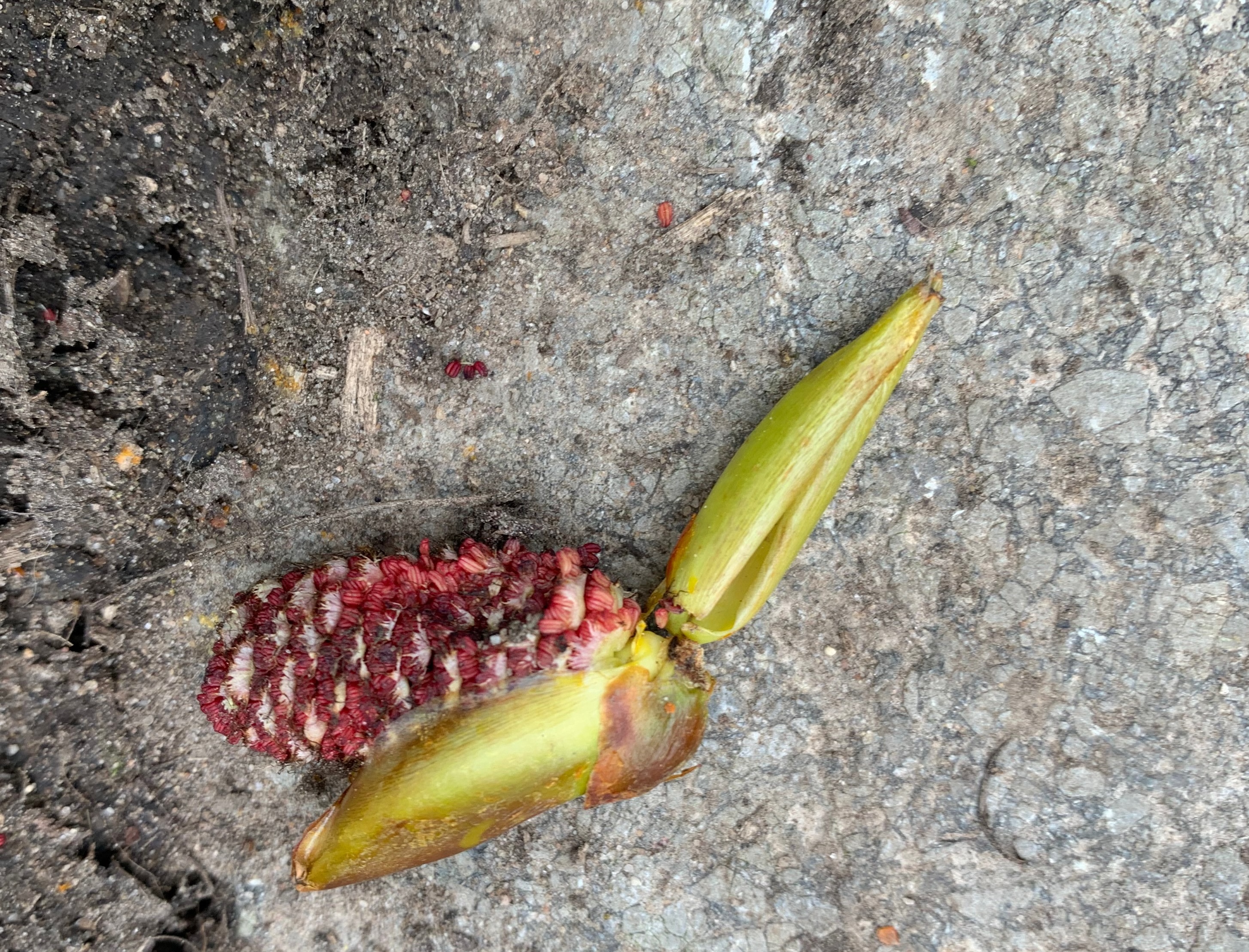
*This poem is addressed to the two black poplars who stand at the source of Fish House Brook, near to the Sanctuary of Vindos, in my hometown of Penwortham. The photograph is of one of the fallen catkins, taken in spring 2022, not quite emerged.

An Introduction to Vindos / Gwyn ap Nudd

I am writing this article for those who are new to the Sanctuary of Vindos and for those who have been following me for a while who might enjoy reading an article that brings together my research on Vindos / Gwyn in one place. 

Vindos

Vindos is the reconstructed Proto-Celtic name of the medieval Welsh God, Gwyn ap Nudd, ‘White son of Mist’. It stems from the root *Windo ‘White’ (1). It is possible that Vindos was worshipped at Vindolanda ‘the Land of White Springs’ (a Roman auxiliary fort on Hadrian’s Wall) and, like His father, Nodens (2), more widely across Britain during the prehistoric and Romano-British periods. 

From Gwyn’s role as a ruler of Annwn ‘Very Deep’ (the Brythonic Otherworld / Underworld) and gatherer of souls, we might derive that Vindos, too, ruled the chthonic regions and was associated with the dead.

It’s my personal intuition that the chalk God found at the bottom of a ritual shaft in Kent and recorded by Miranda Aldhouse Green might be Vindos: 

‘At the bottom of this shaft… all some 2.5 metres deep, was an oval chamber containing a complete figurine, composed of a featureless block of dressed chalk from which rises a long, slender neck and a head with a well-carved, very Celtic face. This figure may have stood in a niche high up in one wall of the chamber… Pottery would indicate a first or second-century AD date’ (3).

It is possible that prehistoric burial monuments with stonework made from chalk and limestone, described by Rodney Castleden as ‘bone-white buildings… temple-tombs… sharply defined with deep boundaries and blinding chalk-domes visible for many miles,’ (4) were associated with Vindos.

Vindos might be equated with the Gaulish Vindonnus ‘Clear Light, White’. According to James McKillop, Vindonnus was worshipped at ‘a site coextensive with Essarois in Burgundy, eastern France. Bronze plaques nearby depicting eyes suggest he was attributed curing powers for eye diseases’ (5).

It is likely that the coming of Christianity played a role in expunging the evidence for veneration of Vindos on the basis of His associations with the Underworld and death. Luckily, as Gwyn, His stories lived on in medieval Wales.

Bull of Battle – Warrior-Protector and Psychopomp

Gwyn’s clearest representation comes from a medieval Welsh poem called ‘The Conversation of Gwyn ap Nudd and Gwyddno Garanhir’ from The Black Book of Carmarthen (1250). Herein Gwyn and Gwyddno (6) converse at an undisclosed location. I believe the poem implicitly suggests that Gwyddno is dead and Gwyn has appeared to guide his soul to Annwn. This is also the interpretation of translator, Greg Hill, whose translation I have used below (7).

In this poem, Gwyn is addressed with deep reverence and respect by Gwyddno as a ‘fierce bull of battle’, ‘leader of many’, and ‘lord of hosts’. This fits with Gwyn’s name not only meaning ‘White’ but ‘Blessed’ and ‘Holy’. Gwyddno petitions Gwyn for protection, and Gwyn replies that from Him, an ‘invincible lord’ (hinting at His divine status), ‘He who asks shall have protection’. As a ‘bull of battle’, Gwyn is a warrior-protector.

At first, Gwyddno does not recognise Gwyn and thus asks what land He comes from. Gwyn replies: ‘I come from many battles, many deaths’. These words are suggestive of His role as psychopomp gathering the souls of the battle-dead. Only when Gwyddno asks Gwyn of His descent does He reveal His identity: ‘My horse is Carngrwn from battle throng / so I am called Gwyn ap Nudd / the lover of Creiddylad, daughter of Lludd.’ There is a sense here that it is only when Gwyddno recognises Gwyn that he realises that he is dead. ‘I will not hide from you.’ He realises he cannot hide either from Gwyn or the truth that he is deceased and states his own name, ‘I am Gwyddno Garanhir.’

Gwyn is then drawn away by His restless horse and red-nosed hound, Dormach, who is wandering away across the firmament, to further battles. Before He departs, He recites a series of verses recording the names of a number of famous warriors, mainly from Yr Hen Ogledd ‘the Old North’ (8), whose souls He has gathered from the battlefield. He then ends by speaking two of the most haunting verses in medieval Welsh literature. 

‘I was there when the warriors of Britain were slain
From the east to the north;
I live on; they are in the grave.’

I was there when the warriors of Britain were slain
From the east to the south;
I live on; they are dead.’

Here, Gwyn laments His role as an undying God fated to witness the deaths of his people and gather their souls until (as we shall soon see) the end of the world.

Leader of the ‘Demons’ of Annwn and the Wild Hunt

In Culhwch and Olwen (1100), Gwyn is contrastingly represented as a sinister figure. Herein we find the lines, ‘Twrch Trwyth will not be hunted until Gwyn son of Nudd is found – God has put the spirit of the demons of Annwfn in him, lest the world be destroyed. He will not be spared from there’ (9). 

These lines, penned by a Christian scribe, allude to Gwyn’s rulership of the spirits of Annwn. They suggest that Gwyn contains the aryal ‘spirit’ or ‘fury’ of beings seen as demons by the church both within His realm and within His person. Paradoxically, it is only because Gwyn partakes in their nature that He can hold them back in order to prevent them from destroying the world.

The lines about the hunt for Twrch Trwyth ‘Chief of Boars’ also contain darker allusions. The Twrch is not just any old boar but a human chieftain who was supposedly turned into a boar by God on account of his sins (10). That Twrch Trwyth is a human shows this is not a boar hunt but a hunt for human souls. That it cannot begin until Gwyn is found demonstrates He is the leader of the Brythonic variant of the Wild Hunt (which occurs across Europe).

Gwyn’s leadership of the Wild Hunt is further evidenced in the works of John Rhys. He refers to Iolo ap Huw, Gwyn’s chief huntsman, ‘cheering cwn Annwn over Cadair Idris’ every Nos Galan Gaeaf / Halloween (11). Rhys also refers to a horned figure with a black face, likely Gwyn, with the cwn Annwn ‘Hounds of the Otherworld’ hunting down a sinner ‘across Cefn Creini’ (12). As a devilish huntsman with His hounds and demonic followers He rides out through the winter months to hunt down not only the dead but living sinners.

Gwyn’s associations with winter and destruction are also hinted at in Culhwch and Olwen. Creiddylad, His sister, goes off with Gwythyr ap Greidol ‘Victor son of Scorcher’ but before He can sleep with Her, Gwyn takes Her by force (presumably to Annwn). Gwythyr gathers an army, attacks Gwyn, fails and is imprisoned. During their period of imprisonment, Gwyn kills the northern king, Nwython, cuts out his heart and feeds it to his son, Cyledyr, who goes mad. Arthur is brought in to intervene, calling Gwyn to him and determining that from thereon Gwyn and Gwythyr will battle for Creiddylad every May Day until Judgement Day and only then one may take her (13).

This Christianised episode is likely based on a pre-Christian seasonal myth wherein Gwyn, a Brythonic Winter King, takes Creiddylad, a Goddess of fertility and sovereignty, to Annwn for the duration of the winter months. On May Day, Gwythyr, a Brythonic Summer King, wins Her back for the summer.

Arthur’s intervention is employed to show the Christian warlord’s power over Gwyn. Throughout the tale, Arthur is demonstrated to have power over giants, witches, and magical white animals who are associated with Annwn. 

In another episode, Gwyn and Gwythyr accompany Arthur to slay Orddu, ‘Very Black’, a witch who lives in Pennant Gofid ‘the Valley of Grief’, ‘in the uplands of Hell’ (14). Gwyn attempts to stop Arthur from attacking Orddu to no avail, and Arthur cuts her in half and drains her blood. It is likely that Orddu was a ‘witch of Annwn’ (15) who worked magic with Gwyn and His spirits. 

Again, Arthur is shown to have power over Gwyn and His followers. Ultimately, Arthur usurps the hunt for Twrch Trwyth, seizing Gwyn’s role and replacing Him as warrior-protector of the Island of Britain. Yet, in the story and now, Arthur fails to hold back the forces who threaten to destroy the world. It is only Gwyn who can contain the furious spirits, who number the spirits of Annwn and the dead, until the world’s end.

King of Annwn and the Fairies

In The Life of St Collen (1550), Gwyn is described as ‘King of Annwn and of the fairies’, and He and His people are once again derided as ‘devils’. Gwyn summons Collen to His fair castle, which is described as being filled with ‘appointed troops, ‘minstrels’, ‘steeds with youths upon them’, and comely maidens. There, from his seat upon a golden chair, Gwyn invites Collen to feast upon His bountiful feast of delicacies, dainties, drinks, and liquors. Collen refuses, saying he will not ‘eat the leaves of trees’, suggesting the food is an illusory conjuration. He then says the red and blue clothing of Gwyn’s people signifies ‘burning’ and ‘coldness’ (it is hellish). Finally, he throws holy water over the heads of Gwyn and His people, and they vanish (16). Once again, we find a legend showing the power of a Christian over Gwyn.

The description of Gwyn’s castle is similar to the fortress of the King of Annwn / Faerie in other sources. In ‘The Spoils of Annwn’, we find seven fortresses, which I believe to be fragmented appearances of the same fort. This fortress, as Caer Wydyr ‘the Glass Fort’, is made of glass. As Caer Siddi ‘the Fairy Fort’, it contains the treasures of Annwn, and above it is a fountain that pours a drink sweeter than wine. As Caer Wedwit ‘the Mead Feast Fort’, it holds the ‘cauldron of the Head of Annwn’, which is ‘kindled by the breath of nine maidens’ and will not boil food for a coward (suggesting an initiatory function). Again, Arthur assaults Annwn and its people, stealing the spoils (17). 

In spite of Christian intervention, Gwyn and the spirits of Annwn live on as Y Tylwyth Teg ‘the Fair Family’ in later folk and fairylore. Like the Greek Furies, who are referred to as the Eumenides ‘Kindly Ones’ or ‘Benevolent Ones’ (with whom They are equated), this is likely a euphemism used to conceal Their contrary nature. They continue to steal or entice people to Their realm; curing, cursing, driving to madness, turning space and time and lives around.

Protector of the Sanctuary

Gwyn is a paradoxical God. On the one side, dark and furious. On the other, blessed and holy. Only because He is both can He offer protection and healing.

In The Speculum Christiani, Gwyn is invoked to heal the evil eye. ‘Some stupid people also go stupidly to the door holding fire and iron in their hands when someone has inflicted illness, and call to the King of the Benevolent Ones and his Queen, who are evil spirits, saying: ‘Gwyn ap Nudd, who are far in the forests for the love of your mate, allow us to come home’ (18). 

This might be seen to relate to the ability of Vindonnus to cure eye ailments. The father of Vindos / Gwyn, Nodens, was a God of healing dreams. Thus, it makes sense that Gwyn is not only a God of death and destruction, but of healing. 

In my experience, Gwyn is a powerful God of transformation who invites us to put to death the parts of ourselves we no longer need to become more whole.

“You who ask shall have protection,” He speaks. “I shall help you to come home.”

~

Footnotes and References

(1) Proto-Celtic – English https://web.archive.org/web/20060114133008/http://www.wales.ac.uk/documents/external/cawcs/pcl-moe.pdf
(2) Nodens, ‘the Catcher’, later known as Nudd or Lludd Llaw Eraint ‘Mist Silver-Arm’, was venerated at Lydney ‘Lludd’s Isle’ and two silver Romano-British statuettes dedicated to Him as Mars-Nodontis were found on Cockersand Moss in my home county of Lancashire.
(3) Aldhouse-Green, M., The Gods of the Celts, (1986, Sutton Publishing), p134
(4) Castleden, R., Britain in 3000 BC (Sutton Publishing, 2003), p90-91
(5) McKillop, J., Dictionary of Celtic Mythology, (Oxford University Press, 1998)
(6) Gwyddno Garanhir ‘the Knowing One with Crane-Legs’ is a legendary figure most famously associated with Cantre’r Gwaelod, ‘the Lowland Hundred’, a sunken land off the coast of Wales extending from Borth Beach (Porth Wyddno). He also had a port in the North and his hamper is listed in ‘The Thirteen Treasures of the Island of Britain’ which were in the North.
(7) https://awenydd.weebly.com/the-conversation-between-gwyn-ap-nudd-and-gwyddno-garanhir.html
(8) This name refers to the post-Roman Brythonic kingdoms of northern England and southern Scotland, which eventually fell to the Anglo-Saxons.
(9) Davies, S. (transl.), The Mabinogion, (Oxford University Press, 2007), p. 199
(10) Ibid., p. 209
(11) Rhys, J., Celtic Folklore, Welsh and Manx, (Oxford: Clarendon Press, 1901), p. 180-181
(12) Ibid., p. 281
(13) Davies, S. (transl.), The Mabinogion, (Oxford University Press, 2007), p. 207
(14) Ibid., p. 212
(15) Dafydd ap Gwilym refers to ‘witches of Annwn’ in his poem ‘The Mist’. Browich, R., (ed.), Dafydd ap Gwilym Poems, (Gomer Press, 1982), p. 134
(16) https://www.maryjones.us/ctexts/collen.html
(17) Haycock, M., Legendary Poems from the Book of Taliesin, (CMCS, 2015), p. 435-438
(18) Roberts, B.F., ‘Gwyn ap Nudd’, Llên Cymru, XIII (Jonor-Gorffennaf, 1980-1), pp.283-9.

The Sanctuary of Vindos Dedication

Beloved Vindos,
my patron, inspiration and truth,
on this night of the Reaping Month,
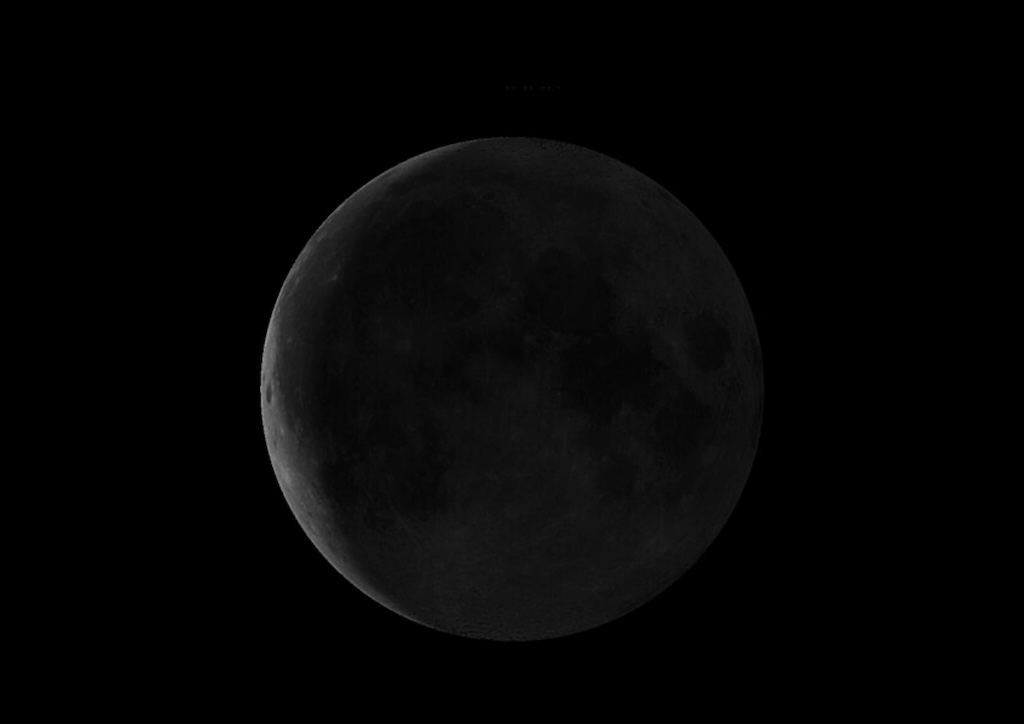
on the total eclipse of the full moon,
I hereby dedicate this Sanctuary to You.

May I honour You well
with my prayers and inspiration.

Through Your guidance as a Guide of Souls
may I guide and heal others too.

Together may we reweave 
the ways between Thisworld and Annwn.

When I unburied the Wise Lad

and polished all his statues
I fell into his smile

and I smiled too

and all the world smiled
and all the universe smiled
and all the people of Annwn.

I can’t rememer how long ago
I forgot how to smile

but here it is –

this sign upon my lips,

not just for me but for you
the Wise Lad’s gift.

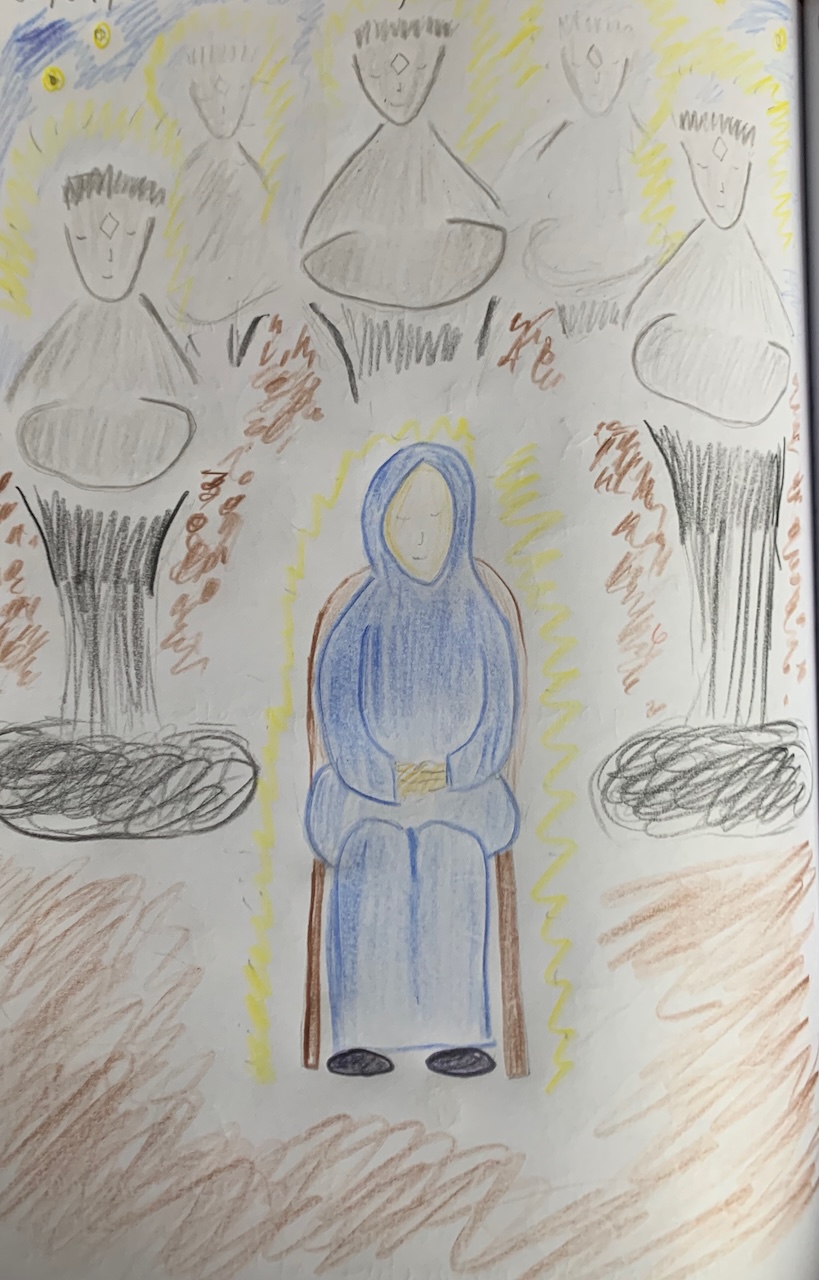
When I drew this image it was supposed to represent the unburying of a multitude of meditating Wise Lad statues being unburied from the earth from where they’d lain for eons. On completing it I realised that looked at from another perspective they appear to be hovering over drop down toilets! One of His jokes I think!