The Wise Lad and the Meditating Frog

Many years ago, in early spring at sunset, the Wise Lad was wandering the Frog Song Marsh, watching the frogs and toads emerge from their places of hibernation, forming long slippery lines as they headed to the many ponds.

As darkness fell the mating calls of the male frogs and toads were deafening – a thousand thousand voices raising their caphony throughout the marshland.

Thus the Wise Lad was surprised to find a solitary frog sitting apart on a stone.

“What are you doing?” He enquired. “Why aren’t you seeking a mate with the rest?”

“I’m meditating,” the frog’s legs were crossed and his pads rested on his shins.

The Wise Lad knew a little of meditation from sitting still with his father, Nodens, staring into the waters as they waited together for a fish to take the hook.

“I’ve never known a frog to meditate before,” the Wise Lad was stunned.

The frog frowned. “Can you not see these legs were made perfectly not only for jumping and swimming but for sitting in meditation? These pads not only for catching prey and clinging onto mates but for holding hand gestures? These lungs and gills for breathing deeply both in and out of water?”

“You can meditate under water too?” the Wise Lad asked in admiration.

The frog nodded glibly and demonstrated by hopping into a nearby pool, sinking down to the bottom and once again taking up his meditating posture. 

On getting out, “And don’t you believe the lies of the other frogs who will tell you I’m not a frog at all, that I’m the son of a chieftain who the Hag of Marsh Pond put a spell upon, that I’m avoiding the mating rites because I don’t want to be kissed by a frog or a woman and turned back into a human again.”

“I wouldn’t believe such lies at all,” the Wise Lad reassured him.

“Good,” said the frog as he continued meditating through the nocturnal frog-song.

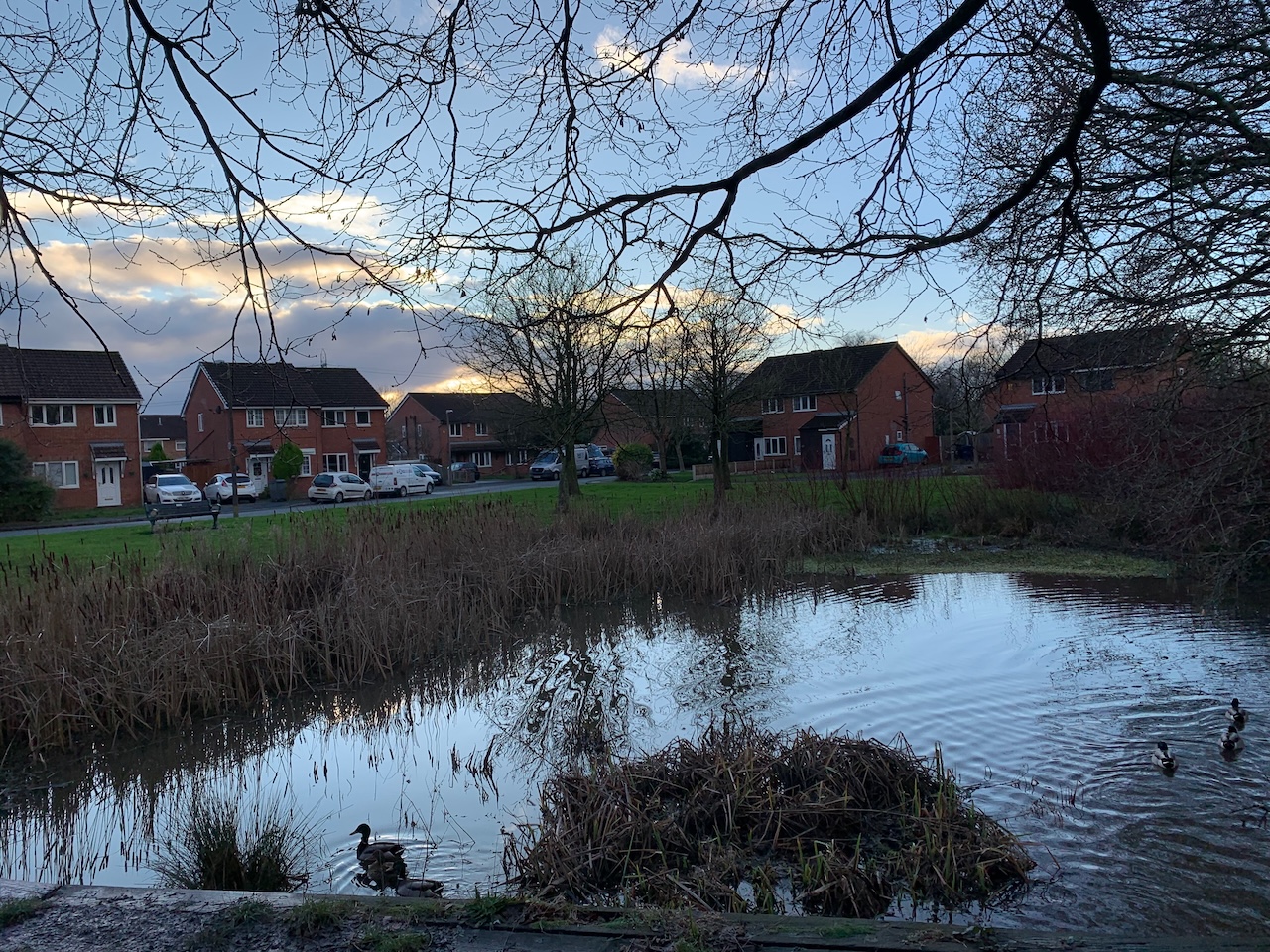
This story was received as taking place near Marsh Way Pond in Penwortham.

The Wise Lad and the Boy with the Empty Bowl

Many years ago the Wise Lad was wandering the Broad Oak Woodland when he came across a boy sitting beneath the boughs of an old oak tree. 

He’s holding a wooden bowl, the lad noticed, sniffed up, but it’s empty.

He saw the boy was staring in trance into the bowl and recognised a sitting quest. 

For three days and three nights he watched in approval as the boy slipped in and out of his trance, moved not, slept not, ate not. Wondered, what does he see?

As the third night reached its end the Wise Lad foraged for him the tastiest of hazelnuts, the juiciest of blackberries, caught, strangled, cooked a tasty hare.

At dawn the boy fell into an exhausted sleep and the Wise Lad padded up silent as the mist and slipped his gifts just as silently into the empty bowl.

“You,” the boy reached out, grasped his arm, caught him in his dark gaze, “you were watching all along from the sidelines and with me in my visions.”

“Tell me about them,” the Wise Lad spoke curiously and encouragingly.

The boy picked a hazelnut from the bowl. “You took me into one of these, right into the kernel, taught me of its wisdom, from flower and catkin, to nut, of its journey in the belly of squirrel, of jay, of salmon, its growth into a hazel tree.” 

The boy picked a blackberry from the bowl. “You took me to the stars to visit a planet as black as one of these, frosty, taught me of how ice can flow as rivers, volcanoes, how the coldest of planets tastes sweet as blackberries.”

The boy picked out a morsel of hare’s flesh. “I followed a hare to her form and she led into the ground and through to another land where I saw you playing, hunting with other boys, with the dead boys of my tribe and others. They had faces like clouds and mist and smiles like the otherworld’s sun.”

“But there is no sun in Annwn,” the Wise Lad spoke confused.

“I know,” said the boy, “yet still they smiled like it.”

The Wise Lad smiled. “You have completed your sitting quest and one day amongst your people you will be an Inspired One, a Soothsayer, a Wise One.”

I received this story as taking place here in Penwortham in the remainder of the oak wood on Hurst Grange Park. A little closer to me is an area known as Broad Oak. A Damp Oak Forest covered much of Lancashire from the Neolithic Period until the late Bronze Age when much of it was replaced by bogs.

The Wise Lad and the Old Three Bears

Many years ago the Wise Lad was wandering through Ribblesdale. In the limestones crags he espied a cave and was immediately drawn into its darkness.

What drew him was not so much the dark, for there would soon be much of that with winter on its way, but the smell of a delicious stew cooking. Inside he found a skin cauldron boiling over a fire and around it three wooden bowls. 

In each bowl was a mixture of berries, nuts and meat that made his mouth water. He tried the first bowl, “Agh!” He dropped the wooden spoon. “Too hot!” He tried the second bowl. “Ugh!” He spat it out. Too cold!” He tried the third bowl. “Just right.” He grinned, wolfed it down, only slightly disconcerted when he found a golden hair at the bottom.

Full up, rubbing his belly, he collapsed into one of the three wooden chairs. “Too small.” It barely fit his arse. He tried the second. “Too big – enough room for two of me and my dogs on here.” When he sat on the third chair it wobbled because it was already missing a leg then collapsed beneath him. “Someone else has been here before me and broken the chair that is just right!”

Moving into the next cave he was relieved to see three beds lined with mosses and twigs. He tried the first. “Too hard.” The sticks dug in his ribs. Then the second. “Too soft.” He sunk into the moss. Finally he lay down in third. “Just right.” As he curled up he realised he was lying in the sleeping shape of someone else who had slept there before and caught a girl scent.

“Hmm…” Something told him it would be unwise to fall asleep in that bed. 

The Wise Lad got up and made his way into the next cave where he found the skeleton of the girl who the bears had stripped of flesh and put in their stew. By the remnants of her skull and golden hair she had been pretty.

“No wonder the stew was so tasty,” he picked a piece of meat from his teeth. 

“You ate me,” her golden-haired ghost appeared and spoke accusingly. 

“You ate the third bowl too,” shrugged the Wise Lad.

The ghost-girl glanced at the other skeletons piled up in the cave. 

“Once again,” he heard the voices of the Old Three Bears, “someone’s eaten my stew,” “someone’s broken my chair,” “someone’s been sleeping in my bed.”

“It’s time to go,” said the Wise Lad to the golden-haired ghost, “take my hand and we’ll go and share your story with the people who need to know the risks of having their stew, their chairs, their beds, everything in their world just right.”

When the Wise Lad came to the World

I.
No-one knows 
the time or date of his coming
because he slipped like mist into the world

between times, between places –

a boy here, a boy there,
a boy everywhere

on every one of his foreheads a shining jewel.

II.
Some say 
he came as a star 
or in a shining starship

others that he came on turtleback
or was spat out like a prophet by a whale,

others that he crawled from the Abyss,
the darkest pit, the deepest well.

The crows of course claim
they brought him

on a dark moon
like the blackest of storks.

III.
What wisdom did he bring?

Not the knowledge of Uidianos
and his knowing ones and the Court of Don.

No his wisdom was even deeper than Annwn.

It’s told he buried it here to keep it safe like a bomb.

Here, there, everywhere, in all times and places,
in every one of us and so it waits until
he comes to awaken it.

IV.
So he came 
to me, here in Penwortham,
jewel shining like a star in the dark
and took up residence
in my heart.

The Wise Lad

Over the Twelve Days of Devotion to Gwyn ap Nudd (25th Dec – 5th Jan) I focused on Gwyn’s boyhood. In all honesty at first I wasn’t looking forward to spending twelve days with Gwyn as a boy on the basis of my experiences with the boys at my primary school who were loud, boisterous, rude and bullying.

Thankfully, following my writing of ‘Vindos and the Salmon of Wisdom’, Gwyn reassured me that I wouldn’t be spending my time with Him ‘as a stupid boy’ but ‘as the Wise Lad’.

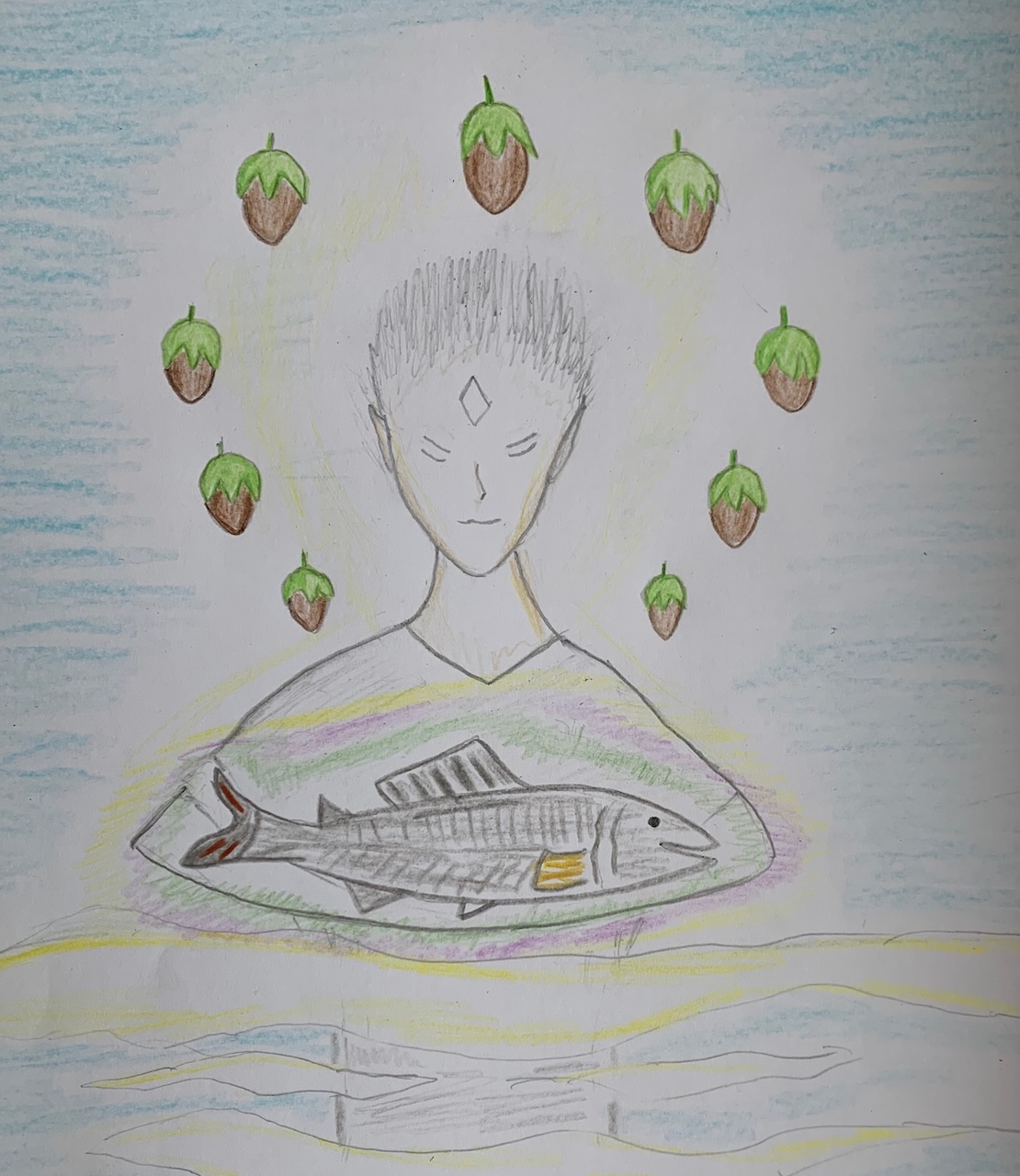
What will follow over the next few days is the best of the inspiration He gifted to me during this period. Beneath is an image of the Wise Lad with the Salmon of Wisdom and nine hazel nuts looking pixie-like and slightly sinister. I have been led to believe that, like the term ‘the Fair Folk’, ‘the Wise Lad’ is a euphemism for something darker.

Vindos and the Salmon of Wisdom

Many years ago, when the Ribble was rich in salmon, at autumn they swam up river and up the tributaries not only to spawn. Near the source of Silver Fish Brook stood a hazel tree that was covered in nuts that were filled with wisdom. It was rumoured that if any fish ate nine nuts it would be filled with all the world’s wisdom. Yet no salmon managed to eat all nine nuts because the squirrels were greedy and the salmon were even greedier. They only managed to eat one or two until a mast year came and a big salmon barged past the rest and managed to eat nine nuts and was filled to the brim of his eyes, to the tips of his fins, to the top of his tail with all the world’s wisdom. 

Nodens Silver-Hand, the Catcher, the Fisherman, the Lord of the Waters and Dream heard of the this fish. Nodens was wise but He wanted more wisdom. So He went and sat at the place later known as Fish Pan Pool, took out His silver fishing rod and He fished for three long years. 

Finally, He caught the salmon, but instead of cooking him Himself He called to his son, Vindos. “Cook for me this fish but on no account eat any of his flesh.”

Vindos was a good lad. He obeyed. 

Yet as He turned the fish he tempted Him, “Vindos, Vindos, eat me, eat me and you will be filled with all the wisdom of the world.” 

Vindos said, “No, all the wisdom of the world already lies within me.”

He turned the fish and was careful not to get so much as a drop of fat on his fingers. 

The salmon did not give up. “Eat me, eat me and you will be filled with all the wisdom of the Land of Dream.”

“No, all the wisdom of the Land of Dream already lies within me.”

Vindos turned the fish and when a drop of fat leapt at him leapt back. 

The salmon did not give up. “Eat me, eat me and you will be filled with all the wisdom of the Deep Annwn – the Mysteries of the Otherworld.”

“No, all the wisdom of the Deep Annwn already lies within me.”

The fish sighed. He was nearly done. “Then feed me to your father.”

At this point Vindos beheld a vision. “No,” he said, “my father is already wise and I have foreseen that humanity will need your wisdom more in the future.”

Vindos let the salmon go and he went leaping, diving, swimming down Silver Fish Brook out to the Ribble. It is said he will not return again until the culverts are gone and the hazel tree is rich in nuts and wisdom.

*This story is based on the Irish story of the Salmon of Wisdom in Irish mythology drawing on parallels between Nechtan and Nodens and Finn and Vindos. Silver Fish House Brook refers to Fish House Brook which flows through Greencroft Valley in Penwortham where a wise hazel tree grows.

The King of Annwn Complete

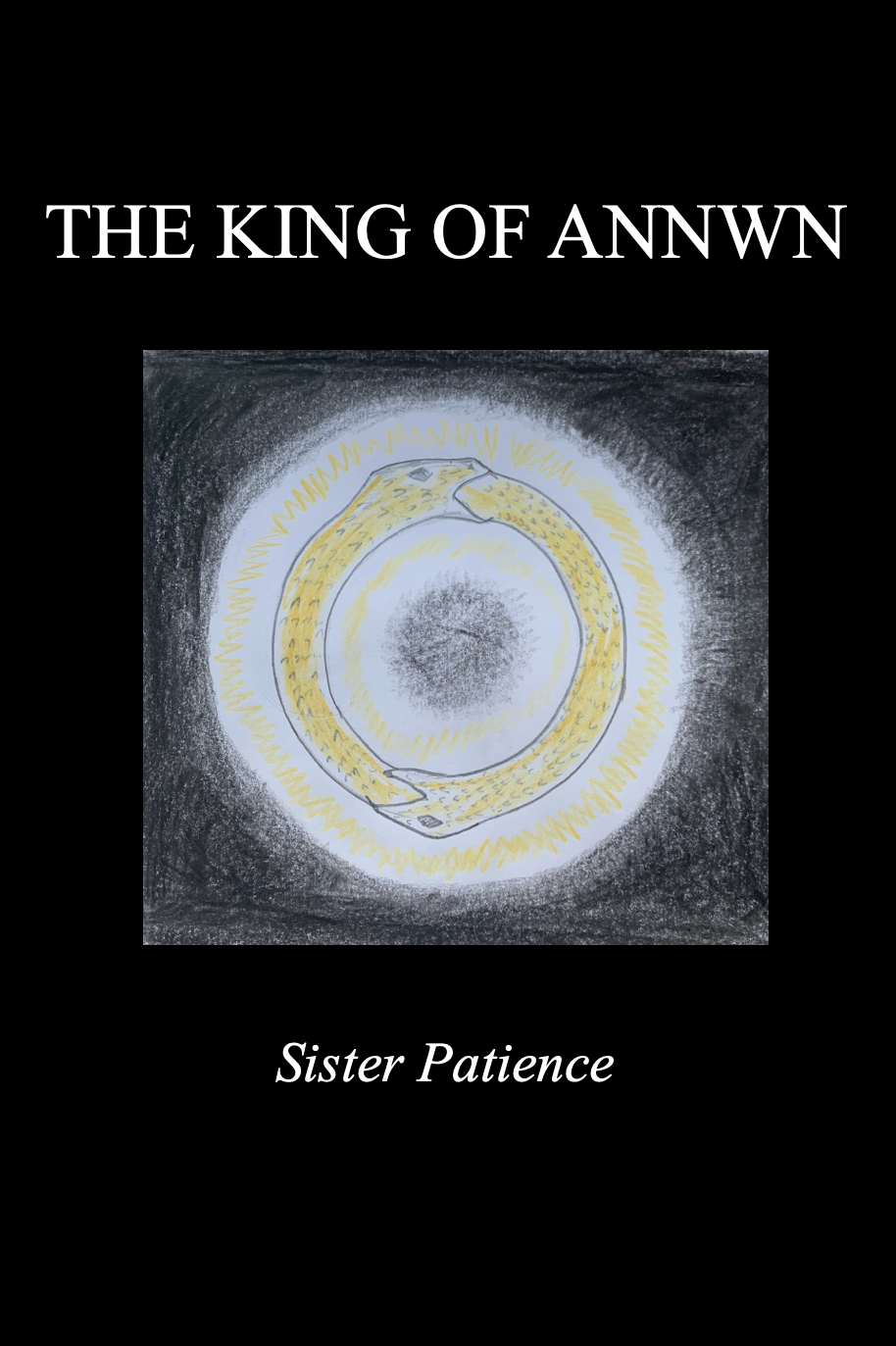
The King of Annwn is now complete. It was gifted to Gwyn and my patrons yesterday. It will not be officially published but is available as a PDF HERE. Donations can be made by emailing sisterpatience22@gmail.com. Below is the introduction.

Fragments of a Lost Mythos

I wrote this book for love of a God. He was known in ancient Britain as Vindos ‘White’ and is still known in Wales and beyond as Gwyn ap Nudd ‘White son of Mist.’

I met Gwyn at a nadir in my life at the head of a fairy funeral procession on Fairy Lane in my hometown of Penwortham in Lancashire. My rational mind refused to believe it. What would a wild Welsh God want with a suburban English poet? Yet, I knew deep within that I knew Him and had always known Him from time’s beginning. I dedicated myself to Gwyn as my patron God and began to serve Him as His awenydd ‘person inspired’ by bringing His stories and veneration back to the world.

In medieval Welsh mythology Gwyn is the King of Annwn, ‘Very Deep,’ the Otherworld, later known as Faery. Two of my books, The Broken Cauldron and Gatherer of Souls, recover and reimagine His stories from existing sources and reweave them back into the landscape of northern Britain from where they have been lost.

This book is different because I have been called to go beyond the existing texts, from the known to the unknown, under Gwyn’s guidance through meditation and journeywork to seek visions of the stories of His birth, His boyhood and how He built His kingdom. I’ve also drawn on Irish, Norse and other Indo-European sources.

What lies herein is an emerging myth, both new and ancient, telling the cycle of the birth and death of Vindos. I don’t believe it’s the only one – He told me there are as many stories of His birth as there as facets on the jewel in His forehead – but it is the one He has inspired me to tell.

In the later sections you will note I have drawn on the Four Branches of The Mabinogion, reading between the lines, finding the King of Annwn in different guises, to reconstruct the later episodes in the story of Vindos. For this I am indebted to Will Parker’s reading of the Four Branches as a plot by which the forces of Annwn are ‘drawn out’ ‘confronted’ and ‘neutralised’ by the Children of Don.

Whereas some of the stories are set in their traditional places I have chosen to locate others within my home county of Lancashire weaving the mythos of Vindos and His family into the landscape where I met and venerate Them. 

I decided to use the ancient British names for the Gods rather than their medieval Welsh names to create a more archaic feel. Thus Vindos rather than Gwyn, Nodens rather than Nudd, Uidianos rather than Gwydion, reconstructing with a little poetic licence where I have no scholarship to follow, for instance Kraideti rather than Creiddylad.

I started writing this book in 2019 and it took many forms before I decided on the current format of  fragmentary episodes and poems which follows the form of the medieval Welsh sources such as The Mabinogion, The Black Book of Carmarthen and How Culhwch won Olwen.

I share it here, not as an ur-text, as the one truth about Gwyn’s origins, but as one facet of the jewel of His mysteries. I hope it will help and inspire its readers to come to know and love Gwyn and to seek visions of His tales.

~

With the completion of this book I have made the decision to stop blogging and to close my Patreon in order to focus more deeply on my monastic calling and find paid work. For the past couple of years the Gods and spirits have telling me to slow down, calm down and get off the computer and the right time has finally arrived.

Having an online presence has provided the benefit of a platform to share research and devotional material for my Gods but has had significant costs to my mental health in terms of the time and energy used for little financial compensation. It’s addictive and distracting and has formed a substitute for life in the real world and I need to find out who I am without an online persona.

This blog will remain as a static website as an archive of my writing and as a place to offer donation-based soul guidance sessions and shamanic healings (once my training is complete).

The Cow of Anrhuna

At the head of the line…
the spoil was the cow of An(r)hun(a)
.’
~ The Battle of the Trees

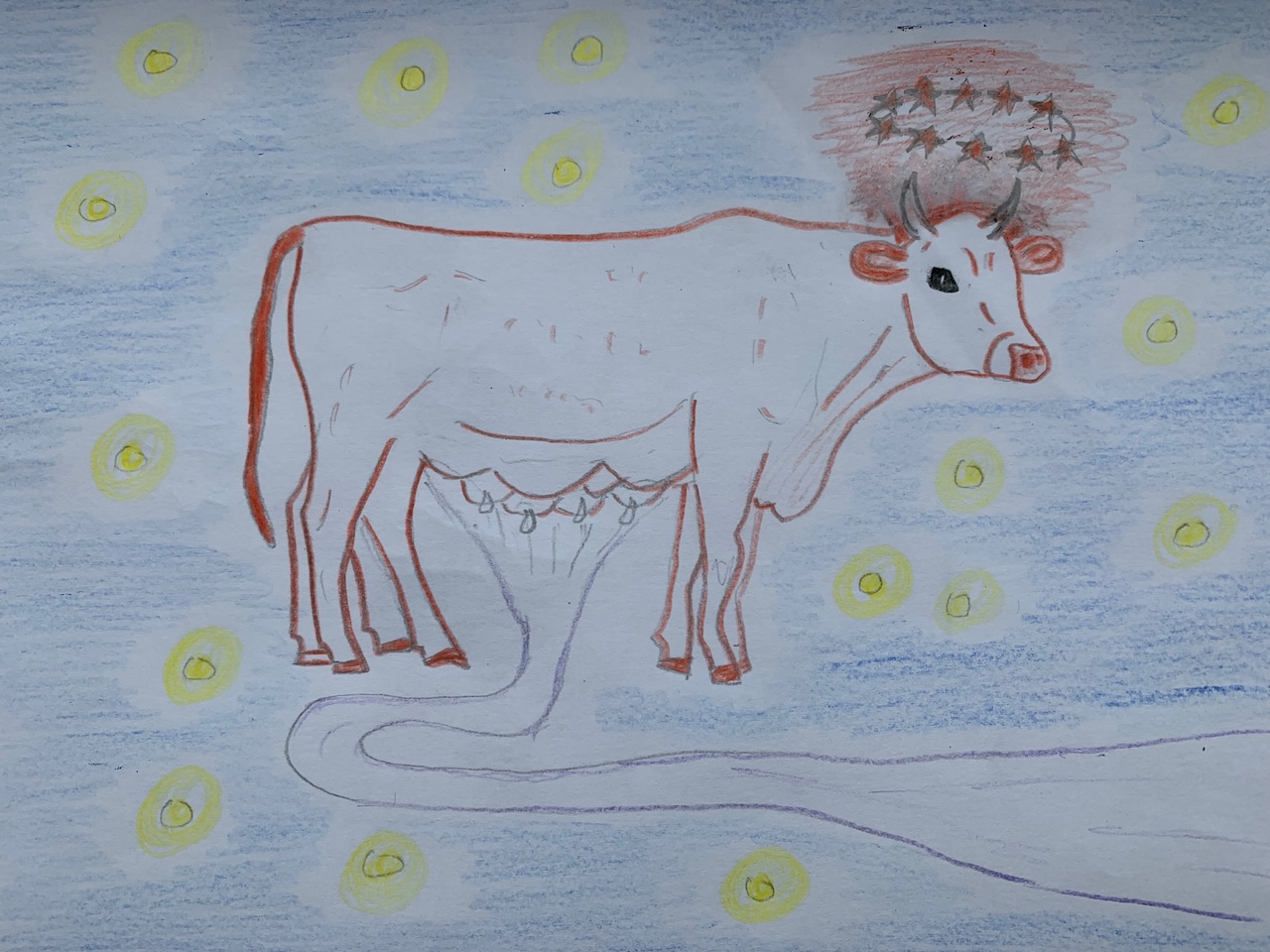
I am the Cosmic Cow.

I am white and red with seven legs,
eleven udders pouring the whitest milk,
a red crown of twelve stars upon my head.

My cow bells sound through the sea of stars.
My milk is the origin of the Milky Way.

I am ever loving and ever giving.

You cannot capture me because
I always come willingly.

You cannot take my milk
because I am always pleased to give.

Milk me until your fingers are bare bone
and my milk will never run dry,
not until you have used
every bucket in the world
and you have emptied every mine.

I am ever living and ever giving.

I can melt the heart
of the cruelest warlord
with one look from my soft eyes
And halt the wars betwen nations
with the scent of cud between my soft lips.

I am the spoil but I cannot be spoilt –
white, blessed, holy am I.


‘The Battle of the Trees’, in The Book of Taliesin, records a conflict between the Children of Don and Arawn, King of Annwn, and His otherworldly monsters.*

We are told ‘At the head of the line / the spoil was the cow of Anhun’. The cow, as the spoil, is absolutely central to the battle but, unfortunately we find out nothing else about her. All we are told is, ‘It caused us no disaster’. This suggests the cow is a benevolent being but we find out nothing more.

Marged Haycock suggests that Anhun is St Anthony and this buch ‘cow’, ‘buck’, ‘buck-goat’ or ‘roebuck’ might be the satyr he met in the wilderness.

This didn’t feel quite right to me – I couldn’t see the Children of Don fighting over a satyr. For a long while I saw this animal as an Annuvian cow akin to the Brindled Ox, who was stolen in ‘The Spoils of Annwn, but could discern no more.

Then, a few months ago, I was sitting looking at the name ‘Anhun’ and saw a couple of spaces between the letters filled in by the name An(r)hun(a). This title means ‘Very Great’ and she is a found Goddess who myself and a number of other awenyddion have come to know as the Mother of Annwn and of its ruler, Gwyn. (It’s my personal belief Gwyn and Arawn are titles of the same God). 

Anrhuna’s association and possible identification with a magical cow ties in with parallels from Irish mythology. Her Irish cognate is Boann or Bó Find, which might derive from the Proto-Celtic *Bou-vindā ‘White Cow’. She is the wife of Necthan (Nuada) who is cognate with Nodens / Nudd ‘Mist’ the father of Vindos / Gwyn ‘White’. *Bou-vindā fits with Her being the mother of Vindos.

Bo Find ‘White Cow’ and Her sisters Bo Rhuad ‘Red Cow’ and Bo Dhu ‘Black Cow’ came from the Western Sea to make barren Ireland green and fertile. 

My personal gnosis around the Cow of Anrhuna presents her as a cosmic cow akin to Auðumbla ‘hornless cow rich in milk’ whose milk fed the primordial giant, Ymir, from whom the world was made in the Norse myths. Also to the sacred cow and bovine appearances of the Divine Mother, Kamadhenu, and the Earth Mother, Prithvi, in the Hindu religion. 

Her loving and giving nature and endless supply of milk also link to later folklore. In the Welsh lore we find Gwartheg y Llyn, ‘Cows of the Lake’ who belong to the lake-dwelling Gwragedd Annwn ‘Wives of the Otherworld’. They are usually white or speckled / brindled and are captured for their milk and, on being mistreated or milked dry, disappear back to their lakes.

In England we find the legend of the Dun Cow who provides plentiful milk until a witch tricks her by milking her with a sieve not a pail and she dies of shock. There are two variants here in Lancashire. In one the dead cow’s rib is displayed at Dun Cow Rib Farm in Longridge. In a happier variant her milk saved the people from the plague and she was buried at Cow Hill in Grimsargh.

I now like to think these stories derive from a deeper myth featuring the Cow of Anrhuna. It also made me smile that the cattle of Annwn, likely the cow’s daughers, are associated with the Wives of Annwn after my marriage to Gwyn.

*Gwydion fashions the trees ‘by means of language and materials of the earth’. Lleu is the battle-leader, ‘Radiant his name, strong his hand, / brilliantly did he direct a host’. Peniarth MS 98B records how the battle was caused by Amaethon stealing a roebuck, a greyhound and a lapwing from Arawn. Arawn’s monsters include a black-forked toad, a beast with a hundred heads and a speckled crested snake.

Contemplating the Abyss Part Four – The God Beyond the Gods

In the previous post I looked at abyss mysticism in the writing of medieval monastics. Here I shall discuss how it relates to the visions of the Abyss that formed the core of my attempted novel, In the Deep, and to my own experiences.

The Christian abyss mystics of the medieval period perceived the soul and God to be dual abysses. Through a process of annihilation, led by love, the abyss of the soul was dissolved in the abyss of God. Van Ruusbroec conceived this slightly differently suggesting the Abyss was a ‘God beyond God’.

The process of annihilation was one that involved suffering. Penitence, purgation, purification, to varying degrees in different authors but the result was ultimately joyous union with God as the ‘divine’ or ‘blessed’ abyss.

The big difference between my own experiences and visions and those of these Christian mystics is theological as I am a polytheist and not a monotheist and find it difficult to identify the Abyss with the Christian God. 

The Abyss has a presence in my life as something powerful, as something divine, as a deity, but not as a God I can name. Thus Van Ruusbroec’s conception of it as a ‘God beyond God’ resonates deeply with me as does the positing by the Gnostics of a God of the Deep preceding the creator God whose prior existence is suggested in Genesis 1.2 ‘And the earth was without form, and void; and darkness was upon the face of the deep. And the Spirit of God moved upon the face of the waters.’ The terms ‘deep’ and ‘abyss’ stem from the Hebrew tehom and are often used interchangeably.

In the cosmology that has been revealed to me by the Brythonic Godsthe Abyss is part of Annwn, ‘Very Deep’, its deepest part, its bottomless depth. It is a place to where the souls of the dead return and from it are reborn.

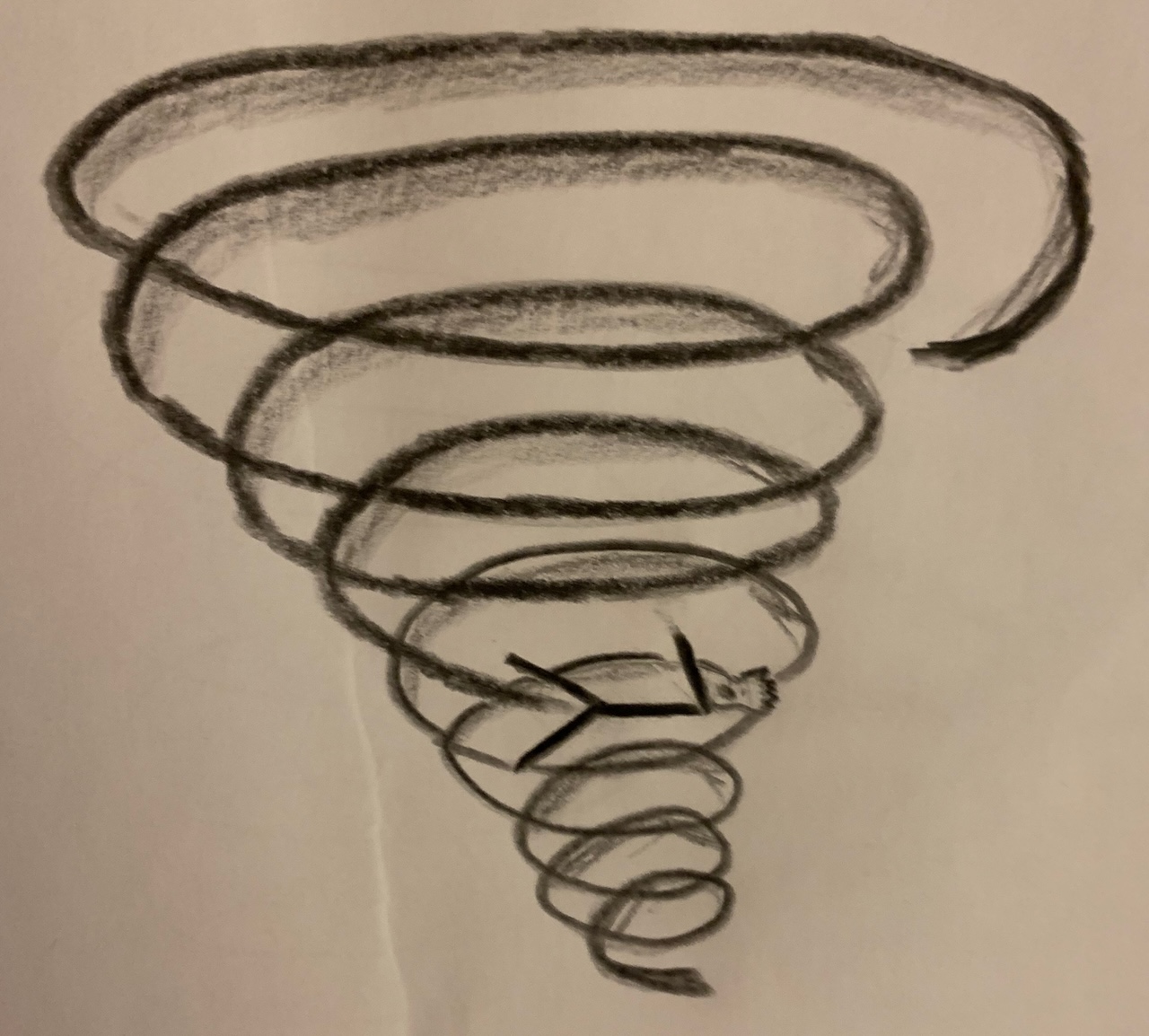
The way I envisage it bears remarkable similarities to the vision of Hadewijch of Antwerp – ‘an unfathomable depth’, ‘a very deep whirlpool, wide and exceedingly dark; in this abyss all beings were included, crowded together and compressed’.

It is associated with deep wisdom that can only be won as a result of sacrifice. In the stories I was shown Nodens / Nudd agreed to give up His sword arm. He hung over the Abyss in the coils of the Dragon Mother, Anrhuna, the Goddess of the Deep, and received the knowledge, ‘There is no up or down or before or after – everything meets here in you the Dragon Mother.’ 

Vindos / Gwyn ap Nudd hung over the Abyss on a yew wounded in raven form and gave every last drop of his blood in exchange for a vision ‘to set the world to rights’. His knowledge was brought out of Him by a series of riddles and He saw Himself as a black dragon before plummeting dead into the Abyss.

At the beginning of the next book in death He was united with ‘the source’:

Vindos fell,
and as he fell he left behind
his shell of bones and black feathers 

and his soul flew free on wider wings
on the winds of the Abyss.
He had won

their favour
through his offering 
of every last drop of his blood.

By his wounding, by his questioning,
agony had become ecstasy.
The bottomless

abyss
was no longer bottomless.
He had mastered its paradoxes and knew

where darkness turns to light
and death to life.
Down was

now up
and he was one
with the source, the spring

from which the ocean of the stars
sprung when the universe
was born.’

These scenes bear similarities with Marguerite Porete’s words about the soul, in annihilation, finding ‘there is neither beginning, middle nor end, but only an abyssal abyss without bottom’ before acheiving ecstatic union with God.

It seems my Gods, Nodens / Nudd and His son, Vindos / Gwyn are presenting to me a tradition of sacrifice to the Abyss in return for its wisdom. By leading the way they are showing what might be expected of Their devotees.

My first experience of the Abyss took place as the result of an unconscious process of self-annihilation – dissolution of the self through the combination of practicing Husserl’s epoche (putting all one’s presuppositions about the nature of reality aside) with drugs and alchohol and all night dancing.

There was a yearning within me, I might now say deep for deep, abyss for abyss, but I didn’t know what it was and when I got to the Abyss it terrified me. I wasn’t ready for abyssal wisdom. I didn’t know what to do. I didn’t understand its choices, to live as I was or to die physically, or to take a third door. 

I see in my own impulses and those of the abyss mystics, love and annihilation, the interplay of eros the ‘life drive’ and thanatos the ‘death drive’ which together lead to the Abyss and to union with the divine if one is prepared to surrender to make some sacrifice of themselves.

I’ve never been good at giving or sacrifice always wanting things my own way.

Ten years ago, Gwyn, my patron God, a King of Annwn, asked me for a sacrifice in exchange for the wisdom of Annwn – to give up my desire to be a professional author. I did so… but not in full… I secretly entertained a hope if I gave it up for a period I might be let off and be able to have my cake and eat it.

My experience of writing In the Deep, spending a year and a half on a novel that has turned out unpublishable and daring to think it might sell more widely than my previous publications has shown this is not the case. 

It’s taken me ten years to realise I must give up my biggest dream in full for good.

This fits with the process of self annihilation found in the medieval mystics. Only by giving up our desires, surrendering our will, can we walk the path of the Gods and with them find a deeper unison with the God beyond the Gods.

I believe this also relates to the need to give up my identity as Lorna Smithers, published author, performing poet, public speaker, to become Sister Patience.

In the Deep was not written purely for self gain. First and foremost it was written for love** of Gwyn, as an origin story for Him, as an offering. I believe it is because of that the awen flowed and I retain these visions as His gift.

That He, ‘White, Blessed’, has led me to the blessed Abyss, the God beyond the Gods, who may or may not be the formlessness of the Mother of the Deep before She took form.

To the third door – to die to his present life, to be annihilated, hopefully like Vindos / Gwyn to be reborn.

He was
the first microbe
and every single tiny thing.

He was an ammonite and a starfish,
He was a silver salmon,
every fish.

He swam
amongst bright creatures
as an eel, as a seasnake, as a snake,

as a horned serpent, as a bull, as a wolf.
Playful as a new-born pup
Vindos

chased his tail
and the trails of starships
and traversed every wormhole

before he emerged from the sea of stars
and climbed out of the cauldron,
naked, dripping, triumphant,

and very much living
to stand beside Old Mother Universe.

*I also wrote the sequel, The Spirits of Annwn, in draft form as a long poem, when possessed by the awen last year.
**Unlike annihilation love is a difficult thing for me to talk about as someone who, after a number of botched relationships, only discovered they were asexual and aromantic late in life. Unlike a number of Gwyn devotees with an intense devotional relationship with Him I am not a God spouse. Much inside me rebels against using the language of marriage found in Christianity such as ‘bride of Christ’ and even ‘love’ with its sexual and romantic connotations in reference to our relationship. I wish there was a word for purely devotional love.

In part five I will be writing about how these insights relate to the Brythonic tradition.
Contemplating the Abyss Part One – ‘In the Deep’

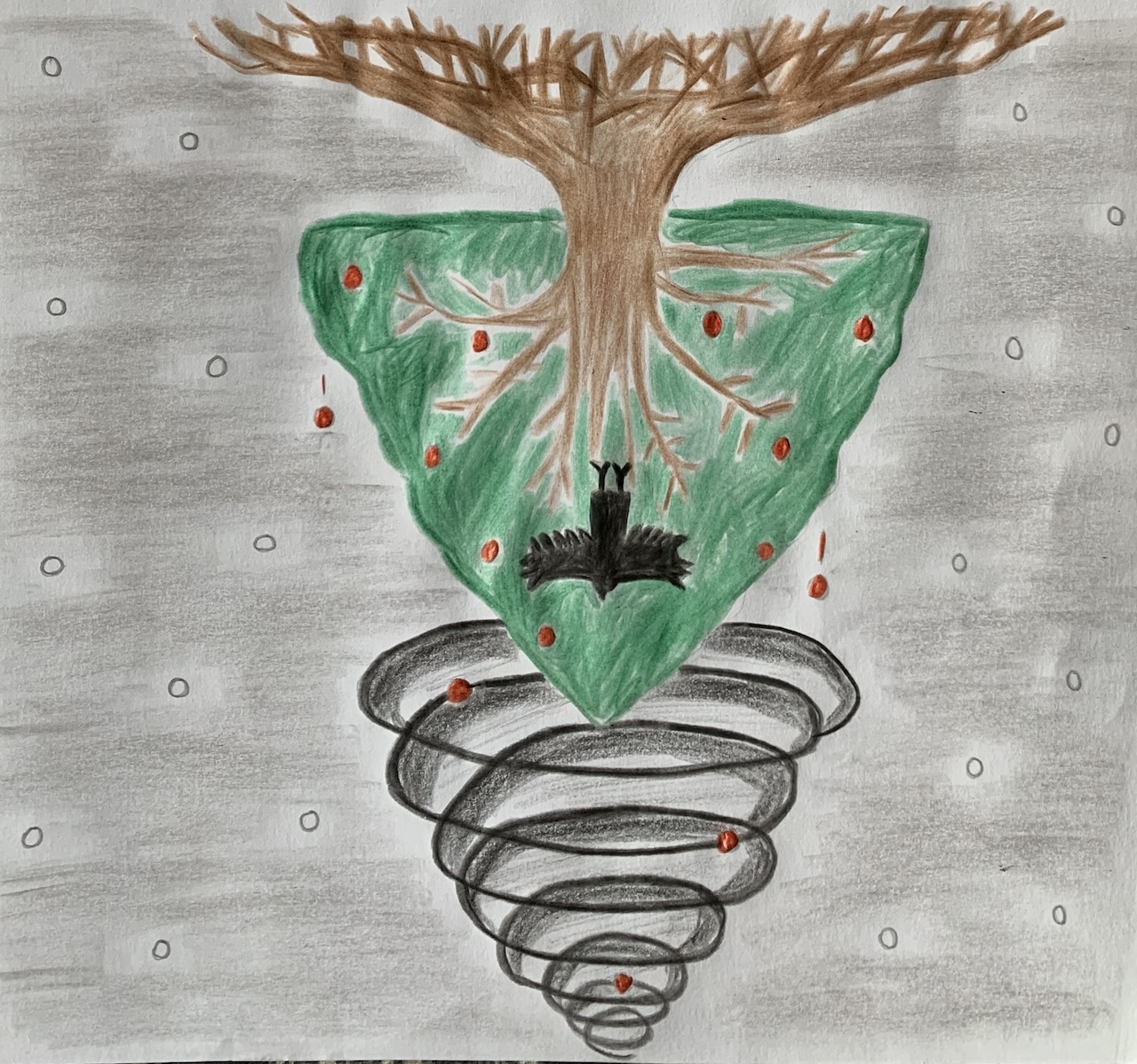
The Abyss was its spiralling core and its beginning and its end. 

The Beginning

It began with a boy falling, falling, falling into the Abyss.

The boy dreamt of the birth of his Dragon Mother from the infinite waters of the Deep with nine heads and nine-hundred-and-ninety-nine coils and her giving birth to an infinitude of dragons, serpents, monster-serpents and monsters.

*

The boy dreamt of the birth of the stars – each the eye of a fiery giant. He watched them mating, spawning bright gods, who built their fortresses in the skies. The King of the Gods ordering the constellations with a turning sword. This god cast out, plummeting like a comet with an icy tail, down to the Deep. 

*

The boy dreamt of the god hanging in his mother’s coils over the Abyss to gain its wisdom. ‘There is no up or down or before or after – everything meets here in you the Dragon Mother.’ He watched them mate and knew he was conceived.

*

The boy dreamt of the Children of the Don descending from the stars to slaughter the Dragons of the Deep. Lugus, their leader, cut off the arm of his father, Nodens and slaughtered his Dragon Mother, Anrhuna. Lugus then tore the boy, Vindos, and his sister, Kraideti, from the womb. He stole Kraideti ‘the Girl who will Bring Life’ to the stars and threw Vindos ‘the Boy who will bring Death’ into the Abyss.

*

The boy awoke and crawled from the Abyss to eat his Dragon Mother’s heart in a rite that made him King of Annwn (he later gained his name – Vindos / Gwyn ‘White, Blessed, Holy’).

The End

Vindos killed Lugus as vengeance for slaying his Dragon Mother. Lugus took flight in the form of an eagle and perched wounded in an oak tree for nine nights with a sow beneath feasting on the rotten flesh and maggots from his wound. 

Uidianos sang Lugus down from the oak with three englyns and restored him to life.

Lugus returned the blow, shattering the Stone of Vindos, to pierce his enemy’s side. Vindos took the form of a raven and flew to Annwn where he hung wounded on a yew tree upside down over the Abyss and answered its riddles.

Night One: 

“Tell me
the hour the King
and Queen of Annwn
were born.”

“Not easy –
we were not born 
but ripped from the womb 
on the hour of the death 
of dragons.”

*

Night Two:

“Tell me
in your eternal
battle who killed
who?

“Not easy,
summer and winter
are mirrors – when one
kills the other kills 
too.”

*

Night Three:

“Tell Me
how many trees
are in the forests
of Annwn?”

“Not easy,
for they are without
number but ask me again
and I will name
them.”

*

Night Four: 

“Tell me
how many doors
there are to
Annwn.”

“Not easy,
for they are without
number but ask me again
and I will open
them.”

*

Night Five:

“Tell me
where divide 
darkness and light,
day and night?”

“Not easy,
for there are no
divisions – each follows
each in an endless
procession.”

*

Night Six: 

“Tell me
where the restless wind 
comes from and where
he rests.”

“Not easy,
for no-one but he
knows the location of the Lands
of the First and Last
Breaths.”

*

Night Seven:

“Tell me
how many 
stars are in the
Heavens.”

“Not easy,
for they will not
be counted until all
souls are in the
cauldron.”

*

Night Eight:

“Tell me
the fate of
your last drop 
of blood.”

“Not easy,
for I cannot divide it
from the ocean of blood
that will drown
the world.”

*

Night Nine:

“Tell Me
the hour the King 
and Queen of Annwn
will die.”

“Not easy –
we cannot live without 
each other and thus will die
together when all souls
are gathered.”

*

Vindos then fell into the Abyss.

These scenes had a basis in my personal encounters with the Abyss. I will be talking about those in part two, then in part three and four presenting my recent discovery of ‘Abyss Mysticism’ in the writing on medieval monastics and how this has helped me make a little sense of the abyssal visions behind this book.