Letting go of my identity as Sister Patience has been somewhat of a relief. In many ways I felt like I was living a double life. I had to keep my birth name, Lorna Smithers, for financial purposes and appointments such as the doctor and dentist. Although my mum accepted my name change, my dad refused to (although he has recently started referring to me as ‘her’ rather than ‘Lorna’ to escape my admonishments). Other family members ignored my request. Whilst I felt comfortable telling my friends and personal trainer at the gym, I never found the right moment to tell my doctor, dentist, physio, hairdresser or former colleagues at the supermarket where I worked and still shop. It was a nightmare managing two email addresses (when you’re autistic and every single message has to be replied to, removed from the inbox and filed correctly before you can relax, one is more than enough!).
I also felt like I was trying to live up to an ideal I couldn’t match. No amount of positive affirmations or metta ‘loving kindness’ or tonglen ‘giving and receiving’ practice made me as patient and kind as I wanted to be. I’d think I was improving then have another blow up with my dad and be doubly angry with myself because it demonstrated he was right – that I’m not Sister Patience.
Yet without Sister Patience who am I? Settling back into the skin of Lorna Smithers has felt rawer and truer but hasn’t been a wholly comfortable experience. I’ve once again had to confront my past – something that from the perspective of modern society looks like a series of failures (failed philosopher, failed poet, failed author, failed nun…) but from an alternative one might look an authentic spiritual journey well lived.
And, of course, the definition of ‘failure’ is subjective. I might have failed to be an author in terms of making a living from it but I’ve still had books and articles published and received small payments along the way whether they are from book sales, Patreon support, or free subscriptions to magazines. So I can still claim to be an author. I’m also succeeding with my shamanic practitioner training and shamanic guidance and healing sessions along with running circles so can also claim to be a shamanic guide.
In my last couple of posts I’ve mentioned that I recently received the gnosis that I’m more of a hermit than a nun. I feel that’s true in my soul but it doesn’t match my outer reality yet – I still live with my parents and do not make enough money to cover my food and board let alone to live self-sufficiently. One of my readers, Caer, recently signposted me to a book called Consider the Ravens and therein it noted that any true hermit wouldn’t advertise themselves as such. There’s a dichotomy between being an author and shamanic guide who has to market themselves online and a hermit. There’s also a restless feeling I have unfinished business in the world. So, whilst hermithood is an inner reality and dream for the future, it isn’t something I can identify with wholly at present.
Author, shamanic guide, would-be-hermit, are the roles I now identify with, along with my devotion to my patron God, Gwyn ap Nudd, which has been ongoing throughout these upheavals (thinking about it, damn Him, He’s the one who has caused all of them!).
Being Sister Patience has made me a little stronger, a little kinder, a little more patient, likely in preparation for further challenges and tumult along the way…
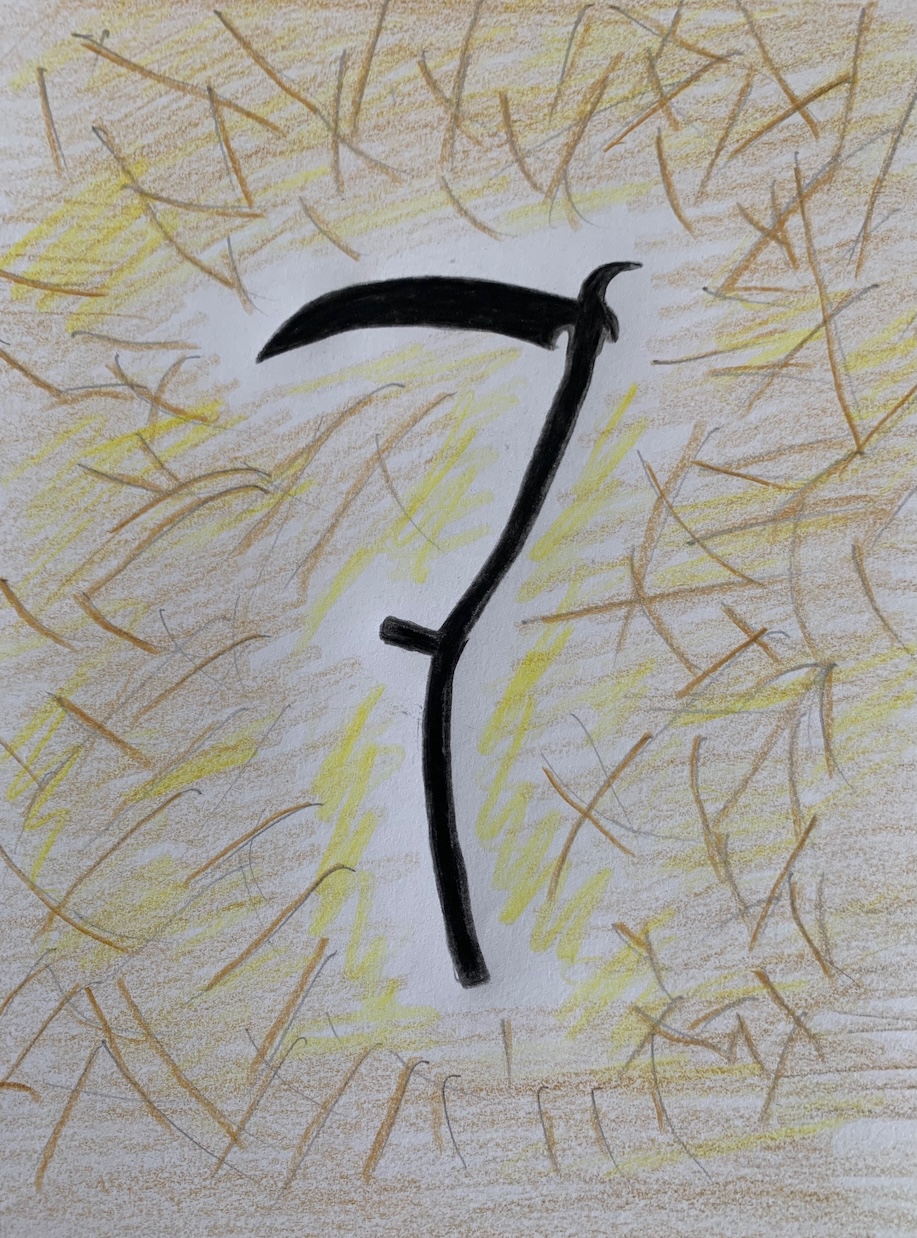
The wind is blowing. The Reaper is busy with His scythe. After my insights about being more of a hermit than a nun a whisper on the wind, ‘Sister Patience must die.’ Three years ago I took temporary vows by this name as a nun of Annwn and, as the time comes to renew them approaches, I realise I will not be taking them again this year. Instead I must surrender this name, this identity, disrobing over the next few weeks, then giving it entirely back to Gwyn, from whom it came, on His feast day on September the 29th. I have learned many lessons and received many blessings from this name. Hopefully some of the virtues of Sister Patience will live on as I return to my birth name and continue to serve Gwyn as a hermit and shamanic practitioner.
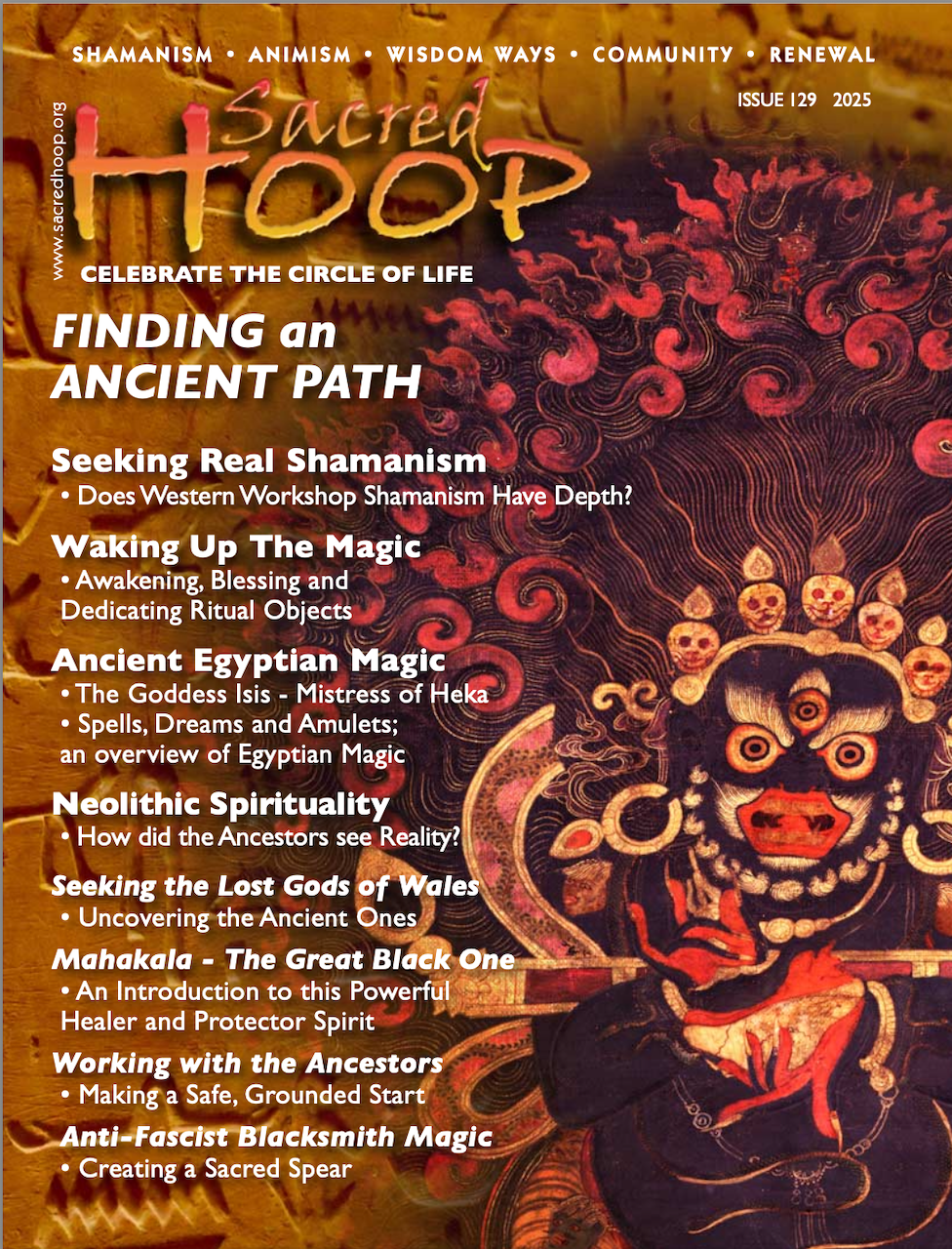
My article ‘The Gods and Spirits of Annwn’ has recently been published in Sacred Hoop – ‘a leading international magazine about Shamanism, Sacred Wisdom and Earth Spirituality.’
I’ve recently spent a week in retreat and a huge insight came up as I was contemplating why I’m struggling to feel I’m of value and to stand in my truth as a nun, not only in polytheist and shamanic groups but in my local community.
I realised this is firstly because I’m not a cloistered nun and secondly that, although I’ve tried on the role of a lay nun, this doesn’t truly fit either. I’m not naturally a community person. I’m not naturally an active. I’m not smily and sociable. This is not only because I’m autistic and struggle with social anxiety but because my soul has a deep need for solitude and silence – it hurts when that state of being is broken by the social demands for polite conversation and small talk.
One sign that I was forcing myself to do the wrong thing by trying to be a community person was the problems I experienced when I tried running in-person shamanic circles (something I felt I should do but was not told to by my Gods). I had to cancel the first one at Galloways, a lovely venue that was formerly a home for the blind, due to the extremely cold weather in January. After this, the numbers were good for one circle, then dwindled, meaning we couldn’t afford the room. When I tried co-organising another at the Education Hut in Greencroft Valley, where I’ve been conservation volunteering for thirteen years, it was very stressful due to being weather-dependent as based in a woodland and was called off due to a storm.
Ok, I admitted to the Gods, I’m not meant to be running in-person circles. If I don’t listen next time, you’ll send something worse than cold and ice and a minor storm. In retrospect, I could see they were safeguarding me from the stress of organising people to do things (my main trigger for burnout) along with the discomforts of making small talk at the beginning and end and co-ordinating the group drumming (which really hurt my head!). I realised I’d be able to mask for a certain amount of time, but long term, the attendees would perceive how uncomfortable I am in community.
As I sat with these thoughts, I received the gnosis ‘the truth is I’m a hermit’. It’s risen from within before and has been repeated by the people who really know me. I’ve shrugged it off again and again as I haven’t felt hermit-like enough. I run an online monastery. I’m training to be a shamanic practitioner. I go to the gym.
When I looked into this, I found there were no rules that prevented a hermit from going to the gym. Most hermits are expected to support themselves by work that fits with leading a prayerful solitary life, and being a shamanic practitioner does. And it is possible for a hermit to found and run a monastery that accommodates an eremitic lifestyle as exemplified by St Romauld and the Camaldolese order.
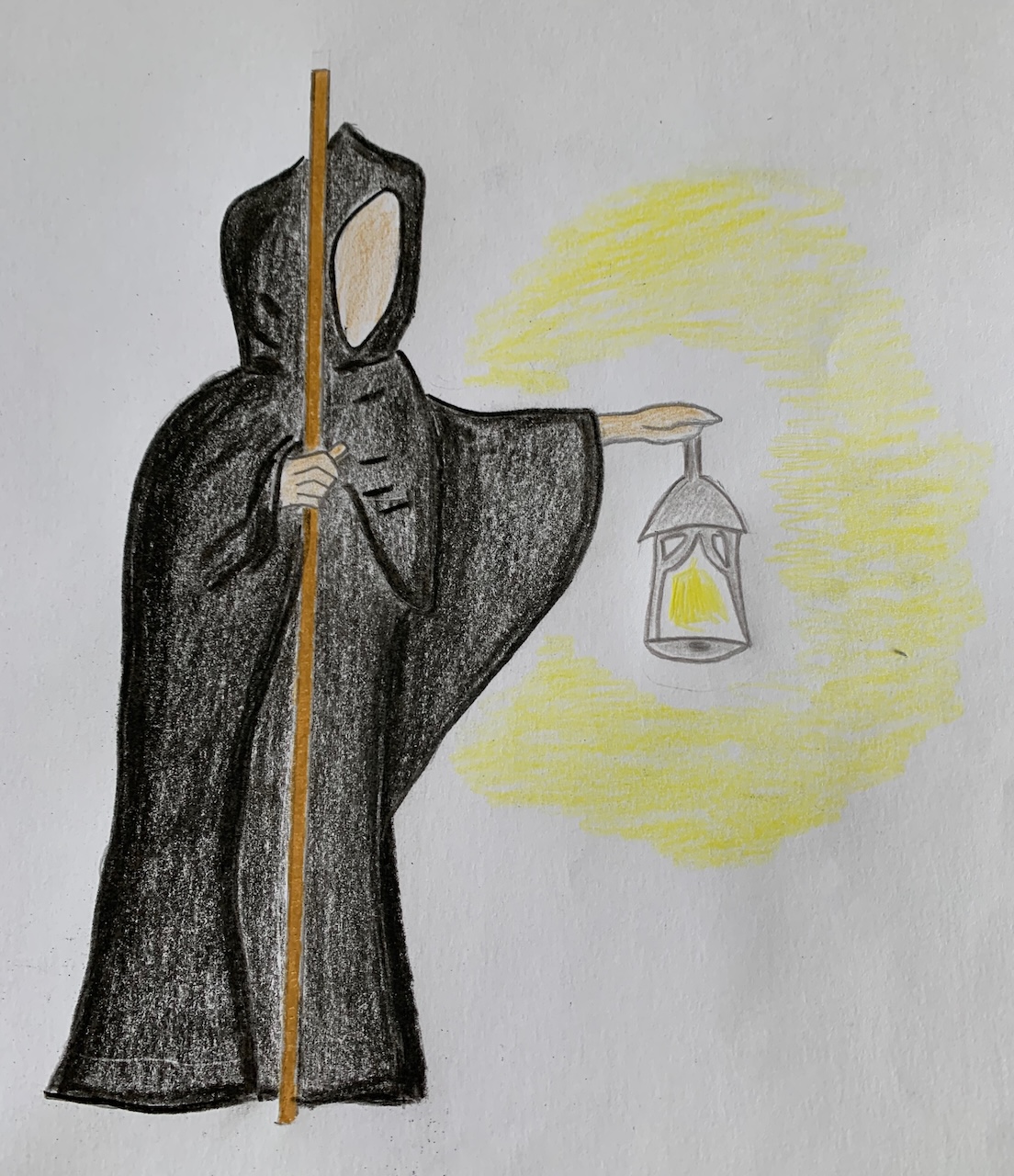
So, I realised, I can be a hermit nun. This thought made me feel incredibly happy and at peace with myself. It made me think of all the times I’ve drawn the Hooded Man in the Wildwood Tarot, ‘my old friend’, and felt the deepest of kinships.
Finally, I can stand in my truth when people ask me what I do without feeling I need to put on pretences to be a smily sociable lay nun but can explain I am a hermit nun and that silence and solitude are intrinsic to my role.
For the first time in my life, my nature and vocation are at one.
Soul retrieval is a central practice within core shamanism. It was (re)introduced to the West by Michael Harner in the 1970s following his study and practice with indigenous shamans around the world.
From a shamanic perspective, one of the main causes of illness is soul loss. This occurs in moments of trauma wherein the pain is so great a part of the soul departs from the body in order to preserve the intregrity of the whole. Soul loss can occur as a result of major trauma such as accidents, near-death experiences, war-time experiences, abuse and neglect. It can also be brought about by ongoing traumas such as bullying and being trapped in a controlling relationship. What constitutes trauma for one person might be different for the next. We can also, consciously or unconsciously, send soul parts away in order to fit in with family, friends, or the demands of society. These are often child parts, sensitive parts, or wild parts that do not cohere with social norms.
Within a shamanic context the soul parts can depart to various places. They can remain stuck at the site of the trauma here in the Middle World or take flight to a favourite place where they feel safe. They can also go to the Upper World or the Lower World. It is common to find they are looked after by guides or ancestors or protected by guardians.
The technique for bringing these missing soul parts back is called soul retrieval. It is possible for spontaneous soul retrieval to happen – for soul parts to come back on their own – and for a person to be able to find or call back their own soul parts. However, most often, because a person has sent their soul parts away and they no longer trust them or believe being with them is safe, it takes the skill of a shamanic practitioner to bring them back.
In a soul retrieval the practitioner journeys into the spirit realm with their guides to find the lost soul part. Negotiations with the protectors and with the soul part itself are usually needed to persuade it to come back. Soul parts will rarely return if the client is in the same conditions as when they left – for example trapped in abusive relationship or in an intolerable job. The soul parts frequently ask that the client make life changes to accomodate them (if they have not already done so) and might also ask that they make room for their needs – such as time for play or for spirituality or creativity. They might also ask for ritual acts such as the client eat their favourite food on a particular day, wear their favourite clothes, or do a favourite activity. Once the negotiations have been completed the soul parts sometimes need healing. After this, the practitioner returns and blows the soul part into the client’s body (usually a chakra) then rattles around to seal them in. The journey is then discussed with the client and they are advised on integration.
The main symptom of soul loss is feeling like you are not all here or a part of you is missing. Other symptoms include lost or fragmented memories and recurring dreams. Often, talking therapies fail to work because they are not addressing the parts that are missing. This fits with what, today, we call PTSD. In fact, the concepts of soul retrieval and soul loss fit very well with contemporary findings in neuroscience which demonstrates that trauma causes certain parts of our brain to go offline (causing parts of ourselves to disappear). Also, with psychotherapy, particularly Internal Family Systems, wherein protector parts are negotiated with and exiled parts integrated back into the whole. Following soul retrieval it is common for a person to feel more grounded and whole, for memories to return, and recurring dreams to ease.
Like most people I’ve experienced a fair amount of trauma. I’m autistic and was bullied throughout school and have also been bullied in the workplace. As a result I was often disassociated and retreated into fantasy to escape. I also depended on alcohol to self-medicate my anxiety for most of my life. Having a soul retrieval with my mentor and retrieving a soul part from one of my past lives have helped me to be happier and more present in the world.
My patron God, Gwyn ap Nudd, gathers the souls of the dead in the Brythonic tradition. He played a role in my soul retrieval, guiding my mentor to one of my lost soul parts and bringing it back to me. This experience was very emotional. Afterwards I realised that gathering lost soul parts was also His role. From thereon I knew soul retrieval was to be an important part of my work.
For my training towards becoming a shamanic practitioner I completed ten case studies. Soul retrieval proved popular because so many people relate to the concept of soul loss and recognise they are suffering from it. Finding and returning lost soul parts has been challenging but beautiful and inspiriting work and a fulfilment of service to both my clients and my God.
At first I was anxious about doing this healing for a couple of reasons. Firstly, there was the fear that I’d be completely useless at it and unable to find the soul parts. This was assuaged a little when one of my crow guides joked that I’d find it easier finding the soul parts than the people they belonged to.
Secondly, I was nervous about interacting with other people on such a deep level as an autistic person with social anxiety who has little experience of interpersonal relationships. Would I be able to show adequate care and kindness towards my clients and the lost and wounded parts of their souls? To make the shift from being an anxious and defensive person who has survived in a neurotypical world by masking to being more open-hearted I had to put a lot of trust in Gwyn and my guides and the people I was working with. Following my prayers I was able to drop down from the chatter in my head to working on a more intuitive and heart-centred level. This enabled me to interact with clients empathetically face-to-face and during the journeys. Not only that, on many occasions, I shared their emotions – both joy and sorrow, and even ended up hugging a couple of people afterwards (I never hug!).
During the healings I recovered soul parts from various places. Some remained at the site of trauma in the Middle World often within urban landscapes. Others had chosen to remain in or had fled to familiar places Middle World such as family homes, woodlands and beaches. A couple had escaped to fairytale landscapes in the Upper World. Some had gone to or were stuck in the Lower World – being submerged in underwater places or trapped in underground tunnels were common themes. Some of the soul parts had otherworldly guardians. Others had been looked after by ancestors, animal spirits, or favourite pets who had passed over.
The soul parts varied in age and appearance. Many were child parts. I was surprised to find a foetal part. I’d come across very young and baby parts but had been unaware that parts could leave whilst in the womb. I was equally surprised by the appearance of an elderly part. I hadn’t realised we contained or could lose parts older than our current age but this made sense within the context of the soul containing all our possibilities within it. Whilst most appeared as human some at first appeared as objects or essences.
In order to return, some of the soul parts simply wanted loving and nurturing. Others asked the clients to make room for emotions such as fear and joy. In some instances specific rituals were given which helped with the integration.
I didn’t have any problems journeying and so far have not returned without any soul parts. Contrarily, after discussing the healings with my mentor, in a couple of cases I feel I might have been overtrying, pushing too hard to find the soul parts, rather than letting the journeys unfold at a slower pace and allowing for distractions that might provide other revelations about a client’s problems.
Another thing I noticed was my reactions to the feedback (provided a month later). I was really attached to my clients providing positive comments and assuring me that all the classical effects of a soul retrieval had been felt. In a couple of instances life stresses had got in the way or clients had felt less certain about whether the soul parts had returned making me feel I’d failed.
When I spoke to my mentor about this she reminded me that spirit does not follow the Western model of cause and effect. Shamanic healing isn’t linear. When we’re working with spirit / energy / the web of life, if we change or unpick something in one place it will alter something elsewhere in space and time but it might not be the thing we expect. Also, it is common for clients to have ups and downs and for the healing work to bring up issues that need to arise and to be integrated and processed. These issues of having certain expectations and being attached to results are something I need to work with.
Overall I felt the soul retrievals were a success. On all occasions my clients had powerful and moving experiences and experieced the return of soul parts. In my feedbacks it was repeated that they felt safe and comfortable working with me, that they were listened to, that I was calm and… patient. I still have alot to learn but my foundational training in soul retrieval is complete and I’m looking forward to further developing my skills with this practice.
I am now offering soul retrieval at a student rate of £30 for a 2 hour session (1/2 hour online interview and 1 1/2 hour healing online or in-person for local people).
I was born from a rose bush planted by Creiddylad – black, white and red. My black sister is dead and my white sister is gone.
I wanted to be kind but I could not escape my thorns.
I fled from this world and wrapped myself around the fortress of Annwn’s King.
I would not let Creiddylad in.
I wanted to be kind but I was cruel.
“It will always be winter here. He will always wear my crown. He will never return to gather the dead. We will sleep together amongst His treasures for ever.”
“I planted you, I nurtured you,” Creiddylad wept, her tears pouring down around my roots. “Each one of your petals I made from a tiny piece of my heart.”
“Then why am I so cruel?”
“Because there is cruelty hidden deep within my heart – that is why I practice kindness every day.”
“Then I can be kind too?”
“Yes.”
“Then what must I do?”
“Leave Annwn, leave my King, return to the world to be a sanctuary for another, who like you, has been cruel, but longs to learn to love, to be kind, to heal.”
So I unwrapped my trestles and I threw down my thorns and prostrated myself at Creiddylad’s feet in my first act of kindness promising there will be many more.
As I prepare to step up to beginning working with clients in shamanic energy healings the Spirit of the Sanctuary appeared to me in meditation and said She wanted to act as a guide and revealed Herself to me a form that She wants to make public for the first time. She appears here as a dark-haired woman with a halo of red roses and a black serpent wrapped around her lower half (both are symbols of the sanctuary).
As I progress with my shamanic practitioner training I am now offering free shamanic energy healing to volunteer clients for case studies.
Shamanic Energy Healing
From a shamanic perspective pain and illness are caused by blocked and congealed energy and by intrusions of negative energy into our energy bodies. In a shamanic healing session stuck energies are moved and transformed and any energies that don’t belong to us are safely extracted. This work differs from other forms of energy healing in that the practitioner works in a shamanic trance state under the guidance of spirit guides and helpers and uses traditional shamanic tools such as a drum and rattle.
You will need to be available for a 30 minute online interview and a 1 hour 30 min healing session (in-person if local or online) potentially followed by further sessions if needed.
If you are interested please email at: sisterpatience22@gmail.com
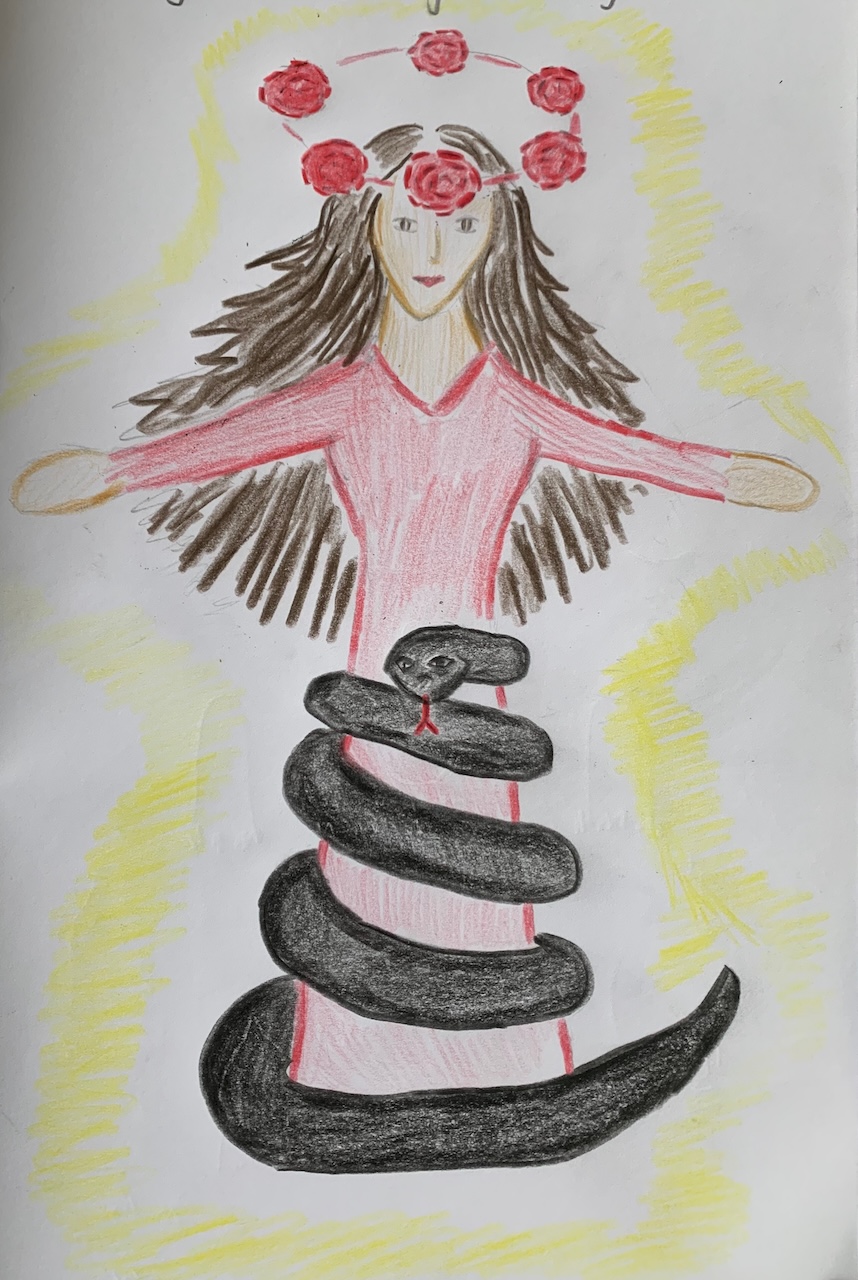
 The Sanctuary of Vindos