Power Animals and Power Animal Retrieval

The term ‘power animal’ was introduced to the West by Michael Harner as one of the central concepts within core shamanism. It is borrowed from the native North American peoples and is interchangeable with ‘guardian spirit’.

A power animal helps us to connect with the natural world and the spirit world. According to Harner its presence provides us with energy and good health, whereas when we lack a guardian spirit, we are no longer power-filled and this leaves us open to the intrusive energies that cause illness.

Harner notes ‘the individual characters represent entire species or larger classes of animals… the entire genus or species… a person usually possesses not just the power of a bear, or of an eagle, but the power of Bear or of Eagle.’

Power animals or guardians spirits can be found across cultures. It’s a concept I relate to deeply because I connect so strongly with Horse. When I was little I used to run round the playground playing horses (until I got it bullied out of me). I managed to persuade my parents to let me go horseriding and spent all my time outside school helping out at a local riding school in exchange for free rides and later in life worked with horses.

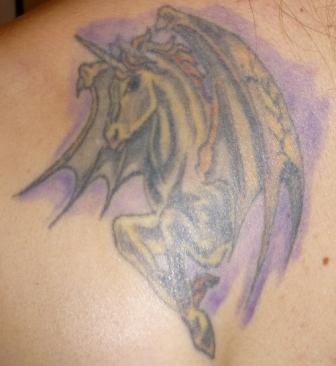
When I was eighteen I got a tattoo of a white winged unicorn on my back and, later, when I discovered shamanism, she appeared as my guardian spirit. It didn’t take me long to work out that my power animal was Horse.

Since our ‘meeting’ (I believe she’s always been there) she has brought an abundance of joy and energy into my life whether out walking or at the gym or when she carries me between the world in my shamanic journeywork.

I’ve had relationships with other power animals and have a regular ‘team’. It’s common to have one or more power animals who stay for life and others who appear to guide us through certain life lessons then depart once they are done. For example, a one-legged raven guided me on my explorations of the Old North then disappeared and I haven’t seen him since.

Different power animals bring different powers and qualities into our lives. We can call on their power and shapeshift into them – a practice seen in the Brythonic culture wherein warriors invoked their energy as bulls of battle, wolves of war and ravening ravens when they fought on the battlefield and in the Anglo-Saxon and Norse cultures where we find the Berserkers ‘Bear Shirts.’

Such relationships are reciprocal with the human benefiting from the animal’s power and the animal benefiting from being able to express its power in the world.

The absence of a power animal results in power loss, which can cause ill health. The shamanic healing for this is a power animal retrieval. This is a practice that Harner borrowed from the native North American peoples. Herein a shamanic practitioner journeys to the Lower World to bring back a power animal for the client. Harner tells us, ‘the secret to recognizing the power animal is a simple one: it will appear to you at least four times in different aspects or at different angles.’ For example, one might see Stag at a distance, shapeshift into Stag, see Stag on a cave wall, then ride on Stag. Once the identity of the power animal is established, the practitioner gathers the power animal into their arms and returns to blow them into the body of the client (Harner notes the Jívaro blow the animal into the chest and then into the fontanelle but I have been guided to blow them into one of the chakras) and then rattles around the client to seal them in.

I first learnt power animal retrieval at The Shaman’s Pathway workshop with the Sacred Trust and have progressed towards using it to heal clients in my one-to-one shamanic training. Including the person I worked with in the introductory workshop I have so far completed six power animal retrievals. I have found these healings to be a source of power and wonder for both the client and myself as I have helped (re)unite them with their guardian spirits.

I have used the traditional way of journeying for a client then reporting back and other methods taught to me by my mentor which provide more scope for agency and participation for the client. These are speaking out loud as I journey so the client is more immersed, taking them with me on the journey so they can look around and interact, and holding space for them to journey.

Each journey was unique and ranged from one client being courted by every animal in the forest to another to whom only one animal appeared. In some instances the client’s power animal turned out to be the one who had consistently shown itself as the most powerful presence in their lives, whereas others were less frequent guides or a complete surprise.

I was astounded by the immense power and intelligence of other people’s guardians. Each was unique and it was a privilege to meet and interact in such a close way and to play a role in helping clients to establish and deepen their relationships with them. When I was sealing agreements between the client and their animal I felt a sense of being a bridge between the worlds and, somewhat laughably, like a celebrant, as they made their ‘vows’.

This work was a step up from the guidance journeys as there was more responsibility in finding a power animal who would bring energy and health to the client and might be a friend and source of guidance and wisdom for life. I feel I met the demands, ensuring that I was fully present for each person, listening to their needs, and paying full attention during the journeys.

One of the things I was slightly uncertain about was Harner’s method of recognising the power animal from four angles. In an introductory workshop to core shamanism I got an animal who showed themselves in four different ways (Panther) but who didn’t turn out to be my power animal (Horse). 

I was also unsure about this method of recognition because there is no evidence that it was ever used in British or other Western European traditions. However, I went with it for the journeys and found when doing  power animal retrievals for clients it was integral for identifying the power animal from all the other animals and could think of no better method.

The greatest challenges I faced were self-doubt and the desire of my ego to get things ‘right’ by providing a journey that matched those of shamanic authors. Being aware of these tendencies I made sure I trusted and stayed with what was shown by my guides, the spirit world, and the spirits we met.

The effects of the healings for the clients have varied from experiencing more power and joy in their lives and new or deeper connections with their power animals, to ailments easing and being able to come of some medications. It has been a beautiful and edifying experience for clients, their guardians and myself.

I’m very happy to announce that I have now completed my power animal retrieval training and am offering this healing at a student rate of £30 HERE.
Greencroft Valley Shamanic Circle

First Monday of the month 1 – 2.30pm

Entry £5

~Learn about shamanism in a safe inclusive space.
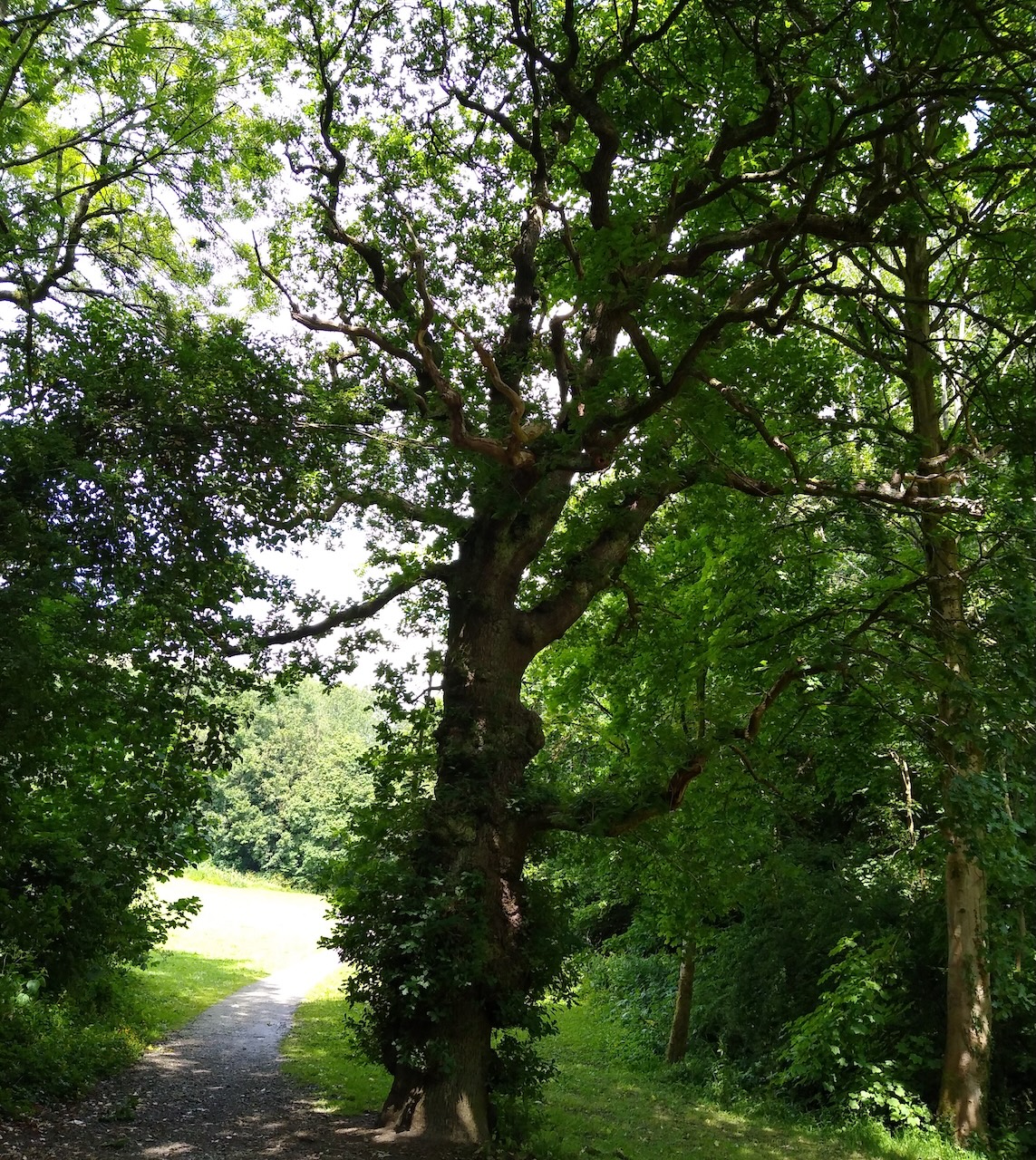
~Connect with nature on a lovely suburban park.
~Find out about local history, mythology, folk and fairylore.
~Explore the spirit worlds and build relationships with spirit guides.
~Journey for yourself and others for guidance and healing.
~Work with the fae and British Gods and Goddesses.
~Become part of a like-minded community.
~Experience spiritual growth and personal transformation.

Woodland Nursery, off Alderfield, Penwortham, PR1 9LB

For further details contact: sisterpatience22@gmail.com

Animal Power

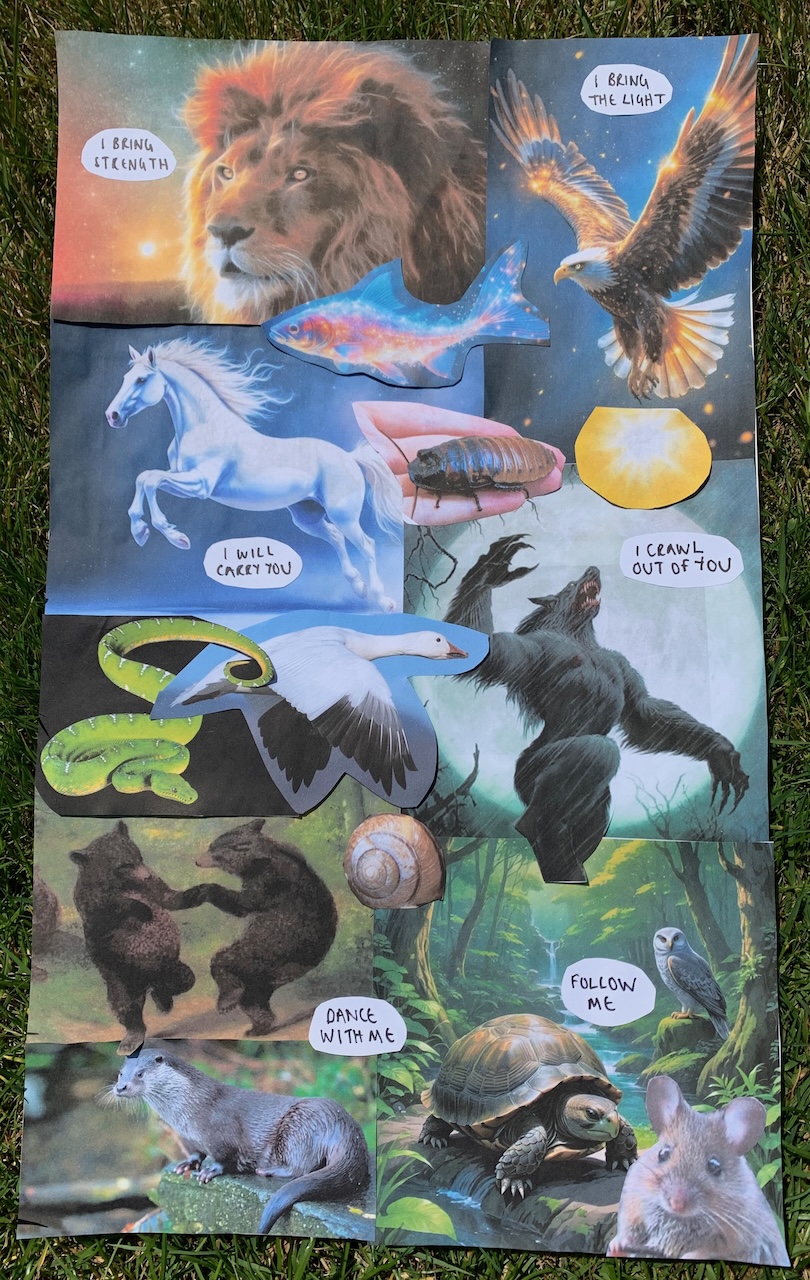
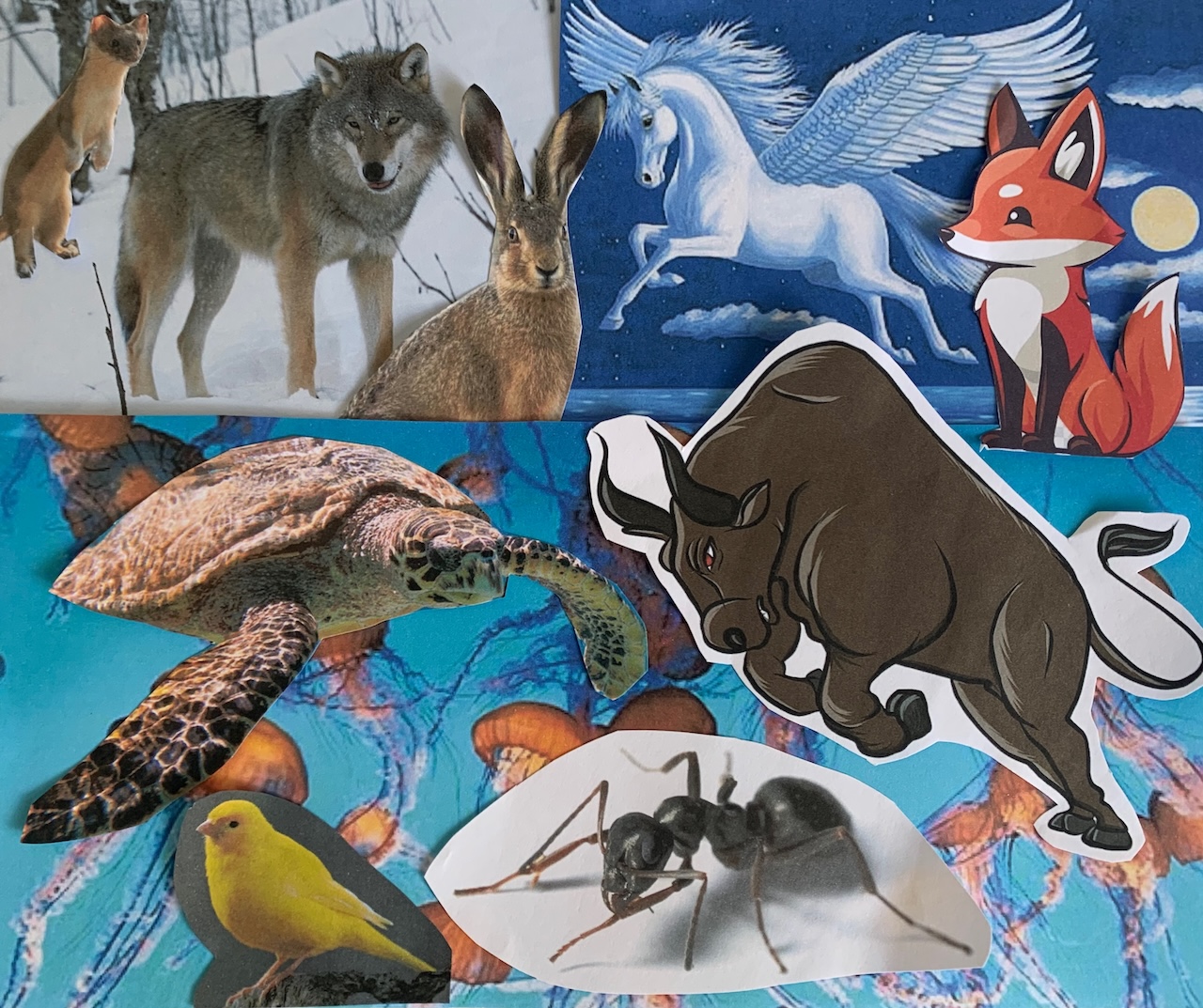
This collage was pieced together from some of the encounters and messages from animal spirits experienced by clients during shamanic journeys on my introduction to shamanism course and during power animal retrievals. It forms a celebration of the work we have done together to date. I would like to thank those who I have worked with for permission to share. I’m continuing to offer student rate shamanic guidance HERE and free shamanic healing (including power animal retrievals HERE).

The Animals Beside Us

It’s said there’s an animal beside us
from the moment we’re born
’til the moment we die.

Why, then, was I so alone
when I walked through the school doors,
and got knocked down by the animals 
in the playground again and again?

Why was I mocked when I showed a bit of spirit – 
running as a horse round the edges of the tarmac
whilst the others played British Bulldogs or Red Rover 
or skidded on the crips the seagulls fought over?

Why was I so alone when I sat in the classroom
writing secret stories about horses in the back of my books
and sketching them running, jumping showjumps, galloping free?

One of the lucky ones I had the chance to loan a pony
and muck out for free rides yet even at the stables
we were saddled by the same rules – boxed in.

I was like the horse on the end of the lungeline,
the box walker going round and round and round…

My white winged mare revealed herself in the form of a tattoo
when I came of age yet it wasn’t until ten years later
she revealed her magic breaking all taboos.

Now I help others to find the animals beside them –
to bring back their bears, eagles, otters, wolves,
to befriend their snakes and cockroaches.

Together we are slowly escaping our boxes,
learning to see through the illusion of separation,
with the animals beside us to understand why we are here.

*A poem based on my relationship with my white winged mare and on helping others to discover their animal spirit guides and power animals on my introduction to shamanism courses and in power animal retrievals.

I am currently offering free power animal retrievals as I progress in my shamanic training HERE.

The Chasing of Rhiannon and the Nature of Horse

Tonight I’m giving a talk on animal spirit guides for a local group. One of the topics I am covering is what the story of the Chasing of Rhiannon can teach us about the nature of Horse and ways of approaching Horse and the Gods and spirits in general. I’m also sharing it here.

Rhiannon is the medieval Welsh name of the ancient British Horse Goddess Rigantona ‘Great Queen.’ She appears in the The First Branch of The Mabinogion. This is my retelling of the episode of Her first meeting with Pwyll, Prince of Dyfed.

Pwyll goes to sit on Gorsedd Arberth, a sacred mound in Pembrokeshire, where it is said that if you sit there all night you will either get injured or see something wonderful. Pwyll sits the long night through and at dawn, luckily for him, he sees something wonderful – a beautiful woman in a shining golden dress of brocaded silk on a big, tall, pale white horse. 

As she rides away Pwyll says to one of his men, “Quick, go after her!”

He runs and he runs and he runs but he cannot catch her. 

“Quick, get on a horse!” 

He rides and he rides and he rides but he cannot catch her because the faster he rides the further she gets away and finally she disappears over the horizon and is gone.

Pwyll is bitterly disappointed yet, determined to see her again, he sits on the mound a second night. And at dawn she appears again – a beautiful woman in a shining golden dress of brocaded silk on a big, tall, pale white horse. 

As she rides away Pwyll says to his best rider on his fastest horse, “Quick, go after her!’

He rides and he rides and he rides but he cannot catch her because the faster he rides the further she gets away and finally she disappears over the horizon and is gone.

Pwyll is even more disappointed, yet determined to catch her the next time, he sits on the mound a third night. And at dawn she appears again – a beautiful woman in a shining golden dress of brocaded silk on a big, tall, pale white horse.

As she rides away this time Pwyll himself goes after her on his fastest horse. He rides and he rides and he rides but he cannot catch her because the faster he rides the further she gets away. 

Just as she is about to disappear over the horizon, he shouts, “Maiden, for the sake of the man you love, wait for me.” 

She stops, turns. “I will wait gladly,” she says, “it would have been better for the horse if you had asked a while ago.” 

When Pwyll catches up to her, she draws back her veil, reveals her name, “Rhiannon.”

This story might firstly be seen to relate to Horse as a prey animal. If we chase a horse it will always run faster than us, the faster we chase, getting further away. If we stop, speak quietly, it too will stop, turn, be curious, approach, reveal to us its unique nature.

On another level it relates to the elusive nature of the Horse Goddess and to the Gods and spirits in general. Often, if we chase too hard, try too hard, they evade us. If we stop, ask direct questions, They will turn, respond, reveal Their identities and names.

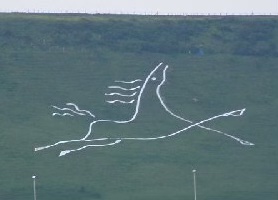
Folkestone White Horse (Wikipedia Commons)

The Old Three Bears

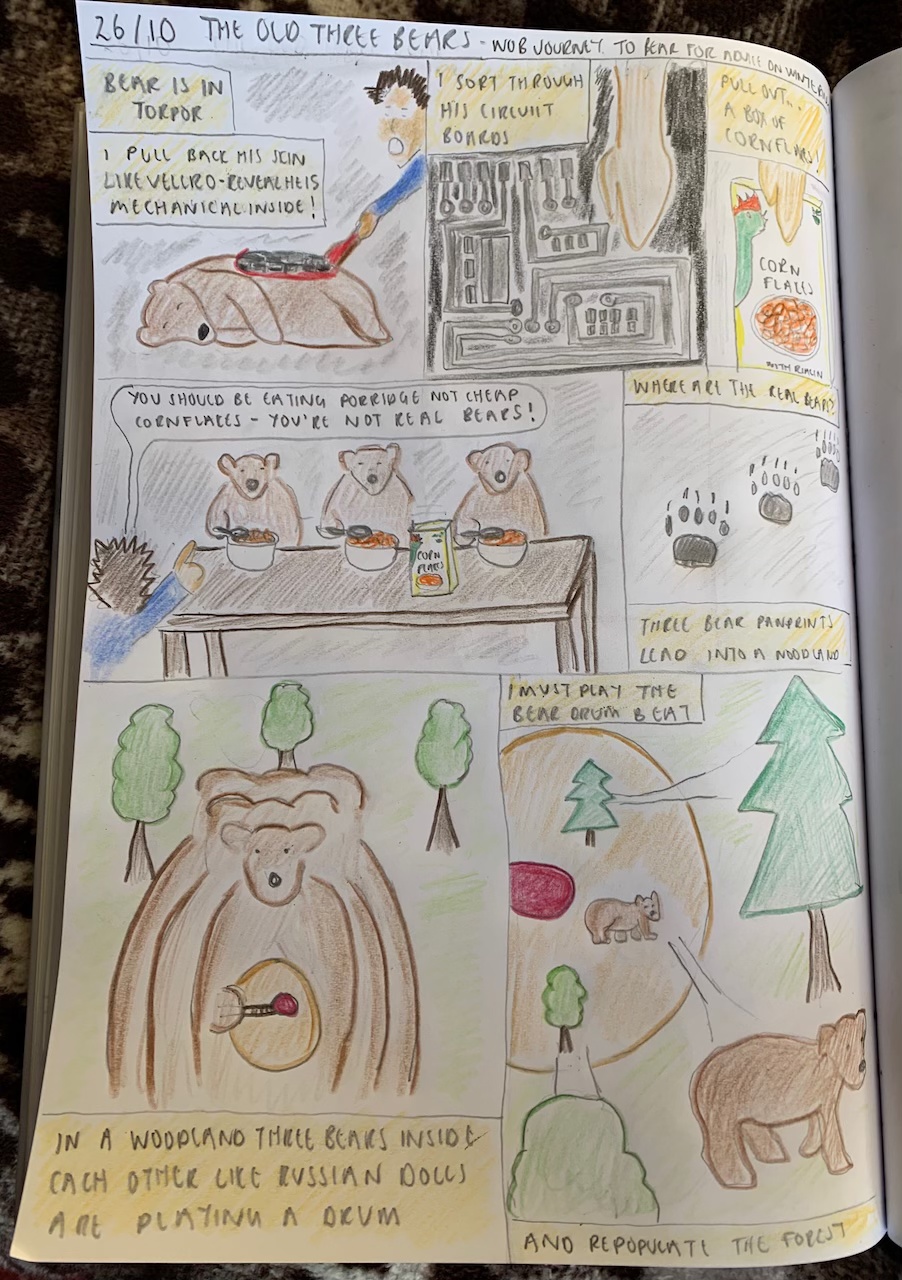
In a recent journey circle at the Way of the Buzzard Mystery School we journeyed to Bear to ask for advice on overwintering. I was expecting to receive my usual guidance on slowing down and making time for rest. What happened was surprising. 

When I got to the cave Bear was in a torpor. I pulled back his skin, like velcro, and found to my shock that he was mechanical inside. I searched inside his insides, which were like circuit boards and pulled out a box of cornflakes! I then found myself in a cottage with the three bears shouting at them: “You should be eating porridge not cheap cornflakes!” This made me realise they were not real bears. In the basement of the cottage I found three bear pawprints leading into a woodland. There I found the three bears inside each other like Russian Dolls playing a drum. I was told I must play ‘the Bear Drumbeat.’ As they drummed images came from the drum and were made manifest. I was told, this way, I must ‘repopulate the forest.’ 

This got me wondering if the Goldilocks and the Three Bears story has roots in an older myth about the Old Three Bears from the time between when the Romans imported oats to Britain to feed their horses and potentially to make porridge and bears became extinct 1,500 years ago. Could the Three Bears within each other be a triple form of the Celtic Bear God or Goddess, Artaios or Artio? 

Their advice is suggestive of how images of the Otherworld are evoked by a shamanic drumbeat and of the power of durmming and imagination to create more ecologically viable futures to which extinct animals like Bear might return.

Core Shamanism and its Advantages and Disadvantages

Shamanism was conceptualised and reintroduced to Western Europe in the 1970s by an American anthropologist called Michael Harner. Harner travelled to the Amazon in the late 1950s and 1960s and lived with the Shuar and Conibo peoples to study their religion. When he reached the point he could find no more information one of the Conibo elders told him he must experience it directly by drinking ayhuasca. The visions he experienced served as proof of the existence of a spiritual reality. He was initiated into both tribes as a shaman and trained in their practices. He then travelled the world visiting shamanic peoples and learning from them.

From this process Harner extracted the core of world-wide indigenous shamanisms without the cultural rites and trappings and made it accessible to Westerners. Harner-style shamanism is therefore also referred to as core shamanism.

Harner claimed that at the core of all shamanic cultures is the belief in three worlds. The Middle World is unique because it has both a physical reality (this world) and a spiritual reality (which might be seen as the other side of this world). Then there is the Lower World, below, where we find natural landscapes and nature spirits such as animals, plants and trees. We might also find mythic and folkloric beings, Gods and Goddesses and ancestors (who are most often from ancient shamanic cultures). In the Upper World, above, we find ethereal and heavenly landscapes and the spirits of clouds, the sun, the moon, the stars, along with the Gods and spirits associated with the heavens in world religions including the Christian God and angels. We also find ascended ancestors such as Christian saints, Hindu gurus, Buddhist boddhisatvas and wise elders such as philosophers and magicians.

It was Michael Harner who brought the shamanic journey to the forefront of shamanism and backgrounded the traditions of inviting the spirits to be here with us or into our bodies. A core shamanic journey has a set framework and structure.

First and foremost one always journeys with an intention. This is the focus of the journey and keeps it on track, preventing the practitioner from getting side-tracked or lost. The intention can be to ask for guidance on a problem, for healing, to find something that has been lost, or simply to explore or spend time with the spirits. It is essential that the intention is held to throughout the shamanic journey.

The shamanic journey always begins at a departure point. This is somewhere in the physical world that is meaningful to the practitioner. To get to the Lower World it must be a place from where one can descend and can be a natural feature such as a cave, a pool, a spring, a tree root, or a manmade feature like a tunnel or a subway. For the Upper World one can take flight from a hill or mountain, or a church tower, or go up a chimney, or travel upwards on smoke or up a ladder. In the Middle World we merely need to enter a trance state to travel its spiritual otherside.

It is through Michael Harner the shamanic journey came be primarily associated with a drum. Harner trialled many different methods of entering a shamanic trance and reached the conclusion that a drumbeat is the quickest, safest and most effective. A beat of 4 – 7 beats per second shifts the mind very quickly into the theta state (gamma – highly focused, beta – everyday busy mind, alpha – meditative, theta – daydream-like, delta – sleep). It offers both a safe way to journey and come back. To signal the end of a journey a call-back beat is sounded – 4 rounds of six sharp beats. This is followed by a minute or so of rapid fire beats. This tells the person who is journeying to thank whoever they are communicating with, then turn around and retrace their steps to their departure point following the same route as they went in. This method brings them back, well-grounded, into their body.

There are also a number of core concepts and practices. One of the concepts is that each of us has a power animal. This is drawn from the northern Native American cultures and is seen to be a spirit animal who is with us throughout our life and is the source of our personal power. Our relationship with our power animal is usually deeper and more personal than with other animal spirit guides who tend to come and go. Power animals are most often found in the Lower World.

Another core concept is the spirit teacher who is usually found in the Upper World. This teacher, again, unlike other human and spirit teachers, tends to be with us throughout most of our lives supporting us and offering guidance through life’s lessons.

One of the best known core practices is soul retrieval. This is based on the notion that when we experience traumatic events a part of our soul is shocked out of us and takes refuge in spiritual reality. We also send parts of our souls away in order to fit in with consensus reality in the physical world – these are often parts that are child-like or wild and might prevent us from attaining material success and financial security. Because those parts are long lost or because we sent them away it takes a shaman’s skill to bring them back. Spontaneous soul retrieval can also occur when we make positive changes in our lives that appeal to lost soul parts, calling them to return. Other core practices include extraction – the removal of harmful energies, depossession – the removal of harmful entities, and psychopomping.

Core shamanism has its advantages and disadvantages. Its main advantage is that it is not tied to one culture or religion, thus making it universal and available to everyone. It also allows practitioners from across varying traditions to practice together.

The disadvantage of this, however, is that the practices take place without the cultural rites for interacting with local and communal spirits such as prayers and offerings, there is no mythic framework or roadmap of the spiritual reality, neither are there traditions of initiation or tribal elders to oversee the initiatory and learnng processes.

Yet the universality and proliferation of core shamanism is overall a good thing as it is giving people back their birth right – the ability to journey to the spiritual reality and commune with helping spirits in order to gain guidance, healing and inspiration.

Evidence for Shamanism in Britain

One of the main types of evidence for shamanic beliefs in Britain is burials with gravegoods. The fact that the ancient Britons buried their dead with accompaniments is suggestive of the belief they took their belongings with them into an Otherworld which was seen to be very much like Thisworld. 

The earliest is the so-called Paviland Red Lady (who was actually a male warrior). His bones were stained with red ochre and he was laid out with ivory rods and sea shells. Later burials in burial mounds have been found accompanied with weapons, jewellery, cauldrons and eating and drinking vessels, games, chariots and horses. 

Another type of evidence is ritual depositions in liminal places which provided access to the Otherworld. Many of these are watery – we find weaponry such as swords and spearheads deposited in lakes, rivers, springs, pools and bogs. Deposits were also made in places leading underground such as caves, crevices and beneath the roots of trees (such as bog oaks here in Lancashire). Ritual pits and shafts were also dug purposefully for depositions of coins and pottery. This demonstrates the Britons had a reciprocal relationship with the spirits of the Otherworld.

Wooden idols which might represent threshold guardians who oversaw the boundaries between the worlds have been found across Britain. These include the Ballachullish Goddess, the Kingsteignton Idol, the Dagenham Idol and the Somerset God Dolly. The Roos Carr Figures, eight wooden warriors with quartzite eyes and removable phalluses and their serpent-headed boats may have been modelled on mythic figures who made voyages to the spiritual reality.

In Deal, Kent, a remarkable chalk figurine was found in a chamber at the bottom of a ritual shaft suggesting communion with an Otherworld Deity.

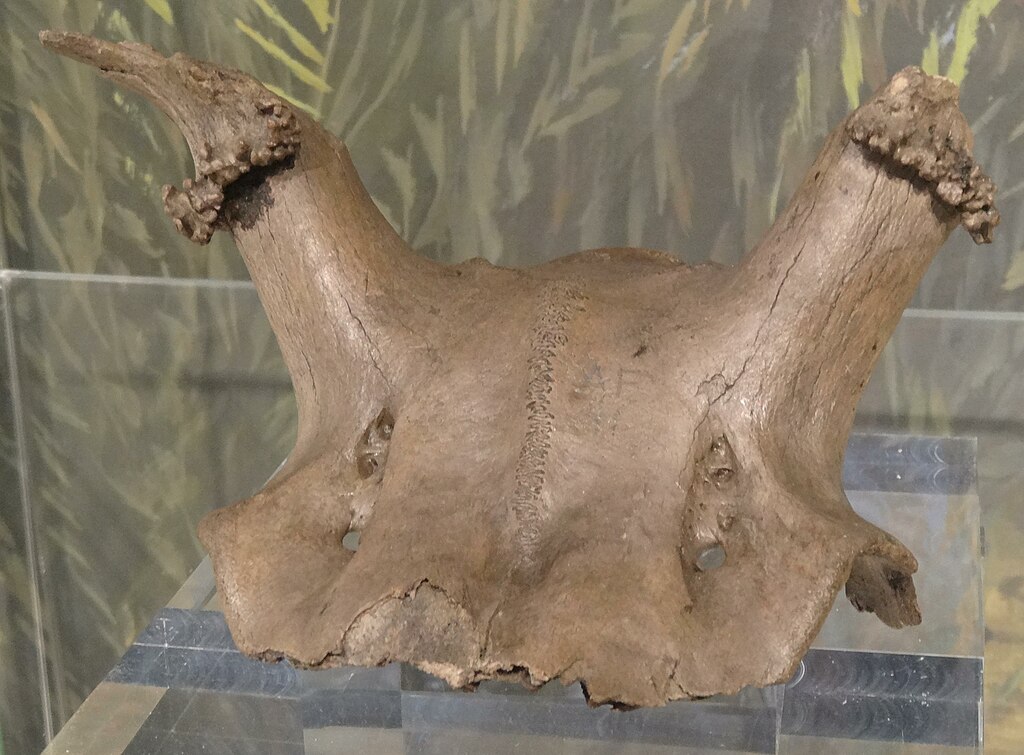
At Starr Carr, in North Yorkshire, 21 antlered frontlets dating to around 9,000 years ago were found. It has been suggested they were used in a shamanic ceremony to bring luck in the hunt before being deposited as offerings to the deer spirits.

Across the world cave art is cited as evidence of shamanic experiences. Here in Britain our oldest example is from Cresswell Crags, dating back to 13,000 – 11,000 years ago with carvings of a deer, a bison, a horse and birds and bird-headed figures.

Writing at the time of the Roman Invasions (we have no written evidence from the Britons themselves because they wrote nothing down), Julius Caesar, said the Gauls, whose traditions derived from Britain, believed ‘the soul does not die but crosses over after death from one place to another.’

We find a possible reference to a native British shamanic tradition that survived into the 1100s in the writings of Gerald of Wales. He records the existence of ‘soothsayers’ known as awenyddion, ‘persons inspired’ who are possessed by ‘ignorant spirits’ or ‘demons’ and who speak in ‘nugatory’ ‘incoherent’ language (ie. the language of prophecy as they give voice to the spirits of the Otherworld).

In medieval Welsh literature we discover the name of the British Otherworld, Annwn, from An ‘very’ and dwfn ‘deep’, again suggesting it lies underground. There are many stories about human interactions with Annwn and its spirits and Deities. In The Mabinogion, Pwyll, Prince of Dyfed mistakenly allows his hounds to feast on a stag which has been killed by the hounds of Arawn, a King of Annwn. To make up for his misdeed he takes Arawn’s place in Annwn for a year and a wins his battle against his rival, Hafgan, and wins Arawn’s favour. Someone who does not behave so respectfully is King Arthur. In ‘The Spoils of Annwn’ he voyages to the Otherworld, steals its magical animals and treasures, including the King of Annwn’s cauldron, and kills the cauldron keeper and, potentially, the King of Annwn himself. Annwn was later known as Faery and we have many stories from the Victorian times until now of sightings of the fairies and people lured into their dances and into their realm.

Within the Welsh bardic tradition, Taliesin, a shapeshifting bard is viewed to have shamanic qualities. Bards to this day channel the spirit of Taliesin and his forebears. 

The British witchcraft tradition is also deeply shamanic with its records of spirit flights and pacts and relationships with familiar spirits (although some stories were projected on women, often Catholics, who did not participate in such practices.)

Sadly, within the shamanic communities here in Britain, much of this evidence remains little known and explored and it is more common for people to look to other traditions, going abroad to take ayhuasca, or looking to the indigenous shamanic cultures of other lands, rather than exploring the lands and lore that are on our doorstep.

*Antlered frontlet courtesy of Wikipedia Commons.

What is Shamanism?

Shamanism is an ancient spiritual tradition dating back at least 40,000 years. It is not a religion but a body of techniques centring on altering one’s state of consciousness to access a spiritual reality and commune with helping spirits for the purposes of accessing guidance, healing and inspiration.

Shamanism is founded on animism. Animism, from the Latin anima ‘soul’ is the belief that the whole world is inspirited. Every mountain, hill, river, tree, plant, fungus, animal, bird, fish, insect and bacterium has a spirit. So does the man-made environment. Houses, churches, office blocks, smart phones, laptops, tools, all have spirits. Thoughts, feelings and emotions, such as love and jealousy, have spirits too. 

In animistic cultures significant landscape features are often viewed as particularly sacred and are associated with spirits of place and Deities. For example we know the river Ribble in Lancashire has a Goddess, Belisama, as the Roman geographer, Ptolemy, in the second century, labelled the Ribble estuary Belisama aest.

Animistic peoples are often also polytheistic. Polytheism is the belief in many Gods. These include local and tribal Gods and Goddesses and Deities who oversee certain functions such as learning, parenting, hunting, war, life and death.

Whilst all shamanic cultures are animistic not all animistic cultures are shamanic. Shamanism takes the belief all things are inspirited one step further. Shamanic peoples also believe in the existence of a spiritual reality that is separate from but intimately connected with physical reality. This spiritual reality has its own landscapes and is populated with spirits who have their own ways of being.

Everybody has the abilitity to ‘shamanise’ – to interact with the spirits and Deities of the household, tribe, locality, and of the spiritual reality. However, there is usually a specific person who serves their community as a shaman – a specialist in interacting with the spirits who has received a calling and undergone a rigorous training.

I will pause here to note the term ‘shaman’ comes from saman ‘one who knows’ from the Russian Tungus people and indigenous cultures have their own names for  shamans. The application of ‘shaman’ and the term ‘shamanism’ to these cultures is a Western development. In the West we only use the term ‘shaman’ to describe a person in an indigenous culture who communes with the spirits to serve their community. Westerners who practice shamanism refer to themselves as shamanic practitioners.

There are two main ways that shamans interact with the spiritual reality. The first is the spirit flight or shamanic journey wherein the soul leaves the body and journeys to the spiritual reality to travel its landscapes and commune with its spirits. The second is inviting the spirits to be with us in this reality. This might take the form of calling them to be present alongside us in the physical realm or into our bodies to dance with us, eat with us, or to speak through us, thus offering guidance directly.

Entering an altered state of consciousness can be done in many ways. These include: listening to repetitive music such as drumming or rattling, dancing, chanting fasting, silence and taking entheogens such as ayhuasca, San Pedro cactus, or psychotropic mushrooms such as fly agaric and liberty cap (which we have in the UK).

We all move through various states of consciousness throughout the day and many people are familiar with trance through going out and dancing to trance music. Where shamanic practice differs is that a shaman enters trance with will and intention and uses it to commune with the spiritual reality to serve to their community.

So how does somebody become a shaman? In indigenous cultures the role of the shaman can be hereditary or a person might be called by the spirits. This can happen when they come of age or may be triggered by a traumatic event such as a physical injury, a mental breakdown or a near death experience. This is often referred to as ‘shamanic sickness’. To outer appearances the person is seen to ‘go mad’ or fall into a depression. It’s common for them to remove themselves from everyday society, sometimes into the wilderness, to spend time alone. During this period their psyche, bearing its presuppositions, rules and norms of everyday reality is broken down and ‘dies’ and they are initiated into the metaphorical, mythic, dreamlike ways of being of the spiritual reality. Once this process is completed they return to their community ‘reborn’ and ready to serve as a shaman. 

A shaman serves their communities in many ways. Some of these are very practical – using their skills of soul flight and communing with the spirits to find the herds when the people are hungry or to find lost pets or possessions. Shamans also use their abilities to heal. This can take the form of energy healing or they might work with plant spirits and herbal medicines. They are able to remove harmful energies and entities from people and places. Pyschopomping, helping the dead to pass and aiding spirits who are trapped in this world to move on, is also a shamanic role.

Whereas these ancient shamanic practices have been maintained in places such as Siberia, Mexico and the Amazon and amongst the Native American peoples, sadly shamanism has been lost from Western Europe. This is mainly due to the hegemony of Christianity. The Christianisation of Britain began in the fourth century when it was under Roman rule and the emperor, Constantine, converted to Christianity. This resulted in the taking over the sacred sites associated with pre-Christian Gods and and spirits and re-dedicating them to the Christian God, Jesus, Mary, the angels and the saints and labelling many of our indigenous Deities as ‘devils’. Our capacity to shamanise was taken away by the ban on communicating with our local spirits and Deities and replaced with the rule we can only commune with the Christian Deities through set prayers, attending church and seeing a priest. Rationalism, materialism, science, industrialisation and capitalism have also played a role.