When I unburied the Wise Lad

and polished all his statues
I fell into his smile

and I smiled too

and all the world smiled
and all the universe smiled
and all the people of Annwn.

I can’t rememer how long ago
I forgot how to smile

but here it is –

this sign upon my lips,

not just for me but for you
the Wise Lad’s gift.

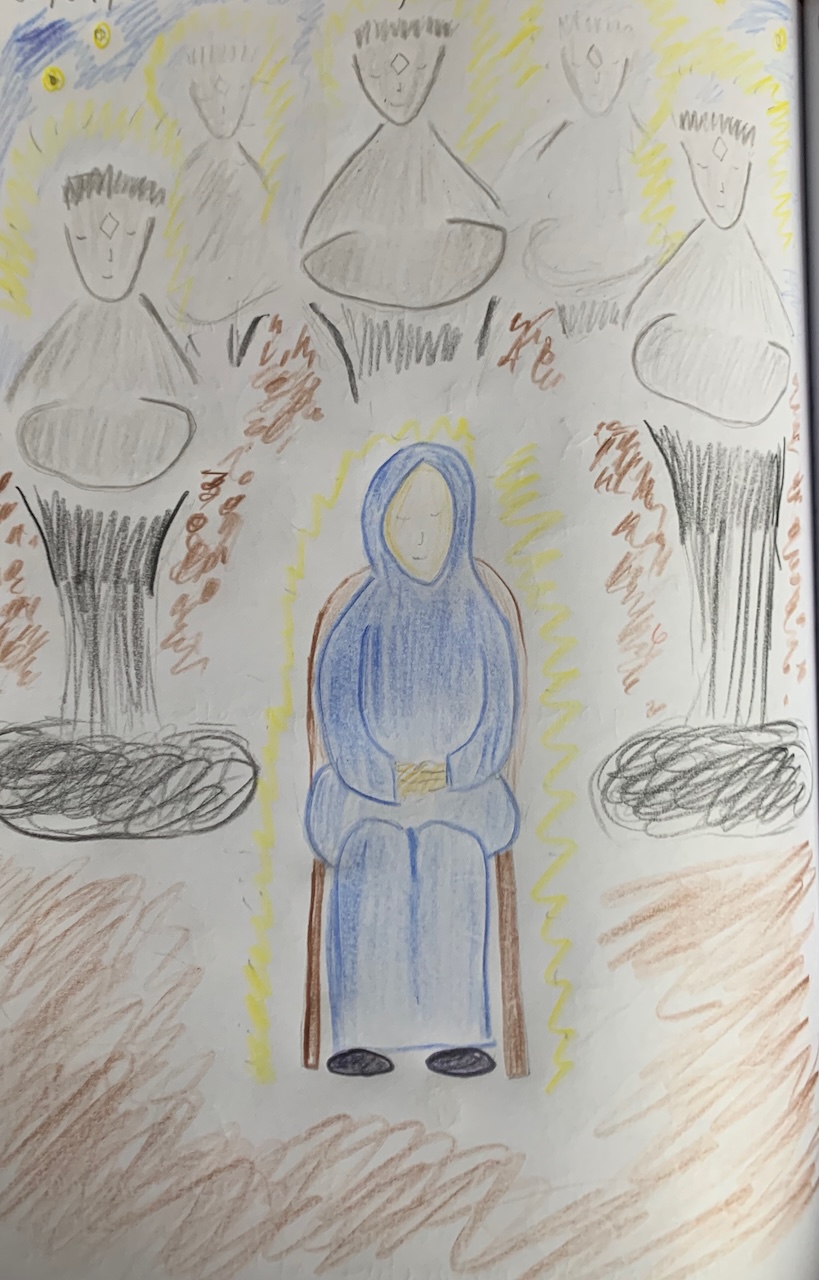
When I drew this image it was supposed to represent the unburying of a multitude of meditating Wise Lad statues being unburied from the earth from where they’d lain for eons. On completing it I realised that looked at from another perspective they appear to be hovering over drop down toilets! One of His jokes I think!

The Wise Lad and the Meditating Frog

Many years ago, in early spring at sunset, the Wise Lad was wandering the Frog Song Marsh, watching the frogs and toads emerge from their places of hibernation, forming long slippery lines as they headed to the many ponds.

As darkness fell the mating calls of the male frogs and toads were deafening – a thousand thousand voices raising their caphony throughout the marshland.

Thus the Wise Lad was surprised to find a solitary frog sitting apart on a stone.

“What are you doing?” He enquired. “Why aren’t you seeking a mate with the rest?”

“I’m meditating,” the frog’s legs were crossed and his pads rested on his shins.

The Wise Lad knew a little of meditation from sitting still with his father, Nodens, staring into the waters as they waited together for a fish to take the hook.

“I’ve never known a frog to meditate before,” the Wise Lad was stunned.

The frog frowned. “Can you not see these legs were made perfectly not only for jumping and swimming but for sitting in meditation? These pads not only for catching prey and clinging onto mates but for holding hand gestures? These lungs and gills for breathing deeply both in and out of water?”

“You can meditate under water too?” the Wise Lad asked in admiration.

The frog nodded glibly and demonstrated by hopping into a nearby pool, sinking down to the bottom and once again taking up his meditating posture. 

On getting out, “And don’t you believe the lies of the other frogs who will tell you I’m not a frog at all, that I’m the son of a chieftain who the Hag of Marsh Pond put a spell upon, that I’m avoiding the mating rites because I don’t want to be kissed by a frog or a woman and turned back into a human again.”

“I wouldn’t believe such lies at all,” the Wise Lad reassured him.

“Good,” said the frog as he continued meditating through the nocturnal frog-song.

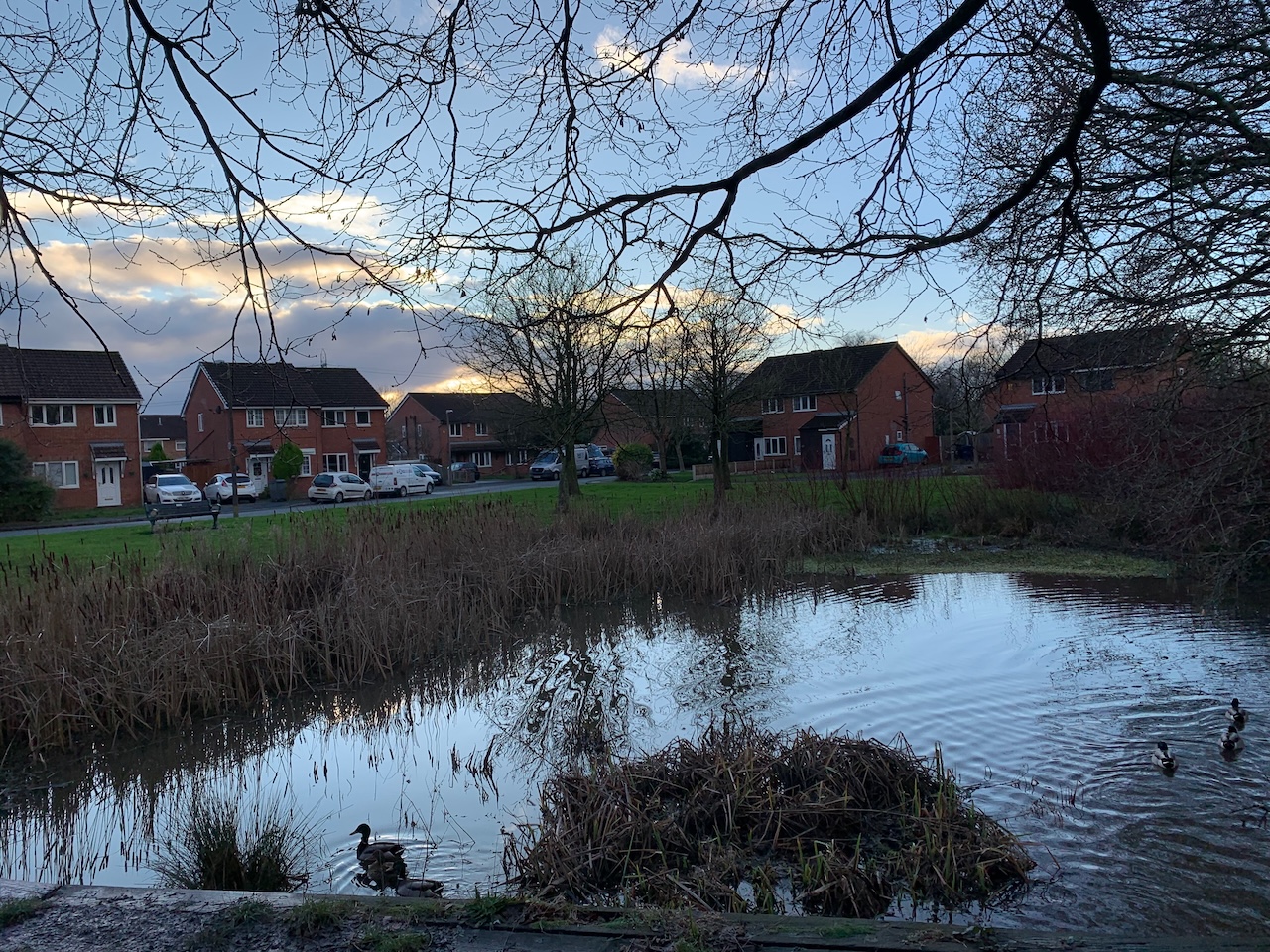
This story was received as taking place near Marsh Way Pond in Penwortham.

The Wise Lad and the Boy with the Empty Bowl

Many years ago the Wise Lad was wandering the Broad Oak Woodland when he came across a boy sitting beneath the boughs of an old oak tree. 

He’s holding a wooden bowl, the lad noticed, sniffed up, but it’s empty.

He saw the boy was staring in trance into the bowl and recognised a sitting quest. 

For three days and three nights he watched in approval as the boy slipped in and out of his trance, moved not, slept not, ate not. Wondered, what does he see?

As the third night reached its end the Wise Lad foraged for him the tastiest of hazelnuts, the juiciest of blackberries, caught, strangled, cooked a tasty hare.

At dawn the boy fell into an exhausted sleep and the Wise Lad padded up silent as the mist and slipped his gifts just as silently into the empty bowl.

“You,” the boy reached out, grasped his arm, caught him in his dark gaze, “you were watching all along from the sidelines and with me in my visions.”

“Tell me about them,” the Wise Lad spoke curiously and encouragingly.

The boy picked a hazelnut from the bowl. “You took me into one of these, right into the kernel, taught me of its wisdom, from flower and catkin, to nut, of its journey in the belly of squirrel, of jay, of salmon, its growth into a hazel tree.” 

The boy picked a blackberry from the bowl. “You took me to the stars to visit a planet as black as one of these, frosty, taught me of how ice can flow as rivers, volcanoes, how the coldest of planets tastes sweet as blackberries.”

The boy picked out a morsel of hare’s flesh. “I followed a hare to her form and she led into the ground and through to another land where I saw you playing, hunting with other boys, with the dead boys of my tribe and others. They had faces like clouds and mist and smiles like the otherworld’s sun.”

“But there is no sun in Annwn,” the Wise Lad spoke confused.

“I know,” said the boy, “yet still they smiled like it.”

The Wise Lad smiled. “You have completed your sitting quest and one day amongst your people you will be an Inspired One, a Soothsayer, a Wise One.”

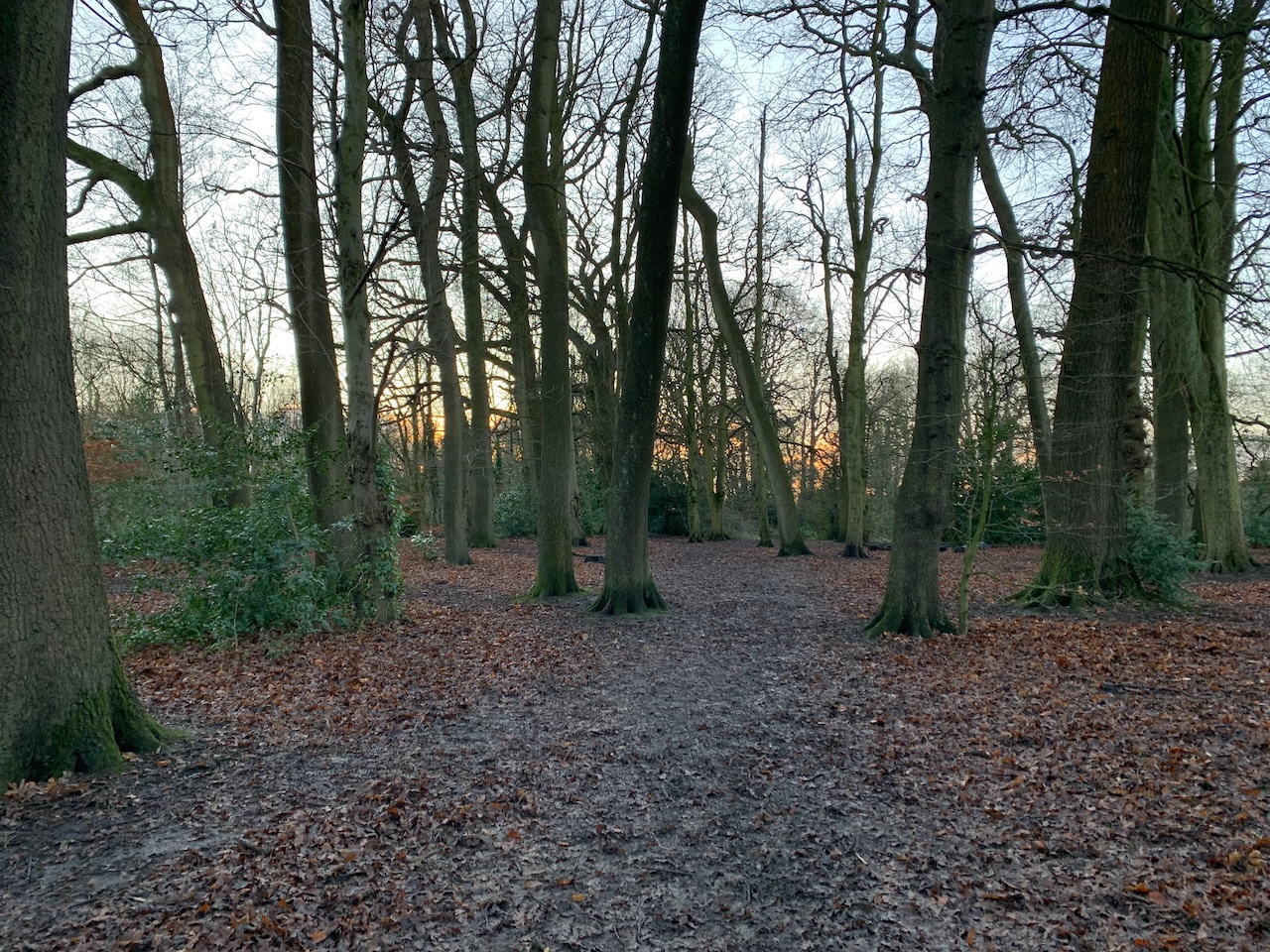
I received this story as taking place here in Penwortham in the remainder of the oak wood on Hurst Grange Park. A little closer to me is an area known as Broad Oak. A Damp Oak Forest covered much of Lancashire from the Neolithic Period until the late Bronze Age when much of it was replaced by bogs.

The Wise Lad and the Old Three Bears

Many years ago the Wise Lad was wandering through Ribblesdale. In the limestones crags he espied a cave and was immediately drawn into its darkness.

What drew him was not so much the dark, for there would soon be much of that with winter on its way, but the smell of a delicious stew cooking. Inside he found a skin cauldron boiling over a fire and around it three wooden bowls. 

In each bowl was a mixture of berries, nuts and meat that made his mouth water. He tried the first bowl, “Agh!” He dropped the wooden spoon. “Too hot!” He tried the second bowl. “Ugh!” He spat it out. Too cold!” He tried the third bowl. “Just right.” He grinned, wolfed it down, only slightly disconcerted when he found a golden hair at the bottom.

Full up, rubbing his belly, he collapsed into one of the three wooden chairs. “Too small.” It barely fit his arse. He tried the second. “Too big – enough room for two of me and my dogs on here.” When he sat on the third chair it wobbled because it was already missing a leg then collapsed beneath him. “Someone else has been here before me and broken the chair that is just right!”

Moving into the next cave he was relieved to see three beds lined with mosses and twigs. He tried the first. “Too hard.” The sticks dug in his ribs. Then the second. “Too soft.” He sunk into the moss. Finally he lay down in third. “Just right.” As he curled up he realised he was lying in the sleeping shape of someone else who had slept there before and caught a girl scent.

“Hmm…” Something told him it would be unwise to fall asleep in that bed. 

The Wise Lad got up and made his way into the next cave where he found the skeleton of the girl who the bears had stripped of flesh and put in their stew. By the remnants of her skull and golden hair she had been pretty.

“No wonder the stew was so tasty,” he picked a piece of meat from his teeth. 

“You ate me,” her golden-haired ghost appeared and spoke accusingly. 

“You ate the third bowl too,” shrugged the Wise Lad.

The ghost-girl glanced at the other skeletons piled up in the cave. 

“Once again,” he heard the voices of the Old Three Bears, “someone’s eaten my stew,” “someone’s broken my chair,” “someone’s been sleeping in my bed.”

“It’s time to go,” said the Wise Lad to the golden-haired ghost, “take my hand and we’ll go and share your story with the people who need to know the risks of having their stew, their chairs, their beds, everything in their world just right.”

When the Wise Lad came to the World

I.
No-one knows 
the time or date of his coming
because he slipped like mist into the world

between times, between places –

a boy here, a boy there,
a boy everywhere

on every one of his foreheads a shining jewel.

II.
Some say 
he came as a star 
or in a shining starship

others that he came on turtleback
or was spat out like a prophet by a whale,

others that he crawled from the Abyss,
the darkest pit, the deepest well.

The crows of course claim
they brought him

on a dark moon
like the blackest of storks.

III.
What wisdom did he bring?

Not the knowledge of Uidianos
and his knowing ones and the Court of Don.

No his wisdom was even deeper than Annwn.

It’s told he buried it here to keep it safe like a bomb.

Here, there, everywhere, in all times and places,
in every one of us and so it waits until
he comes to awaken it.

IV.
So he came 
to me, here in Penwortham,
jewel shining like a star in the dark
and took up residence
in my heart.

The Wise Lad

Over the Twelve Days of Devotion to Gwyn ap Nudd (25th Dec – 5th Jan) I focused on Gwyn’s boyhood. In all honesty at first I wasn’t looking forward to spending twelve days with Gwyn as a boy on the basis of my experiences with the boys at my primary school who were loud, boisterous, rude and bullying.

Thankfully, following my writing of ‘Vindos and the Salmon of Wisdom’, Gwyn reassured me that I wouldn’t be spending my time with Him ‘as a stupid boy’ but ‘as the Wise Lad’.

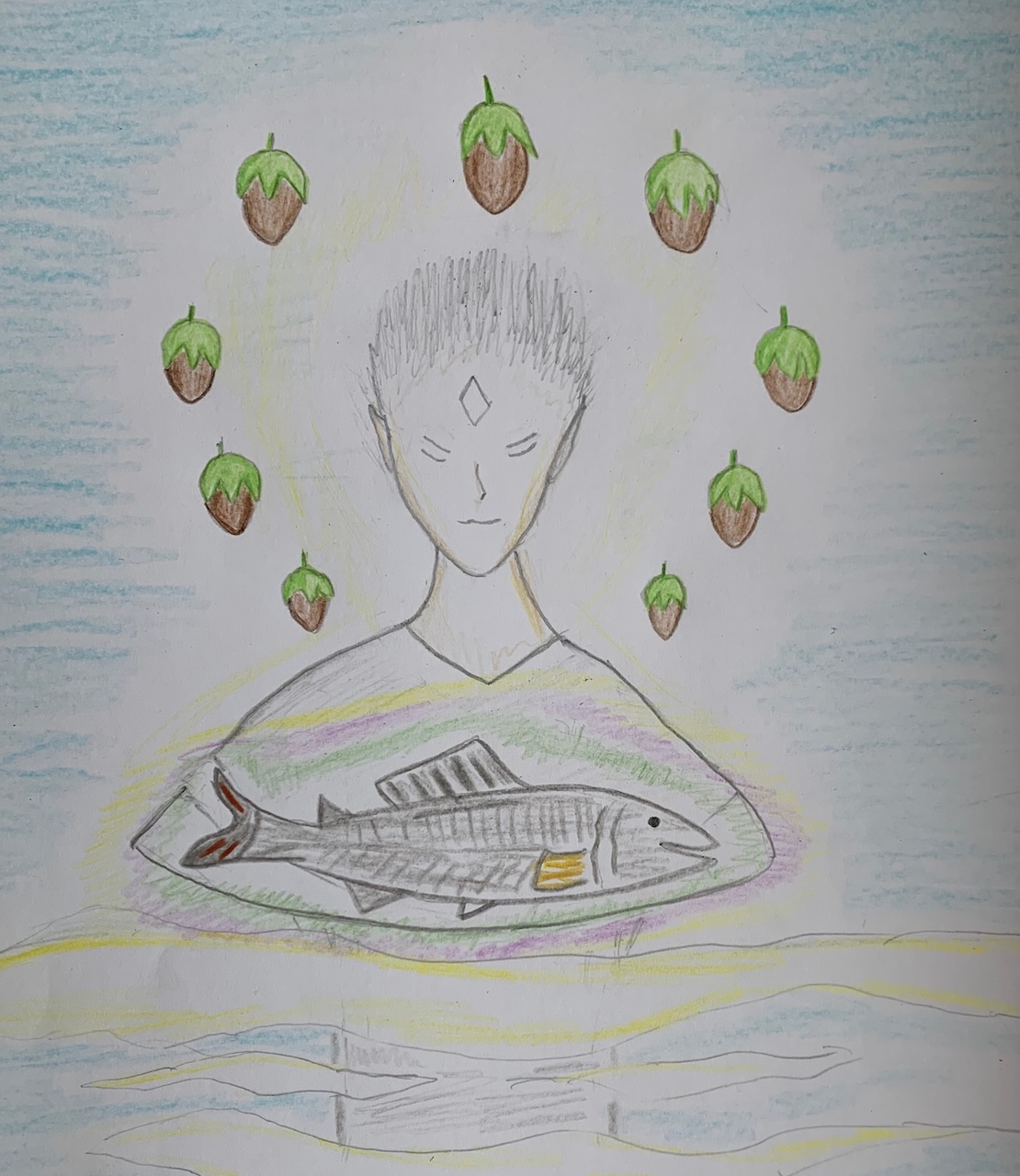
What will follow over the next few days is the best of the inspiration He gifted to me during this period. Beneath is an image of the Wise Lad with the Salmon of Wisdom and nine hazel nuts looking pixie-like and slightly sinister. I have been led to believe that, like the term ‘the Fair Folk’, ‘the Wise Lad’ is a euphemism for something darker.

Two Mother House Poems for Mother’s Night

These two poems were written in response to the Mother House module on Sylvia Lindsteadt’s ‘When Women Were the Land‘ course for Advaya. Lindsteadt’s conception of the Mother House is rooted in Neolithic matrilineal and matrilocal cultures wherein husbands marry into the Mother House rather than women leaving and entering their husband’s house. She also notes the role of the Mother House in monastic traditions. Lindsteadt reads the Greek myth of the abduction of Persephone by Hades as one of Her being taken from Her mother, Demeter’s, house. When I returned to our northern British pre-Christian myth of Creiddylad’s abduction by Gwyn ap Nudd, which shares many parallels, the lines about Creiddylad being shut up in Her father’s house led me to suspect this may be a Mother House story too.

Taken From My Mother’s House

Creiddylad daughter of Lludd Llaw Eraint went off with Gwythyr son of Greidol, but before he could sleep with her Gwyn son of Nudd came to take her by force. Gwythyr son of Greidol gathered a host and Gwyn triumphed… Arthur heard of this and came to the North, and summoned Gwyn son of Nudd to him, and released his noblemen from his prison, and made peace between Gwyn son of Nudd and Gwythyr son of Greidol. This is the agreement that was made: the maiden was to be left in her father’s house, untouched by either party, and there was to be battle between Gwyn and Gwythyr every May Day forever from that day until Judgement Day, and the one that triumphed on Judgement Day would take the maiden.’
~ Culhwch and Olwen

I was taken from my mother’s house then locked up in my father’s house 

so the men like to tell the story. Let me tell you another tale. Of how I was not picking but making flowers, as I made love – styles, stigmas, anthers, stamens, parts that stick to each other and fit together perfectly. 

So I chose to go off with Gwythyr son of Greidol and to go with my brother, Gwyn son of Nudd, to Annwn, to his land of bones to make flowers and love.

Messy the battle, the roses white and red, some say King Arthur ended it. They’re wrong – it was me – it was me and my flowers that brought peace.

And I still live here in my mother’s house with all my flowers and earthly greenery twining my head and limbs and choose to go with my otherworld husband when his hounds call and the trees beg to leave their leaves.

As for my father’s house deep in the sea there are no doors or locks.

As for Judgement Day there are no ends or beginnings in the endless love story between my mother’s house, this earth, or my brother’s house, deep Annwn.

Between the two pass the spirits of the mothers and the fathers, of the sisters and the brothers, no Arthurs are needed to broker the deals between.

Not Taken From My Mother House

They were taken from their mother house
time and time again – 
surnames erased,
Collison, Allen, Curtis…

But what were these names
attached at the end as they married off
and entered the houses of their husband’s fathers?

My surname has never fitted easily with me
and neither has my mother’s received
from a husband ab hominem.

Perhaps that’s why I have 
shrugged them off with my nunnery.

Whatever would my ancestors think
if they knew I had married a God
who did not take me away to the Otherworld
but came instead to dwell here in my Mother House –
here, on my altar, in this sanctuary, in my heart, in my blood?

Here in my mother house where I would keep the skulls
of my mothers and their holy relics if I had them
but instead we keep my great grandmother’s
chest of drawers, cribbage board,
gnarly old desk, cutlery…

I am building shrines to my mothers
and hoping they will understand the changes –

why I married a God who will let our names and spirits flow
into the Otherworld and back again more fluently than any river.

I stand here, now, in my Mother House, timeless, eternal, 
knowing I will not last forever or be erased.
‘Allow us to come home’

Some stupid people also go stupidly to the door holding fire and iron in the hands when someone has inflicted illness, and call to the King of the Benevolent Ones and his Queen, who are evil spirits, saying: ‘Gwyn ap Nudd who are far in the forests for the love of your mate allow us to come home.’
~ Speculum Christiani

Tracks of tanks in the snow.
Avalanches falling from buildings.
Is this the thrum of drones or tinnitus?
An ever-present fear the next missile
will hit the nuclear reactor.

I’m neither here nor there.

I’m in a woodland in Wales
with the peasant folk calling out:
‘Gwyn ap Nudd who are far in the forests
for the love of your mate allow us to return home.’

I’m wandering through the trees and the people
are getting more sinister – fire and iron in their hands 
as they call on the King and Queen of the Benevolent Ones.

I’m walking with the soldiers brought here from Ukraine
for just six weeks to train for frontline combat
with fire and iron in their hands praying
for strength to defend their home.

With my family I’m playing battleships
as the Russian warships depart from Syria.

I’m hearing Donald Trump promising he will end
the war between Ukraine and Russia by drilling a huge fucking hole.

Yet, still, I’m getting called up for war and I’m floating into the air
reciting poetry before my mentor grabs my arm and drags me
to her grandmother’s house safe in the Otherworld.

I say I’m not safe to work on the production lines
at Samlesbury or Warton – to hold fire and iron 
in my hands, grenades, missiles…

instead I will take the hands
of the soldiers as they return home.
I will walk with them through the wildwood
as I walked with Myrddin and the wildmen of Celyddon.

Together we will call upon Gwyn ap Nudd and Creiddylad.
We will banish the belief that They are evil spirits.
We will bring an end to this illness.

I’m praying these dreams
will not be fulfilled.

“For the sake of the man you love”

When I was re-reading and re-telling the story of the Chasing of Rhiannon, from the First Branch of The Mabinogion, one line that I hadn’t paid much attention to before stood out to me. When Pwyll tires of chasing Rhiannon, he calls out, “Maiden, for the sake of the man you love most, wait for me.”

It stood out because it reminded me of the invocation of Gwyn ap Nudd in the Speculum Christiani – ‘Gwyn ap Nudd who are far in the forests for the love of your mate allow us to return home.’

I saw a similarity between Rhiannon, a Queen of Annwn, being called out to for the sake of the man she loves and Gwyn, a King of Annwn, being petitioned for the love of His mate. This got me wondering whether this evidences a tradition of petitioning the Queen and King of Annwn for the love of Their consorts. 

This is clearly the case in the fragment from the Speculum Christiani wherein Gwyn is petitioned for the love of His consort, Creiddylad, a Queen of Annwn.

It is less obviously so in the First Branch because the text suggests the  man who Rhiannon loves is Pwyll. Rhiannon says: “I am Rhainnon, daughter of Hyfaidd Hen, and I am to be given to a husband against me will. But I have never wanted any man, because of my love for you. And I still do not want him, unless you reject me. And it is to find out your answer on the matter that I have come.”

Yet this seems strange as, to all appearances in the tale as it is told, Rhiannon has not met Pwyll before – so how could She love him? Reading between the lines, however, in the preceding episode, Pwyll took the place of Arawn, a King of Annwn, for a year and a day, leading His hunt, feasting at His feast and sleeping with His wife. Yet Pwyll did nothing but sleep with the Queen of Annwn, turning his back in bed. One wonders whether the unnamed queen was Rhiannon, re-appearing at Gorsedd Arberth to seduce Pwyll. If that was true, it would make sense that Pwyll was calling out to Rhiannon, for the sake of the man She loves, Her husband, Arawn, King of Annwn. 

However, in the First Branch telling, Rhiannon does not present Herself as the wife of Arawn, but as the daughter of Hyfaidd Hen, who is forcing Her into an arranged marriage with Gwawl ap Clud. Her sovereignty has been removed and she is but a maiden being forced to marry a man against Her will.

This is suggestive to me of a Christian interlocutor purposefully removing the Queen Annwn’s status – a suggestion backed up by Her later calumniation – Her identity as a Horse Goddess is made a parody as She is forced to go on hands and knees bearing riders from the mounting block to the court of Arberth.

Similarly, in the episode of the battle of Gwyn and Gwyn Gwythyr, from Culhwch and Olwen, Creiddylad is also removed of Her sovereignty and shut in Her father’s house from where neither rival can take Her until the Day of Doom.

In Rhiannon: An Inquiry into the First and the Third Branches of the Mabinogi, W. J. Gruffydd argues that the conception of Pryderi by Rhiannon and Pwyll might originate from an older tale wherein Arawn in Pwyll’s form conceived Pryderi / Mabon – the Divine Son who gives His name to The Mabinogion.

If Gruffydd is correct this strengthens the argument that in the pre-Christian version Pwyll was speaking a petition to Rhiannon, Queen of Annwn. Thus, “For the sake of the man / woman you love,” and “for love of your mate,” might have been traditional ways of petitioning the King and Queen of Annwn.

Aspen – Tree of the Woman’s Tongue

“Can you hold your tongue for a year and a day?” My patron God, Gwyn, challenged me. 

“No,” turned out to be my answer, “no – I cannot.”

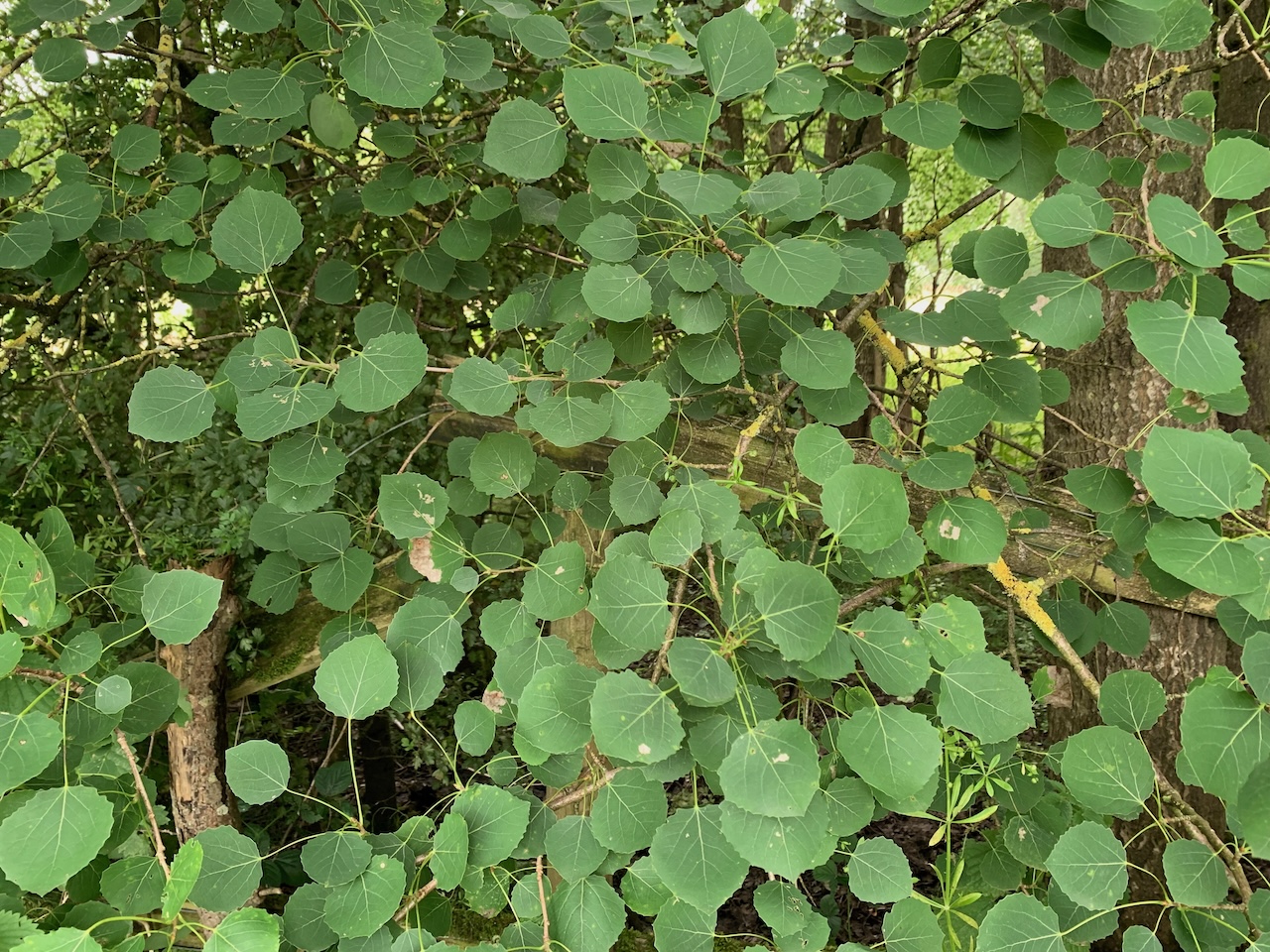
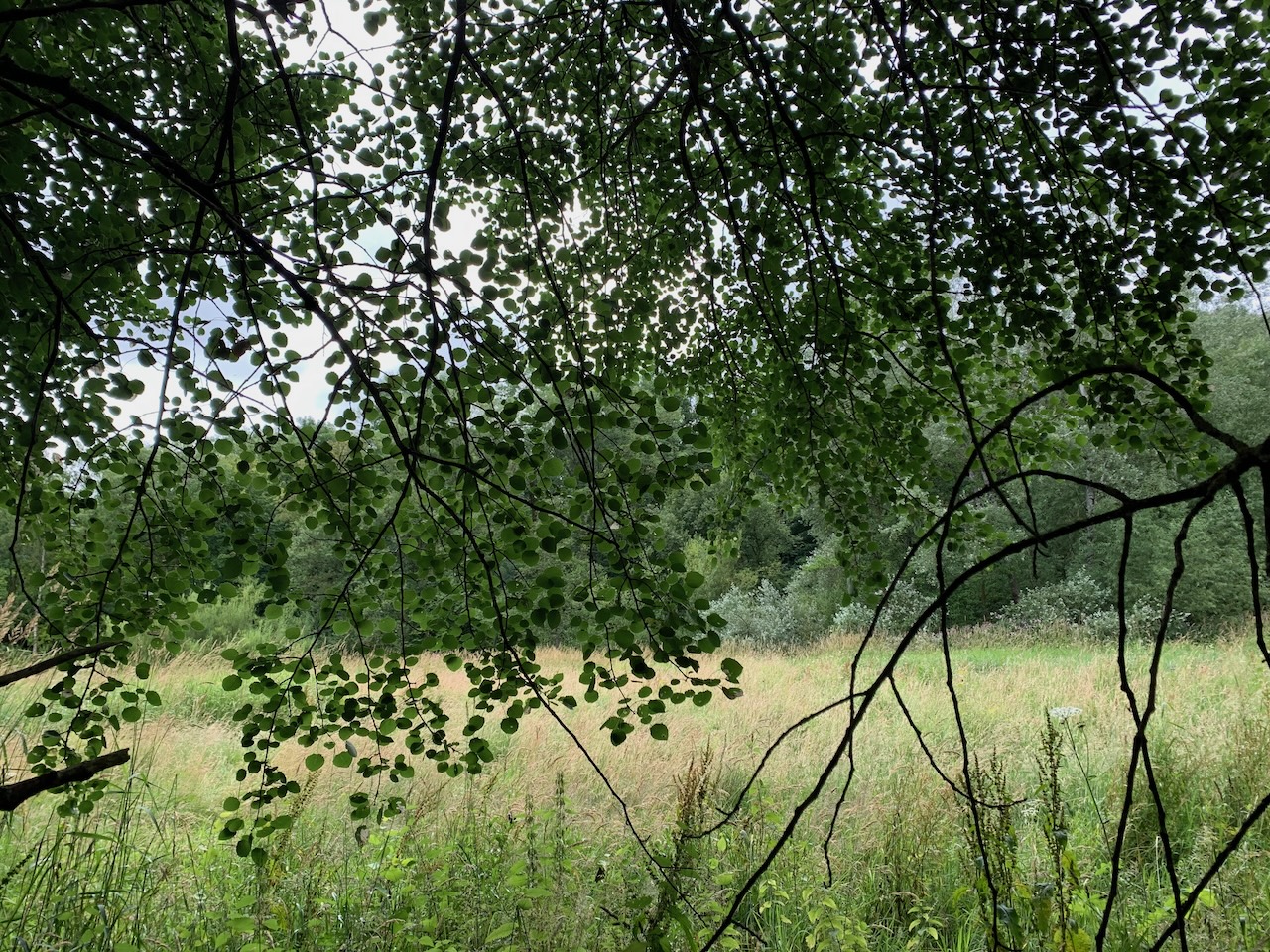
No coincidence that this year I have been connecting more deeply with aspen. Because of the talkative rattling of is leaves it is known in Welsh as coed tafod merchen ‘tree of the woman’s tongue’ and coed tafod gwragedd ‘tree of the wife’s tongue’. Similarly in Scotland it is known as ‘old wives’ tongues’. 

The English, ‘aspen’ derives from the Germanic asp perhaps relating to its snake-like bark or to snake’s tongues. Its Latin name, Populus tremens, refers to its leaves which are said to quake restlessly as it provided wood for the cross Jesus was crucified on.

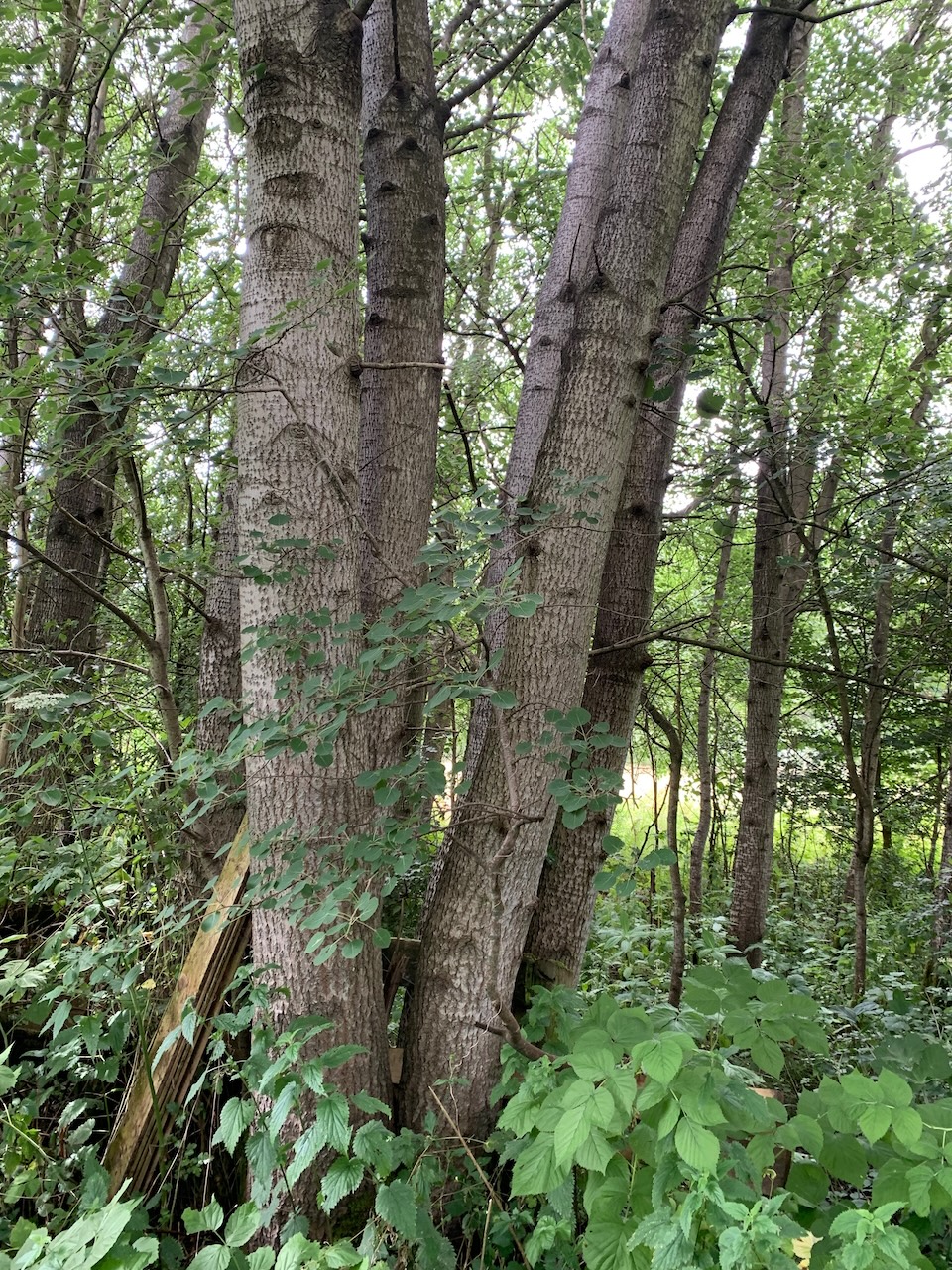
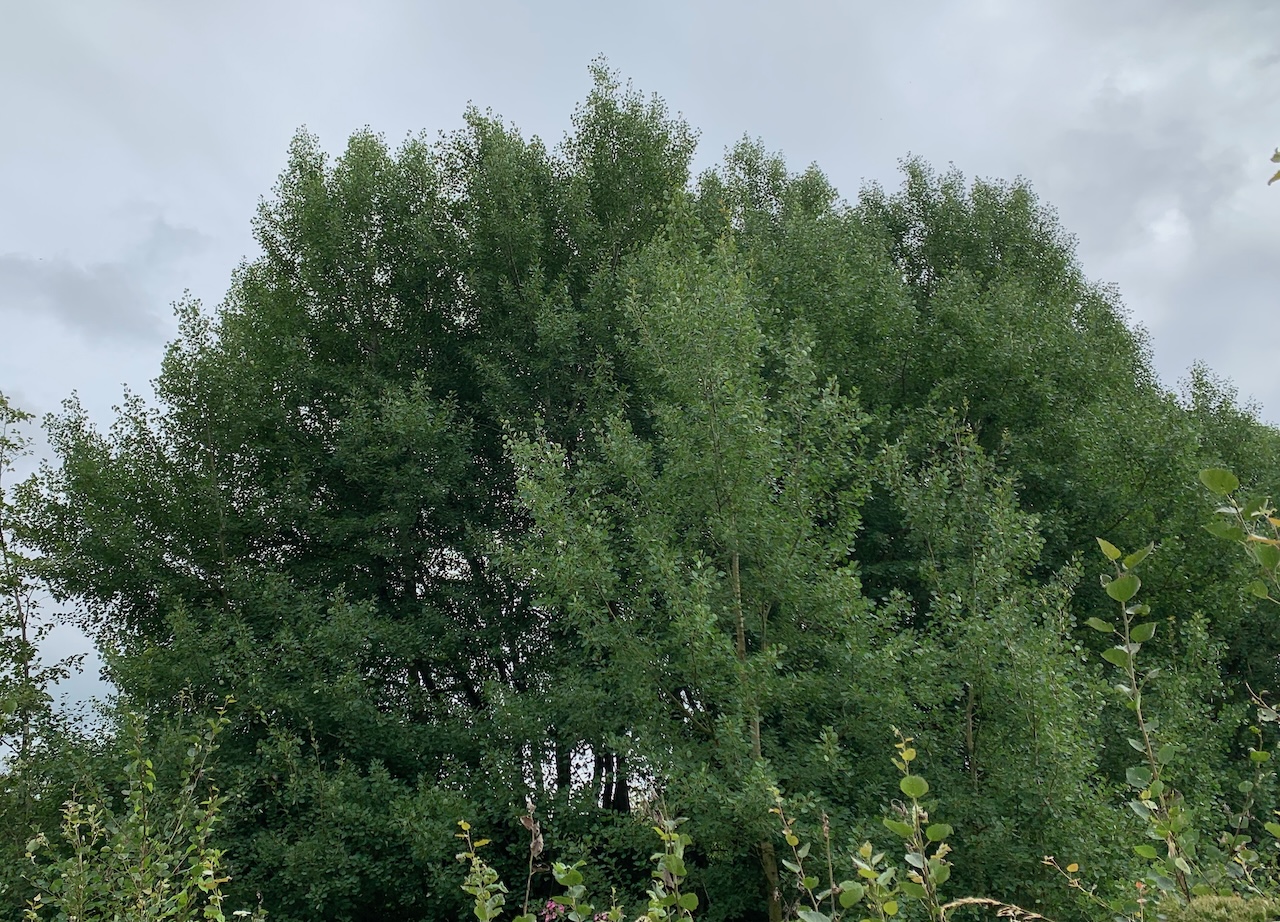
An ominous tree, associated with prophecy, until recently it existed at the peripheral edges of my vision. Small stands in local woodlands, on the edges of roads and paths, just one considerable colony at Fishwick Bottoms.

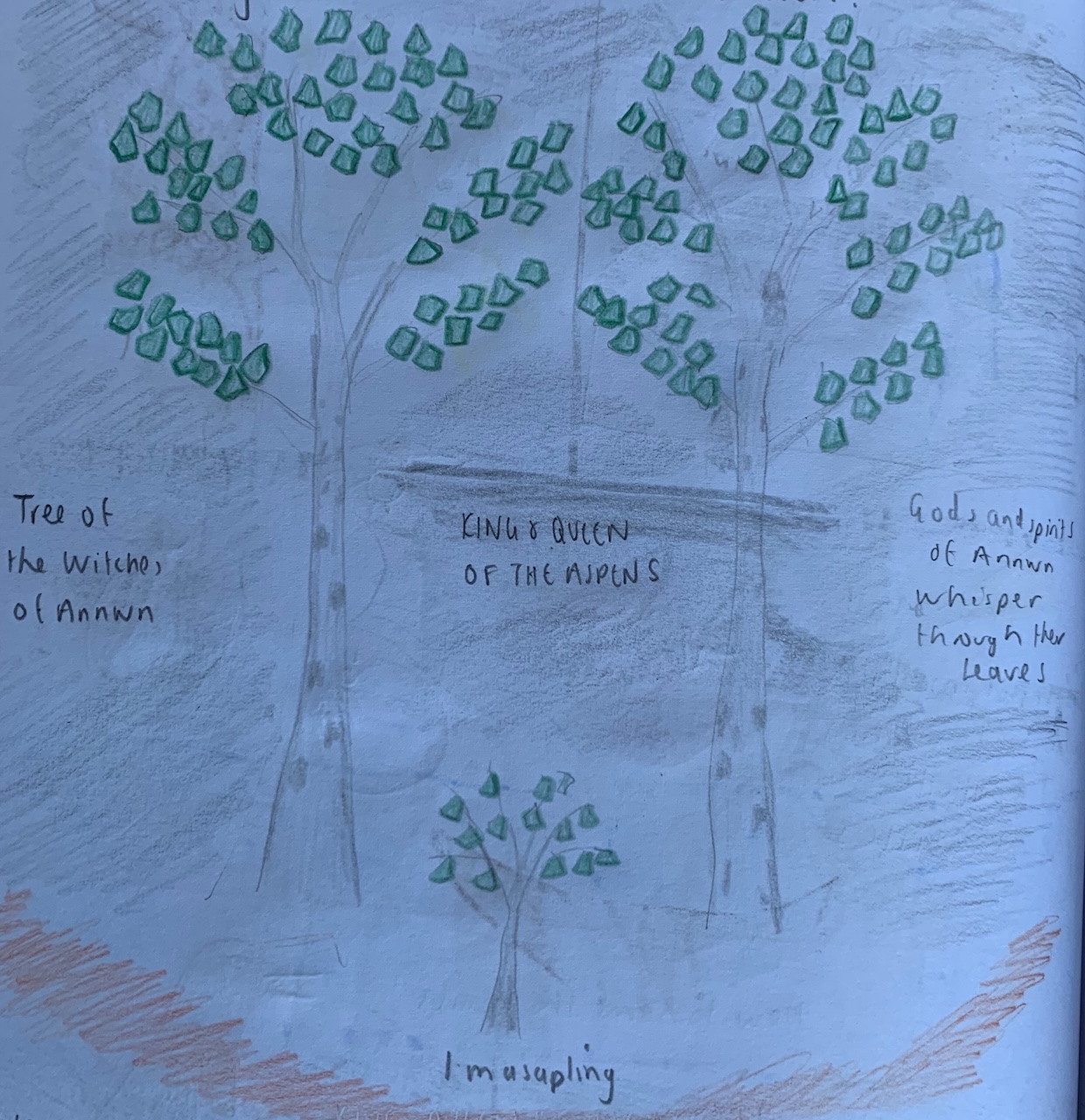
I’ve spoken to it in passing and sat beneath its leaves and listened to its chatter. I’ve journeyed to it, met the King and Queen of the Aspens, learnt that it was the favoured tree of Orddu, Orwen and and their ancestors, the Witches of Annwn who have become spiritual guides for me in the traditions of the Old North.

Orddu showed me that the woodland in Pennant Gofid, ‘the Valley of Grief’ was an aspen wood that had been there since the end of the Ice Age. We walked together as she pointed out the fungi and buzzing flies in areas of decay. Afterwards I learnt that aspen supports numerous detrivore species of fungi, up to 155 on a rotting log and saxoproxylic Diptera favour the microhabitats created by decaying sap under its bark.

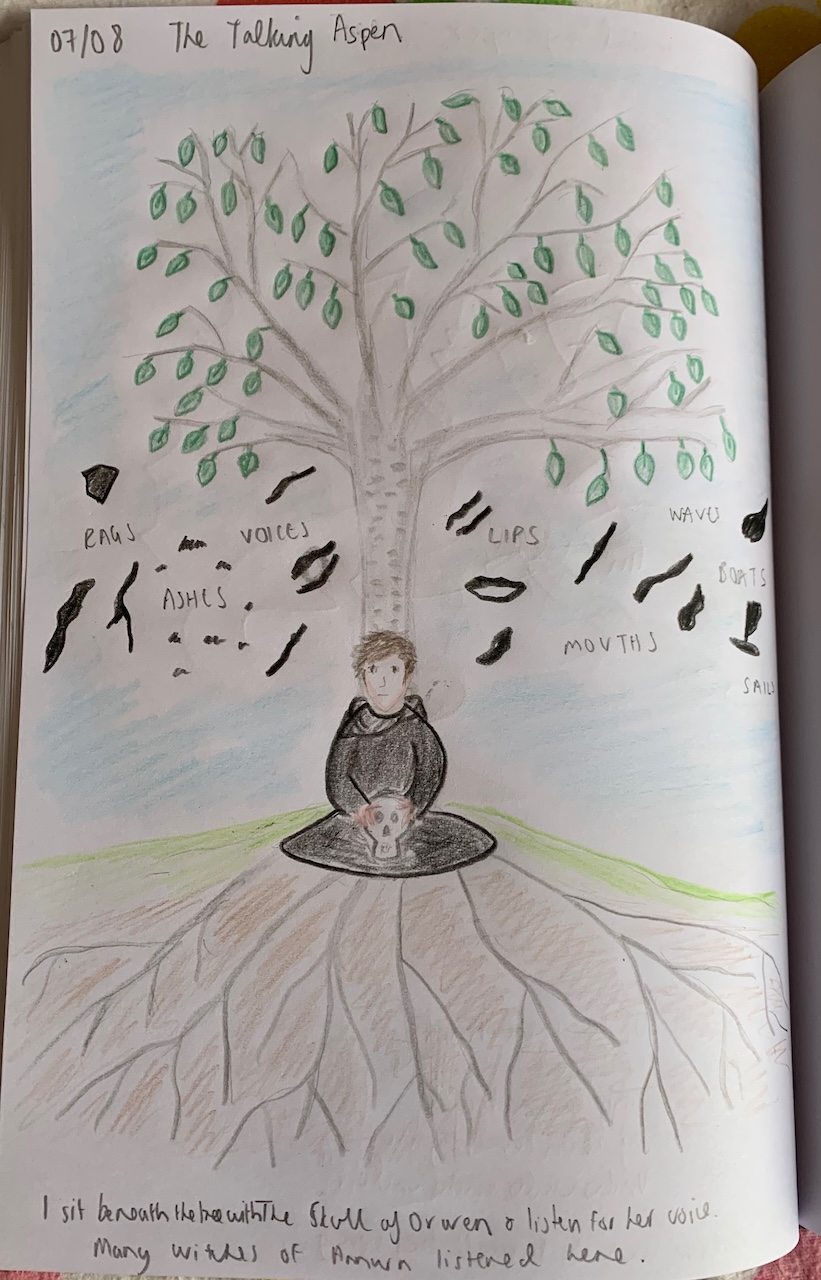
Aspen is usually a sociable tree that grows in colonies yet Orddu introduced me to a single Talking Aspen she and her ancestors sat under to read the prophecies from its leaves. I was instructed to sit beneath it with her mother, Orwen’s skull, to listen to the wagging tales of old and dead witch’s tongue.

I was shown, in autumn, how the Witches of Annwn fly as birds of aspen. 

“In winter, when the aspen is silent,” Gwyn asked me, “can you hold your tongue?”

“No,” turned out to be my answer, “no – I cannot.”

Like old women, old wives, old witches, this middle-aged nun of the aspened suburbs and wife of the King of Annwn cannot hold her tongue. 

Aspen needs to tremble. Tongues need to wag. Words need to be typed. I need to write for the sake of my well being, for my Gods, for those who find inspiration in my work in spite of giving up all hope I will make a living from it.

Over my period of silence I’ve found a new way forward as a shamanic guide providing one-to-one shamanic sessions in my local community and am planning to start a shamanic circle here in Penwortham in the New Year.

Step by step my Gods and spirits are showing me my path as a nun of Annwn. Part of this is reclaiming my relationship with my abandoned creativity and embracing it as a way to health and healing for myself and others.

*Information about aspen in this document comes from ‘The Biodiversity and Management of Aspen Woodlands: Proceedings of a one-day conference held in Kingussie, Scotland, on 25th May 2001.’